

Weather Guard Lightning Tech
Tower Training Academy’s Renewable Apprenticeships
Nick Martocci, founder of Tower Training Academy, discusses their nationally recognized apprenticeship programs for wind turbine technicians and battery energy storage specialists. The company focuses on creating partnerships and initiatives that support career development and veterans’ transition into the renewable energy sector.
Sign up now for Uptime Tech News, our weekly email update on all things wind technology. This episode is sponsored by Weather Guard Lightning Tech. Learn more about Weather Guard’s StrikeTape Wind Turbine LPS retrofit. Follow the show on Facebook, YouTube, Twitter, Linkedin and visit Weather Guard on the web. And subscribe to Rosemary Barnes’ YouTube channel here. Have a question we can answer on the show? Email us!
Allen Hall: As renewable energy technology gets more complex and specialized every day, the industry needs skilled professionals ready to climb those towers and maintain critical systems. This week we speak with Nick Martocci founder of Tower Training Academy in Las Vegas. Tower Training Academy offers nationally recognized apprenticeship programs for both wind turbine technicians and battery energy storage specialists, helping everyone from recent high school graduates to career changers develop essential skills and certifications, while providing lifelong career support.
Welcome to Uptime Spotlight, shining Light on Wind Energy’s brightest innovators. This is the Progress Powering tomorrow.
So we were just talking, it’s been a year since we’ve spoken to you and I follow your Tower Training Academy YouTube page, LinkedIn page. I think you’re on Instagram also.
Nick Martocci: Yep. Instagram. We got [00:01:00] Facebook. A lot of social media. Uh, a lot has happened in the last time since we’ve chatted. Uh, been able to send a few more apprentices through the wind turbine program.
Uh, I’ve been able to help out a lot of veterans. We had one veteran actually come through my program, uh, work with us vets to help veterans, uh, transition, uh, into the renewable sector, if you will, and help them out also with transferring them out of a bad situation. Uh, the veteran, he just. Fell onto some harm times and, uh, no, no lie before he was with my program, was actually living in his car and so he got with us vets and uh, was able to get a little assistance from them.
Also got with Salvation Army, got some assistance from them and the US vets actually pointed him towards my program. We were able to get him a sponsorship and to this day it’s changed his life and he’s still, even right now out in the field. Doing torque contention work. [00:02:00] That’s awesome.
Allen Hall: That’s a great story.
And I, on your LinkedIn page, I’ve noticed a couple of ribbing ribbon cutting ceremonies with local dignitaries.
Nick Martocci: Yeah, we had a congresswoman Susie Lee, her office was very, very helpful with getting, uh, some other help that we needed. Uh, moved along with, uh, a few other pieces, but she was out there to help us, uh, announce that we actually did become a, the first.
Approved apprenticeship for the Department of Labor that’s active for our battery energy storage apprenticeship program. And so now we have both programs since last year. Uh, that was something that we had to kind of keep hidden behind the green curtain, if you will. And so I was working on that and now that’s already up and running.
Uh, we had one apprenticeship approved before us a few years ago and they haven’t sent anybody through it and. At the end of this month. Right now we’re in March, so at the end of this month [00:03:00] we’ll have 10 coming through my program already.
Joel Saxum: I think that’s super important for the industry right now where that, that the renewables industry, because battery storage growing.
Right? I, I mean, I live in Austin, right? So it’s just batteries after batteries going into the Ercot market and there’s a lack of people, lack of technicians, lack of engineering expertise, to be honest with you. Yeah. About how do we, how do we handle battery storage systems from an o and m perspective. We know how to install ’em.
Nick Martocci: Yeah.
Joel Saxum: Or if, I guess if you ask the insurance companies, they don’t think we know how to install ’em yet, but, but we know how to, we know how to get ’em out there. How do we maintain ’em? It’s awesome that you guys are doing this because I don’t know of any other real facility putting battery storage o and m capable people.
No.
Nick Martocci: It, it, it was a lot of grunt work, if you will, of putting everything together for our standards. Uh, I, I used a lot of other handrail systems that are out there as far as ideas. Uh, kind of like this Tony Stark moment, if you will create a framework and just keep messing with how this [00:04:00] works and integrate changes.
Uh, a big piece was to, and again, I wanna thank them, is a DO uh, a DO helped me out with a lot of the standards. They do a lot of the training for me. So that partnership there is, uh, a big piece that really helps out the technicians themselves with the certifications because it is accredited. Through is E.
And so that allows them now not only to have those skills and that training and certification, but also allows for that forward progression in their careers. Because like I said, it’s accredited so they can take those credits and start working on their degrees as well. So this is something that allows, not just for that immediate, okay, let me get a career piece going.
But now also that forward thinking piece of actually what’s the next step for me as far as becoming a manager, getting my degree, things of that nature. Anything that I put together with my programs, there’s always a what’s next for that person. Just like I was telling you guys about last year, the biggest thing that bothers me is that what’s next for me as a person in this industry [00:05:00] with a lot of jobs, it’s clock eight, clock out.
Yeah. Hope to see you tomorrow. Yeah, I, that’s why I have IFC there to be able to help out with that progression. And now I’d love to announce also that they’re now a 5 0 1 C3. They’re a nonprofit. And all of the donations go and we’ve partnered with PBS, uh, or partnering, working, um, with PBS to be able to offer PMP and CMP certifications.
So that program management, project management certification.
Joel Saxum: Yeah. Okay. So I know you were before the i is it IFC Infinite Fidelis
Nick Martocci: consultants?
Joel Saxum: That’s what, it’s the easiest
Nick Martocci: way to say it is IFC. Yeah.
Joel Saxum: Because we were helping technicians not only go through the training, get the skills, but then. Placing them with, with people, placing them in companies, getting them onto their first day at the job.
And I know you were helping people even build resumes and all kinds of great stuff to actually, you know, take your fellow man and carry him along for some success. So I like to see that now even, even with that, the [00:06:00] addition of the idea of putting PMP uh, training into people. Now they can become project management professionals and kind of, I’m not, I’m not just, I’m not, I’m not a technician anymore.
Now I’m upskilling. Now I can get to this next level. That’s, that’s awesome.
Nick Martocci: Because the big piece is the development of the workforce. They’ve gotta be able to, one, be empowered with their knowledge, make sure those standards are understood. One, also for their safety, but two for their personal and professional development,
Allen Hall: because they’re not gonna be a technician forever and they need to on move on to next.
You can only clean towers for so many years, right? That’s right. Right. Yeah. You work on batteries. Yeah. For so long now, tower Training Academy is in Las Vegas, and that’s a. Becoming more of an energy resource area is a lot of projects surrounding Las Vegas, not necessarily in Las Vegas. Where are the technicians, the future technicians coming from to train at your facility?
Nick Martocci: So I’ve had folks come from all over the USAI. I’ve had folks from Maine, from Massachusetts, from Utah, [00:07:00] Arizona, California, all coming Texas, Oklahoma, uh, because my apprenticeships are national apprenticeships. My reach is the entire US right now, and I know this is a military term, but lower 48. Um, but so far lower 48 is really what I’ve seen the most engagement with.
And so I’ve also worked on getting on a lot of workforce programs for, with the states, uh, also known as ETPL, uh, which is, uh, a, a eligible training provider, which means that OLA funds federal funds will be there to help assist individuals to be able to pay for the training as well. I. And so paying for the training is another big piece.
Uh, some companies will sponsor individuals, others will have to have an individual basically take care of the bills themselves, if you will. So having those wheel of funds and other funding grants, things of that nature, teaming up with IFC, infinite Fidelis Consulting, having them be able to help fund through donations, training and certifications for [00:08:00] people is a big, big piece.
Wow.
Allen Hall: Okay. ’cause usually when we talk to training facilities. The people that are attending are within probably 60 to a hundred miles Yeah. Of that facility. Yeah. Yeah. There’s not a lot of draw outside, which in my neck of the woods in Massachusetts right now, there’s not a lot of places to go. So you’re gonna travel somewhere?
Yeah, right. Why not travel to Vegas? It makes a lot more sense, especially since you have a program set up to accept people like that and makes it a lot more accessible. To the general
Nick Martocci: population? Well, the big piece, I mean, Al also, and I get, and I’ve spoken with a lot of folks, uh, the, there is a concern with negative, uh, negative concern with Vegas and I get it, but the biggest piece is also understanding that I’m as far north as you can get of Vegas without not being in Vegas anymore.
I’m literally right across the way from Nellis Air Force Base. Uh, I get to watch the Jets take off every day. I’m right by the raceway. So all of the above, that little two mile piece that people have concerns about, I’m, I’m way away from that. And I even have [00:09:00] partnerships with the hotels in the area to be able to allow people to have accommodations and keep things closer to me than all of that.
Sure.
Allen Hall: But that allows to keep the cost down because you have access to all the facilities and Las Vegas is a city. Yeah. So they’re, everything’s accessible. I, I realized, yeah, you probably wanna stay off the ship if you’re smart and you wanna keep your money. However, the thing about Vegas that I like about Vegas, and I’ve been there many times and I’m not a big strip person, is that it is a big city.
There are things to do there that don’t involve gambling and carrying on, but all the services are there. The air force’s great. Yes. It’s inexpensive. You can live there for a while. Mm-hmm. Which, if you’re training, you’re going through this program.
Joel Saxum: Can make the difference I’ve had, oh, go ahead. I think that’s a big, an important part of the training.
So, so many places are like, yeah, we’ve talked to a lot of training facilities. Um, a lot. We know a lot of ’em connected within the industry and they want people to come from all over the place, but not all of them are putting [00:10:00] together. I have a partner with the hotels or partner with this. So like, and like I know this is a cross industry thing.
Um, there’s a, there is a. Lineman training school like down in Georgia. Right. What was the name of that? I don’t, either way. But they put their package includes housing and all this stuff, right? With it. Right. And that’s a huge thing. If you’re trying to draw people in, you gotta go stay. You know, if you’re gonna be there for a month or something, you gotta stay in a hotel for a month.
If you guys, you know, which is a normal technician thing to do, it’s good training right in that part. But to have that partnerships kind of set up already for that makes it that much easier. Greasing the wheels for people to be able to come. Yeah,
Nick Martocci: because these folks are coming from all across the us.
I’ve even seen folks get an Airbnb for about 800 bucks for the month. Oh, wow. Which really isn’t bad. You’re sharing it. Uh, and then like I said, with the hotels, it keeps it really, you know, cost effective. To your point, as far as flying in, and I’m being sarcastic a little bit, but I don’t know, there’s a, for some reason, a round trip ticket in and out of Vegas is heat is.[00:11:00]
It’s the cheapest in the United States, and I don’t know why it’s super cheap. I don’t know why. So, I mean, you take that couple hundred dollars instead of paying the airline. Yeah, yeah, yeah, absolutely. And, and so you can get a, a, a future technician around trip ticket really inexpensively. And then again, housing’s not that bad.
Uh, if it’s comparable to the most places. And like I said, yeah, it, uh, it, it, it’s gonna be. Really, really what they need as far as all of the technical trainings for the technical pieces, and then also the apprenticeship, which we’ll see how things go, but will be part of the IRA as well.
Allen Hall: Yeah. So what is your core technician?
Draw from? Like where, where, what kind of jobs were they doing before they came to Tower Training Academy? I’ve had, or were they coming outta high school or they coming outta the military? I’ve folks from both,
Nick Martocci: uh, I, I’ve had folks that basically were 18, 19 years old, just finished high school. I’ve had folks that were iron workers for years and decided to make a change ’cause they were tired of sitting on their couch [00:12:00] for a while.
Uh, I, I, I’ve had folks that were in sales, something totally different and then made a major shift. Uh, I’ve had folks that were in retail, you know, working at, you know. Calvin Klein or Aero Postel or something like that. And I, I’ve had folks from everywhere and every age I’ve had folks as, like I said, as young as 18 and 19.
I think the oldest was in their fifties.
Allen Hall: Yeah, that’s, I think that’s really fascinating. ’cause we talked to other training facilities and what they say is they’re coming from retail, which is odd. I thought, oh, they’re coming from farming communities, or something like that. Right. They’re a mechanic and like, no, no, no.
A lot of ’em are come from retail because they’re bored outta their mind and then they wanna go, go do something that has a little more adventure to it. And they’re young and they wanna earn some money, right? They want don’t wanna earn minimum wage, they wanna have a a career of which Tower Tri Academy gives them.
Oh yeah.
Nick Martocci: That is a huge advantage. But yeah, the big advantage that I see, like I said, is the partnership between Tower Train Academy [00:13:00] and IFC because anyone that’s an alumnus from Tower Train Academy will immediately have access for life. F to IFC, right? And Infinite Fidelis Consulting will be there always to be able to help out with resume writing, interview prep, job placement pieces, or if they just want the professional development pieces of the CMP and p and p certifications.
It, it, it’s there for you to be able to take advantage of.
Allen Hall: So all these new technicians and apprentices are coming to Las Vegas to get trained up. Where are they going when they finish? Uh,
Nick Martocci: I’ve worked with all different types of company, epic tack on, and you know, so on and so forth. Optic energy. Um, for the battery pieces and I’ve worked with others.
Uh, I’ve had a very blessed, blessed OMS this year. Uh, I’ve made a lot of connections here and I’m looking forward to sending technicians to many more companies. Wow, that’s fantastic.
Allen Hall: So you’ve grown in size, you’ve grown in scale, and it’s literally been scope Scope. Yeah. It’s been 12 months since we last talked to [00:14:00] you and it.
That’s tremendous. That’s a lot of work to do in 12 months, by the way, you’re working your tail off. Congratulations.
Nick Martocci: I’m trying. What does the next 12 months look like? Well, the growth is actually the piece. Um, I’ve got everybody in the office on a quote right now that I got from church, and I’m not trying to put my religion on anybody, but what is your 2026 gonna look like based on the decisions and choices you’ve made in 2025?
And so that’s really been the big piece. The other part is the growth. Because of the growth I’m looking for. And that’ll probably be our announcement next year. Uh, ’cause I’ve got about 12 to 13 months left on my lease and so we’ll probably be moving and finding a whole new location and so wait for updates on that one.
But, uh, we, we are definitely bigger than what we need to be as far as our head count in the facility. And so we, we definitely need a new facility to be able to accommodate all the training that we’re doing and. Some of the things that we’re wanting to do with a DO, [00:15:00] like I was saying, and I think there’s gonna be a lot, a lot coming down the pipe with that one as well.
So Internet’s, so ISPs
Allen Hall: and OEMs and operators across the United States. If you haven’t heard of Tower Drain Academy, you need to get on to the website and check this place
Nick Martocci: out. How do they do it? Uh, really easy. They just Google Tower Training Academy. Uh, I have folks all over that are willing to send out, uh, information and when we post this video, I’ll make sure that there’s a link for, for sure.
Uh, but literally all they gotta do is just Google Tower Training Academy and it pops right up and go to the Instagram page. It’s actually Instagram, uh, Facebook, LinkedIn, uh, and then we have a YouTube channel. You can follow us anywhere.
Allen Hall: It’s good stuff on your social media, on the YouTube. Yeah, very helpful.
If I was new to the industry, I would be going to your, your sites to check it out because. I will learn so much in a short amount of time just to get a flavor for what you’re doing in Las
Nick Martocci: Vegas. [00:16:00] It’s, it’s quite good. Well, with the social media piece is, what I try to do is be more informative of the industry itself, more than just to myself of, Hey look, this is Tower Training Academy.
This is what we got. Um, I wanna be able to also showcase everything that the battery industry is doing. Everything that the wind industry is doing, offshore pieces. There’s more than just what we do that impacts this entire industry. So. It, like you said, if I was somebody off the street and I wanted to learn a little bit more, having access to that type of information more than just me, you know, swinging my own bell around and saying, Hey, check me out.
Um, it it, it allows them to really, really learn and understand the industry. And that’s the biggest piece is keeping everybody informed. Yes, absolutely. So check
Allen Hall: out Tower Training Academy, Google it, go to the social media. Great to have you back, Nick. Thank you so much. Pleasure. Thanks for having me. We’ll, we’ll hopefully see you in 12 months or sooner.
And we need more updates because
Nick Martocci: things are happening rapidly there. Well, if you guys are at re plus, I know [00:17:00] it’s not OMS, but if you guys are at another, uh, another event, uh, that that’ll be in Vegas this year. Yeah. Feel free to pop in and come and check out the facility. Cool. Sounds great.
https://weatherguardwind.com/tower-training-academy-apprenticeship/

 Obviously, what MTG says here is good news, but really? Is she sincere, or did she realize that it was to her political advantage?
I’m highly suspicious. Until this reversal, she was known for her positions as a white supremacist, antisemite, QAnon conspiracy theorist (including Pizzagate), anti-vaxxer, and Putin supporter, and for aiding and supporting attempts to overturn the results of the 2020 election.
Now, out of nowhere, she’s a sane individual?
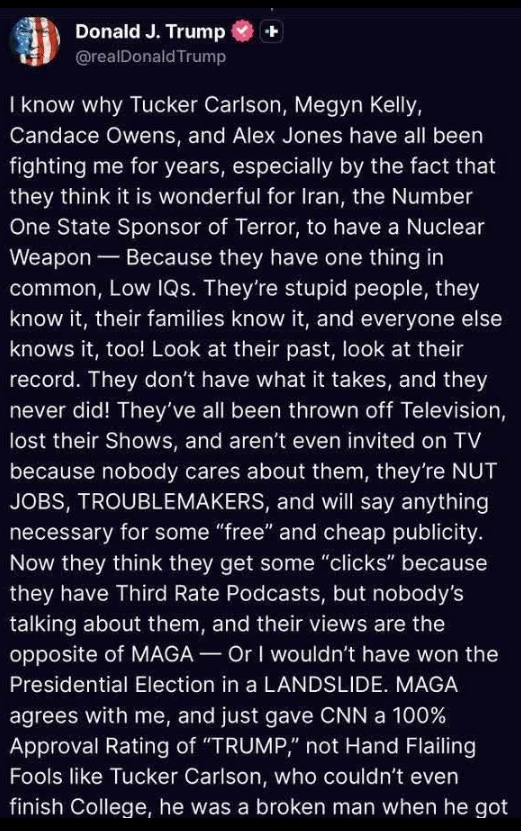
The lifecycle of someone like Tucker Carlson and the others mentioned at left:
a) They’re on Fox News or maybe they have their own podcast, spouting pro-Trump crap.
b) They see what they should have seen from the start, i.e., that Trump is criminally insane, and the say so publicly.
c) Trump calls them “low IQ.”
Doesn’t this garbage have a limited shelf-life? Are voters going to buy this indefinitely?
At left see we what it’s like when a formerly great country is being led be a moron.
Will “they better stop now!” lay this issue, the precursor to World War III, to rest?
A World Superpower Pays Heavy Costs to Be Led by a Spoiled Child


-
Climate Change8 months ago
Guest post: Why China is still building new coal – and when it might stop
-
Greenhouse Gases8 months ago
Guest post: Why China is still building new coal – and when it might stop
-

 Greenhouse Gases2 years ago
嘉宾来稿:满足中国增长的用电需求 光伏加储能“比新建煤电更实惠”
-
Climate Change2 years ago
Bill Discounting Climate Change in Florida’s Energy Policy Awaits DeSantis’ Approval
-

 Climate Change2 years ago
嘉宾来稿:满足中国增长的用电需求 光伏加储能“比新建煤电更实惠”
-
Climate Change Videos2 years ago
The toxic gas flares fuelling Nigeria’s climate change – BBC News
-

 Renewable Energy6 months ago
Sending Progressive Philanthropist George Soros to Prison?
-

 Carbon Footprint2 years ago
US SEC’s Climate Disclosure Rules Spur Renewed Interest in Carbon Credits