Connect with us

Published

on

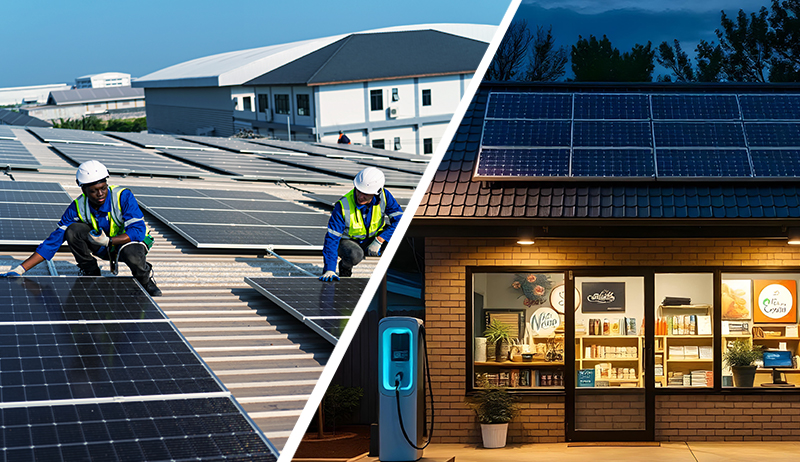
In today’s fast-paced business world, every dollar counts, which makes smart companies turn to solar energy as a way to take control of their bottom line.

Installing commercial solar is not just an environmentally responsible move; it’s a crucial financial decision that can help in cost savings, enhancing the long-term value of your business.

From slashing power bills to unlocking tax incentives and increasing property value, going solar in Australia has never made more financial sense.

Additionally, as energy prices continue to rise and sustainability becomes a business priority, solar power provides a competitive edge, not just today, but for years to come.

Therefore, in this article, we’ll break down the top 5 financial benefits of installing commercial solar in Australia, so you can see how the sun can help power not only your operations, but your profits too.

What is Commercial Solar and Why Does It Matter for Australians?

Commercial solar refers to solar power systems installed for businesses, farms, and other commercial operations, helping them cut energy bills, reduce carbon footprints, and gain energy independence.

But the question is, why does it matter for Australians?

Well, we all know that Australia is geographically blessed with abundant sunshine and vast landscapes. This makes solar an excellent option for residents to power their homes and businesses with clean, reliable, and sustainable energy.

Moreover, in recent years, electricity costs have continued to rise, putting excess pressure on Australian businesses of all sizes.

Therefore, going solar isn’t just a smart move; it’s a competitive edge for the Aussies!

With generous government incentives, fast payback periods, and growing consumer demand for sustainability, Aussie businesses can now harness the sun and future-proof their operations, contributing towards Australia’s Renewable goals.

And the best part?

Commercial solar systems are not just good for the planet; they turn your rooftops into assets, offering long-term savings, energy independence, and a powerful sustainability statement.

So, just think, can your business afford to run without solar? If not, it’s high time you made the switch.

The Top 5 Financial Benefits of Commercial Solar in Australia 2025

For progressive Australian businesses, solar energy is more than a cost-cutting solution.

It’s a long-term investment that ensures energy resilience, reputation, and responsibility, while providing a way to
take control by stabilizing operating costs, reducing environmental pollution, and positioning you as a leader in
the clean energy transition.

Are you ready to turn sunlight into serious savings?

So, let’s explore the top five financial advantages your business can unlock simply by installing a commercial solar
system on your property.

1. Major Savings on Energy Bills & Protection Against Electricity Price Hikes

Reducing Electricity Bills

  • One of the most immediate and obvious financial benefits
    of commercial solar
    is a reduction in ongoing electricity expenses.
  • By generating your own power during daylight hours, your business draws less from the grid. Remember! The greater
    the
    solar system’s size, the greater the portion of your electricity load it can offset.

Protection from Rising Energy Prices

  • Electricity prices in Australia have been climbing over the past years. However, by investing in solar power,
    businesspeople can now protect themselves from rising fuel costs and potential supply chain disruptions.

  • Over the lifespan of solar panels, which averages 20 to 25+ years, these savings compound significantly.
  • For many businesses, the payback period typically ranges from 3 to 7 years, depending on factors such as usage,
    system size, and available incentives.

2. Government Incentives, Rebates & Tax Advantages on  Commercial Solar

In most parts of Australia, a big financial benefit comes from the support government and regulatory schemes offer.

These ultimately help reduce the upfront investment and improve return on investment (ROI).

Small‑scale Renewable Energy Scheme (SRES) & Small‑scale Technology Certificates (STCs)

  • For any systems under 100 kW, the SRES provides Small‑scale Technology
    Certificates (STCs)
    , which work like upfront rebates by offsetting part of the cost.
  • The number of certificates depends on system capacity, location, and several other factors.

However, please note that the STCs are being phased down toward 2030, with the number of certificates/value per STC
declining gradually each year.

So, acting fast and installing a solar PV
system with STC
sooner can yield greater benefits.

Large‑scale Renewable Energy Target (LRET) & Large‑scale Generation Certificates (LGCs)

  • For larger commercial systems that are greater than 100 kW, LGCs are awarded under the LRET scheme based on how
    much renewable electricity is generated.
  • These certificates can be either sold or traded, providing an ongoing financial return over multiple years.

Accelerated Depreciation & Tax Write‑Offs

  • Businesses can often claim depreciation for their solar assets, which means a company can reduce its taxable
    income by accounting for the solar system’s decline in value, which yields tax savings.

Local Grants & State-Based Incentives

  • Apart from federal schemes, many Australian states, local governments, and councils offer additional grants or
    low‑interest financing for commercial solar installations.
  • In VIC
    and NSW, these rebates
    further reduce up-front costs, improving cash flow.

3. Strong Return on Investment & Short Pay‑Back Period

Due to the combination of energy savings, incentives, and lower operating costs, commercial solar systems tend to
offer substantial financial returns. How?

Let’s move forward and see!

Typical Payback Periods

For many commercial solar projects in
Australia, payback periods fall in the 3‑7 year range, depending on system size, orientation,
energy consumption profile, electricity costs, and incentive availability. 

Moreover, after the solar panel payback period in Australia, the electricity generated is effectively “free,” which
increases profitability over the system’s lifetime.

Low Operating & Maintenance Costs

  • After installation, solar PV systems require relatively low ongoing maintenance. These costs are usually
    negligible when compared with the savings achieved.

  • The warranties from the provider often cover 20 to 25+ years for panels and 5 to 10 years for inverters, which
    helps in planning for costs.

4. Additional Revenue Streams & Financial Incentives

Beyond direct savings, installing commercial solar can generate additional income or financial benefits through
various indirect means. This fosters economic growth while bringing financial stability.

Feed‑in Tariffs: Sell the Excess Energy

  • Suppose your system generates more electricity than you use during times of low demand.
  • Wondering what you should do?

    In such a case, some states and energy retailers allow you to export the extra power to the grid, earning credits
    or
    payments through feed‑in tariffs.

    Even though in recent years commercial feed‑in tariff rates have often been lower, they still add financial
    value.

  • This process can also help reduce grid demand and save costs when using electricity during expensive peak
    periods.

Certifiable Renewable Energy Certificates & Carbon Credits

  • As more companies commit to net‑zero or emissions reduction, having your own renewable assets may allow you to
    claim or trade carbon credits, or at least account for less in your emissions footprint.

Increase Property Value

  • Commercial property with solar
    installations
    is generally more attractive to tenants and buyers due to lower operating costs and green
    credentials. This ultimately led to higher rental income, faster leasing, or selling at premium prices.

5. Improve Sustainability & Enhance Business Reputation

Adopting sustainable practices not only reduces environmental impact but also strengthens a company’s brand image.

Businesses that prioritize sustainability demonstrate corporate responsibility, appeal to eco-conscious consumers,
and differentiate themselves in competitive markets.

Risk Reduction & Energy Security

  • Solar panels combined with solar batteries can offer backup
    during outages or grid instability.
  • Moreover, it lets you operate during peak demand times without asking for huge peak‑tariff charges. This reduces
    the risk of business interruption, ensuring greater energy freedom.

Enhanced Brand & Market Position

Being able to show you’ve invested in clean energy can improve your company’s reputation. This might bring more
business, attract better staff, qualify for other sustainability programs, and energy efficiency schemes.

Additionally, in Australia, regulatory trends are moving toward stricter emissions and renewable energy targets.

Therefore, all the early adopters can avoid any future cost issues or penalties.

Commercial Solar Successful Projects: Cyanergy’s Case Studies!

Cyanergy has already proven strong capabilities across a wide range of commercial solar projects, showcasing
their expertise in handling systems from small to large-scale solutions that exceed 500 kW.

Besides installing solar panels, we focus on reducing the total cost of ownership for clients, ensuring fast payback
periods and long-term financial benefits.

With a solid foundation in project management and engineering, Cyanergy consistently delivers high-performance
systems with accurate cost estimations and measurable energy savings.

Here are some of our latest commercial projects across Australia:

Sparacino Farms: Peats Ridge, NSW

Sparacino Farms is a family‑run avocado and citrus operation in Peats Ridge, NSW. They wanted to both lower their
power bills and improve sustainability, so they partnered with Cyanergy to install a large solar system for their
farm as well as a separate 27.7 kW system with battery storage for the residential property.

Key Project Details & Outcomes:

  • System size:76 kW for the commercial farm
    and 27.7 kW for the residential side, with 19.2 kWh battery storage.

  • Total investment:  AUD 96,819.05.
  • Monthly savings: AUD 3,000.
  • Payback period:  30 months.
  • Annual energy generation:87 MWh.
  • The yearly electricity cost was reduced from approximately $48,000 to $12,000, resulting in a cost reduction of
    about 75%.

Some Other Benefits of installing Commercial Solar on Sparacino Farm:

  • Enhanced energy independence, especially with battery storage on the residential portion.
  • Significant carbon emissions were avoided, aligned with their sustainable farming values.

AC Laser: Thomastown, VIC

AC Laser is a manufacturer in Victoria that was dealing with high electricity costs and wanted to reduce those
expenses while improving sustainability. They engaged Cyanergy to design and install a solar system matched to their
usage.

Key Project Details & Outcomes:

  • System size:45 kW.
  • Total investment: AUD 90,600.
  • Monthly savings:  AUD 3,403.33.
  • Payback period: 26 months.
  • Annual energy generation:75 MWh.
  • Electricity cost before solar: AUD 79,000 per year

After solar: AUD 38,160 per year.

Other Benefits:

  • The investment sharply reduces a large portion of their operating costs.
  • Offers a fast return on investment, freeing up cash flow for other business uses.

Kew Golf Club: 99.88 kW Commercial Solar Installation

With the aim of reducing operational costs and embracing sustainability, Kew Golf Club undertook a significant clean
energy upgrade with the installation of a 99.88 kW commercial solar power system.

Designed and installed by Cyanergy, this project reflects the club’s commitment to environmental responsibility while
delivering measurable financial benefits.

The solar system not only offsets a substantial portion of the club’s annual energy consumption but also contributes
to long-term savings and reduced carbon emissions.

Here are the key technical and financial details of the installation:

Key Project Details and Outcomes:

  • System Size:88 kW
  • Upfront investment: AUD 108,462.82
  • Payback Period: 63 months
  • Monthly Savings: AUD 1623.33
  • Yearly Energy Bill Before Solar: AUD 52,330
  • Yearly Energy Bill After Solar: AUD 26,165 (nearly 50 % reduction)
  • Annual Energy Generation:09 MWh

Challenges & Special Features

  • The roof: built with rare rubber tiles, which required special fixing solutions from the USA that comply with
    Australian structural standards.

  • The club wanted the panels to look clean and blend well, making them aesthetically appealing. To address that,
    all-black 440 W Longi panels and a Sungrow 110
    kW inverter
    were used, balancing look & performance.

Ashfield Bowling Club — 32.56 kW Commercial Solar Installation

Ashfield Bowling Club recently installed a 32.56 kW commercial solar system to cut energy costs and reduce its
environmental impact.

Supplied by Cyanergy, the system generates around 41.40 MWh annually, delivering strong savings and a fast return on
investment.

Project Details and Outcomes

  • System Size: 32.56 kW
  • Annual Energy Generation: 41.40 MWh
  • Solar Panels: Longi 370 W
  • Inverter: Sungrow 30 kW
  • Upfront Investment: AU$16,917
  • Payback Period: 21 months (1.75 years)
  • Monthly Energy Savings: AU$805.83
  • Annual Bill Before Solar: AU$20,000
  • Annual Bill After Solar: AU$10,331
  • Energy Bill Reduction: 50%

Make a Difference with Cyangery’s Commercial Solar System Today!

For any Australian businesses, the financial case for commercial solar is compelling. Between energy‑cost savings, generous government incentives and rebates, and strong ROI, it’s obviously a worthwhile business investment.

So, if you’re a business in Australia considering solar, the best first steps are:

  1. Perform an energy audit to understand your energy consumption patterns and demand charges.
  2. Get quotes from reputable solar installers like Cyanergy. We ensure our system includes all incentives and realistic performance estimates.
  3. Model financials, not just up‑front cost, but 20‑25 year cash flows, such as costs, savings, and maintenance.
  4. Conduct in-depth research to identify state and local incentives available in your region.
  5. Consider storage options if peak demand or export tariffs make that worthwhile.

So the wait is over! Now you can install your solar panel on your property by following the steps mentioned above.

For further details on Commercial solar installation, talk with our expert team at Cyanergy.

Your Solution Is Just a Click Away

The post Top 5 Financial Benefits of Installing Commercial Solar in Australia appeared first on Cyanergy.

Top 5 Financial Benefits of Installing Commercial Solar in Australia

Continue Reading

Renewable Energy

EchoBolt’s BoltWave Makes Bolt Inspections Easy

Published

on

Weather Guard Lightning Tech

EchoBolt’s BoltWave Makes Bolt Inspections Easy

Pete Andrews from EchoBolt joins to discuss ultrasonic bolt inspection, the Bolt Wave device, and blade stud defect detection.

Sign up now for Uptime Tech News, our weekly newsletter on all things wind technology. This episode is sponsored by Weather Guard Lightning Tech. Learn more about Weather Guard’s StrikeTape Wind Turbine LPS retrofit. Follow the show on YouTube, Linkedin and visit Weather Guard on the web. And subscribe to Rosemary’s “Engineering with Rosie” YouTube channel here. Have a question we can answer on the show? Email us!

Welcome to Uptime Spotlight, shining light on wind. Energy’s brightest innovators. This is the Progress Powering tomorrow.

Pete Andrews: Pete, welcome to the program. Good to be back. Yeah. See you face to face. Yeah. Yes. This is wonderful. It’s a really great event to catch it with loads of the. UK innovation that are happening in the supply chain. So it’s, yeah, really nice to be here.

Allen Hall: This is really good to meet in person because we have seen a lot of bolt issues in the us, Canada, Australia, yeah.

Uh, all around the world and every time bolt problems come up, I say, have you called Pete Andrews and Echo Bolt and gotten the kit to detect bolt issues? And then who’s Pete? Give me Pete’s phone number. Okay, sure. Uh, but now that we’re here in person, a lot has changed since we first talked to you probably two years ago.[00:01:00]

You’re a bootstrap company based in the UK that has global presence, and I, I think it’s a good start to explain what the technology is and why Echo Bolt matters so much in today’s world.

Pete Andrews: Yeah, absolutely. So, um, as you said, we’re a uk, um, SME, there’s a team of 13 of us based here in the uk. Yeah. But we do deliver our services internationally, but really focused on Northern Europe.

Yeah. But increasingly we’ve done more in the US and North America, a little bit in Canada. Um, but our big offering really is to help wind turbine operators and owners reduce the need to routinely retire in bulks. So we have a quick and simple inspection technology that people can deploy, find out the status of their bolt connections, and then.

Reti them if necessary, but the vast majority of the time we find that they’re static and absolutely fine and can be left [00:02:00] alone. So it’s a real big efficiency boost for wind operators.

Joel Saxum: Well, you’re doing things by prescription now, right? Instead of just blanket cover, we’re gonna do all of this. It’s like, let’s work on the ones that actually need to be worked on.

Let’s do the, the work that we actually need to, and instead of lugging, like we’re looking at the kit right here, and I can, you can hold the case in one hand, let alone the tools in a couple of fingers. As opposed to torque tensioning tools that are this big, they weigh a hundred kilos, and those come with all of their own problems.

So I know that you guys said you’re, you’re focused here. You do a lot of work, um, in the offshore wind world as well. Yeah. I mean, offshore wind is where you add a zero right? To zeros. Yeah. Everything else is that much more complicated. It costs that much more. It’s you’re transitioning people offshore to the transition pieces.

Like there’s so much more HSE risk, dollar risk, all of these different spend things. So. The Echo Bolt systems, these different tools that you have being developed and utilized here first make absolute sense, but now you guys are starting to go to onshore as well.

Pete Andrews: Yeah, that’s right. So I mean, as as you said, that there’s really [00:03:00] three main benefit areas we focus on.

The first one is the health and safety of technicians, right? As you said, some of the fasteners used offshore now are up to MA hundred. So a hundred millimeter diameter bolts,

Joel Saxum: four inches for our American friends. Yeah, absolutely.

Pete Andrews: And they probably weigh. 30 kilos plus per bolt. Yeah. Um, so just the physical manual handling of that sort of equipment and the tightening equipment for those bolts is a huge risk for people.

If you think 150 bolts lifting or maneuvering, the tooling around on on its own can cause all the problems. So as well as the inherent risk of the hydraulic kit failing. So occasionally we see catastrophic tool failure. Is, which have really high potential severity, you know, sort of tensioner heads ejecting or crush injuries from Tor.

So that is really a key focus for our customers, just to [00:04:00] keep their teams safe, but also you have to be the cost effective and the the major cost benefit we allow is that we don’t have to revisit every bolt and every turbine like you’d have to do if you were retyping. So we believe there’s something of the order of a million pounds per installed gigawatt saving.

By moving from a routine REIT uh, maintenance strategy to a focused condition based inspection, you significantly reduce the amount of intervention you make and keep your turbines running more and reduce the boots on the ground on the turbine. So three real kind of, um, key. Benefits for people adopting our technology

Allen Hall: because we routinely see tower bolts being reworked or retention depending on who the manufacturer is.

And I’m watching this go on. I’m like, why are [00:05:00] we doing this? It seems, or the 10% rule, we’re tighten 10% this year, and they’ll come back and see how it’s going. That’s a little insane, right, because you’re just kind of. Tensioning bolts up to see if one of them has a problem and then you just do more of them and we’re wasting so much time because echo bolts figured this out years ago.

You don’t need to do that. You can tell what the tension is in a bolt ultrasonically, which was the original technology, the first gen I’ll call it, uh, that you could tell the length of the bolt. If the length of the bolt is correct within certain parameters, you know that it is tension properly. If it’s shrunk, that probably means it’s not tensioned properly.

That’s a huge advantage because you can’t physically see it. And I know I’ve seen technicians go, oh, I could take a hammer and I can tell you which ones are not tensioned properly wrong. Wrong. And I think that’s where equitable comes in because you’re actually applying a a lot of science simply [00:06:00] to a complex problem because the numbers are so big.

Pete Andrews: Yeah, I mean that, that, that’s been the real. Driving force between our offering is to simplify it. So ultimately we’re based on a non-destructive testing technique. It’s an ultrasonic thickness checking technique, but when from the non-destructive testing background, it’s crack detection, people have time, they can be, it’s a very precision measurement.

People have to be trained in the wind industry. We’re trying to inspect. A thousand, 2000 bolts a day at scale. It’s a completely different, um, ask of the technology and the way the technology has been developed historically has required too much technician expertise, too much configuration and set up time, and hasn’t delivered on the, on the speed that’s needed to be efficient in wind.

And that’s where our bolt wave [00:07:00] unit we’ve, that we’ve developed over the last. 18 months, let’s say, where all of our focus has gone to make it as slick and as easy for a client technician to pick up with minimal training. It’s through an iOS interface. Everyone understands it intuitively. Um, it’s a bit like using the camera app on your phone.

You know, you’re just hitting measure, measure, measure, measure, measure 10 seconds a bolt as you move the, um, ultrasonic transducer across, and then the data gets moved. Automatically to the cloud, to our bolt platform. And customers can view it in near real time. The engineer in the office can see the inspections happened.

They can see if there are any anomalous bolts, and then there can be communication there and then whether an intervention is necessary. So it’s sort of really changed the way our customers think about managing their, um. They’re bolted joints.

Joel Saxum: Well, I think these are, these are the kind of innovations that we love to see, right?

Because [00:08:00] we regularly talk about a shortage of technicians, and this isn’t, I was just learning this this week too, like this is not a wind problem. This is a everywhere problem. No matter what industry you’re in. Use are short of technicians. But we’re seeing like a tool like this is developed to be able to scale that workforce as well.

Right. You don’t need to be an NDT level three expert to go and do these things. ’cause there’s a very few of those people out there. Right? Right. We know the NDT people, a lot of NDT people, and that’s a hard skillset to come by. Yeah. This can be put in the hands of any technician. Yeah, a quick training course.

Just, Hey, this is how you use your iPhone. You can check Instagram, right? Yeah. Okay. You can off figure. Yeah, have fun. See you at lunch. Um, but they can, they can make this happen, right? They can go do these inspections and you’re getting that, that, uh, data collected in the field. Centralized back to an SME that’s looking at it and you don’t have to put that SME in the field and try to scale their ability to go and travel and do all these things.

They can be in the office making sure that the, the QA, QC is done correctly. I love it. I think that that’s the way we need to go with a lot of things. [00:09:00]Uh, and you’re making it happen.

Pete Andrews: Yeah. And it’s a real kind of. F change in mindset for us. So originally when we started Ebot, we were using third party hardware.

Yeah. Which required a bit of that specialism. Yeah. A bit of care about the setup of the project, getting multiple parameters configured before you got going. And it wasn’t really something we could put in the hands of a customer.

Joel Saxum: Yeah.

Pete Andrews: Which meant Ebot scale was limited to what our own team could go and do, and regionally as well.

You know, so we’re UK based. Probably 60% of our customers are uk, but now we have this Northern Europe offshore wind is obviously on our doorstep, but then increasingly we’ve done more and more in North America, so we’ve probably been to five or six sites now in North America and expect that to be a growth market because we can, we can now ship the devices over there, give some virtual training help.

Uh, [00:10:00] people set themselves up and then that opens up that market, you know, so it’s been a real change in strategy for us, but has allowed us to have far more impact than we otherwise would just try to be a pure service.

Allen Hall: Well, let’s talk about the big problem in the states of a minute, which are the root bushing or inserts that are loose in some blades.

When you lose that pushing, you also lose the tension on the bolt that can be measured. Is that something you’re getting involved with quite a bit now because of just trying to determine how many bolts are affected and, and where we are on the safety scale of can we run this turbine or not? Is that something that EE bolt’s been looking into?

Pete Andrews: Yeah, absolutely. So I, I’d say there’s sort of two halves of what we do. There’s the, there’s the bulk wholesale monitoring of. Typically static connections to eliminate this routine retitling where it’s not needed typically, typically. But then we have these edge cases of certain [00:11:00] connections and certain platforms that have known bolt integrity problems, and we are working with clients to really, um, manage those integrity risks.

Blade stud is an absolute classic, you know, sort of, I think almost every turbine OEM on some, if not all of their platforms has got. Embedded risk into their blades, pitch bearing connections. Um, so yeah, exactly as you said, our customers are using the technology for two things really. One is to ensure the bolts have been tightened to the preload that was specified or the target window.

And quite often we find there is an opportunity to increase the preload and therefore increase the resistance to fatigue failure. So. You know, particularly on older sites where the bolts perhaps not in the condition they were on day one. Well, they definitely won’t be. Um, when people have gone and retti them, they haven’t got back to where they, they should be.[00:12:00]

So we can prove that and increase a bit of that resilience, but then also start to look for the segments around the joint where, um, the bolt might start loosening or failures are occurring, and find areas where they can really hone in. And actively manage risk. And that sort of leads to what we’ve decided to do for the next year, particularly with Blade Stud in mind, is evolve this technology.

So whilst it’s also measuring the elongation, we will do a defect scan at the same time. So you’ll monitor your blade stu, um, connection and we’re hoping that we can set the device to flag to you there and then. We believe this bulk has got a defect while you’re here, get it changed out before it fails and, and all the knock on problems, um, from there.

Joel Saxum: So what you’re just pointing to there is a, is a workflow, right? So to me that is typical [00:13:00] of some of the amazing, innovative companies in the UK that I’ve run into throughout my career. And that is, you’re a group of SMEs, you know, bolted connections. That’s what you do, right? But then you’re like, hey. If there’s a tool, we could make a tool that would make our lives a bit easier, then it’s like, well, we could make the entire industry’s lives a little bit easier as well.

So let’s iterate on that. And now you’re able to send these kits around the world to look at these things. Hey, you have a problem with this specific model. We can help you with this because we know the failure mode and we know how to look for it. Let’s do that for you. Also here, you’re doing bolt bulk measurements.

We got that for you. But it all kind of flows back to the fact that Echo Bolt is a team. A bolted connection, SMEs that are making tools and being able to also provide consulting if need be. Yeah. Right. Um, to, to an entire industry. And I think that, um, this is my take on it, right? Wind is stop number one. I think you guys are gonna do a fantastic year, but there’s a lot of, uh, opportunity out there in bolted [00:14:00] connections as well.

Allen Hall: A tremendous amount blade bolts being broken from defects in the crystalline structure. What appears to be a more. Rapidly developing issue across fleets that I’ve seen. I went to a farm this summer and the number of blade bolts that were there on the table that were broken on the conference room table was And the whiteboard office.

Yeah. Yeah. This one,

Joel Saxum: this one.

Allen Hall: Your hard head is not gonna protect you from this one. It’s, it’s, it was this, um, I couldn’t imagine the amount of time they were spending hunting these things down. And of course, the only way they were finding ’em was they were broken. You like to catch ’em before they break because it becomes

Joel Saxum: a safety risk.

Just not too long ago we saw an insurance case where there’s an RCA going on and it is pointing at an entire tower came down. Right. And it is pointing at a mid, mid tower section bolted connection. How often do you guys run into those problems? Or are you contacted by insurance companies or anything like that to, to take a peek at those?

Pete Andrews: We haven’t done anything directly for insurance [00:15:00]companies, but we have been engaged by. Engineering consultancies that are doing RCA type activities. Okay. Um, things like at the end of defect liability periods mm-hmm. A customer has, has seen, they’ve had a lot of, uh, issues from an OEM, maybe an OE EM has offered a modification or an upgrade, assessing whether that upgrade is actually solved the problem or not.

We’ve got involved in, um, but the tower. Issue specifically. It’s actually very rare we find, um, problems with tower connections, but where we do is often where they haven’t achieved good flange flatness, ah, during installation or the bolts have been, let’s say, left out in the elements for a period and lubrication has been, has deteriorated before the bolt’s been installed.

So there are cases out there, but what I would say is. [00:16:00] To think about your whole life cycle, so ensure the bolt’s installed correctly and we can help with that with a QA to say, yes, this torque or tightening method has got you to the load that you want. Do some through life monitoring, but often if you install it correctly, it will it’s operational life.

You will have very little concern. But then in the UK market, we’re increasingly getting involved again at the end of life, right? Life extension where life extension turbines are 20, 25 years old. How does an operator make a decision to carry on running without replacing all bots? Um, and that’s where increasingly we being asked to use the technologist just to say, actually the joint is fine.

The bolts have run in a good, um, operational envelope. Run them on. Don’t replace a hundred percent of them like you might have been recommended to from your, um, yeah. Turbine supplier side. [00:17:00]

Allen Hall: So Pete, if someone’s doing a repower where they’re basically putting a new one in the cell on an existing tower, they’re making a lot of assumptions about all the bolts from the ground up that they’re gonna be okay.

And I know we’re talking about that. We’re in a lot of installations where. If the turbine has gone through a repowered or two. So now those bolts are 20 years old. Yeah. And trying to get ’em to

Joel Saxum: 30 35. 35

Allen Hall: 40. Yeah. I don’t know what they’re doing. By those bolted connections. Are they just like replacing the bolts?

Are they hitting ’em with a hammer again? Is that the, yeah,

Pete Andrews: I mean, they might replace ’em, but you’ve got a problem with the foundation bolts. ’cause they’re obviously often anchor bolts set into concrete, so you have to reuse them and. With the projects, both in wind and in process power industry with the chimney stacks to try and ascertain whether foundation bolts that are set into concrete are still suitable for operations.

So look for corrosion losses, look for [00:18:00] defects. Um, so yeah, they’re all things that need thinking about before you just make the snap decision to repower. But I think

Joel Saxum: a lot of that, uh, going back to a couple minutes ago, you were talking about at the commissioning phase, making sure that you have proper qa, QC of how these things were installed day one, and then making sure that before commissioning of a turbine, they’re checked.

I think that’s really important. We’re starting to see that in the blade world now too, where we’ve been talking about it for a long time, and now when you talk to operators, they’re like, we’re getting inspections done on the blades before they’re hung. Or at the factory before they’re hung. After they’re hung.

Like they want a good foundation baseline. Are you seeing that in the bolted connection world too?

Pete Andrews: Yes. Sort of. It’s just emerging for us. What we’ve found is, so most of our customers are in the operational phase ’cause they are the ones feeling the pain. Yeah. Of the routine retitling work. When they do major components, they sometimes engage us to come and say, can you check [00:19:00] before and after the blade was removed?

What was it? Before we took it off from a a bolt load perspective, what is it afterwards? Can you then recheck after 500 hours When we retalk it? And what we’ve seen there often is the initial install hasn’t got them to where they needed to be and they’ve had to go and do the break in maintenance or the 500 hour REIT to get the bolts to the right load.

So one of the questions that we have is whether. Some of the defects are actually being initiated very early on in that initial running in period and whether if, if actually you’d taken the time at, at the point of assembly to make sure you were correct, whether that avoids some of the knock on integrity concerns.

So yeah, it’s interesting area.

Allen Hall: Well, bolts are what hold wind turbines together and you better know you have the right. Tension and [00:20:00] torque on your bolts to get to the lifetime of the wind turbine and to, and to check it once in a while. And I know there’s a lot of operators I can think of right now in the United States that are sort of doing that job somewhat.

I I think they have missed out on opportunities to save a lot of money and to call it echo bolt. How do people get ahold of you? Because that’s one thing I run into all the time. Like, Hey, hey, you gotta talk to Ebol, call Ebol. How do they get ahold of you?

Pete Andrews: So the easiest ways are via our website. Which is echo bolt.com.

Um, LinkedIn, you’ll find us at Echo Bolt on LinkedIn. Reach out. Our email would be info@cobolt.com. So any of those route and you’ll, uh, reach me and the team and more than happy to speak to you about any of your faulting concerns or problems. We are, uh, yeah, we’re passionate about your problems.

Allen Hall: Pete, thank you so much for being on this podcast.

I, it is great to actually see you in person and see the bolt wave technology. It’s really [00:21:00] impressive. So anybody out there that needs bolt tensioning to checking tools, you need to get ahold of Pete at Echo Bolt and get started today. Thank you Pete. Thanks guys. It’s great to be here.

EchoBolt’s BoltWave Makes Bolt Inspections Easy

Continue Reading

Renewable Energy

Carbon Capture and Synthetic Fuels

Published

on

As we’ve noted in the past, the idea of capturing CO2 from the atmosphere is completely unfeasible, since 99.96% of the air around is something other than CO2 (mostly nitrogen).  However, there are environments that change this equation radically, cement plants being one of them, where the concentration of CO2 emissions is as high as 30% (versus .04%).

Now, this brings the subject of synthetic fuels into the realm of possibility.  Sure, if you want to make gasoline, diesel, and jet fuel, you’ll need two other things: hydrogen (which can come from electrolyzing water), and a considerable amount of energy, as these processes are heavily endothermic, meaning that energy must be supplied from external sources.

The good news is that we have enormous amounts of off-peak wind and nuclear that are wasted every day.  Please see: Doty WindFuels.

Carbon Capture and Synthetic Fuels

Continue Reading

Renewable Energy

What Trump Is Actually Doing

Published

on

With each passing day, there are fewer and fewer American voters who believe the bullshit at left.

Is Trump working hard to stay out of prison? Enrich himself and his family?  Of course.

Could be possibly care less about anything else? Obviously not.

What Trump Is Actually Doing

Continue Reading

Trending

Copyright © 2022 BreakingClimateChange.com