

Kate Williamson is a research associate focused on climate change adaptation at the Oxford Centre of the Stockholm Environment Institute (SEI) and was seconded to the UK Climate Change Committee in 2025. Magnus Benzie is a UK-based affiliated researcher with SEI.
Travel and health services have been upended in the UK as high temperatures lead rails to buckle, electric lines to sag and computer systems to fail.
More new homes are being built on flood-prone plains, and more existing homes are likely to become uninsurable as flood risks grow. Costs of food, petrol and diesel are rising in the wake of extreme weather and disruptions in global supply chains for fertiliser and fuel.
The threats posed by climate change to people in the UK have never been so palpable in so many aspects of daily life. Meanwhile, the policy agenda to address these impacts is practically invisible – eclipsed by other public concerns and confined to largely unimplemented and inadequate plans. It is no accident that the term describing this policy agenda – adaptation – is not widely understood by the general public.
Upcoming report on “well-adapted UK”
The UK needs to change direction and now. This month presents a new opportunity to set a viable course. On May 20, the Climate Change Committee (CCC) – the UK’s independent advisory body on climate change – will release a first-of-its-kind report on creating a “well-adapted UK” as part of its assessment of UK climate risks.
The report will set out evidence on how best to address those risks. In doing so, it will highlight how such a policy agenda can improve daily life for the country’s population.
-
UK halves Green Climate Fund contribution, as it spends more on security
After promising £1.6 billion to the UN’s flagship climate fund in 2023, the UK government has now said it will only hand over half as much -
Scientists warn El Niño could intensify climate extremes in 2026
Climatologists say a particularly powerful weather pattern could amplify wildfire risk, heatwaves and flooding worldwide as global temperatures continue to rise


Action is long overdue. Thirteen years ago, the UK published its first National Adaptation Plan, which articulated a vision for “a society which makes timely, far-sighted and well-informed decisions to address the risks and opportunities posed by a changing climate”. Since then, second and third editions of this plan have circulated, and a fourth is in the works. Despite multiple cycles of planning, current adaptation policies are still described by the CCC as “inadequate”, “piecemeal” and “heading in the wrong direction”.
Meanwhile, climate change has become a crisis of today, not a distant, future threat.
The public does not need to know the technical jargon of adaptation to understand what they witness first-hand: more frequent extreme weather events, people at risk from high heat in poor housing, and food and fuel poverty exacerbated by wild weather events in the countries that produce our imports. No wonder most UK voters consider the UK unprepared for climate change.
From policy to real resilience
To improve, the UK must move adaptation from the policy periphery and make on-the-ground resilience a central and well-funded focus. Here are ways to begin:
1. Start honest conversations with the public about what adaptation means and why it can help address other pressing concerns. If policymakers talk about adaptation in a way that addresses the things people see and care about, the public is more likely to come along with them. The fragmentation that surfaced in this month’s local elections – with a surge by the Reform Party on the right, the Green Party on the left, and nationalist parties in Scotland and Wales – shows that business-as-usual policies are failing to generate voter support. Ignoring or denying climate change is not a path towards resolving the issues that ail the UK.
Efforts must be made to demonstrate, across the political spectrum, that climate policies are not the enemy of prosperity. Policymakers must make it clear that climate adaptation has to be part of the answer in dealing with public concerns about affordable food and energy, safe and comfortable homes, and healthy lives. The Green Party’s winning campaign in the February by-election in Gorton and Denton, for example, framed environmental issues with respect to local concerns. This is a powerful illustration of how such an approach can resonate.
2. Upgrade adaptation governance to reflect the enormity, complexity and scope of the challenges ahead. Climate change is a force to be reckoned with in virtually all aspects of governance and at all levels. Dealing with it requires all hands on deck. At present, the UK employs a piecemeal approach that has lost the country its role as a global climate adaptation leader. One way to summon the necessary political and financial clout would be to place the adaptation agenda at the heart of government. The UK should leverage a new “strategic resilience” approach – one dedicated to addressing climate shocks and other strategic challenges that occur both within and beyond national borders – as outlined in our recent working paper.
3. Give communities meaningful ways be part of policy decision-making. The results of 2026 local elections make clear that people in the UK are demanding change. Governments at all levels can rebuild trust by meaningfully collaborating with citizens, integrating local concerns into plans, and implementing these. This is not easy, but it can be done. Citizen assemblies, public dialogues and game-play have all proven to be effective.
In a policy secondment at the Climate Change Committee, one of us witnessed the enormous effort that went into finding ways to help decision-makers chart a course to a resilient, stable and healthy future for the UK. The government must now act on the evidence and expert advice, with the level of urgency that the climate crisis requires and Britain’s people deserve.
Key findings from the “Well-adapted UK” report will be the subject of a webinar on May 21 hosted the Climate Change Committee and the UK Maximising Adaptation to Climate Change Hub.
The post The UK faces growing climate threats – where is the response to match? appeared first on Climate Home News.
The UK faces growing climate threats – where is the response to match?

Climate Change
Greenpeace Australia Pacific activists in police custody after two-day protest against Woodside’s Browse gas project at Scott Reef
PERTH, Sunday 18 October 2026 — Two Greenpeace Australia Pacific activists are in police custody after occupying a gas platform at Woodside’s Scarborough gas project, in peaceful protest of the fossil fuel corporation’s plans to drill for oil and gas at Scott Reef.
NEW footage and photos of the peaceful protest available here and on Instagram
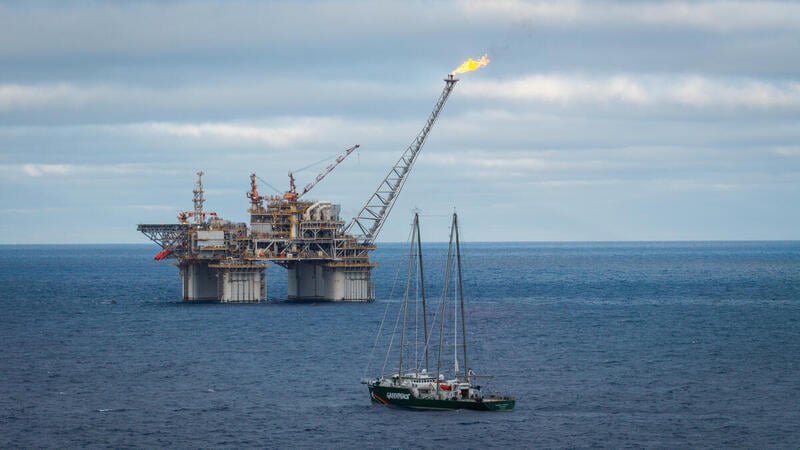
The activists used specialised climbing equipment to scale and attach themselves to a Floating Production Unit (FPU), a key piece of gas processing infrastructure at the Scarborough gas field over 200km off the coast of Exmouth, at around 05:45am AWST on Saturday and proceeded to occupy the platform for two days, displaying banners reading “Stop Woodside’s Dirty Gas. Save Scott Reef.”
Special police forces landed a helicopter on the FPU at around 11:30am AWST. The activists safely removed themselves from their equipment before being taken into police custody around 1:00pm AWST. At the time of writing, no charges have been laid.
David Ritter, CEO at Greenpeace Australia Pacific, said: “It takes guts and conviction to do what our activists have done, peacefully protesting Woodside’s reckless gas plans at Scott Reef.
“Woodside’s plans to drill up to 57 toxic wells at Scott Reef are outrageous. If allowed to go ahead Woodside would turn Scott Reef, Australia’s largest oceanic reef, home to nesting green sea turtles and elusive pygmy blue whales, into an industrial gas zone. Around half a million people have called on our governments to stop Woodside and to save Scott Reef.
“Our activists are highly trained and experienced in these activities. West Australia has a proud history of peaceful, democratic protest at sea, to protect our oceans from environmental threats. From whaling in Albany in the seventies, to Woodside’s threat to Scott Reef today, there’s more than fifty years of history, of Greenpeace taking action off WA’s coast to protect the places we love.
“Peaceful protest has long been part of what has given us so many of the things that are great about Australia and is part of the fabric of our democracy and our national identity.”
“The right to peaceful protest is fundamental to a healthy democracy. From Australia to the Arctic and the Amazon, Greenpeace has been peacefully protesting for more than 50 years to expose the biggest environmental threats around the world. We will not be silenced by corporations like Woodside who actively try to stop everyday people from speaking out against their reckless plans.
“Woodside’s reckless proposal to drill at Scott Reef is an unacceptable risk to Scott Reef and to the climate, which our government should emphatically reject.”
Speaking from the Rainbow Warrior, Captain of the Rainbow Warrior Hettie Geenen, said:
“It felt powerful watching from the Rainbow Warrior as these brave activists scaled Woodside’s enormous and imposing gas infrastructure, which has no place at Scott Reef. We are all out here because we feel an urge to act, in the face of Woodside’s grave threat to Scott Reef and to our climate. Now we ask for the Australian government to act too, and reject Woodside’s reckless Browse project.
“Just before this peaceful protest, the Rainbow Warrior sailed to Scott Reef, where our whole crew got to witness the magic of an untouched, healthy reef ecosystem full of marine life. It was my second time visiting Scott Reef with the Rainbow Warrior. When you see Scott Reef up close and witness its magic first hand, it is impossible not to feel driven to try and protect it.”
The activists sailed to Scarborough on the Rainbow Warrior, Greenpeace’s flagship vessel, which is in the region campaigning to protect Australia’s oceans, including Scott Reef.
-ENDS-
Media contact
Greenpeace Australia Pacific media team in Perth on +61 406 231 892 or +61 407 581 404 or email media.au@greenpeace.org
Climate Change
GREENPEACE GAS PROTEST DAY TWO: Activists spend first night on Woodside’s Scarborough gas platform, “in this for the long haul”
- NEW footage and photos available here and on Instagram – more being uploaded today.
- Interviews available with campaigners on board the Rainbow Warrior on request.
Greenpeace Australia Pacific activists have slept overnight on Woodside’s Floating Production Unit and dropped a massive 12×14-metre banner reading “Stop Woodside’s Dirty Gas. Save Scott Reef”.
Two activists have set up temporary hanging tents on the South East pillar, while the other two returned to the Rainbow Warrior late yesterday afternoon, after fulfilling their initial role. The activists will occupy the platform for as long as possible.
The environmental advocacy group is peacefully protesting Woodside’s plans to drill for oil and gas at Scott Reef as part of its Browse proposal.
Sakyo Noda, one of the Greenpeace Australia Pacific activists, said: “As a Japanese person living in Australia, I feel incredibly passionate about stopping Australia’s gas exports to Asia.
“Despite what the gas industry tells us, Australia’s gas is not helping to decarbonise Asia. It is simply not true. We shouldn’t be allowing fossil fuel companies like Woodside to extract new fossil fuels, let alone at extraordinary places like Scott Reef”.
Aboard the Rainbow Warrior, Geoff Bice, WA Campaign Lead at Greenpeace Australia Pacific, added, “Everyone is in good spirits. We’re in it for the long haul.”
Links:
Photos and video of Scott Reef here
Audio and footage of yesterday’s press conference here
Content and live updates will be uploaded to a live blog and Instagram
In-person interviews in Perth with David Ritter, CEO of Greenpeace Australia Pacific, can be organised. Dial-in, SimSat and Zoom interviews with Geoff Bice, WA Campaign Lead at Greenpeace Australia Pacific, currently aboard the Rainbow Warrior, can be organised.
Saturday, 17 October 2026
7.18 AM AWST
Hi folks! We’re joining you live from the Rainbow Warrior where we will be providing you with updates as our four activists continue scaling and occupying Woodside’s gas platform. The activists are peacefully protesting against Woodside’s latest gas expansion plans, the Browse project, which would see up to 57 toxic wells drilled at Scott Reef.
“Right now our activists are scaling Woodside’s massive Floating Production Unit. They are scaling the South-East pillar and the underside of the Helideck. They’ll be setting up camp soon and have plenty of provisions with them – so stick around!”
5:45 AM AWST
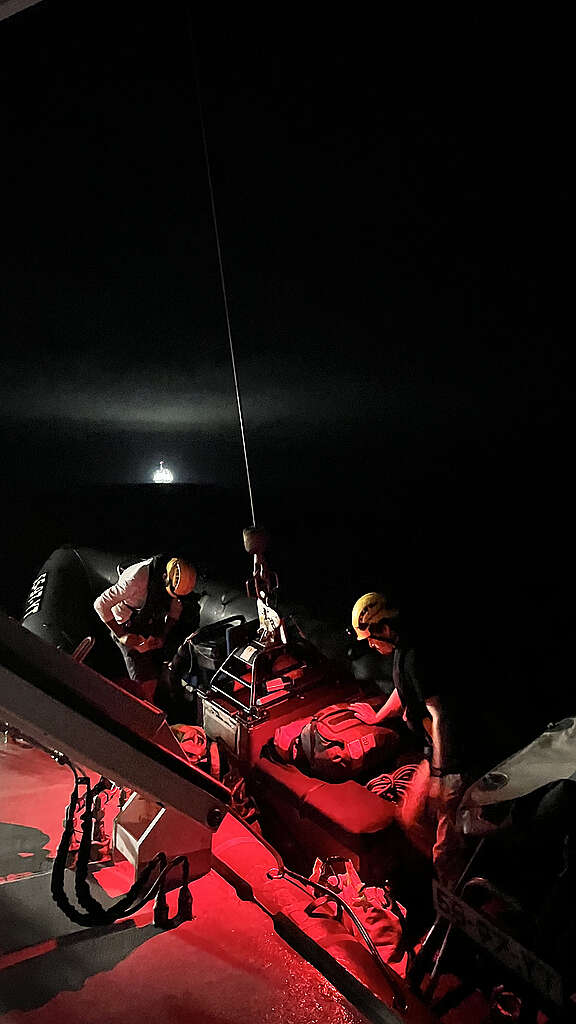
Our RHIBS are in the water! We’ve deployed our four activists and our ship crew on our small fast boats, headed to the gas platform. We’re carrying crew and equipment, plenty of food, all of our safety climbing gear, some big banners, cameras and a whole lot of heart… someone even has something to read after they get settled in.
5:26 AM AWST
Before sunrise activists prepared to launch RHIBS from the Rainbow Warrior.
Looking for a front seat view?
You can follow along with the Live Rainbow Warrior bow cam here!
Looking for more?
Follow us on Instagram for a peek behind the scenes and hear from our Rainbow Warrior crew.
Live blog: Greenpeace activists occupy Woodside gas project to save Scott Reef

Greenpeace Australia Pacific activists in police custody after two-day protest against Woodside’s Browse gas project at Scott Reef
GREENPEACE GAS PROTEST DAY TWO: Activists spend first night on Woodside’s Scarborough gas platform, “in this for the long haul”

Making Billions by Harming Others
-
Climate Change1 year ago
Guest post: Why China is still building new coal – and when it might stop
-

 Greenhouse Gases2 years ago
嘉宾来稿:满足中国增长的用电需求 光伏加储能“比新建煤电更实惠”
-
Greenhouse Gases1 year ago
Guest post: Why China is still building new coal – and when it might stop
-

 Climate Change2 years ago
嘉宾来稿:满足中国增长的用电需求 光伏加储能“比新建煤电更实惠”
-

 Renewable Energy12 months ago
Sending Progressive Philanthropist George Soros to Prison?
-