Connect with us

Published

on

Climate change is the defining issue of our time, and we are at a defining moment. We face a direct existential threat.

In the evolving landscape of business sustainability, small and medium-sized enterprises (SMEs) are increasingly recognizing the imperative of transitioning to net-zero carbon emissions. SMEs are vital to the global economy, and their transition to net-zero can significantly impact emission reductions. While transitioning is undoubtedly a challenge, it offers substantial marketing and financial opportunities as well.

Making a shift to sustainable practices offers SMEs a chance to:

  1. Enhance their brand image
  2. Attract eco-conscious consumers
  3. Differentiate themselves in an increasingly competitive market

In this post, we explore how SMEs can leverage their sustainability efforts not only to mitigate climate impact but also to build stronger customer relationships, foster brand loyalty, and ultimately drive business growth. It is our hope that better understanding the benefits of sustainable practices will motivate more SMEs to pursue these initiatives, leading to better climate outcomes and creating long-term sustainable growth for the economy. Let’s start by looking at a couple of headline case studies that prove our point.


BrewDog’s Carbon-Negative Drive Sustains $2BN Revenues

A notable case study is BrewDog, a craft beer company currently valued at around two billion dollars. In 2019, BrewDog committed to becoming carbon-negative by 2023. To achieve this goal, BrewDog invested in switching their breweries to renewable energy sources. They also reduced their waste outputs through recycling and upcycling initiatives. Additionally, the company invested in a Scottish Highlands forest that offsets more than the total carbon footprint of their operations.

BrewDog’s bold sustainability commitments, heavily promoted through their branding and marketing campaigns, generated widespread earned media coverage. This helped improve their brand image and made them an instant hit with environmentally conscious consumers.


Riverford’s Net-Zero Journey Builds a £100M Brand

Another noteworthy case study is Riverford, an organic farming and food delivery company. Riverford committed to going net-zero and followed through by optimizing delivery routes and using electric vehicles to reduce their supply chain emissions. Furthermore, the company transitioned to 100% renewable energy in their operations and promoted local seasonal produce to minimize carbon footprints. Riverford also invested in soil health to enhance carbon sequestration and reduce agricultural emissions.

Riverford’s commitment to sustainability, heavily highlighted in its marketing materials, led to positive media coverage, recognition with various sustainability awards, and a measurable boost for their brand’s reputation. The company became the go-to choice for environmentally conscious clients in the UK, with annual turnovers that have topped £100 million.


Creating Access to New Markets and Customers

Having reviewed a couple of examples that prove the value of becoming net-zero, let’s dive deeper into the potential benefits SMEs can gain from adopting sustainability as a strategy. Transitioning to net-zero can open up access to new markets and customers for SMEs, particularly as the trend for consumer interest in sustainability continues to rise. While in the early 2000s only 20% of consumers stated sustainability as a concern, Deloitte data from 2020 puts that number at 43%, more than double!

The Marketing Potential of Going Net-Zero for SMEs

Source: Shifting sands: How consumer behavior is embracing sustainability


Aligning with this trend guarantees SMEs access to customer segments that prioritize environmental responsibility in their purchasing decisions. While the macro perspective looks promising, it’s worthwhile looking at another couple of case studies to understand how this plays out at the individual SME level.


The Eco-Cool Case Study

Eco-Cool Limited, a refrigeration company, faced pressure due to declining sales and revenue caused by increasing competition and regulatory pressure to reduce greenhouse gas emissions. The company made the strategic choice to “go green” in an attempt to turn things around. They transitioned to eco-friendly refrigeration units that use natural refrigerants, invested in solar panels to power their manufacturing facility, and adopted energy-efficient practices.

In Eco-Cool’s case, the choice to adopt sustainability as a strategy paid off in a big way. Within just two years of launching their sustainability initiatives, the company started attracting environmentally conscious customers and businesses and secured contracts with retailers seeking to reduce their carbon footprint. This resulted in a 30% increase in new customer acquisitions over the period. Furthermore, the company qualified for government grants and subsidies that promote sustainable business practices.


Net Zero – The Opportunity for New Partners

Adopting net-zero policies doesn’t only provide great storytelling opportunities; it also offers SMEs the chance to partner with similar businesses and organizations. By showing a dedication to sustainability, SMEs can draw in partners who share the same values and goals. These partnerships can lead to new business opportunities and joint sustainability projects. The Green Tech case study below serves as an excellent example.


Overcoming Challenges and Barriers to Net-Zero for SMEs

Having established the benefits SMEs can gain from adopting net-zero as a strategy, it’s important to balance the picture and discuss the challenges, which can be loosely categorized into two groups: operational and analytical.


SMEs Operational Challenges to Sustainability

The most obvious challenges SMEs face on their journey to becoming net-zero are the lack of resources and expertise needed to implement sustainable practices and the limitations of budgets and cash flow that prevent the initial investments required in renewable energy, energy-efficient technologies, etc.

Thankfully, many jurisdictions offer SMEs bridging loans and grants specifically designed to help overcome these challenges. If you’re considering becoming net-zero, it’s well worth looking into what types of support are offered in your area.


SMEs Analytical Challenges to Sustainability

A further challenge SMEs face when opting to go green is determining their carbon footprint across their entire supply chain. Most SMEs lack the tools and knowledge needed to accurately track their emissions and are therefore unable to set meaningful reduction targets. Without these targets, it’s impossible for SMEs to determine the scope of effort required to become truly net-zero. Regulatory barriers and market uncertainties complicate the picture even further.

Here again, support exists for those who need it. Local and national trade associations, advocacy groups, and government agencies often provide guidelines for businesses on how to correctly calculate emissions. A good place to start is the Verra Project Methodologies listed below in the appendix. Private sector consultancies such as Carbon Credit Capital are also available to provide these calculations as a service.


Conclusion – Embracing Net-Zero: The SME’s Pathway to Success

The journey to reach net-zero by 2030 brings both challenges and opportunities for small and medium-sized businesses (SMEs). This transition is not just about being environmentally responsible; it can also improve brand image, build consumer trust, and help businesses stand out in the market. Case studies like BrewDog and Riverford show that sharing sustainability efforts can boost customer loyalty and attract new eco-conscious clients. Additionally, frameworks from organizations like Verra and consultancies like Carbon Credit Capital help SMEs measure their carbon footprints, plan their sustainability journeys, and certify their emission reduction projects once completed. Contact us today to learn more.


Appendix – Introducing the Verra Project Methodologies

Verra Project Methodologies are the set of rules and guidelines used for creating and approving projects under the Verified Carbon Standard (VCS) Program. These guidelines ensure projects follow the correct steps to produce real reductions in greenhouse gas (GHG) emissions and removals. They also ensure projects can issue Verified Carbon Units (VCUs).

Each methodology has specific requirements and guidelines, so SMEs should carefully evaluate which methodology aligns best with their project goals and circumstances. Below are some of the most commonly used methodologies for reference:


Agricultural Sector SMEs

  • Climate-Smart Agriculture: This methodology is relevant for SMEs in the agricultural sector seeking to reduce emissions, enhance resilience to climate change, and improve productivity and livelihoods.
  • Agriculture Forestry and Other Land Use (AFOLU): This methodology is relevant for SMEs in sustainable agriculture, reforestation, and land use practices.
  • Reducing Emissions from Deforestation and Forest Degradation (REDD+): This methodology is relevant for SMEs in forest conservation and/or involved in activities where deforestation is a concern. It also includes components related to renewable energy and efficiency.
 

Energy Sector SMEs

  • Energy Efficiency: SMEs can implement energy-efficient technologies and practices to reduce emissions and potentially generate carbon credits.
  • Renewable Energy: SMEs in the energy sector can consider implementing renewable energy projects and exploring options for certifying emission reductions through relevant standards.
 

Community and Conservation-Focused SMEs

  • Climate Community & Biodiversity Standards (CCB): This standard focuses on projects that reduce greenhouse gas emissions, contribute to biodiversity conservation, and support local communities. It is relevant for SMEs active in these areas.
  • Gold Standard (GS): SMEs focused on community development and conservation can benefit from certifying their emission reduction projects through the Gold Standard.
 

General Industry SMEs

  • Verified Carbon Standard (VCS): This is one of the most widely used voluntary greenhouse gas emissions reduction standards, providing a robust framework for verifying and certifying emission reduction projects, including those related to renewable energy and energy efficiency. SMEs across various industries can utilize the VCS for their emission reduction projects.

By adopting these methodologies, SMEs can ensure their projects meet high standards for sustainability, thereby gaining credibility and trust in the eyes of consumers and partners.

Carbon Footprint

Verra to Launch Scope 3 Standard in 2026: A New Era for Value Chain Carbon Tracking

Published

on

Verra is moving closer to launching its long-awaited Scope 3 Standard (S3S) Program, with version 1.0 phase 1 now scheduled for Q3 2026. This first release will allow companies to list project pipelines using an initial set of S3S-adapted methodologies. Although the timeline is slightly later than expected, the delay reflects a deeper push to build a stronger, more reliable system.

This move shows a clear focus on quality and long-term impact. Verra is not rushing the launch. Instead, it is taking time to improve the system. The team is refining technical frameworks, learning from pilot projects, and aligning with global standards. As a result, the final program will be stronger and easier to use. It is also likely to attract more companies and drive real climate action across supply chains.

Verra Aligns the Program With Global Climate Standards

Verra is working closely with companies, project developers, and climate experts. The goal is simple. Build a program that is practical, reliable, and easy to trust.

The extra time helps improve how the system connects with existing carbon markets. It also allows Verra to upgrade its digital tools and infrastructure. At the same time, lessons from pilot projects are shaping the final design. These pilots tested how existing Verified Carbon Standard (VCS) methods can work for Scope 3 projects in real conditions.

Training is another key focus. Verra is creating clear guidelines and support tools for project developers. This will help users understand the system quickly and scale their projects without delays.

Finally, the new timeline helps align the program with major global frameworks. These include updated climate standards and carbon accounting rules. This alignment will make the program more relevant and widely accepted.

How the Scope 3 Standard Will Transform Supply Chain Emissions

Scope 3 emissions are the biggest part of a company’s carbon footprint. In many sectors, they make up more than 75% of total emissions. These emissions do not come from a company’s own operations. Instead, they come from its supply chain—both before and after production.

Verra’s S3S Program aims to fix this problem in the following ways:

  • It brings a clear and trusted system to measure and manage these emissions.
  • Companies will be able to track real emission cuts and carbon removals in their value chains.

Explaining further, the program uses a strong measurement system. Companies will follow simple and consistent methods to calculate emissions. Then, independent auditors will check the data. This step builds trust and ensures the results are real.

New Carbon Units for Clear Tracking

Verra also introduces a new unit system. Project developers will receive Intervention Units (IUs). Companies will receive Scope 3 Intervention Units (S3IUs). These units will be recorded in a public registry. This makes tracking easy and avoids double-counting.

Co-Investment Drives Supply Chain Action

Another key feature is co-investment. Companies can invest in projects within their supply chains. In return, they can claim verified climate benefits. This system encourages suppliers, buyers, and investors to work together.

Understanding the Scale of Scope 3 Emissions

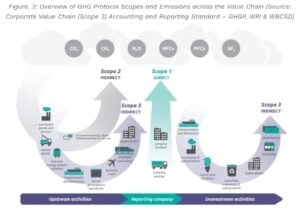
Unlike Scope 1 and 2, Scope 3 emissions cover the full value chain. They include both upstream and downstream activities.

Upstream emissions come from things a company buys. This includes raw materials, equipment, and transport. Downstream emissions happen after a product is sold. These include product use, delivery, and disposal.

The Greenhouse Gas Protocol lists more than 15 categories under Scope 3. These include goods, travel, waste, and investments. However, not every category applies to every business.

For example, a service company may have fewer downstream emissions. In contrast, a manufacturing company may see large emissions from product use and supply chains.

scope 3 emissions
Source: Greengage

Closing the Gap in Carbon Markets

Many companies want to cut Scope 3 emissions. But they face a big challenge. There are no simple and clear rules to follow. Because of this, companies often feel unsure. They do not know how to measure emissions or report results correctly. This slows down investment in supply chain projects.

As explained before, Verra’s S3S Program offers clear rules and a strong system, and also uses third-party checks and transparent tracking. As a result, companies can now invest in projects and trust the results. Finally, the outcome will be more money inflow into supply chain climate solutions.

The program also improves carbon markets. Until now, most systems have focused on standalone projects. But S3S connects emission cuts directly to company supply chains. This creates a more complete and practical approach.

Aligned With Global Climate Standards

Another strong point of the S3S Program is its global alignment. Verra designed it to match major climate frameworks.

  • It works alongside the Greenhouse Gas Protocol’s new standards. It also aligns with the updated net-zero rules from the Science Based Targets initiative (SBTi).
  • In addition, it connects with new frameworks from the AIM Platform and the Taskforce for Corporate Action Transparency (TCAT).
  • Most importantly, it aligns with Verra’s Verified Carbon Standard (VCS) version 5, released in December 2025.

This version improves the quality and trust in carbon credits. By linking with VCS 5, the S3S Program builds on a strong and proven system.

From Pilot Phase to Real-World Action

In 2025, Verra moved the program from planning to testing. It launched pilot projects and asked for public feedback.

These pilots were very useful. They showed what works and what needs improvement. They also helped adapt existing methods for real-world use. At the same time, it built the program’s structure. It set up rules, governance, and funding systems.

Verra is working with partners like the Value Change Initiative and SustainCERT. These groups help improve the program and keep it aligned with global best practices.

A Turning Point for Corporate Climate Action

Companies today face strong pressure to cut emissions. Scope 3 is the hardest part to manage, but also the most important.

Verra’s S3S Program offers a clear solution. It gives companies a simple and trusted way to act on supply chain emissions. By standardizing how emissions are measured and reported, the program makes climate action easier. It also opens new doors for investment and collaboration.

In the bigger picture, this program can support global climate goals. It helps reduce emissions at scale and strengthens trust in carbon markets.

With its 2026 launch coming soon, Verra’s Scope 3 Standard could become a key tool for companies worldwide—turning climate goals into real, measurable results.

The post Verra to Launch Scope 3 Standard in 2026: A New Era for Value Chain Carbon Tracking appeared first on Carbon Credits.

Continue Reading

Carbon Footprint

Oil Shock Ignites Chinese EV Export Surge Around the World

Published

on

Oil Shock Ignites Chinese EV Export Surge Around the World

Rising global oil prices are driving up demand for electric vehicles (EVs), with Chinese brands emerging as key beneficiaries. Recent spikes in crude prices are driven by heightened tensions in the Middle East and disruptions in the Strait of Hormuz, a critical oil shipping route.

These factors have pushed Brent crude above $100 per barrel and created instability in fuel markets. This has pushed many consumers to rethink fuel costs and consider EV alternatives. Higher fuel prices increase running costs for gasoline and diesel cars, making EV ownership more economical in many markets.

Chinese EVs Gain Speed Abroad

Dealers in countries like Australia and parts of Southeast Asia see growing interest in Chinese EVs. This rise comes as fuel prices increase.

Showrooms selling Chinese new energy vehicles (NEVs) are seeing more test drives, customer inquiries, and rising order volumes. In Australia, the EV market share hit a record high of 11.8% for vehicle sales. Analysts say this jump is partly due to rising petrol prices.

Chinese manufacturers like BYD, GWM, and Chery are rapidly growing abroad. Some dealers see more walk-ins and more customers buying EVs.

China’s EV industry is now the largest in the world. In 2024, Chinese automakers produced over 12.87 million plug‑in electric vehicles (PEVs), including battery electric (BEV) and plug‑in hybrid models, accounting for nearly 47.5% of total automobile production. That figure marked a strong year‑on‑year rise and underscored China’s industrial scale and export readiness.
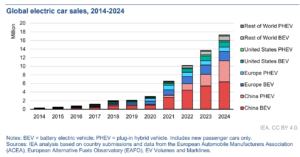
global EV sales 2024 china lead
Source: IEA

By late 2025, more than 51% of all new vehicles sold in China were electric — a major shift from just a few years earlier.

This domestic scale provides an export advantage. Chinese EVs often cost less than similar European and North American models. This helps them succeed in markets where fuel costs hit household budgets hard.

Fuel Costs Drive Behavior Shift

Rising oil prices are a major driver of these sales trends. Global crude prices have fluctuated due to geopolitical tensions. The Strait of Hormuz route carries around 20% of the world’s oil trade. These disruptions pushed crude prices sharply higher in early 2026.

In many countries, higher retail fuel prices translate into more immediate cost pressures for consumers. Reports from countries like Australia show petrol prices over $2.50 per litre. This rise is making consumers think about EVs to lower long-term costs.
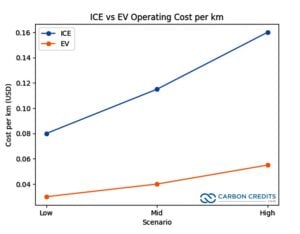
When oil prices rise, the cost gap between internal combustion engine (ICE) or gasoline cars and EVs becomes much larger. For example, at $100 per barrel oil, gasoline prices in many markets can reach about $1.20–$1.50 per liter (or $4.50–$5.50 per gallon).

ICE vs EV operating cost per km
Sources: Estimates from ICCT, IEA, U.S. DOE

At this level, a typical ICE vehicle may cost around $0.12–$0.18 per km in fuel, while an EV typically costs $0.03–$0.06 per km in electricity. This means EVs can be 2 to 4 times cheaper to run per kilometer.

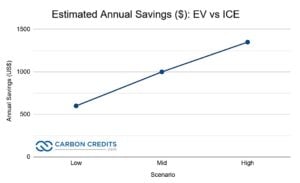
Over a year, drivers can save roughly $600 to $1,500, depending on mileage and local energy prices.

Annual savings ev vs ice

Global EV Market Trends and Forecasts

The surge in Chinese EV exports aligns with broader global trends. Major industry forecasts suggest that global sales of battery electric and plug-in hybrid vehicles may top 22 million units by 2025. This could represent about 25% of all new car sales worldwide.

Global electric vehicle sales in 2025 reached nearly 21 million units, including both battery electric vehicles and plug‑in hybrid electric vehicles. This total represents a significant increase, roughly 20 % more than in 2024.

China’s share in this global growth is large. In 2024, Chinese manufacturers made up around 70% of all EV exports. This shows China’s key role in supply chains and manufacturing.

As oil demand growth slows due to EV uptake, some forecasts suggest that EVs could displace millions of barrels of global oil demand each day in the coming decade. By 2030, EV adoption could cut about 5 million barrels per day of oil use, according to major energy outlooks.

Trade Barriers vs Expansion

Despite strong export gains, barriers remain. Some regions have imposed tariffs and trade restrictions on Chinese EVs, and infrastructure gaps in charging networks can slow adoption. For example, tariffs exceeding 100% on certain Chinese EV imports in the U.S. have limited market share there.

However, Chinese OEMs are developing supplier and shipping capacity to support overseas demand. In 2025, China’s electric car makers expanded shipping through roll‑on/roll‑off carriers capable of transporting more than 30,000 vehicles, improving export logistics.

Emerging markets in Southeast Asia, Latin America, and Oceania are also showing rising EV interest. In the Philippines and Vietnam, dealerships see EV orders growing quickly. Some are even doubling their weekly sales, thanks to high fuel costs.

In India, where oil imports make up a big part of the economy, rising petrol costs make running traditional fuel vehicles more expensive. This has helped boost interest in electric vehicles, which are cheaper to operate when fuel is costly. Notably, the share of ICE retailers fell by over 25% in March.
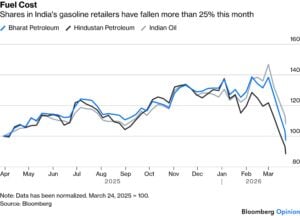
share of gas cars in India fell bloomberg

Indian consumers and businesses view EVs as a way to shield against unstable oil prices. This also helps lower fuel costs, supporting the country’s move to electric transport.

What This Means for Energy and Transport Futures

The convergence of high oil prices and strong EV supply from China is creating a feedback loop. Higher fuel costs push consumers to consider EVs more seriously. Chinese manufacturers are well positioned to fill that demand with competitive pricing and large production scale.

The shift could speed up the move from fossil fuel cars to electric vehicles worldwide. This is especially true in price-sensitive and emerging markets. EV adoption also has implications for oil demand trends.

  • As battery and charging tech get better and EV markets grow, oil use — especially in transport — might slow down or peak sooner than we thought.

At the same time, governments and industry groups are tracking these shifts closely. Policies that support charging infrastructure, EV incentives, and emissions standards will influence how quickly the global fleet electrifies.

Ultimately, the current oil price shock may have sparked a shift in global automotive markets — one where Chinese EVs take an increasingly central role in transport electrification worldwide.

The post Oil Shock Ignites Chinese EV Export Surge Around the World appeared first on Carbon Credits.

Continue Reading

Carbon Footprint

Texas Solar Market Heats Up with Meta and Google Investments

Published

on

The U.S. is witnessing a surge in utility-scale solar development, driven by growing corporate demand for clean energy. Major tech companies like Meta and Google are securing long-term deals in Texas, combining renewable energy growth with economic and grid benefits.

This trend highlights how corporate commitments are shaping the future of the clean energy transition. Let’s find out.

Zelestra and Meta’s $600 Million Solar Deal

Madrid-based renewable energy firm Zelestra secured a massive $600 million green financing facility, signaling strong investor confidence in utility-scale solar. The funding, backed by Société Générale and HSBC, will support two large solar projects in Texas—Echols Grove (252 MW) and Cedar Range (187 MW).

These projects are not standalone efforts. Instead, they are part of a broader clean energy partnership with Meta, one of the world’s largest corporate renewable energy buyers. Together, they form a portion of a seven-project portfolio totaling 1.2 GW under long-term power purchase agreements (PPAs).

Sybil Milo Cioffi, Zelestra’s U.S. CFO, said:

“This financing marks a significant milestone in the delivery of our largest U.S. solar projects to date. It reflects strong confidence from Societe Generale and HSBC in our strategy and execution capabilities and reinforces our ability to attract first-class capital to support our growth platform in the U.S. market.”

Zelestra is strengthening its presence in the U.S. energy market with innovative solutions for hyperscalers and corporate clients. It is developing around 15 GW of renewable projects across key markets. In February 2026, BloombergNEF ranked Zelestra among the top 10 PPA sellers to U.S. corporations.

Solar Powering Meta’s Climate Strategy

Meta continues to aggressively expand its clean energy footprint. The company has made renewable energy procurement a core part of its climate roadmap—and the numbers clearly reflect that shift.

In 2024, Meta reported emissions of 8.2 million metric tonnes of CO₂e after accounting for clean energy contracts. In comparison, its location-based emissions stood at 15.6 million tonnes. This marked a sharp 48% reduction, largely driven by renewable energy purchases.

Moreover, the company has consistently maintained momentum:

  • Since 2020, it has matched 100% of its electricity consumption with renewable energy.
  • Over the past decade, it has secured more than 15 GW of clean energy globally.
  • Overall, renewable energy procurement has helped cut 23.8 million MT CO₂e emissions since 2021.

As a result, Meta cut operational emissions by around 6 million tonnes in 2024 alone. At the same time, it tackled value chain emissions using Energy Attribute Certificates (EACs), reducing Scope 3 emissions by another 1.4 million tonnes.
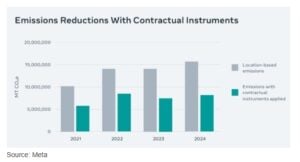
meta emissions

Most of these deals were concentrated in the U.S., highlighting the country’s growing importance in corporate decarbonization strategies.

Google Partners with Sunraycer for 400 MWac Texas Solar Project

Meanwhile, Google is also accelerating its clean energy investments. The company recently signed two long-term PPAs with Sunraycer Renewables for the Lupinus and Lupinus 2 solar projects in Texas.
These agreements will support the construction of a nearly 400 MWac solar facility in Franklin County. The project is expected to become operational by late 2027.

Importantly, this collaboration goes beyond just energy supply. It also aims to deliver broader economic benefits, including:

  • Local job creation during construction
  • Long-term tax revenue for the region
  • Continued investment in local infrastructure

David Lillefloren, CEO at Sunraycer, said:

“These agreements with Google represent a significant milestone for Sunraycer and underscore the strength of our development platform. We are proud to support Google’s clean energy objectives while delivering high-quality renewable infrastructure in Texas.”

Additionally, the deal was facilitated through LevelTen Energy’s LEAP process, which simplifies and speeds up PPA execution. This highlights how innovative platforms are now playing a key role in scaling renewable deployment.

“Google’s data centers are long-term investments in the communities we call home,” said Will Conkling, Director of Energy and Power, Google. “This collaboration with Sunraycer will fuel local economic growth while helping to build a more robust and affordable energy future for Texas.” 

Google’s Global Clean Energy Push

Google, like Meta, has built a strong clean energy portfolio over time. Since 2010, it has signed over 170 agreements totaling more than 22 GW of capacity worldwide. Its long-term ambition is even more ambitious—achieving 100% carbon-free energy, every hour of every day, by 2030.
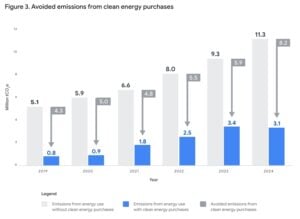
These agreements cover more than 17.3 GW in North America, over 4.5 GW in Europe, around 400 MW in Latin America, and more than 300 MW across the Asia-Pacific region.

Significantly, between 2011 and 2024, its clean energy purchases have avoided over 44 million tCO₂e—equivalent to the total annual electricity emissions of all homes in New York State combined.

GOOGLE EMISSIONS
Source: Google

In the broader context, Google has committed over $3.7 billion to clean energy projects and partnerships, expected to generate around 6 GW of renewable electricity. For example, the company developed an investment framework supporting a 1.5 GW portfolio of new solar projects across the PJM grid.

By providing both investment capital and power purchase agreements, these projects gain a faster, more certain path to construction. In essence, the tech giant isn’t just a buyer of clean energy—it actively invests to create more, using its resources and engineering-driven approach to help these projects launch and scale.

Why Texas Is Becoming the Center of Energy Transformation

All these developments point to one clear trend—Texas is rapidly becoming a global hub for clean energy and data center growth.

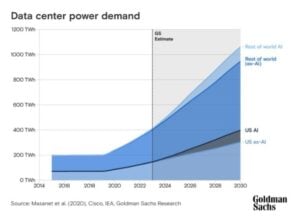
On one hand, the state offers strong solar resources, vast land availability, and a deregulated power market. On the other hand, it is witnessing a surge in electricity demand, especially from data centers and AI-driven workloads.

According to projections from the EIA, U.S. electricity demand could rise by 20% or more by 2030. Data centers are expected to play a major role in this growth. In fact, energy consumption from data centers increased by over 20% between 2020 and 2025.
data center

As a result, energy infrastructure in Texas is facing growing pressure. Rising industrial activity, extreme weather events, and rapid digital expansion are all contributing to grid stress. Yet, at the same time, this demand is driving unprecedented investment in renewable energy.

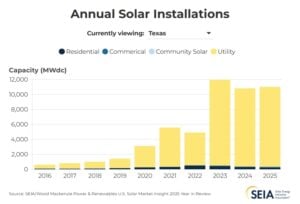
The EIA expects Texas to lead solar expansion in the coming years, accounting for nearly 40% of new solar capacity in the U.S. California will follow closely, and together, the two states will drive almost half of total additions.
TEXAS SOLAR

U.S. Solar Capacity for 2026: 86 GW on the Horizon 

Even though the sector has faced temporary slowdowns, the long-term outlook for U.S. solar remains highly positive.

In 2025, the U.S. added 53 GW of new electricity capacity—the highest annual addition since 2002. Notably, wind and utility-scale solar together generated 17% of the country’s electricity, a massive jump from less than 1% two decades ago.
EIA us

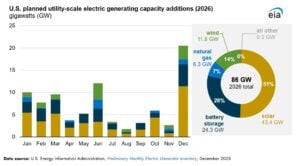
Looking ahead, growth is expected to accelerate again. Developers are planning to add around 86 GW of new capacity in 2026, which could set a new record. Solar alone is projected to account for more than half of this expansion.

Breaking it down further:

  • Solar is expected to contribute 51% of new capacity
  • Battery storage will make up 28%
  • Wind will account for 14%

Utility-scale solar capacity additions could reach 43.4 GW in 2026, marking a 60% increase compared to 2025 levels.

Analysis: Corporate Demand Is Reshaping Energy Markets

Overall, the developments from Zelestra, Meta, Google, and Sunraycer highlight a broader transformation underway in global energy markets.

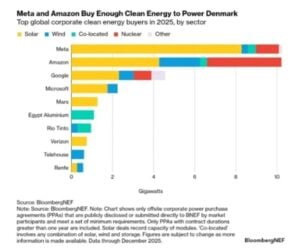
First, corporate buyers are no longer passive participants. Instead, they are actively shaping energy infrastructure through long-term PPAs. These agreements provide stable revenue for developers while ensuring a clean power supply for companies.
corporate buyer

Second, financing is becoming more accessible. Large-scale funding deals, like Zelestra’s $600 million facility, show that banks are increasingly willing to back renewable projects with strong contractual support.

Third, regions like Texas are emerging as strategic energy hubs. The combination of rising electricity demand and favorable renewable conditions is attracting both developers and corporate buyers.

However, challenges remain. Grid reliability, permitting delays, and policy uncertainty could still impact the pace of deployment. Even so, the overall trajectory remains clear.

Clean energy demand is rising fast. Big Tech is leading the charge. And solar power is set to play a central role in meeting future electricity needs.

The post Texas Solar Market Heats Up with Meta and Google Investments appeared first on Carbon Credits.

Continue Reading

Trending

Copyright © 2022 BreakingClimateChange.com