

Weather Guard Lightning Tech

The Lightning Diverter Problem with GE Vernova Blades
A design that causes massive problems
As wind turbine operators continue to expand their fleets worldwide with larger turbines, bigger generators, and longer blades, the risk of significant lightning damage continues to plague the industry. Lightning is now the leading cause of unplanned turbine downtime for many operators. In years past, OEM warranties or insurance would cover the costs of repairs and business interruption. Those days are gone. OEMs have eliminated lightning damage from warranties and insurance companies are dramatically raising rates, or eliminating coverage, for lightning damage. That leaves operators exposed to millions in repair bills every year.
The SafeReceptor ILPS System
The basic lightning protection systems for LM Wind Power blades has been two small, coin-sized receptors placed on either side of the blade tip. Designated as the SafeReceptor ILPS, the receptors are connected to an insulated metal cable that runs through the center of the blade which connects to the hub, nacelle, tower and eventually earth. Certified to IEC61400-24, the SafeReceptor ILPS has been used on most onshore LM Wind Power blades since 2011.
LM Wind Power would, occasionally, place a special, additional lightning protection feature onto their blades. Patented in 2005, this lightning add-on contained a line of stainless steel cross-shaped buttons in a soft, gray-colored sealant which formed a segmented lightning diverter. As lightning approached a blade, the LM segmented lightning diverter helped guide the lightning to the receptor, lowering the chance of lightning damage to the blade.
LM Wind Power, and eventually TPI Composites, used the LM Wind Power segmented lightning diverter. Most installations of the LM segmented lightning diverter placed the device behind the receptor – using the receptor to block rain and airflow impact. The reason? If the LM Wind Power diverter was directly exposed to the wind and rain it would eventually degrade.
Remarkably, the LM diverter strip was used sparingly, or not at all, on the LM/TPI 56.9m and 62.2m blades. As it turns out, the 56.9m / 62.2m are unusually vulnerable to lightning damage. In a WGLT study of over 900 GE Vernova onshore turbines in Texas and Oklahoma with blades exceeding 50m, the rate of lightning damage was approximately 1 in 5 strikes. The industry standard for lightning damage is roughly 1 in 50 strikes per the IEC standard. That results highlight a gigantic risk for wind turbine operators.
Presumably in response to these high damage rates, GE Vernova has introduced LPS “improvements” to the 56.9m and 62.2m blades. Two additional receptors have been added to the blade approximately 3m from the blade tip. Also, LM Wind Power diverter strips have been added to every receptor; with short pieces behind the tip receptors plus long pieces behind and in front of the two receptors down the blade.

This is a risky decision by the blade designers at GE Vernova. Most lightning strikes occur when blades are pointed upwards towards the sky – and segmented lightning diverters provide maximum protection when they are also pointed towards the sky. GE Vernova placed the LM Wind Power diverters parallel with the airflow over the blade – perpendicular to the sky – which dramatically lowers their lightning protection ability.

Why are the LM Wind Power diverters not oriented upwards towards the storm clouds? Our research indicates that exposing the broad side of the diverter to rain erosion causes the part to fail.
Several years ago, Weather Guard Lightning Tech developed an accelerated rain erosion test rig to mimic rain erosion that appears on aircraft nose radomes and wind turbine blade tips. This test sprays water droplets onto test samples at 135 m/s (300 mph) and has yielded accurate predictions for lifetimes. WGLT examined the durability of the LM Wind Power diverters in our accelerated rain erosion test rig. The results were astonishing. The LM Wind Power diverter failed in under 1 minute for every orientation.

And here are the images of the test articles after rain erosion testing.

Sample 2 Post-Test 90 Degrees to Face of Diverter

Sample 5 Post-Test 0 Degrees to Side

Sample 6 Post-Test 0 Degrees to Leading Edge
Now, what does this mean for the lightning protection for your GE Vernova wind turbine blades with LM Wind Power diverters? You need to monitor the diverters for damage and peeling off the blade. Missing metal segments from a diverter or sections of diverter that have separated from the blade need to repaired or replaced.

What’s the risk? Your blades are susceptible to significant lightning damage which could cost you $$$.
For more information about StrikeTape lightning protection technology and installation services, contact Weather Guard Wind at 1.413.217.1139 or info@wglightning.com.
About Weather Guard Wind: Weather Guard Wind specializes in advanced lightning protection solutions for wind energy applications, with installations protecting turbines worldwide in the most challenging lightning environments.
https://weatherguardwind.com/the-lightning-diverter-problem-with-ge-vernova-blades/

 For most of our lives, many of us boomers have believed that the biggest threat to the United States was our president, starting with Tricky Dick Nixon, the inventor of the “trickle-down economics,” liar Ronald Reagan, and GW (the moron) Bush.
But yes, none of us was prepared for the cold, calculating criminal who is Donald Trump.
There Were Prior Threats to the Nation Stemming from the White House
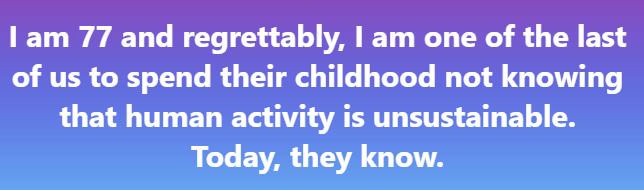 The fact that human activity is unsustainable has been revealed to us gradually over the last century. Rachel Carson’s “Silent Spring” was published 63 years ago.
That said, the ideas of climate change, ocean acidification, and loss of biodiversity have been essentially unchallenged by scientists for just the last couple of decades.
The only thing standing in the way of rapid environmental progress is greed, and in the end, that may prove to be an unbeatable foe. Decarbonizing our grid and transportation sector will eventually destroy the fossil fuel industry, a group so powerful that it has a stranglehold, both on our lawmakers and on our corporate-owned media, that works so hard to misinform our citizenry.
 It’s still possible that our most senior military leaders will insert themselves in time to prevent some truly catastrophic event here in the United States/abroad.
I keep thinking I’ll read about an exchange like this:
Trump: We’re invading Greenland.
Some four-star general: The f*** we are.
This may sound like a pipe dream, but these are people of real honor and integrity who take their oaths to our constitution quite seriously.
Will the U.S. Top Military Intervene Before Trump Inflicts Irreparable Damage



-

 Greenhouse Gases2 years ago
嘉宾来稿:满足中国增长的用电需求 光伏加储能“比新建煤电更实惠”
-
Climate Change1 year ago
Guest post: Why China is still building new coal – and when it might stop
-
Greenhouse Gases1 year ago
Guest post: Why China is still building new coal – and when it might stop
-

 Climate Change2 years ago
嘉宾来稿:满足中国增长的用电需求 光伏加储能“比新建煤电更实惠”
-
Climate Change2 years ago
Bill Discounting Climate Change in Florida’s Energy Policy Awaits DeSantis’ Approval
-

 Renewable Energy11 months ago
Sending Progressive Philanthropist George Soros to Prison?
-
Greenhouse Gases1 year ago
嘉宾来稿:探究火山喷发如何影响气候预测
-

 Climate Change2 years ago
Analysis: China’s CO2 falls 1% in Q2 2024 in first quarterly drop since Covid-19