

 Here’s Nobel Prize-winning economist Paul Krugman’s recent column in the New York Times addressing the oft-discussed issue: Are efforts to achieve environmental sustainability necessarily damaging to the strength of the economy?
As usual, as we dig deeper into subjects like this, we learn that there are important complexities.
In this case, some efforts to decarbonize open up huge economic opportunities.
Krugman uses the “carrot and stick” metaphor and points out that carrots like financial bonanzas tends to work better than sticks, like taxes. Yet, in reality, our society is too far from where it was a few decades ago, where the consumption of fossil fuels becomes extremely unattractive the moment someone is asked to cover the costs of the environmental damage associated with climate change, ocean acidification, and loss of biodiversity.

Weather Guard Lightning Tech
What Rosie Learned in Europe’s Wind Turbine Test Labs
Rosie returns from Denmark and shares her experiences seeing DTU blade testing, a lightning lab, and a 15 MW Vestas test turbine.
The Uptime Wind Energy Podcast is brought to you by Weather Guard Lightning Tech, creators of the StrikeTape Ultra LPS retrofit. Subscribe to Uptime’s Substack newsletter. And check out Rosemary’s “Engineering with Rosie” Youtube channel. Have a question we can answer on the show? Email us!
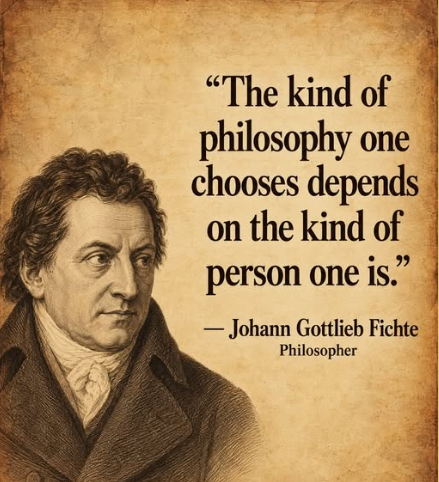 In a recent post, I argued that our brains are wired in a certain way, and that we have little in any control over our values and beliefs.
German philosopher Johann Gottlieb Fichte seem to be saying something similar here. To take me as an example, I’m no more capable of being a Trump supporter than I am in believing in the tooth fairy or Santa Claus.
It’ s true that MAGA votes against its own financial interests. But keep in mind that they have other more important interests. e.g., punishing immigrants and other people of color.



-
Climate Change1 year ago
Guest post: Why China is still building new coal – and when it might stop
-

 Greenhouse Gases2 years ago
嘉宾来稿:满足中国增长的用电需求 光伏加储能“比新建煤电更实惠”
-
Greenhouse Gases1 year ago
Guest post: Why China is still building new coal – and when it might stop
-

 Climate Change2 years ago
嘉宾来稿:满足中国增长的用电需求 光伏加储能“比新建煤电更实惠”
-

 Renewable Energy12 months ago
Sending Progressive Philanthropist George Soros to Prison?
-
Climate Change2 years ago
Bill Discounting Climate Change in Florida’s Energy Policy Awaits DeSantis’ Approval
-
Greenhouse Gases1 year ago
嘉宾来稿:探究火山喷发如何影响气候预测
-

 Climate Change2 years ago
Analysis: China’s CO2 falls 1% in Q2 2024 in first quarterly drop since Covid-19