

Many solar companies work with independent contractors for sales or installation work, or both. This is a very risky practice in California. The state has strict laws describing when workers can be considered contractors, and misclassifying workers can lead to state investigations, large tax bills and substantial penalties easily worth tens of thousands of dollars per person.
The California test for whether a person is properly classified as a contractor changed substantially over the last several years. The test used to focus primarily on whether the company controlled the worker. The factors included, among other things, whether the employer directed how the job was completed, whether the employer supplies the tools for the job, the degree of permanence in the relationship, and the worker’s opportunity for profit and loss.
In 2018, the California Supreme Court adopted the “ABC” test to determine whether a worker may be classified as a contractor. Under that test, which was codified in Labor Code section 2775, a worker may be classified as an independent contractor where they are (1) free from control and direction of the employer; (2) perform work that is outside the usual course of the employer’s business; and (3) customarily engage in an independently established trade, occupation or business of the same nature as that involved in the work performed.

The most significant difference between the older “control” test and the ABC test is part (2). Under the ABC test, a worker’s duties must be outside the usual course of the company’s business. In other words, the contractor should not be doing work that falls within the company’s typical scope of work.
For example, if the company is a solar installation business, the people doing installation work should not be classified as contractors. Conversely, assuming you meet the other parts of the test and use a good contractor agreement, a company that installs solar panels should be able to contract with individuals or another company to sell the company’s installation services.
Red flag situations
In addition to tough legal requirements, some work situations raise red flags for government investigators and plaintiff attorneys. For instance:
The company has contractors that do the same work as some employees. For instance, if the company provides solar installation services and it employs some maintenance technicians and contracts with other maintenance technicians, it raises a red flag that the contracted technicians are improperly classified.
Even if the company’s usual course of business is not solar maintenance services, companies tend to demand and expect the same performance from contractors that do the same type of work as its employees, including controlling how they work, when they are scheduled or whether they wear a uniform, among other factors. All of these details are red flags and do count against a worker being classified as a contractor.
The company does not have a good contractor agreements. Companies must have written agreements with contractors. The agreements should address, among other things, the specific project the contractor is hired to complete, the duration of the agreement (shorter is better), how and when the contractor will be paid, and that the contractor understands and agrees that they are not an employee.
Not having an agreement or using an agreement without these critical provisions is a red flag because it tends to show that the company is treating the contractors like employees.
The company’s practices with contractors are sloppy. Does the company supervise contractor performance, provide training to contractors, provide contractors with a handbook or guidelines about how to do their work, schedule contractors, provide tools, require contractors to record time they work, or require them to attend company meetings? Any of these are red flags that a company’s contractor practices may cause a worker to be considered an employee.
Risks
Misclassifying workers as contractors carries substantial risk. The government learns about potential misclassification situations when contractors request unemployment, workers’ compensation or complain to administrative agencies. The government will investigate red flag situations and assess substantial penalties or pursue unpaid taxes.
Misclassification claims are also popular with plaintiff attorneys because compliance with the law is difficult. A lawsuit may result in claims for significant unpaid wages, reimbursement of expenses and penalties, plus attorney fees.
Companies should constantly assess whether the contractors they are working with are properly classified and make changes in their practices, if necessary.
Joel Van Parys is a partner with CDF Labor Law LLP.
The post Solar Companies Working with Independent Contractors is Risky Business appeared first on Solar Industry.
Solar Companies Working with Independent Contractors is Risky Business

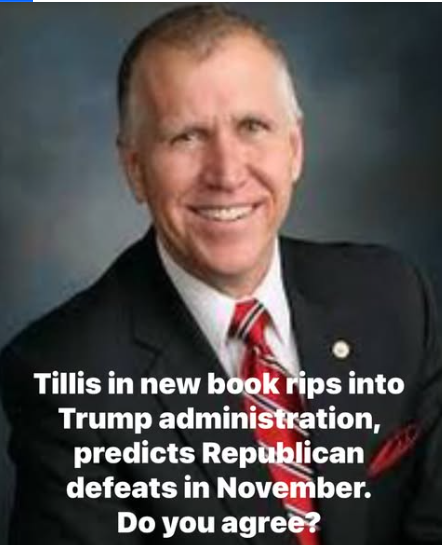 Maybe, as they say, “Hell has a special place reserved in it” for people like Thom Tillis, Republican Senator from North Carolina, who enabled Trump to rape and destroy the United States.
That was until it became clear to Tillis that he could jump ship, write a scathing book about the president, get all over mainstream news promoting it, and go on to enjoy another chapter of political success.
That we Americans are so stupid that we accept this blatant hypocrisy and criminality is sad proof that we’re not the people we were 20 years ago. Maybe what many people are saying are correct: we deserved what we got.
Here’s a short video from Elle Cordova that reminds us that science is something of a rarity in human history.
The great tyrants of history have done their best to cause the people they ruled to reject science, simply to ensure the masses are ignorant, terrified, superstitious, and thus easily controlled.
The current political administration is particularly engrossed in the rejection of science. I wonder why.
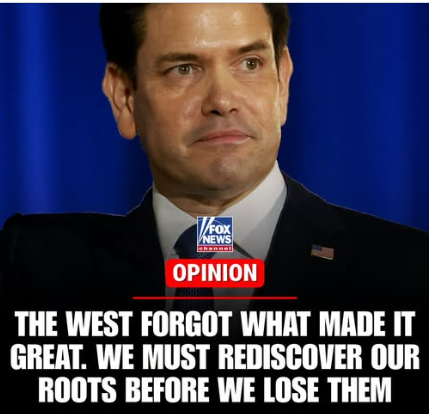 Are you saying that the ascendency of a criminal sociopath made Western Civilization great?
Not sure how credible that is to people with the IQ of an artichoke.



-
Climate Change1 year ago
Guest post: Why China is still building new coal – and when it might stop
-

 Greenhouse Gases2 years ago
嘉宾来稿:满足中国增长的用电需求 光伏加储能“比新建煤电更实惠”
-
Greenhouse Gases1 year ago
Guest post: Why China is still building new coal – and when it might stop
-

 Climate Change2 years ago
嘉宾来稿:满足中国增长的用电需求 光伏加储能“比新建煤电更实惠”
-

 Renewable Energy12 months ago
Sending Progressive Philanthropist George Soros to Prison?
-
Climate Change2 years ago
Bill Discounting Climate Change in Florida’s Energy Policy Awaits DeSantis’ Approval
-
Greenhouse Gases1 year ago
嘉宾来稿:探究火山喷发如何影响气候预测
-

 Climate Change2 years ago
Analysis: China’s CO2 falls 1% in Q2 2024 in first quarterly drop since Covid-19