

Weather Guard Lightning Tech
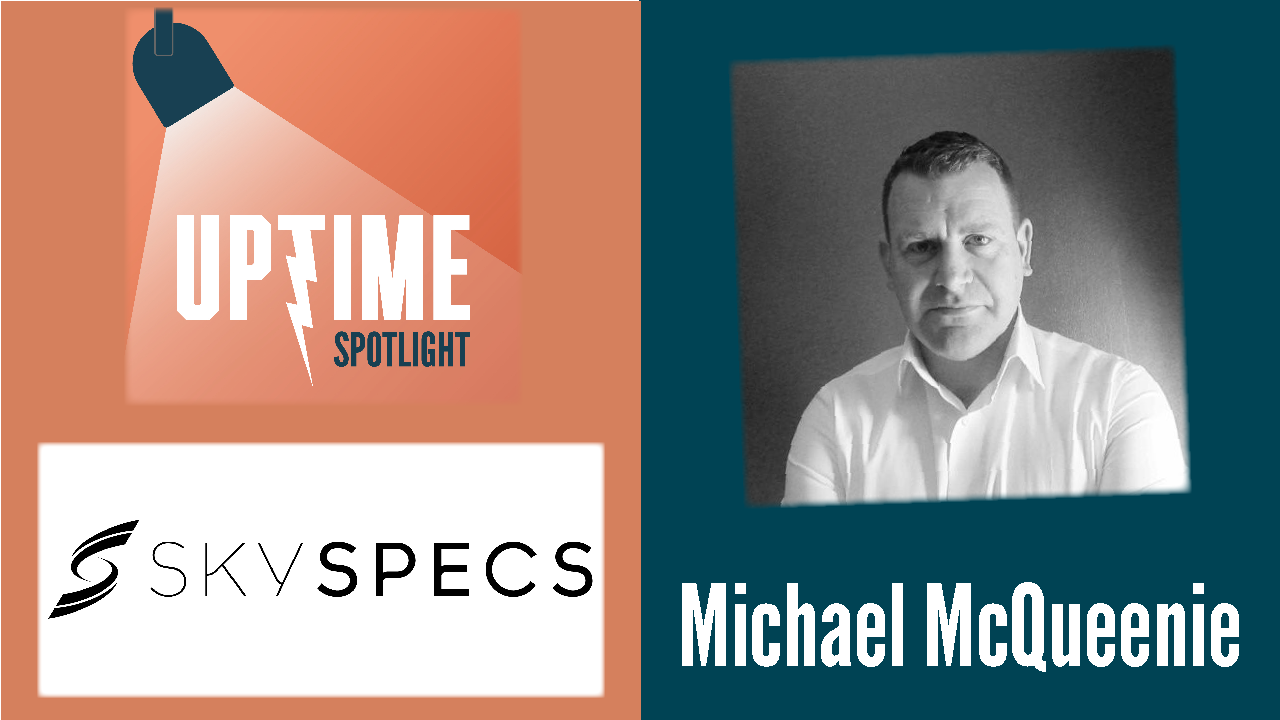
SkySpecs Supports European Wind Growth
Allen and Joel sit down with Michael McQueenie, Head of Sales for SkySpecs in Europe at the SkySpecs Customer Forum. They discuss the booming European wind energy market, SkySpecs’ role in asset management, and their expansion into solar farm operations.
Sign up now for Uptime Tech News, our weekly email update on all things wind technology. This episode is sponsored by Weather Guard Lightning Tech. Learn more about Weather Guard’s StrikeTape Wind Turbine LPS retrofit. Follow the show on Facebook, YouTube, Twitter, Linkedin and visit Weather Guard on the web. And subscribe to Rosemary Barnes’ YouTube channel here. Have a question we can answer on the show? Email us!
Welcome to Uptime Spotlight, shining Light on Wind Energy’s brightest innovators. This is the Progress Powering Tomorrow.
Allen Hall: Welcome to the Uptime Wind Energy Podcast Spotlight. I have Joel Saxum with me. I’m Allen Hall, the host, and we are here with Michael McQueenie head of sales for SkySpecs over in Europe. Michael, welcome to the show.
Michael McQueenie: Thanks for having me.
Allen Hall: We are at SkySpecs customer Form 2025 and it has been a blowout event, so many operators from all over learning and exchanging information about how they operate their assets.
We wanted to have you on today because you’re our reference to Europe and what is happening with SkySpecs in Europe. America and Europe are on different pathways at the moment. What is that status right now in Europe? What are people calling you for today?
Michael McQueenie: the, European market is really booming.
we get calls from customers to support [00:01:00] with internal inspections, external inspections as we always have for, nearly a decade now. We are seeing a lot more, discussions around the, enablement services that we can offer. how did, how do we bring a blade engineer and how do we bring a CMS engineer into support and give us, give us more of an insight on the data that we have or, or the data that Skys fix are producing.
things are evolving. and, it’s a buoyant offshore industry at the moment.
Allen Hall: yeah, there’s like thousands of turbines going up right now. it used to be when you thought of. Deployment. Unlike Germany, for example, it’d be three turbines on the hillside.
Michael McQueenie: Yeah.
Allen Hall: Now we’re talking about in the uk have hundreds of turbines hitting the water.
Michael McQueenie: Yeah.
Allen Hall: And that’s change of scale has driven a lot of operators realize I need expertise in blades, I need expertise in CMS. I need an expert in gearbox, but I don’t necessarily need them full time.
Michael McQueenie: Yeah.
Allen Hall: Skys spec. Can you help me?
Michael McQueenie: the projects [00:02:00] are, they’re fewer projects, but they’re, the scale of these projects are massive.
the scale of the turbine scale of the projects and the impact the projects can have on, the country, as a whole is, is massive. So yeah, it’s, it is a. It’s a, it is a great time to be in Europe and to see the growth. it’s been, coming for a long time. I’ve worked with consultancies who are looking at feasibility studies, in offshore, and onshore.
But the, the growth has been. Just, it’s just around the corner. And I do feel like now with some of these big projects that they’re installing, and yeah, just given the size of the turbines, it’s it’s massive.
Joel Saxum: one of the things I want to, I think there’s an important context here is that we’re talking, we’re sitting in Ann Arbor, right?
we’re in the us You’re over in Europe. I worked for a Danish company for a while and it was always like this seven hour delay. Kinda can I get the in, can I get the support? Can they get the support? Can we work? How do we work back and forth? Sometimes it was cool because you’d send an email at two o’clock and when you woke up in the morning [00:03:00] it was done.
That was awesome. But also there was these delays. Now this is the interesting thing here is, and Skys facts. This morning we listened to Cheryl. always a great presentation. Yeah. the head of the TEI blade stuff here. She was delivering some insights, but with her was Thomas. Thomas is in Europe.
And you have CMS experts in Europe. You have the local talent that’s over there that can work with these operators on their timelines, on their regular day stuff. They’re not waiting as, and what I’m trying to get to is, is SkySpecs is not a Ann Arbor company. Skyspace is a global company in a big way.
And so this, so thinking like, oh, this is an American company, w. Will we use someone that’s more local no. No. Skyspace is a local European company as well.
Michael McQueenie: Yeah, and we’ve got the SMEs over there. it’s not just Cheryl, who’s a fantastic en engineer. Having your at your, disposal, Thomas is phenomenal.
customers are seeing real value in integrating him into their team, being the SME [00:04:00] for them, as you, as we said before. Being able to turn ’em off, on and off as required. Don’t, you’ve not got that the FTE cost right. to bring in an SME that, that needs to, support you with a, with an individual component of your, asset.
Yeah. Blades are a huge problem. The industry’s seeing that as they’re getting bigger, the problems are getting bigger. but yeah, having, a local presence in Europe is, massive. my inbox is full from, all the US. Inquiries and issues, during the night, just like you’re saying.
Yeah. And I wake up to dozens of emails with, requirements on inbox and my to-do list is full. But the, but the reality is yeah, we’re, grown in Europe. we are. Our real solid presence in Europe and we’ve, seen massive growth this year.
Joel Saxum: I think it, it’s part of the value chain there.
Touching on the Thomas and Cheryl. Right. So in SkySpecs over this week, we’ve been talking more and more about the, how you guys like to specifically work within a workflow. And that workflow being we have [00:05:00]inspections, we’re in the platform now we’re in horizon, bam. And we can enable the tech enabled services, which is those SMEs which you have inside.
The company and then rolling that forward to the repair vendor management, which is happening in a big way in the States. Yesterday I saw a number, $13 million in repairs managed by the Sky Spec team. That’s huge. And, that same capability. And we’re just talking blazes right now, like we haven’t even touched on CMS performance monitoring, financial asset monitoring.
That same concept is, is replica replicate in the EU as well.
Michael McQueenie: No, it absolutely is, Our customers have got problems, we can help them with the problems. Thomas is, as you said, we work in workflows and Thomas is, is looking to support customers with how they, touch their data as few times as they possibly can.
How do we get from A to B and how does a customer understand what their problems are and how they fix the problems? And sometimes an [00:06:00]SME is the, way to fix that. Thomas has provide, provided huge value to our customers. The design of workflows in Horizon is the, essence. It exists just to try and get from A to B and, and try and drive insights and then next steps.
And I think that’s the important part, being, this is the action to
Joel Saxum: get
Michael McQueenie: to the, we’ve got the data, we understand what the data’s telling us. here’s an insight, but actually what is the follow up? And, Thomas is designing that follow up for our customers and providing the support.
Allen Hall: and just a little bit comparison between the United States and Europe, when we still talk to anybody in the United States about a turbine.
Almost always, it’s a two megawatt, one and a half megawatt turbine, right? Occasionally a four. Sometimes someone says
Joel Saxum: yesterday like, oh, that’s a three megawatt
Allen Hall: turbine. Whoa, what’s big? And in Europe, three megawatts was like years ago, particularly offshore that, everything’s 6, 8, 10.
Michael McQueenie: Yeah.
Allen Hall: Plus
Michael McQueenie: 3.6 was the common [00:07:00] turbine.
Five, eight.
Allen Hall: Yeah.
Michael McQueenie: Years ago, that was, what everyone was working on. And, they’re a very reliable turbine. It’s, there was a reason why there were so many of them installed at that time. but nowadays, we’re helping OEMs with 50 megawatt turbines.
Allen Hall: and I think that’s the, thing that we just don’t see in the states is a turbine that’s 15 megawatts is down for a day.
Is so much more expensive and particularly offshore and the expenses go astronomical compared to onshore. Yeah, and Michael, I always see your position of you’re there to save. Millions of pounds or millions, of euros all the time because a shutdown there is huge.
Joel Saxum: Yeah.
Allen Hall: And because the grids are changing so much in Europe where they’re becoming more solar and wind dependent and coal is going to change away.
And
Joel Saxum: triage.
Allen Hall: Yeah. The triage bit, is that the SkySpecs is in that position to really help a lot our operators out. You’re [00:08:00] providing the insights and the guidance and the knowledge that. An operator probably doesn’t have, because they don’t have the staff to go do it. It’s a And can you enlighten us like what that is because we just don’t see a lot of that here.
Michael McQueenie: Yeah. I think there’s a good reason you don’t see that this was, we are just providing data to some of these, transactions. Whether it’s a due diligence, inspection, or an end of warranty. We are just providing the insights for the customers to. Make their own decisions. Um, so it’s not a SkySpecs decision.
We are just providing insights to, to allow them to make a, smart, educated, data-driven decision.
Joel Saxum: I think that’s important, concept too. ’cause like here, the Skys spec user form, of course, we’re in the States, so we’ve been talking and I think there’s only two or three people here from.
Yeah. From overseas. So we’ve been talking a lot about the one big, beautiful, what it means. That doesn’t mean that much to you in your daily life, right? No. But your daily life is a bit different with, you have more of a focus on. Maybe financial asset owners. ’cause the market’s different, right?
Michael McQueenie: yeah.
Absolutely. The, [00:09:00] simplification of process and actually having a workflow no matter what, it’s, whether we’re taking financial data, CMS data or performance, SC data, The simplification of that process and driving insights from it is literally the foundation of what SkySpecs have been here to do.
So providing, financial institutions funds with the ability to. Reach out and, make quick decisions, data-driven decisions. there’s some very smart people in these organizations, asset managers who are, A costly resource to the fund. What they really need to do is pull le pull levers as in when it’s required to.
We need some support with sc. We need some support with blades. How do we, how do they, bring that resource and that expertise in house without having the FTE? and the funds are, phenomenal companies. They’re, growing fast. They don’t want the linear growth of people. to go along with that, that, growth of their portfolio.
So it’s important that we build relationships and make sure that we’re helping them [00:10:00] in every side of their business, whether it’s financial decisions or, technical decisions.
Joel Saxum: I think there’s a, there’s an important takeaway from this week as well, listening to all the SkySpecs, the people, the presentations, the communications, the, collaborations, the conversations.
Some of ’em a little bit later at night than other ones. I, won’t name any names, but. Listening to those things and understanding this. So a few weeks ago when I was talking with, we talked with Josh Garrell a little bit ago, and I, shared this with him. I saw a McKinsey report that said, SkySpecs, inspection company.
SkySpecs to me is not an inspection company. they do the best inspections in the world, in wind, in my opinion. Yes. However, there’s so much more, there’s so much more there. And it is, it’s really a full support in my opinion, for the CMS to scada, the performance monitoring, the financial asset modeling, the tech enabled insights, repair, vendor management.
There’s so many other solutions within this umbrella that I think a lot of people don’t see.
Allen Hall: And the one case study that came up yesterday, Michael, I think [00:11:00] that I found interesting was the offshore. Inspections before blades are hung. Yeah. And we see a lot of times in the states where blades are damaged in transport, we think, okay, yeah, the truck damaged it.
Okay, fine, we can fix it on the ground. But on the offshore case, that simple repair now has to happen out in the ocean, and that goes from a couple of thousand dollars to 10. Pounds to tens of thousands of pounds or more to get that resolved. And you had a case just like that.
Michael McQueenie: Yeah, and I think it’s hundreds of thousands if we’re being honest.
Yeah. If you start looking at vessel costs, crew costs, everything else. But actually what I like about it is that OEMs are actually becoming way more proactive because they know the cost of an up tower repair compared to, an onshore repair. So having the foresight to. Have the inspections completed at the right time.
Working with us on timelines, using technology to perform the inspections, getting through as many as we can, as quickly as we can, [00:12:00] addressing the problems, doing the analysis, and then actually solving the problem before it goes offshore is massive drainage that, how many times is a bleed lifted from the factory to installation.
Lot. It’s a lot. It’s a lot, It’s handled a lot. So there’s a opportunity for something to go wrong, as you said, oh, it’s been knocked, it’s, there’s something wrong. Something’s happened. but solving that is the OEM’s responsibility. So they’re becoming much more proactive in my opinion. we’ve, we’ve had a lot of use cases this week, and it’s always been about the, owners, the operators, how we’ve saved them money, how we provided them value.
The OEMs are looking to us to help them on that front as well, whether it’s robotic or whether it’s, providing analysis or, or a platform to, to manage the data. we are working with, with them in offshore, but the problems are so much bigger.
Allen Hall: I think the OEMs are learning from Skys spec, so watching what operators are doing to hedge their bets to protect their assets.
And SkySpecs is pretty much involved in all of that. [00:13:00] Now the OEMs are watching the operators saying, why are we not doing that? We’re seeing that in
Joel Saxum: the lightning.
Allen Hall: Absolutely. We’re seeing enlightening. We’re seeing it in CMS now. We’re seeing it in a number of areas where the OEMs have watched SkySpecs maneuver and provide better value to their customers that the OEMs are trying to mirror,
Joel Saxum: I touch on another case study because Alan, you and I sat in on this one yesterday, and if so, I’m gonna put my, my, I’m a European operator hat on. and this is a little weird. I don’t, I have a good accent. Not, I’m not gonna try that, but okay. Say I’m going to, I have a smaller wind farm, right?
So I may have, 20 turbines of a specific model, and I would like to understand where am I at for performance benchmarking? Am I doing well or not? I don’t have a huge fleet. European fleets are not that big unless you’re offshore. As specifically compared to the US where our wind farms are a hundred, 120 turbines.
Sun Z is a thousand turbines, right? That’s a wind farm. So the problem is different, [00:14:00] but Skys spec has that data. If this is your site, let’s look at how your site is doing compared to. These 1500 of the same models around the world. And then you can look at that, understand your performance benchmark, and then start diving into the issues that may be causing it, to not perform as well.
And then fixing them and getting it up to speed to what it should be compared to everybody else. And I thought, man, what a use case, especially in the European market.
Michael McQueenie: No, absolutely. and we always talk about benchmarking. We’ve, I’ve been with companies who have tried benchmarking in the past, looking at KPIs.
How do you benchmark your performance of your turbine against something similar? And I think Skyspace are starting to get that right. we’ve, got the sc the scatter data and looking at the biggest impact in damages or the biggest failure faults that you have on your turbine and how we, how it can help you.
Push the OEMs. Yeah, just give them a prod to,
Joel Saxum: we saw
Michael McQueenie: case studies on that
Joel Saxum: yesterday.
Michael McQueenie: The case studies we’ve seen this week have actually been incredible, and that’s probably the, biggest takeaway for a lot of [00:15:00]people. Just try and understand how we’ve helped. The, customers achiever a return or, what we’ve saved them, over time.
those have been probably the biggest takeaway for me this week. just people are starting to understand and appreciate the returns they could see if they engage with us on all these other products. But the performance side of thing, benchmarking is, a really interesting topic.
Completely away from just looking at performance data. Everyone in the room over the last couple of days. Is, dancing around the, topic of benchmarking because, they’re, very, protective of the data. Yes. but I think people, and we’ve spoke about maybe for the last 12 months, they have shown an interest in, oh, I can share some data and if it’s anonymized, that I’d be happy to take part in that.
But. I’d love to see, that taking a step further, I’d love to see that. I think everyone in the industry, everyone in that room would benefit from, [00:16:00]from data sharing to, to learn from each other with freely optimiz data. Yeah, absolutely.
Allen Hall: there have been a number of announcements this week also from SkySpecs.
Some of the bigger ones are the move into solar and Europe. There’s a lot of solar power in Europe, particularly some parts of Europe. That could be a massive amount of phone calls your way, Michael. oh, sky Spec is doing blades. Turbines and solar. I’ll take it.
Joel Saxum: Yeah.
Allen Hall: And I think there’s been a huge demand for that for the last several years, but it’s just been, you’ve been so busy with turbine problems, so honestly that you haven’t had the ability to get to solar.
Now with some of the tools you just brought in, you can.
Michael McQueenie: Yeah, I think we, we started off just blades, as we all know. Yeah. As you said, if we were just an inspection company. the acquisitions we’ve made, over the last few years have been taking us to the point where we’re now covering full turbine asset health monitoring.
And that was an important part. once we achieve that, now you can, you gain a [00:17:00] bit of clarity. we can start to look at diversification into new asset types. Solar’s been something I’m asked about once a month from European customers, and prospects. So we’ve tempered expectations for quite a long time.
We, we know we were going to move into solar at some point. we’ve got, we’ve got a really big opportunity I think, we’re very well positioned to, to help solar operators. Yeah,
Allen Hall: I think, I think there’s the variability in solar. From the different manufacturer. There’s so many manufacturers of panels and are inverters and even some of the configurations, the, support structures have issues, but SkyScan specs is gonna make that a lot easier because the tools are better now than they were five years ago.
Michael McQueenie: Yeah, no, absolutely. And we’ve got a massive customer base with that mix of wind, solar battery. So we, have to come up with that solution and, the tools are perfectly placed.
Allen Hall: Yeah.
Michael McQueenie: It’s the same engineers that will be asked.
Joel Saxum: See
Michael McQueenie: now [00:18:00] you’re dealing with solar. There’ll be no questions asked.
There will be. That’s happening already. You fixed wind for us. There’s, I’m gonna change your job description as wind engineer plus solar.
Allen Hall: Yeah. And then it’s gonna be
plus
Allen Hall: best, right?
Michael McQueenie: That,
reviewable energy engineer,
Joel Saxum: that’s what it will be. But I think there’s a, there’s some things here too to share with the European crowd is, there has been some strategic additions to the leadership team, Ben Token coming on as the CTO helping with some of that data architecture in the background.
And then what will be the future of you guys have, there’s always work to be done, right? But have gotten really close to having a big, perfect little model of this is how you manage a wind asset. now that can be control C, C control V, solar, control C control V best, and that’s the future of what Skys spec is going to become a renewable energy company.
And that’s the future.
Michael McQueenie: Yeah. I think that the additions to the business have been pretty visionary. Yeah. rich and Ben are both. Phenomenal individuals will, that will drive us to, success in all these other areas. [00:19:00] rich has, been part of the business and has from the board from a, for a number of years now, and, I think he’s now seeing the.
How special the business is. How special it could be. Yeah. Once we, start that diversification.
Joel Saxum: Yeah. I’ve seen Rich here at the, ’cause we are in Ann Arbor at the forum. It’s Wednesday. So we’ve, we’re on day two, and I’ve seen Rich floating around talking with some of the customers, talking with a lot of the SkySpecs employees.
I’ve had a few conversations with him and. That man has a big smile on his face all day long.
Michael McQueenie: Yeah.
Joel Saxum: He sees the opportunity. he’s happy to engage. He wants to talk with people. he’s gonna be a big part of the future of the group. And I, think it’s exciting to see him here.
Michael McQueenie: He really has, I think both of them have, really accelerated the excitement and the, development of all the tools.
everyone’s rallying behind them to
Joel Saxum: Yeah.
Michael McQueenie: to try and make sure that, we, get to the next tech.
Joel Saxum: Yeah. Last night we talked with, Ben about big data and analytics. We’re recording it now. So we’re, telling we’re gonna try to get him down to [00:20:00] Australia to speak to the Australian crowd during our event down there in February about big data analytics and his background, what Skys books is doing with it.
Allen Hall: Yeah. And big data is the future. Everybody knew it three years ago. Yeah. We’re finally at the level we can start processing it and make use of it. I think Michael, you’re in a unique position and SkySpecs is in a really unique position in Europe. The world is looking to Europe on renewables. The expansion of renewables, how coal has essentially gone away.
Gas is still kicking around. France has a, still a good bit of nuclear and rightly It’s a great resource for them. but the solar, wind battery play is gonna be the, big push over the next several years. Without SkySpecs, it’s gonna be really hard to be successful there and to get the revenue stream that you expected out of it.
Your phone has to be ringing off the hook all the time. Yeah.
Michael McQueenie: The, co-location story has been building momentum for a couple of years now, and right now it’s [00:21:00] just, everyone’s talking about it, the battery, adding batteries to sites and co-locating solar with wind. And, yeah, it’s, been, it is a really exciting thing.
it’s skys picks are really well positioned to help every one of them.
Allen Hall: So how do people get ahold of you? And is LinkedIn the best place? Just go, Michael McQueenie and SkySpecs.
Michael McQueenie: Yeah, most people, I’m fairly well connected in the European market. A lot of people will have my details, but yeah, LinkedIn, absolutely.
Allen Hall: Okay, great. Michael, I love having you, on webinars and in person for these, interview sessions because Joel and I learn so much. you’re just a great resource and if you’re interested in SkySpecs and, and the services that they offer. In Europe, get ahold of Michael. He will get you set up and get you into the horizon platform and get you solutions.
So Michael, thank you so much for being on the podcast.
Michael McQueenie: Thank
Allen Hall: you very much for it. It’s been [00:22:00] great.
https://weatherguardwind.com/skyspecs-european-wind/

Weather Guard Lightning Tech
Ørsted Finishes Drone Trial, Iberdrola Exits South Korea
Allen covers Ørsted’s Hornsea 2 drone trial, the DeepWind test site, Germany’s proposed land rent cap, and Iberdrola’s Korea exit.
The Uptime Wind Energy Podcast is brought to you by Weather Guard Lightning Tech, creators of the StrikeTape Ultra LPS retrofit. Subscribe to Uptime’s Substack newsletter. And check out Rosemary’s “Engineering with Rosie” Youtube channel. Have a question we can answer on the show? Email us!
 The vast majority of Americans have liberal views. We favor a woman’s right to choose abortion, high-quality public education, affordable healthcare, clear air and water, the use of science in policymaking, equal rights for minority ethnicities and religions, and efforts to trim the enormous gap between rich and poor.
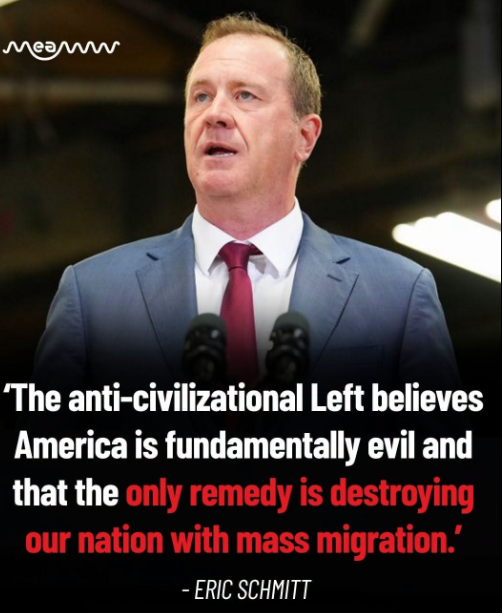
It would be very interesting to know what percentage of U.S. voters believe that liberals hate America, that we believe our country “is fundamentally evil and the only remedy is destroying our nation with mass migration (sic).”
Trump’s approval rating is about 30%, and a few percent of that is the amoral super-rich. So, possibly it’s in the high 20s.
But aren’t there at least some MAGA folks who would concede that educated people don’t necessarily hate America? My mother lived on a steady diet of Fox News, but even she had respect for Bernie Sanders, about whom she said, “I admire his sincerity, misguided though it is.”
An Important Republican Position: The Left Really IS “Radical”–But Who Believes This?
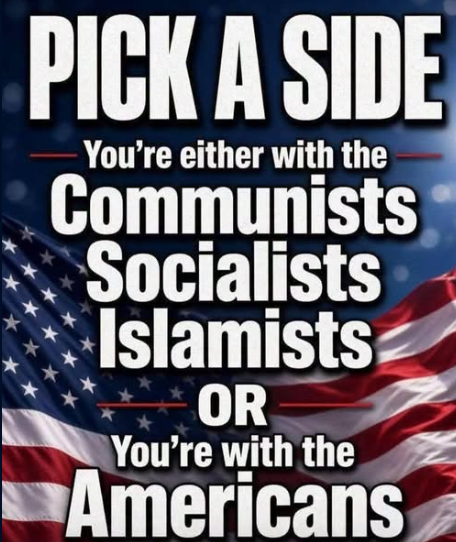 Whoa. Let’s take a step back. Is it really either A or B?
You could on the side of the morons, those incapable of any level of critical thinking, like the author of the meme here.



