

Weather Guard Lightning Tech

Ørsted Denies Equinor Merger, WOMA 2026 Tickets Live
The crew discusses Equinor’s significant investment in Ørsted, while Ørsted denies plans to merge. They also cover Jupiter Bach’s new plant in Colorado and the upcoming Wind Operation and Maintenance Australia 2026 event.
Register for ORE Catapult’s UK Offshore Wind Supply Chain Spotlight!
Learn more about Composite Inspection and Consulting!
Sign up now for Uptime Tech News, our weekly email update on all things wind technology. This episode is sponsored by Weather Guard Lightning Tech. Learn more about Weather Guard’s StrikeTape Wind Turbine LPS retrofit. Follow the show on Facebook, YouTube, Twitter, Linkedin and visit Weather Guard on the web. And subscribe to Rosemary Barnes’ YouTube channel here. Have a question we can answer on the show? Email us!
You are listening to the Uptime Wind Energy Podcast brought to you by build turbines.com. Learn, train, and be a part of the Clean Energy Revolution. Visit build turbines.com today. Now, here’s your hosts. Allen Hall, Joel Saxon, Phil Totaro, and Rosemary Barnes.
Allen Hall: Welcome back to the Uptime Wind Energy Podcast.
I’m your host, Allen Hall in the queen city of Charlotte, North Carolina. I have Rosemary Barnes in Australia who has, uh, been doing a little bit of travel. Joel is back in Austin, Texas. Man, I feel like everybody’s been traveling a lot and so is Yolanda. The Yolanda has been on the road quite a bit and we have a really interesting week in wind energy.
Particularly over in Denmark and Norway, and if you’ve been following the news there, uh, as we all know, Ecuador had a pretty big investment into Sted several months ago where they put in about two and a half [00:01:00] billion dollars to buy 10% of Sted to help write the ship a little bit, and then. A c basically last month, right Joel?
It was about last month where they, they spent about a billion dollars for the right rights issue, uh, to keep that stock moving, right, and or, and need more cash. And that’s how they raised it. That’s a total investment, about three and a half billion dollars. That’s a lot of money for anybody to be spending at this moment, and Ecuador is thinking this is a pretty good bet.
That’s great and they wanna work closer with Ted. And the talk is that Ecuador wants a boar seat with Ted Joel. Is there any chance that is going to happen?
Joel Saxum: Well, it was, it’s interesting that they brought that up as well, right? Because the initial buy-in, you know, back I think six, nine months ago or whatever it was, they specifically said in their press release, we are not trying to get a board seat.
We don’t want to have [00:02:00] control over this, yada, yada, yada. But then when the rights issue came out, and I think it was the, the TED stock dropped like 30% or something that day. Um, they threw more cash in, they got a little bit more power. But it’s like anything, right? Once, once you’ve got, uh, quite a bit of money invested and you have a, have pretty heavy percentage of us of whatever that investment may be, it can be.
Half ownership in a car, I don’t care. You want to have a little bit more say about what happens with your money and what the results can be based on strategic decisions. And if you’ve, you know, been watching Ted’s decisions. Now they’ve been at the, the whim of government policies and stuff for the last few years, but they’ve also mistepped a little bit on a couple of them.
Uh, so you can see EOR wanting to get in there to protect their investment a little bit. The, in the funny thing to me here, and, um, Rosie, you spent a ton of time up in Denmark, is the, the, the back and forth between the Norwegians and the Danes about, oh, you’re, you’re just our [00:03:00] little brother. You’re our, oh, you’re our distant cousin, da da da da.
How they were kind of all at one point in time, a lot, you know, a lot closer. There was what was called the, um, the calmer Union, I think it was. And that was the Danes, Norwegians, Swedes, all under one king. This was a long time ago, but, so there’s that area of the world’s kind of all been playing together and, and if you know a little bit of the history too, all of that money that Norway has, so all the money that Einor has is Danish ex Danish land money.
So the Danes gave away their rights to the North Sea, to the Norwegians for whatever reason, and that’s where all the oil was that made the Norwegians rich. That is the EOR pile of cash.
Rosemary Barnes: People talk about that frequently, like really frequently. In Denmark. I probably would’ve had a conversation like, I don’t know, at least once a month, maybe once a week about that topic.
I remember one that sticks out in my mind. Um, I always said that Norwegian, like, I love the Norwegian [00:04:00] accent. It sounds like Danish, but they’re, they’re laughing. And I remember saying that to my boss one time, my Danish boss, and he says, yeah, they are laughing, they’re laughing all the way to the bank because they’ve got our oil.
And, and every Danish person has a huge chip on their shoulder about it. Um, it, it was like the oil, the oil reservoirs weren’t well known when they did the divide up of who would get, you know, which bits of the ocean. It was mostly about fish. Um, and yeah, so they divided it where they divided it, everyone was happy with it at the time, and then not so long afterwards found out there was just heaps and heaps of, uh, oil under there.
And yeah, Norway got quite rich off it. But you know what? I think that, um, Denmark hasn’t done so bad out of it because it kind of forced them to go all in on wind energy in a way that other, like other countries kind of, it’s like during the oil shock of, was it the 1970s? You know, everyone. Looked into wind energy a lot, but as soon as the price went down again, then they were just like, oh, don’t worry about wind energy.
But [00:05:00] Denmark just, you know, kept on keeping on and they did have, you know, a few decades of just total world dominance in wind energy. Um, and it also kind of, you know, filtered through to other bits of the economy. It’s, it’s really nice kind of. Smart industry manufacturing. They, they really did train up a whole generation or so of, um, engineers that are, you know, really industrious and innovative and you see them in all sorts of other industries now.
So I, I don’t think that Denmark should have a ship on their shoulder about it. I think that, you know, they should consider that they got some, some good out of it as well.
Joel Saxum: I, I completely agree. The, the last funny I’ll throw in there is, if you don’t know this, Ted used to be known as Dong Energy, which is Danish oil and natural gas.
So they used to be an and not, that’s not too long ago. That’s only like 10, 12 years ago.
Rosemary Barnes: No, and I think it’s the only example of, um, any fossil fuel company that has flipped, like fully flipped to [00:06:00] renewables. I don’t think there’s another example. Um, maybe, you know, someone can email us and, and tell me I’m wrong, but I’m pretty sure they’re the only ones.
And so that’s why, like, I, I really like, I’m always going for them, you know, like I’m always cheering them, cheering them on. I want them to succeed because I want that to be something that can happen, you know, so much better if, um, oil and gas companies spend their energy transitioning to renewables and succeeding compared to if they spent their energy trying to, you know, um, stymie the renewable energy transition.
So yeah, I, I think good for them.
Allen Hall: Ted is saying no chance of any sort of merger with Ecuador. In fact, there’s CFOs, total analysts, there are no merger plans, and the CEO of Ted is also basically saying we’re focused on our own plan. We, we we’re going to go ahead and get the company righted and we don’t really need a lot of Ecuador involvement.
That’s gonna come to a head pretty soon though, if Orec [00:07:00] can’t get their stock back up. Like Joel has pointed out, the, the pressure from Ecuador will slightly diminish over time. And if Oreg can get really rolling, which analysts are saying now is somewhere in the 2030 region before they become, uh, self-sufficient in a, in a sense that, uh, until such time, EOR probably is gonna keep knocking on that door.
It does lead to the question, and I think Rosemary, you brought it up, oh, probably six months ago or more, that Ecuador is starting to pull back from its renewables business and starting to focus a little more on the oil and gas side, but they have renewable sort of requirements that they’re going after are goals.
And that stead could fulfill those goals, is that still likely to be the situation where EOR is gonna be in oil and gas and Orsa is gonna be in renewables and between the two of them, they satisfy, uh, both sides, Denmark [00:08:00] and Norway’s economic interest?
Rosemary Barnes: I, I think it’s very, very hard actually for, um, a company that’s used still oil and gas projects to move on to renewables.
I mean, they’re not. That similar, you might like, you might think it’s one kind of energy, um, moving to another kind of energy. But I think that that totally misunderstands how the, the business, the actual business works, what kinds of, um, projects they do, how risky they are, how much return they require, and the only reason.
Companies would do that as if they were kind of forced to.
Joel Saxum: That’s the ESG thing. Yeah.
Rosemary Barnes: Well, it’s not only ESG though, because I mean, eor they are kind of running out like, you know, started off with, um, stuff in Norway or in Norway’s waters. Right. And they’ve, to a certain extent, run out of good projects. I mean, that always happens with, um, with fossil fuels that, you know, the good sites get, um, uh, depleted and you have to find new sites that, that always happens.
Um, aside from [00:09:00] public pressure. Legal pressure in some cases to not do this kind of extraction anymore. Like they are the, it is possible to run out of good sites and to think, okay, well now renewables is starting to look a bit better.
Joel Saxum: Yeah. I think make, I think if you, if you look at it this way too, like make no mistake about it, Einor is, is a major.
In oil and gas, you have the two tiers at the top you have super, major, major. They’re a major bumping against super major. They’re active in, well, not in Australia anymore, ’cause they canceled that in 2020. Right. But Indi India, four or five different countries in Africa. They’re in Brazil, they’re in Argentina, they’re in.
Guyana, they’re in Canada, like they’re everywhere drilling for oil and gas,
Allen Hall: Gulf, Mexico
Joel Saxum: and Yeah, in the us Yeah. So the UK Norway, that, that’s just one little part of it, right? They’re, they have, they’ve been drilling in Africa for 40 years. They’re, they’re a type of company, right? They’re the same thing as a BP or a Shell, or a Repsol.
Which have, which have all said, we’re going into renewables. Wait a second. No, [00:10:00] we’re not. Right. They’re all kind of doing the same thing, uh, pulling back out. And I, but I think Eor, that’s their way of saying we are still a little bit environmentally conscious. We’re still trying a little bit, let’s put some money in stead.
Um, because like you said, it’s just not their, their thing.
Allen Hall: So when does it hit the national government level since now you have CEO for Ecuador and or Ted, uh, having opposing views in the press and they’re very vocal about it. This is not your typical. Danish Norwegian discussion where there’s undertones and there’s not a lot of, uh, quotes in the press.
This is right out in the press, very open right at the moment. At what point do you see the Danish government and the Norwegian government coming together and maybe making some of the decisions for both sides?
Joel Saxum: The Danish government owns 50.1% of Ted.
Allen Hall: That’s right.
Joel Saxum: And what’s the, the company’s named after an or a Danish physicist.
Right. It was like Hans Christian, Ted or something. Right.
Rosemary Barnes: No, I just wanna say something that I’ve always, I don’t know if I’ve ever seen it on the podcast, but it’s so funny because, [00:11:00]okay, so Danish, um, oil and natural gas. An acronym. That’s a bit weird because it’s in English, but for a Danish company, dong isn’t the best word in English.
However, or, I mean, what do we say, Ted? It’s not like it’s, it’s the crossed out o and in in Danish, you should say that like, right. It’s got like the two hardest sounds hardest to say. The, uh, and the, the D is, you say in Danish, you say the D with like your tongue and your lower teeth. Like, ooh. And if you like, look like you’re about to throw up, then you know that you’re saying it, right?
So it’s like they’ve gone from dong to URL and it’s like, why didn’t they pick a word that, like if they want it to be an international, um, like a, a word that makes sense internationally, then why not pick a word that anybody other, a Danish person can say? It’s, um. I, they’re gonna have to do another rebrand
Joel Saxum: because Lego was taken.
Rosemary Barnes: Lego is a, Danish is a [00:12:00] Danish word. It comes from Lago, which means play well. So Le got, um, from the, the two parts of the, the word. So that one, yeah. Perfect. No notes. I did that really well. It’s Danish, but it makes sense. Uh, internationally, well done. They, I don’t know whoever came up with, uh, that the Lego founder needed to be involved in.
Dongs rebranding and have chosen something other than Ural.
Joel Saxum: We need to get someone on the podcast just to discuss that with us, like what happened here, why it has to be a Danish person that has some history with stead. Maybe
Rosemary Barnes: I don’t. The concept is cool. I like the concept. I just, um, it just, it and annoys me because.
You know, like I learned, I, I, I worked really hard at being able to say those Danish sounds in a way that meant Danish people could understand me, but now I’m supposed to say Ted. Um, and that bothers me. So, you know, I’m, yeah, feel personally victimized by this, uh, this name change and they should do something about it.
For my, for my personal preference,
Joel Saxum: as a person who was once the only American in a [00:13:00]mainly Danish company. I got made fun of regularly for my inability to pronounce any Danish words.
Allen Hall: Delamination and bottomline failures and blades are difficult problems to detect early. These hidden issues can cost you millions in repairs and lost energy production.
C-I-C-N-D-T are specialists to detect these critical flaws before they become expensive burdens. Their non-destructive test technology penetrates deep to blade materials to find voids and cracks. Traditional inspections, completely. Miss C-I-C-N-D-T Maps. Every critical defect delivers actionable reports and provides support to get your blades.
Back in service, so visit cic ndt.com because catching blade problems early will save you millions.
Well, a a Danish company is bringing wind turbine manufacturing jobs to of all places. Colorado Jupiter, Bach, [00:14:00] which is the Danish specialist in the cells and spinner covers for a lot of the OEMs, announced it’s opening a new assembly plant in Brighton, Colorado. It will assemble in the cell covers, which are obviously, as we all know, the outer shells of wind turbines.
Now, Joel, what’s in Colorado, who’s making wind turbines in Colorado at the moment?
Joel Saxum: ERs
Rosemary Barnes: Envision has, um, has a big office there also. I don’t think they manufacture there
Joel Saxum: in right outta Boulder. I think it’s, it was, isn’t there, didn’t we do an article not too long ago about a tower manufacturer, like in Pueblo,
Allen Hall: wasn’t it Cs?
Joel Saxum: Yeah, you’re sitting on the I 25 corridor, so Brighton is actually on I 70, which is heading east off the I 25 corridor, but that I 25 corridor runs from Montana down into New Mexico and it everything branches off at I 70 branches off at I 80 branches off at, so that everything covers, like to me, I’ve always said Denver, which is Brighton, is a suburb of an eastern suburb of Denver, is a great [00:15:00] place for wind energy companies because you’re a day drive from like 50,000 turbines.
You’re right there in the center of you have good airports, you’ve got good transit, there’s good rail there, there’s good highways there. Um, and you have a workforce there, right? You’re sitting outside of Denver. So I think it’s a great spot. Uh, happy to have Jupiter Bach joining the, or expanding there in Colorado.
I think it’s, I think it’s a good plan. Good move.
Allen Hall: Well, we had their CEO, Andreas Kiker on the podcast six months ago, maybe a year ago, and they were, uh, going to have a big expansion down in Florida. I think that still happened because they support a lot of the ge uh, production down there in Pensacola.
But this is the. I think this is a second plant. They have a facility up in, around, uh, Schenectady, New York, also supporting, uh, GEs assemblies, uh, up there. So I guess this would be actually factory three in the us. And this makes a lot of sense, doesn’t it, in terms of avoiding tariffs and having to ship things from other places [00:16:00] that they’re gonna build it.
Sort of next door to the OEMs manufacturing facility.
Joel Saxum: Yeah. Let me ask you a question about that one. ’cause I don’t know the answer to this. Everything we’ve talked about with the IRA bill basically getting canceled, one big, beautiful bill, all this stuff we’ve been talking about, wind turbine development and construction and all this good jazz.
However, as a part of that, IRA bill, there was the ITC credits, the in invest investment tax credits that would go towards something like this. I don’t have the answer to it. Do, do you think this, this. Still qualify or would qualify for some ITC tax credits for them to build manufacturing capabilities.
Allen Hall: Just getting started, isn’t that usually how this works? They’re only gonna have about 15 employees there when they get started, which makes me think the Pensacola facility has a lot of employees and eventually they’re gonna get up to that level. But just planting your steak in the ground, I think would qualify.
Isn that that’s how most of the IRA bill events [00:17:00] happen. Like you, you gotta start. Once you start, then it triggers more in the future, I would assume this is something similar.
Joel Saxum: Well, the ITC tax credits was like, that was like step one, right? But it was like 30 per 30% or something. Like if you build a new facility, we’ll give you a 30% tax break on your capital spent to build that new facility.
I’m, I wouldn’t be surprised as well if the state of Colorado is not helping ’em out because they did a lot of things with Vestas and that that tower manufacturing company, when they were bringing them in, like, Hey, come and come and put an office in here. We’ll give you blah, blah, blah, blah, blah. Like much like most states will put a package together for big manufacturing things.
Allen Hall: So that leads to a broader question because when, when I read the Jupiter Bar article the other day, I thought, oh, that’s really interesting. There’s some investment going on in the US and overall. If you look at, uh, renewables in the United States, they are a good investment that, that some of the renewable energy companies and some of the second, what I’ll call secondary renewable energy companies that are associated are [00:18:00] seeing valuations go up.
And there’s been a lot of sales, most recently of wind farms and renewable assets in the United States. That leads to the question of, is it gonna be like an underground, in a sense, an underground expansion of renewable energy in some of these low level? Get the shovel in the ground to get ready for the, the push that’s gonna happen over the next couple of years.
I see that happening. So even though the, the OEMs are still struggling a little bit and, uh, some of the large operators are realigning, there’s still a lot of money being spread around. Joel, what was the acquisition? That just happened.
Joel Saxum: CBRE bought peer services for $1.2 billion. Now that’s a lot of money, but that’s not just for their win business.
Right? That is peer services was into telecoms and all kinds of stuff, so, but that’s four, 4,000 employees or whatever. But a thousand of those, last I knew, a thousand or so of [00:19:00] those 4,000 people were in wind. So $1.2 billion is a hell of an acquisition for a service company.
Allen Hall: Joel and I have been down to Pierce’s training facility outside of Dallas, and it was new and massive and really impressive, and the amount of effort going into training new employees was going full bore, $1.2 billion.
Joel and Yolanda, that’s a lot of money to pay for that kind of company. You, you know what I mean? It, it does seem like that was a, a pretty penny and there’s a lot more activity I think we’re not paying attention to just because it doesn’t necessarily reach the level of national press where, uh, there’s buying and selling happening in renewables.
Joel Saxum: Yeah. I mean, from, from sitting in in my chair, which some days can be command Central on the cell phone and on the, on the laptop. There’s a lot of m and a activity happening in wind right now. Uh, especially on the service side. You’re seeing. Companies that have, some companies that have used the last few years of a boom to grow.
[00:20:00] In personnel, growing revenue, signed contracts, all this great stuff. And then you’re seeing some consolidation happening now, uh, of these companies getting brought into others, others trying to bolt on services. You know, like, Hey, we do service, but we’d like to have blades and we’d like to have, uh, construction or some cranes or whatever.
So you’re seeing people strategically bolt on because, and if you’re a good company, your customers are asking you, right? Hey, I know you did our. Borescope inspections, but can you do some blade inspections or can you do this? Can you do that? Yeah. And then once that gets to a, a fever pitch, then what do you do?
It’s hard to, it’s hard to find that person and just, here’s an example, right? Blades. It’s hard to find the person to run the blade company. It’s hard to find the engineers to be the back end of the belly company. It’s hard to find the technicians to staff the blade company. So what do you do? You just go buy one, go find one that’s got 30 people in it already buy it.
That’s happening quite. Uh, there’s, there’s a ha a large handful of that happening,
Allen Hall: and my concern about it is that [00:21:00] because there’s so much shuffling happening and money changing hands, I’m a little concerned about the 2026 blade season in the US and actually globally, you know, Onda, you’re a little closer to that in terms of blade activity and repairs that are going on.
What does 26 look like? Are they gonna be fewer? I ISPs? And are they just going to be larger or there’s still gonna be new entrants into the ISP world?
Yolanda Padron: We’ve talked about the fact that nobody wants to be the Guinea pig a lot of times, right? Nobody wants to beat the Guinea pig for these ISPs either. You get into the idea that some, um, really great operators like EDF where they can track.
The techs that are going on each team, and they have a way of, of mitigating their risk that way. Right. But not everybody has done that and not everybody has the capabilities to, to control exactly who has been on their site and who will be on their site aside from. These [00:22:00] particular companies, right? So as these companies grow, um, I think it’ll, it’ll definitely be having a lot more blade work going on and having to have these blades last a very long time.
But I don’t see a lot of new people coming into the market. I don’t know if, if you guys have seen anything different.
Allen Hall: So it’s become a smokestack industry. Is that where we’re gonna go? It’s gonna be vertically integrated.
Joel Saxum: Well, I think what you’re, you’re, you, you have here as well is. You, you may see, okay, so let’s, let’s, let’s separate it from field operations and business, right?
So while you may see businesses changing hands, this, that, the other thing, one of the reasons that that can happen is, is to be honest with you in the field, if a psych supervisor at a wind farm likes a certain team and a certain but of people, he doesn’t care what logo comes at the top of the invoice.
He, she, whatever it may be, right? So if the, if this person, say, Yolanda runs a wind farm and she likes [00:23:00] team one, team two, team three from company X, Y, Z. If that company X, Y, Z now is company A, B, C, Yolanda doesn’t care anymore, she still wants team one, team two, and team three. Okay? Then you’re in procurement.
Now payments go to a different place. You’re making money elsewhere. I don’t care. I just want those technicians. So I think that you’ll see some of that. At our, you know, the high level looking in and going, oh, this company was bought by this company. This company’s bought by this company. The MSAs go with usually when there’s a purchase.
And if the people, like the people and the people are jumping around, they still are working with the same wind farms a lot. Um, I mean that’s I guess my, my take from the field. Maybe Yolanda, you have a different visual vision of that.
Yolanda Padron: If you’re growing the, the scope of this blade work great that you’re having, ’cause you want the blades to last as long as possible.
You also have a, oftentimes you have a site that runs really lean internally, right? As the owner, as the operator. You don’t wanna have to manage a lot of different [00:24:00] teams. So you mentioned team one, team two, team three coming in from company X, Y, Z. If they can trust that company, X, Y, Z will get the job done, regardless of how many teams is on there, they’d rather have.
Company X, Y, Z, then have company A, B, C, and D, E, F, and X, Y, Z, and having a lot of points of contacts that they have to come in and manage and add even more to their plate on top of their day-to-day operations, which is already so much for a lot of these site teams.
Joel Saxum: And I think that that’s the advantage that you’re seeing here of the consolidation, right?
Oh, we’re here on your site doing service. Well now we’re doing BOP, and now we can offer you blades, and now we can offer this. So now you’ve got one. One company contact and then we can take care of your. Stuff. And that’s, and I think that’s where a lot of these acquisitions are going.
Allen Hall: Don’t miss the UK Offshore Wind Supply Chain Spotlight 2025 in Edinburg on December 11th.
Over 550 [00:25:00] delegates and 100 exhibitors will be at this game changing event. Connect with decision makers, explore market ready innovations, and secure the partnerships to accelerate your growth. Register now and take your place at the center of the UK’s Offshore Wind Future. Just visit supply chain spotlight.co.uk and register today.
So if you haven’t visited Australia, you need to visit Australia. And the perfect time to be in Australia is February 17th and 18th because that’s when we’re holding the Wind Operation and Maintenance Australia event in of all places. And I’m gonna mispronounce this Melbourne. It was terrible, right, Rosemary?
Rosemary Barnes: Yeah. We just went through this it.
Allen Hall: So the website is live for Woma 2026. You can actually click the link register now. It’s $950 Australian, which is about Joel’s $700 us, [00:26:00]which is the cheapest, most returned for your investment conference in Australia. You’re not gonna find anything else anywhere near that price with.
All the great content about how to operate and maintain your wind turbines in a really, really tough environment, which is Australia. What are some of the highlights, Rosemary, that we’re gonna see on February 17th and 18th and next year?
Rosemary Barnes: Well, we have, um, got a few because the event was quite successful last year and we’re a bit more confident on numbers for this year.
We have actually set aside some budget to bring some speakers from overseas on topics that I know that Australians struggle with. So one of them is bringing somebody to talk about contracts because, uh, yeah, in Australia there’s a lot of these full service agreements and you know, the, it really matters the wording of your contract.
Like, just to give one example. What is a serial defect for one person, it might mean 20%. Um, of your blades or towers [00:27:00] or whatever have this defect within the first five years of operation. For somebody else, it might be 30% in two years, and so that really affects whether you’re gonna be able to claim for those kinds of things.
So any number of little details like that, we’ll go through. Um, and then who are the other international people? We’re, we’re bringing some, um, people with experience, sort of operations experience with large, large, large fleets.
Joel Saxum: LEP.
Rosemary Barnes: Yeah. Leading edge protection.
Joel Saxum: Yeah. We’re talking to quite a few people, uh, that do run large fleets in, uh, and I’m talking large fleets, like eight, 10, 15,000 turbines in one company.
And the reason that we’re doing that and trying to bring those people over is they have had personally. A hand in the holistic management of. Specific engineering aspects of that operations and maintenance wise. So blades, uh, gear boxes, whatever it may be. They’ve looked at the problems. They’ve figured out a way to manage those problems for that massive size of a fleet.
So coming to a [00:28:00] place like Australia where there’s, yeah, 4,500, 5,000 turbines. Um, that, like, that whole entire portfolio would fit inside their company. So they can really give some advice as this is how we’ve done things, this is how we’ve, what we’ve found, this is a good way to manage it. Um, here’s some of the tools we use.
Um, we’re really excited for that.
Rosemary Barnes: One other thing is kind of the opposite of that is the really Australian specific part because the longer that I work in this space on Australian projects, um, on a lot of, yeah, maintenance and operations, mostly for me to do with wind turbine blades. I just see certain issues recurring over and over again that are really different to what happens overseas.
So, you know, it’s to do with, um, yeah, leading edge, erosion, ocean. Um, it’s a global problem, but it, these products fail differently in Australia than elsewhere. So, you know, you do see, you wanna replace, sometimes you wanna replace your leading edge protection after just one or two [00:29:00] years, but then if you replace it with a, the incorrect product.
You’ll be doing it again in another year or two. And to be honest, I’m not, I’m not totally certain that a really ideal product exists in that space. And then there’s also some issues around with, um, operating in high temperatures, the high uv, um, lightning we’re seeing, we’re getting some good lightning results from some of the, um, sensors that have been installed around Australia recently.
Seeing that lightning is really different here. Um, yeah, so many of those things, it’s not. Purely about people talking about solutions. It’s as much about understanding the problem properly so that then solutions can develop that really suit Australia rather than suiting Europe or North America.
Allen Hall: Absolutely. It’s an exchange of ideas. It’s it’s exchange of knowledge. It’s not, it’s Danish American. Europeans come to Australia to tell a story what to do. It is an exchange, and I learned way more last year at this conference than I’ve [00:30:00] learned in conferences in the US over the last three or four years.
It was incredible, just in a day and a half. And this conference will be about two days. It’ll be at the Pullman, Melbourne on the park, a beautiful, beautiful city. The thing about February 17th and anything, there’s a lot going on in Australia, so if you want to attend this, you need to be thinking about getting your airline tickets settled right now.
Because like we’re doing, we wanna make sure we’re there for this conference and all of us on the Uptime podcast will be there, including Rosie. She will drive up in her Cadillac and show up and talk to the conference for five minutes and jet off wherever else she’s going. But it’ll be a really fun time.
It will be a really fun time.
Joel Saxum: I do wanna touch on one other thing that’s been a theme for us here as of late. Like we’ve been to Allen and I’ve been to a couple conferences in the last, uh, month or so, and connecting with people, and one of the really important things that we loved about this event last year was the networking opportunities [00:31:00] that we kind of built into it with coffee breaks and the cocktail hours and the whatever you want to call it.
Very, very laid back. But the conver, the conversations that happen at those networking opportunities, that’s where the real meat is because the people that have the solutions and the problems are meeting each other and, you know, swapping stories. And I don’t know how many times I’ve just seen cards go back and forth or contact information of, and it’s not a sales process, it’s just like, Hey, you got an issue, we can connect on it.
Let’s help, let’s do this, let’s do that. And that’s really what we wanna make this about because as we always say on the kind of the, the uptime. Podcast is a rising waters floats all boats. So we’re just here to help each other.
Allen Hall: Amen. So please go to woma WOMA 2020 six.com and get registered. There are only 250 seats and they are selling very quickly.
So if, if you plan to attend, get on WMA 2020 six.com and register today. That wraps up another episode of the Uptime Wind [00:32:00] Energy Podcast. Thanks for joining us as we explore the latest. Wind energy, technology, and industry insights. If today’s discussion sparked any questions or ideas, we’d love to hear from you.
Reach out to any of us on LinkedIn and don’t forget to subscribe. So if you never miss an episode and if you found value in today’s conversation, please leave us a review. It really helps other wind energy professionals discover the show and we’ll catch you here next week on the Uptime Wind Energy Podcast.
https://weatherguardwind.com/equinor-orsted-woma/

 We have starving veterans living in our streets and dying of treatable diseases.
Sure, the MAGA crowd hated gays and loves divisiveness, but is naming a month for our vets is the very best we can do for them?
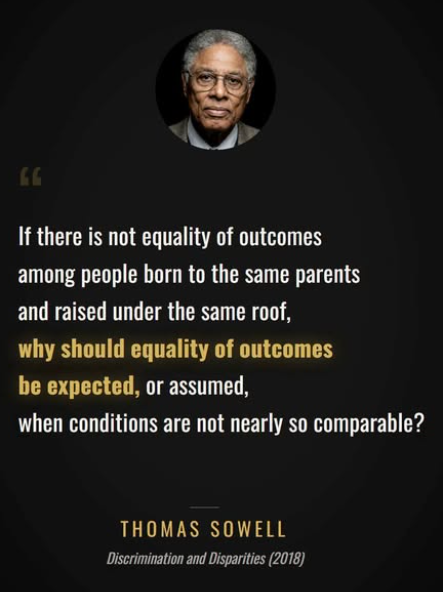 Thomas Sowell is not an idiot, and thus he must know that no one wants a social order in which everyone’s lives turn out the same. Does anyone truly believe that drug addicts, morons, and lazy slobs should enjoy the same fruits of prosperity as temperate and diligent people?
It would be nice, however, if all of us had equal opportunity for success. If you’re interested, Google “equity vs. equality.”
One of the tragedies of life in America today is rhetoric that is deliberately designed to cloud our thinking with fallacious logic. He should be ashamed of himself.
 It’s said that those who act decently because they fear the wrath of God and being sent to hell in the afterlife are simply terrible people on a leash. That speaks to me.



-
Climate Change8 months ago
Guest post: Why China is still building new coal – and when it might stop
-
Greenhouse Gases8 months ago
Guest post: Why China is still building new coal – and when it might stop
-

 Greenhouse Gases2 years ago
嘉宾来稿:满足中国增长的用电需求 光伏加储能“比新建煤电更实惠”
-
Climate Change2 years ago
Bill Discounting Climate Change in Florida’s Energy Policy Awaits DeSantis’ Approval
-

 Climate Change2 years ago
嘉宾来稿:满足中国增长的用电需求 光伏加储能“比新建煤电更实惠”
-
Climate Change Videos2 years ago
The toxic gas flares fuelling Nigeria’s climate change – BBC News
-

 Renewable Energy6 months ago
Sending Progressive Philanthropist George Soros to Prison?
-

 Carbon Footprint2 years ago
US SEC’s Climate Disclosure Rules Spur Renewed Interest in Carbon Credits