

For millions of consumers, the sustainability scheme stickers found on everything from bananas to chocolate bars and wooden furniture are a way to choose products that are greener and more ethical than some of the alternatives.
Inga Petersen, executive director of the Global Battery Alliance (GBA), is on a mission to create a similar scheme for one of the building blocks of the transition from fossil fuels to clean energy systems: batteries.
“Right now, it’s a race to the bottom for whoever makes the cheapest battery,” Petersen told Climate Home News in an interview.
The GBA is working with industry, international organisations, NGOs and governments to establish a sustainable and transparent battery value chain by 2030.
“One of the things we’re trying to do is to create a marketplace where products can compete on elements other than price,” Petersen said.
Under the GBA’s plan, digital product passports and traceability would be used to issue product-level sustainability certifications, similar to those commonplace in other sectors such as forestry, Petersen said.
Managing battery boom’s risks
Over the past decade, battery deployment has increased 20-fold, driven by record-breaking electric vehicle (EV) sales and a booming market for batteries to store intermittent renewable energy.
Falling prices have been instrumental to the rapid expansion of the battery market. But the breakneck pace of growth has exposed the potential environmental and social harms associated with unregulated battery production.
From South America to Zimbabwe and Indonesia, mineral extraction and refining has led to social conflict, environmental damage, human rights violations and deforestation. In Indonesia, the nickel industry is powered by coal while in Europe, production plants have been met with strong local opposition over pollution concerns.
“We cannot manage these risks if we don’t have transparency,” Petersen said.
-
China maximises battery recycling to shore up critical mineral supplies
Beijing is bracing for a tsunami of spent EV batteries by taking steps to boost recycling – a strategy that could also cut its reliance on imports of clean energy minerals -
Rush for critical minerals tests Europe’s resolve to protect nature
A Climate Home News investigation found that more than half of the EU’s “strategic” mineral projects lie on, or within a kilometre, of protected Natura 2000 sites -
West Africa’s first lithium mine awaits go-ahead as Ghana seeks better deal
Ghana wants to benefit from the scramble for lithium but its reliance on mining firms for revenue and expertise weakens its ability to negotiate preferential terms, experts say



The GBA was established in 2017 in response to concerns about the battery industry’s impact as demand was forecast to boom and reports of child labour in the cobalt mines of the Democratic Republic of the Congo made headlines.
The alliance’s initial 19 members recognised that the industry needed to scale rapidly but with “social, environmental and governance guardrails”, said Petersen, who previously worked with the UN Environment Programme to develop guiding principles to minimise the environmental impact of mining.

Digital battery passport
Today, the alliance is working to develop a global certification scheme that will recognise batteries that meet minimum thresholds across a set of environmental, social and governance benchmarks it has defined along the entire value chain.
Participating mines, manufacturing plants and recycling facilities will have to provide data for their greenhouse gas emissions as well as how they perform against benchmarks for assessing biodiversity loss, pollution, child and forced labour, community impacts and respect for the rights of Indigenous peoples, for example.
The data will be independently verified, scored, aggregated and recorded on a battery passport – a digital record of the battery’s composition, which will include the origin of its raw materials and its performance against the GBA’s sustainability benchmarks.
The scheme is due to launch in 2027.
A carrot and a stick
Since the start of the year, some of the world’s largest battery companies have been voluntarily participating in the biggest pilot of the scheme to date.
More than 30 companies across the EV battery and stationary storage supply chains are involved, among them Chinese battery giants CATL and BYD subsidiary FinDreams Battery, miner Rio Tinto, battery producers Samsung SDI and Siemens, automotive supplier Denso and Tesla.
Petersen said she was “thrilled” about support for the scheme. Amid a growing pushback against sustainability rules and standards, “these companies are stepping up to send a public signal that they are still committed to a sustainable and responsible battery value chain,” she said.

There are other motivations for battery producers to know where components in their batteries have come from and whether they have been produced responsibly.
In 2023, the EU adopted a law regulating the batteries sold on its market.
From 2027, it mandates all batteries to meet environmental and safety criteria and to have a digital passport accessed via a QR code that contains information about the battery’s composition, its carbon footprint and its recycling content.
The GBA certification is not intended as a compliance instrument for the EU law but it will “add a carrot” by recognising manufacturers that go beyond meeting the bloc’s rules on nature and human rights, Petersen said.
Raising standards in complex supply chain
But challenges remain, in part due to the complexity of battery supply chains.
In the case of timber, “you have a single input material but then you have a very complex range of end products. For batteries, it’s almost the reverse,” Petersen said.
The GBA wants its certification scheme to cover all critical minerals present in batteries, covering dozens of different mining, processing and manufacturing processes and hundreds of facilities.
“One of the biggest impacts will be rewarding the leading performers through preferential access to capital, for example, with investors choosing companies that are managing their risk responsibly and transparently,” Petersen said.
-
Self-taught mechanics give second life to Jordan’s glut of spent EV batteries
As EV sales boom in Jordan, a lack of formal infrastructure for dealing with end-of-life batteries is leading to some innovative solutions -
Argentina’s pioneering glacier law on the line as Milei bets on copper rush
President Javier Milei wants Congress to relax groundbreaking glacier protection legislation to boost mining, but opponents say the environmental risks are too great -
Outdated geological data limits Africa’s push to benefit from its mineral wealth
As companies flock to Africa to secure minerals for the energy transition, unreliable and century-old mapping risks stifling investment


It could help influence public procurement and how companies, such as EV makers, choose their suppliers, she added. End consumers will also be able to access a summary of the GBA’s scores when deciding which product to buy.
US, Europe rush to build battery supply chain
Today, the GBA has more than 150 members across the battery value chain, including more than 50 companies, of which over a dozen are Chinese firms.
China produces over three-quarters of batteries sold globally and it dominates the world’s battery recycling capacity, leaving the US and Europe scrambling to reduce their dependence on Beijing by building their own battery supply chains.
Petersen hopes the alliance’s work can help build trust in the sector amid heightened geopolitical tensions. “People want to know where the materials are coming from and which actors are involved,” she said.
At the same time, companies increasingly recognise that failing to manage sustainability risks can threaten their operations. Protests over environmental concerns have shut down mines and battery factories across the world.
“Most companies know that and that’s why they’re making these efforts,” Petersen added.
The post Battery passport plan aims to clean up the industry powering clean energy appeared first on Climate Home News.
Battery passport plan aims to clean up the industry powering clean energy

When oil and gas shipments stopped flowing through the Strait of Hormuz at the start of the Iran war, Southeast Asian nations were left reeling as the supply crunch laid bare their acute reliance on fossil fuel imports.
As prices soared, governments in the region scrambled to introduce emergency energy-saving measures – from a four-day working week to curbs on air conditioning. Thailand revived decommissioned coal plants while the Philippines, which imports nearly all of its oil, declared a “national energy emergency”.
But the crisis has also prompted renewed resolve to find a long-term solution to their vulnerability at a time when electricity demand is booming to power the region’s growing industry, cooling needs and the mushrooming of energy-hungry data centres.
At the heart of Southeast Asian nations’ response is a longstanding infrastructure project to connect the region’s power grids by 2045 and enable cross-border trading of clean electricity through a network of underground and subsea interconnectors.
-
Southeast Asia’s fragile grids threaten billions in clean energy investment
Renewables developers need reliable electricity infrastructure and stable policies to help the region meet climate goals and surging demand for power -
UN backs push to upgrade grids slowing clean power uptake in Africa and SE Asia
The Global Grids Accelerator will help turn national and regional plans to expand electricity infrastructure into viable projects on the ground -
China keeps Indonesia’s battery dream afloat but future less certain
Chinese capital and technology turned Indonesia into the world’s top nickel supplier, but its dependence on China and the rise of nickel-free batteries could upset its battery ecosystem plans
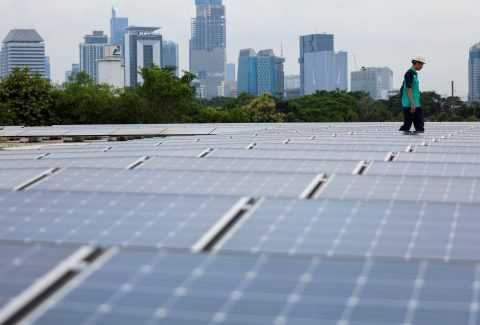
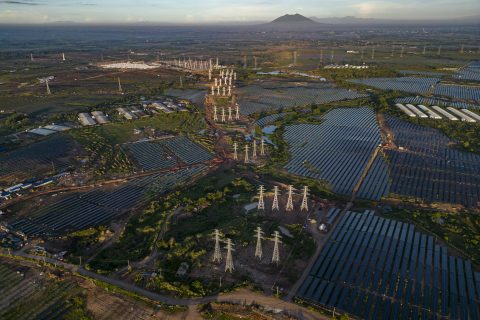
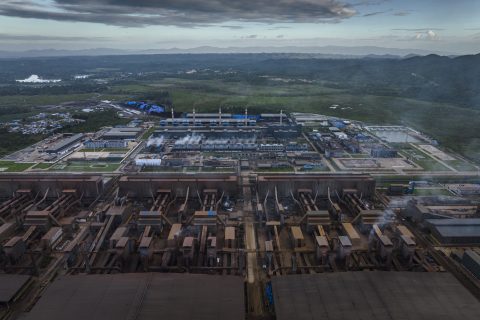
The plans will allow nations with high renewable energy generation potential to trade surplus power to their neighbours and major demand centres like Singapore, helping to integrate more renewables into the power mix and reduce reliance on fossil fuel imports.
“[It] will give us more energy security,” the Philippines’ energy secretary, Sharon Garin, told a press conference after a meeting of the Association of Southeast Asian Nations’ (ASEAN) energy ministers last week, when they discussed accelerating the delivery of the regional grid as part of measures to respond to the energy crisis.
“The Philippines is rich in solar power, Malaysia is rich in hydropower and Indonesia has geothermal: different countries have different resources. [The ASEAN Power Grid] will optimise the utilisation of renewables to the benefits of each member state,” said Garin.
But turning this decade-old political vision into a reality has been slow, held up by painstaking work to harmonise a patchwork of regulatory and legal frameworks and mobilise the private capital needed to build cross-border infrastructure.
More than $300 billion is needed to expand and modernise the region’s fragile grids to support the projected energy demand increase by 2050. This includes $27 billion required to deliver the cross-border interconnections by 2040, according to the International Energy Agency (IEA).
Every year of delay could cost the region billions of dollars in additional fuel costs and lock in new gas infrastructure for decades to come, according to analysis by global energy think-tank Ember.
The building block for energy security
With electrification high on the agenda of the COP31 climate talks in Türkiye next month, there is growing attention on the need to modernise and expand grid infrastructure to cope with growing electricity use and more renewables in the power mix.
Clean electrification and energy efficiency could deliver about a third of cumulative carbon emission reductions between 2026 and 2050, according to the International Renewable Energy Agency’s World Energy Outlook. But delivering that would require doubling annual global grid investment to $1 trillion between now and 2035.
Last month, the UN launched an initiative to accelerate investment into expanding and modernising grids in Southeast Asia and Africa.
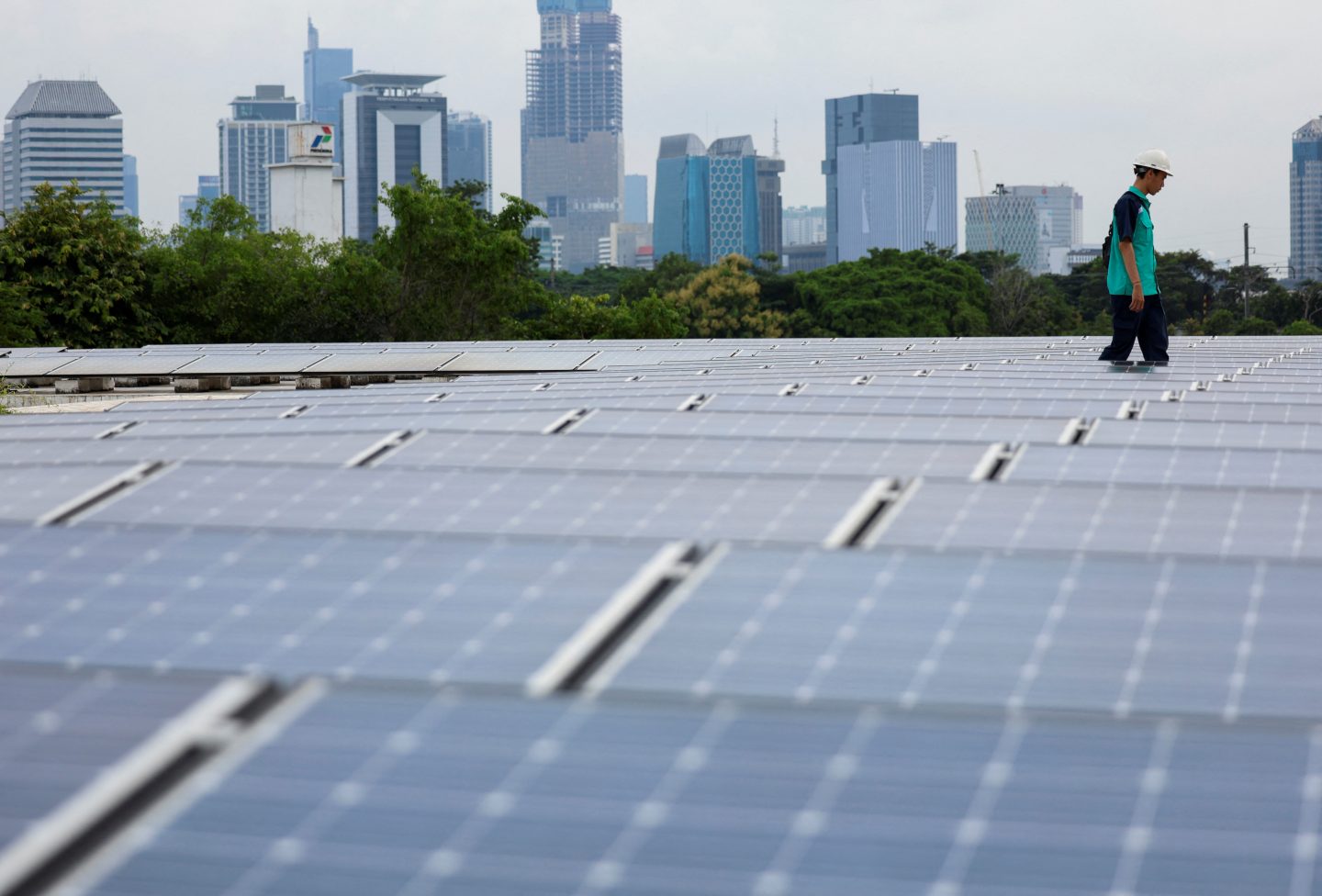
First conceptualised in 1997, the ASEAN Power Grid has gained fresh impetus in recent years as countries turn to renewables to cut their emissions and move away from volatile fossil fuel markets.
Energy supply disruption caused by wars in Ukraine and the Middle East has strengthened the case for regional grid connections. Before this year’s conflict began, the Middle East accounted for 60% of Southeast Asia’s crude oil imports. Competition for fewer, more expensive oil and gas shipments has left Southeast Asia facing a $160 billion energy import bill this year. Based on current policies, this could rise to $400 billion by mid-century.
In the Philippines last week, energy ministers agreed on an enhanced planning framework to deliver the ASEAN Power Grid and made progress on regulatory guidelines.
Garin said ministers were considering accelerating the project’s delivery. “The first study was to connect [by] 2045 – that’s too far,” she said.
A strong business case
The economic benefits of the plan have “captured the political imagination” of leaders in the region, Robert Cooke, grids advocacy lead at the Global Renewables Alliance, told Climate Home News. “The business case is stronger than ever,” he said.
“If countries were to go about building their own separate grids, of course that would be an expensive endeavour. But the discussion around the ASEAN Power Grid includes what costs could we share in building out this grid,” added Tiza Mafira, director of the Indonesia office for the Climate Policy Initiative.
Stronger grids would help the region meet collective targets to increase the share of renewable energy in total primary energy supply from 14% to 30% and in installed power capacity from 34% to 45% by 2030.
Connecting and pooling dispersed renewable resources would also help smooth local power shortages caused by daily and seasonal variations, reducing the need for backup gas plants and battery storage.
The IEA found the ASEAN Power Grid could help unlock some of the 20 terawatts of untapped solar and wind potential across Southeast Asia – an amount around 55 times the region’s current total power capacity.
From lines on a map to shovels in the ground
Rather than building a single unified network, the ASEAN Power Grid is developing cross-border links between neighbouring countries and smaller groups of nations.
As of 2025, nine of 18 priority interconnection projects are operational – accounting for