

Feeding the 8.2 billion people who inhabit the planet depends on healthy soils.
Yet, soil health has been declining over the years, with more than one-third of the world’s agricultural land now described by scientists as “degraded”.
Furthermore, the world’s soils have lost 133bn tonnes of carbon since the advent of agriculture around 12,000 years ago, with crop production and cattle grazing responsible in equal part.
As a result, since the early 1980s, some farmers have been implementing a range of practices aimed at improving soil fertility, soil structure and soil health to address this degradation.
Soil health is increasingly on the international agenda, with commitments made by various countries within the Global Biodiversity Framework, plus a declaration at COP28.
Yet, there is still a lack of knowledge about the state of soils, especially in developing countries.
Below, Carbon Brief explains the state of soil health across the world’s farmlands, the factors that lead to soil degradation and the potential solutions to regenerate agricultural soils.
- What is soil health?
- Why are agricultural soils being degraded?
- Why is soil health important for food security and climate mitigation?
- How can CO2 removal techniques improve soil carbon?
- How can agricultural soil be regenerated?
- What international policies promote soil health?
What is soil health?
Agricultural soil is composed of four layers, known as soil horizons. These layers contain varying quantities of minerals, organic matter, living organisms, air and water.
The upper layers of soil are rich in organic matter and soil organisms. This is where crops and plants thrive and where their roots can be found.
Below the topsoil is the subsoil, which is more stable and accumulates minerals such as clay due to the action of rain, which washes down these materials from the topsoil to deeper layers of the soil.
The subsoil often contains the roots of larger trees. The deeper layers include the substrate and bedrock, which consist of sediments and rocks and contain no organic matter or biological activity.
Soil organic matter consists of the remains of plants, animals and microbes. It supports the soil’s ability to capture water and prompts the growth of soil microorganisms, such as bacteria and fungi, says Dr Helena Cotler Ávalos, an agronomic engineer at the Geospatial Information Science Research Center in Mexico.
Some of these organisms can help roots find nutrients, even over long distances, while others transform nutrients into forms that plants can use. Cotler Ávalos tells Carbon Brief:
“Life in the soil always starts by introducing organic matter.”
Soil is typically classified into three types – clay, silt and sand – based on the size and density of the soil’s constituent parts, as well as the mineral composition of the soil. Porous, loamy soils – a combination of clay, silt and sand – are considered the most fertile type of soil. The mineral composition also influences the properties of the soil, such as colour.
Healthy soils contain three macronutrients – nitrogen, phosphorus and potassium – alongside a range of micronutrients. They also contain phytochemicals, which have antioxidant and anti-inflammatory properties and are important for human health.
Below is a graphic showing the elements that constitute healthy soils, including non-mineral elements such as hydrogen, carbon and oxygen (shown in green), according to the Nature Education Knowledge Project.

The concept of “soil health” recognises the role of soil not only in the production of biomass or food, but also in global ecosystems and human health. The Intergovernmental Technical Panel on Soils – a group of experts that provides scientific and technical advice on soil issues to the Global Soil Partnership at the UN Food and Agriculture Organization (FAO) – defines it as the “ability of the soil to sustain the productivity, diversity and environmental services of terrestrial ecosystems”.
Soils can sequester carbon when plants convert CO2 into organic compounds through photosynthesis, or when organic matter, such as dead plants or microorganisms, accumulate in the soil. Soils also provide other ecosystem services, such as improving air and water quality and contributing to biodiversity conservation.
Why are agricultural soils being degraded?
The term “soil degradation” means a decline in soil health, which reduces its ability to provide ecosystem services.
Currently, about 35% of the world’s agricultural land – approximately 1.66bn hectares – is degraded, according to the FAO.
Introduced during the Industrial Revolution, modern-era industrialised agriculture has spread to dominate food production in the US, Europe, China, Russia and beyond.
Modern modes of industrial agriculture employ farming practices that can be harmful to the soil. Examples include monocropping, where a single crop is grown repeatedly, over-tilling, where the soil is ploughed excessively, and the use of heavy machinery, pesticides and synthetic fertilisers.
Agricultural soils are also degraded by overgrazing, deforestation, contamination and erosion.
The diagram below depicts the different types of soil degradation: physical, chemical, biological and desertification.
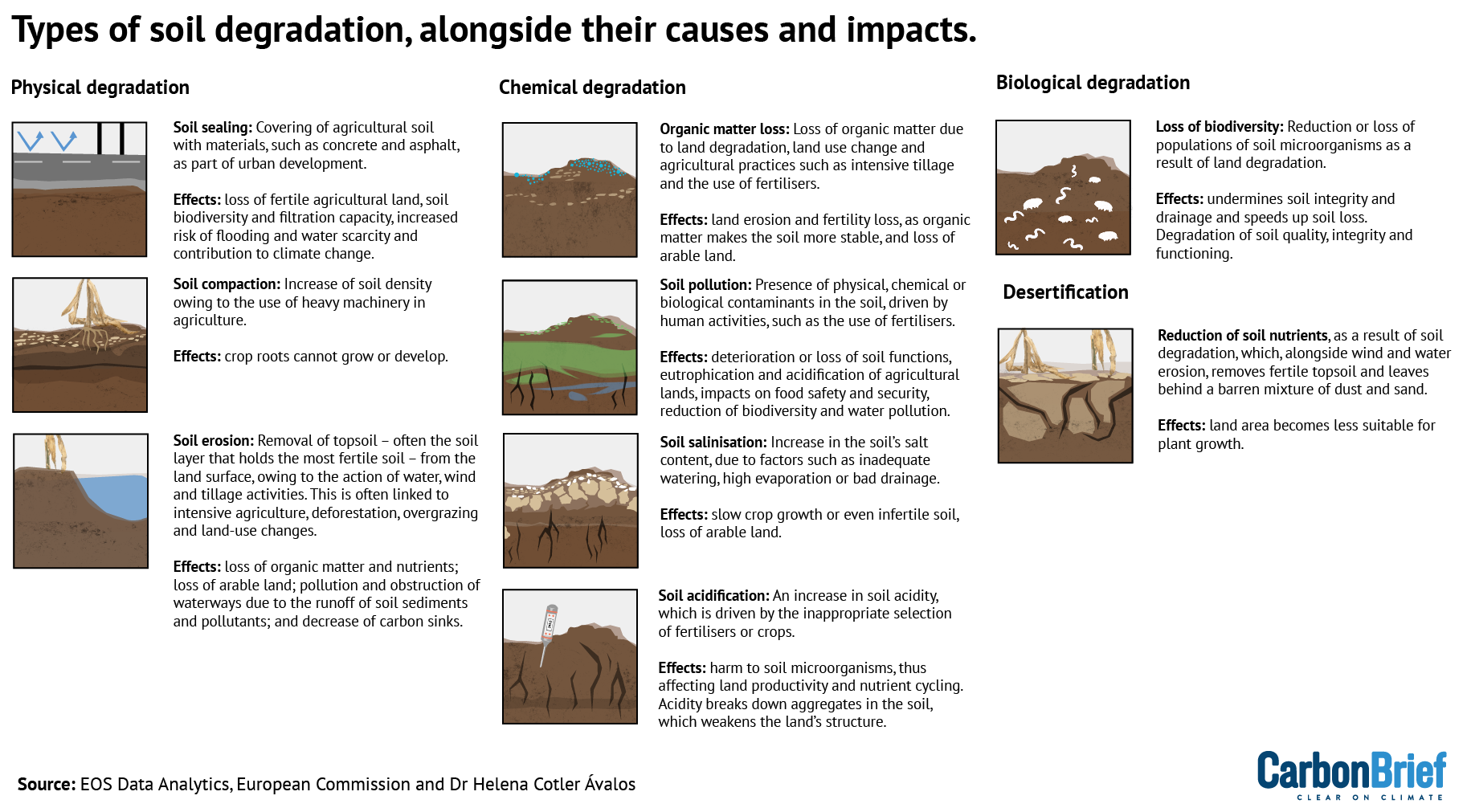
Types of soil degradation, alongside their causes and impacts. Source: EOS Data Analytics, European Commission and Dr Helena Cotler Ávalos. Credit: Kerry Cleaver for Carbon Brief.
Industrial agriculture is responsible for 22% of global greenhouse gas emissions and also contributes to water pollution and biodiversity loss.
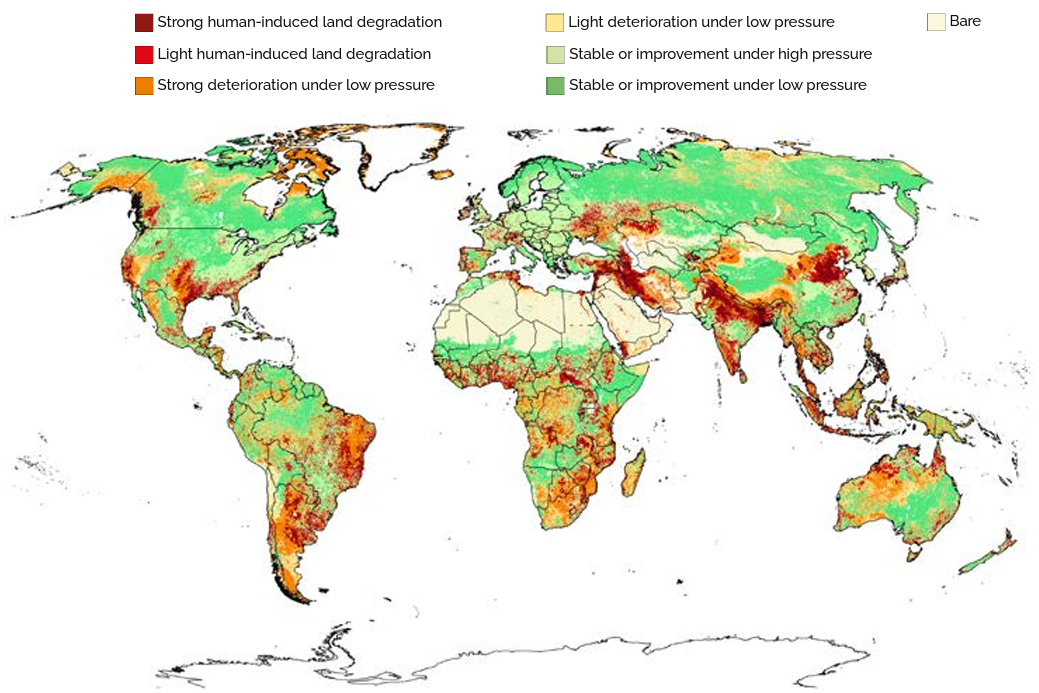
The map below, from the FAO, shows the state of land degradation around the world, from “strong” (dark red) to “stable or improv[ing]” (bright green).
It shows that the most degraded agricultural lands are in the southern US, eastern Brazil and Argentina, the Middle East, northern India and China.
Soil degradation became widespread following the Green Revolution in the 1940s, says Cotler Ávalos. During the Green Revolution, many countries replaced their traditional, diversified farming systems with monocultures. The Green Revolution also promoted the use of synthetic fertilisers and pesticides.
These changes led to a “dramatic increase” in yields, but also resulted in disrupting the interactions between microorganisms in the soil.
Cotler Ávalos tells Carbon Brief:
“It is the microorganisms that give life to soils. They require organic matter, which has been replaced by [synthetic] fertilisers.”
Today, there is a widespread lack of data on the condition of soils in developing countries.
For example, in sub-Saharan Africa, there are few studies measuring the rate and extent of soil degradation due to insufficient, reliable data. In Latin America, data on soil carbon dynamics are scarce.
Conversely, the EU released a report in 2024 about the state of its soils, spanning various indicators of degradation, including pollution, compaction and biodiversity change. The report estimates that 61% of agricultural soils in the EU are “degraded”, as measured by changes in organic carbon content, soil biodiversity and erosion levels.
The UK also has its own agricultural land classification maps, which classifies the condition of agricultural soils into categories ranging from “excellent” to “very poor”. This year, a report found that 40% of UK agricultural soils are degraded due to intensive agriculture.
Cotler Ávalos tells Carbon Brief:
“No country in the global south has data on how much of its soil is contaminated by agrochemicals, how much is compacted by the use of intensive machinery, how much has lost fertility due to the failure to incorporate organic matter.
“What is not studied, what is not known, seems to be unimportant. The problem of soil erosion is a social and political problem, not a technical one.”
Improved soil data, indicators and maps can help guide the sustainable management and regeneration of agricultural soils, experts tell Carbon Brief.
Why is soil health important for food security and climate mitigation?
As around 95% of the food the world consumes is produced, directly or indirectly, on soil, its health is crucial to global food security.
Food production needs to satisfy the demand of the global population, which is currently 8.2 billion and is expected to surpass 9 billion by 2037.
A 2023 review study pointed out that the total area of global arable land is estimated at 30m square kilometres, or 24% of the total land surface. Approximately half of that area is currently cultivated.
Studies have estimated that soil degradation has reduced food production by between 13% and 23%.
The 2023 review study also projected that land degradation could cut global food production by 12% in the next 25 years, increasing food prices by 30%.
Another recent study found that, between 2000 and 2016, healthy soils were associated with higher yields of rainfed corn in the US, even under drought conditions.
Research shows that soil health plays an important role in nutrition.
For example, a 2022 study found that a deficiency in plant nutrients in rice paddy soils in India is correlated with malnutrition. The country faces a growing amount of degraded land – currently spanning 29% of the total geographical area – and more than 15% of children are reported to suffer from deficiencies in vitamins A, B12 and D, along with folate and zinc, according to the study.
Soil health is also crucial for mitigating climate change.
Global agricultural lands store around 47bn tonnes of carbon, with trees contributing 75% of this total, according to a 2022 study.
Agricultural soils could sequester up to 4% of global greenhouse gas emissions annually and make a “significant contribution to reaching the Paris Agreement’s emissions reduction objectives”, according to a report from the Organisation for Economic Co-operation and Development (OECD).
Some farming practices can reduce greenhouse gas emissions and improve soil carbon sequestration, such as improving cropland and grazing land management, restoring degraded lands and cultivating perennial crops or “cover crops” that help reduce erosion.
However, some scientists have warned that the amount of carbon that can be captured in global soils – and how long that carbon remains locked away – has been overestimated.
For example, an article published in Science in 2023 argued that one of the widely used models for simulating the flow of carbon and nitrogen in soils, known as DayCent, has “plenty of shortcomings”. It says:
“It doesn’t explicitly represent how soils actually work, with billions of microbes feasting on plant carbon and respiring much of it back to the atmosphere – while converting some of it to mineralised forms that can stick around for centuries.
“Instead, the model estimates soil carbon gains and losses based on parameters tuned using published experimental results.”
That, along with uncertainties associated with small-scale estimations, makes the model unable to accurately predict increases or decreases of soil carbon over time and, thus, a positive or negative impact on the climate, the outlet said.
How can CO2 removal techniques improve soil carbon?
Soils can also play a role in mitigating climate change through the use of CO2 removal techniques, such as biochar and enhanced rock weathering.
Biochar is a carbon-rich material derived from the burning of organic matter, such as wood or crop residues, in an oxygen-free environment – a process known as pyrolysis.
Biochar can be added to soils to enhance soil health and agricultural productivity.
Due to its porous nature, biochar holds nutrients in the soil, improving soil fertility, water retention, microbial activity and soil structure.
The long-term application of biochar can bring a range of benefits, such as improving yields, reducing methane emissions and increasing soil organic carbon, according to recent research that analysed 438 studies from global croplands.
However, the study added that many factors – including soil properties, climate and management practices – influence the magnitude of these effects.

Dr Dinesh Panday, a soil scientist at the agricultural research not-for-profit Rodale Institute and an expert in biochar, tells Carbon Brief that biochar typically is applied when soils have low carbon or organic matter content.
He adds that this technique is currently being used mostly in growing high-value crops, such as tomatoes, lettuce and peppers. For staple crops, including rice, wheat and maize, the use of biochar is only at a research stage, he adds.
Enhanced rock weathering is a process where silicate rocks are crushed and added to soils. The rocks then react with CO2 in the atmosphere and produce carbonate minerals, storing carbon from the atmosphere in the soil.
In the US, enhanced weathering could potentially sequester between 0.16-0.30bn tonnes of CO2 per year by 2050, according to a 2025 study.
Panday says that both biochar and enhanced weathering are mostly practised in developed countries at the moment and both have their own benefits and impacts. One of the disadvantages of biochar, he says, is its high cost, as producing it requires dedicated pyrolysis devices and the use of fossil gas. One negative effect of enhanced rock weathering is that it may alter nutrient cycling processes in the soil.
A 2023 comment piece by researchers from the University of Science and Technology of China raised some criticisms of biochar application, including the resulting emissions of methane and nitrous oxide, the enrichment of organic contaminants and heavy metals, and the dispersion of small particulate matter that can be harmful to human health.
Scientists still question how much carbon-removal techniques, such as enhanced rock weathering, can store in agricultural soils and for how long.
How can agricultural soil be regenerated?
Many types of farming practices can help conserve soil health and fertility.
These practices include minimising external inputs, such as fertilisers and pesticides, reducing tillage, rotating crops, using mixed cropping-livestock farming systems, applying manure or compost and planting perennial crops.
Low- or no-till practices involve stopping the large-scale turning over of soils. Instead, farmers using these systems plant seeds through direct drilling techniques, which helps maintain soil biodiversity. A 2021 review study found that in the south-eastern US, reducing tillage enhanced soil health by improving soil organic carbon, nitrogen and inorganic nutrients.
Mixed farming systems, which integrate the cultivation of crops with livestock, have also been found to be beneficial to soil health.
A 2022 study compared a conventional maize-soya bean rotation and a diverse four-year cropping system of maize, soya bean, oat and alfalfa in the mid-western US. It found that, compared to the conventional farm, the diversified system had a 62% increase in soil microbial biomass and a 157% increase in soil carbon.
One of the aims of soil regeneration is to make agricultural soil as much like a natural soil as possible, says Dr Jim Harris, professor of environmental technology at the Cranfield Environment Centre in the UK.
Harris, who is an expert in soil and ecological restoration, says that regenerating soils involves restoring the ecological processes that were once replaced by chemical inputs, while maintaining the soil’s ability to grow crops.
For example, he says, using regenerative agricultural approaches, such as rotational grazing, can help increase soil organic matter and fungi populations.
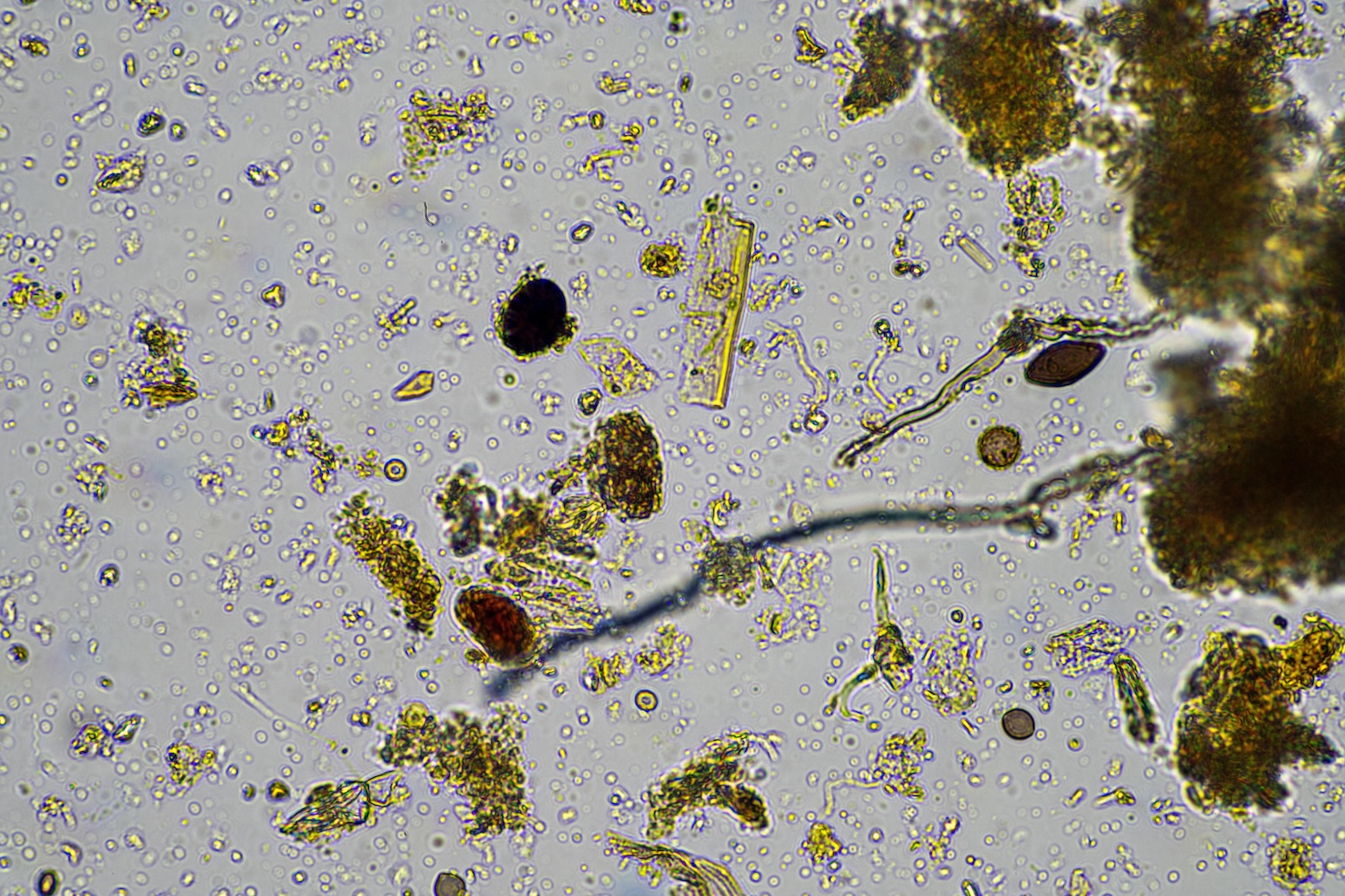
Which soil regeneration actions will be most successful will depend on the soil type, the natural climatic zone in which a farm is located, the rainfall and temperature regimes and which crops are being cultivated, he adds.
To measure the results of soil regeneration, farmers need to establish a baseline by determining the initial condition of the soil, then assess indicators of soil health. These indicators range from physical indicators, such as root depth, to biological indicators, such as earthworm abundance and microbial biomass.
In Sweden, researchers analysed these indicators in 11 farms that applied regenerative practices either recently or over the past 30 years. They found that the farms with no tillage, integration of livestock and organic matter permanent cover had higher levels of vegetation density and root abundance. Such practices had positive impacts on soil health, according to the researchers.
Switching from conventional to regenerative agriculture may take a farmer five to 10 years, Harris says. This is because finding the variants of a crop that are most resistant to, say, drought and pests could take a “long time”, but, ultimately, farms will have “more stable yields”, he says.
Harris tells Carbon Brief:
“Where governments can really help [is] in providing farmers with funds that allow them to make that transition over a longer period of time.”
Research has found that transitioning towards regenerative agriculture has economic benefits for farmers.
For example, farmers in the northern US who used regenerative agriculture for maize cropping had “29% lower grain production, but 78% higher profits over traditional corn production systems”, according to a 2018 study. (The profit from regenerative farms is due to low seed and fertiliser consumption and higher income generated by grains and other products produced in regenerative corn fields, compared to farms that only grow corn conventionally.)
A 2022 review study found that regenerative farming practices applied in 10 temperate countries over a 15-year period increased soil organic carbon without reducing yields during that time.
Meanwhile, a 2024 study analysing 20 crop systems in North America found that maize and soya bean yields increased as the crop system diversified and rotated. For example, maize income rose by $200 per hectare in sites where rotation included annual crops, such as wheat and barley. Under the same conditions, soya bean income increased by $128 per hectare, the study found.
The study pointed out that crop rotation – one of the characteristics of regenerative agriculture – contributes to higher yields, thanks to the variety of crops with different traits that allow them to cope with different stressors, such as drought or pests.
However, other research has questioned whether regenerative soil practices can have benefits for both climate mitigation and crop production.
A 2025 study modelled greenhouse gas emissions and yields in crops through to the end of the century. It found that grass cover crops with no tillage reduced 32.6bn tonnes of CO2-equivalent emissions by 2050, but reduced crop yields by 4.8bn tonnes. The lowest production losses were associated with “modest” mitigation benefits, with just 4.4bn tonnes of CO2e emissions reduced, the study added.
The authors explained that the mitigation potential of cover crops and no tillage was lower than previous studies that overlooked certain factors, such as soil nitrous oxide, future climate change and yields. Moreover, they warned, carbon removal using regenerative farming methods risks the release of emissions back into the atmosphere, if soil management returns to unsustainable practices.
Several of the world’s largest agricultural companies, including General Mills, Cargill, Unilever, Mars and Mondelez, have committed to regenerative agriculture goals. Nestlé, for example, has said that it is implementing regenerative agriculture practices in its supply chain that have had “promising initial results”. It adds that “farmers, in many cases, stand to see an increase in crop yields and profits”. As a result, the firm says it is committed to sourcing 50% of its ingredients from farms implementing regenerative agriculture by 2030.
However, Trellis, a sustainability-focused organisation, cautioned that “these results should be taken somewhat sceptical[ly]”, as there is no set definition on what regenerative agriculture is and measurement of the results is “lacking”.
In some places, the regeneration or recovery of agricultural soils is still practised alongside farmers’ traditional knowledge.
Ricardo Romero is an agronomist and the managing director of the cooperative Las Cañadas – Cloud Forest, lying 1300m above sea level in Mexico’s Veracruz mountains. There, cloud forests sit between tropical rainforest and pine forests, in what Romero considers “a very small ecosystem globally”, optimal for coffee plantations.
His cooperative is located on land previously used for industrial cattle farming. Today, the land is used for agroecological production of coffee, agroforestry and reforestation. The workers in the cooperative are mostly peasants who take on production and use techniques to improve soil fertility that they have learned by doing.
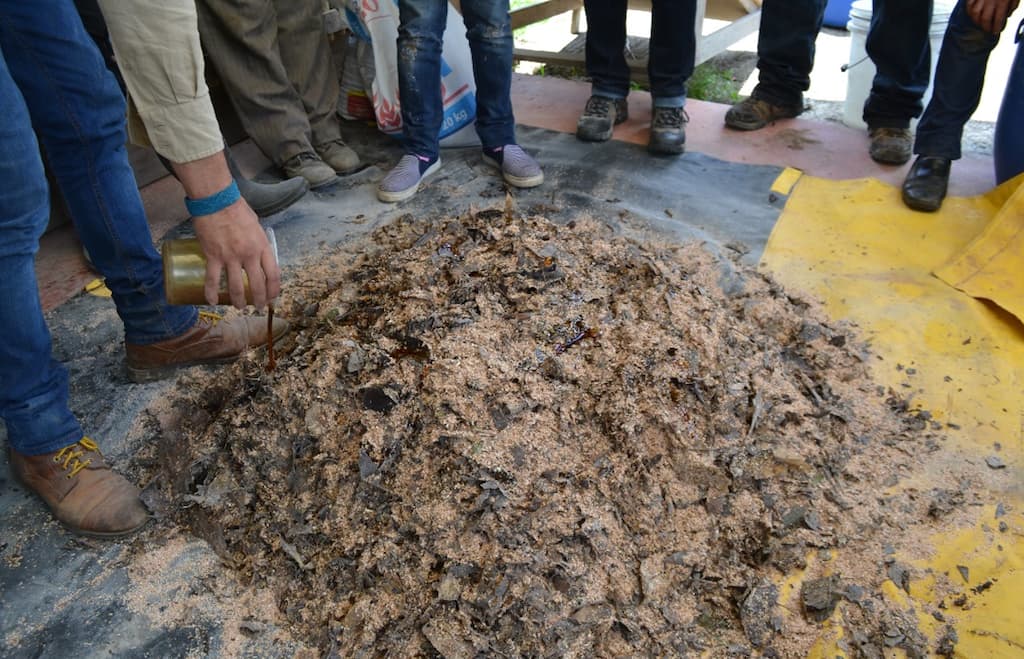
Romero says the soils in his cooperative have improved and crop yields have been maintained thanks to the compost they produce. He tells Carbon Brief:
“We are still in the learning stage. We sort of aspire to achieve what cultures such as the Chinese, Koreans and Japanese did. They returned all their waste to the fields and their agriculture lasted 4,000 years without chemical or organic fertilisers”.
What international policies promote soil health?
Soil health and soil regeneration feature in four of the targets under the UN Sustainable Development Goals (SDGs).
(There are 169 targets under the SDGs that contain measurable indicators for assessing progress towards each of the 17 goals.)
For example, target 15.3 calls on countries to “restore degraded land and soil” and “strive to achieve a land-degradation neutral world”.
Soil health is increasingly being recognised in international negotiations under the UN Framework Convention on Climate Change (UNFCCC), UN Convention on Biological Diversity (UN CBD) and the UN Convention to Combat Desertification (UNCCD), says Katie McCoshan, senior partnerships and international engagement manager for the Food and Land Use Coalition (FOLU).
Each of these conventions has established its own work groups, declarations and frameworks around soil health in recent years.
Ideally, says McCoshan, action on soils should be integrated across the three different conventions, as well as in conversations around food and nutrition.
However, work across the three conventions remains siloed.
Currently, agriculture is formally addressed under the UNFCCC via the Sharm el-Sheikh joint work on implementation of climate action on agriculture and food security, a four-year work plan agreed at COP27 in 2022. This work group is meant to provide countries with technical support and facilitate collaboration and research.
The COP27 decision that created the Sharm el-Sheikh agriculture programme “recognised that soil and nutrient management practices and the optimal use of nutrients…lie at the core of climate-resilient, sustainable food production systems and can contribute to global food security”.
At COP28 in Dubai, the presidency announced the Emirates Declaration on Sustainable Agriculture, Resilient Food Systems and Climate Action. The 160 countries that signed the declaration committed to integrating agriculture and food systems into their nationally determined contributions, national adaptation plans and national biodiversity strategies and action plans (NBSAPs). The declaration also aims to enhance soil health, conserve and restore land.
Harris says the Emirates Declaration is a “great first step”, but adds that it will “take time to develop the precise on-the-ground mechanisms” to implement such policies in all countries, as “they are moving at different speeds”.
Within the UNFCCC process, soil has also featured in non-binding initiatives such as the 4 per 1000, adopted at COP21 in Paris. The initiative aims to increase the amount of carbon sequestered in the top 30-40cm of global agricultural soils by 0.4%, or four parts per thousand, per year.
The UNCCD COP16, which took place in 2024 in Saudi Arabia, delivered a decision to “encourage” countries to avoid, reduce and reverse soil degradation of agricultural lands and improve soil health.
Although COP16 did not deliver a legally binding framework to combat drought, it resulted in the creation of the Riyadh Global Drought Resilience Partnership, a global initiative integrated by countries, international organisations and other countries to allocate $12bn towards initiatives to restore degraded land and enhance resilience against drought.
The COP also resulted in the Riyadh Action Agenda, which aspires to conserve and restore 1.5bn hectares of degraded land globally by 2030.
Although soil health appears under both conventions, it is not included as formally in the UNFCCC as in the UNCCD – as in the latter there is a direct mandate for countries to address soil health and land restoration, McCoshan tells Carbon Brief.
Under the UNCCD, countries have to establish land degradation neutrality (LDN) targets by 2030. To date, more than 100 countries have set these targets.
Under the biodiversity convention, COP15 held in Montreal in 2022 delivered the Kunming-Montreal Global Biodiversity Framework (GBF), a set of goals and targets aiming to “halt and reverse” biodiversity loss by 2030. Under the framework, targets 10 and 11 reference sustainable management of agriculture through agroecological practices, and the conservation and restoration of soil health, respectively.
A recent study suggests that restoring 50% of global degraded croplands could avoid the emission of more than 20bn tonnes of CO2 equivalent by 2050, which would be comparable to five times the annual emissions from the land-use sector. It would also bring biodiversity benefits and contribute to target 10 of the GBF and to UNCCD COP16 recommendations, the study added.
McCoshan tells Carbon Brief:
“[All] the pledges are important and they hold countries accountable, but that alone isn’t what we need. We’ve got to get the financing right and co-create solutions with farmers, Indigenous people, youth, businesses and civil society as well.”


The post Q&A: The role of soil health in food security and tackling climate change appeared first on Carbon Brief.
Q&A: The role of soil health in food security and tackling climate change