

Weather Guard Lightning Tech

PEAK Wind Insights with Lene Hellstern
Lene Hellstern, director of engineering at PEAK Wind, discusses the critical importance of thorough technical, commercial, and financial due diligence before investing in wind farm projects. She shares insights from her 24 years of experience on how developers can avoid common pitfalls, manage risks, and build better relationships with turbine manufacturers to ensure more accurate power production estimates.
Fill out our Uptime listener survey and enter to win an Uptime mug!
Sign up now for Uptime Tech News, our weekly email update on all things wind technology. This episode is sponsored by Weather Guard Lightning Tech. Learn more about Weather Guard’s StrikeTape Wind Turbine LPS retrofit. Follow the show on Facebook, YouTube, Twitter, Linkedin and visit Weather Guard on the web. And subscribe to Rosemary Barnes’ YouTube channel here. Have a question we can answer on the show? Email us!
Allen Hall: Wind farm developers often face a challenging reality. Projected power output doesn’t match actual performance. This gap can mean millions in lost revenue and unexpected challenges. This week we speak with Lene Hellstern director of engineering at PEAK Wind. With over 24 years of experience analyzing wind projects worldwide, Lene brings crucial insights about what developers need to know before investing millions in wind farm development.
This is a great interview. Stay tuned.
Welcome to Uptime Spotlight, shining Light on Wind Energy’s brightest innovators. This is the progress Powering tomorrow.
Allen Hall: Lene, welcome to the program.
Lene Hellstern: Good to be here.
Allen Hall: We’ve been wanting to talk to you for a long time. So I’m glad you’re on the podcast because your interaction with developers is remarkable and the process that you go through I think is eye-opening. ’cause I don’t see that process happening at all wind sites and in Europe I think it happens more commonly.
But in the United States not so much. Why or when developers not consulting experts like you before, they spend hundreds of millions of dollars. What is the problem with that?
Lene Hellstern: It actually, it does happen, but yeah, sometimes it don’t. And yeah, I might not be the right one of asking to ask this question.
Maybe you should ask them as well why don’t you do it? But I, so for some it’s it’s budget constraints, right? Because you’re a consultant and then they don’t immediately see, how this money that I’m paying the consultant, how does that convert into a gain? Profit. It could be seen as some loose and money just because they’re asking a lot of questions on technical stuff.
It could also be that they are unaware, many are more into the financial part of it. And they have this perception that it’s not needed, the the technical due diligence or the commercial due diligence as the financial, because it’s like buying a car. It is really not like buying a car.
So maybe that is, that’s the reason. And that they think, the wind always blows, so it’s gotta go the turbine. But that’s just not how this world.
Joel Saxum: Would it be fair to say that some of your customers have felt the pain or they’ve gotten burned and that’s why they’re there?
Lene Hellstern: Yes. Yeah. Yeah. And you also, we can ask a lot of questions in the process before you buy the turbines. And then we can cover a lot of risks and you can mitigate before everything falls apart. Right. And that gives them a really good advantage, right? They can cover their themself and take all kind of scenarios into consideration, right?
And you get a much, if you ask kindly to the OE em, you do get some answers and you get a better collaboration with the OEM. If you conduct these technical due diligence, if you yell and scream at them, it’s not gonna go well. No. Kill with kindness. That’s much better than threats.
And I want this, and demand that and just ask, right?
Allen Hall: So what are they missing? Generally, when you’re starting a due diligence and you’re walking into a new situation, what are the highlights that a general developer just doesn’t really think about that really needs expertise like yours?
Lene Hellstern: Oh, but they don’t know the consequences of the selections they do in this process.
There is a not lot of things, technical topics that you need to make a decision on what kind of leading its protection do you want? Of course the OEM is guiding you you also on, on various technical topic, but you also as an owner, have some requirements you want fulfill and sometimes they don’t, they’re not even aware of what is it that is important to me.
They don’t know, and then they don’t know the technical consequences that they make. How does that end up, if you, let’s say you, you can some people are not aware that turbines come with a design lifetime, but if you’re smart, you can actually run it longer. But if you prepare early.
Then it doesn’t cost so much to run it longer. And if you run the turbines for a longer time, the, your levelized cost of energy goes down. But they don’t know what they need to do technically and what they need to cover. Let’s say, I can give you an example. Without getting too nerdy. Let’s say that you need, you wanna run your wind farm long, but you know that in this area, in order to get that, the authorities are gonna ask for track record.
They’re gonna, they wanna see data throughout the years from your control monitoring system. But and you can provide that. Perhaps depending on if you, in the contract, made sure that you actually have access to the control monitoring system and that you can download the data because if you don’t have that in the contract and have that settled upfront, it’s gonna, either you won’t get it because it’s not your property, you haven’t made sure that you get it, or the OEM is gonna ask you for money.
So if you have that sorted out before then, if the authorities come and say, Hey, I wanna see the track record for your condition monitoring system, you don’t need to start paying for it. And you don’t need to start digging. And so that, that’s just one example that, where we can help them and say what is it you want?
We can also say what things is it you need to take into consideration?
Joel Saxum: Steer
Lene Hellstern: owner.
Joel Saxum: My question originally is, what percentage would you think your due diligence is commercial versus technical? But at the same time, I think that they fit together because the technical side of things will drive the commercial and the contract side of negotiation.
Lene Hellstern: Maybe it’s one third each. Financial, commercial, and technical.
Joel Saxum: That makes sense.
Lene Hellstern: And can you live with on route one? Yeah. But then it’s gonna, you’re gonna be in pain.
Joel Saxum: Yeah. I boil it down to say if I was building a house, and I think I can generally as a, this is my, me as a wind farm developer, I’m building a house and I generally know how to do everything.
However, I may not be an expert on the foundation, but I tried it myself and now 10 years down the line, I’ve got foundation issues. So while I could have done it, I, there was a lot of things I didn’t know specifically. So that’s when I would call someone like the peak team like you have, because you have the relationships with the OEMs, you know how to deal with them, you know the questions to ask.
You’ve been through these processes a ton of times. So you’re that subject matter expert. But can you focus a little bit and tell us how. The difference between having a good relationship with the OE em or a long standing one. ’cause I know when we were talking off air, you were saying, sometimes I walk into me and they go, oh, le, nice to see you.
Lene Hellstern: It’s a small world actually. And I’ve been in this industry for 20. Four years soon. I know I don’t look that old, but I have and people, go around and you don’t know when you’re meeting this person and then they sit on another side of the table, right? So always keep good relations.
Always ask nicely, give them your arguments because if they understand what you are gonna use the information. For then they are, they might be more willing to give it to you. Let’s take a an example. The failure rates, right? That they really don’t wanna give you that unless they understand what it is you they’re gonna use it for.
Or I would use it for and sometimes I tell ’em, okay, can I please have the failure rates for your main components? And they say, go, no. And I go, okay, that’s fine. But the problem here is then I am gonna guess them. And why not get it from you because. Then in my guessing I would, although I am getting pretty good at it, but I would put in, a, a sort of a risk, right?
So it, I’m automatically pumping it a little bit up, right? Because I’m not really sure, so I need to cover myself here. Where if I get it from the OM and they can tell me why did you come to this conclusion? And I can see, I can think, okay, this is, they’ve done a pretty good job.
They used, the background is God knows how many turbines, so this is, they’ve done their homework. I trust this. Then I, we can use it in our calculations. So that’s that’s and then you don’t get that from them if they don’t trust you and you started yelling and screaming at them.
And also, and when we have contract negotiations, you just you tell them, sometimes we don’t reach an agreement, but, all wanna have things signed at the end of the day. And and tell them why is it you are asking these questions instead of just demanding left and right.
Why is it a value to you? And then make them, give them the arguments for internally in their organization to make sure that you can actually have the information you need.
Allen Hall: Yeah. It, it puts PEAK Wind in a unique position here. And I want to dive into this a little bit deeper. So you’re walking into OEM, big powerful, OEM makes thousands of turbines, has a long service history to developer, which may have a long service history with this.
OE em or may not have any history at all with them. They’re, they may be completely new to the industry. That puts you in a really odd position that you have to navigate both of those conditions and try to get to a good conclusion like that. But PEAK Wind is the one to go do this. And because you bring a lot to the table.
And I’m just, I think we ought just step back for a minute and explain all the things you do when you’re in those discussions interacting between the OEM and the developer. What does that look like?
Lene Hellstern: So if we are in a due diligence, right? We have a of course we don’t almost say we don’t kiss until, right?
So there’s a we don’t say, oh yeah, listen, this client, this happened and this client, you don’t do that, right? Then we did. So we don’t do that. But we do know that there, and you can also see that in the press. There are certain platforms that have certain issues, right? And then we go in. And then let’s say that this OEM has had a history of issues with the cooling system.
And so then we ask questions on the cooling system in this technical due diligence, sometimes you’re lucky and you go to the OEM and you sit with them in meetings and say, and if you are back lucky. You always give them a list of what would I like as a consultant to hear about here?
So they have a chance to prepare, right? If you don’t do that, how on earth can they repair? So then you say, we know that for, that your platform has previous history issues here. So what how, what have you done to improve this? And can we be sure that the turbine is their client is buying, it’s actually taken into consideration, or you’re gonna do a retrofit later down the line?
Or because, the OEMs are not stupid, they will try and fix it. They’re good people so they don’t wanna put anything on the market with flaws and errors in it, right? So then they get mad customers. So that’s where we go in and we we try to see how, how big a risk is this now when you buy this platform and sometimes it’s not, and sometimes it is.
And then we need to find out what, so what are you gonna do? What can the client here expect?
Allen Hall: So you’re trying to understand what the risk is in terms of dollars, I assume, and that, or whatever the currency is at the location, trying to put some numbers to it to say this turbine’s gonna produce this amount of revenue, this turbine’s gonna produce that kind of revenue.
Or These are the problems you’re gonna have if it’s lifetime. You need to build that into your models. That has to be a real eye-opener for developers at times. Because I think a lot of times, like you’re saying, like they, they pick a turbine, they get focused on it, and they don’t realize what that means.
And I’m wondering do, does an operator. Developer changed the turbine they were gonna buy because of this interaction? Because you’re giving ’em some advice and saying maybe this may not be the right turbine for that space.
Lene Hellstern: Yeah. Sometimes they actually have to, right?
Because if the site suitability is completely off if it’s overloaded, then either you’re gonna be faced with extreme containment where you’re losing a lot of production and then, the business case just doesn’t hold water. So always have your site suitability. Everybody. I once heard someone say, yeah, there’s no business reason for site suitability.
Wow. That particular company now has a whole team of site suitability experts. But yes they learned one of the people that learned. But so you in your, in that if you have a good team you always have, you have a selection of turbines you find suitable for the site. And you have a layout.
If you’re smart, you have a layout that fits them all because then you don’t need to wiggle them around all the time, which is not fun because depending on what country you are, wherever you are in the world, there are different permitting procedures, right? So I have destroyed, or I have didn’t destroy, but that was working for an OEM.
But I have actually not well, they. They got the wind direction wrong, so they spaced them too tight. Yeah, so I found that there was an offset on the wind direction and I could say. Yeah you gotta do it. I could do a new sign layout out for you. Or you gotta do it yourself because you you spaced the turbines too tight.
Then they would get overloaded and then they came back and said, yeah, we’re scrapping the project because the, it’s gonna take us five to eight years to get a new permit. So you could, I, to some degree killed it, but. It wasn’t my fault, I would say. And so you wanna have your spacing, right? And then you can’t know what turbines you’re gonna be buying, right?
Because when you do the layout, you are five minutes before. But if you are nice to the OEMs, you’ll know. What’s coming up
Allen Hall: when you get into these discussions between the OEM and the developer and the pieces that they’re typically missing are related to operational losses, clearly and loads. Those are two things they haven’t thought about, and they assume that the OEM has ’em all figured out.
How do you step into that discussion and try to navigate that?
Lene Hellstern: But the OEM you need to have your wind resource assessment done a lot earlier. Be way before you contact OEM and you need to do wind, you need to do production estimates on several different kind of turbines to find out which one is best.
You also need to know about site suitability because you, if you are in complex terrain. Like a mountain or you have forestry, then you need to know what does it do to your turbine? How tight can you space it? So you need to have a prop and you always have site limit limitations part. If it’s flat land in Texas, then you have, I.
Huge sites, right? And also if you have neighboring wind farms. So all of these things need to be mapped out and then you need to look at what is the design of the turbines. And you don’t actually start contacting your, the OEM before you could do it if you have good connection, but you can also, have a tinder and but you don’t.
And OEMs. Calculate, and I’m not saying they’re wrong because then some of them are gonna call me. They calculate when resource assessment on one in one way, and then you would want it in another way. And the reason that the OEMs and without, I’m gonna try not put to put too many words in their mouth for them it is okay if the production is overestimated.
Because that for them, that is just, they just put high loads on the turbines and then they are sure that the turbine is sighted for or suitable for site. And also the OEM does not take account all your other losses. They only take the turbine, they. They don’t take grid losses into consideration. They don’t take substation.
All of these, the losses you have, they don’t take that into consideration because they sometimes, they don’t often know what it is, right? What they’re selling you, the turbine, they are not selling you the grid access.
Joel Saxum: Are they doing that because they’re assuming, basically it’s a horse, a piece, like if you put this turbine in or that turbine in, or that turbine in all of the grid losses and things behind the turbine.
Are equal based on what? It doesn’t matter what turbine you install. Is that why they assume that? Or are they just saying this is our technology, so this is the one that we can do?
Lene Hellstern: No, it’s just this. Yeah, they’re just, this is what we sell you. This is what we know about. Then they, if they started calculating on all other things, then they’re giving you a free service.
Right. That someone else in the market is already, I completely understand it. I’m not criticizing it. They sell a turbine. They sell a power curve on the certain condition conditions, but that’s what they sell.
Allen Hall: That’s the number one complaint in the United States though, is that the power that was predicted from the farm.
Is higher than what actually happens by a several percentage points. Sometimes I’ve heard double digits. At times it seems completely unreasonable. You should not have double digit errors in that calculation. But is that just because they haven’t done a system assessment to the level like PEAK Wind would do to.
Put all your losses in there and tell you what you can deliver to the transmission lines.
Lene Hellstern: First of all, nobody is interested in the right numbers because the people that are developing this is only interested in a high number ’cause that is a greater likelihood of success. I used to be very annoyed about this, but after 24 years, I’m like, yeah, so this, they nobody’s interested in the real number, right?
They want a high number so they can make sure that this pro project is gonna happen. So also it also internally within the, when I worked a lot with wind resource assessment, I would always get complaints. It would be you, it should be nine meters per second. No, but it’s not.
We’ve studied it. We analyzed it, we deducted everything. Your average wind speed is 8.5 just per second. Yeah. But it should be nine. No. Or, why are you giving it such a high grid loss? Because the grid’s gonna be congested. We are, look, we are looking at 25 years. It is already starting.
They’re starting to contain, there is no plan of building out the grid anytime soon. It’ll be worse. Your grid containment. So I’m not gonna tell you don’t have anything because you will. Always, I also worked as a developer. You, if you wanna not please anyone, go into wind resource assessment and production estimates, because they’re always gonna be unhappy.
Joel Saxum: Okay. So you’re, you guys operate your course at Danish company, but you’ve done projects all over the world in the states, in Europe, offshore, onshore. Great. So do you see a difference in where the demand is coming from your services? Say. Is it partially coming from the fin financiers of the projects?
The insurers? Or is it purely developers, or is that geographically dependent?
Lene Hellstern: We have a lot of different clients, so we don’t believe in putting all the eggs in one basket, so we have financial institution that are looking to acquire a part of a offshore wind farm somewhere in the world. We have developers.
That they are looking they wanna develop projects or they wanna sell them. We have utilities. It, it’s different, right? It’s also some have the the capacity to do this kind of work. Others have already done it, but they want a third pair of eyes, right? So that’s fair enough.
And then, we try, we, of course, I’m not, I’m gonna get so hammered if I say we don’t try and please anyone. We always try to please our clients, but we also try to be honest and say, this, the production estimates, you have forgotten this, and that. Or you, there, there are some gray areas here that you’ve gotta make a guess.
I, and your guess is a bit too low. If you take these things into consideration so it can be a lot of different clients and that’s the beauty of being a consultant. ’cause I’ve been an OEM, I’ve been a developer, I’ve been working for utility. But as a consultant you, it’s, and then you try and find out what is it they want?
What do they need? Um, and then we try and help them and please them. But we also try to be honest so they understand what is they’re venturing into. Then they can make the right, we dress ’em up so they make the right decisions, right? Make them aware of the risks.
Allen Hall: So that honesty is why you would get a hold of PEAK Wind because you’d rather know now and get an outside independent assessment before you spent the a hundred, 200, 400, $500 million on a project and then learn afterwards that, lene was right. You want to know that upfront because she does know what she’s talking about. She does. However, that history and PEAK Wind is full of people like that, that know wind and know where the problems lie and can give you that information upfront in a project. And that’s why we, that’s why we had Lene on today is because she’s just so full of knowledge and experience and there’s a lot of developers that don’t have that.
And it’s hard to find it lene, how do people get ahold of PEAK Wind and get you on board to help them through this process?
Lene Hellstern: You just call us. We’ll help you but we won’t, we won’t always say what you wanna hear, but we will say what you need to hear. Yeah, it’s so you just contact us.
We, we are on LinkedIn. We have a webpage. Yeah. Just reach out.
Allen Hall: The website is peak-wind.com and PEAK Wind is based in Denmark. Adjust accordingly on your two time zone and the US Exactly.
Lene Hellstern: And Korea, Taiwan, uk I forget someone. Yeah. Yeah. Hamburg, Germany. Two places in Denmark. Yeah. Yes. So we are very much global.
We are like 211 currently. And it’s not just leaning. Who’s doing this work, but they, I have a whole army of good people behind me helping with this. ’cause I am not the specialist on everything. We pull in the specialist on the, on different topics like whether it’s components. And I am not the specialist on commercial or financial.
I’m the director of engineering, so I that’s my area. And then. I pull in my people on the different specialist topics, and we would love to help.
Allen Hall: Having those talented people in one place is what you’re paying for, and that’s why PEAK Wind is so important to the industry. So reach out to PEAK Wind and you can just go to the website, it’s PEAK-Wind.com.
You can find Lene on LinkedIn and contact her and she’ll get you started. But the honesty is. Part of the equation. And Lene, thank you so much for being on the podcast. Great guest. We love to have you back on, so you’re always welcome to come back onto the podcast.
Lene Hellstern: Sure. This was super fun. I just hope somebody got smarter by listening to this.
https://weatherguardwind.com/peak-wind-insights-with-lene-hellstern/

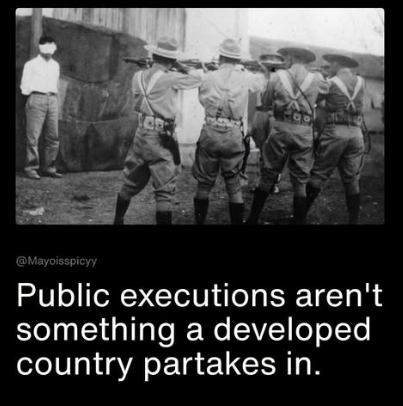 The United States seems set on propelling itself backwards.
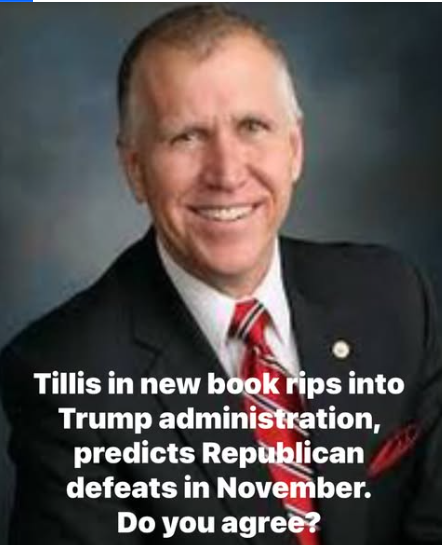 Maybe, as they say, “Hell has a special place reserved in it” for people like Thom Tillis, Republican Senator from North Carolina, who enabled Trump to rape and destroy the United States.
That was until it became clear to Tillis that he could jump ship, write a scathing book about the president, get all over mainstream news promoting it, and go on to enjoy another chapter of political success.
That we Americans are so stupid that we accept this blatant hypocrisy and criminality is sad proof that we’re not the people we were 20 years ago. Maybe what many people are saying are correct: we deserved what we got.
Here’s a short video from Elle Cordova that reminds us that science is something of a rarity in human history.
The great tyrants of history have done their best to cause the people they ruled to reject science, simply to ensure the masses are ignorant, terrified, superstitious, and thus easily controlled.
The current political administration is particularly engrossed in the rejection of science. I wonder why.



-
Climate Change1 year ago
Guest post: Why China is still building new coal – and when it might stop
-

 Greenhouse Gases2 years ago
嘉宾来稿:满足中国增长的用电需求 光伏加储能“比新建煤电更实惠”
-
Greenhouse Gases1 year ago
Guest post: Why China is still building new coal – and when it might stop
-

 Climate Change2 years ago
嘉宾来稿:满足中国增长的用电需求 光伏加储能“比新建煤电更实惠”
-

 Renewable Energy12 months ago
Sending Progressive Philanthropist George Soros to Prison?
-
Climate Change2 years ago
Bill Discounting Climate Change in Florida’s Energy Policy Awaits DeSantis’ Approval
-
Greenhouse Gases1 year ago
嘉宾来稿:探究火山喷发如何影响气候预测
-