

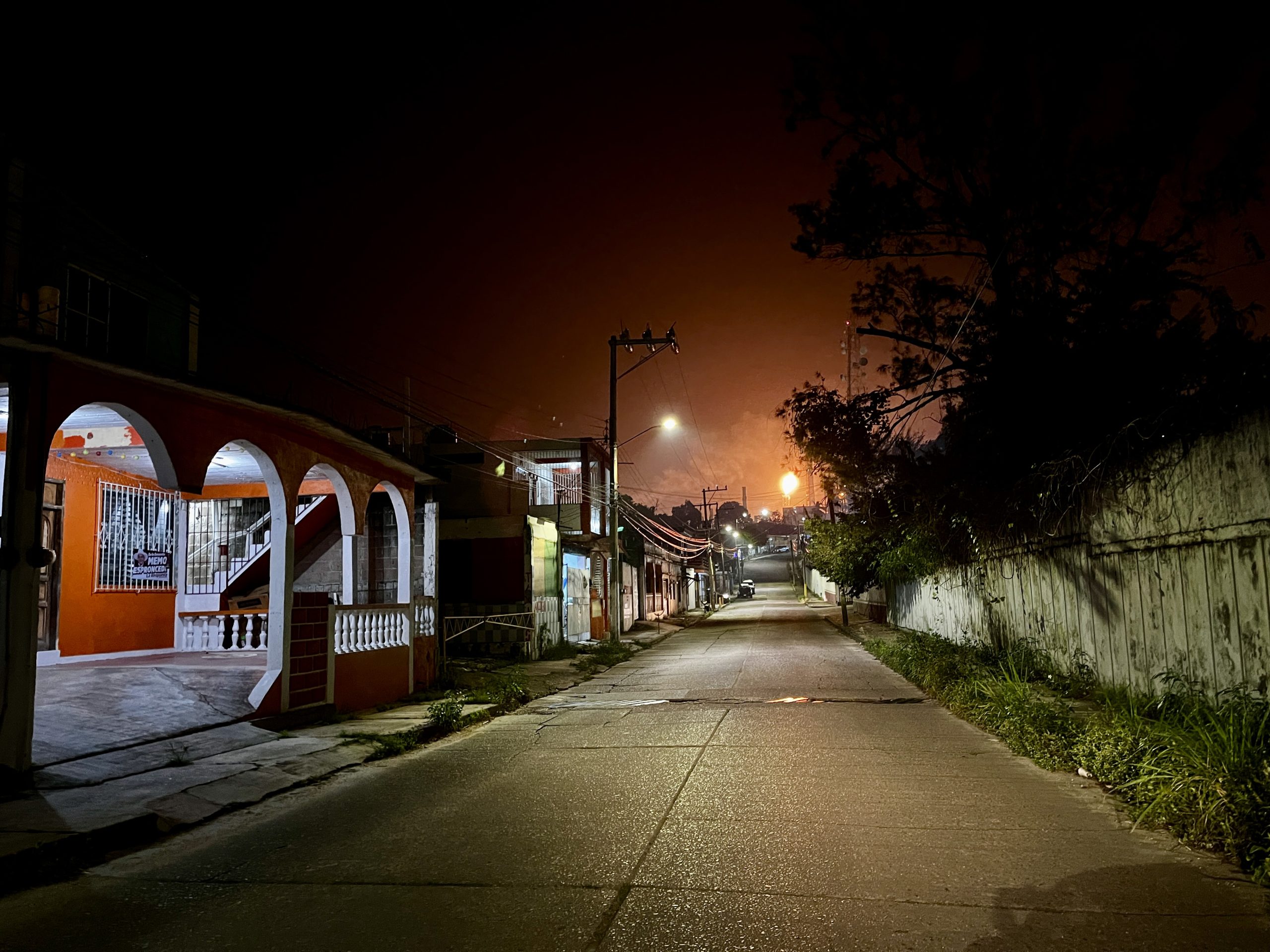
At night, the Lázaro Cárdenas refinery – Mexico‘s oldest, built in 1906 – lights up the city of Minatitlán, in the southern oil-producing state of Veracruz. Gas flaring turns night into day, inhabitants say, while a mix of industrial smells in the air reminds visitors they have arrived in Mexico’s oil and gas heartland.
“It is like Mordor,” said one resident, referring to the volcanic realm in the fantasy novel “The Lord of the Rings” with a tone between humour and resignation. “There are no more dark nights in Minatitlán,” said another local interviewed by Climate Home.
The refinery is a key pillar of Mexico’s state-owned oil company, Petróleos Mexicano (Pemex), and a testament to the firm’s problems with climate-heating methane gas. Pemex has struggled for years to control its rocketing methane emissions despite promises to the contrary and has failed to find an efficient way to use the gas – instead venting or flaring it, which releases methane into the atmosphere.
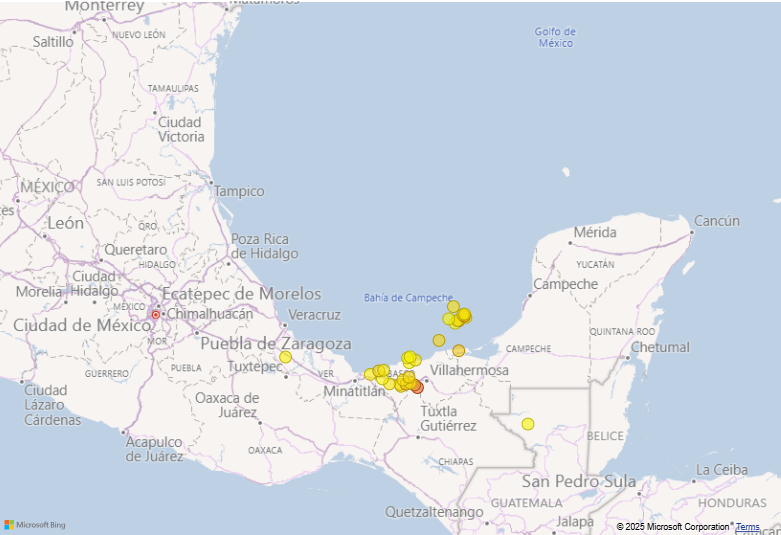
While its oil production went down in the decade from 2013 to 2023, Pemex now has one of the highest methane footprints per barrel of oil in the world, about eight times that of ExxonMobil and 83 times Saudi Aramco’s, according to local think-tank Mexico Evalúa.

Methane is a greenhouse gas that is around 80 times more potent than carbon dioxide in the first 20 years after it is emitted. Experts say cutting methane emissions is “low-hanging fruit” in tackling climate change.
To that end, a coalition of 160 countries – among them Mexico – have signed a global methane pledge, aiming to reduce emissions by 30% globally by 2030 with respect to 2020 levels. The initiative was first launched in 2021 at the COP26 climate summit in Glasgow.
Pemex has also joined voluntary initiatives like the Oil and Gas Methane Partnership (OGMP) in 2014, under which ten oil and gas giants – including BP, Shell and TotalEnergies – promised to track and evaluate ways to reduce their emissions. Pemex left the partnership when it was ratcheted up in scope and relaunched in 2020. Meanwhile, the company’s emissions have continued to go up.
Ending poverty and gangs: How Zambia seeks to cash in on the global drive for EVs
Pemex’s rising methane emissions, even as its oil and gas production fell, could put Mexico’s ambitious climate goals at risk, analysts warned. The government recently announced at COP29 it will set a net zero greenhouse gas emissions target for 2050, making it the last G20 country to adopt a net zero pledge.
“This new ambition from the Mexican state to reach net zero by 2050 needs to consider the country’s energy policy and Pemex in particular,” said Fernanda Ballesteros, Mexico country manager at the Natural Resource Governance Institute (NRGI).
Like many of the world’s largest economies, Mexico is still due to submit a new nationally determined contribution (NDC) – a climate plan with a 2035 target to cut emissions of all greenhouse gases including methane. Countries are expected to file their new NDCs before September.
Mexican environment secretary Alicia Bárcena has called this round of climate plans “our last hope” to keep global warming to 1.5C above pre-industrial times.
But the country’s new NDC will need to address Pemex’s emissions and show a clear plan for change, Ballesteros said. “[Pemex] is a very relevant actor for Mexico to achieve this [net zero] goal,” she added.
Fugitive methane
Minatitlán is a small city of just over 144,000 inhabitants, including a large floating population from neighbouring states like Oaxaca and Tabasco. Mexico’s southern region made headlines in 2021 when a pipeline rupture caused a gas leak that set fire to the ocean in the Gulf of Mexico.
Around the time of that incident, Pemex promised to reduce flaring (where gas is burned off), as well as venting (where it is released directly) and other types of fugitive emissions such as leaks, as outlined in its 2021-2025 business plan.
A Climate Home analysis of the company’s last four sustainability reports shows that Pemex did manage to reduce flaring, but gas venting and leaks kept growing. And over the past decade, methane emissions still followed an upward trend.
Many methane leaks from Pemex-run facilities – some major – have occurred in recent years, with one in the Deer Park refinery, located in Texas, leaving two dead in 2024.
Climate Home has identified another large leak of methane emissions from a Pemex plant in Minatitlán.
On April 28, 2024, methane monitoring platform Carbon Mapper detected one of the largest methane plumes in the Americas coming from a Pemex plant located right in the heart of the city. Climate Home confirmed that a second satellite data provider, Kayrros, also recorded this plume.
The plume released more than 16 tonnes of methane per hour into the atmosphere, a rate higher than any other single plume detected in oil-producing countries on the continent such as the US or Venezuela over that same year.
Both Kayrros and Carbon Mapper recorded the plume only once, meaning it is not possible to know how long it was active and thus the amount of greenhouse gases emitted into the atmosphere.
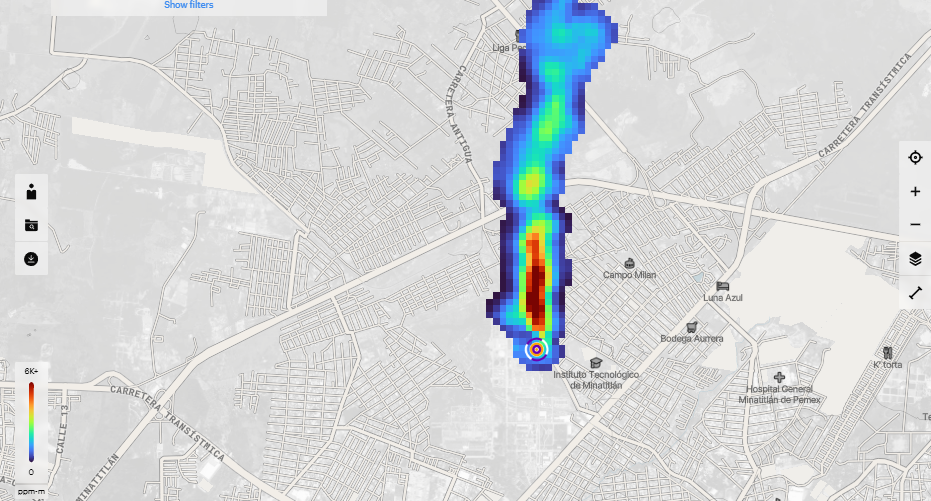
The plume was detected over Pemex’s Cosoleacaque petrochemical complex, located 5km from the centre of Minatitlán, near a university and a hospital. The complex contains four ammonia plants, of which only one is currently operational, according to six Pemex workers interviewed.
Cosoleacaque produces ammonia from gas, which is then sold to make fertilisers. This is a business Pemex has recently resuscitated with support from President Claudia Sheinbaum, a climate scientist, in a bid to boost the domestic agriculture sector.
Lula’s government pushes for new oil drilling in the Amazon – where it will host COP30
Pemex plans to invest almost $400 million in reactivating petrochemical plants that were dormant for more than two decades. Cosoleacaque is one of the plants that was restarted in 2023 after operating at minimum levels for years. Workers said there are plans for all four ammonia plants in the complex to come back online, with a second one due to restart around March.
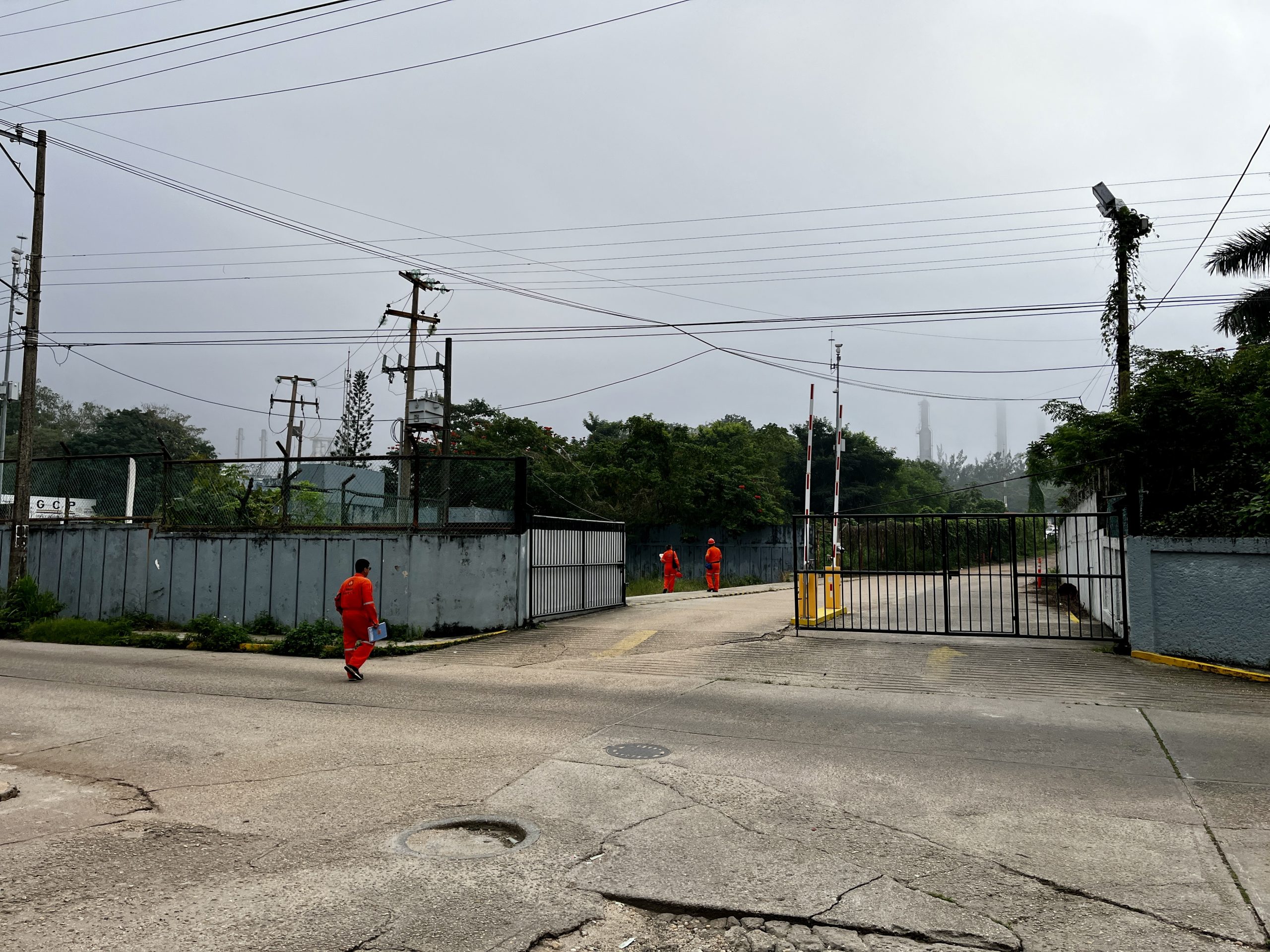
When asked about the leak there, workers suggested it could have gone undetected, because it was active on a Sunday. “If the leak happened on the weekend, there is no way we could have known, because we just work from Monday to Friday,” said one Pemex worker who requested anonymity.
Climate Home contacted Pemex for comment on its growing methane emissions and the plume detected over the Cosoleacaque complex, but did not receive a response.
Soaring emissions
Pemex received a boost from the government of Andrés Manuel López Obrador in 2018, as he vowed to “rescue the national oil industry again”. Up to then, the company had struggled through years of high debt and plummeting production. Nonetheless, Mexico’s former president described oil as “the best business in the world”.
As the company started to drill more oil under the new mandate to increase production, it found itself with a lot of excess gas it could not take advantage of, mostly due to a lack of suitable infrastructure, analysts said. It resorted to flaring and venting the gas instead.
“Deliberate gas flaring and venting was a problem in the past, but it really worsened during the previous government’s six-year term,” said Adrián Duhalt, a Minatitlán-born energy researcher at US-based think-tank the Texas-Mexico Center.
As deliberate methane releases soared and accidental leaks continued, Pemex’s methane emissions rocketed, almost doubling between 2018 – when López Obrador was elected – and 2022, according to Pemex statistics.
The country’s current president, Sheinbaum, has doubled down on the previous administration’s spending on new oil and gas projects, with the goal of making Mexico self-sufficient in gasoline consumption.
Japan disregarded widespread calls to raise its 2035 emissions goal
Health impacts unknown
While flaring is the most obvious source of emissions, leaks are frequent in Minatitlán, according to residents – but most are only perceptible when ammonia is emitted, because of its distinct smell. The oil and gas industry’s toll on the public health in the area remains largely unknown, analysts said.
Neighbours of the plant interviewed by Climate Home – most of whom have worked in the oil and gas industry themselves – raised concerns over ammonia leaks from the Cosoleacaque complex, which they said caused headaches, dizziness and allergies.
The city was ranked among the top 30 industrial cities in Mexico with worsening health indicators due to air pollution and other types of contamination, according to a 2023 multidisciplinary study sponsored by the Mexican government. Researchers reported rising cases of cancer, kidney failures, birth defects and spontaneous abortions.
In La Oaxaqueña, a neighbourhood immediately adjacent to the ammonia plants, people have learned to live with the chemical smell in the air, which they describe as “that of a public restroom” or “hair dye”.
“Coughing and sneezing is nothing – sometimes you want to run away. I once had to carry my daughter in the middle of the night to the hospital because she was vomiting,” said one woman, describing the effects of an ammonia leak incident. She wished to remain anonymous.
While experts say there is a research gap on the health impacts of oil and gas infrastructure in southern Mexico, a group of NGOs reported similar symptoms last year in the neighbouring state of Tabasco, where they found headaches, nausea and nosebleeds to be common among people living near Pemex plants.
The world’s biggest climate finance coalition is in crisis. Is it worth saving?
On the other side of Minatitlán, flaring at the Lázaro Cárdenas refinery adds to the air pollution, locals said. As the city relies on northern winds to blow away air pollutants from the refinery, the situation worsens when those winds shift or stop.
“Whenever the North [wind] is not blowing, you can really see the cloud of gases on the horizon, and sometimes also perceive the smell,” explained Ramón García, a lawyer who has worked on cases of health complications blamed on the local oil industry.
García said such legal cases are common in the region, especially those related to environmental damage and health impacts – but they almost never reach local administrative courts, as Pemex often settles early in the process, he added.
The details of the cases are also kept secret, García said. In one, involving an oil spill in the region of Papantla, north of Veracruz, the National Agency for Safety, Energy and Environment (ASEA) ordered Pemex to implement an 11-point plan to clean up the spill. When García asked for details of the case in January, he was told they were confidential.
Researcher Duhalt said such issues haven’t “affected the loyalty from the community to the company”.
From an academic standpoint, the Minatitlán-Coatzacoalcos corridor might be considered a sacrifice zone, “but from the standpoint of the head of family, it is just your source of employment,” he added.
Aging infrastructure
Pemex has struggled to control its methane emissions partly due to aging infrastructure and a lack of political will, analysts told Climate Home.
“There are already corporate procedures and technological changes for Pemex to [be able to] emit much less methane. It has been in their plans for years,” said Viviana Patiño Alcala, an energy researcher at think-tank México Evalúa. “But this has not translated into meaningful (emissions) reductions,” she added.
Ballesteros from NRGI noted that the company has focused most of its investments on new projects rather than maintaining existing ones.
In Minatitlán, one worker interviewed near the Cosoleacaque complex said, “it’s all messed up inside, but we are working to fix it”, while a neighbour said it was common to see fires and hear ambulances heading to the plant.
Ballesteros noted that the poor state of Pemex’s infrastructure is reflected in the number of leakage and spill events, which have increased since 2018, rising from 912 recorded events in 2018 to 1,211 incidents in 2023, according to the company’s annual statistics.
It may also be contributing to the high number of worker accidents. In 2023, Pemex reported 129 injuries and 11 fatalities. Its index for accident frequency in that same year was 57% above the industry standard set by the International Association of Oil and Gas Producers (IOGP).
A 2024 report by Reuters showed that the company put off urgent repairs to two of its offshore platforms, causing key components to fail and forcing it to flare large amounts of gas as a result.
“It’s very difficult for this trend [of rising methane emissions] to change soon,” said Patiño Alcala. “If this current administration has been clear in something it is that the environment is important, but it’s more important to provide Pemex with a market.”
Meanwhile, in Minatitlán, residents seem resigned to living with the clouds of gas and the light of the refinery’s flares painting the sky orange.
“With the leaks, even if we don’t see clearly, we know what is in the breeze,” said Irving, a 27-year-old oil worker who lives near the Cosoleacaque plant. “We know how this is, but that’s life for us.”
The post Oil giant Pemex fails to control methane emissions, threatening Mexico’s net zero goal appeared first on Climate Home News.
Oil giant Pemex fails to control methane emissions, threatening Mexico’s net zero goal

Scientists have vowed to keep working on the next flagship set of reports for the Intergovernmental Panel on Climate Change (IPCC), after a political row over the timeline for their release saw its latest session suspended on Friday evening without agreement.
During the weekend, government officials and scientists alike expressed disappointment over the inability to reach a compromise before some delegates from developing countries and small island states had to leave the week-long meeting in Ethiopia to catch flights home.
The disagreement – which has persisted since early 2024 – turns on whether the three key parts of the AR7 assessment should all be published before the conclusion of the UN’s next Global Stocktake of global climate action, which is due to be completed in late 2028.
The IPCC issued a statement after the close of the session, saying that “key agenda items” – the timelines for the three AR7 reports, as well as the IPCC budget – remain open and under discussion. It said the IPCC’s plenary session and its deliberations on the pending agenda “will resume at the earliest opportunity”, giving no further details of when.
IPCC Chair Jim Skea told delegates in closing remarks that recent months had been some of the most turbulent for the climate science panel and that, if there were stronger words than “profound disappointment” he would use them, according to a summary published by the Earth Negotiators Bulletin (ENB). IPCC discussions happen behind closed doors.
IPCC scientists remained committed
In an open letter, issued on Monday, a group of nearly 120 scientists – from a total of 664 AR7 authors – said they “stand committed to continue working to deliver the AR7 reports in a manner that is rigorous, timely and inclusive, in line with our mandate to be policy-relevant”.
“An assessment that arrives after the decisions it is meant to inform cannot serve its purpose,” they emphasised. “The second Global Stocktake in 2028 is such a decision point, and the world should not have to face it without the IPCCʼs latest assessment.”
Europe, small islands and the least developed countries, plus many Latin American and developed nations, want the IPCC to meet this deadline, arguing that the findings from the UN climate science body are irreplaceable in the UN climate policy-making process.
However, around a dozen developing countries plus Russia have argued that the reports should come later in order to allow for greater research input from the Global South – something that, in their view, would make the findings fairer. They also claim that a shorter timeline would put excessive pressure on experts.
-
Who shapes climate science? The equity question facing the IPCC
Early completion of the next global climate science assessment reports risks excluding research from the Global South, which is key to ensuring the findings are fair -
Governments that support climate science must stand firm against naysayers
The IPCC is meeting to decide the timing of its next major report, as some countries try to delay it and weaken the case for faster emissions cuts


The most vocal of this group at last week’s meeting were India and Saudi Arabia, according to the ENB summary and a developed country diplomat. Critics see this push for a longer timeline as an excuse to deprive government decision-makers of the latest science and ease pressure on emerging economies to raise their ambition, particularly on cutting emissions.
Commenting on last week’s meeting, France’s ambassador for climate negotiations Benoît Faraco said a broad coalition of developed and developing countries from all five continents, “united in their support for science and the timeline proposed by scientists”, had withstood pressure “from a few countries” seeking to slow down the process of adopting the IPCC reports.
He added that France would not back down and would “continue to fight tirelessly for science, protect the integrity of information, and convince our partners that without the best available scientific data, we will be less effective in tackling climate change and protecting our populations”.
Inclusivity proposal stalled
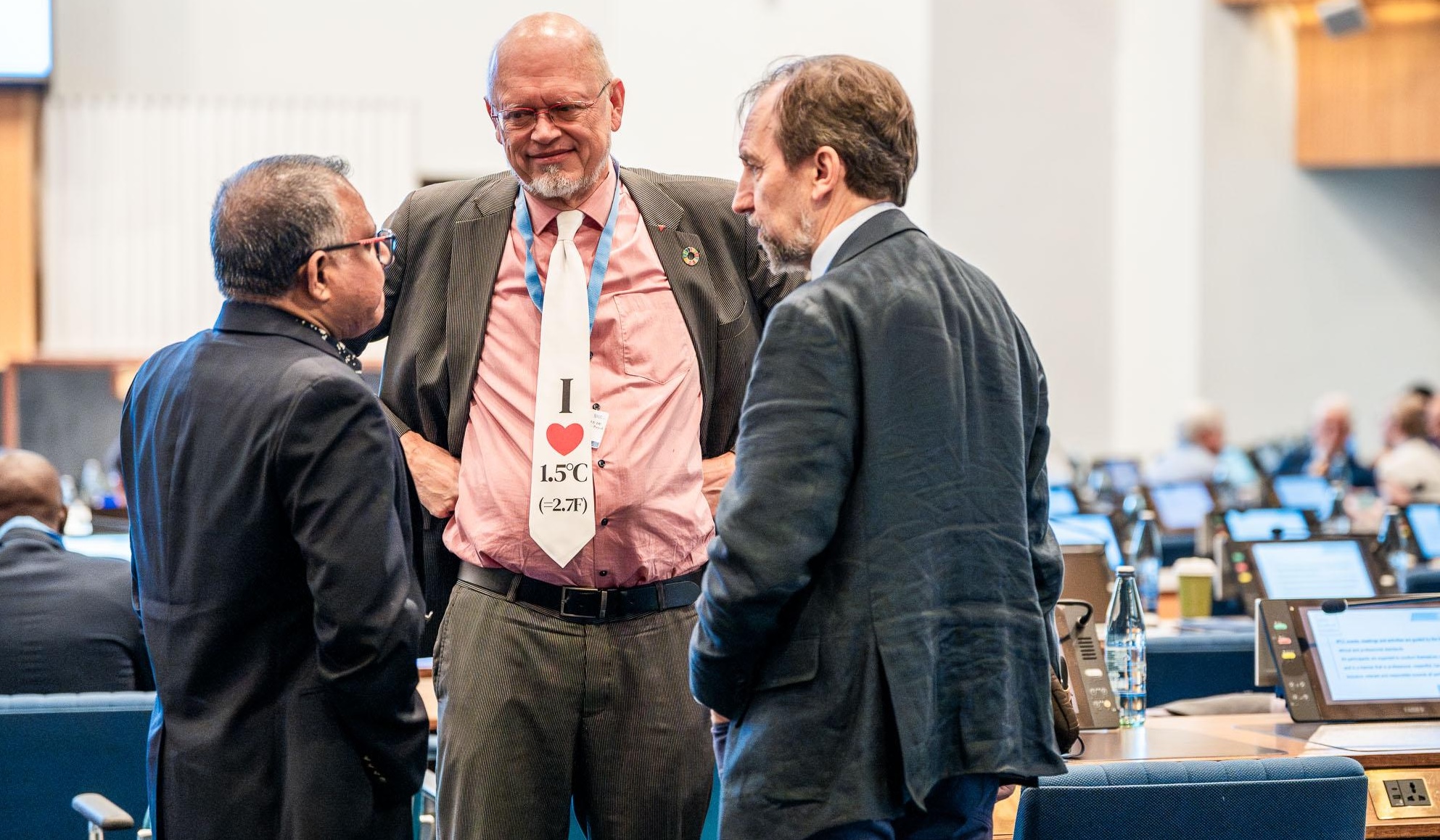
In a bid to unlock a solution for the AR7 timeline, countries discussed ways to improve the inclusivity of the IPCC’s work. One option put on the table was for the IPCC to expand its funding for delegates from developing countries to attend some or all of its sessions from one to two participants, according to the ENB summary and a delegate speaking to Climate Home News.
That would increase the costs for the IPCC to complete AR7 by up to a quarter, according to an assessment shared by the secretariat. The panel’s budget is under severe strain and its officials have warned that, without additional voluntary contributions, it risks running out of money before it can deliver on this assessment cycle.
Climate Home News understands that some of the IPCC’s traditional donors – which mainly include European countries, Japan and Australia – indicated a willingness to support funding for an additional developing country participant. But without an agreement over the budget or the timeline for the reports, that option was ultimately not adopted.
‘Disappointed and worried’
The three reports are managed by working groups that collate and draw overall findings from the latest scientific studies and data on the physical effects of global warming around the world, how to adapt to it, and pathways for cutting planet-heating emissions in order to meet the temperature goals of the Paris Agreement.
Winston Chow, an urban climate professor at Singapore Management University who co-chairs Working Group II on adaptation, wrote in a LinkedIn post that he was “disappointed and worried” for the IPCC authors who have worked “extraordinarily hard” to assess the relevant climate science over the past two years.
He said he shared their concern that “the rigour, time and goodwill they’ve invested are now being put at risk by the Panel’s stalemate”.
As science comes under attack at UN talks, climate movement splits over how to respond
For Working Group II, a meeting for 250 experts writing that report is scheduled for January 2027, followed by the approval of a special report on cities and climate change in Singapore next March.
But because the IPCC’s budget has not been confirmed due to uncertainty about the AR7 schedule, travel support for those researchers is at risk, wrote Chow. “If they cannot participate, our assessments will lose vital expertise, perspectives and scientific breadth, and the collective effort of our authors will be undermined,” he warned.
Scientific work continues
Despite the political holdups, he – together with French climate scientist Robert Vautard, co-chair of Working Group 1 – agreed with IPCC head Skea who told the IPCC’s closing session on Friday: “The engine room of the IPCC is working, and it’s healthy.”
Vautard commented in a separate post on LinkedIn after it ended: “The boat is at full steam.” Working groups I and II are due to start revising the first drafts of their reports, while Working Group III on reducing emissions is finalising its first draft which will be out soon, he wrote.
“The most exciting two years of the cycle are ahead, for the authors. The momentum in the engine room is here and now. Trust the engine room!” he added.
The IPCC and some scientists report that progress has been made towards achieving an equitable balance of authors from the Global North and the Global South.
The group of researchers who signed the open letter on Monday noted that “inclusivity is at the heart of how we work”, with author teams bringing together experts from developed and developing countries with diverse backgrounds and at different stages of their careers.
Plea to overcome political differences
The signatories include several scientists from some of the countries opposed to the alignment of all IPCC reports with the Global Stocktake.
“We are committed to an assessment in which the knowledge, experience and priorities of every region are fully reflected, a commitment we share with the leadership of the IPCC.
Equity is built into how our assessment is being drafted,” they added.
They appealed to governments that make up the IPCC “to overcome their political differences and work together as we do as a global scientific community, so that we can deliver the IPCC reports the world needs to hear”.
In a statement published on Monday, IPCC chair Skea said reaching consensus on the schedule for the reports is “vital”. He added that the assessments provide authoritative scientific evidence to inform national climate policies, strengthen adaptation and resilience and support access to climate finance, as well as helping communicate the scale of the climate crisis and the urgency of efforts to tackle it.
The post IPCC scientists vow to press on with climate reports despite political deadlock appeared first on Climate Home News.
IPCC scientists vow to press on with climate reports despite political deadlock
An Lambrechts is a biodiversity politics expert at Greenpeace International with extensive experience in biodiversity-related multilateral negotiations. She is the head of the Greenpeace delegation at the Convention on Biological Diversity (CBD) COP17 happening in Yerevan, Armenia.
In 2022, COP15 delivered the landmark Kunming-Montreal Global Biodiversity Framework to halt and reverse biodiversity loss by 2030. With COP17 starting in Yerevan, we are now halfway to the deadline, and according to the first Global Review of progress, countries are not on track to meet the biodiversity targets, and implementation must accelerate fast.
One of the main findings of the Global Review is that funding falls far short of the scale needed to halt and reverse nature loss. But the crisis facing the world’s biodiversity is not an absolute scarcity of capital – it is a profound public policy distortion.
The global economy currently spends roughly $30 destroying nature for every single dollar invested in its protection. According to a report from the Intergovernmental Science-Policy Platform on Biodiversity and Ecosystem Services, a staggering $2.4 trillion is spent in public subsidies for fossil fuels, agriculture and water use, while global investment in biodiversity conservation and restoration stands at a mere $220 billion.
Countries urged to ramp up “insufficient” nature policies at COP17
Yet, discussions about how to close the biodiversity finance gap continue to claim that salvation lies in mobilising private capital, scaling offsets and “derisking” investments in nature. This is a fundamental misunderstanding of both the nature of ecological stewardship and of the global financial architecture.
Biodiversity conservation is not a speculative investment portfolio – it is the foundation of human survival. The health of our planet is a non-monetisable, non-excludable public good. Expecting profit-seeking private capital to protect nature perpetuates the structural drivers of ecosystem destruction in the first place.
But if private market mechanisms cannot save biodiversity, where will the necessary public resources come from?
Money going to the wrong places
The answer lies in recovering the vast public wealth currently drained b