

Well before I became a member of the Greenpeace crew, I grew up on the stories of mighty campaigning vessels like the Rainbow Warrior, and their incredible work around the world to protect our beautiful blue planet.
From challenging whaling through direct confrontations with whaling ships; confronting nuclear testing, and protecting our oceans from overfishing, I knew the formidable power of Greenpeace boats to hold polluters to account and expose environmental crimes at sea. In fact, growing up in Perth in the 80s, I had a poster of the Rainbow Warrior on my wall.
Made possible by the extraordinary generosity of our supporters, our new ship is now refitted and ready for campaign operations; newly painted in Greenpeace’s hallmark green and rainbow livery.
So it was a particularly unforgettable momentfor me this week, when under the wide blue Queensland sky, we held the launch ceremony for the SV Oceania, Greenpeace Australia Pacific’s new campaigning vessel and the first bluewater Greenpeace ship to be permanently stationed in our region.
Australia Pacific’s oceans face multiple threats, including offshore gas drilling, deep sea mining, overfishing, plastic pollution and climate damage. Oceania creates a dynamic new capacity for Greenpeace to expose, document, and peacefully confront these and other threats to the oceans in our region. It will also help deepen and strengthen our relationships with Pasifika communities, who are not only on the frontlines of the climate crisis but are leaders in finding climate solutions.
It’s one of the most significant moments for Greenpeace Australia Pacific’s history; our organisation was born in Albany, Western Australia, where our very first action blockading a whaling station with small zodiac boats ultimately helped end whaling in Australia.
Now, Oceania is set to soon cast off the lines and begin the 3500 nautical miles-long trip to the heart of Australia’s biggest climate fight in Western Australia, where fossil fuel giant Woodside is starting their offshore gas development, which will emit 6.1 billion tonnes of pollution—the Burrup Hub. This monstrous project is not only the most climate-polluting project proposed in Australia, but also a direct and dire threat to magnificent marine ecosystems like the Scott Reef, home to incredible wildlife like turtles, whales, and other endangered species.
We’ll sail to WA to connect with all those who want to see our climate and our oceans safe from such monstrosities; those who are calling for a better, brighter future for Western Australia—not a doubling down on more toxic gas drilling by the likes of Woodside.
And at every stage of the Oceania’s voyage and every step of this and all future missions, we will be thinking with gratitude of all those who made it possible.

Claver Gatete is Executive Secretary of the UN Economic Commission for Africa. Jason Veysey is Energy Modeling Program Director and Senior Scientist at the Stockholm Environment Institute. Lisa Sachs is Director of the Columbia Center on Sustainable Investment at Columbia University.
The case for global energy transition has rarely been clearer. The closure of the Strait of Hormuz earlier this year exposed the cost of unplanned, fossil-dependent systems, while the falling cost of renewables, the rising penetration of electric vehicles, and the growing value of demand flexibility have made the direction of travel obvious. The benefits of a clean, secure, integrated system are no longer in dispute. What remains unclear is how to build it.
Countries around the world have called for faster renewable energy deployment and alternative energy arrangements. A secure, affordable, resilient, decarbonised system requires specific investments in specific places in a specific sequence, optimised across sectors and borders. But very few governments have the analytical foundation to translate those imperatives into investment.
The two instruments that are supposed to determine investment priorities for decarbonisation – Nationally Determined Contributions (NDCs) and country platforms – cannot answer the most basic question facing any country undertaking an energy transition: what should the energy system look like?
-
New coal mine openings slow as East Asian demand plateaus
China and Australia drove global decline in new capacity additions in 2025, but planned production kept growing

To close this gap, every country needs a bankable, economy-wide optimisation model for its energy system. A model is not a plan, but it can help answer the critical question of what the future energy system should look like. It shows how optimal scenarios vary as assumptions and policies are adjusted, calculates investment requirements and sequencing, and quantifies how system costs are affected by assumptions, policies, and exogenous variables like trade policy and financing terms.
Tool for efficient investment
Optimisation is a simplified way of simulating an energy system, but it can be an extremely powerful tool for moving energy planning from reactive (how do we manage the disparate actions in the energy system?) to intentional (what energy system underpins our national objectives?). A model can show how optimal scenarios vary as assumptions and policies are adjusted, and how investment requirements are quantified and sequenced.
Optimisation models can treat the energy system and the sectors it serves as an integrated whole, optimising across sectors and projects in ways that can be mutually reinforcing. If considered independently, growth in industrial demand, transport electrification, and digital infrastructure can add stress to the energy system. But an optimised plan can arrange these and other changes in an efficient, synergistic way.
Two to tango: How governments can unlock private investment for national climate goals
New load can be added where low-cost power is available; industrial customers can ensure the viability of investments in energy supply; electric vehicle charging policy can smooth load curves and reduce costs for all consumers.
Additionally, optimisation modeling can also change the financeability of investments. Taken alone, each project faces uncertainty about the rest of the system, which raises the cost of capital and causes projects to stall or unwind after contracts are signed. A coherent, optimised plan makes visible the coordination that private capital would otherwise have to bet on: identified offtake, sequenced and committed transmission, contracted power supply, and so on.
What COP31 and COP32 should do
The upcoming COPs in Turkey and Ethiopia can shift the center of gravity of international climate cooperation from fragmented commitments to planning. Three moves are urgently needed.
First, optimised, economy-wide, long-term energy system planning must be the foundation on which any meaningful NDC, country platform, or finance commitment rests. NDCs are typically drafted by environment or single-line ministries, with limited cross-sectoral input from ministries of energy, finance, and planning. They contain targets, derived from sectoral strategies or national commitments, not from an analytically grounded picture of what the energy system should look like and what investments would make it work. Country platforms are generally a portfolio of investments assembled from existing project pipelines, rather than derived from a system-level analysis of what an optimised, decarbonised energy system would require.
Second, recognise regions as a key planning unit. Modern integrated energy systems are inherently regional. Renewable endowments are unevenly distributed; balancing variable supply across borders lowers aggregate cost, reduces redundant backup capacity, and unlocks economies of scale no individual nation can achieve. Many energy investments in Southeast Asia, East Africa, Southern Africa and Central Asia may only be financeable in a regional context. Assessing domestic infrastructure without regional optimisation perpetuates the perception that decarbonisation is more expensive than it is.
COP31 leaders unveil global targets, with spotlight on electrification
Third, finance the planning capacity. A coordinated commitment by multilateral development banks, bilateral donors, and philanthropic partners to help every region and its constituent countries develop and maintain their own modelling capability, with open-source tools and regional analytical hubs, would close the most consequential gap in the current architecture. The cost is small relative to current spending on country platforms, failed project preparation, and misallocated infrastructure investment.
This includes supporting regional institutions such as the ASEAN Centre for Energy, the African Energy Commission, regional power pools, and the Latin American and Caribbean Energy Organization to determine what optimised regional systems require. Country-by-country pledging, repeated at every COP, will not deliver what meaningfully integrated systems can.
The 2026 energy crisis made the cost of unplanned, fossil-dependent systems newly visible. That window of clarity will close. The international community should seize the moment to build the planning foundation that has been missing for thirty years, rather than commissioning another round of NDCs or pledges, striving for outcomes neither was designed to deliver.
The post Every country needs a model to help optimise its energy transition appeared first on Climate Home News.
Every country needs a model to help optimise its energy transition
The world is currently experiencing what is expected to become the strongest El Niño on record – dubbed a “super El Niño” by many.
El Niño is the warm phase of a recurring climate pattern in the tropical Pacific that releases heat from the ocean into the atmosphere.
This temporarily raises global temperatures and reshapes rainfall and extreme weather around the world – impacting the lives of billions of people.
The current El Niño event began in June and is expected to last into 2027.
El Niño is part of a wider climate pattern called the El Niño-Southern Oscillation (ENSO) cycle.
The ENSO cycle also has a cool phase, known as La Niña, as well as a “neutral” phase. El Niño and La Niña events typically last between nine and 12 months, but can go on longer.
Below, Carbon Brief explains how the ENSO cycle works, its impacts on extreme weather and global temperatures and why this El Niño event is projected to be the most intense since records began.
The post Explainer: How the ‘super El Niño’ will reshape the world’s weather appeared first on Carbon Brief.
https://interactive.carbonbrief.org/el-nino-explainer/index.html
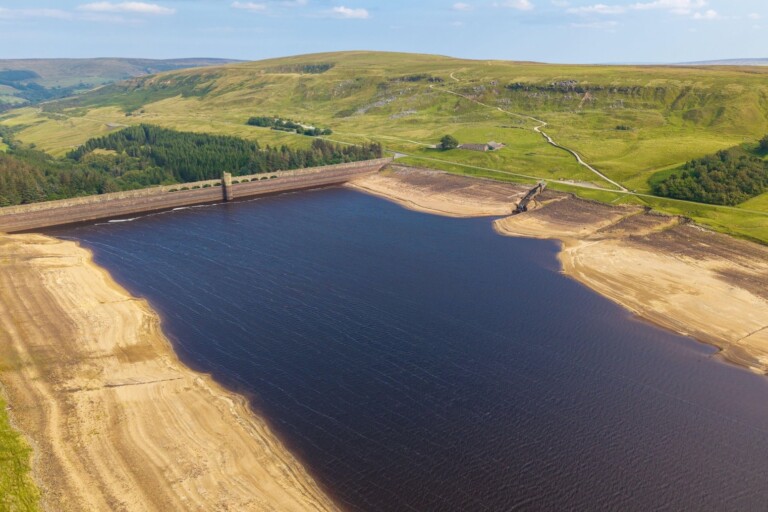
The second-largest reservoir in the US reached a record-low water height on Saturday – just days after the country’s largest reservoir broke its own record.
Both Lake Mead and Lake Powell are located on the Colorado River.
They provide water for populations across seven US states in the south-western US, with around 40 million people getting some or all of their municipal water from the Colorado River.
The river also provides water for around 5.5m acres (22,258 square kilometres) of farmland across Colorado, Arizona, California and the other states in the river basin.
Experts tell Carbon Brief that climate change, population growth and over-consumption are all contributing to the current record-low levels of the reservoirs.
Record lows
At full capacity, Lakes Mead and Powell can hold a combined 68 cubic kilometres of water – enough to supply all household consumption in the contiguous US for nearly 1.5 years. However, the water level in both reservoirs has been declining for decades.
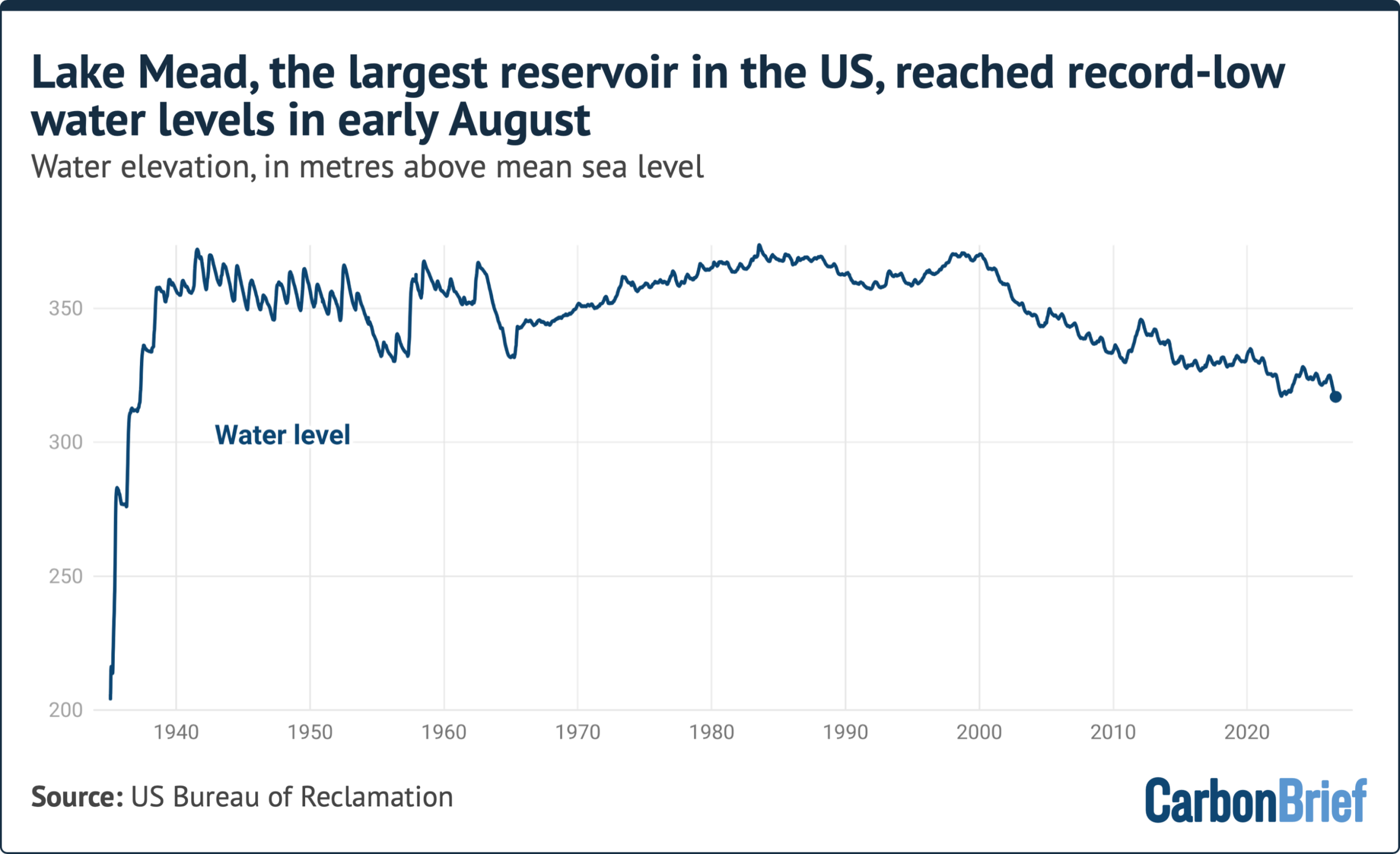
The chart below shows the water level of Lake Mead, in metres above mean sea level. The reservoir, which began to fill in 1935 following the construction of the Hoover Dam, has a “full pool” maximum capacity of 347.60 metres. The water level in Lake Mead reached a record low of 317.11 metres on 7 August.
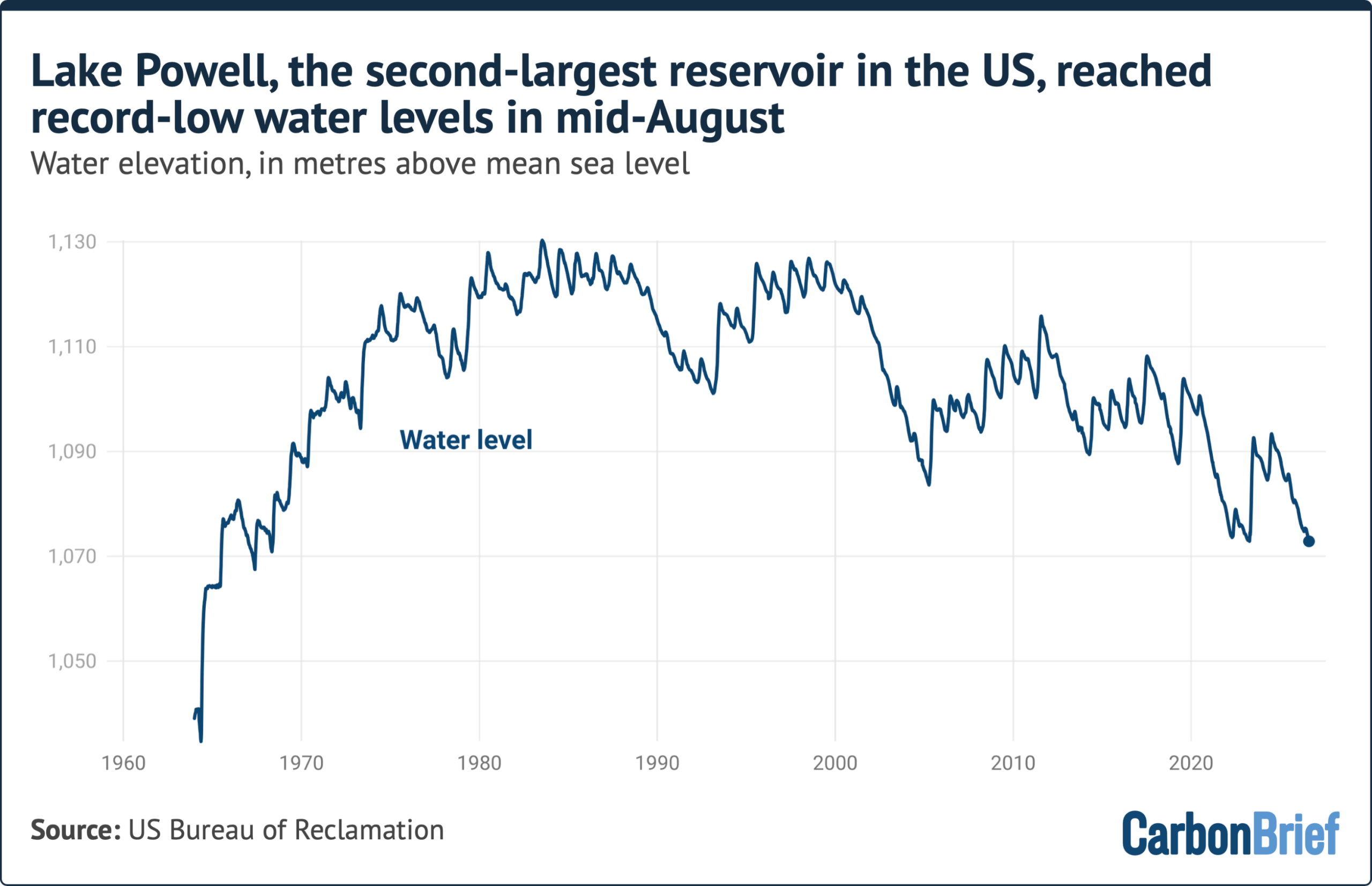
The following chart shows the water level of Lake Powell, in metres above mean sea level. Lake Powell’s full-pool level is 1,127.76 metres.
While the reservoir reached its maximum capacity several times in the 1980s, it has not done so since. On 15 August, the water level in Lake Powell was recorded at a new record-low of 1,072.87 metres.
Both reservoirs have continued to decline in the days since breaking their respective records. The downward trend will largely continue in both lakes until next spring, when the snowpack in the mountains of the Upper Colorado River Basin begins to melt, says Dr Jack Schmidt, a senior research scientist at Utah State University’s Center for Colorado River Studies. He tells Carbon Brief:
“The big dilemma of the moment is that we’re only in the middle of August, and we have no assurance of what the coming winter will be. The only thing we can be sure of is that we will be depleting overall total basin reservoir storage from now until, roughly, early April.”
Compounding factors
The record lows across the two reservoirs are the result of several compounding factors, experts tell Carbon Brief.
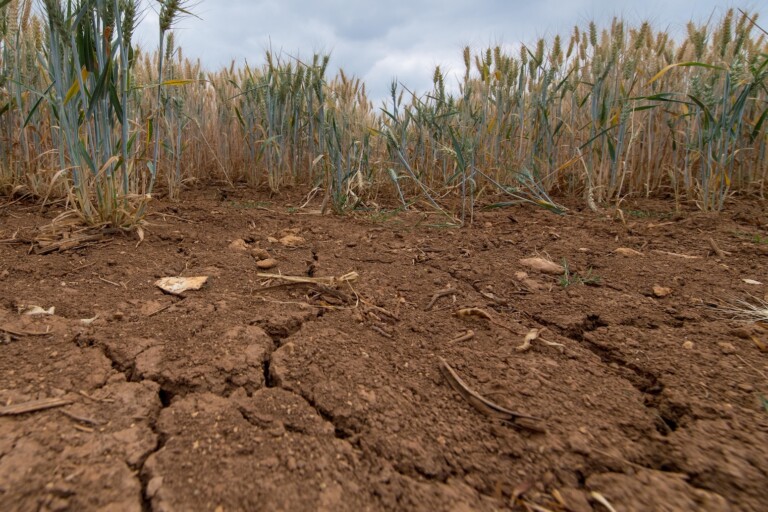
Since the turn of the 20th century, the amount of water flowing along the Upper Colorado River has declined by about 20%. Research suggests that half of this decline can be attributed to human-induced climate change.
Most of the river’s streamflow comes from the snowpack of the Upper Colorado River Basin, which stretches across five western US states but is primarily located in Colorado and Utah.
This region has been gripped by a historic “megadrought” for more than a quarter of a century. Nearly half of the megadrought’s intensity over 2000-18 is attributable to climate change, according to a 2020 study.
At the same time, the increasing population in the US south-west has put added pressure on the Colorado River’s water supply. The number of people obtaining some or all of their water from the Colorado system has grown by 15 million (around 60%) since 1992.
Schmidt tells Carbon Brief:
“There’s an ultimate cause of the present water crisis, and there’s a proximate cause. The ultimate cause is a warming climate, a warming planet and a pretty clear correlation between warming conditions and decreased runoff in the Colorado River Basin.
“The proximate cause is that in this messy democratic republic of ours, big policy decisions that match the variability of the climate occur painfully slowly – with intense political negotiations – and only incrementally.”
On 31 July, the US Bureau of Reclamation, which manages water resources in the western US, released an environmental impact statement on its proposed post-2026 strategy for managing Lakes Powell and Mead. The strategy itself has not been released yet.
Schmidt notes that the statement does appear to give the Bureau flexibility to “respond to crisis” by reducing the delivery of water to several states. However, he adds:
“They acknowledge it won’t work if we just stay critically dry, and of course every climate model for the 21st century, especially with a continually warming planet, says that that’s exactly what’s going to happen.”
The post Analysis: The two largest reservoirs in the US have hit record-low levels appeared first on Carbon Brief.
Analysis: The two largest reservoirs in the US have hit record-low levels



-
Climate Change1 year ago
Guest post: Why China is still building new coal – and when it might stop
-
Greenhouse Gases1 year ago
Guest post: Why China is still building new coal – and when it might stop
-

 Greenhouse Gases2 years ago
嘉宾来稿:满足中国增长的用电需求 光伏加储能“比新建煤电更实惠”
-

 Climate Change2 years ago
嘉宾来稿:满足中国增长的用电需求 光伏加储能“比新建煤电更实惠”
-
Climate Change2 years ago
Bill Discounting Climate Change in Florida’s Energy Policy Awaits DeSantis’ Approval
-

 Renewable Energy10 months ago
Sending Progressive Philanthropist George Soros to Prison?
-
Greenhouse Gases1 year ago
嘉宾来稿:探究火山喷发如何影响气候预测
-

 Carbon Footprint2 years ago
US SEC’s Climate Disclosure Rules Spur Renewed Interest in Carbon Credits