

Weather Guard Lightning Tech

News Flash: HSBC $1B Pledge, Vitol + AT Capital $350M to Juniper Green Energy, BlackRock in Thailand
This action-packed episode tackles game-changing renewable energy investments across the globe – from HSBC pouring $1 billion into climate tech startups to BlackRock colonizing Thailand’s bubbly sustainability-linked bond market. Allen, Phil, and Joel dive into Vitol and AT Capital plowing $350 million into India’s Juniper Green Energy and its plans to triple clean power capacity in just 2.5 years. With climate solutions needing major funds to cross the commercialization finish line, the episode underscores the renewable gold rush as major players prospect for green jackpots worldwide.
Sign up now for Uptime Tech News, our weekly email update on all things wind technology. This episode is sponsored by Weather Guard Lightning Tech. Learn more about Weather Guard’s StrikeTape Wind Turbine LPS retrofit. Follow the show on Facebook, YouTube, Twitter, Linkedin and visit Weather Guard on the web. And subscribe to Rosemary Barnes’ YouTube channel here. Have a question we can answer on the show? Email us!
Allen Hall: I’m Allen Hall, president of Weather Guard Lightning Tech, and I’m here with the founder and CEO of Intelstor, Phil Totaro, and the chief commercial officer of Weather Guard Lightning Tech, Joel Saxum, and this is your News Flash.
HSBC has pledged 1 billion to support climate technology startups. They have already allocated 100 million for investment in breakthrough energy catalysts focusing on climate technologies. The funding will aid companies working on various solutions, including electric vehicle charging, battery storage, sustainable food and agriculture, and carbon removal technologies.
Phil, a billion dollars going to climate technology startups is a nice little boost to those industries.
Philip Totaro: It is, and it’s coming at a time when there’s kind of mixed feelings, I guess, from the venture capital community about particularly investing in anything related to hardware. But there’s a lot of money that’s been pouring into software.
So this move by HSBC is interesting because it sounds like they’re going to spread it around a little bit and potentially get a lot of companies, you know, off the, off the ground with a wide array of solutions. That’s looks like a pretty good thing.
Joel Saxum: What I’d like to see from this HSBC corner here is what we’ve talked about before with some of these other VC companies.
Now, we know VC spending, like Phil said, is slowing down right now. There’s not a whole lot of people with that are willing to empty or open their, their dry powder kegs. But I’d like to see more of these, this money be invested in solutions that are TRL 678, right? That are closer to actually commercialization and making a difference.
Because a billion dollars is, it’s a huge fund, it’s fantastic, but I would, I don’t want to see, this is just me, right? I don’t want to see a ton of this money get thrown at people with ideas. And while that is definitely needs to happen, right? We need to have monies for that as well. But man, to have some in where it’s like, Hey, this is, this is two steps away from commercialization.
That would be fantastic because we can actually get some stuff up and up and moving.
Philip Totaro: And Joel, that’s a great point. I think what happens a lot in the VC community, because I’ve had this conversation about advising VC companies in the past and funds and things like that, where they come down on it is they would rather make
100 bets with the hope that they get one unicorn out of those hundred bets, than make ten bets that are all gonna be a winner, but they’re only gonna each make, like, maybe a hundred million each, you know what I mean? They, they just don’t think that way in terms of making a lower number of higher quality investments.
They are throwing a thousand darts at a dartboard and hoping they get a unicorn.
Joel Saxum: Yeah, exactly. It’s a, it’s the capital game, right? That they’re in it to make money, and they want to hit that home run. I get it completely. I’m just looking at I’d like to see a fund come out that say, you know, like we’re actually going to put our money where our mouth is and really focus on getting some solutions out there in the world.
That would be, that would be nice.
Allen Hall: Swiss Dutch commodities trader, Vitol and Singaporean investment firm, AT Capital Group are investing 350 million dollars in Juniper Green Energy an india based renewable energy power producer. The investment aims to help Juniper Green Energy triple its operational capacity to two and a half gigawatts by 2026. Juniper green energy has been operational since October, 2018 and it operates solar wind and hybrid power projects. Currently the company has an operational portfolio of 800 megawatts 435 megawatts of projects under construction and a development pipeline exceeding three gigawatts. Again, Phil, there is so much money going into new renewable investments outside of Europe. In this case, India.
Philip Totaro: Yeah, and this is really interesting because India is a country where not only are there still quite a few Greenfield projects being developed, but there’s a huge number of their installed base that is getting to be 15 going on 20 years old now, most of it’s, you know, these little rinky dink, 250 kilowatt Units and things like that.
So they’re really looking at repowering and greenfield project sites that can be cultivated to start displacing even more you know, fossil fuels from, from the country’s power supply. So I think this builds on the deal that they, these two companies previously made in, in juniper. I think it was around 200 million in, in prior investment.
For project development. So you know, if they’re keeping the spigot flowing, that’s, that’s only going to help them continue this you know, building out this development pipeline that they’ve got.
Joel Saxum: Yeah, I’m not, I’m not an expert by any means on the regulatory environment in India. But I do know that they do, the, the federal government has said they would like to get more renewables online.
However, these numbers that I’m staring at here in this press release are triple its 2. 5 gigawatt operational capacity by 2026. So that means they’re going to add 5 gigawatts of new power to Juniper Green Energy in the next 2. 5 years. They better get moving. That’s a lot of work to do. I know they have a pipeline, a development pipeline of 3 gigawatts, so they’ve got some things in the works already, which is fantastic.
But interconnections you know, just getting the turbines or the solar panels or even if it’s hydro or whatever it is. That’s a lot of work to do in the next two and a half years.
Allen Hall: Global asset management giant, BlackRock is considering expanding its business into Thailand. BlackRock is particularly interested in investing in Thailand’s sustainability linked bonds and the clean energy sector.
BlackRock’s potential investment in Thailand’s biocircular green BCG sector could significantly boost the country’s economy and provide capital for Thai companies to expand. And Phil, this is, this is really a unique thing where BlackRock is kind of going outside of their normal investment areas and is looking into Thailand.
There’s a lot of opportunity in Thailand in the renewable sector at the moment, right?
Philip Totaro: There is, and they actually have a fair amount of wind and solar installed already. And the market’s actually likely to be a pretty big solar market. They haven’t really even tapped the rooftop solar installations there either.
Most of the, the, what they have installed is actually utility scale projects. So, yeah, again, as, as we’ve talked about with some of these other companies today, it’s, you know, keeping the spigot open is a good thing in general. But in this case, BlackRock making the move into Southeast Asia outside of China is kind of a, a deliberate move on their part to try and, you know, continue dipping their toes in the water in, in other markets where a lot of the mainstream, you know, institutional investors like BlackRock’s compatriots haven’t necessarily done that yet. So it’s, it’s mostly been local players you know, getting capital together from local banks or financiers to, to be able to do project development.
So this is potentially the early steps of a a longer journey into a wider investment opportunity for BlackRock and, and their partners.
Joel Saxum: To me it looks like pioneers versus settlers, right? The pioneers went across, they had a lot of troubles, they figured, they kind of figured out the route, they got things done.
That’s what that local money did. And now BlackRock is coming behind them as the first big settlers to move into the area. I know BlackRock’s got pretty good kind of presence in Singapore there as a financial center. So that’s not too far down the road or not too far across the water, I suppose. But yeah, it could, could be, could be big for them.
Probably look for some of the other big players to move in there, right? Some of the other, the big money people, the Brookfields and those kind of type groups to follow suit.
Allen Hall: If you’d like to learn more about mergers, acquisitions, and partnerships, visit our friends at intelstor at intelstor.com.
News Flash: HSBC $1B Pledge, Vitol + AT Capital $350M to Juniper Green Energy, BlackRock in Thailand

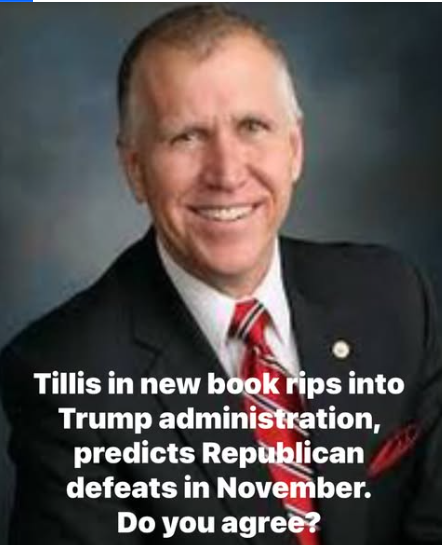 Maybe, as they say, “Hell has a special place reserved in it” for people like Thom Tillis, Republican Senator from North Carolina, who enabled Trump to rape and destroy the United States.
That was until it became clear to Tillis that he could jump ship, write a scathing book about the president, get all over mainstream news promoting it, and go on to enjoy another chapter of political success.
That we Americans are so stupid that we accept this blatant hypocrisy and criminality is sad proof that we’re not the people we were 20 years ago. Maybe what many people are saying are correct: we deserved what we got.
Here’s a short video from Elle Cordova that reminds us that science is something of a rarity in human history.
The great tyrants of history have done their best to cause the people they ruled to reject science, simply to ensure the masses are ignorant, terrified, superstitious, and thus easily controlled.
The current political administration is particularly engrossed in the rejection of science. I wonder why.
 Are you saying that the ascendency of a criminal sociopath made Western Civilization great?
Not sure how credible that is to people with the IQ of an artichoke.



-
Climate Change1 year ago
Guest post: Why China is still building new coal – and when it might stop
-

 Greenhouse Gases2 years ago
嘉宾来稿:满足中国增长的用电需求 光伏加储能“比新建煤电更实惠”
-
Greenhouse Gases1 year ago
Guest post: Why China is still building new coal – and when it might stop
-

 Climate Change2 years ago
嘉宾来稿:满足中国增长的用电需求 光伏加储能“比新建煤电更实惠”
-

 Renewable Energy12 months ago
Sending Progressive Philanthropist George Soros to Prison?
-
Climate Change2 years ago
Bill Discounting Climate Change in Florida’s Energy Policy Awaits DeSantis’ Approval
-
Greenhouse Gases1 year ago
嘉宾来稿:探究火山喷发如何影响气候预测
-

 Climate Change2 years ago
Analysis: China’s CO2 falls 1% in Q2 2024 in first quarterly drop since Covid-19