


New York-based clean energy startup Amogy has secured an additional $23 million in funding, bringing its total investment to $80 million. This latest round was led by the Korea Development Bank. The fresh capital will accelerate Amogy’s work on its ammonia-to-power technology, which generates clean electricity without emissions.
The company aims to deploy this technology mainly for powering ships and large energy systems across Asia.
Seonghoon Woo, co-founder and CEO at Amogy said,
“We’ve long recognized the strong demand for ammonia-to-power technology in the shipping industry, but we also see much broader opportunities to use ammonia as a clean fuel – especially with the growing demand for the ‘clean power’ globally. We’re ready to meet that market demand. Support for a hydrogen-based economy is especially strong in Asia, and as the most cost-effective hydrogen carrier, ammonia is quickly evolving into the leading zero-carbon fuel solution for these markets. We are deeply grateful for the strong confidence our investors have placed in our vision and growth trajectory. We are especially proud to partner with institutions like Korea Development Bank, whose deep expertise in scaling energy infrastructure brings significant value to our mission.”
Why Ammonia-to-Power is a Game-Changer
Unlike fossil fuels, ammonia produces no carbon dioxide when used this way. During power generation, only water and nitrogen gas are emitted. This makes ammonia a powerful tool for reducing emissions in industries like shipping, which accounts for about 2.5% of global CO2 emissions (3rd IMO GHG study).
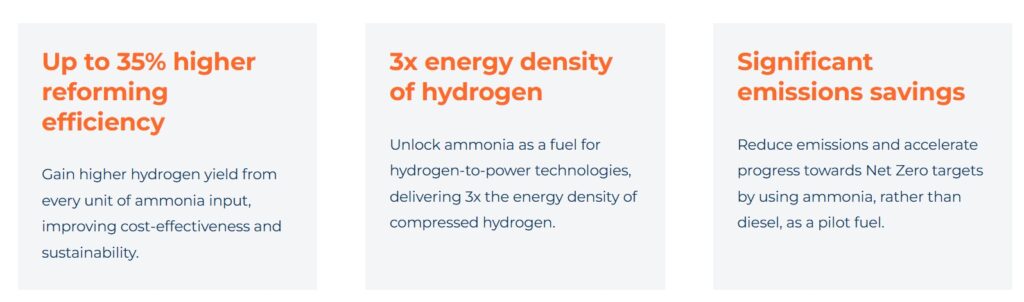
Ammonia’s high energy density means it stores more energy in less space than hydrogen alone, and it’s easier and safer to handle—no extreme pressures or freezing required.
However, the environmental benefits depend on how ammonia is made. Currently, much of the world uses “gray ammonia,” produced from natural gas and releasing CO2. Amogy’s goal is to shift toward “green ammonia,” made using renewable electricity, closing the loop on carbon emissions.
In Asia, where coal and gas still dominate power generation, projects like Amogy’s 40 MW plant in South Korea could significantly cut pollution and carbon output. These systems can replace or support fossil fuel plants, improving local air quality and helping countries meet climate goals.
Amogy’s Cutting-Edge Tech Turns Ammonia Into Emission-Free Electricity
Its patented “ammonia cracking technology” is a game-changer for decarbonizing heavy industries. It efficiently converts ammonia (NH₃) into electric power without burning the ammonia directly. Instead, ammonia is fed into a reactor where a special catalyst “cracks” it into hydrogen and nitrogen at lower temperatures than other systems.
Next, the hydrogen and nitrogen gases pass through a purification step to remove any ammonia traces. The hydrogen then powers fuel cells or hydrogen engines, generating 100% carbon-free electricity. The nitrogen is safely released back into the air.
Amogy’s ammonia cracking technology
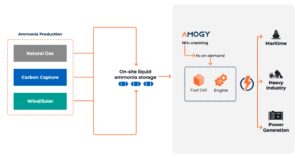
This process eliminates the need for diesel pilot fuel, lowers costs, and enables decarbonization of engines that currently rely on fossil fuels.
With this technology, Amogy targets sectors like shipping and heavy industry, which currently face big challenges in cutting emissions. So, cleaning up their energy use is critical to fighting climate change.
In 2024, Amogy unveiled the world’s first carbon-free, ammonia-powered ship, proving that ammonia can serve as a practical fuel. Now, the company plans a much bigger project: a 40-megawatt ammonia-powered energy plant in Pohang, South Korea, expected to be up and running by 2029.
Asia: The Strategic Hub for Amogy’s Growth
Asia is vital for Amogy’s expansion because energy demand there is growing fast, especially in countries like South Korea and Japan. These nations have limited natural resources and depend heavily on imports.
They also have strong policies promoting clean hydrogen and ammonia fuels, such as South Korea’s Clean Hydrogen Portfolio Standard, which aims for 2% of electricity from hydrogen and ammonia by 2030, and 7% by 2035.
By focusing on Asia and building partnerships there, Amogy is positioning itself as a leader in the ammonia fuel market. The Korea Development Bank’s backing adds both financial strength and local support to Amogy’s projects.
The Huge Market Potential for Ammonia Energy
The clean energy sector is booming, with the International Energy Agency estimating that more than $2 trillion per year must be invested by 2030 to hit net-zero targets. Ammonia is gaining ground as a way to store and transport hydrogen energy. It can also use existing fuel infrastructure, making it a versatile solution.
- Experts expect the ammonia market to surpass $90 billion by 2025, fueled by demand from shipping, energy, and heavy industries.

Amogy’s systems can power both new and retrofitted ships, as well as large facilities like factories and ports. This creates enormous market opportunities. With Asia’s rapid industrial growth driving power needs, Amogy is well placed to tap into one of the world’s most energy-hungry regions. Their successful ammonia-powered ship trial in September 2024 further shows the technology’s potential to scale.
Investor Confidence Runs High
With $80 million raised so far and a company valuation of $700 million, investor confidence in Amogy is strong. The latest round led by Korea Development Bank not only provides funding but also brings strategic guidance in a region keen to adopt green fuels.
Major industry players like Samsung Heavy Industries and Mitsui O.S.K. Lines have already teamed up with Amogy. These partnerships help speed up commercialization and provide real-world testing opportunities in shipping and energy infrastructure. Amogy plans to move from pilot projects to full commercial operations within the next four years.
By focusing on hard-to-abate sectors with few zero-emission alternatives, Amogy’s versatile ammonia-to-power solution gives it a competitive edge in the growing clean tech market.
Amogy’s Road Ahead: Powering the Net-Zero Future
Amogy is at a pivotal moment in clean energy innovation. Its ammonia-to-power technology offers a practical way to decarbonize some of the hardest energy challenges in the world. If it scales successfully and transitions fully to green ammonia, it could become a cost-effective solution that helps meet global net-zero goals.
Global policy trends and rising investments are aligned with Amogy’s mission. The next few years will be critical as the company expands projects, builds partnerships, and demonstrates its technology at larger scales, setting the stage to lead the future of clean power.
The post New York-based Amogy Accelerates Ammonia-to-Power Solutions with $23M Funding Boost appeared first on Carbon Credits.


Bitcoin’s recent drop below $70,000 reflects more than short-term market pressure. It signals a deeper shift. The world’s largest cryptocurrency is becoming increasingly tied to global energy markets.
For years, Bitcoin has moved mainly on investor sentiment, adoption trends, and regulation. Today, another force is shaping its direction: the cost of energy.
As oil prices rise and electricity markets tighten, Bitcoin is starting to behave less like a tech asset and more like an energy-dependent system. This shift is changing how investors, analysts, and policymakers understand crypto.
A Global Power Consumer: Inside Bitcoin’s Energy Use
Bitcoin depends on mining, a process that uses powerful computers to verify transactions. These machines run continuously and consume large amounts of electricity.
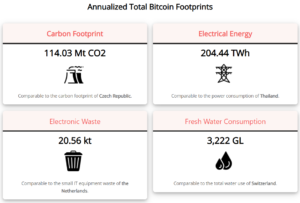
Data from the U.S. Energy Information Administration shows Bitcoin mining used between 67 and 240 terawatt-hours (TWh) of electricity in 2023, with a midpoint estimate of about 120 TWh.

Other estimates place consumption closer to 170 TWh per year in 2025. This accounts for roughly 0.5% of global electricity demand. Recently, as of February 2026, estimates see Bitcoin’s energy use reaching over 200 TWh per year.
That level of energy use is significant. Global electricity demand reached about 27,400 TWh in 2023. Bitcoin’s share may seem small, but it is comparable to the power use of mid-sized countries.
The network also requires steady power. Estimates suggest it draws around 10 gigawatts continuously, similar to several large power plants operating at full capacity. This constant demand makes energy costs central to Bitcoin’s economics.
When Oil Rises, Bitcoin Falls
Bitcoin mining is highly sensitive to electricity prices. Energy is the highest operating cost for miners. When power becomes more expensive, profit margins shrink.
Recent market movements show this link clearly. As oil prices rise and inflation concerns persist, energy costs have increased. At the same time, Bitcoin prices have weakened, falling below the $70,000 level.

This is not a coincidence. Studies show a direct relationship between Bitcoin prices, mining activity, and electricity use. When Bitcoin prices rise, more miners join the network, increasing energy demand. When energy costs rise, less efficient miners may shut down, reducing activity and adding selling pressure.
This creates a feedback loop between crypto and energy markets. Bitcoin is no longer driven only by demand and speculation. It is now influenced by the same forces that affect oil, gas, and power prices.
Cleaner Energy Use Is Growing, but Fossil Fuels Still Matter
Bitcoin’s environmental impact depends on its energy mix. This mix is improving, but it remains uneven.
A 2025 study from the Cambridge Centre for Alternative Finance found that 52.4% of Bitcoin mining now uses sustainable energy. This includes both renewable sources (42.6%) and nuclear power (9.8%). The share has risen significantly from about 37.6% in 2022.
Despite this progress, fossil fuels still account for a large portion of mining energy. Natural gas alone makes up about 38.2%, while coal continues to contribute a smaller share.
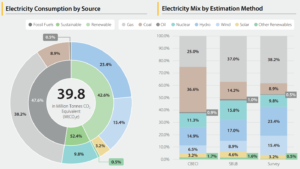
This reliance on fossil fuels keeps emissions high. Current estimates suggest Bitcoin produces more than 114 million tons of carbon dioxide each year. That puts it in line with emissions from some industrial sectors.
The shift toward cleaner energy is real, but it is not complete. The pace of change will play a key role in how Bitcoin fits into global climate goals.
Bitcoin’s Climate Debate Intensifies
Bitcoin’s growing energy demand has placed it at the center of ESG discussions. Its impact is often measured through three key areas:
- Total electricity use, which rivals that of entire countries.
- Carbon emissions are estimated at over 100 million tons of CO₂ annually.
- Energy intensity, with a single transaction using large amounts of power.
At the same time, the industry is evolving. Mining companies are adopting more efficient hardware and exploring new energy sources. Some operations use excess renewable power or capture waste energy, such as flare gas from oil fields.
These efforts show progress, but they do not fully address the concerns. The gap between Bitcoin’s energy use and its environmental impact remains a key issue for investors and regulators.
- MUST READ: Bitcoin Price Hits All-Time High Above $126K: ETFs, Market Drivers, and the Future of Digital Gold
Bitcoin Is Becoming Part of the Energy System
Bitcoin mining is now closely integrated with the broader energy system. Operators often choose locations based on access to cheap or excess electricity. This includes areas with strong renewable generation or underused energy resources.
This integration creates both opportunities and challenges. On one hand, mining can support energy systems by using power that might otherwise go to waste. It can also provide flexible demand that helps stabilize grids.
On the other hand, it can increase pressure on local electricity supplies and extend the use of fossil fuels if cleaner options are not available.
In the United States, Bitcoin mining could account for up to 2.3% of total electricity demand in certain scenarios. This highlights how quickly the sector is scaling and how closely it is tied to national energy systems.
Energy Markets Are Now Key to Bitcoin’s Future
Looking ahead, the connection between Bitcoin and energy is expected to grow stronger. The network’s computing power, or hash rate, continues to reach new highs, which typically leads to higher energy use.
Electricity will remain the main cost for miners. This means Bitcoin will continue to respond to changes in energy prices and supply conditions. At the same time, governments are starting to pay closer attention to crypto’s environmental impact, which could shape future regulations.
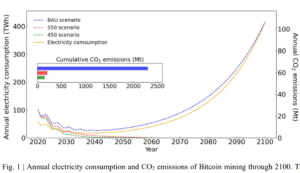
Some forecasts suggest Bitcoin’s energy use could rise sharply if adoption increases, potentially reaching up to 400 TWh in extreme scenarios. However, cleaner energy systems could reduce the carbon impact over time.
Bitcoin is no longer just a financial asset. It is also a large-scale energy consumer and a growing part of the global power system.
As a result, understanding Bitcoin now requires a broader view. Energy prices, electricity markets, and carbon trends are becoming just as important as market demand and investor sentiment.
The message is clear. As energy markets move, Bitcoin is likely to move with them.
The post Bitcoin Falls as Energy Prices Rise: Why Crypto Is Now an Energy Market Story appeared first on Carbon Credits.

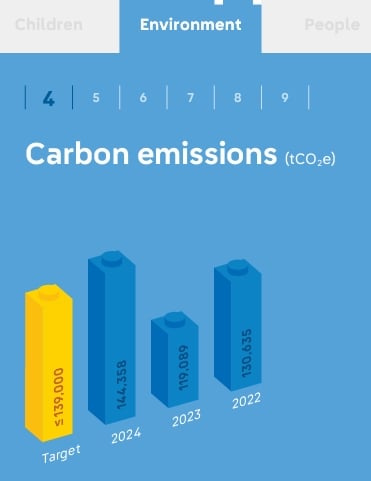
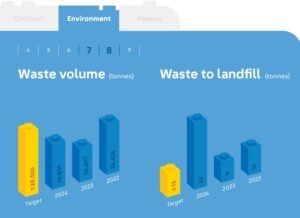
The post LEGO’s Virginia Factory Goes Big on Solar as Net-Zero Push Speeds Up appeared first on Carbon Credits.
Carbon Footprint
Chanel Reveals First Climate Transition Plan: How the Luxury Giant Aims to Hit Net-Zero

Chanel has unveiled its first comprehensive climate transition plan, charting a clear path to net-zero emissions by 2040. Building on its earlier “Mission 1.5°” strategy, the plan aligns with global climate standards and follows the Science-Based Targets initiative (SBTi). This means Chanel must reduce at least 90% of its emissions and remove the remainder.
The move shows a bigger change in luxury brands. They face more pressure from investors, regulators, and customers to take real climate action. Many companies now publish detailed transition plans to show how they intend to meet their net-zero commitments.
For Chanel, climate considerations are no longer immaterial—they now inform core business decisions, from risk management to opportunity assessment.
Breaking Down Chanel’s 1M Tonnes Carbon Footprint
In its Climate Transition Plan, Chanel reported total emissions of about 1.12 million tonnes of CO₂e in 2024. Most of these emissions do not come from its own stores or offices. Instead, they come from its supply chain.
- Scope 1 and 2 emissions: 2% of total (about 24,071 tonnes)
- Scope 3 emissions: 98% of total (about 1.1 million tonnes)
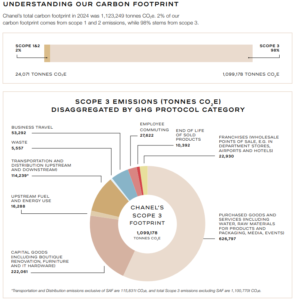
This shows a key challenge. Like many fashion brands, Chanel’s biggest impact is upstream. That includes raw materials, manufacturing, and logistics. The largest source is purchased goods and services, which account for over 626,000 tonnes of CO₂e.
Other major sources include:
- Capital goods: about 222,000 tonnes
- Transport and distribution: over 114,000 tonnes
- Business travel: over 53,000 tonnes
These figures highlight how complex the fashion supply chain is. It also shows why cutting emissions is harder than in other sectors.
Clear Targets: 2030 and 2040 Milestones
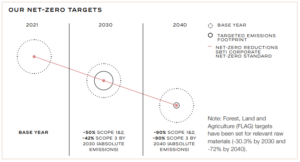
Chanel has set both near-term and long-term net-zero targets to tackle its carbon footprint. By 2030, the company aims to:
- Cut Scope 1 and 2 emissions by 50%, and cut Scope 3 emissions by 42%.
By 2040, the goal is deeper:
- Cut all emissions (Scope 1, 2, and 3) by 90%, and remove the remaining emissions through carbon removals.
Specific targets also cover land-based emissions associated with raw materials like leather and cashmere, with reductions of 30.3% by 2030 and 72% by 2040.
Importantly, Chanel does not rely on carbon offset credits to meet its targets. Instead, it focuses on real emissions cuts. This aligns with stricter global standards. Many frameworks now limit the use of offsets in net-zero plans.
Progress So Far: Renewable Energy and Supply Chain Improvements
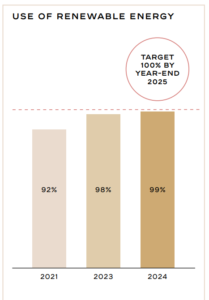
The French luxury brand has already achieved measurable progress. Direct emissions have fallen 22% since 2021, driven primarily by the use of renewable energy. By 2024, 99% of the company’s electricity came from renewable sources, and the goal is to reach 100% by 2025.
Long-term power purchase agreements, including solar projects across Asia and Europe, have supported this transition.
Scope 3 emissions have also improved, declining 10% relative to 2021. Raw material emissions dropped 20% in 2024, thanks to changes in sourcing and the adoption of lower-impact inputs such as sustainable leather and cashmere.
How Chanel Plans to Cut Emissions and Reach Net Zero
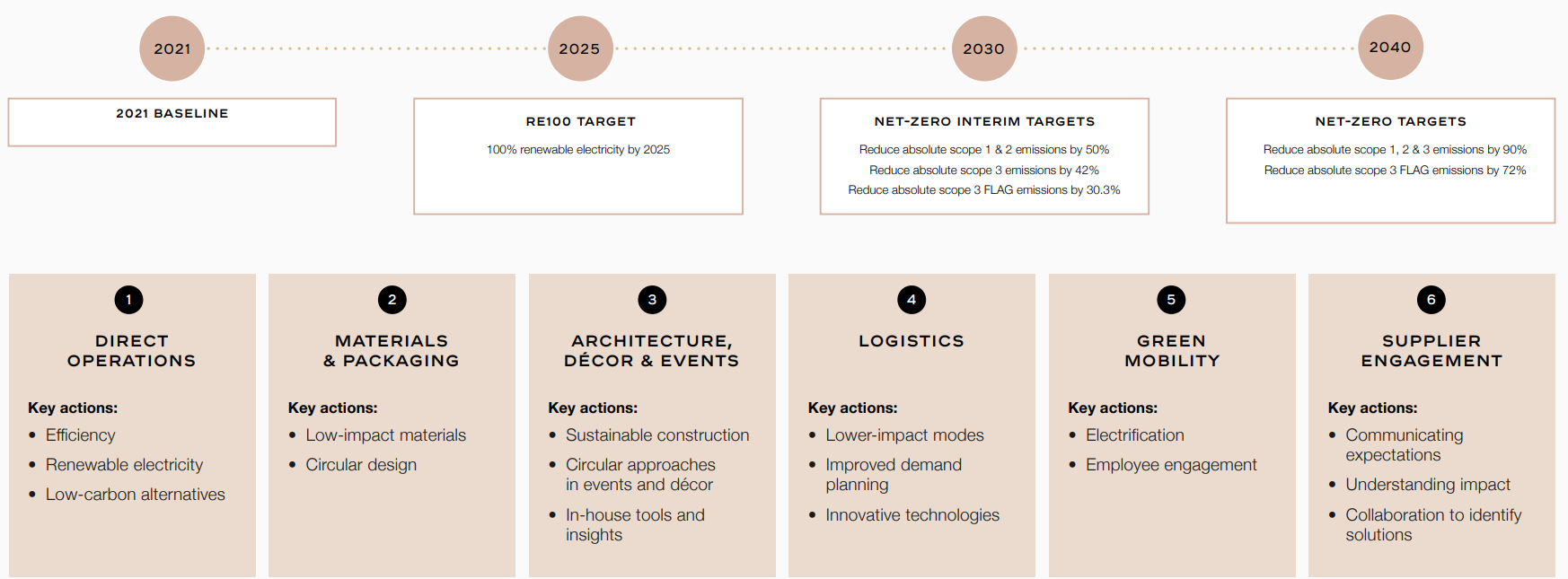
The company’s strategy to tackle its emissions focuses on six main areas:
- optimizing operations,
- adopting lower-impact materials and packaging,
- implementing sustainable design in construction and events,
- shifting to low-emission logistics,
- promoting electric mobility, and
- engaging closely with suppliers.
Since Scope 3 emissions dominate the total footprint, supplier engagement is crucial.
Innovation also plays a key role. Chanel supports initiatives that reduce energy consumption in manufacturing, such as a project that lowered energy use by 27% at a supplier site. Circular design is another focus, with investments in repair services and durable products to extend product life.
Beyond Emissions: Climate Investment and Social Impact
Chanel’s climate plan extends beyond emissions reductions. The company invests in nature and climate projects, including the LEAF Coalition for forest protection, sustainable agriculture programs, and community-based climate initiatives.
In 2024, Chanel committed $125 million to Fondation Chanel, part of which funds women-led climate programs, tying environmental action to social impact. This approach embodies a “just transition,” ensuring that climate action also benefits workers and communities.
The Luxury Sector Shifts: Chanel Sets the Bar for Fashion
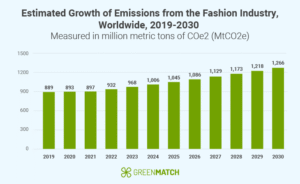
Chanel’s plan reflects a wider shift in the fashion and luxury sector. The industry faces growing pressure to act on climate. Fashion accounts for an estimated 2% to 8% of global emissions, based on various global studies.
Supply chains are complex and global, making change harder. At the same time, regulations are tightening. New rules in Europe and other regions require companies to disclose emissions and transition plans.
Many brands are now setting net-zero targets. But not all have detailed plans. Chanel’s transition plan stands out because it includes:
- Full emissions data
- Clear reduction targets
- A roadmap for action
Still, challenges remain. Cutting Scope 3 emissions is difficult. It depends on suppliers, technology, and costs. There is also a risk of slow progress. New materials, clean energy, and circular systems take time to scale.
Looking Ahead: A Long Road to Net-Zero
Chanel’s transition plan represents a significant step in addressing over 1 million tonnes of emissions. Progress in operations and energy use is evident, but the supply chain remains the most difficult hurdle.
Achieving net-zero by 2040 will require transforming material sourcing, deep collaboration with suppliers, and investment in new technologies.
As consumer demand for low-carbon products grows and investors increasingly scrutinize climate risks, transition plans have become a business imperative. Chanel’s strategy highlights a key trend: climate action is no longer a peripheral responsibility—it is integral to growth, risk management, and long-term value creation.
The post Chanel Reveals First Climate Transition Plan: How the Luxury Giant Aims to Hit Net-Zero appeared first on Carbon Credits.

-
Greenhouse Gases7 months ago
Guest post: Why China is still building new coal – and when it might stop
-
Climate Change7 months ago
Guest post: Why China is still building new coal – and when it might stop
-

 Greenhouse Gases2 years ago
嘉宾来稿:满足中国增长的用电需求 光伏加储能“比新建煤电更实惠”
-
Climate Change2 years ago
Bill Discounting Climate Change in Florida’s Energy Policy Awaits DeSantis’ Approval
-

 Climate Change2 years ago
嘉宾来稿:满足中国增长的用电需求 光伏加储能“比新建煤电更实惠”
-
Climate Change Videos2 years ago
The toxic gas flares fuelling Nigeria’s climate change – BBC News
-

 Carbon Footprint2 years ago
US SEC’s Climate Disclosure Rules Spur Renewed Interest in Carbon Credits
-
Renewable Energy2 years ago
GAF Energy Completes Construction of Second Manufacturing Facility