A major ocean conference has ended in Mombasa, Kenya, with just a handful of countries committing to high-level political declarations on banning deep-sea mining, protecting climate-resilient coral reefs and combatting illegal fishing.
The Our Ocean Conference (OOC) brought together more than 5,000 delegates to discuss marine issues and make voluntary commitments to advance ocean sustainability.
It was the first time in the conference’s 11 editions that it had been held on African soil.
African countries played an “important leadership role” at the talks, observers told Carbon Brief, helping to drive ambition on fisheries transparency, a precautionary pause on deep-sea mining and developing proposals for marine protected areas on the high seas.
Across the three-day conference, attendees also made 320 separate commitments, including new funding for scientific research, improving waste-management programmes to reduce marine pollution and mapping Indigenous groups’ customary waters.
Some of these commitments were accompanied by announcements of new funding, with a total of $6.4bn “mobilised” across all pledges.
Several non-governmental organisations also released new reports during the conference, on topics ranging from the implementation of marine protected areas to “climate-resilient” coral reefs.
Observers told Carbon Brief that the commitments and discussions at the conference were “positive steps”, but added that these pledges must now be backed up by action.
During the opening ceremony, former US secretary of state John Kerry urged delegates to move “from commitments to implementation”.
Here, Carbon Brief outlines the key takeaways from the OOC across five major climate-related topics.
Background
The OOC was first held in Washington DC in 2014, where it was championed by Kerry.
The conference aims to “identify action-based solutions and make tangible commitments” towards addressing key issues facing the ocean, such as climate change and overfishing. It does so through voluntary commitments made by governments, non-governmental organisations, civil society groups and others.
These commitments align with the six “pillars” of the conference:
- The ocean-climate nexus
- Marine pollution
- Marine protected areas
- Maritime security
- Sustainable blue economy
- Sustainable fisheries
Since then, the conference has been held annually (with the exceptions of 2020 and 2021 during the Covid pandemic), with the host city changing every year.
Each edition of the conference is very different, attendees told Carbon Brief, and the host country plays a large role in setting the conference’s priorities.
For example, at the 2024 conference, held in Athens, Greece, shipping and sustainable tourism were discussed at length alongside the six existing pillars.
At this year’s summit, extra attention was paid to the roles of local communities in achieving a “healthy” ocean.
Since 2025, the conference has had its own dedicated secretariat, hosted at the research organisation, the World Resources Institute (WRI). (Prior to that, the US Department of State acted as the de-facto secretariat.)

Conference participants told Carbon Brief that the OOC has been “highly successful” in achieving its aims over the past decade.
An analysis of the first 10 years of the conference, published by WRI in 2025, found that of a total 2,618 commitments made at the OOC, around 1,130 had been completed and a further 1,005 were in progress.
In Mombasa this year, 104 countries and organisations made a total of 320 voluntary commitments. More than one-quarter of these commitments were made in the “sustainable blue economy” action area.
According to the preliminary report released by the secretariat at the conclusion of the OOC, the commitments made at the conference represent $6.4bn in “mobilised” finance. However, it is unclear from the report how much of this figure is new committed funding.
Marine protected areas
Marine protected areas (MPAs) are one of the six key action areas of the Our Ocean Conference.
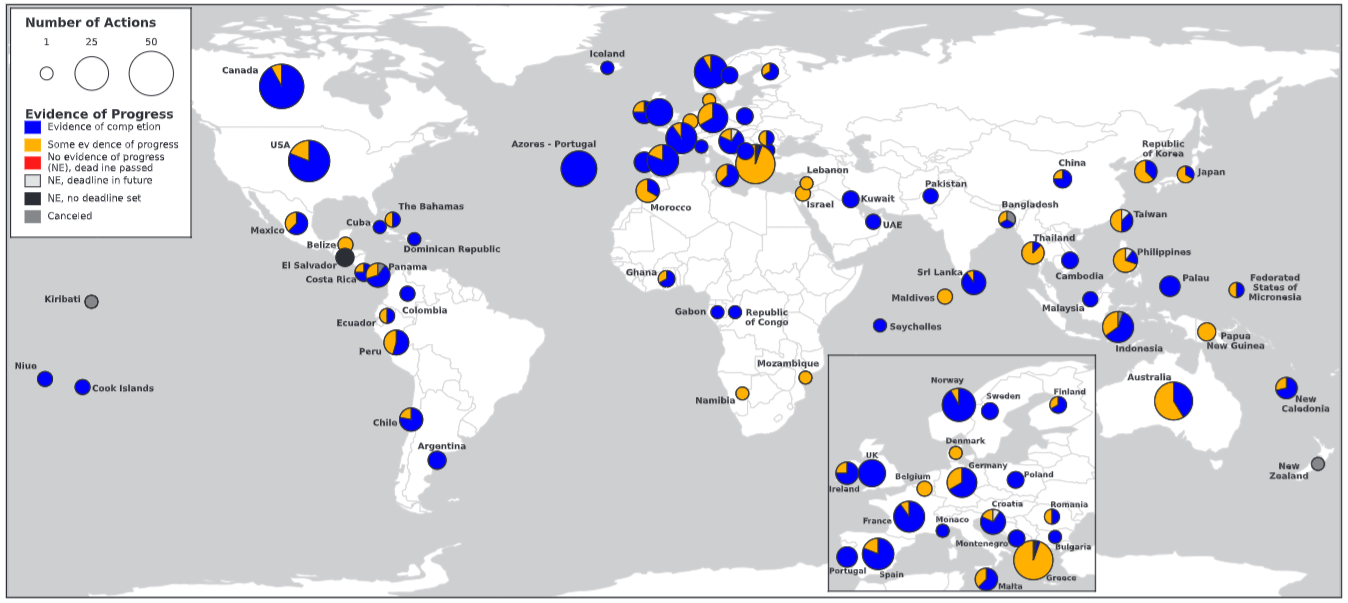
A June 2026 independent assessment of the MPA-related commitments at previous editions of the OOC found that the conference has “made an outsized contribution to global marine conservation efforts”.
According to the analysis, more than one-third of the Earth’s MPAs stemmed from announcements made at the OOC – a total area of more than 10m square kilometres (km2).
This progress is the result of nearly two-thirds of MPA-related OOC commitments already fully implemented, the assessment says, while most of the remaining commitments “show evidence of progress”.
If all pledged MPAs were to be implemented, it would represent protection for around 14.4m km2 or 4% of the ocean.
The chart below shows the number of pledged actions related to MPAs and other area-based conservation methods that were pledged at the OOC between 2014 and 2025, coloured by the progress made on each commitment.
Several groups announced new MPAs – or the completion of previously announced MPA designations – at the OOC.
These included the establishment this year of two new MPAs in the Juan Fernández region of Chile, protecting a total of around 337,000km2 of ocean, and the approval of the Azores Marine Park, which will span 287,000km2 – making it the largest network of protected areas in the north Atlantic Ocean.
However, despite the progress made in designating MPAs, further work is needed to ensure that these areas are truly protected, experts told Carbon Brief in Mombasa.
A report released by the Smithsonian Tropical Research Institute (STRI) at the summit detailed the “implementation gap” facing MPAs. It noted that “at least half of existing MPAs remain unimplemented or operationally ineffective”, while just 3.5% of the global ocean is “fully and highly” protected.
Closing this gap will require “inclusive, sustained and context-sensitive design, management and funding approaches”, continued the report.
Dr Ana Spalding, the director of STRI’s Adrienne Arsht community-based resilience solutions initiative, told Carbon Brief that, while MPAs are typically evaluated based on their biodiversity outcomes, the communities that rely on ocean ecosystems are also very important to consider. Focusing on just one aspect or the other will result in an MPA that is not effective, she added:
“There’s going to be a sweet spot between the two.”
High Seas Treaty
The Agreement on the Conservation and Sustainable Use of Marine Biological Diversity of Areas Beyond National Jurisdiction – also known as the BBNJ Agreement or the High Seas Treaty – entered into force on 17 January 2026.
This followed the treaty, achieving the necessary 60 state ratifications on 19 September 2025. The week before the OOC, the east African nation of Comoros became the 90th party to ratify the agreement.
The first Conference of the Parties for the High Seas Treaty will be held in January 2027 in New York City. At that meeting, parties will be tasked with creating the rules of procedure, establishing the subsidiary bodies and carrying out other foundational work.
Because so many key decisions will be made at this COP1, it is “imperative” to have as many ratifications as possible before the conference begins, said Rebecca Hubbard, director of the High Seas Alliance, a coalition of non-governmental organisations that advocates for protection of the high seas. She added:
“We hope that well over 100 countries will be party to the agreement by COP1, so that they can be at the decision-making table.”
One of the key provisions of the High Seas Treaty is that it creates a mechanism for countries to establish MPAs in international waters. This will be key to achieving the “30 by 30” target of protecting 30% of the world’s land and oceans by 2030, Hubbard told Carbon Brief.
However, establishing a high-seas MPA under the agreement requires a thorough process, including a review by a scientific and technical subsidiary body, a consultation with parties and a vote by the COP. Thus, in order to achieve the “30 by 30” target, parties will need to act swiftly to begin the process of establishing high-seas MPAs, according to Hubbard. She said:
“It will be very, very tight. It’s definitely possible, but it requires really strong government leadership and prioritisation.”
She added that it is “essential” that governments begin forming proposals for high-seas MPAs before the COP meets in January, noting that some countries are already doing so.
At a side event on 16 June, representatives from South Africa and the EU detailed plans to propose a high-seas MPA that would link two existing protected areas in the sub-Antarctic – one South African and one French. Hubbard told Carbon Brief:
“That’s a really great example of what we can do with the High Seas Treaty – having developed and developing countries working together, sharing knowledge [and] developing scientific approaches together. I think that’s the hopeful future, collaboration [and] cooperation, that the High Seas Treaty really provides.”
Also at the summit, Senegal, Mauritania, the Gambia and Guinea-Bissau committed to creating “at least two” transboundary west African MPAs.
Deep-sea mining
Although deep-sea mining was not a major focus of the Mombasa talks, it did feature at several side events.
At a reception held by the Deep Sea Conservation Coalition (DSCC), Prof Rashid Sumaila of the University of British Columbia said the “wrong question is being asked” about deep-sea mining. He continued:
“It’s not whether they have the minerals, it’s whether extracting them gives a net-positive impact.”
Sumaila added that evaluating the risk of deep-sea mining will require a cost-benefit analysis that is as “broad and inclusive as possible”.
At the same reception, the foreign-affairs minister of Malawi, Dr George Chaponda, announced the country’s support of a “precautionary pause” on seabed mining in international waters. This would prohibit mineral exploration in such areas until there is robust scientific evidence showing limited environmental harm.
In doing so, Malawi became the first African country to support such a pause – and the 41st country overall to support a precautionary pause or moratorium on the activity.
Chaponda told the assembled guests that Malawi’s existence as a landlocked country did not preclude its involvement in the deep-sea debates, urging:
“To my fellow landlocked states: geography does not diminish our stake in the ocean.”
Later in the week, Kenya and Madagascar also announced their support for such a pause.
In a statement, David Willima, the Africa lead at DSCC, said:
“The leadership shown by Malawi, Kenya and Madagascar sends a vital signal that African nations are stepping forward to defend the deep ocean and are unwilling to accept the risks of deep-sea mining.”
Coral reefs
At the third UN Ocean Conference (UNOC), held in Nice, France, in June 2025, 11 countries and several partner organisations launched the high-level commitment to protect “climate-resilient” coral reefs.
These are reefs that, according to scientists, have the “best chance of long-term survival in the face of climate change”.
(UNOC occurs every three years and is specifically focused on achieving the UN Sustainable Development Goal on sustainable ocean use. Unlike the OOC, UNOC results in a negotiated political declaration.)
A further four countries signed the commitment in Mombasa: Comoros, the Dominican Republic, Kenya and the UK. According to a representative at the launch event, the goal is to reach 31 signatories – representing 80% of the world’s coral cover – by COP31 in Turkey in November this year.
Signatory governments pledged their commitment to:
- Identifying climate-resilient reefs and prioritising their protection.
- Integrating coral-reef protection into national strategies and plans.
- Enacting policies to reduce the local pressures facing coral reefs, such as overfishing, pollution and overdevelopment.
- Implementing national reef monitoring programmes and action plans.
- Ensuring equity and working with local communities in protecting reefs.
The Mombasa conference also coincided with the presentation of a new study on climate-resilient reefs, covered in the 17 June edition of Carbon Brief’s Cropped newsletter. (The study is currently in the final stages of peer review.)
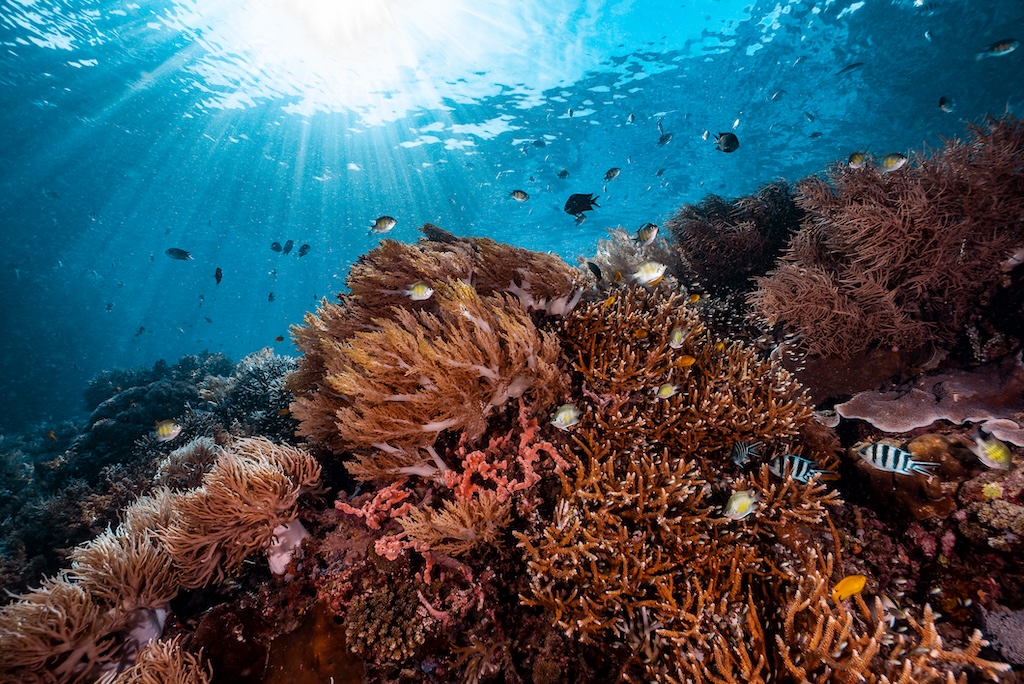
Building on a 2018 project that identified the 50 coral reefs that “form an optimal portfolio of reefs that are most likely to survive climate change”, the new work mapped more than 165,000km2 of coral reefs across 70 countries. These were found to have the best chances of persisting in the face of climate change and a warming, acidifying ocean.
Dr Emily Darling, director of coral-reef conservation at the Wildlife Conservation Society and a co-author of the study, told Carbon Brief that “one of the key things countries can do that have these important reefs is elevate them into national policy” across multiple government sectors.
She added that learning from these reefs will become vital over the coming months as El Niño warms the world’s oceans even further.
Darling told Carbon Brief:
“Climate change is not a single blanket on the world’s oceans. There are a lot of pockets of resilience, there are pockets of revolution for corals, and it’s all about finding those places, and how do we support them through the other local pressures that they experience that we know we can manage.”
Although few monetary coral-related commitments were made at the summit, Norway pledged to allocate NOK 20m ($2m) to the Global Fund for Coral Reefs.
Fisheries
One of the major achievements of the summit was the adoption of the Mombasa Declaration to advance fisheries transparency and combat illegal fishing.
The declaration “recognise[s]” that illegal, unreported and unregulated (IUU) fishing is a major factor driving the unsustainable use of ocean resources and the degradation of marine ecosystems.
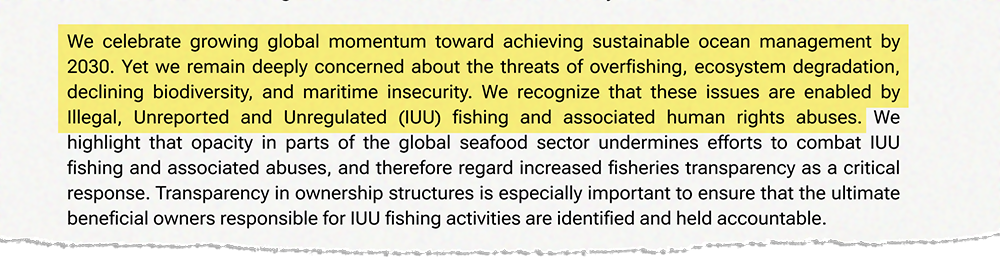
The declaration, which was signed by 16 national governments – eight of them from Africa – commits parties to follow a set of principles laid out in the Global Charter for Fisheries Transparency. This was developed and promoted by a group of civil society organisations known as the Coalition for Fisheries Transparency.
The commitments in the Mombasa Declaration fall within four broad categories:
- Supporting transparency and accountability in the fishing industry.
- Strengthening monitoring of fishing activities and cooperating with enforcement actions.
- Building capacity and supporting implementation of transparency reforms.
- Strengthening ocean-observing systems and promoting the use of open-access data.
The declaration notes that these principles should “apply to and benefit both small-scale and industrial fisheries” and support “broader ocean-management efforts”.
At a press conference announcing the launch of the declaration, Ghanaian fisheries and aquaculture minister Emelia Arthur called it a “global testament of our collective commitment to transparent fisheries”. She emphasised the importance of the sector to all aspects of life, saying:
“Fisheries is nutrition. Fisheries is food security. Fisheries is livelihoods. Fisheries is national security.”
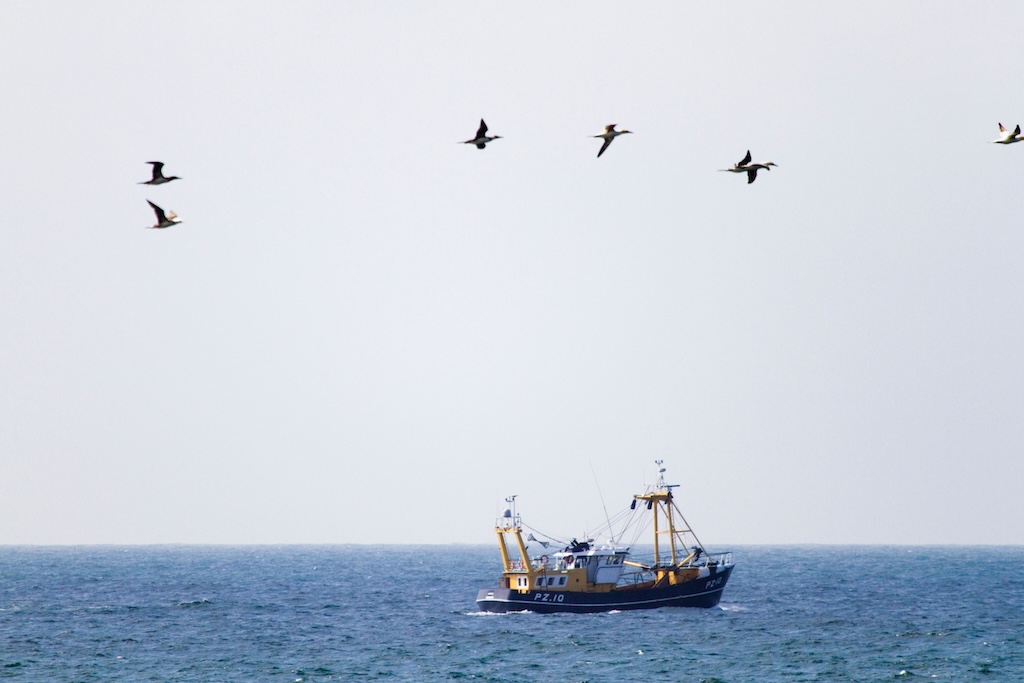
Several civil society organisations, philanthropies, community groups and governments also made separate fisheries-related commitments at the summit.
The EU committed €46m ($52m) through its Horizon Europe research programme to fisheries work, including €32m ($36m) for “adaptive co-management strategies” and €14m ($16m) for research on conservation and sustainable management of migratory fishes.
The EU and Italy both also announced contributions to the European Maritime, Fisheries and Aquaculture Fund.
The government of Kenya made nine fisheries-related pledges at the summit, including committing to train compliance officers dedicated to combatting IUU fishing, developing management plans for all of its commercial fisheries and establishing bycatch mitigation measures.
At the summit, the UN Food and Agriculture Organization launched its biannual “state of world fisheries and aquaculture” report.
According to the report, the world set a new record for fisheries and aquaculture in 2024 – producing a total of 235m tonnes of fish and algae. This total consisted of nearly 92m tonnes of fish from capture fisheries, 103m tonnes of farmed fish and 40m tonnes of algae production.
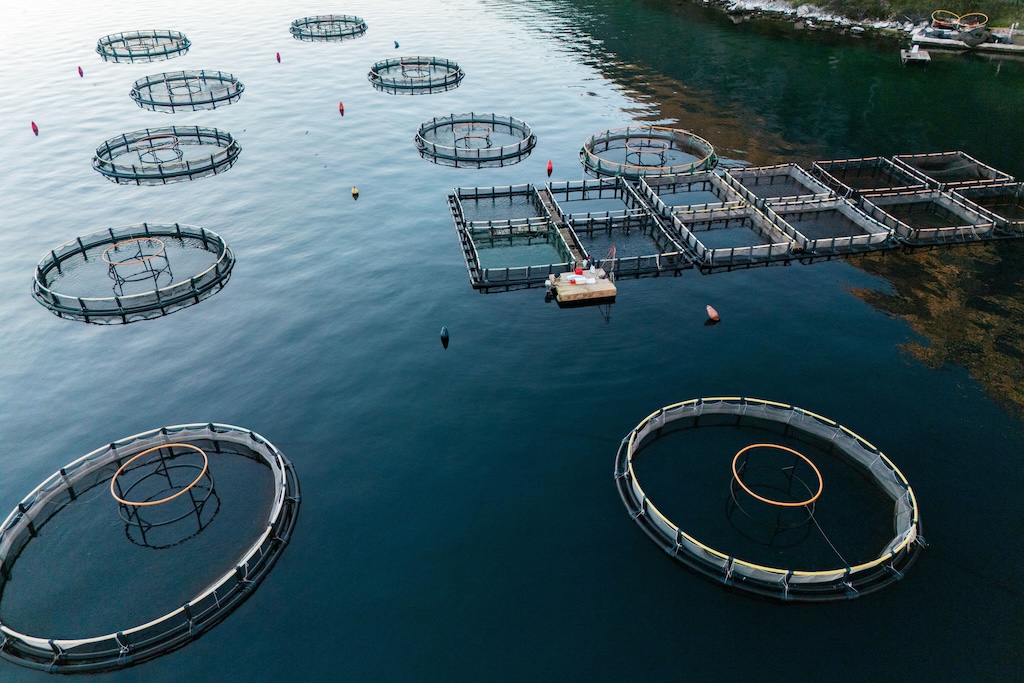
The amount of fish produced by capture fisheries has remained largely stable since 2000, while aquaculture production has increased by an average annual percentage rate of just under 5%, according to the report.
While the largest growth has occurred in Africa, Latin America and the Caribbean, the vast majority of aquaculture production – 89% – occurs in Asia.
The report also says that more than one-third of the world’s marine fish stocks are overfished, with significant variation based on region and species. It adds that climate change may play an increasing role in driving the unsustainability of fisheries in the future:
“Despite the uncertainty of climate risks in the short, medium and long term, studies on the impacts of climate change on aquatic food systems around the world increasingly document the relevance and potential success of adaptation measures, urging decision-makers to integrate climate change considerations into fisheries and aquaculture planning and management.”
The post Mombasa: Key outcomes from the Our Ocean Conference in Kenya appeared first on Carbon Brief.
Mombasa: Key outcomes from the Our Ocean Conference in Kenya
Climate Change
As Nigeria rails at loss and damage “mirage”, fund boss assures money is coming
After a four-year set up period, a fund to help vulnerable countries respond to climate impacts is facing criticism from Nigeria’s environment minister over delays in delivering aid, while its chief executive says the first disbursements will be made by the end of the year.
At an event at London Climate Action Week on Tuesday, Nigerian environment minister Balarabe Abbas Lawal said that whenever he goes to UN climate summits “we talk about loss and damage funds, and all these years nothing has been translated into action”.
He added that the fund currently “looks like a mirage”, and said that “a number of our governments are beginning to believe that COPs are just talk shops”.
The idea of addressing the loss and damage caused by climate change was first discussed at COP13 in 2007. A fund was agreed to at COP27 in 2022 to help vulnerable countries respond to climate emergencies, and it was officially set up the next year. Since then, the fund’s board and management have been working out the details of how it will work.
Ibrahima Cheikh Diong, a banker from Senegal, was appointed CEO in 2024. Referring to Lawal’s frustration, Diong told Climate Home News on Thursday that the fund is “moving according to plan”.
A call for funding requests, launched at COP30, closed on June 15. Projects – including those to strengthen responses to floods in Bangladesh and Lagos and improve water infrastructure in Jamaica – bid for a combined $250 million. Diong said that the fund’s board would decide which projects to fund at its next board meeting in the Philippines, starting on July 8.
“We hope that by the end of the year we can begin then to make the decision and see the funds going, so hopefully the frustration for Nigeria will be reduced”, he said, adding that “every time wasted, when it comes to loss and damage, is lives not saved”.
Funding concerns
While climate campaigners have called for tens of billion of dollars of funding a year, wealthy nations have promised the fund $822 million and delivered just $449 million – with countries like Italy, France and Luxembourg failing to pay in full.
A briefing paper prepared by the fund’s secretariat earlier this year warned that, unless fresh contributions are secured, the fund could run out of resources by the end of 2027.

Diong said that the fund intends to hold a replenishment round, where governments promise money, next year. In the meantime, as public finance “is being very difficult to mobilise”, the fund is looking at other sources of funding.
“What exactly that source of funding will be, we have to look at the potential, look at the feasibility and so on”, he said, so the fund can keep up with demand.
In an open letter in April, a group of climate campaigners called for developed countries to increase contributions to the Loss and Damage fund and introduce taxes on fossil fuel companies, financial transactions, luxury air travel and wealth to help finance it.
“Rich countries must be held strictly accountable for the devastation they have caused,” said Climate Action Network International head Tasneem Essop. “Their failure to fulfill their responsibility to the loss and damage fund is not just an oversight; it is a shameful betrayal of humanity.”
The post As Nigeria rails at loss and damage “mirage”, fund boss assures money is coming appeared first on Climate Home News.
As Nigeria rails at loss and damage “mirage”, fund boss assures money is coming
Climate Change
China Briefing 25 June 2026: Five-year plans passed | Critical-mineral tensions | Industrial decarbonisation plan
Welcome to Carbon Brief’s China Briefing.
China Briefing handpicks and explains the most important climate and energy stories from China over the past fortnight. Subscribe for free here.
Key developments
New five-year plans
GENERATION TARGET: China today released its 15th five-year plan for building a “new-type energy system”, according to finance news outlet Cailianshe. It said the plan covered topics including energy sources, power-market reform and China’s role in clean-energy supply chains and climate governance. The plan, published by the National Development and Reform Commission, stated that China will aim for clean energy to constitute 30% of power generation by 2030 – up from approximately 22% today. It also stated that wind and solar will become the “mainstay” of China’s power mix. The government will work to increase clean-energy consumption, such as by upgrading the grid to “accommodate” 900 gigawatts of distributed energy and promoting emerging solutions such as virtual power plants and hydrogen. The plan also urged the “strengthening” of coal’s role as a “bottom-line guarantee”.
IN THE WORKS: At a meeting on 11 June, China’s State Council approved the “15th five-year plan for building a beautiful China”, reported industry news outlet BJX News. The meeting readout noted the importance of “actively address[ing] climate change” and developing “green production and lifestyles”, it added. The next day, the Ministry of Ecology and Environment (MEE) approved a series of environment-related five-year plans, including the “15th five-year plan for a national response to climate change”, said business news outlet 21st Century Business Herald article. The full text of the plans is not yet available.
JOBS AND GOVERNANCE: A separate five-year plan on employment included calls to “unlock employment potential” by developing “new energy system” projects, according to current affairs outlet China News. The government also published a white paper on global governance that said the “general public truly feels that nations are taking action and that unity can overcome any obstacle” to address climate change, reported state news agency Xinhua. It added that the paper called on developed countries to “honor their commitments” on climate finance. Foreign minister Wang Yi said in a press conference that China aims to “innovate governance mechanisms” to address issues such as how countries can “achieve” a global low-carbon transition, Xinhua also reported.
Critical mineral barbs
REDUCE DEPENDENCIES: The Group of Seven (G7) major economies have stated that “no single country should supply more than 60% of their imports of rare earths”, reported Bloomberg, in “an effort to reduce their reliance on China”. The full communique, which does not mention China by name, said that diversifying supply chains was “urgen[t]”, due to “market concentration”, the “growing use of arbitrary trade restrictions” and the need to “reduce vulnerabilities”. In response, China’s foreign ministry urged the G7 to “stop disrupting the international trade order” with “self-made rules”.
EXPORTS BLOCKED: The Indonesian government’s new nickel production quotas and pricing rules could put $50bn of Chinese investment at risk, Chinese diplomats argued in a letter covered by the Financial Times. Lithium miners in Zimbabwe, including Chinese firms, are asking for more time to build local processing facilities ahead of a 2027 lithium concentrate export ban, said Reuters. Meanwhile, China restricted trade with two US rare-earth companies, in response to the US adding companies including CATL and BYD to a “blacklist”, said the Financial Times. China’s exports to Japan of rare earths used to make permanent magnets remain “negligible”, reported Reuters.
DIALOGUE URGED: EU member states have asked the European Commission to develop new trade instruments to deal with the “economic threat” posed by China, reported the Hong Kong-based South China Morning Post. Despite “combative rhetoric” ahead of the summit, the Financial Times reported that the 27 leaders opted for dialogue rather than immediate action to address “global macroeconomic imbalances”. Separately, the European Commission plans to impose tariffs on Chinese plug-in hybrid electric vehicles, reported German business newspaper Handelsblatt.
CLIMATE MINISTERIAL: The EU, China and Canada held a climate ministerial, in which Chinese environment minister Huang Runqiu said countries “must strengthen cooperation rather than retreat from it”, said Euronews. Climate outlet Tanpaifang reported that Huang also said COP31 should address “insufficient emission reduction efforts and financial support from developed countries”. According to a European Commission transcript, EU climate commissioner Wopke Hoekstra said: “We need to act for climate, but also for competitiveness and independence. We cannot afford to depend on third countries.”
Mandatory targets for energy users
NEW TARGETS: From August, the Chinese government will “set binding targets” for companies on how much low-carbon power and non-electric energy they must consume, said Bloomberg. It added that targets will be set for how much low-carbon power provinces must absorb into their grids. Provinces and “key energy-consuming industries” will see their uptake of clean energy monitored on a quarterly basis and be subject to annual assessments by the State Council, said industry news outlet International Energy Net.
END-USER PRESSURE: The announcement marks the first time that China has established targets for non-fossil energy consumption at the “end-user level”, reported economic news outlet Jiemian. It added that the previous system, which only covered power, placed the responsibility for absorbing renewable energy into the grid “primarily” onto local governments and power grid companies.
SUPPORTING THE MARKET: The new measures will “help address grid integration challenges and promote better utilisation of renewable energy”, an official at the National Energy Administration told reporters, according to Xinhua. The official said it would also help boost demand for other low-carbon industries, such as “green hydrogen, ammonia and methanol”. Liu Guobin, vice-president of the China Electric Power Planning and Engineering Institute said in an “explanation” posted on International Energy Net that the measures would also “convey clear…expectations to the market” for the long-term outlook for renewable energy, “guiding the rational allocation of investment”.
More China news
- BECALMED: China’s thermal power generation rose 2.1% year-on-year in May, as “lower wind speeds curbed renewable energy growth”, reported Reuters.
- TRUCK TARGET: The government issued a new plan for developing “new-energy heavy duty trucks (HDTs)” that aims to have sales of electric, hydrogen and other low-carbon HDTs account for 40% of new truck sales by 2030, said Xinhua.
- SUPERMASSIVE SYSTEM: China’s total power capacity reached 4,000 gigawatts in May, reported BJX News, larger than that of the US, EU, India, Russia and Japan combined. Coal’s share of the capacity mix fell to 32%, while the non-fossil share rose to 62%.
- EXPORT DRIVER: China’s exports of electric vehicles (EVs) rose 54% year-on-year in May to $10bn by value and lithium-battery exports “rose 37% to $8bn”, but solar cell exports fell 7% by value to $2bn, said Caixin. The thinktank Ember found that Chinese EV exports to south-east Asia, particularly Thailand and the Philippines, reached an “all-time high” of $1.2bn.
- ONGOING RISK: The heavy rainfall seen throughout June, as well as drought, is likely to continue during China’s flood season, said the Ministry of Emergency Management in comments covered by Jiemian.
- PROJECTION PUSHBACK: The China Energy Research Society’s Wang Weiquan described projections by BloombergNEF of China’s emissions reduction and share of coal in the power mix as “overly optimistic” and “even radical”, according to the state-run newspaper China Daily.
Spotlight
What is in China’s new three-year action plan for industry?
China has issued a new action plan for energy conservation and reducing carbon emissions across nine heavy industries.
In this issue, Carbon Brief examines how the plan will impact China’s industrial development and decarbonisation.
China will conduct an “intensive campaign for energy conservation and carbon reduction upgrades” across heavy industry between 2026 and 2028.
The plan targets nine key industries: steel; electrolytic aluminum; cement; flat glass; oil refining; ethylene; synthetic ammonia; methanol; and coal-fired power.
After 2028, it said that production capacity that does not meet efficiency standards will be phased out and that efforts will be broadened to other industries.
Combined, power and industry make up the vast majority of China’s emissions profile.
Emissions in some of these sectors – notably, steel and cement – have been falling. However, chemical-industry emissions have experienced double-digit growth.
China’s power sector, which generates the majority of its electricity through coal, is responsible for around 40% of the country’s total carbon dioxide (CO2) emissions.
Focused on efficiency
The plan outlined several measures for companies to take to reduce their energy use and emissions profile.
According to a Carbon Brief count, the majority are focused on energy efficiency, such as promoting high-efficiency industrial processes and upgrading energy-consuming equipment.
More than 70% of China’s steel, aluminium, cement and flat glass capacity does not meet energy efficiency benchmarks, said a government official in a Q&A published by the National Development and Reform Commission (NDRC).
Yang Zhou, senior advisor China at Agora Energiewende, told Carbon Brief that the policy will “pick the last lowest hanging fruit” in terms of eliminating low-efficiency capacity. After this, she said, the focus will turn to entering a “deep-water” phase of decarbonising industrial capacity, as well as making it more efficient.
Some of the measures that companies are encouraged to take in the plan do directly link to decarbonisation. These include developing “hydrogen metallurgy” and sourcing low-carbon materials and fuels, as well as increasing electrification and renewable power usage.
The coal-power industry should improve flexibility, decouple combined heat and power operations and integrate biomass and renewable energy into their operations, it said.
Coal plants are expected to reduce coal consumption per kilowatt-hour (kWh) of electricity by “at least five grams of standard coal” and carbon emissions per kWh by 10%-20%, if not more.
The document said that the share of coal-fired power capacity that meets energy efficiency benchmarks should improve by 15 percentage points by 2028. This rises to 20 percentage points for the other eight industries.
By 2028, according to the NDRC, the plan aims to cut energy use by more than 100m tonnes of standard coal per year and reduce CO2 emissions by more than 200m tonnes.
Supporting business
Companies will receive support from the central government, which will subsidise 20% of the total investment that “approved” projects require.
Provinces should “fully leverage” pricing mechanisms to encourage retrofitting, said the policy.
Local policymakers can now add a surcharge of up to 0.1 yuan ($0.15) per kWh to market-traded electricity prices for non-compliant producers – which finance outlet Caixin said was a “central” tool for enforcement.
The South China Morning Post quoted an unnamed analyst, however, saying the policy may not “deliver its intended effects”, as some industries still receive subsidised electricity from local governments.
Companies will also be able to use verified CO2 emission reductions from approved projects to “offset” emissions from “new, renovated or expanded” dual-high projects. For industries covered by China’s carbon market, this may be formalised in their emissions allowances.
The NDRC official said that support should be provided to “ensure they receive reasonable returns on their carbon emission allowances”.
The policy “seeks to strike a balance” between energy security and climate goals, rejecting the “radical thinking of ‘one-size-fits-all shutdowns and phase-outs’”, according to a widely-read commentary by Sprinting Power Worker, a “self-media” WeChat account.
“For industries such as coal power, steel and cement, a gradual capacity reduction is expected due to market forces,” said Yang. She added:
“For growing sectors like chemicals and non-ferrous metals, China’s strategy is to expand capacity, [albeit] increasingly concentrated, scaled-up and efficient. Continued decarbonisation will require large-scale deployment of solutions like electrification, green power-green hydrogen coupling and circular economy.”
Watch, read, listen
SULPHURIC SLOWDOWN: Rhodium Group published an analysis of how China’s efforts to restrict exports of sulphuric acid could impact global electrification efforts.
ARCTIC ACTIVITY: The Circumpolar podcast explored the variety of interests, including energy and the environment, driving China’s actions in the Arctic.
TRANSITION IN NUMBERS: Thinktank Agora Energiewende hosted a webinar on its new report, which outlined key trends in China’s energy transition.
CARBON TAX: The Center for Strategic and International Studies looked into how China is responding to the EU carbon border adjustment mechanism.
4.9%
The amount by which China’s oil consumption is expected to fall in 2026 compared to the year before, according to a report by a thinktank under oil giant PetroChina, covered by Reuters. It said the decline is due to the “pivot to new energy and high oil prices due to the Iran war”, according to the report.
New science
- Economically developed Chinese cities “transferred” 42% of their greenhouse gas emissions related to plug-in electric vehicles to less developed cities in 2020, “substantially increasing” the recipients’ climate mitigation costs | Nature Cities
- Renewable energy development “significantly reduces” urban-rural income inequality in Chinese cities | World Development
- Grain trading between Chinese provinces increased more than fivefold between 1980 and 2020 and production shifted northward, driving a more than 217% increase in “embodied nitrogen losses and greenhouse gas emissions” | Nature Food
Recently published on WeChat
China Briefing is written by Anika Patel, with contributions from Lekai Liu. It is edited by Simon Evans. Please send tips and feedback to china@carbonbrief.org
The post China Briefing 25 June 2026: Five-year plans passed | Critical-mineral tensions | Industrial decarbonisation plan appeared first on Carbon Brief.
Climate Change
Livestock heat deaths in transit doubled in UK record-hot summer of 2025
Twice as many animals died due to heat stress en route to slaughterhouses during the UK’s record-hot summer in 2025 compared to 2024, according to new Carbon Brief analysis.
Government figures showed that nearly 6,600 animals – mostly chickens – died in transport as a result of the sweltering summer heat in England and Wales from June to August 2025.
This compared to 3,100 in summer 2024 and no official cases in summer 2023.
These figures were still below the more than 18,500 deaths recorded in the summer of 2022 when UK temperatures hit 40C for the first time, as previously reported by Carbon Brief.
The deaths are a “horrifying reminder of what happens when animals are treated as cargo”, said an animal-rights group spokesperson.
Detailed descriptions included in the data on the deaths highlighted thousands of animals dying amid heat stress, high humidity levels and long journeys.
Thousands of animals also died due to cold, wintry conditions, with more than 13,000 deaths recorded between December 2024 and February 2025 – almost double the previous winter.
Heat deaths
Carbon Brief has analysed recent years of “dead on arrival” data focused on livestock that died due to heat or cold stress en route to slaughterhouses.
The data was obtained through the UK Freedom of Information (FOI) Act from the Food Standards Agency (FSA), which is responsible for the compliance of slaughterhouses in England and Wales.
At least 1m chickens die in the UK each year while being transported to slaughterhouses due to suffocation, poor transport procedures and other issues, reported the Bureau of Investigative Journalism in 2018 .
Pigs, cows, sheep and other animals also die in this way in smaller numbers.
The new data showed that 6,595 animals died due to heat stress en route to abattoirs between June and August 2025, which was the warmest summer on record in the UK.
According to the Met Office, human-caused climate change made this summer heat 70 times more likely to occur.

Carbon Brief requested non-publicly accessible details of “dead on arrival cases” that were categorised as “suspected heat/cold stress”.
Each incident contained a detailed description written by a vet with supporting evidence about the condition of the animals, the transport conditions and the suspected cause of death. These are filed to the FSA.
The information showed that certain individual days had particularly high death tolls. Almost 1,000 chickens died in a number of incidents during a heatwave on 11 July 2025. Some chickens showed visible signs of heat stress, such as panting and immobility, the reports said.
On 12 August, amid more high temperatures, 2,154 chickens died in heat-stress incidents.
Body temperatures of some of the chickens that died on this day were as high as 46C.
A chicken will die if its body temperature exceeds 45C and it should ideally stay as close to 41C as possible, according to a 2005 document from the Department for Environment, Food & Rural Affairs (Defra).
The table below shows the total number of heat- and cold-related deaths of livestock in recent years, based on the data obtained through FOI.
The “dead on arrival” information covered every summer and winter since 2023, alongside the summer of 2022.
The figures were likely an underestimate of the total number of livestock deaths due to high or low temperatures, as they only included deaths with “suspected cold/heat stress” as a listed category.
However, the incident descriptions in many other deaths mentioned high and low temperatures as contributing factors, despite the ultimate cause of death not being labelled as such. These were not included in Carbon Brief’s tally.
The figures covered deaths in England and Wales. Scotland and Northern Ireland do not record the cause of deaths en route to slaughterhouses, so it is not possible to single out the cases linked to high or low temperatures.
Preventing deaths
These livestock deaths are a “horrifying reminder of what happens when animals are treated as cargo”, says Alex Harman, campaigns manager at animal rights group Animal Aid. He tells Carbon Brief:
“These 6,600 individuals [in summer 2025] did not just die, they suffered prolonged, agonising heat exhaustion inside metal containers – anyone experiencing the UK’s heatwave this week will be able to empathise.”
Climate change is “simply amplifying the violence already built into animal farming”, he says, adding that the only “compassionate, logical” solution is to “stop viewing animals as products and urgently transition to a plant-based food system”.

Pigs and chickens cannot sweat and face difficulties cooling down on very hot days.
Cramped or long journeys can exacerbate this, combined with high humidity levels, sometimes upwards of 80%, the livestock data showed.
Abigail Penny, the executive director of Animal Equality UK, tells Carbon Brief that “these same scenes of extreme animal suffering play out every summer and, if nothing is done, it’s only going to get worse”.
Workers transporting animals during extreme weather conditions are expected to put in place measures to protect them, according to UK government guidance.
These measures can include ensuring water and ventilation systems function properly on vehicles, avoiding travel during the hottest or coldest parts of the day and recognising signs of heat and cold stress in animals.
The FSA said that the number of “dead on arrival” incidents caused by cold and heat stress increased by more than 50% between April 2024 and March 2025 compared to the same period the year prior.
The FSA and Defra declined Carbon Brief’s request to comment on the new figures.

Cold deaths
Thousands of animals also die due to cold stress while travelling to slaughterhouses each year. Carbon Brief assessed data for these deaths in the winters of 2023-24 and 2024-25.
At least 13,057 livestock animals died due to cold weather conditions between December 2024 and February 2025. This is more than double the number – 6,981 – that died the previous winter.
On 6 February 2025 alone, 4,056 poultry deaths were reported due to cold weather impacts.
Some livestock also died due to cold conditions in the summer months.
For example, 326 animals died amid cold weather in the summer of 2023. No official heat-related deaths were recorded in that period, but a number of incidents referred to hot-weather conditions or heat stress as contributing factors.
Overall, 2023 was a very warm year in the UK, with soaring temperatures in June and September. At least 3,103 animals died from heat stress in September, the figures also showed.
Conditions were cooler and wetter in July and August, which may have contributed to the absence of heat-stress deaths.
Most cold deaths during warmer months occurred in the early hours of the morning or overnight when temperatures dropped, the FOI data shows.
On 28 August 2025, for example, 134 chickens died due to cold stress. The incident description outlined that the animals were “very wet”, dirty and had few feathers, which can reduce a chicken’s ability to hold warmth.
The animals were transported overnight to a slaughterhouse and “suffered distress and pain” because of the weather and other factors, the description noted.
The post Livestock heat deaths in transit doubled in UK record-hot summer of 2025 appeared first on Carbon Brief.
Livestock heat deaths in transit doubled in UK record-hot summer of 2025
-
Greenhouse Gases11 months ago
Guest post: Why China is still building new coal – and when it might stop
-
Climate Change11 months ago
Guest post: Why China is still building new coal – and when it might stop
-
Greenhouse Gases2 years ago嘉宾来稿:满足中国增长的用电需求 光伏加储能“比新建煤电更实惠”
-
Climate Change2 years ago嘉宾来稿:满足中国增长的用电需求 光伏加储能“比新建煤电更实惠”
-
Renewable Energy8 months agoSending Progressive Philanthropist George Soros to Prison?
-
Climate Change2 years ago
Bill Discounting Climate Change in Florida’s Energy Policy Awaits DeSantis’ Approval
-
Carbon Footprint2 years agoUS SEC’s Climate Disclosure Rules Spur Renewed Interest in Carbon Credits
-
Greenhouse Gases12 months ago
嘉宾来稿:探究火山喷发如何影响气候预测