

Weather Guard Lightning Tech

Media Sourcery, Everpoint Transforming Turbine Blade Recycling
Larry Ketchersid, CEO of Media Sourcery explains the company’s partnership with Everpoint Services to improve the process of recycling turbine blades and solar panels. Using blockchain technology to create verifiable proof of proper recycling, companies can get the processing and documentation they need – along with peace of mind.
Listen to the entire interview here
Wind and solar energy continue to expand worldwide, as more countries realize their tremendous potential, but a major blind spot looms: decommissioning renewable energy assets doesn’t always go according to plan. Wind turbine blade recycling has had some bad press lately, and solar panels, too, can disappear from job sites, only to reemerge in landfills, abandoned lots, or worse—dumped in unknown locations with no accountability. The problem undermines renewable energy by mocking its “green” label, and it threatens regulatory trust.
Enter Larry Ketchersid, CEO of Media Sourcery, and his collaboration with Everpoint Services, a renewable waste recycling company. Together, they’re leveraging blockchain and low-power IoT trackers to bring proof, transparency, and accountability to the renewable waste chain of custody.
Turbine Blade Recycling – Where’s the Accountability?
Despite increased public scrutiny, turbine blades and solar panels are frequently stockpiled rather than properly recycled. The renewable sector faces a critical perception issue: lack of verifiable documentation that assets are disposed of responsibly. Once a blade leaves a wind farm, how can operators—and regulators—be sure it reaches an approved recycler?
“You don’t know what people are doing with it. There’s a lot of dump sites where stuff gets put. It’s not the circular economy we’re trying to promote,” Ketchersid said in our interview.

Blockchain-Backed Proof of Recycling
Ketchersid explained that Media Sourcery’s system was originally developed to track the cold-chain integrity of COVID-19 test kits during the pandemic. Today, their platform tags and tracks renewable assets throughout their decommissioning lifecycle, from dismantling and transport to grinding and reuse.
Key elements include:
- Low-profile “sticker trackers”: Thin, GPS-enabled devices affixed to turbine blades or solar panel pallets. These send location data at defined intervals, and are cheap enough to destroy during grinding.
- Geofencing and smart rules: Trackers are idle while on-site to conserve battery; once assets leave the site or enter a recycling zone, they ping updates more frequently.
- Decentralized public ledgers: All tracking metadata is hashed and stored on the blockchain, ensuring tamper-proof documentation for regulators or stakeholders.
- NFT-backed verification: Upon completion of the recycling process, all lifecycle data can be minted into a non-fungible token (NFT), providing an immutable record of recycling proof, with potential carbon offset market value.
A Practical Use Case in Renewable Demolition
Everpoint Services integrates this tracking system into its demolition workflows. As part of one a recent project, 460 pallets of solar panels were fitted with sticker trackers. A shared dashboard visualized their movement from site to recycler, with geofences marking transition points, allowing operators, OEMs, or insurers to confirm in real-time that recycling actually occurred.
If a tracker went missing, fallback data from truck-mounted diagnostic trackers and GPS logs filled in the gaps—ensuring continuous verification.
From an accountability standpoint, “The goal is to provide as much evidence as possible.,” Ketchersid said. “We know what went on the truck. We know what got ground up. We know where and when it happened.”
The Next Challenge: Downstream Material Tracking
Currently, most tracking ends at grinding. But after that, companies want to be able to prove that blade shreds or panel fragments are being reused in construction materials or elsewhere – not quietly dumped.
Media Sourcery is exploring several solutions, including:
- Chemical fingerprinting: Originally tested in medical cannabis, a spray-on marker embeds a unique chemical signature into the material. It survives processing and can later be identified via spectrometry to trace final use.
- Vision AI at recyclers: Cameras with built-in machine learning monitor dials, shredders, and throughput, ensuring data integrity even when trackers are destroyed.
- Secondary tagging: Select Gaylord boxes or processed material bags can be tagged to verify downstream shipment and reuse.
Why Use Blockchain When Recycling Turbine Blades?
Storing this lifecycle data on the blockchain offers two vital benefits:
- Immutability: Once hashed and stored, data can’t be altered—critical for regulatory proof or insurance audits.
- Tokenization: NFTs created from the recycling data can later represent carbon offset credits, enabling participation in voluntary carbon markets.
Ketchersid’s team is working with DOE labs like Oak Ridge and Sandia to validate the full greenhouse gas (GHG) savings from verified recycling, potentially linking these NFTs to measurable Scope 3 emissions reductions.
Can Blockchain Proves that Wind Energy is Truly Green?
More than solving a waste problem, “We’re trying to promote a circular economy,” Ketchersid said. “This technology is how we make that real.”
Transparent, verifiable recycling builds trust with regulators, communities, and investors. And with the rise of carbon markets and ESG reporting, proof of authenticity isn’t just helpful; it’s becoming necessary.
Additional resources:
See working demos of wind turbine blade recycling and other projects and learn about blockchain-backed recycling tracking at https://proofofauthenticity.net
More in the Podcast: Applications Beyond Renewables
While wind and solar are the current focus, – Ketchersid said the potential extends to tracing balsa wood in turbine blades, ensuring sustainable sourcing, or verifying bio-based composites – in addition to green energy, Media Sourcery has applied similar techniques to:
- Medical cold-chain verification
- Medical cannabis provenance
- Capped well methane emissions tracking
- Verification of international carbon credit legitimacy
Listen to the entire interview on Spotify!
https://weatherguardwind.com/media-sourcery-everpoint-transforming-turbine-blade-recycling/

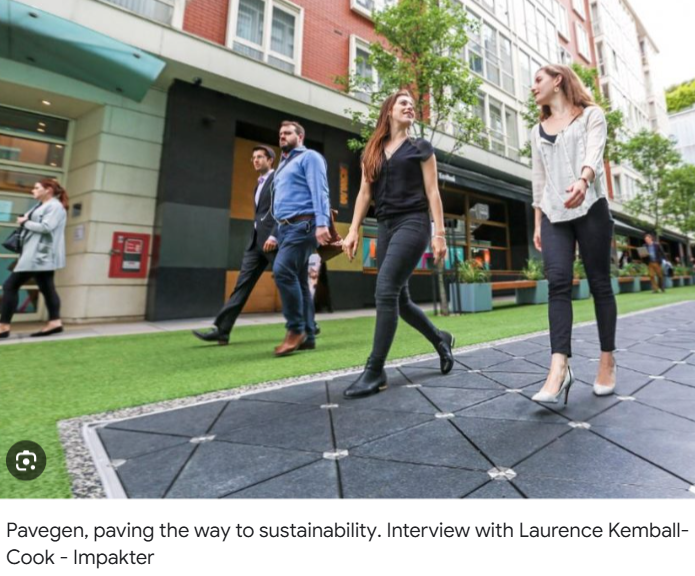 Ever heard of piezoelectricity, the generation of electric charge in solid materials—such as quartz, ceramics, and bone—in response to applied mechanical stress?
It’s real, but it is very limited in scope, and thus it has zero potential application in our world, despite what the people at Pavegen are claiming.
If you don’t care what you pay for electricity, this makes perfect sense.
Did you know that hamsters running on wheels can be used to generate electric power?
Weather Guard Lightning Tech

Britain Breaks Wind Record, Ørsted Exits Floating Project
Allen covers the UK’s all-time wind record, the Crown Estate’s new 6 GW leasing round, Port Talbot’s floating wind assembly port, and Ørsted and BlueFloat’s exit from the Stromar project.
Sign up now for Uptime Tech News, our weekly newsletter on all things wind technology. This episode is sponsored by Weather Guard Lightning Tech. Learn more about Weather Guard’s StrikeTape Wind Turbine LPS retrofit. Follow the show on YouTube, Linkedin and visit Weather Guard on the web. And subscribe to Rosemary’s “Engineering with Rosie” YouTube channel here. Have a question we can answer on the show? Email us!
Good Monday everyone!
Last Wednesday, the British Isles did something remarkable. Wind turbines across the United Kingdom generated twenty-three thousand eight hundred and eighty megawatts of electricity — an all-time national record. That is enough to power twenty-three million homes at the same moment. And while wind was hitting its record high, natural gas fell to just two-point-three percent of total British supply. A two-year low for gas. In a single day.
Britain is not stopping there. The Crown Estate has announced a new offshore wind leasing round, targeting six gigawatts of new capacity off the northeast coast of England — enough to power six million more homes. And now the United Kingdom is building the physical infrastructure to match that ambition. Ministers have committed up to sixty-four million pounds in support for Port Talbot in South Wales. The plan: the UK’s first dedicated assembly port for floating offshore wind. Associated British Ports says total investment could exceed five hundred million pounds once fully built out. The goal is the Celtic Sea, where developers are targeting four gigawatts of floating wind. Four gigawatts. Floating. In open ocean.
Floating offshore wind is the industry’s next frontier. But it is also the industry’s most expensive and complicated technology. Consider what happened quietly this last week off the coast of Caithness, Scotland. Ørsted, the world’s largest offshore wind developer, and BlueFloat Energy have both walked away from the Stromar floating wind project. Stromar is a one-point-five gigawatt floating wind farm — sixty to one hundred meters of water depth, fifty kilometers offshore, enough power for one-point-five million homes. Construction was not expected to begin until twenty twenty-eight. Now Nadara, the project’s remaining partner, holds one hundred percent of Stromar alone. For Ørsted, the exit signals tighter capital discipline. For floating wind, it signals just how difficult the economics remain.
And yet, across the North Sea, a solution is taking shape. The University of Strathclyde and Japan Marine United signed a Memorandum of Understanding last week. Their mission: standardise and mass-produce floating offshore wind turbines. Japan Marine United has been developing floating wind technology since 1999. Their Jade Wind floater is headed for large-scale government-led deployment in Japan. Standardisation — the same answer that made fixed-bottom offshore wind competitive.
So here is where we are. Britain just broke its wind generation record. The Crown Estate is opening new ocean for development. Port Talbot is becoming a floating wind assembly hub. And Strathclyde and Japan Marine United are building the engineering knowledge to make it all affordable. Two companies stepped back from Stromar. But the Celtic Sea is still waiting.
And that’s the state of the wind industry on the 30th of March 2026. Join us tomorrow for the Uptime Wind Energy Podcast.
 Prioritizing the relative importance of addressing America’s social woes is, to be sure, an inexact science.
Our war vets are living on the streets, dying of preventable diseases. We may never another free and fair election. Clean energy, which was once making significant progress in decarbonizing our energy and transportation sectors, is being shot to ribbons by the current presidential administration.
But goddamn it! We need to start solving problems that don’t exist, like drag queens in our schools.



-
Climate Change8 months ago
Guest post: Why China is still building new coal – and when it might stop
-
Greenhouse Gases8 months ago
Guest post: Why China is still building new coal – and when it might stop
-

 Greenhouse Gases2 years ago
嘉宾来稿:满足中国增长的用电需求 光伏加储能“比新建煤电更实惠”
-
Climate Change2 years ago
Bill Discounting Climate Change in Florida’s Energy Policy Awaits DeSantis’ Approval
-

 Climate Change2 years ago
嘉宾来稿:满足中国增长的用电需求 光伏加储能“比新建煤电更实惠”
-
Climate Change Videos2 years ago
The toxic gas flares fuelling Nigeria’s climate change – BBC News
-

 Renewable Energy5 months ago
Sending Progressive Philanthropist George Soros to Prison?
-

 Carbon Footprint2 years ago
US SEC’s Climate Disclosure Rules Spur Renewed Interest in Carbon Credits