

Carbon Brief’s editorial team is supported by an international group of academics, each specialising in various areas of climate science, biodiversity, energy and policy.
As contributing editors, they help to keep Carbon Brief up-to-date with the latest scientific and policy developments, as well as providing advice, when required, on matters of scientific accuracy.
The contributing editors, who will serve a term of two years in the role, are not paid by Carbon Brief and do not endorse its content.

Prof Bethan Davies (@iceybethan.bsky.social)
Prof Bethan Davies is a professor of glaciology at Newcastle University. She specialises in the response of glaciers and ice sheets to climate change, with recent work focusing on the
British-Irish Ice Sheet, Patagonia, Antarctica, the Andes, Alaska, Svalbard and Austria. She is currently editor for the journal Quaternary Science Reviews, chair of the UK Arctic-Antarctic Partnership and co-chair of Diversity in Polar Science Initiative. She is a lead author on the Intergovernmental Panel Climate Change’s (IPCC) upcoming IPCC seventh assessment report (AR7). She also established the website AntarcticGlaciers.org.
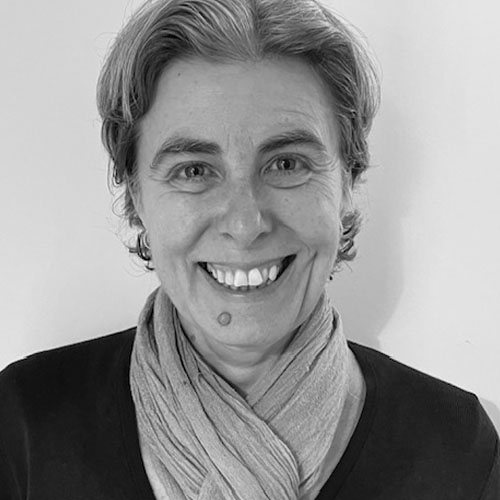
Dr Joanna Depledge (Joanna Depledge)
Dr Joanna Depledge is a fellow at the Cambridge Centre for Environment, Energy and Natural Resource Governance (CEENRG) at the University of Cambridge. She has been following climate change and wider environmental negotiations for more than 25 years, including as a staff member at the secretariat of the UN Framework Convention on Climate Change (UNFCCC) and a reporter for the Earth Negotiations Bulletin. Joanna has been on the editorial team of the journal Climate Policy since 2014. She is also a founding member of Cambridge Zero, a member of the research network Climate Strategies, and sat on the steering committee of the production gap report for 2020 and 2021.

Dr Gabriela Di Giulio
Dr Gabriela Di Giulio is an associate professor at the University of São Paulo. She holds a BA in journalism, an MSc in science and technology policy and a PhD in environment and society from the University of Campinas. Her research explores the interactions between environment, society and science–policy dynamics, with a particular focus on how environmental crises affect socio-cultural contexts. Her current work addresses climate change and adaptation, the governance and communication of risks and uncertainties, and pathways toward sustainability transitions.

Prof Erich Fischer (@erichfischer.bsky.social)
Prof Erich Fischer is climate scientist at ETH Zurich. His research interests include changes in weather and climate extremes, detection and attribution, climate variability, constraining uncertainties in global-to-regional model projections, and the human impacts of warming. He is a lead author on both the IPCC sixth and seventh assessment report. He is co-chair of the World Climate Research Program (WCRP) Lighthouse Activity on Explaining and Predicting Earth System Change (EPESC). He is an associate editor on the journal Science Advances and a co-editor of Weather and Climate Dynamics.
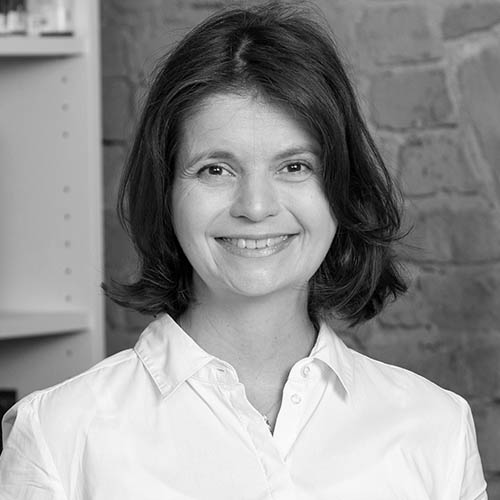
Prof Sabine Fuss
Prof Sabine Fuss is a working group leader and head of research department at the Potsdam Institute for Climate Impact Research (PIK). She holds a professorship in sustainable resource management and global change at Humboldt-Universität zu Berlin Her expertise is in sustainable development, tropical rainforest conservation and climate change mitigation, with a particular focus on carbon dioxide removal. She was a lead author on the IPCC’s special report on 1.5C and was appointed to the European Academy of Sciences in 2021. She received her PhD in international economics from Maastricht University in 2008.
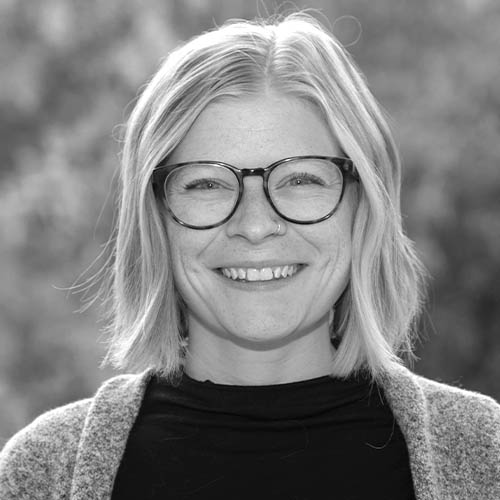
Dr Kirsten Mayer (@kirstenjmayer.bsky.social)
Dr Kirsten Mayer is a scientist at the US National Science Foundation National Center for Atmospheric Research (NSF NCAR). Her research uses machine learning to explore sources of predictability within the Earth System, particularly focused on subseasonal and longer timescales. She is also an active member of the WCRP ESMO Working Group on Subseasonal to Interdecadal Prediction (WGSIP). She has a PhD in atmospheric sciences from Colorado State University.

Dr Albert Salamanca
Dr Albert M Salamanca heads the secretariat of the Adaptation Research Alliance (ARA) and is a senior research fellow at the Stockholm Environment Institute (SEI) Asia centre. His work focuses on climate change adaptation, disaster risk reduction and sustainable development, with particular attention to strengthening the research–policy interface in south-east Asia. He holds a PhD in geography from Durham University.

Dr Christopher Trisos (Christopher Trisos)
Dr Christopher Trisos is the director of the Climate Risk Lab and of the African Synthesis Centre for Climate Change, Environment and Development (ASCEND) at University of Cape Town. He holds the AXA research chair in African climate risk at the African Climate and Development Initiative. His work focuses on understanding risks from climate change to enable communities to adapt for a better future, with a particular focus on Africa and the global south. He has served as a coordinating lead author for the IPCC, a negotiator at the UNFCCC, and has advised several international organisations and governments on climate change risks and adaptation.
Carbon Brief is grateful for the support of its earlier cohort of contributing editors:
Second cohort: Dr Céline Guivarch; Prof Frank Jotzo; Dr Zachary Labe; Dr David Lapola; Dr Friederike Otto; Prof Lisa Schipper; Dr Chandni Singh; and Dr Portia Adade Williams.
First cohort: Prof Richard Allan; Prof Mark Brandon; Prof Piers Forster; Prof Gabriele Hegerl; Prof Simon Lewis; Prof Tim Osborn; Prof Camille Parmesan; and Prof Peter Stott.



The post Introducing Carbon Brief’s 2026 cohort of contributing editors appeared first on Carbon Brief.
Introducing Carbon Brief’s 2026 cohort of contributing editors

A World War II-era policy is stopping old coal plants from closing, despite high costs and the wishes of their owners.
At one time, the U.S. electricity grid ran mostly on coal.
Italy has delayed the permanent closure of its four coal-fired power plants to 2038, after the war in the Middle East caused the cost of producing electricity from gas to spike.
The government inserted the measure into a broader bill aimed at addressing the energy crisis. Parliament approved the legislation on Wednesday after the government tied it to a confidence vote, meaning that losing the vote would see the right-wing coalition government collapse.
The decision marks a climbdown from a pledge first made under centre-left Prime Minister Paolo Gentiloni in 2017 to phase out coal by 2025 on the mainland and by 2028 on the island of Sardinia.
The Mediterranean island’s 1.5 million people remain heavily dependent on coal for electricity due to limited grid connections with the European mainland and a slow rollout of renewable energy.
Riccardo Molinari, a member of Parliament for the governing coalition Lega party, which championed the amendment, said the plants could be kept open as a “strategic reserve”, which can be turned on if needed.
“Unnecessary” decision
But analysts say the practical impact of the move is likely to be limited. Luca Bergamaschi, executive director of Italian climate think tank ECCO, described the extension as “largely symbolic”.
“Keeping them open will not materially affect electricity prices, which are driven by gas – for most hours of the day – and EU market rules,” he told Climate Home News. “The decision sends a negative signal but we don’t expect any meaningful impact on prices or emissions, which shows how unnecessary this is”.
-
Charging worries, high prices put brakes on EV growth in Bangladesh
Sales of e-bikes and rickshaws are up amid queues at fuel stations, but a lack of charging infrastructure and high prices still deter many Bangladeshis from going electric

Coal has already been largely phased out of Italy’s power mix. Generation from coal has fallen over 90% since 2012 and accounted for less than 2% of electricity production last year, almost entirely in Sardinia.
In 2024, Italy got about half of its electricity from gas and half from clean sources like hydropower, solar and wind.
Coal plants on stand-by
Italy has four coal-fired power plants left but only two, both in Sardinia, are still producing electricity.
The other two are run by the country’s largest utility Enel, in Brindisi and Civitavecchia. They were shut down at the end of last year after they became uneconomic.
The company had planned to begin decommissioning them, but the government intervened at the last minute, requiring them to remain on standby in case of an energy crisis.
Gilberto Pichetto Fratin, Italy’s Minister of Environment and Energy Security, said at the end of March that these two power plants could be switched back on “right away, with a government decree”.
“If the price of gas exceeds 70 euros per megawatt hour, producing with coal would be convenient,” he told Italian newspaper Il Corriere della Sera.
European gas prices spiked to just below that level in mid-March as the Iran war escalated, but have since come down to around 50 euros per megawatt hour.
Coal surge in Asia
Italy’s move comes amid a broader, though limited, shift back towards coal in some parts of the world as countries respond to restricted gas supply. Germany slightly increased coal-fired generation in March and has considered reactivating idle plants as a precaution.
Outside Europe, the trend has been more pronounced. Several Asian countries heavily exposed to disruptions in Gulf gas supplies have increased coal use.
Nepal’s EV revolution pays off as oil crisis causes pain at the pumps
Japan has allowed its coal power plants to operate at a higher rate to reduce the need for liquified natural gas (LNG). Bangladesh, Thailand and the Philippines have also increased electricity generation from coal since the start of the conflict in the Middle East.
But analysis from Zero Carbon Analytics suggested that producing electricity from solar is cheaper than coal in most south-east Asian countries.
“Energy security in Southeast Asia will not come from switching between fossil fuels,” Amy Kong added. “It will come from reducing dependence on them altogether.”
The post Italy pushes coal exit back after gas prices rise appeared first on Climate Home News.
Lawmakers adjourned without passing a single measure addressing data center expansion, tax breaks or consumer protections.
When the final gavel fell on Georgia’s legislative session, Big Tech and Georgia Power had little reason to be disappointed.
Bills to Protect Ratepayers From Data Centers Fail in Georgia Legislature


-
Climate Change8 months ago
Guest post: Why China is still building new coal – and when it might stop
-
Greenhouse Gases8 months ago
Guest post: Why China is still building new coal – and when it might stop
-

 Greenhouse Gases2 years ago
嘉宾来稿:满足中国增长的用电需求 光伏加储能“比新建煤电更实惠”
-
Climate Change2 years ago
Bill Discounting Climate Change in Florida’s Energy Policy Awaits DeSantis’ Approval
-

 Climate Change2 years ago
嘉宾来稿:满足中国增长的用电需求 光伏加储能“比新建煤电更实惠”
-
Climate Change Videos2 years ago
The toxic gas flares fuelling Nigeria’s climate change – BBC News
-

 Renewable Energy6 months ago
Sending Progressive Philanthropist George Soros to Prison?
-

 Carbon Footprint2 years ago
US SEC’s Climate Disclosure Rules Spur Renewed Interest in Carbon Credits