

Weather Guard Lightning Tech
Inside Power Curve Testing with ArcVera Renewables
Allen and Joel discuss power curve testing with John Bosche, co-founder of ArcVera Renewables and member of the IEC technical committee that sets the global 61400-12-1 standard. He breaks down the nitty-gritty details and complex requirements for accurately measuring a wind turbine’s all-important power performance. Visit https://www.arcvera.com/
Sign up now for Uptime Tech News, our weekly email update on all things wind technology. This episode is sponsored by Weather Guard Lightning Tech. Learn more about Weather Guard’s StrikeTape Wind Turbine LPS retrofit. Follow the show on Facebook, YouTube, Twitter, Linkedin and visit Weather Guard on the web. And subscribe to Rosemary Barnes’ YouTube channel here. Have a question we can answer on the show? Email us!
Pardalote Consulting – https://www.pardaloteconsulting.com
Weather Guard Lightning Tech – www.weatherguardwind.com
Intelstor – https://www.intelstor.com
Allen Hall: Welcome to the special edition of the Uptime Wind Energy Podcast. I’m your host, Allen Hall, along with co host, Joel Saxum. A wind turbine’s power curve is key to a revenue generating wind farm. We have not discussed power curve measurements on the podcast before, even though we do. Run across them all the time.
And we thought it was due time to bring in an expert. And our guest today is John Bosch, co founder and president of ArcVera Renewables, who represents the U S and as an expert on the IEC tech committee, which maintains the IEC 61400 12 1 standard for power performance testing, John also participates on the IEC.
Tech advisory group that votes on us positions regarding all standards and John has spent a long career in the wind industry. He’s worked in wind since 1990 and. Back in 2001, he founded Chinook Wind up in Washington State, and Chinook merged with VBAR Greg Poulos, in 2017 to form ArcVera Renewables that everybody knows.
John, welcome to the program.
John Bosche: Hey, thanks, Allen. Thanks, Joel. It’s good to be here with you today.
Allen Hall: So we’re trying to understand the power curve. So we talk about it all the time, but we’ve never been involved in a measurement of it. And I know when we travel around and go visit wind sites, everybody just assumes that, Oh, a power curve is this, and there’s a plot and we get it from GE or Vestas, whoever we get it from.
And here’s this magical thing. And all our lives depend on it and that the wind turbines are producing this amount of power with that amount of wind. But how is, I would like to learn, like, how is that created and how is that validated? Because those are two things I just don’t understand yet.
John Bosche: The power curve in some ways really is the most important part of the power curve.
It’s what at ArcVera, we say the arc in arc vera is connecting the meteorology part, which is what Greg does to the the power curve, which turns that meteorology into energy. And and I, not just the power curve, but the machinery in general, so the power curve really is that important bridge of, converting the wind into.
Into energy. It edits. At its heart, it’s a very simple concept. At a given wind speed, there’s a certain amount of power you expect and, at different, at the next higher wind speed, it’s a little more power and up until you hit rated power. It’s, you could say it’s equivalent to the EPA mileage when you buy a car you expect it’s going to get whatever 36 miles to the gallon or something.
And of course then your mileage may vary and there’s never a guarantee or a warranty on the mileage with the car. With wind turbines, you do get a warranty from the turbine vendor. They guarantee the power curve. But in order to enforce that guarantee, you have to actually go measure the power curve.
If you don’t measure it, then it’s just deemed that the wind turbine meets that power curve. And if you’re disappointed later down the road, five years or something. You’re just out of luck because you didn’t measure the power curve. So that’s the reason why companies often often measure, measure, spend the money to measure a power curve.
Joel Saxum: Let’s talk on this one. So now this brings to something to mind and it will show a lot of people something. And this is one I, we talked about with another expert in the field the other day and they said, XYZ turbine company makes like. 200 different variants. When we say a Vesta’s V100, everybody assumes it’s the Vesta’s V100.
However, for different wind resource locations, different blades, so this is why you see different turbines that may be the same model, but they have shorter blades, or longer blades, or different model blade and they’re rated for different wind speeds, but it’s the same nacelle type, but in a different area.
So there, you could have a a GE15, but that GE15 may have. 10 different iterations of it based on, are you in a high wind speed, are you in a low wind speed, are you in turbulent winds, are you this or that and that changes the power curve for every one of those. It would be like you said the car thing, right?
It would be like if you had a certain model of car with a different, different motor in it, or different tires on it, or different arrow on it, or something of that sort. Each one of those, will each one of those sub models have a different type of power curve? And you test against that?
John Bosche: Yes and no. For a given wind turbine model, there’s generally a power curve though there will be multiple power curves for different air densities. There also are different power curves for different operating modes, for example low noise mode, or maybe a load reduction mode.
But those are usually special cases. Generally, for a given turbine model and a given air density, there’s just one, one power curve. The one exception is GE does publish low, medium, and high turbulence power curves. And so you want to make sure you’re using the correct turbulence value in the, in selecting the power curve.
Normally, as you say, if you change the rated power or extend the blades a little bit, that usually results in a new turbine model. That has to be recertified with a new type certificate and a new power curve. For example, the GE, you mentioned the GE 1. 5, it also was available as a GE 1. 6. That was officially a different turbine model than the GE 1. 5. And then it became a GE 1. 7 and, et cetera. And so those are, those iterations are generally considered a new turbine model with some minor variation, you can maybe. have a small change in rated power without requiring a new certification.
One thing that will vary on a wind turbine is maybe the supplier of the blades. So maybe a GE turbine can have TPI blades or LM blades and those blades have different aerodynamic properties. So The turbine actually performs slightly different with those two different blades, but GE doesn’t publish they don’t publish a TPI power curve and an LM power curve, it’s just one power curve.
And that is that is a little sometimes it seems like they, there should maybe be two different power curves, but. They have to, pick a power curve that maybe goes down the middle between those two blades, or hopefully the two blades perform approximately similarly.
Allen Hall: I didn’t know that!
Okay, so that’s fascinating.
Joel Saxum: Okay, so let’s go baseline here. Let’s go I just installed a wind farm. We’ve commissioned date, it’s February 14th, Valentine’s Day 2024. I’m calling you guys to make sure that it’s correct. What is the process? How does it work?
John Bosche: The first thing you have to do is evaluate the terrain.
So if the terrain is flat, and there’s a mathematical description of flat terrain, and it’s way flatter than you would think if you have a little, gully through the site for, rain runoff, that can change it from flat terrain to not flat terrain.
And but you, so there’s a mathematical formula that’s prescribed in the IEC standard. You just evaluate the terrain. If it’s flat terrain then that’s a much simpler procedure. If it’s not flat terrain, if it’s considered complex, you have to actually start maybe six months or a year before the wind turbines ever get installed.
And you install a temporary met tower at the location where the turbine will be and a permanent met tower that’s upwind, a bit upwind of either upwind or off to the side, generally two between two to four rotor diameters away from the turbine location, and you collect data from those two towers for a period of time.
And then you can create kind of wind speed ratios between the Met Tower location and the turbine location. Then when you’ve removed the temporary tower and put the turbine in, you can adjust the wind speed from the permanent tower to reflect the wind speed conditions at the wind turbine location.
So that’s called a site calibration. Once you’ve done the site calibration, or in the case of flat terrain, you don’t have to do a site calibration. So you have this permanent met tower that’s upwind of the turbine again, two to four rotor diameters. And then you collect data from that tower simultaneously with collecting power data from the wind turbine and you’ve been the wind speed and the power data and that do some density corrections and some filtering.
And that creates the power curve. It’s a very simple process except that there are a thousand details that can, that have to be attended to carefully. So The type of anemometer you use is important. It has to be calibrated the, all of the calibration, not only all of the sensors, temperature, pressure, everything have to be calibrated.
Not only calibrated, but they have to be an IEC 17025 calibration, which you don’t always automatically get when you buy sensors. You have to ask for that specifically, and then how they’re actually mounted on the tower their requirements, how long the boom has to be. Diameter of the boom and the, distance of the anemometer from the boom.
The height, the height has to be within plus or minus 2 percent of the hub height and, then same thing with the power measurement equipment, there are requirements for calibration and accuracy of those sensors and so yeah, there’s as I say, there, it’s the reason why there are, there, there’s a standard that’s 300 pages long or whatever it is cause there are a lot of details to attend to.
Joel Saxum: Your use cases for you guys.
Okay. ArcVera gets a phone call. Is it usually always we’re looking to develop this wind farm? Yeah. Can you get involved in that, that basically pre feed stage or what is it? What is your business? What does the business look like when you get engaged from an operator?
John Bosche: Yeah, it can be a, and of course we do much more than just power curve testing.
So often our engagement starts with the wind resource assessment, which might be years before the project gets built. We might work on the independent engineering report for the project. Maybe the project changes hands somewhere along the way, we might do some due diligence. You never know where our involvement picks up.
Sometimes it picks up at the time when the power curve is done. There might be a power curve RFP that’s sent out by a developer, and we respond to that and get selected to do the power curve measurement. It’s a variety of when we get involved.
Joel Saxum: Okay, so the next question I have for you, and this is going in a different direction.
You’re a part of on, you’re on that IEC standard. That has to deal with power curve testing and power curve items in general. I’ve seen power curves used as basically investigative tools for turbine failures, for blade failures, for rotating equipment failures. Do you guys get involved in that side of things and, or have you ever had an operator come to you and say, Hey, we got 100 turbines out here’s a bunch of SCADA data, can you tell us where we can do things to optimize, which ones are not running well, which ones are, is that a thing you guys do too?
John Bosche: Sure, we do that a lot, we’ll do, we call it an operational assessment, so we look at how a wind farm is operating, and all of the, generally when we’re involved in that, it might be a, an underperforming wind farm, so we’ll look at the power curves, we look at all of the individual power curves for, All of the turbines on the site, generally using the cell anemometers looking for kind of outlier turbines, and we can calculate the weight loss for the project and, um.
See if that matches how that matches up with the Pre construction estimate for the weight loss. We can look at, project availability. We can look at electrical losses. There’s. There, there are, a dozen or so different components that may add up to that overall underperformance of the project when it comes to if there are component failures occurring we do that as well.
So that would be a root cause analysis and we we often do we definitely look at SCADA data as part of that root cause analysis, whether we would look at the power curve specifically, maybe we wouldn’t sometimes for example, a loop. A turbine overperforms its power curve.
It’s a, a three megawatt turbine, but it’s producing power up to 3. 3 megawatts or something. So that can add extra loads to the blades and, the yaw system, everything. And so that might, that could be a source of of root cause for the failure. Usually not, but it could be.
We also see that weird things like often wind turbines have wind sector management, so they have to shut down during certain wind conditions when the wind is from a certain direction and a certain wind speed, and those parameters often get entered incorrectly, or perhaps they were originally entered correctly, and then later during maintenance, they get re entered incorrectly, so now the turbine is shutting down From a wind direction that it doesn’t need to shut down, but it doesn’t shut down from the direction it does need to.
And so that first of all hurts production, but also can lead to, a lot of damage from the wake induced turbulence of the neighboring turbines.
Allen Hall: And all these power curve measurements and all the wake measurements, what are we talking about in terms of percentages here? Like, how accurate is the power curve measurement?
Is it plus or minus 1%, 5%? And where does it fit into all the discussion about lost energy?
John Bosche: Probably the 5 percent is pretty close. And it depends on several things, the terrain, how close the Met tower is to the turbine, et cetera. So that range is maybe three to 7 percent for the uncertainty on the overall power curve test.
And one thing that’s interesting most I don’t know if I’d say most, certainly many warranties are written where. The power curve guarantee is the published power curve minus the uncertainty of that test. If there’s say a 5 percent uncertainty, they’re really guaranteeing 95 percent of the power curve.
Many wind farm developers and owners are using this decide not to do a power curve test because it’s pretty unusual to see a wind turbine underperformed by more than 5%. So you might see more commonly, 1 or 2 percent underperformance that doesn’t lead to a warranty claim and they decide, because of this Because of this 5 percent allowance, it’s not worth their money and the effort to test the power curve.
On the other hand, um, sometimes they do underperform by more than 5%. And it’s usually, it’s often, developers who’ve been burned in the past with underperforming turbines that choose to spend the time and effort and money to do the power curve test. The other reason they do it is if generally it’s, it would be the tax equity investors that.
Make, make that a requirement that they have to do a power curve test.
Joel Saxum: Yeah. The financial services sector I see as being something that you could use you guys so much in that, like the due diligence phases. Okay. So let me look at it this way in a different light. If you’re a business investor and you’re going to go buy a business, if you can see that there’s a little bit of degraded performance in the business and immediately see where you could fix it.
And you got numbers on that. That’s a win. That’s a business. I would want to buy a wind farm. I would want to buy. Oh, we can squeeze a little more performance of us because we engage shark bear. They told us what was going on out here. And now if we do a little bit of corrective maintenance and get things moving.
John Bosche: Yeah, leading edge erosion is a huge issue.
It can definitely degrade, the performance by. By many percent, in, in severe cases, I don’t know more than 10 percent reduction in performance. And okay. That needs to be taken care of on a regular basis and I’d say it’s a, it’s an, generally it’s an investment that’s well worth spending to keep the production up.
Joel Saxum: John, what is your opinion, then, being a power curve expert, on some of the solutions in, out in the wild, out in the wind industry market, of erosion and telling people what their AEP performance loss is?
John Bosche: You can measure directly the power curve and determine how much, it’s been degraded from so that’s one of the benefits of doing a baseline power curve test.
When the project is new, then you can remeasure down the road to look for degradation. You can also do actually more accurate than doing that is do a side by side. Repair the leading edges on one turbine and don’t repair the leading edges on the neighboring turbine and see how much the relative difference in performance.
That’s probably the best way to, to evaluate changes, whether it’s from vortex generators, leading edge repairs any other kind of, blade upgrades. But the other thing with leading edge erosion is not only does it degrade performance, but it also degrades the structural reliability of the blade.
And eventually, if it gets bad enough, moisture can ingress into the blades and That that creates its own problems when it freezes also potentially creates lightning, lightning issues when there’s extra moisture inside of the blade. There’s, there are a lot of good just reasons for the structural health of the blades to keep the leading edges repaired.
Joel Saxum: One of the things we always talk about leading edges go bad, aerodynamic performance suffers, creates tip, creates vortices and dirty air behind it. It’s bad for lightning as well. So like leading edge erosion is something that the world definitely needs to be TA taken care of.
John Bosche: Yeah, leading edge erosion is a whole separate topic. I’d love to talk, I can talk for hours about that, but there’s even what causes leading edge erosion is really, an interesting topic of ongoing research and it’s a, it’s really a fascinating topic, actually, in the old days, when wind farms were mostly in Palm Springs and in the ultimate past.
We thought it was blowing sand that caused the leading edge erosion. Now, it turns out it’s more, it’s water droplets actually that causes it.
Allen Hall: I was just over at the leading edge erosion conference last week at and yeah, it’s this huge topic and it all revolves around power loss and what that power loss isn’t.
I know that’s one of the questions that was a big discussion point. In fact, we spent about an hour in discussion about what is the likely losses there and what kind of range are we talking about? And I think one of the problems is that we don’t go out and really measure it. And I’m not sure why that is, but it does seem like measuring the power curve or doing side by side measurements would be a really good solution to it, to quantify it because different parts of the world have different levels of erosion and different effects.
What, how long does it usually take to do that, to do the side by side or to do a power curve measurement? Was it a six month process, a year process, a two year process to really get fine enough data?
John Bosche: In that case, you’re not doing an IEC standard power curve test. You’re doing maybe more of an informal power curve test.
And you can take as long, as little, as much or little time as you want, really. I, if you have, if you do it during the, a good wind sea, high wind season, Probably a month is enough time for collecting data to really do a, if you’re doing, for example, a side by side test during the wind season a month, I would say would be long enough.
If you really want to, fill all of the wind speed bins for the IEC standard, you probably need to allow for 3, 3 months or 4 months But but for these informal tests, you don’t, you’re not required to fill all of the bins and meet all of the IEC requirements.
Allen Hall: What’s the error bars on those kind of tests?
Because I hear the side by side tests of just from power curve discussions and adding a VG or something of that sort to blades and they try to do side by side. Using SCADA data, really rough data. It doesn’t seem it’s all that accurate. If you’re looking for a percent or two, those, isn’t that sort of hard to find?
And do you need to do an IEC type of measurement to really get the resolution that you need to determine if that condition works?
John Bosche: Yeah. And something like evaluating VGs, again, you’re, the good thing is you’re not going for absolute accuracy. Let’s say the test is off by 3%. If it’s off by the same 3 percent before and after, then you don’t really care that much.
What you’re looking for is a relative change in performance after the bleed improvements are made.
Allen Hall: And there must be a lot of discussion at the IEC level about. These measurements, this is all about money at the end of the day and generating power. Is there a lot of discussion at the IEC committee at the moment?
And I know there’s a new revision issued about a year or so ago. What’s, where’s the IEC committee and what’s the next steps there?
John Bosche: The most recent substantive update of the IEC -12-1 was in 2017. The 2022 document, which is edition three. Doesn’t really change and change it in a substantive way.
It really just reorganizes the document and it has to do with all of the details of how you measure the wind historically have lived in that dash 12 dash 1 document. And so now there are many other standards dash 15, for example, needs to refer to wind measurements. Even, the acoustics measurements or loads measurements standards need to refer to how to measure the wind.
So instead of those standards, all referring to dash 12 dash one, that’s been pulled out, it’s in 50 dash one now. And it really is just pulling some of those details out. Into standalone documents.
Allen Hall: Yeah, we’re getting finer and finer on the measurements and there’s more and more measurements to make.
You mentioned acoustics and I was thinking the same thing. Acoustic seems to be a big player at the moment. We were just talking to an operator, an offshore wind farm. We had acoustic treatments offshore, which sounded weird. Like, why would the ocean care what the noise is? But. Yeah, there’s a lot of work going on at Acoustics.
Joel Saxum: The fishermen like to fish in peace.
Allen Hall: Clearly they do. And that’s part of that IEC spec though, like trying to standardize all these measurements is, must be, you guys must meet what, once or twice a year to, to go over these discussions.
John Bosche: Generally, IEC standards go through what’s called maintenance cycles in which, they’re updated, say from.
Version 1, Edition 1 to Edition 2, and those those update cycles can last anywhere from a year to sometimes 7 years it just depends how complicated it is and how extensive when a maintenance cycle is active, the group probably generally meets several times a year, maybe 3 4 times a year, and then in between, like right now on the -12-1, we haven’t been meeting regularly since 2017.
And we’re just about to embark on a new we have embarked now on a new maintenance cycle. So for the next couple of years, we’ll meet quarterly and and address kind of the, changes in the state of the art of how you would do power curve measurements.
Allen Hall: And What’s the latest in the state of the art?
John Bosche: So LIDAR was addressed in addition to, for ground mounted LIDAR. And then actually more recently, there was a dash 50 dash three standard. That addresses nacelle mounted LiDAR and I was also involved in that effort, and it’s actually, at the moment, it can only be used in flat terrain, again, as defined by this set of equations in the IEC standard, but it really, it, it does away with the need for a MET tower, and I think, and it seems to be quite accurate, so it’s I think it’s It’s an exciting new advancement for our industry.
Allen Hall: Yeah, we’ve seen a lot more action on the Nacelle metal lidars. And just curious where the direction was there, because it does seem like an advancement and just haven’t seen it implemented all that much.
John Bosche: An interesting thing that we’ve seen on a bunch of different power curves we’ve done at different sites and different turbine models is that despite the fact that, following the IEC standard, we adjust for air density and even can adjust for Wind shear and turbulence.
Even with those adjustments, we’ll see sometimes a very big difference in the power curve from summer to winter, sometimes 5 or 10 percent from summertime to winter time. And so it’s something for, project owners and developers to be aware of is. Actually, when you measure the curve, power curve matters as much, if not more than, the details of the measurement.
If you measure if you measure in the summer, you’re going to get a worse looking power curve. If you measure in the winter, you’re going to get a good looking power curve. There can be sometimes a game played, between the turbine vendor and the and the project owner as to when you start the test.
Joel Saxum: Yeah, it makes sense to me based on the flexibility of the blades. You’re losing power when blades flex.
Allen Hall: And the air is denser, right?
John Bosche: That’s right. The density, yeah, I hadn’t thought about the stiffness aspect. That could be a good area to investigate. My best theory is that in the summer when the air density is lower, that affects the Reynolds number of the wind flow over the blades.
And lower Reynolds number brings you closer to a stall condition. Blades often are operating near or even in stall near the root of the blade. And so it’s just a question of how much of the blade root is in a stall condition. And maybe in the summer, there’s a little bit more of the blade that’s in a stalled condition and affects the performance.
That’s my best theory.
Allen Hall: Yeah. It’s something as an operator, you wouldn’t think about all that much, but you’re right, John. That’s totally part of the power curve is right temperature, density, and as Joel pointed out, things about the turbine itself, right? We’ll make a difference in the power curve.
So it does matter. And I know there’s a lot of discussion in the industry about trying to maximize power curve and get the energy up and do all those great things. And this is why people need to call ArcVera right? They need to get ahold of you to ask these questions, to get some answers, need an expert.
John Bosche: But importantly, if the power curve is measured for sort of these winter ideal conditions, and you measure the power curve in the winter, you think everything’s fine, but half of the year, it’s the turbine could be significantly underperforming. If you didn’t account for that in the pre construction energy estimate.
Then then you can get significant underperformance just because of this seasonal variation in the power curve. And so it’s worth thinking about. And and for us, for we consultants who do the pre construction energy estimates it’s something for us to consider in our calculations.
Allen Hall: Yeah, absolutely. So how do people find out about ArcVera? How do they get ahold of you, John? Because you’re a wealth of knowledge here. Where do they go?
John Bosche: Well, arcvera.com is our website. It has lots of information and bios and white papers. And we publish monthly anomaly maps for for how, whether the wind is higher than average or lower than average for the, all of the U S and Brazil, South Africa, and India, which are other countries that we operate in.
A lot of our clients find those to be quite interesting. And if anyone wants to reach out to me, my email addresses. john.bosche@arcvera.com.
Allen Hall: John, it’s been great to have you on the program, and we need to have you back. Thanks, guys.
John Bosche: It’s been a pleasure.
Allen Hall: We’ll see you at some of the conferences coming up.
John Bosche: I’m looking forward to it.
https://weatherguardwind.com/inside-power-curve-testing-arcvera-renewables/

 Whoa. Let’s take a step back. Is it really either A or B?
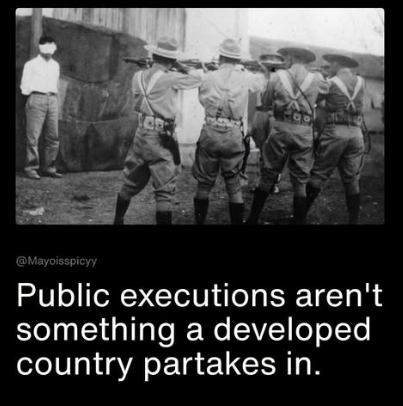
You could on the side of the morons, those incapable of any level of critical thinking, like the author of the meme here.
 The United States seems set on propelling itself backwards.
 Maybe, as they say, “Hell has a special place reserved in it” for people like Thom Tillis, Republican Senator from North Carolina, who enabled Trump to rape and destroy the United States.
That was until it became clear to Tillis that he could jump ship, write a scathing book about the president, get all over mainstream news promoting it, and go on to enjoy another chapter of political success.
That we Americans are so stupid that we accept this blatant hypocrisy and criminality is sad proof that we’re not the people we were 20 years ago. Maybe what many people are saying are correct: we deserved what we got.



