

In a whale migration of epic proportions, a humpback has been recorded making a journey of more than 8,077 miles from Colombia to Tanzania.
A team of marine ecologists says it’s the longest individual whale migration ever recorded, topping the old record of 6,214 miles.
“Humpback whales have complex behavior, but to find an adult male whale halfway around the world is unexpected,” said co-author of the research Ted Cheeseman, a whale biologist at Southern Cross University, as reported by Science.
Cheeseman explained that, while a whale will sometimes move from one group to a different one nearby, in order to get all the way to Tanzania the humpback would have had to pass through two Atlantic-based groups.
“This is more ‘foreign’ than any humpback previously documented,” Cheeseman noted.
The observation of the whale’s extraordinary journey was enabled by modified facial recognition software that was designed to identify whales by the distinct shapes of their flukes.

Photos helped identify the whale in three locations. Kalashnikova et al., Royal Society Open Science, 2024
These “flukeprints” have saved marine scientists many hours of looking over photos in the hopes of uncovering a match based on distinctive markings such as scars, notches and color patterns, said marine mammal biologist Christie McMillan with the Fisheries and Oceans Canada Cetacean Research Program, who did not participate in the study.
A flukeprint is as unique as a fingerprint.
“It’s like a five-metre banner of their ID,” said Cheeseman, as The Guardian reported.
According to McMillan, the identification of the humpback who made the incredible journey is a testament to the usefulness of Happywhale.com, a fluke-identification program co-founded by Cheeseman 15 years ago that examines photographs by biologists as well as ordinary people, reported Science.
After decades of leading nature tours in polar regions, Cheeseman found that regular citizens like his customers could be a valuable source of data.
Dr. Vanessa Pirotta, a whale scientist who was not part of the research team, said the technology could “take a single day of whale watching and turn it into something remarkable,” as The Guardian reported.
Happywhale “is an incredibly valuable tool” that “has allowed for collaboration at a scale that could not have been possible before,” McMillan said in Science.
The Happywhale software compares each fluke image with more than 900,000 photographs from all over the world. Cheeseman said the database includes images of 109,000 individuals, including an “Old Timer” first spotted in 1972 who was seen again this past summer.
In 2013 and 2017, Happywhale identified the record-breaking humpback around summer breeding grounds off the coast of Colombia. In 2022, the whale was spotted again, this time near Zanzibar — an archipelago that is part of Tanzania — off the eastern African coast. The humpback’s distinctive fluke pattern matched the previous images captured in the eastern Pacific.
The finding was surprising since humpbacks normally stay in the same ocean basin, plus the Colombia population typically migrates from its breeding grounds in South America to Antarctica feeding grounds.
“Humpback whales undertake one of the longest known migrations of any mammal. While their migration route generally extends between latitudes, the breeding stocks are longitudinally separated and display high site fidelity to their feeding grounds,” the study published in Royal Society Open Science said.
The researchers aren’t sure where the record-setting humpback traveled between sightings, but it is likely that the whale went to Antarctica before the southwestern Indian Ocean, the home of another breeding population, according to co-author of the study Ekaterina Kalashnikova, a marine biologist with the Bazaruto Center for Scientific Studies and founder of the Tanzania Cetaceans Program.
It is “very likely the distances [the animal swam] were even greater” than the documented distance, Kalashinikova said, as reported by Science.
“This could be a simple story of a deeply confused whale,” said marine biologist Alexander Werth of Hampden-Sydney College, who was not part of the research. “But it’s more likely that this intrepid explorer is a lonely male desperately seeking mates.”
The findings demonstrate Happywhale’s potential to leverage the observations of citizen scientists to add vital data in understudied areas of cetacean research, said marine biologist Lisa Kettemer with the Arctic University of Norway, who was not involved in the research.
“We are learning way more because we have the tools in place,” Pirotta said, as The Guardian reported. “As a world we are way more connected, and that means that the stories that we can tell about whales are more connected globally than ever before.”
Researchers weren’t yet sure if the new technology was providing more information about established whale movements or if the unusual patterns indicated a changing environment impacted by climate change.
“This extreme distance movement demonstrates behavioural plasticity, which may play an important role in adaptation strategies to global environmental changes and perhaps be an evolved response to various pressures, underlining the importance of consolidation of global datasets on wide-ranging marine mammals,” the study said.
The post Humpback Whale Makes Record Migration of Over 8,077 Miles From Colombia to Zanzibar appeared first on EcoWatch.
https://www.ecowatch.com/humpback-whale-migration-record.html

As a longtime book lover, I may be biased, but I think a full bookshelf is one of the most beautiful additions to a space. There’s nothing better than seeing a showcase of your favorite reads alongside a TBR list.
A bookcase, though, can of course be used for all sorts of purposes from placing your favorite photos of family and friends to showcasing treasured vintage finds.
Whatever the case, this guide will help you find the right sustainable bookshelf for your living room, office, or wherever you like to cozy up with a good read!
So what make a bookcase more sustainable? What makes a bookshelf non-toxic?
First of all: sustainable and non-toxic are two overlapping — but distinct — criteria. And both of those terms can come with a lot of opinions and varying definitions.
When it comes to sustainable bookcases, I look for:
- Responsibly Sourced Materials: most bookshelves are made primarily with wood. While natural, unsustainable wood sourcing can be a cause of deforestation, so we want to see that the wood was from responsibly managed forests or made from reclaimed or repurposed wood. Some bookshelves may feature metal, in which case recycled materials here are important.
- High Quality Construction: sustainability includes longevity — how long will you be able to use that furniture piece before it goes to the landfill and gets replaced? Look for transparency around craftsmanship and woodworking processes. Another sign of quality is the length of warranty a company has for its products.
- Ethically Made: this one is straightforward in theory — were the people making it paid fairly and working in safe conditions? — but is unfortunately not always easy to find information. In this category, I look for transparency in practices, what relationship the brand has with the manufacturer (some produce in-house which is the best case scenario for transparency!), where it was made, and how well the makers were paid.
Ideally a sustainable bookshelf would also be non-toxic — as toxic chemical fumes aren’t exactly sustainable! But this isn’t always the case. For example, if a company prioritizes upcycled materials, they don’t necessarily have control over what inputs were part of the original materials. And sometimes a company focuses more on ethical artisan partnerships and sustainable wood sourcing, more than, say, using non-toxic finishes.
But when it comes to non-toxic bookshelves, this is what I look for. (Note that non-toxic doesn’t necessarily mean safe for all chemical sensitivities. Nor does it mean zero potentially irritating chemicals.)
- Solid Wood (where possible): MDF or pressed wood contains glue to stick the various wood pieces together, which can contain added formaldehyde. I prefer solid wood, or if it is engineered wood, I’d make sure the company is transparent around the type of glue used and/or they at least have a product certification like GREENGUARD. (More on that in a second.)
- Low or Zero VOC Finishes: most wood furniture is completed with some sort of finish to provide a protection against scratches or moisture. Many of these finishes are synthetic, and some can contain high levels of toxic chemicals. Look for a natural finish like linseed oil or beeswax or a low VOC synthetic finish.
Relevant Certifications
You’ll see a few certifications referenced throughout this guide. Here’s what each one covers:
- FSC Certified = the wood sourcing was responsibly managed; this is not a finish, foam, or textile guarantee.
- GREENGUARD / GREENGUARD Gold Certified = the finished product was tested for low chemical emissions, including VOCs, with Gold representing the stricter tier.
- Fair Trade Certified
 = verifies that a factory meets standards for fair wages, safe working conditions, and ethical labor practices.
 - Cradle to Cradle Certified (Gold) = evaluates a product or material across material health, circularity, clean air/climate, water/soil stewardship, and social fairness.
Where to Find Sustainable Bookcases and Shelving
I’m always a secondhand first proponent, and that goes for furniture, too. While your local thrift store might not have used bookshelves, check for dedicated furniture resale shops near you or estate sales. (I use EstateSales.net to find ones near me.) You can also find gently used pieces on online marketplaces like Facebook Marketplace, OfferUp or AptDeco.
If you can’t find something you love secondhand, and you don’t want to DIY your own bookshelf, then the next best choice is to shop from one of the sustainable furniture companies below. (If you’re simply looking for a bookstand, I’d suggest browsing Etsy for a collection of solid wood, bamboo, and reclaimed wood book stands and cookbook stands!)
Note that this guide includes affiliate links, which means we may earn a small commission if you purchase through these links which helps us continue to run this website and create resources like these. As always all brands meet strict sustainability criteria and are brands we love — and that we think you’ll love too!
1. Medley
Best for: low VOC wood bookcases
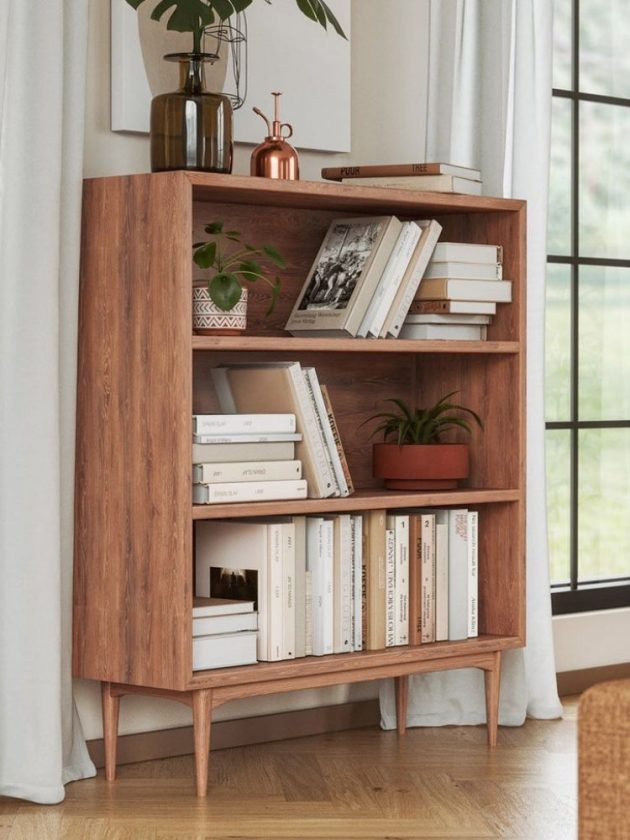
Medley’s bookshelves are elegant and elevated, perfect for a living room. Each piece is made with 100% solid FSC-certified hardwood for the tops and sides, though low-VOC CARB 2 compliant plywood is used for the shelves.
Every eco-friendly bookcase is handcrafted in the US (California or North Carolina) and completed with a low-VOC wood finish.
Price: $2,395 – $2,995
Materials: White Maple, American Walnut Wood
Conscious Qualities: Made-to-Order, US-Made, FSC-Certified Wood, Natural Finish
2. Thuma
Best for: non-toxic modular bookshelf
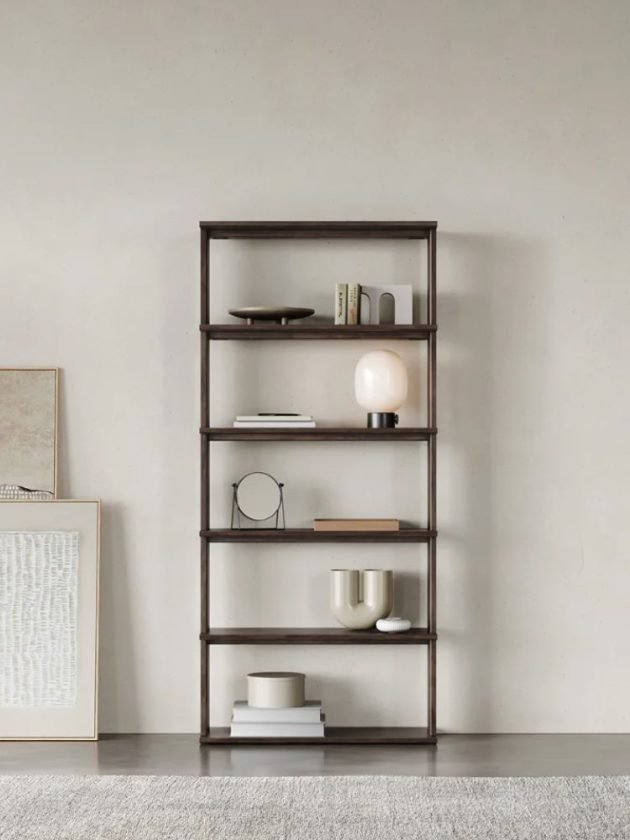
Thuma’s eco-friendly bookshelf is made from upcycled wood sourced from rubberwood trees no longer being used to source rubber. The brand’s bookshelf is also GREENGUARD Gold certified.
What makes Thuma’s bookshelf stand out to me, though, is its modularity — their Pillar Bookshelf can be set in 10 different configurations. And if you start with just a few shelves but later decide you want a larger bookshelf, you can simply buy an additional shelf or two to add on to it!
Price Range: $550 – $3,300
Materials: Upcylced Rubber Wood
Conscious Qualities: GREENGUARD Gold Certified, Repurposed Materials, Adaptable
3. West Elm GREENGUARD Certified
Best for: low-tox bookcases and bookracks for kids
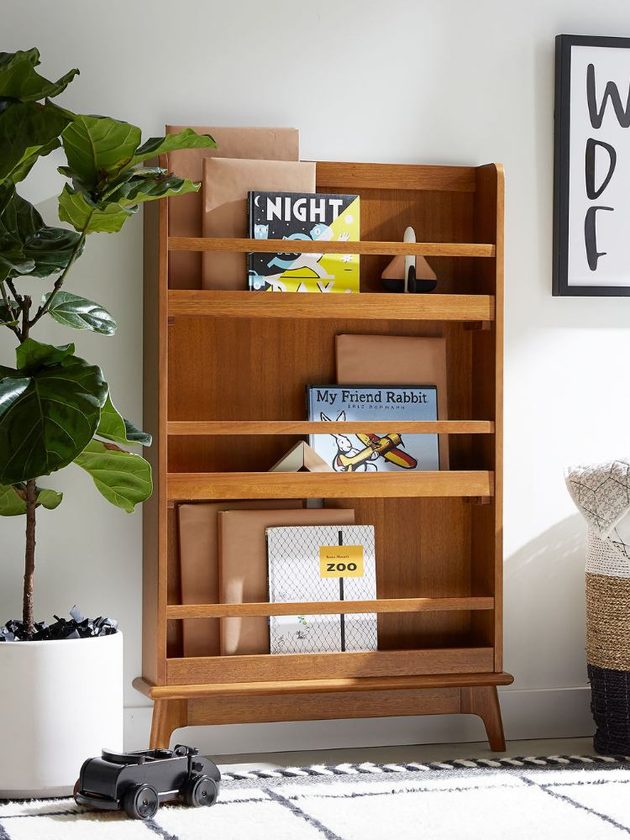
This furniture retailer has plenty of adorable, but functional, bookshelves for a playroom or kids’ bedroom. From cubby bookcases to mid-century bookracks, you’ll find plenty of options that are not only GREENGUARD certified, but made in Fair Trade Certifiedfactories, and/or with FSC-certified wood. Note that the company’s bookshelves are made with engineered wood, though.
West Elm also has GREENGUARD certified bookcases large enough for the adults too!
Price: $399 – $2,897
Materials: Solid Wood, Reclaimed Wood
Conscious Qualities: Fair Trade, FSC Certified, and GREENGUARD Certified Options
4. Urban Natural
Best for: a variety of eco-friendly bookshelves
This natural home retailer has sustainable bookcases in all shapes and sizes. From traditional bookcases to open-back asymmetrical shelving units, Urban Natural has options for any interior aesthetic. Each brand they carry values quality craftsmanship, responsible production, and sustainable sourcing.
Price: $1,099 – $5549
Materials: Solid Teak, Maple, Cherry, Walnut, Birch (varies by brand)
Conscious Qualities: FSC-Certified Options, USA-Made Options, Low VOC Finish Options (varies by brand)

5. MasayaCo
Best for: sustainably-sourced wood bookshelves
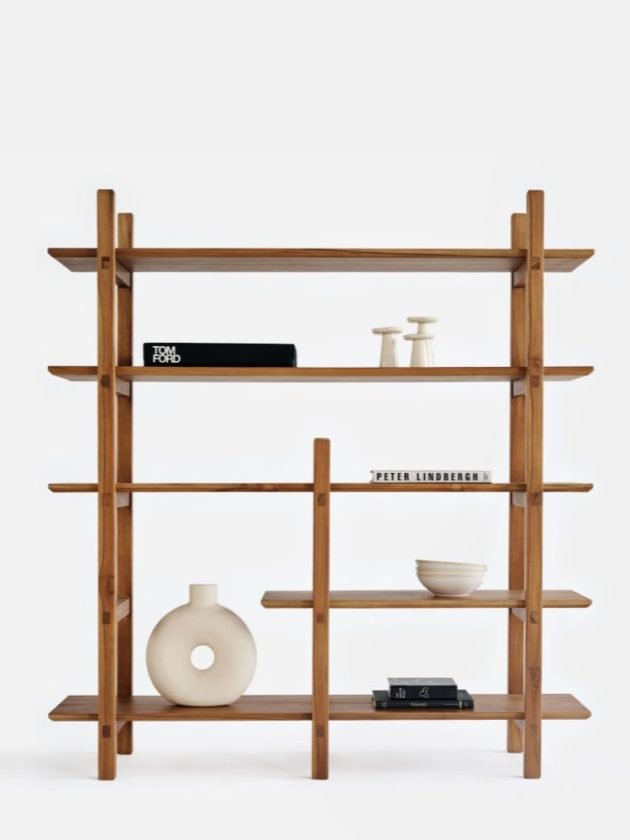
MasayaCo has a stunning collection of sustainable shelves and bookcases handcrafted by artisans in Nicaragua. Not only is each piece of furniture made from responsibly harvested wood, but MasayaCo plants 100 trees for each order — and has planted 1.3 million trees to date. Plus they keep 40% of the reforestation projects completely untouched, to ensure the ecosystems have the chance to truly thrive.
The company shares that with the right care, their teak wood pieces can last up to 75 years. Note, though, that the finishes used aren’t disclosed, so if that’s one of your priorities, this might not be the top pick for you.
Price: $675-$1,295
Materials: Teak
Conscious Qualities: Artisan Made-to-Order, Reforestation Projects, FSC-Certified
6. Healthier Homes
Best for: affordable non-toxic bookshelves
With shelving options starting at under $250, Healthier Homes is a more affordable option for finding sustainable, non-toxic bookcases and shelving.
Most of their wood furniture is made from Parawood, rescued from rubber tree farms after the trees stop producing latex. And their wooden bookcases come unfinished, so you can have full control over the color and any chemicals used. (The company also sells zero VOC furniture paint.)
Price: $238 – $2,160
Materials: Repurposed Wood, Metal, Zero VOC Finishes
Conscious Qualities: Repurposed Materials
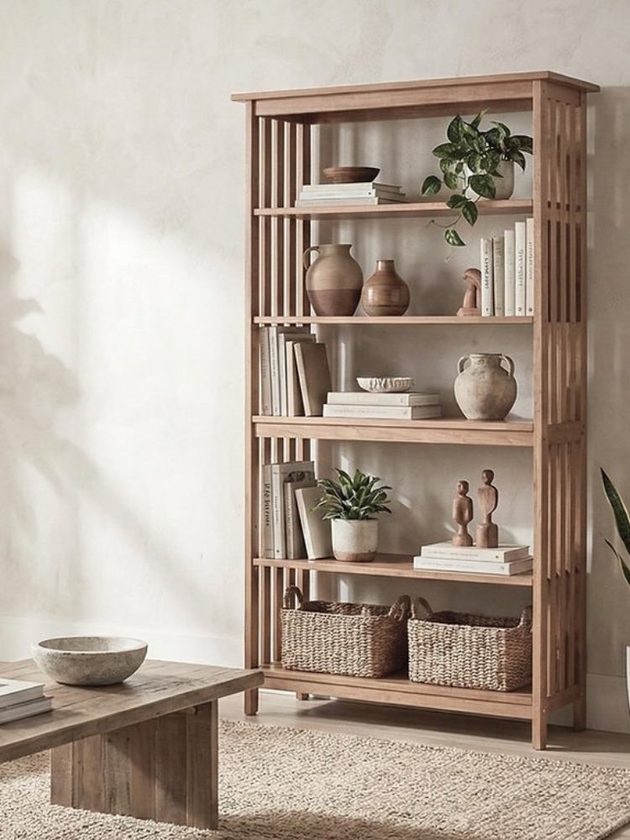
7. What We Make
Best for: reclaimed wood bookshelves
Illinois-based furniture company What We Make crafts non-toxic bookcases with a VOC-free finish.
The shop offers both modern Scandinavian styles (pictured here) using solid oak and industrial style sustainable bookshelves made with a stainless steel frame and the reclaimed wood salvaged from 100+ year old Midwestern barns.
Price: $2,025 – $5,055
Materials: Oak, Reclaimed Wood
Conscious Qualities: Made-to-Order, Repurposed Material Option, Zero-VOC Finish
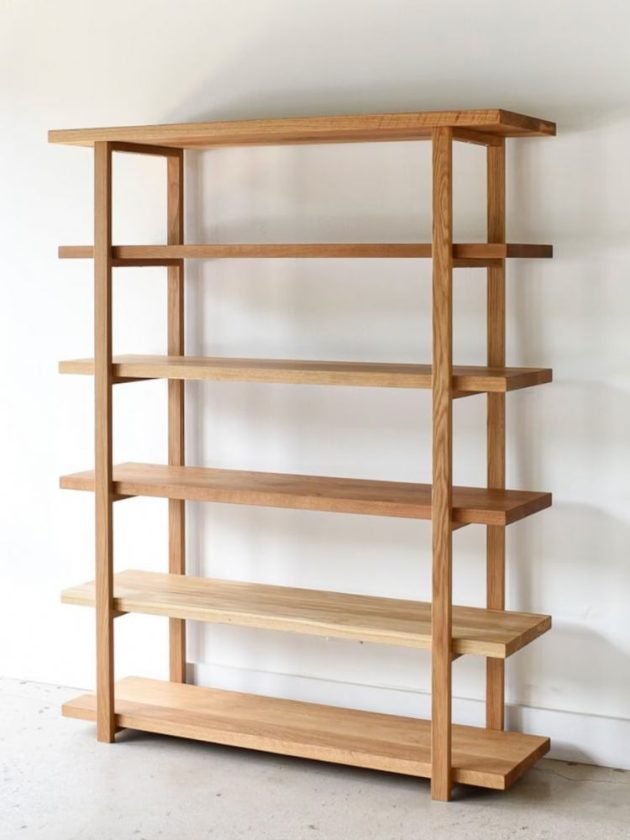
8. Greenington
Best for: bamboo bookshelves
Greenington is a furniture company with pieces crafted from sustainably hand-harvested Moso bamboo. Greenington sources mature bamboo — reached in just 5 years — for maximum strength and durability. And because bamboo is technically a grass, not a tree, it regenerates after being cut without any replanting.
The company uses every part of the bamboo culm, for zero waste production, winning the Sustainable Furnishings Council Green Ribbon Award in 2020.
Price: $809 – $2,139
Materials: Moso Bamboo
Conscious Qualities: Zero-Waste Production, Sustainable Materials

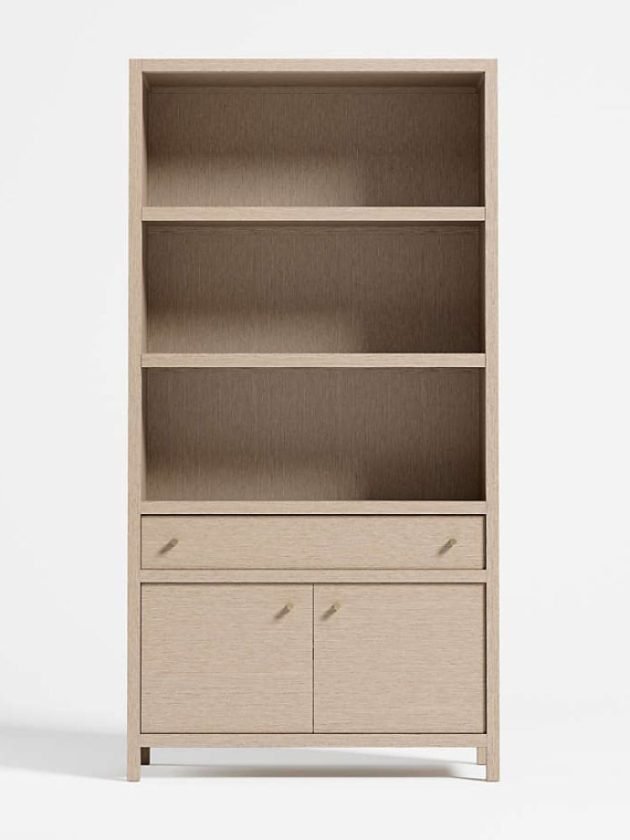
9. Crate & Barrel FSC-Certified
Best for: certified responsibly sourced wood shelving
Crate & Barrel’s FSC-Certified collection features bookshelves made with materials like solid oak, mahogany wood, teak, and rattan. And you can find a range of styles and finishes in their collection, from natural oak to espresso and driftwood.
It’s worth noting that the company’s bookshelves do contain veneer and engineered wood as well. There are also select products that are also GREENGUARD certified, but not all of them.
Price: $1,399 – $4,949
Materials: FSC-Certified Wood, Some GREENGUARD Certified Pieces
Conscious Qualities: Natural Materials, Responsibly Sourced
More Guides to Browse:
Sustainable Tables and Coffee Tables to Gather Around
The Best Non-Toxic Furniture Brands for a Healthier Home
Sustainable Storage Furniture: Dressers, Media Consoles, and More
The post 9 Sustainable Bookcases to Showcase Your Latest Reads appeared first on Conscious Life & Style.