Connect with us

Published

on

When carbon dioxide (CO2) is released from a factory or power plant, the gas can be captured and permanently stored underground, preventing it from driving climate change.

This is the idea underpinning carbon capture and storage (CCS), a technology that is at the heart of many nations’ net-zero plans.

Influential organisations, including the Intergovernmental Panel on Climate Change (IPCC), describe CCS as “critical” for cutting emissions from key sectors – and for helping to avoid dangerous global warming.

In particular, capturing CO2 is seen as one of the only viable options for decarbonising some of the world’s highest-emitting industries, such as cement production.

The UK, for example, has committed to investing as much as £21.7bn over the coming decades in its nascent CCS industry, as part of the nation’s net-zero strategy.

Yet, in the UK and elsewhere, there has been a backlash against plans for CCS.

Citing high costs, ties to the fossil-fuel industry and a “history of poor performance”, critics describe CCS as a “dangerous distraction” or a “false climate solution”.

Time and again, the outlook for the roll-out of CCS has been scaled back, as the technology has failed to deliver as quickly as expected – and as policy support has wavered.

Furthermore, critics state that the technology remains “unproven” on the scale required to make a meaningful impact on global emissions.

In this Q&A, Carbon Brief explores the role CCS is expected to play in achieving net-zero, its record to date and the reasons it has been criticised, using the UK as an example.

Article Contents

What is CCS?

CCS involves capturing CO2 emissions released from a large source, such as a gas power plant or a cement factory.

The CO2 is separated from the facility’s exhaust stream, generally using a chemical solvent, before being compressed into a liquid and transported via pipeline or vehicle. The CO2 is then stored by injecting it into underground reservoirs, such as depleted oil fields or saline aquifers.

The term “CCUS” is sometimes also used, referring to the “utilisation” of CO2 to make products, including fertilisers, fuels or building materials. Such uses do not necessarily lead to permanent emissions cuts, as the CO2 can end up later being released back into the atmosphere.

(“CCS” is used in this Q&A, unless quoting another organisation that specifically refers to “CCUS”.)

The infographic below shows the stages of capturing CO2 and transporting it to be either stored or used in other applications.
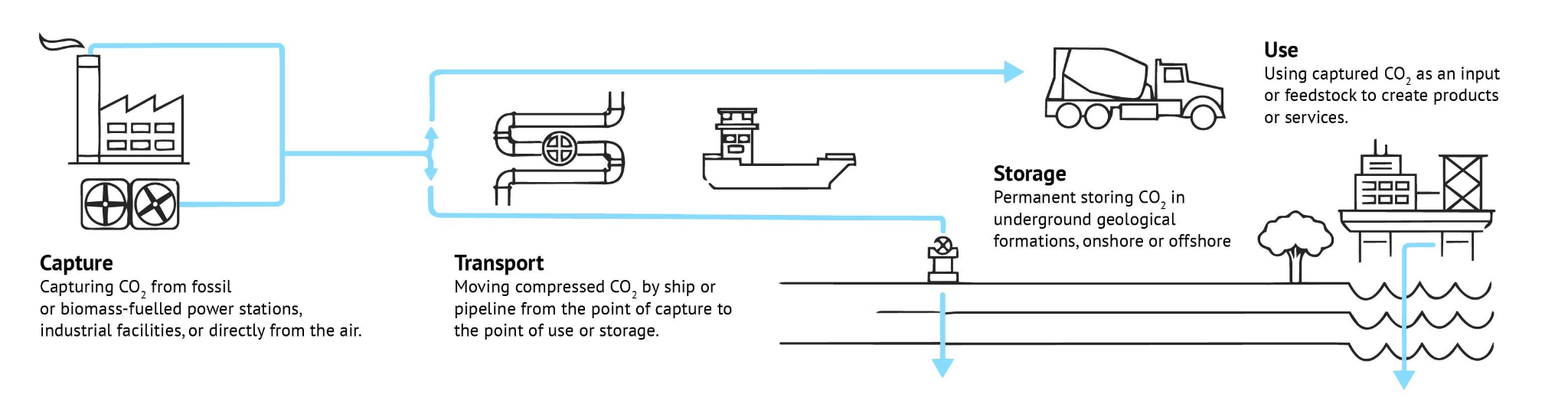
Infographic showing the stages of capturing, transporting and then storing or using CO2.
Infographic adapted by Carbon Brief from the IEA.

Carbon capture technology was originally rolled out at US and Canadian oil wells in the early 1970s as a way to achieve “enhanced oil recovery”. This involves injecting captured CO2 into depleted wells – a process that stores CO2, but also helps to extract more oil.

This remains, by far, the most significant end use for captured CO2 worldwide, with around three-quarters of it used for this purpose.

Moreover, most of the CO2 currently captured is a by-product of gas purification – the process by which fossil fuels such as methane are separated from other, unwanted substances. Selling this CO2 can make such gas projects more economically viable.

Therefore, as shown in the chart below, which is based on International Energy Agency (IEA) data, the majority of CO2 that is both captured and used today helps the fossil-fuel industry to extract and sell more oil and gas.
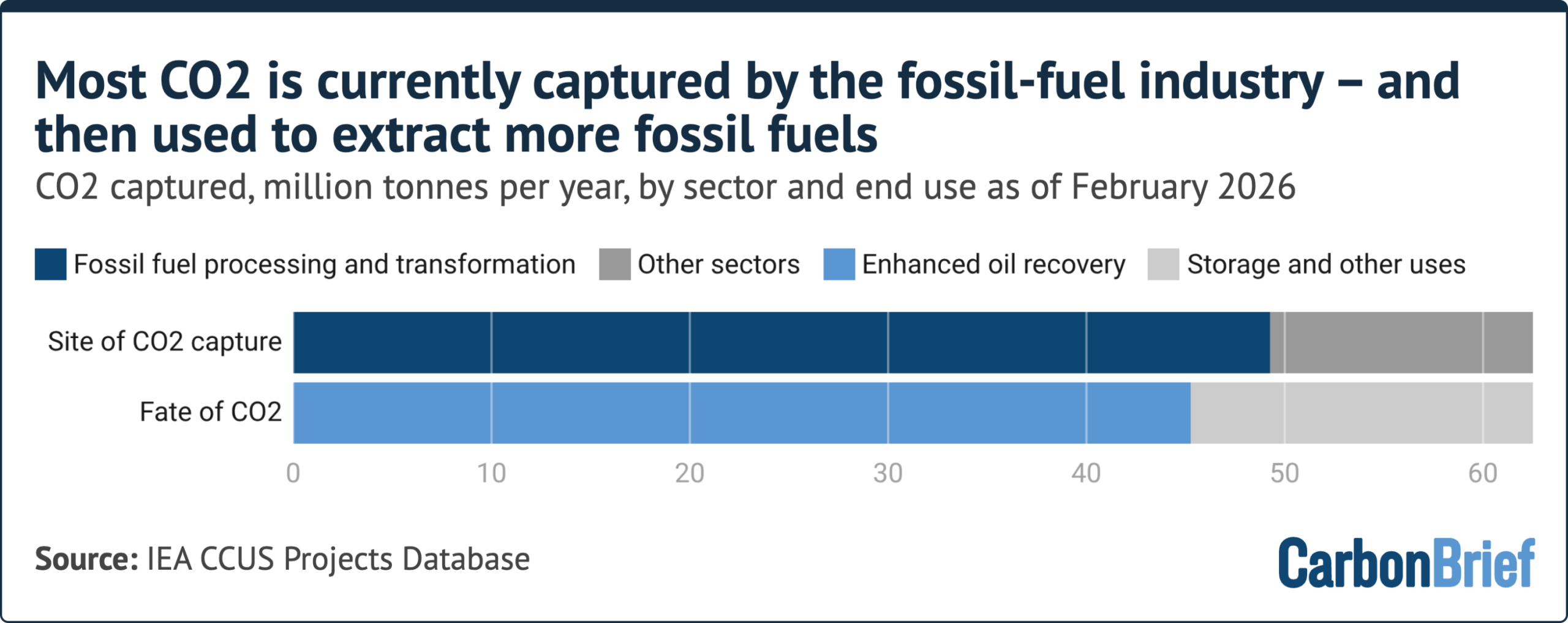
CO2 captured, million tonnes per year, by sector and end use as of February 2026. Most CO2 is currently captured by the fossil-fuel industry – and then used to extract more fossil fuels. Fossil fuel processing produces ~49 of 62 Mt total, while enhanced oil recovery uses ~45 Mt. Source: IEA CCUS Projects database.

CCS was first proposed as a way to deal with CO2 emissions in a 1976 academic article, which imagined injecting the captured gas into the ocean.

It is only since the early 2000s that CCS has gained traction as a proposed climate solution, with a 2005 “special report” by the IPCC exploring the topic. At that time, the authors note there were just three small-scale projects trying to capture and permanently store CO2.

Installing CCS at factories or power plants and permanently storing the CO2 would mean that, in theory, such facilities could continue using fossil fuels without contributing to climate change.

Such applications are often mentioned alongside two related technologies, both of which could be used to “suck” CO2 out of the atmosphere and, thus, deliver “negative emissions”.

One is bioenergy with carbon capture and storage (BECCS). Crops absorb CO2 as they grow and BECCS involves a power plant burning these crops, then storing the resulting CO2.

The other technology is direct air carbon capture and storage (DACCS).

These technologies are classed as “CO2 removal”, as they involve absorbing CO2 from the atmosphere using plants or machines and then storing it permanently.

By contrast, CCS installed at a factory is considered a way to avoid CO2 emitted by that specific facility from entering the atmosphere. This Q&A focuses on such applications, which account for the vast majority of existing and planned CCS.
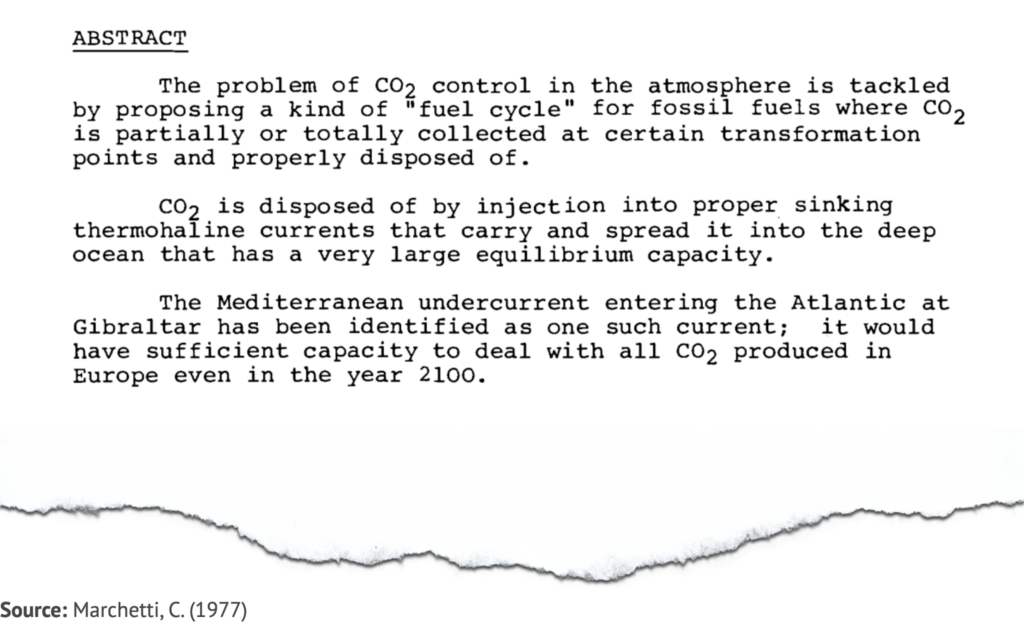
Extract from study by Marchetti, C. (1977), saying: The problem of CO2 control in the atmosphere is tackled by proposing a kind of ‘fuel cycle’ for fossil fuels where CO2 is partially or totally collected at certain transformation points and properly disposed of. CO2 is disposed of by injection into suitable sinking thermohaline currents that carry and spread it into the deep ocean that has a very large equilibrium capacity. The Mediterranean undercurrent entering the Atlantic at Gibraltar has been identified as one such current; it would have sufficient capacity to deal with all CO2 produced in Europe even in the year 2100.
First mention in the academic literature of capturing and storing CO2 for climate change mitigation. Source: Marchetti, C. (1977).

How much CCS capacity has been built so far?

As of February 2026, there were a total of 75 operational CCS projects around the world. As noted above, almost all of them are at fossil-fuel extraction and processing sites, according to the IEA’s database.

Together, these projects capture 62.5m tonnes of CO2 (MtCO2) each year. This is equivalent to the annual greenhouse gas emissions of Ecuador.

(This compares with the 22 CCS projects, promising to capture 40MtCO2 annually, that were operational or under construction as of 2014.)

As the chart below shows, the amount of CO2 currently being captured and stored is a tiny fraction of the total emissions from fossil-fuel use.
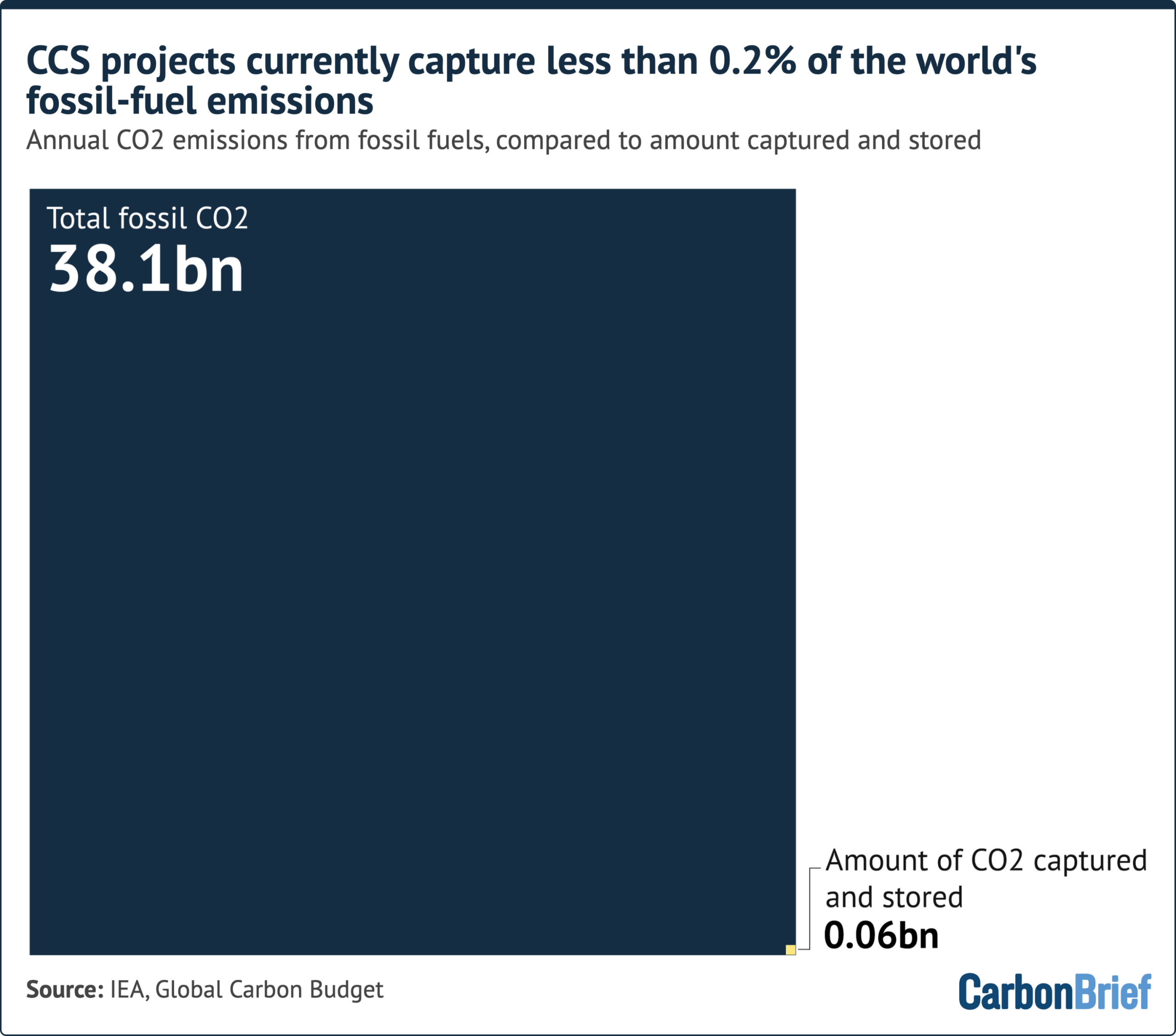
Annual global CO2 emissions from fossil fuels, compared to amount captured and stored. A square chart visually compares total fossil CO2 at 38.1bn to a tiny 0.06bn captured and stored. CCS projects currently capture less than 0.2% of the world's fossil-fuel emissions. Source: IEA, Global Carbon Budget.
“CO2 captured and stored” includes all projects that capture CO2 and use it for enhanced oil recovery, store it permanently underground or use it “with significant climate benefits”, according to the IEA.

In a 2020 report, the IEA explained that the “story of CCUS has largely been one of unmet expectations: its potential to mitigate climate change has been recognised for decades, but deployment has been slow”.

A wave of interest in CCS in the 2000s, largely from countries in Europe and North America, focused on enabling coal power plants to continue operating with lower emissions.

This interest largely petered out, as plummeting renewable energy costs weakened the case for coal plants with CCS. Today, there are only seven operating CCS-coal plants worldwide – five in China, one in the US and one in Canada.

Yet the Paris Agreement in 2015 – and the national net-zero targets that followed – highlighted the need for deep emissions cuts in sectors that previously expected to continue emitting for decades. This, once again, has fuelled interest in the use of CCS.

In recent years, there has also been growing interest in producing low-carbon “blue” hydrogen from gas with CCS.

Hydrogen is widely seen as key for decarbonising certain sectors – particularly in industry – but analyses suggest that it may be difficult to make sufficient “green” hydrogen using renewable power on the timescales required.

As the map below shows, most CCS capacity is based in the US and Canada, with other major fossil-fuel producers such as Norway, Brazil and the Gulf states also contributing.
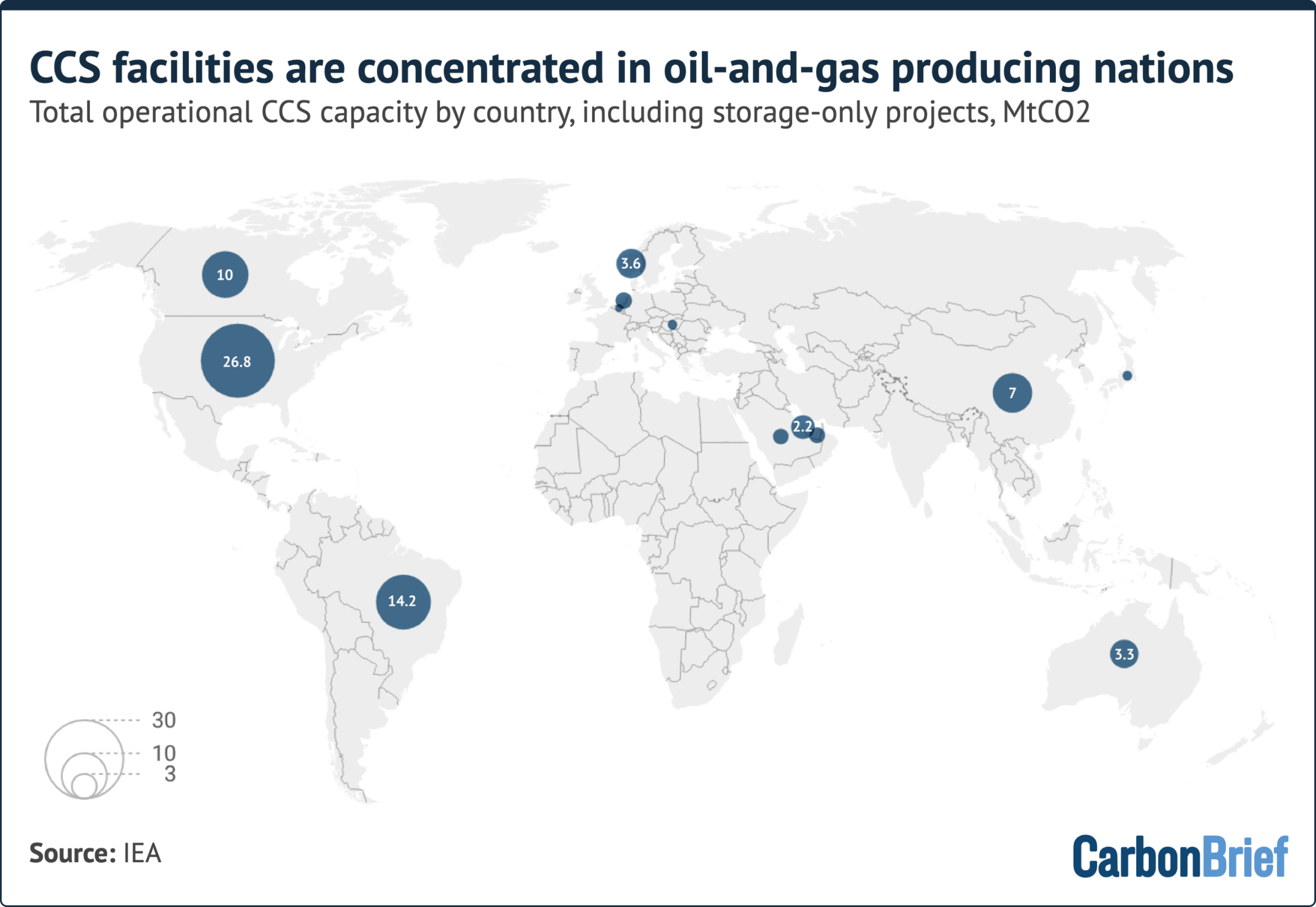
World map showing CCS facilities are currently concentrated in oil-and-gas producing nations. The US has the highest capacity at 26.8 MtCO2, followed by Brazil (14.2), Canada (10), and China (7). Source: IEA.
Projects listed in the IEA CCUS database as split between two countries are divided equally between them. This includes projects that only store CO2, but it excludes projects that only transport CO2. DACCS projects are excluded.

A surge of projects have entered the global CCS pipeline in recent years. According to the IEA, 93.7MtCO2 of capture or storage capacity is under construction as of February 2026 and another 1,279.6MtCO2 is in the “planning” stages.

“Planned” projects include any initiative at early concept, feasibility or engineering study stages and the industry has a long history of projects being cancelled or delayed.

Nevertheless, this pipeline of projects could lead to a large expansion of facilities dedicated to permanent CO2 storage that does not involve extracting more oil.

The planned projects – if they are realised – would also include significant growth in sectors where CCS is virtually non-existent, such as steel, hydrogen and cement production, as shown in the chart below.
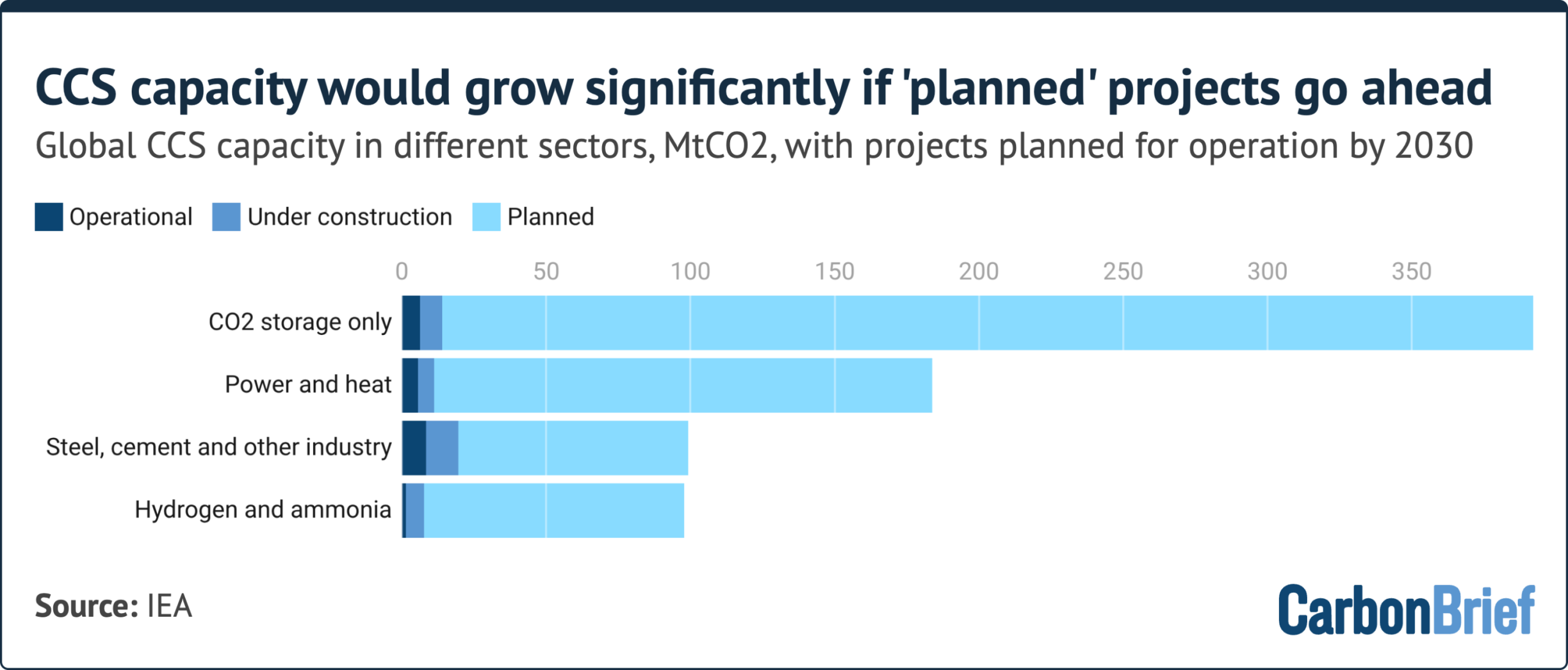
Global CCS capacity in different sectors, MtCO2, with projects planned for operation by 2030. Planned capacity dominates across all sectors, led by CO2 storage at nearly 400 MtCO2. CCS capacity would see significant growth if 'planned' projects go ahead. Source: IEA
A project is considered “under construction” by the IEA if a final investment decision has been announced and construction is on-going or imminent. A project is considered “planned” if it is at concept, feasibility or engineering study stage.

What role is CCS expected to play in reaching net-zero?

It will be impossible to stop dangerous climate change unless the world reaches net-zero emissions, according to the IPCC. The amount of global warming – and whether the Paris Agreement temperature target can be met – depends on when net-zero is reached.

Many global pathways that have been set out for achieving net-zero, including a majority of the IPCC-assessed pathways where global warming is limited to 1.5C, rely on the use of CCS at fossil-fuel plants and industrial sites.

“These models have been quite instrumental in bringing CCS back onto the agenda,” Lina Lefstad, an ecological economist at Lund University, tells Carbon Brief.

Influential organisations relying on CCS in their net-zero scenarios range from the International Renewable Energy Agency (IRENA) through to the oil company Shell. The IEA has stated that net-zero would be “virtually impossible” without CCS.

These scenarios often include 10s to 100s of times more CCS capacity being built in the coming decades. The IEA includes 1.7GtCO2 being captured by 2035 in its net-zero scenario – nearly 30 times more than is captured today.

(Some of the much higher numbers in scenarios assessed by the IPCC have been dismissed by experts as implausible, especially given the slow rollout of CCS to date.)

When considering CCS for both emissions cuts and removals, Dr Jennifer Roberts, a researcher at the University of Strathclyde and deputy director at the UK Carbon Capture and Storage Research Centre (UKCCSRC), tells Carbon Brief the situation is clear:

“From an IPCC climate modelling perspective…reaching net-zero without CCS is far more expensive, disruptive and potentially out of reach.”

This does not mean that it would be impossible to reach net-zero without using CCS. However, net-zero scenarios that use little or no CCS rely on dramatic changes elsewhere, such as much lower global energy demand.

Net-zero scenarios often include a crucial role for CCS in “hard-to-abate” sectors, referring to activities that lack available, low-cost options to fully decarbonise. In particular, CCS is widely seen as vital for decarbonising parts of heavy industry.

The IPCC sixth assessment report (AR6) summary for policymakers calls CCS a “critical mitigation option” for some sectors, including cement and chemicals. The technical summary of the AR6 Working Group III report says that “CCS will be required to mitigate remaining CO2” in industrial sectors.

The IEA describes CCS as “virtually the only technology” that can significantly cut cement emissions, which account for around 7% of the global total. (Much of this CO2 comes from chemical processes, meaning it would still be released if the industry was electrified.)

Yet, the understanding of “hard-to-abate” emissions is changing, as alternatives to CCS become cheaper and increasingly available. As a result, CCS has become a less attractive option in some sectors, as well as being seen as less vital in some others.

Carbon Brief analysis shows that the IEA has reduced its outlook for CCS in the power sector by a third, compared to its expectations in 2021, as the chart below shows.

This reflects both slow progress in deploying CCS and rapid cost reductions in renewables, which make running gas or coal power plants less attractive.
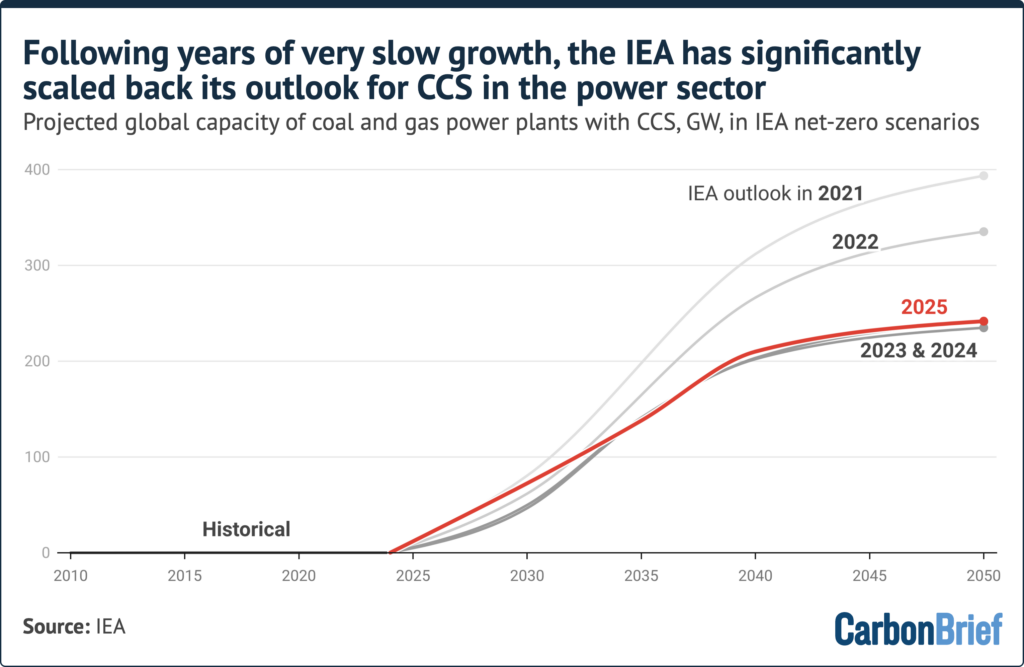
Projected global capacity of coal and gas power plants with CCS, GW, in IEA net-zero scenarios from 2021 through to 2025. Following years of very slow growth, the IEA has significantly scaled back its outlook for CCS in the power sector. Projected 2050 capacity drops from ~400 GW in the 2021 scenario to ~240 GW in the 2025 scenario. Source: IEA
Data comes from IEA world energy outlooks between 2021-2025.

(Even prior to this adjustment, the IEA’s net-zero scenario was already at the lower end of CCS use, compared to those assessed by the IPCC.)

This declining role for CCS in the power sector would mean its use is more concentrated in industry.

Industrial sectors – particularly cement, steel and chemicals – account for 60% of the CO2 captured in 2050 under the IEA’s net-zero scenario, as shown in the figure below. The remaining 40% is roughly split between electricity generation and blue hydrogen production.

Climate NGOs Bellona and E3G have stressed that with “limited public funding, infrastructure constraints and political attention, prioritisation is essential” for CCS. Their “CCS ladder” places CCS in cement and lime production at the top – with the highest “climate value” – while power CCS has “low and decreasing value”.

Despite this, the focus of the CCS sector so far has not been in heavy industry, which represents less than 10% of announced capacity.
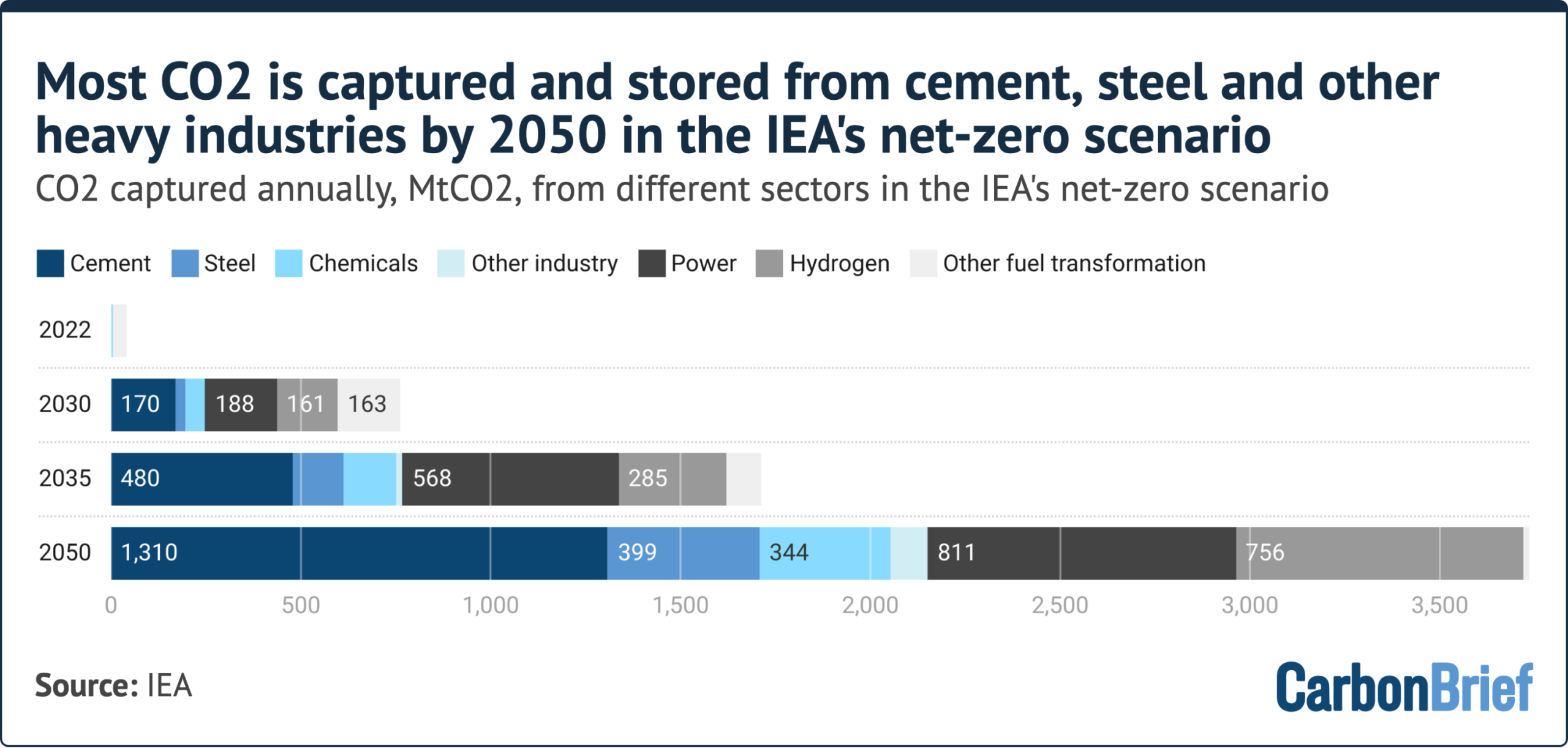
Chart showing the sectoral breakdown of CCS captured annual in the IEA's net-zero scenario. It shows that most CO2 is captured and stored from cement, steel and other heavy industries in the scenario.

Another key consideration is the role governments are assigning to CCS in their national net-zero strategies.

One study found that 33 of the 67 long-term net-zero strategies submitted to the UN by governments, with a further 10 indicating some potential use.

It concluded that high-income countries that produce a lot of oil and gas, such as Canada and Norway, showed the “firmest commitment” to capturing and storing CO2.

Nations have agreed at UN climate talks to “phase down” coal power that is “unabated”. This is generally understood to mean coal power without CCS – leaving space to develop “abated” coal plants. This could allow China, for example, to continue using its sizable coal fleet with CCS to reduce emissions.

Why is CCS controversial?

Despite its role in many net-zero scenarios, CCS remains a highly contested technology.

It has long been framed in some circles as a “false solution” to climate change, that is backed and lobbied for by fossil-fuel companies to “delay” the clean-energy transition.

Critics argue that CCS is expensive – especially compared to increasingly cheap wind and solar power – in part because it significantly increases the energy requirements of a facility.

A University of Oxford working paper published in 2023 concluded that a “low-CCS” pathway to net-zero emissions would cost around $1tn less a year compared to a “high-CCS” pathway. The researchers stated that “no evidence is found for technological learning or associated cost reductions” in the development of CCS to date.

(They added that CCS is “still likely necessary” for cement and chemical production.)

Pointing to the limited progress in scaling up the technology so far, some question whether CCS can play the role envisaged in many net-zero scenarios.

Responding to the IPCC’s most recent report, for example, the Centre for International Environmental Law stated that “abated fossil fuels only exist in models”.

Proponents of CCS contest the notion that CCS is “untested” or “unreliable”, pointing to some projects that have been operating for many years. Moreover, most of the component parts that make up a working CCS project are in wide use for other purposes.

Yet, another key criticism levelled at CCS projects is that they simply do not capture enough CO2, diminishing their role as a climate solution.

There is a widespread view that CCS projects should aim to capture at least 90% of the CO2 being emitted. UK guidelines are among those targeting a higher capture rate of 95%.

The Institute for Energy Economics and Financial Analysis (IEEFA) has assessed the performance of existing projects. Its 2023 analysis is shown in the chart below.

The thinktank concluded that, in reality, most existing CCS projects are far below such capture rates, meaning they continue to emit significant amounts of CO2. (Capture is the most expensive part of the CCS process.)
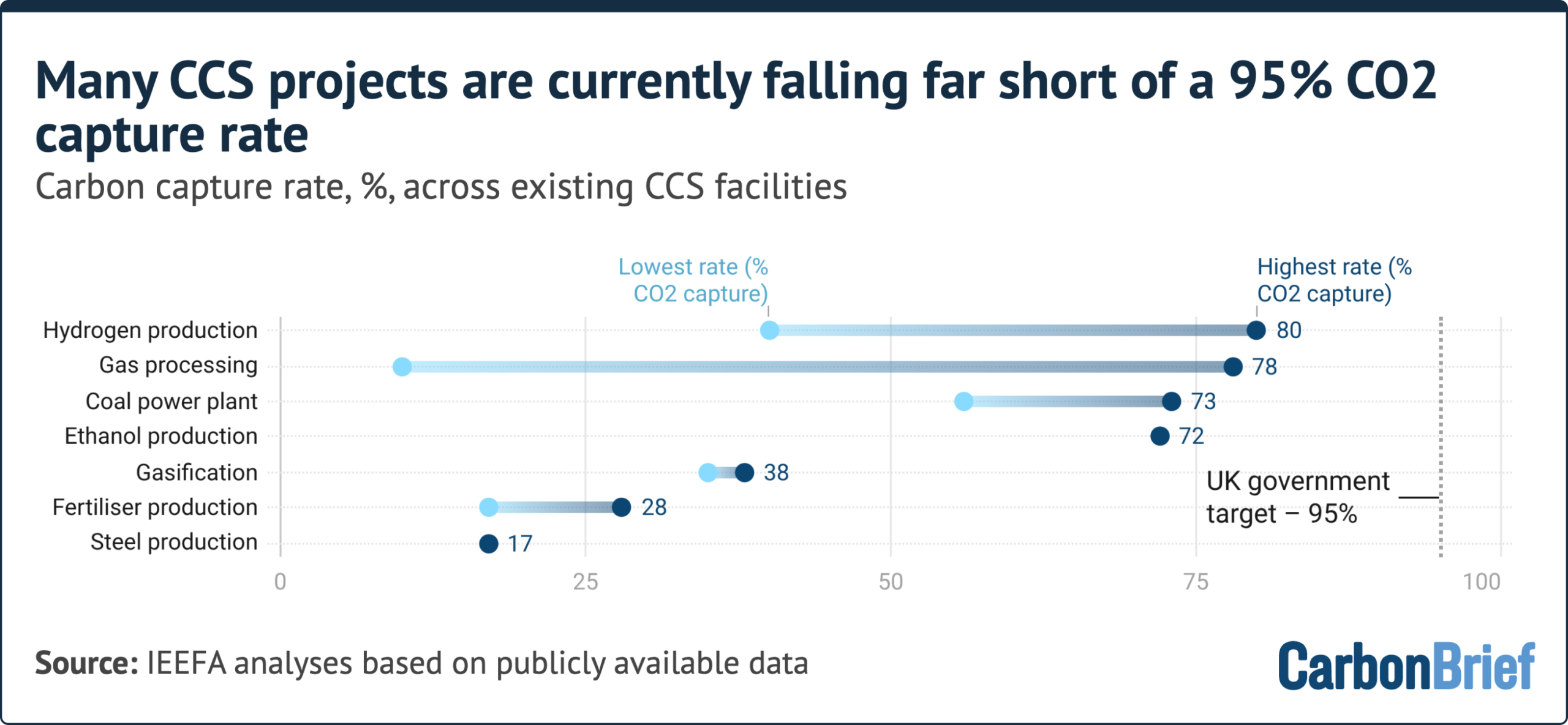
Carbon capture rate, %, across existing CCS facilities. Highest capture rates range from 17% for steel to 80% for hydrogen. Many CCS projects are currently falling far short of a 95% CO2 capture rate. Source: IEEFA analyses based on publicly available data
Based on data analysed by IEEFA from the following projects: Petra Nova and Boundary Dam coal plants, US and Canada; Terrell, Lost Cabin, Shute Creek and Century Plant gas processing facilities, US, and Gorgon, Australia; Quest, Air Liquide and Air Products hydrogen production projects, US and Canada; Great Plains Synfuel and Coffeyville gasification projects, US; Enid and PCS Nitrogen fertiliser projects, US; Bonanza Bio Energy ethanol production, US; and Emirates Steel/Al Reyadah steel project, United Arab Emirates. 

Once the CO2 is captured, it must be stored. The IPCC says there is ample global geological storage available for CO2. It also says that, as long as sites are “appropriately selected and managed”, CO2 “can be permanently isolated from the atmosphere”.

Nevertheless, critics have noted that even relatively low rates of leakage along the transportation and storage chain could have a big climate impact when deployed at scale.

The continued use of gas in gas-CCS or blue hydrogen projects also brings risks of upstream emissions more broadly, such as methane leaks. (See: What are the UK’s plans for scaling up CCS?)

Considering these factors, in 2023 Climate Analytics assessed a “high CCS pathway” from the IPCC database. It concluded that if CO2 was captured at rates seen in existing facilities – around 50% – and upstream emissions remain high, CCS use could see an extra 86GtCO2e emitted by 2050.

The report found that even the IEA’s net-zero scenario, which relies on “more limited fossil CCS use”, could result in an additional 16GtCO2e due to “underperforming fossil CCS”.

All of this calls into question many uses of CCS, according to Andrew Reid, energy finance analyst at IEEFA: “Is there really any point in trying to decarbonise fossil fuels, which comes with significant technical, timing and additional cost risk?” Reid tells Carbon Brief:

“As for cement and chemicals, again, there are alternatives, but these are nascent and expensive. CCS may be a solution here and if investment is going to be made in any area, it most likely should be these.”

On the other hand, CCS advocates argue that gas, for example, is likely to be an important, “dispatchable” part of many electricity systems as nations transition to clean energy.

Prof Stuart Haszeldine, a CCS researcher at the University of Edinburgh, explains this position to Carbon Brief:

“If we’re going to burn gas, then we should be fitting CCS on that…Otherwise we’re just going to say it’s OK for us to burn lots of gas and carry on emitting.”

There is also a line of argument referred to – sometimes pejoratively – as “techno-optimism”, which often stresses CCS as a core climate solution. This was exemplified by a controversial report on climate action in 2025 by the Tony Blair Institute for Global Change (TBI), in which the former UK prime minister wrote that CCS should be “at the centre of the battle”.

This diverges from the IPCC’s conclusion that, while CCS will likely have a role in achieving net-zero emissions, its contribution will be dwarfed by that of renewables.

CCS also attracts criticism due to its connection to the fossil-fuel industry. Dr Jen Roberts at the UKCCSRC tells Carbon Brief that she agrees these links make for complicated messaging:

“CCS is critical for net-zero, but is intrinsically tied with an industry sector that is climate polluting and historically anti-climate lobbying.”

Roberts says careful policymaking, including the development of business models and standards, can support CCS in hard-to-abate sectors where it is most needed.

Some experts suggest that governments should require companies to capture and store their emissions under the “polluter pays” principle.

Roberts also notes that fossil-fuel companies have the experience and the workforce needed to scale up CCS. “Oil and gas companies can evidence a track record in multi-million or billion-dollar subsurface engineering projects,” Roberts adds.

Despite the fossil-fuel industry’s apparent support for CCS, one 2021 study co-authored by Haszeldine noted that they had, in fact, invested relatively small amounts in the technology, compared to renewables and nature-based solutions.

Lina Lefstad at Lund University questions whether the fossil-fuel industry stands to benefit financially through the deployment of CCS as much as some critics imply:

“People seem really worried that the fossil-fuel industry is going to come out the winner again, but if that was the case I think we would have large-scale CCS by now.”

What are the UK’s plans for scaling up CCS?

The UK government has committed “up to” £21.7bn of funding over 25 years to support the nation’s first five CCS projects and to make the nation an “early leader” in the sector.

This package, supported by both the former Conservative and current Labour governments, is intended to help create “clusters” of connected facilities across industrial areas of the UK.

Some have suggested that this represents a large pot of government spending, which could be raided to support more pressing priorities. Indeed, media coverage often points to CCS funding as a potential target for government cuts, or as a way to boost, say, military spending.

This is in spite of the fact that three quarters of the funding is expected to come from levies on consumers, rather than government budgets.

The first two CCS clusters, which are currently set to be deployed in the late-2020s, are the East Coast Cluster in north-east England and HyNet in north-west England and north Wales. The second two, scheduled for around 2030, are Acorn in north-east Scotland and Viking in the Humber.

The projects are expected to include blue-hydrogen production, gas power with CCS and industrial uses. The CO2 captured would be pumped into offshore saline aquifers and depleted gas fields.

Former UK energy secretary Ed Miliband has stated that CCS will “unlock” hard-to-abate sectors and play an “important role” in achieving clean power by 2030.

This position is supported by the UK government’s climate advisors at the Climate Change Committee (CCC), who have consistently stressed that CCS is “essential” for net-zero.

In the CCC’s most recent net-zero pathway, released as part of its seventh carbon budget advice, CCS contributes 2% of emissions cuts in 2030 and 8% in 2050, as shown in the chart below. (If CO2 removals using BECCS are included, this increases to 15% in 2050.)

Sources of emissions abatement in the CCC's "balanced pathway" to net-zero, MtCO2e. Around 8% of UK emissions cuts are linked to CCS by 2050 in the Climate Change Committee's net-zero pathway. Source: CCC.

The CCC maintains that it “cannot see a route to net-zero that does not include CCS”. Nevertheless, the committee has downgraded its expectations for CCS in recent years.

Between the CCC’s sixth and seventh carbon budget advice, its recommendations for power and industry CCS capacity dropped from 46MtCO2 to 41MtCO2.

Dr Jamie Tarlton, the committee’s CCS lead, addressed this at a conference in March 2025, stating that it was “partly because we see more opportunities for decarbonising the other sectors and reducing those residual emissions than we saw five years ago”.

More recently, the UK government also scaled back its expectations for industrial CCS in its latest carbon budget delivery plan for 2035, bringing it more in line with the CCC’s net-zero pathway. It still describes CCS as “part of the most cost-effective route to net-zero”.

The UK’s CCS plans have drawn criticism. A September 2024 letter to Miliband signed by 22 scientists and activists expressed concern about “locking the UK into a fossil-fuel based pathway”.

They note that the gas-CCS power plants and blue hydrogen facilities initially backed by the government would leave the UK reliant on gas imports, as North Sea production declines. This could be expensive and result in “upstream” emissions due to methane leaks.

(At the end of 2025, BP withdrew its involvement in one of the blue hydrogen facilities at the Teesside site. A data centre is planned for the site instead.)

Net Zero Teesside, a gas-CCS power plant in the East Coast Cluster run by BP and Equinor, has been unsuccessfully challenged in court over its emissions savings. The challenge was based on the idea that potential upstream emissions could significantly exceed any emissions cuts from CCS use.

According to a report by Carbon Tracker, the lifecycle emissions of Net Zero Teesside gas-CCS power plant would depend heavily on where it sources its fuel.

The project could cut emissions by around three-quarters, relative to an unabated gas plant, says the report. But it adds that if the plant relies on imported gas with high upstream emissions, then it might only cut emissions by a quarter.

(Most of the upstream emissions from imported gas would be released overseas, meaning they would not be counted in the UK’s official emissions inventory.)

Besides driving “gas dependence” in the UK, the government’s approach has drawn criticism for failing to ensure that CCS is prioritised in the industries that are hardest to decarbonise.

A report by the Public Accounts Committee in early 2025 took aim at the government’s cluster-based approach. It said this “does not ensure that financial support for CCUS is directed at the sectors which will need it most” – highlighting cement production.

(Of the CO2 captured in the CCC’s net-zero pathway in 2050, around 40% is in the industrial and waste sectors, while the remaining 60% is from gas power plants and the production of fuels such as hydrogen.)

Dr Andrew Boswell, the energy analyst who challenged Net Zero Teesside in court, says he is “more nuanced” when it comes to applications of CCS that do not involve gas. “There may be a case for cement, lime and waste…However, the case is unproven,” he tells Carbon Brief.

The Public Accounts Committee report also criticised the “high-risk” approach of using public funds for CCS projects, as well as slow progress in developing the technology.

Enrique Cornejo, head of energy policy at fossil-fuel trade body Offshore Energies UK, tells Carbon Brief that the UK needs to maintain momentum and deploy CCS in order to “achieve economies of scale” and to reduce the cost of the technology more broadly:

“It is indeed necessary to streamline the cluster sequencing process to ensure that emitters in sectors such as cement have a clear route to the CCS market.”

The post Q&A: Does the world need ‘carbon capture and storage’ to reach net-zero? appeared first on Carbon Brief.

Q&A: Does the world need ‘carbon capture and storage’ to reach net-zero?
Continue Reading

Climate Change

South Africa’s offshore oil push meets grassroots resistance in court

Published

on

Layers of red dust coat South Africa’s Saldanha Bay, a legacy of the one billion-plus tonnes of iron ore exported from what was once a quiet coastal fishing town in the 1970s. Now the government wants to turn this area into the “oil and gas hub of South Africa”, but opposition from local communities and civil society could force a change of plan.

Since 2014 South Africa has developed a strategy for taking “full advantage” of its marine resources, known as Operation Phakisa. It has resulted in the mapping of more than 95% of the country’s nearly 3,000-kilometre coastline for offshore oil and gas exploration.

The plan seeks to “drill 30 exploration wells in 10 years”, which it estimates could lead to the production of an average of 370,000 barrels of oil and gas per day over 20 years, with Saldanha Bay earmarked as a key logistics hub. It also aims to develop other marine sectors like aquaculture, maritime transport and ocean tourism.

However, two major court cases against the government and oil giants Shell and TotalEnergies have challenged those plans, as coastal residents, allied with national civil society groups, have pushed back against oil concessions held by the multinationals, arguing they were not consulted, and that towns like Saldanha Bay could face social and environmental harms from the fossil fuel extraction.

    Melissa Groenink-Groves, programme manager at legal nonprofit Natural Justice, said the cases in South Africa could set a precedent for the whole region. “When communities win in the courts, the successes serve as inspiration for other communities to advocate [for] their rights in their own contexts,” she explained.

    She added that the legal challenges to Operation Phakisa also develop climate litigation in the African context, and could impact how environmental impact assessments are conducted going forward.

    Globally, as the oil and gas industry sets its sights on the ocean, with over 85% of new discoveries in 2024 made offshore, scientists and activists warn it could threaten marine life and coastal communities, and weaken the ocean’s ability to trap excess heat from the atmosphere, fuelling planetary warming further.

    A demonstration against TotalEnergies' offshore oil exploration effort in South Africa.
    A demonstration against TotalEnergies’ offshore oil exploration effort in South Africa. (Photo: Ashraf Hendricks/GroundUp News)

    Taking oil companies to court

    About 300 kilometres north of Saldanha Bay, the Aukotowa Fisheries Cooperative, backed by nonprofits The Green Connection and Natural Justice, has taken TotalEnergies to court over its plans to drill for oil and gas in a 30,000-square-kilometre block off South Africa’s west coast.

    The oil exploration block is in a biodiverse marine area bordering Namibia and South Africa known as the Orange Basin, which is a “highly relevant” sanctuary for endangered species, according to Nelson Mandela University’s Institute for Coastal and Marine Research.

    Among other grievances, the cooperative maintains that the company’s environmental impact assessment was flawed, failing to consider the project’s contribution to climate change, and that the government “placed the profits of a multinational corporation above the livelihoods of vulnerable coastal communities”. The Western Cape High Court concluded hearings in late March and is expected to deliver a ruling later this year.

    Walter Steenkamp, chairperson of the Aukotowa Cooperative, is concerned that the oil and gas drilling will lead to increased inequality, asking “for whom is the development? Definitely not for us.”

    In a written statement, TotalEnergies told Climate Home News that it “is a responsible operator fully committed to complying with all applicable South African legislation”.

    Southeast Asia’s fragile grids threaten billions in clean energy investment

    Communities and climate impacts at stake

    On the other side of the country, along South Africa’s eastern coastline, community-based nonprofit Sustaining the Wild Coast and partner organisations challenged Shell and Impact Africa’s exploration permit, arguing that the firms had failed to consult impacted communities – a legal requirement under South African law.

    Co-plaintiff Sinegugu Zukulu also said in 2022 that “oil and gas will lead to more emissions, and in the face of climate change, this is wholly irresponsible”.

    Following two rulings against the companies by lower courts, the case is now before South Africa’s highest Constitutional Court, which has reserved judgment since September 2025. A ruling against the companies would be final, effectively ending the exploration permit.

    Legal expert Groenink-Groves said oil exploration applications under Operation Phakisa have been “granted largely without properly assessing the devastating impact an oil spill could have on small-scale fishers, the risks of drilling in ultra-deep waters, [and] without accounting for climate change impacts associated with oil and gas exploitation”.

    She added that exploration applications have often failed to consider coastal management laws and in some cases, cross-border and regional environmental risks.

    Shell and South Africa’s Department of Mineral and Petroleum Resources did not respond to written requests for comment.

    Co-plaintiff in the case against Shell Sinegugu Zukulu.
    Sinegugu Zukulu, co-plaintiff in the case against Shell. (Photo: Tom van der Schijff)

    South Africa’s offshore oil ambitions

    Fishers around South Africa, many of whom have for generations relied on marine resources for survival, say the country’s offshore oil and gas push is sacrificing their livelihoods for profit.

    “Why do they want to destroy our heritage? We can’t afford to say yes to oil and gas because the ocean is our source of life,” said Carmelita Mostert, a member of advocacy group Coastal Links and third-generation Saldanha Bay fisher.

    Yet with unemployment above 30%, alongside high levels of poverty and wealth inequality, the government sees Operation Phakisa as a vehicle for socioeconomic development.

    South Africa’s Minister of Mineral and Petroleum Resources Gwede Mantashe has described the court cases as “anti-development”, and claimed that the environmental organisations are funded by the CIA.

    Sifiso Dladla, a campaigner with human rights organisation groundWork, argued that the close relationship between the government and the fossil fuel industry – including its 3% contribution to gross tax revenue – limits the potential success of movements pushing for an inclusive energy system. Politicians “need money to win elections. Mining companies need the government to protect them,” he said.

    Patrick Bond, a political economist and sociology professor at the University of Johannesburg, said Operation Phakisa only makes economic sense if its social and environmental harms are ignored, adding that “if a genuine social cost of carbon analysis were done in any African fossil fuel project, there would be few – if any – able to justify the projects economically”. 

    At a global scale, Bond said oil multinationals have the financial backing of European governments – including France’s $2.8 billion stake in TotalEnergies – which can help make local resistance more effective where it has international allies to amplify the messages.

    For Saldanha Bay fisher Mostert, the fight is about protecting the livelihoods of coastal communities. “It is my hope that we can stand strong and protest,” she said. “If oil and gas is not allowed, our lives will be much easier and better – but if oil and gas goes ahead we will be in absolute agony.”

    The post South Africa’s offshore oil push meets grassroots resistance in court appeared first on Climate Home News.

    South Africa’s offshore oil push meets grassroots resistance in court

    Continue Reading

    Climate Change

    Millions of kilograms of marine life taken from Australia’s marine protected areas every year, FOI finds

    Published

    on

    SYDNEY, Tuesday 11 August 2026 — New data obtained by Greenpeace Australia Pacific has found millions of kilograms of marine life are being taken from Australian marine parks by commercial fishers annually, as the government begins its review of the country’s Marine Parks Network.

    The data, released to Greenpeace in response to a Freedom of Information request, relates to 18 of Australia’s 60 Commonwealth marine parks, and shows almost 2.2 million kg of marine life is being fished each year, raising concerns about the true catch numbers across all marine protected areas.

    Greenpeace is calling for the Labor government to use the once-in-a-decade Marine Parks Network review, announced last fortnight, to ban industrial activities, including bottom trawling, longlining and oil and gas mining, from Australia’s Marine Parks Network, and increase fully-protected ocean sanctuaries within the network.

    Elle Lawless, Senior Campaigner at Greenpeace Australia Pacific, said:

    “It’s chilling to think of the true scale of destruction happening inside all of Australia’s marine parks, and how much of our precious ocean wildlife, like dolphins, turtles or seabirds, could be pulled out of protected areas as bycatch.

    “We’re talking about 6,600 kilograms of wildlife in one day, and that does not include what’s caught in the other 42 marine parks, many of which allow destructive fishing like longlining.

    “Australia has made significant progress in securing 52% of its oceans in marine parks; however, this intent is undermined by zones that allow damaging industrial fishing activities, such as bottom trawling and longlining. The review of Australia’s Marine Parks Network is a critical opportunity to fix what isn’t working and finally give our oceans the real protection they deserve.

    You wouldn’t expect someone to bulldoze a national park on land, so why should they be allowed to trawl in a marine park?”

    “Greenpeace Australia Pacific welcomes the Albanese Government’s review of the Commonwealth Marine Parks Network as a rare opportunity to strengthen our marine parks and ban industrial fishing in Australia’s marine protected areas.”

    The documents reveal that the south-west network has the largest catch volume, at 887,160kg per year, followed by the Coral Sea network, which extends out from the Great Barrier Reef, losing significant wildlife at 808,840kg annually.

    —ENDS—

    Notes:

    • More than half of Australia’s Marine Parks Network allow extractive industries, including industrial fishing and oil and gas mining.
    • The data, supplied by the Department of Agriculture, Fisheries and Forestry, does not specify how much of the catch is fish or bycatch, like non-target fish, turtles or seabirds, and is available on request.

    Millions of kilograms of marine life taken from Australia’s marine protected areas every year, FOI finds

    Continue Reading

    Climate Change

    Marine Parks Explained

    Published

    on

    Australia’s network of marine parks is the largest in the world, covering more than half (52%) of Australia’s Commonwealth waters. You could be forgiven for assuming that a marine park is much like a national park on land: a highly protected place where people can enjoy nature while conservation efforts help habitats recover and wildlife thrive. You wouldn’t expect someone to bulldoze a national park, so why should they be allowed to bottom trawl in a marine park?

    The reality is that not all marine parks are equally protected. Australia’s Marine Parks Network is divided into different zoning categories, with each zone determining which activities are permitted and the level of protection provided.

    More than half of the Commonwealth Marine Parks Network allows industrial activities like oil and gas mining, and industrial fishing.

    Our survival, and the survival of our planet, depends on the ocean. The ocean produces more oxygen than all of our forests combined, sustains communities and regulates the earth’s temperature. It’s home to wondrous wildlife and important ecosystems like coral reefs and kelp forests.

    We love our big blue backyard

    Australia’s ocean is teeming with life that is found nowhere else on earth. Schools of colourful fish, vibrant coral reefs, endemic shark nurseries, pods of dolphins, families of whales, playful seal pups and threatened Jurassic-era turtles call Australian waters home.

    Since time began, from the turquoise waves to the deep blue, the ocean has connected our shorelines and communities, fed us, guided us and grounded us. We are intrinsically connected to our big blue backyard – more than 85% of us live within 50km of the shoreline. For tens of thousands of years, people have lived in harmony with the ocean and the wildlife within it, caring for and being sustained by its rich waters. Australia’s waters are some of the most unique and abundant places on Earth but our Marine Parks Network is falling short to properly protect them. 

    Australia’s marine parks aren’t living up to their name

    © Greenpeace / Harriet Spark

    The Australian Commonwealth Marine Parks Network covers commonwealth waters 5.5km from the coast. The network is divided into 7 regional management areas, overall the network contains 60 marine parks. Zoning types determine what activities are allowed in each area. Over half of the network allows industrial activities, risking our most precious and threatened ocean wildlife.

    Within many of our marine parks, destructive industries are allowed to fish, trawl, dig and mine using barbaric and cruel methods. Here are some of the zones explained:

    • Bottom Trawling: Special Purpose (trawl) zones allow bottom trawling. This covers 10 marine parks totalling almost 13 million hectares. Bottom trawlers bulldoze the seafloor with weighted nets, deforesting our underwater forests; a cruel, indiscriminate and inefficient way to fish.
    • Other Industrial Fishing: Includes “Habitat Protection Zones, ““Multi Use Zones” and “Special Purpose Zones.” Fishing methods vary from park to park but many marine parks in these zones allow industrial fishing like longlining. Longlining involves setting lines that can be 100km long, bristling with deadly hooks designed to catch a specific fish species. But longlining is not a selective method of fishing – significant numbers of sharks, rays, turtles, dolphins and seabirds can be harmed or killed as bycatch in the process.
    • Oil and Gas Mining: Many “Special Purpose” and “Multi Use” zones allow seismic blasting and oil and gas mining. 30 marine parks or 65 million hectares of Australia’s highest conservation value areas for ocean wildlife are open for mining and exploration of oil and gas.
    • Ocean Sanctuaries: National Park and Sanctuary zones are fully and highly protected marine parks designed to conserve wildlife and their habitat, where fishing, mining, and other industrial activities are not allowed.

    Industrial fishing is one of the biggest threats to the ocean

    Marine parks on the east coast that allow bottom trawling. 10 marine parks across the whole network allow bottom trawling totalling almost 13 million hectares of ocean habitat for precious wildlife.

    In May, Greenpeace Australia Pacific sailed our campaigning vessel Oceania through some of Australia’s most beautiful and threatened marine parks. Our crew visited Jervis and Hunter marine parks to document their beauty, showcase what’s at risk and aim to expose the industrial fishing activities in these protected waters. Both of these marine parks allow bottom trawling and longlining methods of industrial fishing.

    Industrial fishing is ripping the ocean apart across the planet. Longlining, also known as longline fishing, is an industrial fishing method that involves the use of a fishing line with thousands of baited hooks. These fishing lines can stretch over 100 kilometers in length and are set to capture a fish species, often tuna or billfish species. But it is not a selective method of fishing  and often results in significant bycatch. This includes a range of non-target species like sharks, rays, sea turtles, marine mammals, and seabirds which are often injured or killed as bycatch.

    Bottom trawling involves dragging heavy weighted nets along the ocean floor. This fishing method is popular with commercial fishing companies, because it makes it easy to catch large quantities of fish in one go. But it also damages the seafloor, releasing carbon and can kill or injure non-target ocean life like coral, fur seals, dolphins and seabirds. You may have watched the reality of bottom trawling (and the benefits of ocean sanctuaries) in Ocean with David Attenborough, if not, add it to your watch list!  

    Fully protected ocean sanctuaries that ban industrial fishing and mining can protect ocean wildlife and underwater wonderlands for generations to come. Vast, robust sanctuaries create blue havens where ocean wildlife are safe from nets and hooks, and can truly rest, recover, thrive and replenish out into the surrounding waters. Ocean sanctuaries ensure a healthy ocean full of life.

    A once-in-a-decade chance to fix what’s falling short

    We have a unique opportunity to turn the tide.

    The Australian Government is asking for your feedback on how our Commonwealth Marine Parks Network is managed. This is our once-in-a-decade chance to protect ocean wildlife, ban industrial fishing and create more ocean sanctuaries.

    As part of the review the Government is asking for submissions from the public to hear from you on what improvements are needed to better protect our vast network of marine parks. Writing a submission is a powerful way to influence government decisions and create real change.

    This is the moment to ban industrial activities like bottom trawling and oil and gas mining. But only if they hear from YOU. Add your name!

    Greenpeace is calling on the Australian government to:

    1. Ban industrial activities from Australia’s Marine Parks Network: Ban industrial activities, such as industrial fishing, seismic blasting and oil and gas mining, from Australia’s marine parks.

    2. Create more ocean sanctuaries: Increase fully protected sanctuaries in Australia’s marine parks based on science principles.

    3. Connect Australia’s Marine Parks Network to the High Seas: mCreate seascape connectivity by linking Australian marine parks to new high seas ocean sanctuaries.

    References

    Substantiation that more than half of the Marine Parks Network permits industrial activity comes from a peer-reviewed systematic literature review (Phillips et al. 2025, PLOS One, https://doi.org/10.1371/journal.pone.0307324). The study found that within the Commonwealth Marine Parks Network specifically, “all zones are considered partially protected areas, meaning areas where extractive activities are permitted, except ‘Pink zones’ (Preservation Zones; IUCN Ia) and ‘Green Zones’ (IUCN II).” In other words, every Commonwealth marine park zone type other than the network’s strict no-take sanctuary and national park zones (IUCN Ia and II) permits some form of extractive industrial activity. Since no-take zones are the minority zone type across the network by area, this supports the conclusion that the majority of the network’s area is zoned to permit industrial activity.

    DCCEEW Australian Marine Parks spatial dataset (https://fed.dcceew.gov.au/datasets/erin::australian-marine-parks/explore), filtered by zone type. This confirms that 38.43% of the network’s area is zoned as Sanctuary or National Park zones (IUCN Ia and II). These are the no-take categories excluded from the peer-reviewed study’s definition of partially protected/industrial-permitting zones. The remaining 61.57% of the network falls within the zone categories the study classifies as permitting industrial activity (per The MPA Guide definition of “industrial” applied in Phillips et al. 2025), directly corroborating the peer-reviewed finding with current Commonwealth-specific spatial data.

    For further information on activities permitted within the Marine Parks Network Zoning, you can refer to the Management Plans zoning and rules for each Marine Parks Network area, for example: Temperate East, Coral Sea, North.

    Marine Parks Explained

    Continue Reading

    Trending

    Copyright © 2022 BreakingClimateChange.com