

The health and happiness of everyone onboard sits firmly in the hands of the kitchen staff. This is a responsibility that is taken seriously, and holidays offer a chance to extend that responsibility further and show off with some flare of culinary skill. This holiday was no different; only it also stood as the halfway point of the expedition so far. Fourth of July in the Arctic and cheeseburgers and apple pie were on the menu. The buns were baked fresh, and the patties were a mix of prime cut and spices, better than any barbecue I’ve attended back on land.
It may have been the surrounding Arctic Ocean, the thousands of miles between home and here, or Americans holding the minority on board, but the celebrations of fireworks and barbecues felt like an odd and distant idea. Even the thought of this being a halfway marker seemed at odds with experience. Warned before boarding, but still not fully believing it, time has a different form out here. You can never really get a grasp on it, and right when you do it has a habit of changing shape at the last moment. We remained at our first drilling site (VRE-03A) for eight days; in those days, it felt like a month had gone by. Somehow, despite being only a day longer than transit, it felt like twice the amount of time. From there, however, things sped up, two weeks zipped into one. This, of course, is aided by the eternal daylight that graces all of the shifts with its presence, add then the “Good mornings” said at the end of the day and the “Good nights” said at the start. I could have been born on this ship, and life back home only a distant dream, or I could have arrived yesterday, all of the experiences unfolding in a 24-hour period; both seem equally possible.
Being “lost in time” is exactly the problem the coordinated effort of all the working groups onboard is aimed at, so feeling lost in time is oddly appropriate while being onboard. Unfortunately for me, however, there is no Paleomagnetic team to identify reversals in my magnetic field that could tell me what week I am in or an army of micropaleontologists that can identify small microfossils that fall off me and identify what time of day it is by how hot or cold my body temperature is. No, sadly, these talented teams have their focus on the core samples as they come up, and my best time-keeping tool has been the arrival of Lava Cakes every Saturday (It has been four lava cakes upon writing this blog post).
In spite of the feeling of being lost in the present, the picture of the past is coming further into focus everyday. With nearly 3,000 meters of core recovered (2858.38m to be exact), and teams working around the clock, the personality of the Fram Strait becomes a little clearer with each core arriving in the lab. Unfortunately working in the region still comes with challenges. The possibility of gas hydrates has slowed down drilling operations at times, as an expected measure of precaution. As well as the presence of greigite, which has proven to be a challenge for the magnetostratigraphy of the expedition. The rare forming mineral has a magnetic field that dilutes the signal of the data from the past. Both of these problems can be overcome with interdisciplinary team work and time. Sea ice on the other hand can’t be overcome with this strategy, and after six successful days of drilling along the western slope of the Vestnesa Ridge the threat of large floating ice chunks moving in from the north would push us off site. As for now we head southward to keep clear of sea ice to start drilling at BED-01A.
Working in the conference room I notice people making their way downstairs. The night shift is playing a round of ping pong on makeshift tables in the center of the room, and a “cookie break” brings some members of the opposite shift to join in for a moment before returning to work. A giant “round-the-world” game is starting up. Rather than compete, the emerging rule seems to be to prioritize the rally or just keep the game going. As more and more people gather, Co-Chiefs Kristen St. John and Renata Guilla Luchi join in. The scene is awesome, and just as it gets going faster the familiar “Core on deck” is heard over the comms. A faint reminder of the work sitting on the other side of the break brings the ping-pong rally to an end. Still not sure when I am, but not sure if I mind. Maybe that is what halfway feels like for everyone: good food, good people, and the slight hope that time doesn’t show up anytime soon.






A lot has happened in the meantime: I became an Associate Professor at the University of Southern Denmark, we all lived through the Corona period, then slowly adjusted to the post‑pandemic stability, only to find ourselves again in turbulent political times. I am now affiliated with the Marine Research Center in Kerteminde, a beautiful coastal town on the island of Fyn. My plan is to share small updates on my research and activities every now and then. So let’s start with yesterday’s sampling trip for benthic phytoplankton, carried out by my colleague, Prof. Kazumasa Oguri. The sampling will help prepare for the first‑semester bachelor students who will join his small but fascinating project. This project is all about the benthic diatoms that form dense, photosynthetic communities on tidal‑flat sediments. Their daytime oxygen production enriches the sediment surface and allows oxygen to penetrate deeper, supporting diverse organisms that rely on aerobic respiration. The project will explore how oxygen distribution and oxygen production/consumption in sediments change under different light conditions (day, night, sunrise/sunset). The team will incubate benthic diatom communities in jars and measure oxygen profiles using an oxygen imaging system under controlled light regimes.
Yesterday, we visited several potential sampling sites where students can carry out their fieldwork. I encourage all PIs in our group to define at least one small project related to Kerteminde Fjord, where our laboratories are located. Over time, I hope we can build a more integrated dataset describing the marine and coastal ecosystems of the area.
Another activity currently in preparation is a project on marine invasive species in Kerteminde, which will feed into a course I will run in July and a master’s thesis project. More will come later.
Let’s hope for a more continuous blog from here on, keeping track of our activities, with or without jellyfish!
You may have seen headlines recently about a new global treaty that went into effect just as news broke that the United States would be withdrawing from a number of other international agreements. It’s a confusing time in the world of environmental policy, and Ocean Conservancy is here to help make it clearer while, of course, continuing to protect our ocean.
What is the High Seas Treaty?
The “High Seas Treaty,” formally known as the Agreement on the Conservation and Sustainable Use of Marine Biological Diversity of Areas Beyond National Jurisdiction (BBNJ) Agreement, went into effect on January 17, 2026. We celebrated this win last fall, when the agreement reached the 60 ratifications required for its entry into force. (Since then, an additional 23 countries have joined!) It is the first comprehensive international legal framework dedicated to addressing the conservation and sustainable use of the high seas (the area of the ocean that lies 200 miles beyond the shorelines of individual countries).
To “ensure the conservation and sustainable use of marine biological diversity” of these areas, the BBNJ addresses four core pillars of ocean governance:
- Marine genetic resources: The high seas contain genetic resources (genes of plants, animals and microbes) of great value for pharmaceuticals, cosmetics and food production. The treaty will ensure benefits accrued from the development of these resources are shared equitably amongst nations.
- Area-based management tools such as the establishment of marine protected areas (MPAs) in international waters. Protecting important areas of the ocean is essential for healthy and resilient ecosystems and marine biodiversity.
- Environmental impact assessments (EIA) will allow us to better understand the potential impacts of proposed activities that may harm the ocean so that they can be managed appropriately.
- Capacity-building and the transfer of marine technology with particular emphasis on supporting developing states. This section of the treaty is designed to ensure all nations benefit from the conservation and sustainable use of marine biodiversity through, for example, the sharing of scientific information.
Get Ocean Updates in Your Inbox
Sign up with your email and never miss an update.
Why is the High Seas Treaty Important?
The BBNJ agreement is legally binding for the countries that have ratified it and is the culmination of nearly two decades of negotiations. Its enactment is a historic milestone for global ocean governance and a significant advancement in the collective protection of marine ecosystems.
The high seas represent about two-thirds of the global ocean, and yet less than 10% of this area is currently protected. This has meant that the high seas have been vulnerable to unregulated or illegal fishing activities and unregulated waste disposal. Recognizing a major governance gap for nearly half of the planet, the agreement puts in place a legal framework to conserve biodiversity.
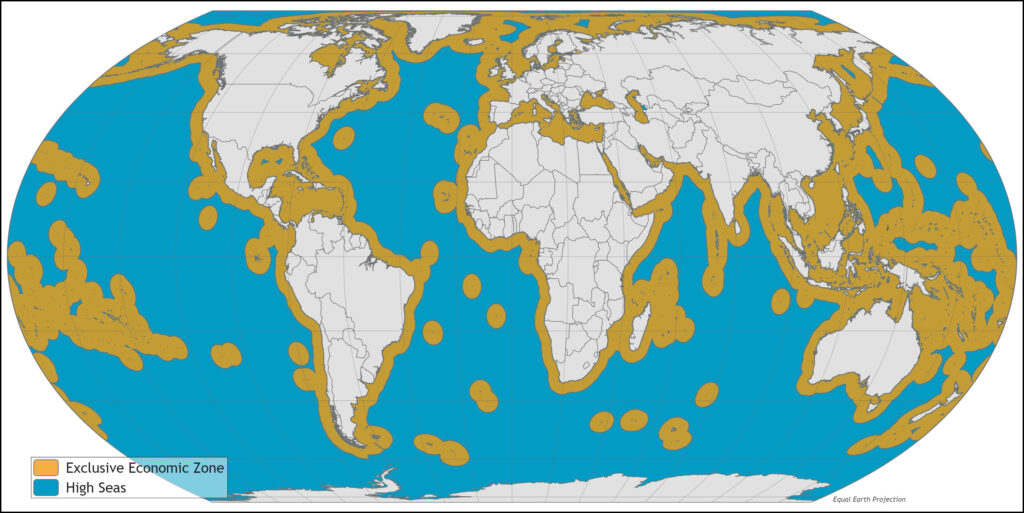
As it promotes strengthened international cooperation and accountability, the agreement will establish safeguards aimed at preventing and reversing ocean degradation and promoting ecosystem restoration. Furthermore, it will mobilize the international community to develop new legal, scientific, financial and compliance mechanisms, while reinforcing coordination among existing treaties, institutions and organizations to address long-standing governance gaps.
How is Ocean Conservancy Supporting the BBNJ Agreement?
Addressing the global biodiversity crisis is a key focal area for Ocean Conservancy, and the BBNJ agreement adds important new tools to the marine conservation toolbox and a global commitment to better protect the ocean.
Ocean Conservancy’s efforts to protect the “ocean twilight zone”—an area of the ocean 200-1000m (600-3000 ft) below the surface—is a good example of why the BBNJ agreement is so important. The ocean twilight zone (also known as the mesopelagic zone) harbors incredible marine biodiversity, regulates the climate and supports the health of ocean ecosystems. By some estimates, more than 90% of the fish biomass in the ocean resides in the ocean twilight zone, attracting the interest of those eager to develop new sources of protein for use in aquaculture feed and pet foods.
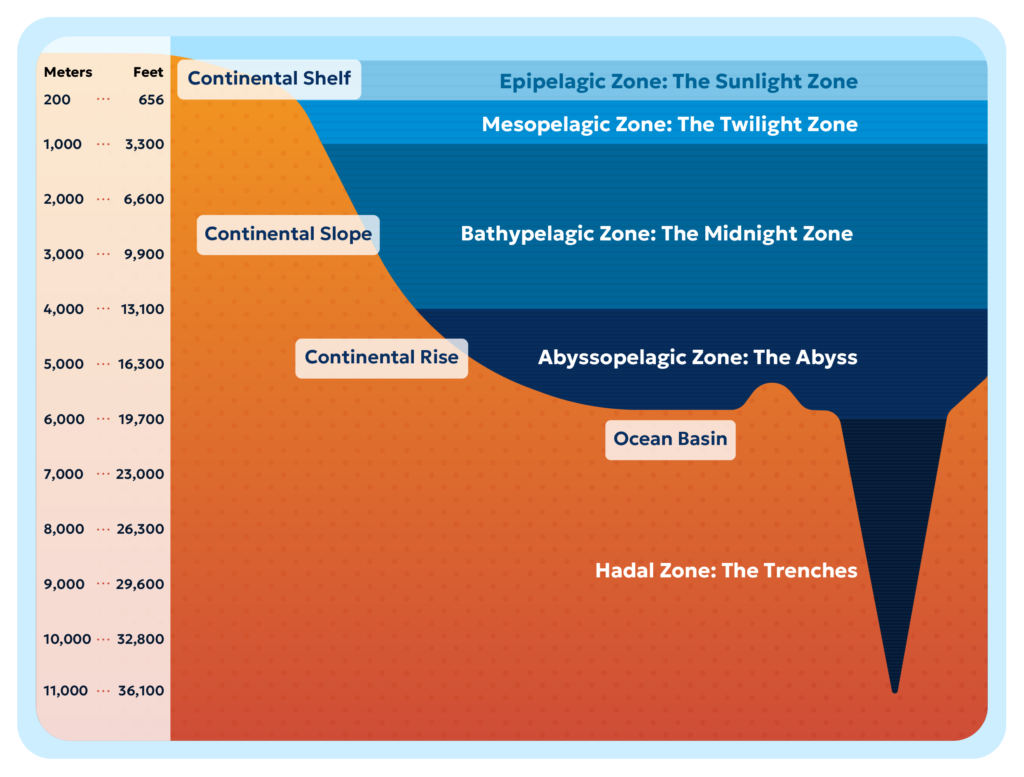
Done poorly, such development could have major ramifications for the health of our planet, jeopardizing the critical role these species play in regulating the planet’s climate and sustaining commercially and ecologically significant marine species. Species such as tunas (the world’s most valuable fishery), swordfish, salmon, sharks and whales depend upon mesopelagic species as a source of food. Mesopelagic organisms would also be vulnerable to other proposed activities including deep-sea mining.
A significant portion of the ocean twilight zone is in the high seas, and science and policy experts have identified key gaps in ocean governance that make this area particularly vulnerable to future exploitation. The BBNJ agreement’s provisions to assess the impacts of new activities on the high seas before exploitation begins (via EIAs) as well as the ability to proactively protect this area can help ensure the important services the ocean twilight zone provides to our planet continue well into the future.
What’s Next?
Notably, the United States has not ratified the treaty, and, in fact, just a few days before it went into effect, the United States announced its withdrawal from several important international forums, including many focused on the environment. While we at Ocean Conservancy were disappointed by this announcement, there is no doubt that the work will continue.
With the agreement now in force, the first Conference of the Parties (COP1), also referred to as the BBNJ COP, will convene within the next year and will play a critical role in finalizing implementation, compliance and operational details under the agreement. Ocean Conservancy will work with partners to ensure implementation of the agreement is up to the challenge of the global biodiversity crisis.
The post What is the High Seas Treaty and Why Does It Matter? appeared first on Ocean Conservancy.
https://oceanconservancy.org/blog/2026/02/25/high-seas-treaty/
On Åland, the seasons change quickly and vividly. In summer, the nights never really grow dark as the sun hovers just below the horizon. Only a few months later, autumn creeps in and softly cloaks the island in darkness again. The rhythm of the seasons is mirrored by the biological station itself; researchers, professors, and students arrive and depart, bringing with them microscopes, incubators, mesocosms, and field gear to study the local flora and fauna peaking in the mid of summer.
This year’s GAME project is the final chapter of a series of studies on light pollution. Together, we, Pauline & Linus, are studying the effects of artificial light at night (ALAN) on epiphytic filamentous algae. Like the GAME site in Japan, Akkeshi, the biological station Husö here on Åland experiences very little light pollution, making it an ideal place to investigate this subject.
We started our journey at the end of April 2025, just as the islands were waking up from winter. The trees were still bare, the mornings frosty, and the streets quiet. Pauline, a Marine Biology Master’s student from the University of Algarve in Portugal, arrived first and was welcomed by Tony Cederberg, the station manager. Spending the first night alone on the station was unique before the bustle of the project began.
Linus, a Marine Biology Master’s student at Åbo Akademi University in Finland, joined the next day. Husö is the university’s field station and therefore Linus has been here for courses already. However, he was excited to spend a longer stretch at the station and to make the place feel like a second home.
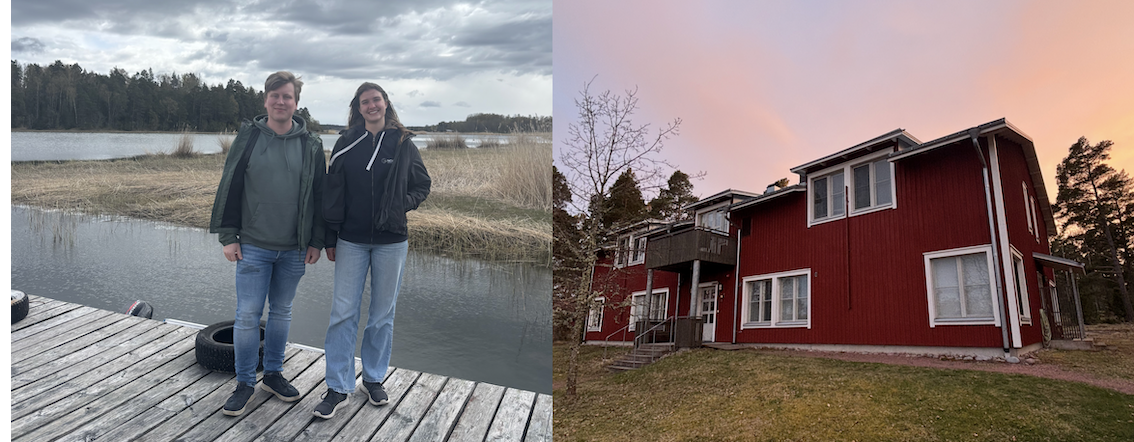
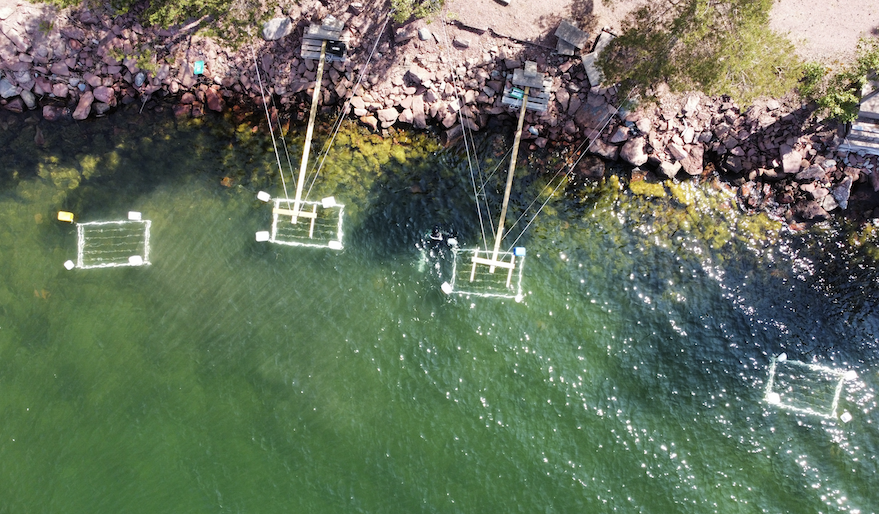
Our first days were spent digging through cupboards and sheds, reusing old materials and tools from previous years, and preparing the frames used by GAME 2023. We chose Hamnsundet as our experimental site, (i.e. the same site that was used for GAME 2023), which is located at the northeast of Åland on the outer archipelago roughly 40 km from Husö. We got permission to deploy the experiments by the local coast guard station, which was perfect. The location is sheltered from strong winds, has electricity access, can be reached by car, and provides the salinity conditions needed for our macroalga, Fucus vesiculosus, to survive.
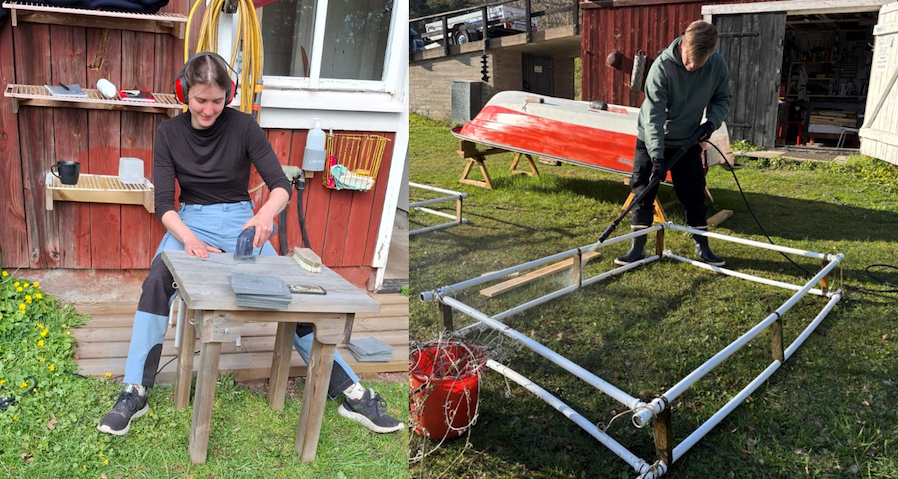
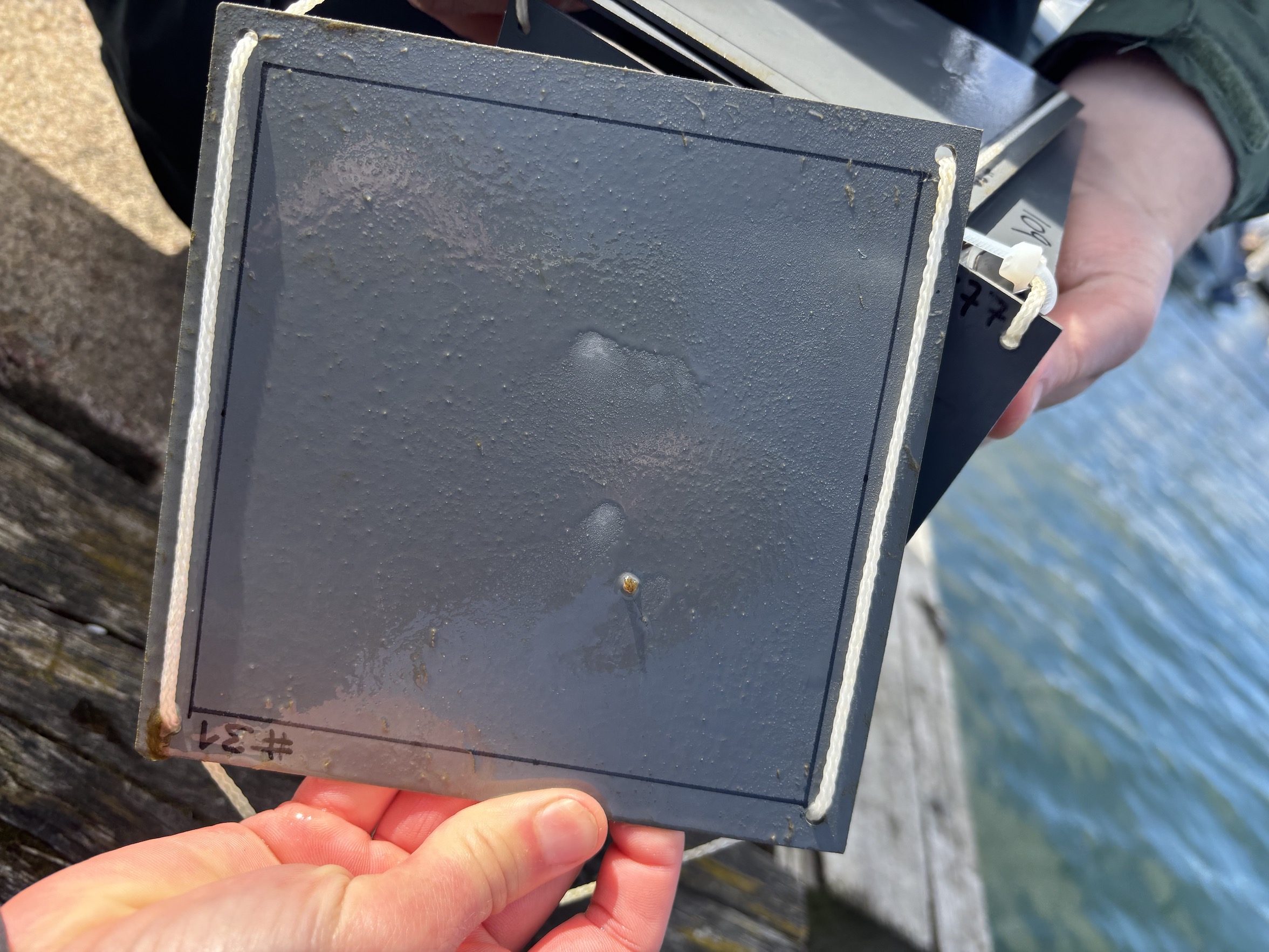
To assess the conditions at the experimental site, we deployed a first set of settlement panels in late April. At first, colonization was slow; only a faint biofilm appeared within two weeks. With the water temperature being still around 7 °C, we decided to give nature more time. Meanwhile, we collected Fucus individuals and practiced the cleaning and the standardizing of the algal thalli for the experiment. Scraping epiphytes off each thallus piece was fiddly, and agreeing on one method was crucial to make sure our results would be comparable to those of other GAME teams.
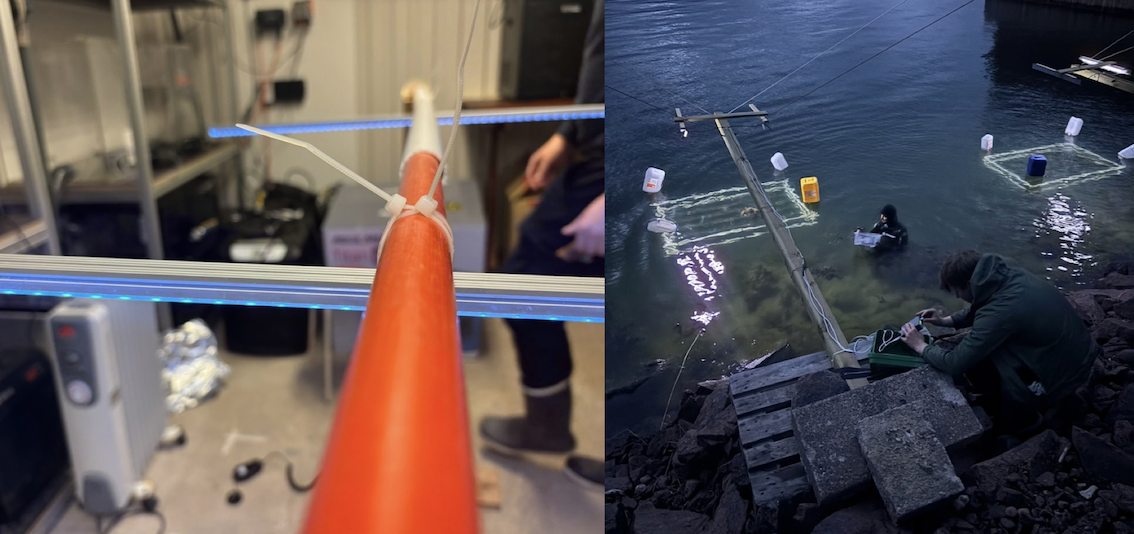
By early May, building the light setup was a project in itself. Sawing, drilling, testing LEDs, and learning how to secure a 5-meter wooden beam over the water. Our first version bent and twisted until the light pointed sideways instead of straight down onto the algae. Only after buying thicker beams and rebuilding the structure, we finally got a stable and functional setup that could withstand heavy rain and wind. The day we deployed our first experiment at Hamnsundet was cold and rainy but also very rewarding!
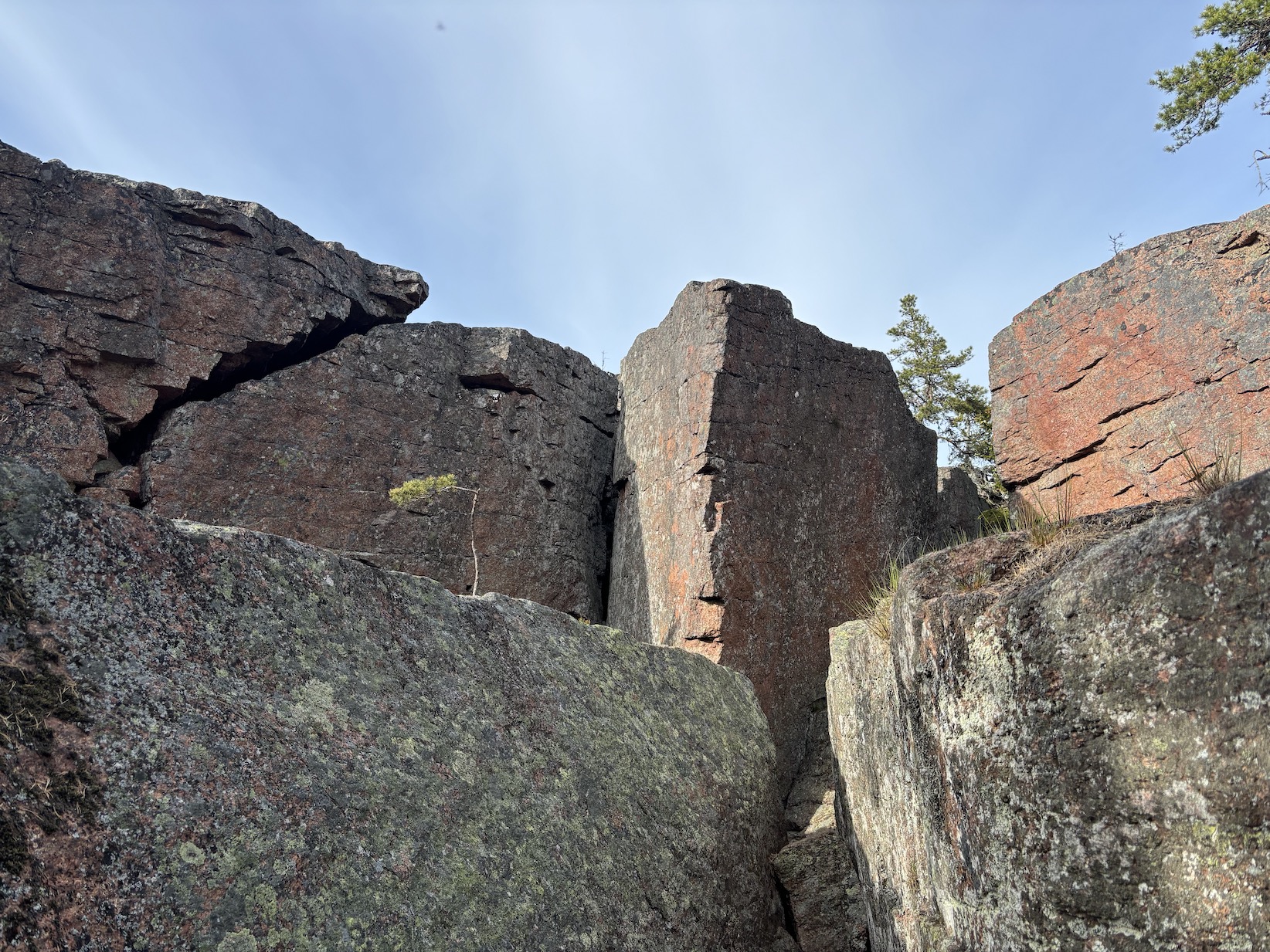
Outside of work, we made the most of the island life. We explored Åland by bike, kayak, rowboat, and hiking, visited Ramsholmen National Park during the ramson/ wild garlic bloom, and hiked in Geta with its impressive rock formations and went out boating and fishing in the archipelago. At the station on Husö, cooking became a social event: baking sourdough bread, turning rhubarb from the garden into pies, grilling and making all kind of mushroom dishes. These breaks, in the kitchen and in nature, helped us recharge for the long lab sessions to come.
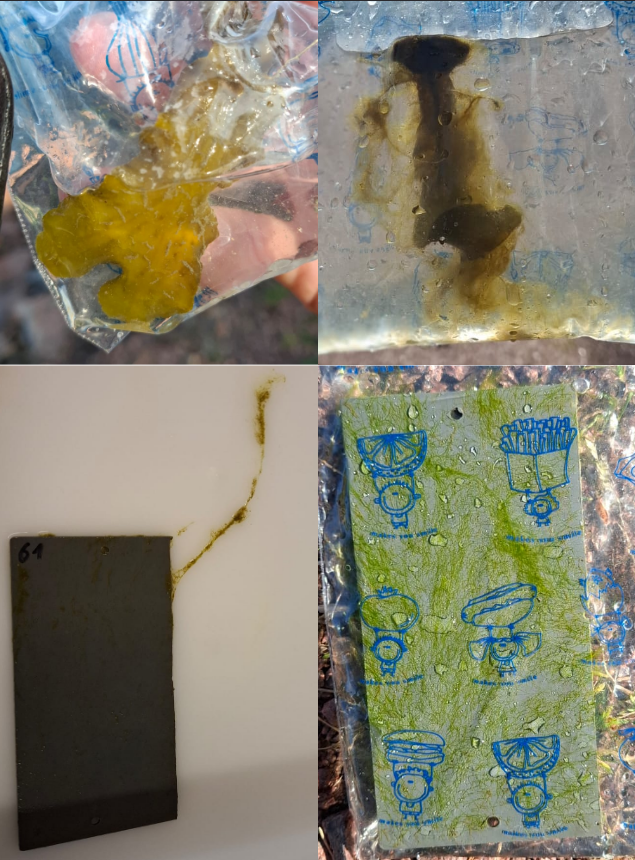
Every two weeks, it was time to collect and process samples. Snorkeling to the frames, cutting the Fucus and the PVC plates from the lines, and transferring each piece into a freezer bag became our routine. Sampling one experiment took us 4 days and processing all the replicates in the lab easily filled an entire week. The filtering and scraping process was even more time-consuming than we had imagined. It turned out that epiphyte soup is quite thick and clogs filters fastly. This was frustrating at times, since it slowed us down massively.
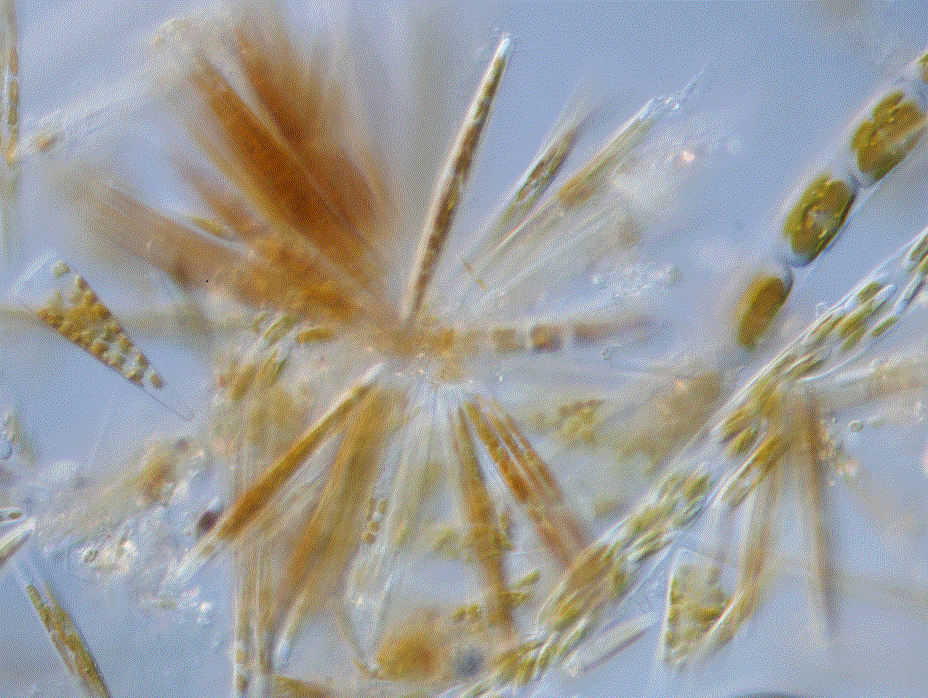
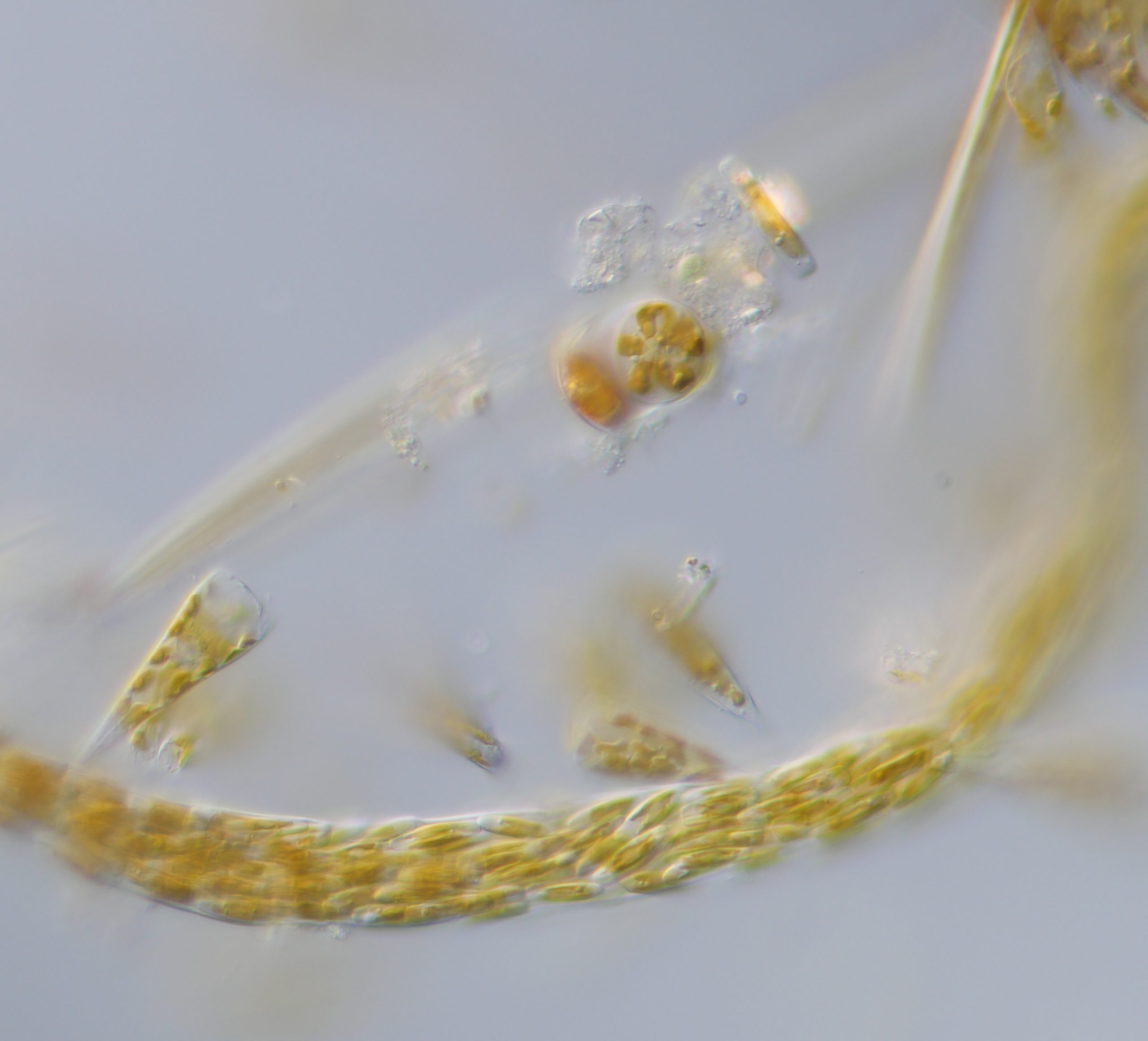
Over the months, the general community in the water changed drastically. In June, water was still at 10 °C, Fucus carried only a thin layer of diatoms and some very persistent and hard too scrape brown algae (Elachista). In July, everything suddenly exploded: green algae, brown algae, diatoms, cyanobacteria, and tiny zooplankton clogged our filters. With a doubled filtering setup and 6 filtering units, we hoped to compensate for the additional growth.
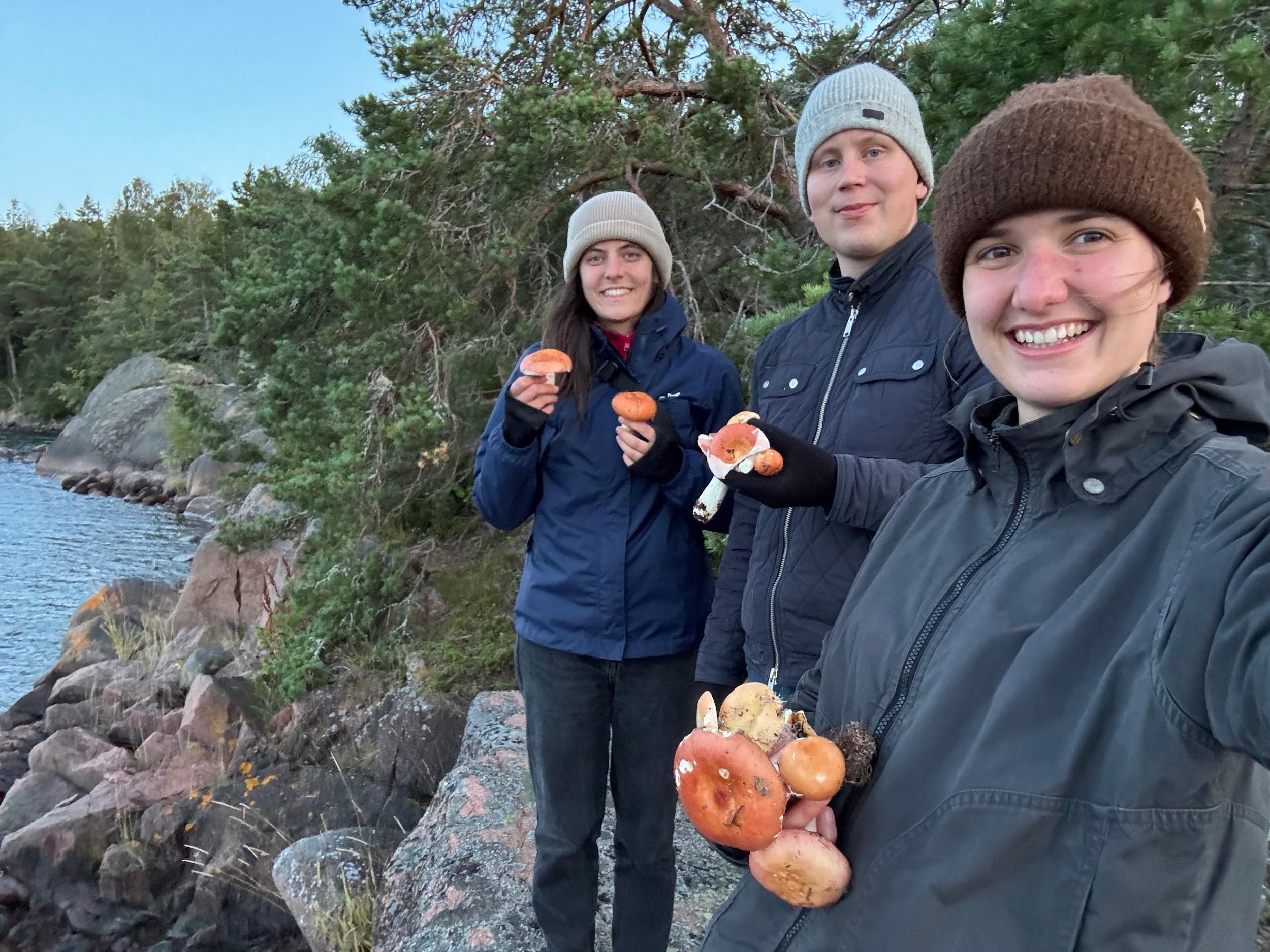
However, what we had planned as “moderate lab days” turned into marathon sessions. In August, at nearly 20 °C, the Fucus was looking surprisingly clean, but on the PVC a clear winner had emerged. The panels were overrun with the green alga Ulva and looked like the lawn at an abandoned house. Here it was not enough to simply filter the solution, but bigger pieces had to be dried separately. In September, we concluded the last experiment with the help of Sarah from the Cape Verde team, as it was not possible for her to continue on São Vicente, the Cape Verdean island that was most affected by a tropical storm. Our final experiment brought yet another change into community now dominated by brown algae and diatoms. Thankfully our new recruit, sunny autumn weather, and mushroom picking on the side made the last push enjoyable.
By the end of summer, we had accomplished four full experiments. The days were sometimes exhausting but also incredibly rewarding. We learned not only about the ecological effects of artificial light at night, but also about the very practical side of marine research; planning, troubleshooting, and the patience it takes when filtering a few samples can occupy half a day.

Summit Sold Its Midwest Pipeline as a Carbon Solution. Now, It’ll Be Used for Fossil Fuels.
The 4-Billion-Year Perspective to Understanding Earth’s Current Climate Crisis

Howard Stern Has No Respect for Trump Supporters
-
Greenhouse Gases8 months ago
Guest post: Why China is still building new coal – and when it might stop
-
Climate Change8 months ago
Guest post: Why China is still building new coal – and when it might stop
-

 Greenhouse Gases2 years ago
嘉宾来稿:满足中国增长的用电需求 光伏加储能“比新建煤电更实惠”
-
Climate Change2 years ago
Bill Discounting Climate Change in Florida’s Energy Policy Awaits DeSantis’ Approval
-

 Climate Change2 years ago
嘉宾来稿:满足中国增长的用电需求 光伏加储能“比新建煤电更实惠”
-
Climate Change Videos2 years ago
The toxic gas flares fuelling Nigeria’s climate change – BBC News
-

 Carbon Footprint2 years ago
US SEC’s Climate Disclosure Rules Spur Renewed Interest in Carbon Credits
-

 Renewable Energy5 months ago
Sending Progressive Philanthropist George Soros to Prison?