Connect with us

Published

on

Weather Guard Lightning Tech

GreenSpur’s Axial Flux Generator Innovation

Jason Moody from GreenSpur discusses their innovative axial flux generator technology, which promises to reduce weight and complexity in wind turbines, offering greater efficiency and lower maintenance costs.

Sign up now for Uptime Tech News, our weekly email update on all things wind technology. This episode is sponsored by Weather Guard Lightning Tech. Learn more about Weather Guard’s StrikeTape Wind Turbine LPS retrofit. Follow the show on FacebookYouTubeTwitterLinkedin and visit Weather Guard on the web. And subscribe to Rosemary Barnes’ YouTube channel here. Have a question we can answer on the show? Email us!

Today we’re excited to have Jason Moody, chairman of GreenSpur, joining us to discuss a generator technology that could fundamentally alter the path of wind energy. While the wind industry has been scaling up turbine sizes, we’ve hit a critical challenge. Generators are becoming massively heavy, complex, and expensive to maintain.

GreenSpur is taking a different approach entirely. They perfected axial flux generator technology that can dramatically reduce weight, eliminate cooling systems. And use any type of magnet from simple faite to rare earth materials. This isn’t just another incremental improvement. It’s a completely different way of generating power that could solve some of offshore wind’s biggest headaches.

Welcome to Uptime Spotlight, shining Light on Wind. Energy’s brightest innovators. This is the Progress Powering tomorrow.

Jason, welcome to the program. Thank [00:01:00] you. Thanks a. Hi Joel. Well, let’s start off with the elephant in the room for offshore wind turbines manufacturing. Uh, there’s some fundamental challenges that are facing them as we approach sort of the 20 megawatt stage and getting further offshore. Weight becomes a big problem.

Jason Moody: Yeah, it does. For, for years they’ve been getting bigger and bigger, and you can see that the industry just wants to push for that next size. But with that, the generators are getting very, very heavy. So the last direct drive generator that we evaluated was in excess of 150 tons. Now, that’s not a, not a small machine anymore, but what what we’re trying to do is introduce a new technology.

That can hopefully address that problem and some others as well.

Allen Hall (2): So when you put a very heavy generator on top of a tower, that increases everything underneath of it, right?

Jason Moody: Yeah. The foundations grow exponentially. The [00:02:00]steelwork and the structure has to grow. Then the cell itself, just based on size, lot more composite parts.

Everything’s bigger.

Joel Saxum: So we’re talking like here, kind of traditional offshore wind fixed bottom right. That’s an issue. The foundations have to grow, uh, exponentially to get these, to hold up this weight. But when another thing that’s happening globally, right? The big push for floating offshore wind. So if now you’re talking about putting more and more and more weight on something that’s actually dynamic, right?

So that kind of, uh, what does that do to the, the whole system.

Jason Moody: That’s a, it’s a different, um, engineering challenge, but it’s mainly in the steel structure and the ballast in, in those, uh, in those systems. So the street, the steel pylon becomes very thick, becomes very heavy, uh, to hold that weight on top.

But most of the time what you found in these newer next gen floating systems is they’ve gone to geared systems, which is a big move in the whole industry for both onshore, offshore, and, and everything in between. Everyone’s moving to hybrid [00:03:00] and geared systems,

Allen Hall (2): and hybrid and geared systems get even more complicated, which is the problem, right?

Is that we’re, we’re trying to lower the cost of energy, but as we go bigger in scale, we sort of lose those efficiencies. It, it doesn’t scale up with the efficiencies. It actually, you start getting more complicated because the generator itself is a limitation.

Jason Moody: It is not just on electrical efficiency either.

It’s, it’s limited because a lot of these generators, as they spin faster, they get hotter. And then with hotter generators, you need fancier and, and more high tech cooling systems and, and there’s another point of failure. So the LCUE really does start to suffer in these more complex advanced systems.

Joel Saxum: The size of these things too, like as we get bigger and bigger and bigger, we’re trying to scale up like.

The idea of working on something, like, I think about this like working on a truck, right? You go from working on a truck or working on a car to working on, uh, a semi go from that to working on, you know, a big boat engine or [00:04:00] something of that sort. And now we’re still talking at small scale, but the tools, you need, the ability to handle and move things like it becomes exponentially more difficult.

So as we get to, I know like we were talking earlier off air, Siemens has their 21 and a half megawatt machine installed. I can’t imagine the amount, the, the types of tooling, lifting mechanisms and stuff just to be able to work on the things. So that’s, that becomes even more of an impasse, especially in offshore operations as we’re trying to keep these things running.

Jason Moody: Yeah. There’s a whole booming and emerging industry on the infrastructure just to move and install these parts, uh, offshore. It’s, uh, just to hoist some of this big heavy equipment up into the na cell. It’s, uh, it’s. Really quite difficult, but getting even more difficult as time goes on

Allen Hall (2): and there’s more components up tower than ever before.

As we get to these bigger generators, cooling is a massive issue and if you follow, uh, all the patents by all the OEMs right now, you’ll see that they’re trying to figure out ways [00:05:00] to provide cooling up tower to the generator and all the gears and everything else moving up top. And it, it becomes a massive problem.

So not only do you have a very heavy generator and relatively complex generator, now you’re adding a coolant system, which is another complicated, heavy system on top of it.

Jason Moody: Yeah, you’re absolutely right, Alan. It, it is getting more complicated and the thermal management in the new cell, it is, it’s only going to get worse.

Allen Hall (2): Greens spur is doing something radically different. And I’ve been following Greensboro for, for a number of years now because, uh, you have been based in part of, been supported by ORE Catapult and you have a different generator design. It’s actually not a new concept, but maybe the implementation I would describe as new.

But moving from a standard sort of two cylinder design, you have a rotor. And you have a stator on the outside, which we see in cars and everywhere. It’s basically every [00:06:00] generator or motor in the world has these two rotating, these two cylindrical pieces. Moving from that into an actual flux design. And when we talk about flux, we’re talking about the magnetic fields that are generated to make these things spin or to create power, actual has a lot of advantages that haven’t been.

Taken, taken into consideration when we’re building massive wind turbines.

Jason Moody: Yeah, precisely. And thanks. Um, the, the way that Greensboro has approached this isn’t using a brand new technology. It’s, the way to describe it is to perfect it in a new application. So axial flux as a generator. Um, it’s been around a long time and the advantages of using axial flux as a generator have been well documented and known.

Uh, for, for, again, a long time. But what we’ve managed to do is we’ve scaled it from what might be a desktop size, um, unit up into the multi megawatt sizes. Now we’ve [00:07:00] got, um, uh, a generator that’s, um, been tested at the ORE Catapult, and, and that’s three meters in diameter. It’s, it’s a huge machine. Um, and, and that’s some of the benefits of Axial Flux can be seen in how you control and how you can manage the, the magnets being on the tire face instead of the tire tread,

Allen Hall (2): right?

And so now you have a series of discs. You have a what call a state or disc and a rotor disc, and they kind of, you can stack them together. So as you want to add more power production, you just add more discs, which, uh, is a really simple way of changing the size of a generator. But the, the key is, is that you have, uh, the coils stationary.

You have the magnets on another disc, and they’re spinning around, which is what’s creating the power. You can use a lot of different magnets in this particular design. You can use [00:08:00] standard, simple off the shelf magnets or rare earth magnets. It’s sort, and it, your, the actual design is sort of ambivalent to it.

Jason Moody: Absolutely. One of our, uh, one of our taglines, one of our USPS and how we’ve, um, adopted the design methodology is to be magnet agnostic. Drivetrain agnostic, which means we can be geared or direct drive even down to the, the coil material. We’re completely adaptable and scalable to whatever our clients might need.

The key is it’s very quick to, to change these parameters in our modeling software so we can easily design the most optimized, uh, generator.

Allen Hall (2): You can really drive the weight down in sort of two ways. You can use rare earth magnets, much more powerful, and you can also remove the copper and put in aluminum for the coils, which drives weight down.

So at the end of the day, you have and. You have a very efficient design, but you can also dump the cooling system. You don’t need a [00:09:00] fluid cooling system to create, for this generator to maintain its power output.

Jason Moody: Yeah, so if we were to go tor to toe with a traditional radial system of, let’s just pick 15 megawatt, we would expect to be 25% lighter, 40% smaller physically and nor water cooling system.

We would have air cooling, water leak. That is tor to toe with an equivalent existing design out there today.

Joel Saxum: So this, it kind of brings me to a question. You, we’ve been talking of course with you, Jason, fantastic technology, but we’ve been talking about a lot of offshore heavy weight. As we get bigger as we get bigger.

But can your designs be optimized? Say I, I think personally, one of the next, uh, frontiers for wind energy is, is low wind applications. Like, um, you know, like look at the United States. We’re talking like the southeast side of the United States where there’s no wind energy now, but we could optimize for its low wind speeds, five meters a second, [00:10:00] seven meters a second, things like that.

Can your designs be optimized for like a low wind speed turbine as well?

Jason Moody: Yeah, that’s a great question, Joel. Now over the last sort of five years, we’ve worked with many of the ma I would say, successful vault companies. So the, the vertical access version of, of what’s currently out there and what you might see is a, a traditional turbine, but these vertical access turbines, they spin on the other axis and they’re typically used in much lower level and low or unpredictable winds.

And they have a lower startup talk now, axial flux, especially our, that can be optimized. Um, they have a, a low starting talk. They have a higher efficiency, so they are very well suited for those vault applications. The challenge in that market is that there’s not many of those vault companies that have.

Entered serial production yet. So we’re still nurturing a kind of nascent market, but we’re very much in there and we’re perfect partners for that type of technology. [00:11:00]

Allen Hall (2): And you’ve been working on this, green Spurs been working on this for over 10 years now. Mostly with ORE Catapult. You have a, a ton of intellectual property that’s been derived out of all the work you’ve done.

And now, uh, the latest, uh, information I’ve seen is that you are at TRL. Seven, which is a huge milestone. You wanna explain what TRL seven means in terms of a development cycle?

Jason Moody: So, yeah. TRL seven is a scale between one to nine, uh, with TRL one being an idea on the drawing board and TRL nine being serial production to achieve.

TL one to six is building, uh, a generator all the way up to, um, kind of testing it. Seven and beyond is when you start getting into the operational environments. Now we’ve just dipped our toe into TL seven by combining all of our build experience with our new simulated experience in real [00:12:00]operational environments that have been submitted to our project, um, by, by partners, so we can then really test what our generator can do in actual turbine conditions.

Allen Hall (2): Right? Which is the hardest part of any development cycle is getting real data. And once you have that real data, then you can start scaling it into what a, a full size unit would be. And that’s where everything starts to really roll. Uh, Greensboro’s been doing this a long time, which to me just validates what you’re doing and.

Having watched from the outside, I’m an electrical engineer, so when I first ran across Green Spurs, like, oh, they’re doing something different. They’re thinking about the problem differently. They’re addressing the magnet problem, the rare Earth magnet problem. They’re addressing the weight problem, which is going to come up.

And Joel, and this is when we were still building like eight megawatt generators. And I thinking, well, the, the future’s only gonna get bigger. This makes total sense now. Now, from a manufacturing standpoint, it [00:13:00]does involve a slightly different process than what we have been doing historically. When we’re winding these coils around these cylinders.

Is it something and, and most of that work has gone offshore? Quite honestly, it’s, it’s not in the us it’s not in the uk. It’s mostly not in Europe for, for the most part. Does this open up the door now because of the sort of simplicity of it and the, the elegance of the design to be manufactured in the uk?

Jason Moody: Well, a couple of years ago we were focused on direct drive technology as the rest of the industry was as well. Uh, we thought that was the future and in a direct drive configuration, these machines are hundreds of tons. The uk it’s not set up for a hundred ton manufacturing of any rotating equipment. So we never had ambitions and we never thought that it would ever come to fruition if we did.

But now, if you were to use, um, the geared configurations or the hybrid drive situation, the machines become much smaller, much lighter. And I mean, [00:14:00] one of our, one of the biggest designs we’ve done is only nine tons. Now that is manufacturable in the UK and any western world. Nine ton generator and we can build that.

That changes our thoughts, that changes our strategy.

Joel Saxum: I think this is an, a really important, uh, like a basically keynote from this podcast to take away. Is that what the innovations that you guys are working on that engages the industrial complex in the uk, the industrial complex in, in the eu, in the United States, wherever you want to build these things, it can be done.

And one of the big problems that we hear, of course Alan and I go to. Basically every wind conference you can think of, um, you guys just finished up the global offshore wind there in the uk and, and a lot of the conversations over the last few years have been supply chain, supply chain, supply chain. And you don’t just hear it within our industry.

You hear it, uh, at high government levels, you hear it, you know, rare earths is a buzzword. All of these things. So you guys have the. The idea that you can manufacture [00:15:00] locally, you can engage, you know, your, your local communities to build these things, but also you’re easing your supply chain constraints by the ability to use rare earths different kind of magnets.

Um, it’s something that the rest of the, the industry just hasn’t. It’s like, it’s like they’re stuck, stuck in like the mud in the background of something we’ve been doing for 20, 30 years, 40 years, 50 years, you know, the same kind of technology. And there’s something, there’s a, there’s a nice, beautiful, shiny object sitting here and nobody’s grabbed it yet.

Um, but, but can you, can you talk to us a little bit about the supply chain, um, and how you guys can basically optimize that to get these things built?

Jason Moody: Yeah. Again, a really great question and one that, um, really goes back to the roots of Greensboro. We were born as a company to try and address the, the rare earth supply chain, the issue around magnet supplies and.

Throughout trying to perfect our technology to work with the lowest power [00:16:00] of magnet, which we did do. Um, we stumbled upon, upon perfecting or making very good axial flux technology. So we didn’t just create a rare earth free generator, we created a really good generator, full stop. It just so happens to be magnet agnostic.

Now, we’ve only talked about using, uh, rare earth magnets, the top end of the power density and the lowest phite magnets. But there’s a whole world of magnets in between that, uh, that are not explored yet. There’s a lot of development even in the US with narron. Those guys are developing some incredible, uh, new magnets.

And we’ve partnered with Nron a few years back and we are one of their conduits into, into wind should they come, come up with a commercial product or available product. So, so there’s a whole lot of gap magnets that would work in our architecture that could not work in the traditional radial flux designs.

Allen Hall (2): Well, let’s walk down that pathway just for a moment. Because of the [00:17:00] actual design. It’s a series of discs. So if you wanted to. Check one magnet versus type versus another. You would just be sliding a disc out, putting another disc in. If you think about the way we would make a standard generator today, it would be really complicated.

It would take a long time to do that. The actual sets itself up to be a little more developmental, where you can do things on the fly that you wouldn’t be able to do on a standard generator radial design.

Jason Moody: Yeah, you’re right at a conceptual level. Um, in practice it’s not as easy as sliding one out, sliding one in, but on a conceptual level it’s an awful lot easier than, um, than a radio system.

Yeah. Because a radio system, you have to change pretty much the whole design. With an axial, you are only changing one plate.

Allen Hall (2): Right. And is there, I assume there’s a, a, a good bit of software that goes along with it, which is where some of the efficiency comes from and from power electronics, I assume both of those.

What are [00:18:00] those sort of milestones in terms of software development and maybe even, even on the electronic side that help make an a design more efficient?

Jason Moody: So there are, there are several elements that have helped us unlock the, the, the real power of axial flux in our technology. Uh, one of them is we have the ability to use an adaptation of the whole back rear.

For those who don’t know what the Halback Array is, it’s a a special way to place the magnets, to manipulate the flux in the direction that you wanted. So instead of flux from a magnet going in both directions, half of it wasted half of it at your coils. We force it all up. The corals increase the power density where we need it, so we can use that.

Whereas you cannot use a haul back effectively in a radial design. So all of a sudden we can use these low powered magnets and any and anything in between. But of course, you can also do the same technique with the the powered markets, with the Neos. End up with an incredibly power dense machine. [00:19:00] Now that’s an, that’s an exploration for a little bit later on.

It shows that our roadmap is, is far from over. We can improve even further than where we are now.

Allen Hall (2): And the simulation tools you developed because you were at ORE Catapult and have built a generator of a significant size, how refined have, have those models been over the last year or two? ’cause it sounds like you really have honed in on.

What a particular magnet could do, what a particular coil setup could do. How we set this up, what a gearbox would be. How, how, how defined or how high level is that competency on the simulation side Right now,

Jason Moody: we spend a lot of time, uh, developing what we call our multiphysics model. That has the electromagnetic modeling.

It has the thermal, it has the structural all embedded into a couple of different tools now that iteratively feeds itself until we come up with the right design. Now, how that correlates with [00:20:00] reality is within a few percentage points. So we simulate, uh, simulated what we did on the test bench in ORE, and it was predicted very, very closely.

We have a good degree of confidence that what we see at the computer screen is reality.

Joel Saxum: So I want to ask you a couple questions about like operational things, because. The, the, the idea that you can get rid of cooling systems, that’s amazing because I know, like here, I’m in Texas, right? So that’s a big problem for all of these guys.

They’re going up tower just with air compressors to blow out radiators to keep these things cool. Uh, but you’re, you’re reducing the complexity. And in that, my mind goes, that makes operations a lot easier and maintenance a lot easier. What does that look like for the lifetime of, of one of these axial flux generators?

As in, you know, a, a serial product in a turbine,

Jason Moody: in an axial flux permanent magnet, iron list generator. ’cause we have no, we have no iron losses and [00:21:00] things we have with iron list status. There are no wear parts, zero. Nothing touches apart from the bearings. The only thing that wears is the bearings. So.

Because we’ve designed this axial flux, uh, machine or all of our machines around standard, well-known name, brand bearings that are already used in the industry, the lifetime is tied to the bearing and they are maintainable as well. So when you take away the cooling, uh, failures, that could be as, as associated with quite a large portion of the failures out in there, and you take the already known lifecycle and lifetime of a bearing.

It can be, it can be no worse than the existing tech. It can only be better. And the inference is, I mean, we haven’t got one in the field to tell you permanent to tell you exactly, but the inference is it cannot be worse, but it will be better is what we’re, what we’re trying to articulate.

Joel Saxum: I mean, you’re removing [00:22:00] heat, right?

And heat is a big failure in any kind of mechanical component. I mean, that’s

Jason Moody: when we got the, the latest report back from the RE Catapult, the fact that it came back so cool. Um, was just amazing to us. We thought it would come back cool, but it’s come back as such a, a thermally efficient machine that, uh, it surprised us.

Allen Hall (2): Let, let me take it into the electrical domain. Also on an axial versus a radio design. There’s a lot of radio generator failures that are due really fundamentally to the design. You have to put. Coils in a certain way, do they have these tight bins. They’re going around these sharp corners. The way you have to try to insulate ’em to protect them, and all that eventually fails.

Dead stop. We know it’s, that’s where the failure modes are. That’s why there’s a number of companies that are out servicing for those events and why you see a lot of generator repair shops trying to fix those known failures. Aio, from what I’ve seen on [00:23:00] your design. Addresses almost all of those upfront to to increase that lifetime.

It’s crazy when you think about how much time and energy we spend fixing generators, because we knew when we bought it, it was gonna fail in this particular way. Get it from the bearings or from the electrical work. It doesn’t really matter. You still have to this generator out and do fixes. Axial removes a lot of that.

So from an operation side, what are we talking about here? Are we talking about. Thousands of dollars a year, tens of thousands of dollars a year in terms of reduced maintenance costs. What, what

Jason Moody: realm are we at here? I couldn’t possibly estimate how big it is, but it’s certainly higher than tens of thousands of dollars.

It’s uh, it’s a big number. Yeah. Just to flesh out a little bit on that, um, on that comment about the coils. So in traditional radials, you have really complex winding paths, and that’s a lot of the time. That’s where you get your short circuit failures. I. [00:24:00] With what we’ve done, we use flat aluminum bar, and then it’s anodized and then it’s fully potted and encapsulated.

This can, it’s fully protected. From both the environment and itself.

Allen Hall (2): That’s a huge thing. I know when we talk, we don’t talk a lot about generators on the show, Joel, and just because we just know that how they perform, they been around over a hundred years. There’s no new innovations. No there. There is none.

There is literally none. Right. So we all come in from an o and m perspective on wind turbines operations, knowing I’m going to have to rip out two, three generators maybe a year depending on the size of the farm and like. Get a crane and do all this stuff, and it’s like inherent into the LCOE Greenburg’s attacking that fundamental understanding of how we think about LCOE.

You wouldn’t need a rewind in

Jason Moody: the maintenance schedule for this generator.

Allen Hall (2): Well, and, and I think this gets, really, gets down to the core of what, uh, [00:25:00] Greensboro is trying to accomplish now, is that you’re changing the way we think about creating power at the fundamental level, at the generator level. What does this look like?

What do you see this in, in 2, 3, 4, 5 years? What do you think Greensboro is doing and where can’t it be implemented? You know, first where, where are we going first? Here

Jason Moody: we’ve taken this technology as far as we can reasonably take it without one of the big players standing up and listening. And now it’s time for them to really help us along the way and put our generator in one of their turbines.

We need the help of one of these, uh, one of these industrial partners to come on board, get in touch with us, and, um, we’ll see where it takes us. But I’m quite sure it’s gonna revolutionize the industry

Allen Hall (2): and the UK’s willing to invest in this. If more recently you’ve seen efforts by the government and the crown of state willing to put money where their mouth is and to support companies like Greens Spur, which [00:26:00] is the right thing to do.

So you’re not going alone on this mission to create this new. Type of generator, maybe an old type of generator. It’s been around a long time, but to, to put it in, into wind turbines and to implement it the way that it needs to be done. This is remarkable. And, uh, I, I know we, we, we talk to a lot of technology companies and, and they’re, and they’re helping, right?

Everybody’s trying to help lower the cost of energy. But when you attack that generator, you are going at the heart of costs. That is where the industry needs to go. And I’m so glad everybody at Greensboro has been dedicated to do this. ’cause it’s not easy.

Jason Moody: It’s been playing in the land of giants, but I think we’ve really got something and that’s what’s driven us for so long.

Allen Hall (2): So if you’re a large operator or you’re an OEM and you haven’t looked at axial flux generators, you need to be doing that now. You can always Google Greens Spur that are on the internet. There’s a ton of information on the website, also on the LinkedIn page, so you [00:27:00] can follow the development there. Jason, thank you so much for being on the program. We love what Greens Spur is doing and let’s stay in contact because as things develop, uh, we want to educate the world and make sure that everybody hears all the excited things that are happening at Greens Spur.

Jason Moody: Perfect. It’s been a pleasure. Thank you very much guys.

https://weatherguardwind.com/greenspur-axial-flux/

Continue Reading

Renewable Energy

The United States Run Amok

Published

on

An old school chum writes:

“We live in a world … that is governed by strength … by force … and by power.” – Stephen Miller (see @ 5:55). For the record, that’s what Hitler said in 1939.

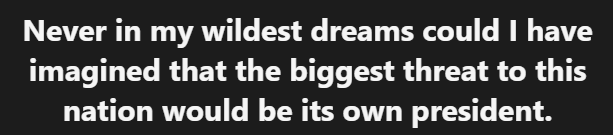
The United States has lost its place in this world. We’ve been taken over by a lunatic president and his “nazi” henchmen.

The United States Run Amok

Continue Reading

Renewable Energy

Solar Compliance & Regulations Every Australian Business Must Know

Published

on

As we enter 2026, we all know that solar energy is not just an environmental choice for Australian businesses; it’s a smart commercial strategy.

Between rising energy costs, increasing ESG pressure, and attractive government incentives, of course, solar has become both eco-smart and economically powerful for Australian homes and businesses.

But before you order panels, sign contracts, or get excited about cleaner energy bills, it’s crucial to understand rebates, financing options, and the regulatory path that every business must follow.

However, from solar compliance regulations in Australia to safety standards, grid connection rules, and government incentives, navigating the legal landscape can feel complex without the proper guidance.

Also, falling behind on compliance can mean delays, penalties, or missed financial incentives, while staying ahead ensures smoother installations, long-term savings, and regulatory peace of mind.

As Australia accelerates its clean energy transition, this guide outlines the solar regulations every Australian business must know in 2026 to stay competitive, compliant, and future-ready.

So, if you are planning to install solar on your business property, let’s dive in!

Solar Rebates & Incentives| Get the Most Financial Support!

Undoubtedly, Australia’s solar boom is transforming the way businesses cut costs, reduce emissions, and future-proof operations, but staying compliant is just as important as going green.

Initially, the cost of solar panels and battery systems may seem high at first glance, but  Government support can dramatically cut upfront investment. So, knowing what rebates or incentives your business is eligible for can mean thousands of dollars saved.

Here we’ve penned down the available solar rebates for Australians:

Federal Rebates: Small-scale Renewable Energy Scheme (SRES)

The big headline rebate in Australia today is the Small-scale Renewable Energy Scheme (SRES).

Under this scheme, you earn Small-scale Technology Certificates (STCs) when you install eligible renewable energy systems, including rooftop solar and solar batteries.

These certificates have a tradable value and are typically sold by your installer to offset the system’s upfront cost.

STCs can significantly lower your installation cost. Wondering how much?

The actual savings depend on:

  • The size of your system (in kW),
  • Your geographic location,
  • The installation date and the remaining deeming years until 2030, when STCs will phase out.

You can also ask your retailer how many STCs your system will generate and what value they’re assigning to each. Sometimes it’s already reflected in your quote.

State & Local Government Incentives

Beyond federal support, many states and even local councils offer additional rebates, loans, or incentives, especially for businesses. For instance:

  • Some regions provide solar panel rebates or partial subsidies for commercial PV systems.
  • Battery rebates and interest-free loans are becoming more common to help businesses install energy storage along with solar.
  • In NSW, battery and Virtual Power Plant participation incentives have increased, offering bonus payments for grid-connected battery systems.

Moreover, rebates can often be stacked. You might be eligible for:

  1. Federal STCs,
  2. State rebates, and
  3. Local council grants are also available if you check early and apply correctly.

How to Finance Your Solar Panel Installation: Find Out!

Not long ago, financing was one of the most common barriers to solar installation. Not all businesses want to or can pay upfront for a solar system, especially larger organisations and commercial properties.

But the story has changed! Solar financing has evolved rapidly, unlocking new, flexible pathways for businesses to go solar without the upfront burden.

Let’s have a look at the top solar financing option for Australians:

Solar Loans & Leasing Options

Many businesses use tailored solar financing:

  • Commercial solar loans with competitive rates,
  • Lease or Power Purchase Agreements (PPAs), where you pay over time or only for the energy produced,
  • Environmental Upgrade Finance (EUF), where repayments are tied to council rates.

These funding options let you unlock solar savings without upfront capital, often making solar monthly costs lower than current energy bills.

Tax & Depreciation Benefits

Solar investments can also provoke tax benefits. It can result in immediate tax deductions in some cases and accelerate depreciation allowances for commercial systems.

However, tax strategies can vary by business size and structure, so it’s wise to seek professional advice before finalising anything.

Australia’s Solar Compliance Framework: Things You Must Follow

In Australia, getting rebates and finance is one thing, but meeting safety and regulatory requirements is another, and it’s mandatory.

Now you might be thinking what key requirements are set by bodies like the Clean Energy Council, local distributors, and state and federal governments.

The requirements list includes:

Accredited Installers & Tradespeople

To qualify for STCs and many rebates, your system must be installed by appropriately accredited professionals such as Cyanergy. To become eligible:

  • Solar installers must be accredited through Solar Accreditation Australia (SAA) and often registered with the Clean Energy Council.
  • Electrical work must be carried out by a licensed electrician or contractor, as required by state law.

No accredited installer?

Cyanergy is here to help you with these solar financing options, making your journey hassle-free.

Australian Standards Business Must Follow

Australia has a robust set of standards that solar systems must comply with. These aren’t optional; they’re embedded in electrical and safety laws and often referenced in codes.

The key standards include:

  • Wiring Rules
  • Installation of Photovoltaic (PV) Arrays
  • Wind Loading and Structural Design Actions
  • Lightning Protection
  • Stand-alone systems
  • Grid connection of inverters and energy systems

Among these, installation of Photovoltaic (PV) Arrays has been revised specifically to support modern solar installations and is a fundamental standard for safe, compliant solar work.

If you don’t meet these standards, regulators or your energy network may refuse to connect you or even fine your business.

Network & Electrical Connections

Even after panels are on the roof, you can’t just switch them on. Your installation must be commissioned by the installer, tested against local network connection rules, and may require type-specific metering, such as digital smart meters.

In many cases, utilities may delay grid export until safety and connection standards are confirmed, so leave time in your project plan.

Building Codes & Local Council Requirements

Compliance at the federal and state levels doesn’t always summarise the whole story. Local planning, building codes, and council approvals can also affect your solar installation process.

How to build approvals?

In Australia, you may need a building permit or development approval, depending on your municipality and the system’s size or location.

Strata, body corporate, or planning rules may require additional approvals before installing panels on shared property or heritage buildings.

Must check with local authorities or your installer before proceeding.

Roof Load & Structural Engineering

Solar arrays add weight and stress to roof structures. Many councils and insurers might ask for:

  • Structural assessments,
  • Proper Documentation
  • Prove that the roof can safely support your system.

This is especially important for older buildings or double-storey structures.

Keep in mind that some installers even refuse to proceed without structural confirmation, which can delay installation if not planned for early.

Australian Safety Standards & Best Practices for Solar Panel Installation

While planning an energy upgrade, safety isn’t just a legal requirement; it protects lives and assets.

So let’s see what the safety rules are for the installation of solar PV systems in Australia:

Electrical & Fire Safety

Solar systems involve high voltages, batteries, and sometimes complex inverter setups. That’s why:

  • Installers must manage risks in accordance with Australian electrical safety and work health and safety (WHS) rules.
  • Battery installations have specific safety requirements, including proper ventilation and fire safety measures.

After installation, your electrician must also provide a Certificate of Compliance for Electrical Work to confirm that the system meets all electrical safety standards and is properly connected.

What are the Other Safety Measures?

Accreditation: Use CEC-accredited designers and installers.

Wiring: Maintain separation between AC and DC cables; protect all wiring from any physical damage.

Inverter Placement: Install your inverters in shaded, well-ventilated areas.

Panel Handling: Cover unpacked panels with opaque material to stop power generation. Also, wear insulated gloves.

Structural Integrity: Ensure proper mounting to withstand weather and prevent roof leaks.

Earthing: Essential for preventing shocks and managing fault currents.

Electrical Isolation: Isolate all power at the main switchboard before work begins.

Maintenance: Regular inspections by a licensed electrician can prevent failures.

Working at Heights: Take extreme care, especially near power lines; wear appropriate PPE, including a respirator, goggles, and gloves.

Documentation & Compliance Paperwork

If you are planning to install solar panels, don’t underestimate paperwork. Thorough documentation helps you:

  • Claim rebates,
  • Demonstrate compliance during inspections,
  • Protect your business in case of disputes.

Why Compliance Matters for Australian Businesses?

Now that you understand the rules and safety measures, it’s time to look at why compliance truly matters.

Following rebates, financing rules, and regulatory standards pays off in multiple ways:

Cost Reduction & Risk Avoidance

Non-compliance can:

  • Void rebates,
  • Lead to fines or permit pull-back,
  • Delay grid connection,
  • Result in expensive rework.

Staying compliant protects both your wallet and reputation. It’s a win-win for everyone.

Reliable Performance & Safety

Standards like AS/NZS 5033 weren’t written randomly; they’re based on decades of safety data. Compliance means your system is efficient, safe, and durable.

Insurance & Resale Value Boost

Properly installed and compliant solar systems often:

  • Improve business property value,
  • Support insurance claims,
  • Reduce liability exposure.

Final Checklist for Australian Businesses Installing Solar

Now that you understand the rules and safety measures, it’s time to look at why compliance truly matters.

Following rebates, financing rules, and regulatory standards pays off in multiple ways:

Cost Reduction & Risk Avoidance

Non-compliance can:

  • Void rebates,
  • Lead to fines or permit pull-back,
  • Delay grid connection,
  • Result in expensive rework.

Staying compliant protects both your wallet and reputation. It’s a win-win for everyone.

Reliable Performance & Safety

Standards like AS/NZS 5033 weren’t written randomly; they’re based on decades of safety data. Compliance means your system is efficient, safe, and durable.

Insurance & Resale Value Boost

Properly installed and compliant solar systems often:

  • Improve business property value,
  • Support insurance claims,
  • Reduce liability exposure.

Is Solar Worth It? Get It Right with Cyanergy

For Australian businesses in 2026, taking advantage of rebates, smart financing, and following the right regulatory path can transform solar from a cost burden into a long-term investment against volatile grid prices.

It also reduces our reliance on fossil fuels, lowering our carbon footprint.

Successful solar adoption happens when you leverage rebates intelligently, finance wisely, and comply meticulously with standards and codes. Ultimately, all you need to do is follow the guidance above.

For any further queries on solar installation, compliance, and regulatory measures, contact Cyanergy today!

Your Solution Is Just a Click Away

The post Solar Compliance & Regulations Every Australian Business Must Know appeared first on Cyanergy.

Solar Compliance & Regulations Every Australian Business Must Know

Continue Reading

Renewable Energy

US Offshore Wind Halts, Japan Launches First Floating Farm

Published

on

Weather Guard Lightning Tech

US Offshore Wind Halts, Japan Launches First Floating Farm

Allen, Joel, Rosemary, and Yolanda discuss the ongoing federal halt on US offshore wind projects and mounting lawsuits from Equinor, Ørsted, and Dominion Energy. Plus Japan’s Goto floating wind farm begins commercial operation with eight Hitachi turbines on hybrid SPAR-type foundations, and Finnish investigators seize a vessel suspected of severing Baltic Sea cables.

Sign up now for Uptime Tech News, our weekly newsletter on all things wind technology. This episode is sponsored by Weather Guard Lightning Tech. Learn more about Weather Guard’s StrikeTape Wind Turbine LPS retrofit. Follow the show on YouTubeLinkedin and visit Weather Guard on the web. And subscribe to Rosemary’s “Engineering with Rosie” YouTube channel here. Have a question we can answer on the show? Email us!

The Uptime Wind Energy Podcast brought to you by Strike Tape, protecting thousands of wind turbines from lightning damage worldwide. Visit striketape.com. And now your hosts, Allen Hall, Rosemary Barnes, Joel Saxum and Yolanda Padron. Welcome to the 

Allen Hall: Uptime Wind Energy Podcast. I’m your host, Alan Hall. I’m here with Rosie Barnes, Joel Saxum, and Yolanda Padron.

Many things on the docket this week. The, the big one is the five US offshore wind projects that are facing cancellation after the federal halt. And on December 22nd, as we all know, the US Department of Interior ordered construction halted on every offshore wind project in American waters. Uh, the recent given and still given is national security.

Uh, developers see it way differently and they’ve been going to court to try to. Get this issue resolved. Ecuador, Ted and Dominion Energy have all filed lawsuits at this point. EOR says [00:01:00] a 90 day pause, which is what this is right now, will likely mean cancellation of their empire. Project Dominion is losing more than about $5 million a day, and everybody is watching to see what happens.

Orton’s also talking about taking some action here. Uh, there’s a, a lot of moving pieces. Essentially, as it stands right now, a lot of lawsuits, nothing happening in the water, and now talks mostly Ecuador of just completely canceling the project. That will have big implications to US. Electricity along the east coast,

Joel Saxum: right Joel?

Yeah. We need it. Right? So I, I hate to beat a dead horse here because we’ve been talking about this for so long. Um, but. We’ve got energy demand growth, right? We’re sitting at three to 5% year on year demand growth in the United States, uh, which is unprecedented. Since, since, and this is a crazy thing. Since air [00:02:00] conditioning was invented for residential homes, we have not had this much demand for electricity growth.

We’ve been pretty flat for the last 20 years. Uh, so we need it, right? We wanna be the AI data center superpower. We wanna do all this stuff. So we need electrons. Uh, these electrons are literally the quickest thing gonna be on the grid. Uh, up and down that whole eastern seaboard, which is a massive population center, a massive industrial and commercial center of the United States, and now we’re cutting the cord on ’em.

Uh, so it is going to drive prices up for all consumers. That is a reality, right? Um, so we, we hear campaign promises up and down the things about making life more affordable for the. Joe Schmo on the street. Um, this is gonna hurt that big time. We’re already seeing. I think it was, um, we, Alan, you and I talked with some people from PGM not too long ago, and they were saying 20 to 30% increases already early this year.

Allen Hall: Yeah. The, the increases in electricity rates are not being driven by [00:03:00] offshore wind. You see that in the press constantly or in commentary. The reason electricity rates are going up along the east coast is because they’re paying for. The early shutdown of cold fire generation, older generation, uh, petroleum based, uh, dirty, what I’ll call dirty electricity generation, they’re paying to shut those sites down early.

So that’s why your rates are going up. Putting offshore wind into the equation will help lower some of those costs, and onshore wind and solar will help lower those costs. But. The East Coast, especially the Northeast, doesn’t have a lot of that to speak of at the minute. So, uh, Joel, my question is right now, what do you think the likelihood is of the lawsuits that are being filed moving within the next 90 days?

Joel Saxum: I mean, it takes a long time to put anything through any kind of, um, judicial process in the United States, however. There’s enough money, power [00:04:00] in play here that what I see this as is just like the last time we saw an injunction happen like this is, it’s more of a posturing move. I have the power to do this, or we have the power to do this.

It’s, it’s, uh, the, it’s to get power. Over some kind of decision making process. So once, once people come to the table and start talking, I think these things will be let, let back loose. Uh, I don’t, I don’t think it will go all the way to, we need to have lawsuits and stuff. It’ll just be the threat of lawsuits.

There’ll be a little bit of arbitration. They’ll go back to work. Um, the problem that I see. One of the problems, I guess, is if we get to the point where people, companies start saying like, you know what, we can’t do this anymore. Like, we can’t keep having these breaks, these pauses, these, this, you know, if it’s 90 days at $5 million a day, I mean that’s 450 million bucks.

That’s crazy. But that nobody, nobody could absorb that.

Allen Hall: Will they leave the mono piles and transition pieces and some [00:05:00] towers just sitting in the water. That’s what

Joel Saxum: I was gonna say next is. What happens to all of the assets, all of the steel that’s in the water, all the, all the, if there’s cable, it lays if there’s been rock dumps or the companies liable to go pick them up.

I don’t know what the contracts look like, right? I don’t know what the Boem leases say. I don’t know about those kind of things, but most of that stuff is because they go back to the oil field side of things, right? You have a 20 year lease at the end of your 20 year lease. You gotta clean it up. So if you put the things in the water, do they have 20 years to leave ’em out there before they plan on how they’re gonna pull ’em out or they gotta pull ’em out now?

I don’t know.

Allen Hall: Would just bankrupt the LLCs that they formed to create these, uh, wind

Joel Saxum: farms. That’s how the oil field does it bankrupt. The LC move on. You’ve, you’ve more than likely paid a bond when you, you signed that lease and that, but that bond in like in a lot of. Things is not enough. Right. A bond to pull mono piles out would have to be, [00:06:00] I mean, you’re already at billions of dollars there, right?

So, and, and if you look again to the oil and gas world, which is our nearest mirror to what happens here, when you go and decommission an old oil platform in the Gulf of Mexico, you don’t pull the mono piles out. You go down to as close to the sea floor as you can get, and you just cut ’em off with a diamond saw.

So it’s just like a big clamp that goes around. It’s like a big band saw. And you cut the foundations off and then pull the steel back to shore, so that can be done. Um, it’s not cheap.

Allen Hall: You know what I would, what I would do is the model piles are in, the towers are up, and depending on what’s on top of them, whether it’s in the cell or whatever, I would sure as hell put the red flashing lights on top and I would turn those things on and let ’em run just so everybody along the East coast would know that there could be power coming out of these things.

But there’s not. So if you’re gonna look at their red flashy lights, you might as well get some, uh, megawatts out of them. That’s what I would do.

Joel Saxum: You’d have to wonder if the contracts, what, what, what it says in the contracts about. [00:07:00] Uh, utilization of this stuff, right? So if there’s something out there, does the FAA say, if you got a tower out there, it’s gotta have a light on it anyways.

Allen Hall: It has to or a certain height. So where’s the power coming from? I don’t know. Solar panel. Solar panel. That’s what it have to be, right? Yeah. This is ridiculous. But this is the world we live in today.

Speaker 4: Australia’s wind farms are growing fast, but are your operations keeping up? Join us February 17th and 18th at Melbourne’s Pullman on the park for Wind energy o and M Australia 2026, where you’ll connect with the experts solving real problems in maintenance asset management.

And OEM relations. Walk away with practical strategies to cut costs and boost uptime that you can use the moment you’re back on site. Register now at W OM a 2020 six.com. Wind Energy o and m Australia is created by wind professionals for wind professionals. Because this industry needs solutions, not speeches, [00:08:00]

Allen Hall: the dominoes keep falling.

In American offshore wind, last year it was construction halts this year, contract delays. Massachusetts has pushed back the signing of two offshore wind agreements that were supposed to be done. Months ago, ocean Winds and Berroa won their bids in September of 2024. The paperwork is still unsigned more than a year later, a year and a half later.

State officials blame Federal uncertainty. Uh, the new target is June and offshore wind for these delays are really becoming a huge problem, especially if you don’t have an offtake agreements signed, Joel.

Joel Saxum: I don’t see how the, I mean, again, I’m not sitting in those rooms. I’m not a fly on the wall there, but I don’t see how you can have something sitting out there for, it’s just say September 24.

Yeah. Yeah. You’re at 18 months now, right? 17, 18 months without an agreement signed. Why is, why is Massachusetts doing this? What’s, what’s the, what’s the thing there? I mean, you’re an, [00:09:00] you are, uh, an ex Massachusetts, Massachusetts, Ian, is that what it’s called?

Allen Hall: Yeah. I, I think they would like to be able to change the pricing for the offtake is most likely what is happening as, uh, the Trump administration changes the agreements or trying to change the agreements, uh, the price can go up or down.

So maybe the thing to do is to not sign it and wait this out to see what the courts say. Maybe something will happen in your favor. That’s a real shame. Right. Uh, there’s thousands of employees that have been sidelined. Uh, the last number I saw was around 4,000. That seems on the low end.

Joel Saxum: Yeah. I think about, um, the, the vessels too.

Like you’re the, like the Eco Edison that was just built last year. I think it’s upwards of 500 million bucks or something to build that thing down in Louisiana, being sent up there. And you have all these other specialized, uh, vessels coming over from Europe to do all this construction. Um, you know. Of course if they’re coming over from Europe, those are being hot bunked and being paid standby rates, which [00:10:00] is crazy ’cause the standby rates are insane.

Uh, ’cause you still gotta run fuel, you still gotta keep the thing running. You still gotta cook food. You still have all those things that have to happen on that offshore vessel. Uh, but they’re just gonna be sitting out there on DP doing nothing.

Yolanda Padron: You have the vessels, you have people’s jobs. You have.

Regular people who are unrelated to energy at all suffering because of their prices going up for energy and just their cost of living overall going up. All because they don’t look pretty.

Joel Saxum: Yeah. The entire, that entire supply chain is suffering. I mean, Yolanda, you’re, you, you used to work with a company involved in offshore wind.

How many people have, um, you know, have we seen across LinkedIn losing their jobs? Hey, we’re pivoting away from this. I gotta go find something else. And with that. In the United States, if you’re not from the States, you don’t know this, but there’s not that much wind, onshore wind on the East coast. So many of those families had to relocate out there, uproot your family, go out to Massachusetts, New Jersey, [00:11:00] Virginia, wherever, put roots back down and now you’re what?

What happens? You gotta move back.

Yolanda Padron: Good luck to you. Especially, I mean, you know, it’s, it’s a lot of projects, right? So it’s not like you can just move on to the next wind farm. It’s a really unfortunate situation.

Allen Hall: Well, for years the promise of floating wind turbines has dangled just out of reach and the technology works, and the engineers have been saying for quite a while.

We just needed someone to prove it at scale. Well, Japan just did the go-to floating wind farm began commercial operation this past week. Eight turbines on hybrid spar foundations anchored in water is too deep for anything fixed. Bottom, uh, it’s the first. Wind farm of his kind in Japan and signals to the rest of Asia that floating wind is possible.

Now, uh, Rosemary, their turbines that are being used are Hitachi turbines, 2.1 megawatt machines. I don’t know a lot about this hybrid spark [00:12:00] type floater technology, which looks to be relatively new in terms of application. Is this gonna open up a large part of the Japanese shoreline to offshore wind?

Rosemary Barnes: Yeah, I mean, at the first glance it’s like two megawatt turbine turbines. That’s micro, even for onshore these days, that’s a really small turbine. Um, and for offshore, you know, usually when you hear about offshore announcements, it’s like 20 megawatt, 40 megawatt monstrosities. However, I, I think that if you just look at the size of it, then it really underestimates the significance of it, especially for Japan.

Because they, one, don’t have a lot of great space to put turbines on shore or solar power on shore. Um, and two, they don’t have any, any good, um, locations for fixed bottom offshore. So this is not like this floating offshore wind farm. It’s not competing against many onshore um, options at all. For Japan, it’s competing against energy imports.

I’m really happy to see [00:13:00] a proper wind farm. Um, in Japan and they’ll learn a lot from this. And I hope that it goes smoothly and that, you know, the next one can be bigger and better. And then it’s also, you know, Japan traditionally has been a really great manufacturing country and not so much with wind energy, but this could be their chance.

If they’re the country that’s really on scale developing the floating offshore industry, they will necessarily, you know, like just naturally as a byproduct of that, they’re gonna develop manufacturing, at least supporting manufacturing and probably. Some major components and then bring down the cost. You know, the more that, um, these early projects might start out expensive, but get cheaper, fast.

That’s how we hope it’ll go. And then they’ll push out into other areas that could benefit from offshore wind, but um, not at the cost. Somewhere like California, you know, they have the ability to have onshore wind. They’d really like some offshore wind, some floating offshore wind. But it is a hard sell there at the moment because it is so much more expensive.

But if it gets cheaper because, you know, projects like [00:14:00] this help push the price down, then I think it will open things up a lot. So yeah, I am, I’m quite excited to see this project.

Allen Hall: Will it get cheaper at the two to six megawatt range instead of the 15 to 20 megawatt range?

Joel Saxum: That’s what I was gonna comment on.

Like there’s, there’s a, there’s a key here that the general public misses. For a floating offshore wind farm. So if you’re gonna do this cost effectively, that’s why they did it with the 2.1 megawatts ones because with a, with the spar product that they’re using basically. And, and I was sourcing this off at my desk, so here you go,

Rosemary Barnes: Joel.

We need a closed caption version for those listening on the podcast and not watching on YouTube. Joel’s holding like a foam, a foam model of a wind turbine. Looks like it’s got a stubby, stubby holder on the bottom.

Joel Saxum: This is. Turbine. Steel. Steel to a transition piece and then concrete, right? So this is basically a concrete tube like, um, with, with, uh, structural members on the inside of it.

And you can float this thing or you can drag these, you can float ’em key side and then drag ’em out, and [00:15:00] then it just fill ’em halfway or three quarters away with ballast sea seawater. So you just open a valve, fill the thing up to three quarters of the way with seawater, and it sinks it down into the water a little bit.

Water level sits about. Right at the transition piece and then it’s stable. And that’s a hybrid. Spar product is very simple. So to make this a easy demonstrate project, keyside facility is the key, is the big thing. So your Keyside facility, and you need a deep water keyside facility to make this easy. So if you go up to Alan, like you said, a two to six, to eight to 10 to 15 megawatt machine.

You may have to go and take, you may have to barge the spars out and then dump ’em off the spar and then bring the turbines out and put ’em on. That’s not ideal. Right? But if you can do this all keyside, if you can have a crane on shore and you can float the spars and then put the, build the whole turbine, and then drag that out as it sits, that’s a huge cost reduction in the installation operations.

So it, it’s all about how big is the subsea portion of the spar? How? How deep is your [00:16:00] deep water keyside port? To make it efficient to build. Right. So they’re looking at 10 gigawatts of floating offshore wind by 2030. Now it’s 2026. That’s only four years away, so 10 gigawatts. You’re gonna have to scale up the size of the turbines.

It’ll be interesting how they do it, right? Because to me, flipping spars off of a barge is not that hard. That’s how jackets and spars have been installed in the past. Um, for, um, many industries, construction industries, whether it’s oil and gas or just maritime, construction can be done. Not a problem. Um, it’s just not as efficient.

So we’ll see what, we’ll see what they do.

Allen Hall: You would need 5,000 turbines at two megawatts to get to 10 gigawatts, 5,000 turbines. They make 5,000 cars in a day. The, the Japanese manufacturing is really efficient. I wouldn’t put anything by the Japanese capabilities there.

Joel Saxum: The problem with that is the cost of the, the inter array cables and [00:17:00] export cables for 5,000 turbines is extreme.

Allen Hall: We also know that. Some of the best technology has come out of Japan for the last 50 years, and then maybe there’s a solution to it. I, I’m really curious to see where this goes, because it’s a Hitachi turbine. It’s a 2.1 megawatt turbine, as Rosemary’s pointed out. That’s really old technology, but it is inexpensive to manufacture and easy to move around.

Has benefits.

Rosemary Barnes: Yeah. It also means like they, they’re not gonna be surprised with like, you know, all of. When you make a 20 megawatt offshore wind turbine, you’re not only in the offshore environment, you’re also dealing with, you know, all your blade issues from a blade that long and 2.1 megawatt turbine has blades of the size that, you know, just so mature, reliable, robust.

They can at least rule those headaches out of their, um, you know, out of their. Development phase and focus on the, the new stuff.

Joel Saxum: Does anybody know who [00:18:00] makes blades for Hitachi?

Allen Hall: Rosie? Was it lm? I, I, I know we have on a number of Hitachi turbines over time, but I don’t know who makes the blades.

Rosemary Barnes: Yeah, I don’t know.

But I mean, also it’s like, um, it doesn’t mean that they’re locked into 2.1 megawatts for forever, right? So, um, if the economics suggest that it is be beneficial to scale up. Presumably there will be a lot that they have learned from the smaller scale that will be de-risking the, the bigger ones as well.

So, you know, um, it’s, there’s advantages to doing it both ways. It’s probably a slower, more steady progress from starting small and incrementally increasing compared to the, you know, like big, um, fail fast kind of, um, approach where you just do a big, big, huge turbine and just find out everything wrong with it all at once.

Um, but. You know, pros and cons to both.

Allen Hall: Hitachi buys TPI. They got the money. They got the money, and they got the brain power. [00:19:00] Delamination and bottom line. Failures and blades are difficult problems to detect early. These hidden issues can cost you millions in repairs and lost energy production.

C-I-C-N-D-T are specialists to detect these critical flaws before they become expensive burdens. Their non-destructive test technology penetrates deep to blade materials to find voids and cracks. Traditional inspections completely. Miss C-I-C-N-D-T Maps. Every critical defect delivers actionable reports and provides support to get your blades back in service.

So visit cic ndt.com because catching blade problems early will save you millions.

The Baltic Sea has become a chessboard under sea. Cables carry data. Pipelines carry energy as we’ve all seen and someone keeps cutting them. Finnish investigators are now saying a cargo ship dragged its anchor [00:20:00] across the seabed for tens of kilometers before severing a telecommunications cable. On New Year’s Eve, special forces seize the vessel.

Four crew members are detained, but the questions still remain. Who or what is trying to cut cables and pipelines at the bottom of the Baltic Sea.

Joel Saxum: It’s not accidents like it happened on New Year’s Eve and it was, and you drug an anchor for tens of kilometers. That’s on purpose. There’s, there’s no way that this is someone, oh, we forgot to pull the anchor up.

You know how much more throttle you have to put on one of these? Have you seen an anchor for an offshore vessel? They’re the size of a fricking house,

Allen Hall: so they’re investigating it right now. And four, the 14 crew members are under detention. Travel restrictions, we’ll see how long that lasts. Crew includes nationals from of all places, Russia, Georgia, Kazakhstan, and Azerbaijan.

So there is a, a Russian element to this. [00:21:00] I don’t know if you were all watching, I don’t know, a week or two ago when there’s a YouTube video from and oral, which makes undersea. Equipment and defense, uh, related, uh, products. And Palmer Lucky who runs that company basically said, there are microphones all over the bottom of the ocean, all around the world.

Everything is monitored. There’s no way you can drag an anchor for a kilometer without somebody knowing. So I’m a little surprised this took so long to grab hold of, but. Maybe the New Year’s Eve, uh, was a good time to pick because everybody is kind of relaxed and not thinking about a ship, dragging an anchor and breaking telecommunication cables, wind turbines have to be really careful about this.

There, there have to be some sort of monitoring, installation sensors that are going on around the, all the wind power that exists up in that region and all [00:22:00] the way down in, in the North Sea. To prevent this from happening, the sabotage is ridiculous. At this point,

Joel Saxum: yeah. I mean, even, even with mattresses over the export cables, or the inter array cables or, or rock bags or rock dumps or, or burials, these anchors are big enough to, to cut those, to drag and cut ’em like it, it’s just a, it’s a reality.

It’s a risk. But someone needs to be monitoring these things closer if they’re not yet. ’cause you are a hundred percent correct. There’s, so, there’s, there’s private, there’s public sides of the acoustic monitoring, right? So like the United States military monitors, there’s, there’s acoustic monitoring all up and down.

I can’t actually never, I looked into it quite a while ago. There’s a name for the whole system. It’s called the blah, blah, blah, and it monitors our coastline. Like ev, there’s a sensor. Every man, it’s a couple miles. Like all, all around the EEZ of the United States. And that exists everywhere. So like you think like in international waters, guarantee that the United States has got microphones out listening to, [00:23:00] right.

So, but if you’re in the Baltic Sea, it’s a little bit different of an, of a confined space. But you have Estonia, Lithuania, Latvia, all along the southern and eastern coast and the, and Russia. And then you have the Fins, Swedes, Norwegian, Denmark, Germany. Everybody is Poland. Everybody’s monitoring that for sure.

It’s just like a postmortem investigation is, is doable.

Allen Hall: Yolanda, how are they gonna stop this? Should they board the ships, pull the people off and sink them? What is it gonna take for this to end?

Yolanda Padron: I don’t know. In the meantime, I think Joel has a movie going on in his head about how exactly he’s gonna portray this.

Um, yeah, it’s. I mean, I’d say better monitoring, but I, I’m not sure. I guess keep a closer eye on it next time. I mean, I really hope it’s, there’s not a next time, but there seems to be a pattern developing. Right.

Allen Hall: I forgot how many of those happened.

Joel Saxum: Yeah. The maritime, this is a, this is a tough reality about the maritime world.

[00:24:00] ’cause I, I’ve done some work done in Africa and down there it’s specifically the same thing. There’s say there’s a vessel. Okay, so a vessel is flagged from. S Cy Malta, a lot of vessels are flagged Malta or Cyprus, right? Because of the laws. The local laws there that Cyprus flagged vessel may be owned by a company based in, um, Bermuda that’s owned by a company based in Russia that’s owned by a company based in India.

All of these things are this way. There’s shell companies and hidden that you don’t know who owns vessels unless they’re even, even the specific ones. Like if you go to a Maersk vessel. And you’re like, oh, that’s Maersk, they’re Danish. Nope. That thing will be, that thing will be flagged somewhere else, hidden somewhere else.

And it’s all about what port you go to and how much taxes you can hide from, and you’ll never be able to chase down the actual parties that own these vessels and that are responsible you, you, it, it’s so [00:25:00] difficult. You’re literally just going to have to deal with the people on board, and you can try to chase the channels to who owns that boat, but you’ll never find them.

That’s the, that’s the trouble with it.

Allen Hall: It does seem like a Jean Claude Van Dam situation will need to happen pretty soon. Maybe as Steven Segal, something has to happen. It can’t continue to go on it over the next couple of months with as much attention as being paid to international waters and.

Everything that’s happening around the world, you’d think that, uh, ships Defense Department ships from Denmark, Finland, Germany. We will all be watching this really closely UK be watching this and trying to stop these things before they really even happened. Interesting times. That wraps up another episode of the Uptime Wind Energy Podcasts.

If today’s discussion sparked any questions or ideas. We’d love to hear from you. Reach out to us on LinkedIn and don’t forget to subscribe so you never miss an episode. [00:26:00] And if you found value in today’s conversation, please leave us a review. It really helps other wind energy professionals discover the show for Rosie, Yolanda and Joel.

I’m Alan Hall and we’ll catch you next week on the Uptime Wind Energy Podcast.

US Offshore Wind Halts, Japan Launches First Floating Farm

Continue Reading

Trending

Copyright © 2022 BreakingClimateChange.com