

Weather Guard Lightning Tech
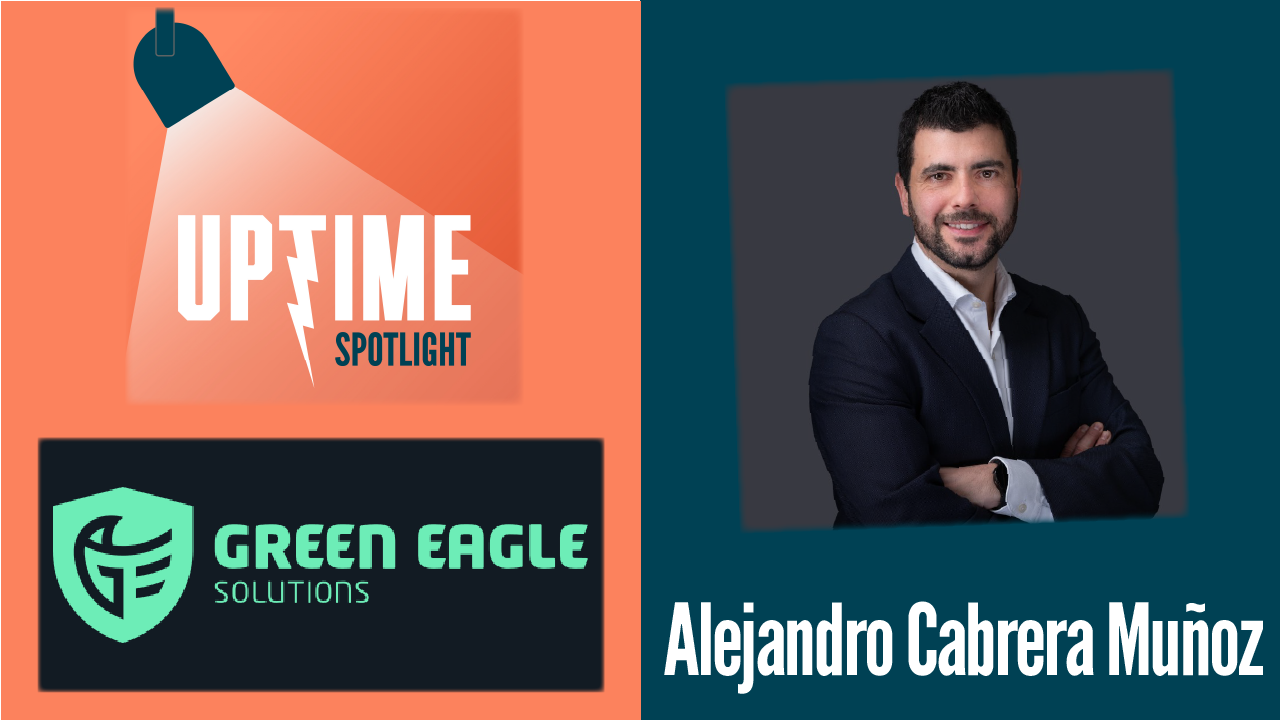
Green Eagle Automates 70 GW of Renewable Assets
Alejandro Cabrera Muñoz, co-founder and CEO of Green Eagle Solutions, returns to discuss automating 70 GW of renewable assets and why operators are self-operating their fleets. Reach out to sales@greeneaglesolutions.com to learn more!
Sign up now for Uptime Tech News, our weekly newsletter on all things wind technology. This episode is sponsored by Weather Guard Lightning Tech. Learn more about Weather Guard’s StrikeTape Wind Turbine LPS retrofit. Follow the show on YouTube, Linkedin and visit Weather Guard on the web. And subscribe to Rosemary’s “Engineering with Rosie” YouTube channel here. Have a question we can answer on the show? Email us!
Welcome to Uptime Spotlight, shining light on wind energy’s brightest innovators. This is the progress powering tomorrow
Allen Hall: Alejandro, welcome back to the program.
Alejandro Cabrera Muños: Thank you so much, Allen. It’s a pleasure to be here.
Allen Hall: Well, so last time we talked, you had so much happening at Green Eagle, and it is, uh, amazing to watch the progress there. You’ve been around for quite a while now. You started, what, in 2011 working on SCADA systems.
Uh, uh, there’s been a lot of evolution since then. Walk me through, like, the process where you thought, “Hey, there’s a business here.”
Alejandro Cabrera Muños: Of course. Uh, we actually started officially back in 2012. It’s been a, quite a, of a long journey to, to get here. Uh, yeah, we started, uh, back, back then. We say it’s a whole new world, right?
If we look backwards, like, almost 15 years. Makes me, makes me feel, like, extremely [00:01:00] old. Uh, but ne- nevertheless, um, yeah, back then we were trying to, to cover, like, a lot of issues that were based on OEM SCADAs, which by the way, we still are dealing with. But, but that, that was starting point. It was, um- It was, uh, based on understanding that the, the renewable energy industry is so complex.
Every wind farm, every solar plant has different issues, different systems. Even, even the same models from the same manufacturer sometimes have complete different systems, which complicates everything. So it was very exciting to, to start our careers in a, in an industry where nothing is standard and where everyone is looking for something that is standard.
So that’s, that’s where we fit in. Um, yeah, and in these years, we, we started basically creating the f- the foundations, uh, uh, on top of, uh, SCADA systems. [00:02:00] But as soon as we had that, those foundations, we realized that this sector is not gonna evolve, uh, it’s gonna cope up with the complexity, uh, of the technical complexity, market volatility, regulatory compliance.
That’s not gonna be solved by just having more SCADAs. So we created a layer of automation in place, which is basically what we’ve been, um, evolving in the last 10 years now, um, with the, with the mindset and with the goal that every wind turbine should be running autonomously without having to have people behind it, uh, supervising and taking control of it.
Allen Hall: Yeah, and that’s a great founding idea, but that has grown from an idea to you’re automating, what, 40 gigawatts of renewable assets right now?
Alejandro Cabrera Muños: Oh, we’re actually now connected to over 70 gigawatts.
Allen Hall: That’s amazing. Alejandro, that’s incredible.
Alejandro Cabrera Muños: And all of them are different.
Allen Hall: Sure. So that, that’s a combination– 70 gigawatts is a combination of wind and solar and anything else?
Alejandro Cabrera Muños: Yes. [00:03:00] Well, actually, one of the, one of the main, um, needs that we try to cover from day one is to be able to connect to all, um, asset classes. So we understand that, um, the challenge of operating a large portfolio for our customers, um, can only be solved if we have the ability to connect to all type of asset classes.
So we can have to connect to wind turbines, inverters, trackers, substations, um, energy meters, you name it. You– we have to connect to every single asset class, um, because what’s important is how you manage that data on top of that and how you react on the anomalies.
Allen Hall: Right. Because I think a lot of operators are now considering taking your model, the Green Eagle model of s-self-operating, but they need that help, they need that insight into the operation of a solar farm or a wind farm or, or any of those assets, renewable assets, ensure those inverter-driven assets.
You’re, you’re seeing– I, I think we’re seeing the same thing, which is a lot of operators decide to [00:04:00] leave full service agreements globally, and what do you think is driving that now? Uh, is it a financial decision? Is it a performance decision, or is it both?
Alejandro Cabrera Muños: I think there are many factors, but I think the main driver is the financial aspects of it.
I think when you, when you delegate the operations to a third-party, uh, entity They are gonna optimize their services to whatever service level agreement or availability they are committed to. And for that reason, you’re never gonna get– effectively, you’re never gonna get the extra mile. You’re never gonna get any extra from there.
Um, and that’s okay when the market is– has great conditions and everything w- is going well. But we are seeing how in the last years we have, uh, a lot of market volatility, negative pricing. Everything is becoming more and more complex, so many projects are actually under stake financially. And I think that’s, um, that’s pressuring everyone to look for opportunities to squeeze their assets a little bit more or a little bit better, I would say.[00:05:00]
Um, and part of that is to take operations in-house so you at least you have the opportunity to, to do, um, a better job, uh, let’s say.
Allen Hall: Yeah, and part of what we’re seeing is, at least in the United States and, and globally now, I think it’s, there’s more action globally than there has been on mergers and acquisitions.
So an operator that has historically had a particular OEM in wind, you know, say it’s Vestas or Siemens or GE, whoever, Nordex, it could be any of them. Uh, when they acquire another competitor or another farm, they’re bringing in a f- a wind turbine they probably don’t know much about. And, and that’s a huge problem.
And, and there’s not a lot of resources for them to grab hold of. Uh, that’s one of the marketplaces you’re trying to fill right now, right?
Alejandro Cabrera Muños: Of course. Uh, as I mentioned before, if something describes our sector is that nothing is standard, despite everyone is seeking standardization of everything, right? Uh, but nothing is standard for, [00:06:00] for– and that, that’s the reality.
So the first thing when, when you have a portfolio and you are incorporating new assets into it, you need, um, a solution that is able to connect to all type of assets, right? Um, w-we call our solution a three-in-one solution because first of all, it acts as a second level SCADA, so you can connect everything there, uh, everything there, and you have access to all the data across all your assets.
Then we have the SCADA automation layer, and then we have the data analysis layer on top of that. Okay. But let’s focus on the operations, which was, uh, your question, right? So you have a new bunch of assets. Sometimes you don’t have any documentation whatsoever, but these are Gamesas, Nordex, a bunch of them from different years.
Um, the first thing that we provide is a second level SCADA, so you can connect to all of those. But We have, uh, something that we believe is very unique. So what we provide to our [00:07:00] customers is ability to automate all these assets autonomously. And what that gives you, it’s, um, set of data that can be analyzed, and we can learn from what’s working, what’s not working, beyond what the manufacturer’s gonna tell you to do, right?
So we have thousands of General Electric turbines connected to our software, for instance. Um, we know what works, what doesn’t works, uh, what are the faults that can be resetted remotely, what are the ones that are not, what is the success ratio of those resets, ’cause that’s a metric that nobody else has unless you have automation in place.
Uh, but we can actually understand, is it working? Is it not working? Is it creating fatigue for no reason to these turbines? So what– we have all this, this, uh, un- this knowledge and this, um, knowhow, uh, for all these models. Um- I believe one of the main, um, value that we provide to our customers is, is not only the, the solution itself, but it’s also the [00:08:00] ability to be somehow prescriptive.
It’s, it’s not that we’re gonna know more about how to operate the assets than our customers, but, uh, we have a sense of what’s the benchmark, right? So I, I– And that benchmark is very, very useful for them as well.
Allen Hall: So th- that’s part of getting to scale, and 70 gigawatts is a, a lot of scale, where you have seen a number of turbines in different places operating in different environments and performing at different levels.
That’s unique, right? That gives you insight into really what’s happening to a turbine or a solar asset globally and also locally. For a lot of operators that just happen to acquire or, or, or take on a- an older wind farm, uh, they tend to get stuck, right? They, they, they, they don’t tend to be able to, to find their way through those little nuances.
That’s a huge financial impact to them eventually, right?
Alejandro Cabrera Muños: It is. And I, and I believe that for many years this was something that in a way got, um– [00:09:00] didn’t get a lot of visibility. I think people were not fully aware of how much revenue, how much production they were losing just because they were not operating their assets at the best capacity.
Um, now we have the data to prove what, what better can look like. W- uh, we have data to prove that if you follow the OEM’s, uh, protocols, you may be creating fatigue for no reason. Um, and there are improv- there are ways to improve that thing. So I think it’s, um– We are, we are opening the door for a new, complete new way to operate your, your portfolio and get more benefit from it.
Allen Hall: I think that’s a very interesting aspect of the sort of the structural aspects of how a, a wind turbine performs, and a lot of that is driven by software. And you, you realize if you’re paying close attention to the OEMs that some of the software updates are not necessarily performance enhancements.
They’re more of protecting the turbine because they realize they may have a problem. So it may be a slight derate, it may be a, a different sort of power curve that happens. [00:10:00] But a lot of operators don’t really sense that that is happening up close because they’re not into the details of that. That’s where Green Eagle separates itself.
You are into all those details. And do you have a lot of operators just reach out for help immediately saying, “Hey, I have this Siemens Gamesa or Gamesa wind farm,” think about an older wind farm, a Gamesa wind farm Help. Just please help. Uh, whatever you can do, just show us you can do it. Do you, do you start to run a little test campaign on that site, or do you, or do you go pull back from the 70 gigawatts and 15 years of history to, to show this is what you can do with that particular asset to, to get them involved in a thinking about the problem a little bit differently?
Alejandro Cabrera Muños: Well, I wish, I wish it was that way. Um, but what, what– It, it was that transparent, but what happens is that we’re working with the largest, uh, some of the largest utilities and IPPs in the world. So what happens is that they, they will never come to us saying, [00:11:00] “We don’t know how to operate this turbine,” or, “We don’t have enough information.”
Um, the way they ask for it is like, “Are you compatible with this?” And, “Do you know… Do you have some protocols? Do you know the standard protocols to run these turbines?” Um, and that’s the way we, we start the conversation, and then they, uh, they, they get confident that we can actually help them with that. We only know about how, how much or how little they know about a specific model once we start working with them.
And it’s not all or nothing. I- Ev-Even the largest manufacturer, e-even the largest utilities, their portfolio is constantly evolving. They’re incorporating new sites almost every month. So there’s always one site that they don’t, they don’t have expertise in the, in the house, so it’s, it’s normal. Like, basically not many people have expertise in some of the models from old Nordex or Gamesas or you name it.
It, it’s impossible basically to have to understand all models in the world. So I think we [00:12:00] have the, the data, the benchmarks, and experience, and on top of that, the of course, the, the tools, so you can actually operate better those, those assets.
Allen Hall: So the name of your system is called ARSOS, A-R-S-O-S, and for anybody listening to this podcast, you can just Google it, and it’s gonna take you to Green Eagle.
What is that product? How would, how would you define or describe that product?
Alejandro Cabrera Muños: Well, ARSOS is a suite. Um, what– The way I like to think about it is a, is a three-in-one solution, right? So it’s first of all, it acts, it, it, it fits in between the SCADA world and the REMs, uh, the REMs, uh, solutions. Okay? And they’re complete different worlds even though you see dashboards and they look the same thing.
But SCADAs must be, um, must be able to be installed on premises. They require OT enterprise cybersecurity level. They can be, they should be installed on air-gapped infrastructure, so no access to internet whatsoever. [00:13:00]Um, and that they tend to be extremely complex to configure and, and, uh, adapt to every, uh, every different site.
So that’s one world. Um, on the other hand, we have the, the REM solutions that are like more like a SaaS platform, like a Power- it could be Power BI, it could be like the, the normal use cases that you need it. You need something, some tools to create the reports at the end of the month to understand the performance of your assets, right?
So you have these two, two worlds. So what we are proposing here is a solution that has been built for the past 15 years, but it fits right in the middle. So it covers Almost everything that you need from a SCADA and second level SCADA solution. It puts automation in place, and then it also gives you all the data so you can consume it in the best way, uh, possible, which by the way, now with, uh, artificial intelligence, it’s incredible what you can do with it.
So this is basically what we have built, um, right [00:14:00] now. And the main differentiation here is that since we are in the middle, we are trying to solve all this complexity from a SCADA world with a product that is already pre-configured. So you can basically connect to your sites in a completely easy way, um, doing clicks and not a lot of complexity because it’s already pre-made for your needs.
Um, because of that, the time to market is extremely much, uh, faster compared to a SCADA solution, so you can have a solution in thing, in hours and not in months. It’s, it’s not a project anymore, right? Which is, which it sounds like normal when you, when you talk about applications, it sounds like a normal thing to do, that you have a, a system running in hours or minutes.
But when you’re talking about SCADAs, that’s like sci- uh, sci-fiction, right? Um, that’s what we’re bringing to, into, onto the table. It’s, it’s, uh, something that you can connect to all your assets in a seamless way, painless, and, uh, and, uh, off the [00:15:00] shelf.
Allen Hall: Well, that’s a very interesting way of framing, uh, the product because, uh, you do see both ends of the spectrum here, where y- there’s a number of companies that are offering a c- completely SaaS product, which is a very pretty dashboard, and it still relies on a human to watch this dashboard and, and to make sense of it, and it provides some insight.
And then you get to the other side, which is almost a completely mechanical system, where it’s just SCADA data and, and you’re just picking up data for datas, uh, to have, basically. So you, you f- you sort of find that middle ground. The, the, the amount of software and technology that it’s in that space, though, must be huge, and what is the effect of AI bring to you?
Does that help you more with just on the, on the, on the model side or just the, the statistical analysis of all the data that you have access to now?
Alejandro Cabrera Muños: Let me make a, um, clarification. Because since, uh, we are, we are providing automation [00:16:00] in a world that is mission critical, right? So there’s no, a lot of, there’s no room for creativity or probabilistic approach.
It all has to be the deterministic, right? Uh, so when we talk about automation, we’ve always been focused on deterministic automation, so rule-based, uh, automation, and that’s what we have implemented on top of the level of the SCADAs, right? So that’s, that’s the part where you know how to deal with an asset.
You have the protocols. You want to understand how they work, but you want to have certainty of what happens if the turbine is on fault and the fault is related to the gearbox temperature and so on. So you wanna make sure that there’s a reset automatically executed only if the temperature of the gearbox is under X threshold.
So this very deterministic approach. Uh, but we have, uh, something, um, very unique when we go on the, on the other side, when we go on the side of the REMs. Because we not only have the data of, of the assets, we [00:17:00] not only have statuses, performance, availability, uh, production. We also have the data of how these assets, assets have been operated, right?
So we know how much fatigue they have received, how they’ve been operated, um, have they received curtailments or not? How many curtailments? What were the reasons? So we can actually have a 360, uh, degree of all the data, including all the control, not only how they’re performing, but also how we are operating those assets.
And we believe that this is very unique because only if you have all these 360 data, then you can actually enhance what you have on top of that. And that is where AI come, comes in, right? So AI, AI is great in, um, helping our customers in doing root cause analysis, um, dealing with anomalies are not well, um, uh, procedure.
Uh, there’s no course of action that is clear, that you don’t know. It’s, they’re not like too [00:18:00] frequent to, to have one. Uh, mixing different type of data. Like I mentioned before, you have, uh, market data, you have curtailments, you have, uh, commands to stop or start a turbine. You have a lot of information there, and you can put all together.
Uh, also along with the CMMS information. Um- Lastly, they get– they can pull that together to do whatever they need, right? Uh, they can build with AI. You, you can now do your own dashboards. You can create your own APMs if you wanted to. Um, and I like to think about it, like, with these new tools that you can create disposable dashboards.
And, uh, the concept is that it doesn’t matter how many different dashboards you have in an APM, but tomorrow you have a, a specific case. And I think it’s amazing that now with AI and the right, uh, data structure, you can now create a dashboard, and maybe it’s just for one use case, you know? And you just build it today, look at the data.
You have [00:19:00] a, um, a case study, and that’s it. May– you never use it that again. The trick for being able to, to, to create this ecosystem where you analyze the data in a completely different way is that we have been working on how to structure the data so the AI is gonna be able to understand the data itself.
So once that, that layer is structured in the right way, then you can actually create your own APMs or your own dashboards as you need to.
Allen Hall: That’s fascinating. So instead of just thinking of a turbine or a, a solar field as a asset where you’re trying to maximize performance necessarily, you’re looking at it from the marketplace, the, the, uh, the shutdowns, all the, the things that are contr- overriding the performance and trying to optimize performance in this market environment, which may be very turbulent, and I think for a lot of wind operators is very turbulent, uh, at, at the minute just [00:20:00] because of the nature of the electricity grid.
So you’re, you’re then thinking about Having an AI tool to help you do investigative work on the particulars, not just the global data set of how this turbine globally operates, but the specifics, that’s fascinating because that allows you then to treat each turbine as its own separate power plant, in a sense, but also to, to think about lifetime issues and how to maintain that piece of equipment in a much more efficient way.
That’s remarkable.
Alejandro Cabrera Muños: And you have the– With AI, you also have the capabilities to automate all these type of analysis. So once you have a specific, uh, case to be analyzed, then you can automate that case to be analyzed in a daily basis, in a weekly basis. But that’s, uh, that, that’s, uh, that’s, uh, the world that we are moving to.
Allen Hall: So a lot of what’s happening at Green Eagle at the moment is being automated and, and making it easy for, for customers to get [00:21:00]onboarded to the RSO system. What does that look like today? Uh, how do, how do I get onboarded? I have an asset of I got 1,000 turbines and a couple of solar fields. What does it look like to get me started in the RSO system with Green Eagle?
Alejandro Cabrera Muños: Well, if you’re using our cloud, it’s, it’s gonna be a process of If you have a, a portfolio of 500 gigawatts, you can connect to our, to our cloud in a matter of like one month to two months So that’s something that you can do by yourself. So, um, you can create the assets, you can create the connectivity.
The connectivity is done through IP filtering or VPN tunnels. All that is from the, from the dashboards, from, from the cloud. Um, then you can, based on the model directory, you can choose which is the, the assets that you want to connect to and through what channels, whether you have Modbus, OPC, and so on.
Um, but that’s a- as complex as, as it gets. Really? It’s n- it’s not easy either, because [00:22:00] you need to understand what is a Modbus, what is a OPC, but that’s what it is. It, it’s not a matter of, like, installing something on site and doing tons of, uh, complex, uh, um, configurations. You don’t need, uh, SCADA engineers to be, like, building these dashboards tailor-made for your sites and, and all that is, is something from the past in o- in our opinion.
Allen Hall: So you’re not on the telephone, or you’re not on a, a online chat with the Green Eagle team, because it’s, it’s, it’s– you’ve, you’ve done enough capacity now that you’ve automated this.
Alejandro Cabrera Muños: You don’t have to.
Allen Hall: That’s amazing, because I think that’s the first worry for any operator that is gonna make that leap saying, “Hey, I need a little bit of help with this wind farm or this solar site,” is that, “Oh, I gotta be on the phone.
I gotta– There’s a lot of im- of onboarding that has to happen,” and you’ve eliminated that.
Alejandro Cabrera Muños: Well, first, w- I, I totally understand this hesitation. Um, many of our customers are living in, in the, in the SCADA world, right? Uh, and which w- it was probably once a pain [00:23:00] to be configured to begin with, and I think half the sector is traumatized by these processes.
So I, I tot- I totally understand that that pain is, is still there, right? I understand that. But what we’re trying to do is to, to move forward and say like, “Yeah, that, that’s gone. That was the past. Now we have a different way to do it.” And if you have, uh, either new assets that you need to connect or you even consider, like, moving to something more modern, something with more capabilities, something that comes with automation in place, uh, well, we have a solution that is painless.
Allen Hall: Can I discuss, or can we go back and forth about the, the use of inverter-based resources, the solar and the wind sites, in terms of the, the move from grid following to grid forming and stabilizing the grid? I think there’s gonna be a lot of changes in the way that we operate these assets over the next year.
Mostly, uh, I see action in the United States from the Iberian blackout about a year ago. They’re changing the thought process of how they want to run the grid so that the wind [00:24:00] and solar can keep the grid operating. Is– Are you involved in, are you involved in that aspect of how you operate those assets and how those inverters perform and, and configuring them to, to do more of the, of the grid forming and keeping the grid stable?
Alejandro Cabrera Muños: I believe, to be honest, this is more related to power plant controllers and hybrid plants. So we have, we have made several projects with, um- With a mix, uh, of, uh, wind, solar, um, and storage. And wh- but what we’re doing here, uh, to be completely honest, we are not involved in the power plant controllers. Uh, we believe that that’s an electrical device and has, uh, uh, particularities that are out of us- our scope.
But what we do is to, again, we connect to all asset classes, right? So we also w- connect to the PPCs, and we can monitor the PPC, the performance of the PPC, and we integrate that into everything else, right? So [00:25:00] that’s, for us, that’s another asset that we are connecting to, and that it make– it completes the view of, um, of sites that are now, like, almost like mini portfolios at, at the same place, right?
‘Cause you have, uh, different technologies, service stations. You have so many things that you need to orchestrate as well. So we’re, we’re w- moving into, into that area as well, uh, f- with the same concepts.
Allen Hall: B- so in a, in a sense, you’re able to monitor the health or status of the grid. Because you’re connected to so many of these assets, you have a pretty good understanding of how the grid is doing at any particular moment then.
Alejandro Cabrera Muños: That’s right, yeah, especially in, in Spain, of course, ’cause we’re connected to, um, over 25 gigawatts at the, uh, at, in Spain, so.
Allen Hall: Alejandro, that’s amazing.
Alejandro Cabrera Muños: Over 25 gigawatts at the, uh, at, in Spain. So, so that’s s- it’s almost a third of the, of the installed capacity in Spain.
Allen Hall: Is there a movement in Spain to, to use technology like yours [00:26:00] to better monitor, regulate, control the, uh, wind and solar assets so- such that they stay engaged when, when the, the grid starts to, to vary a little bit?
Has anybody asked you to, to be involved with that? Because it seems like you’re the right– you’re in the right place at the right time.
Alejandro Cabrera Muños: The challenge of all these grid codes, uh, in, in most of cases is just that There are tons of curtailments that are coming from many different reasons, technical restrictions, market, uh, dispatch, um, other type of compliance.
Um, the, the first challenge is to just execute on them, right? So they’re coming, you need to apply on the, on the sites. Um, that was the first, the first phase. But now that we have so many gigawatts connected, and that we’re also participating in balance mechanis- balance mechanisms and ancillary services, what we are seeing is that depending on how your assets perform and how quickly they are in regulating, um, you are gonna [00:27:00] have penalties or more, uh, profitability in the participation of the markets.
So that’s, that’s extremely important as well ’cause it’s, it’s quite difficult to, to measure. But we have all the– Since everything is automated, you can always track, and you can statistically understand which of the sites are performing better or worse, in what cases, and therefore you have opportunities to improve the regulation and get more revenue from it.
Allen Hall: Okay. So Green Eagle then is, because of the scale that it has at the minute, can look at the grid and is involved in, in the, the grid requirements, so to speak, of, of, uh, curtailments and what assets are operating when, and also the voltage control aspects and frequency control, which is the other part of it.
You, because you’re, because you have so many assets in Spain and globally, you, it’s amazing the number of assets you have. You, you then can actually, one, see health of the grid, two, [00:28:00] provide insights to operators on what that looks like. I mean, real time you could, you can do that. And then are, are, are the regulators then coming to, to you asking advice on how these assets should perform?
Because it does seem like you would be a tremendous resource on how the grid is actually doing on a larger scale from a renewables standpoint.
Alejandro Cabrera Muños: Yeah. Well, fortunately, the, the regulator has its own also, uh, system, so it’s, uh, redundant, right? So as far as we, we are working to, to have, uh, the best system in the world, but, but it will be a lot of, uh, responsibility for us to just have the whole grid depending on us.
That would be a lot of weight. Uh, but in a, in a way, in, in a, in a way, it already depends on us, uh, effectively. So, so the pressure is, is there. We have, we have talked to them, um, since we have so many customers, um, in the, in the– at this level, uh, we have to be very quick in implementing new grid codes and new [00:29:00] regulatory, uh, compliance issues and, and so on.
So that’s, that’s, um… It’s a challenge, but at the same time, it’s, it’s very exciting that we are always ahead in, in this regard.
Allen Hall: Right. If, if I was an operator and I had Green Eagle as one of my, uh, helpers in a sense, uh, assistants in a sense, that helps with the, the grid code i-in terms of, one, understanding it, and two, being able to implement the changes that are coming down all the time.
You have a resource there that understands it from a larger perspective because you see it from multiple operators in multiple places trying to do the same thing. That’s a huge advantage instead of you trying to na-navigate or try to understand all those grid code changes and why they’re happening and what it means to you and how do you operate your assets.
So you can provide a little bit of guidance there for the operators.
Alejandro Cabrera Muños: Of, of course. Um, uh, the main, the main value proposition that we can have here for anyone that wants to participate or be part of the Spanish market is that we already have all this figured out. So if you wanna start from the scratch [00:30:00] with, uh, with a SCADA, industrial SCADA, well, let’s, let’s go with, let’s go with that.
You’re gonna be probably traumatized in the future, right? Uh, but with us you have an off-the-shelf product that is already compliance. It, uh, h- we have already set, uh, the system certified by the TSO in Spain. So we have already gone through this process so many times, and it’s off the shelf, so you don’t have to worry about any of this.
And on top of that, you have the Peace of mind that if tomorrow there’s gonna be a, a, a new change in the, in the, in a new grid code, well, which most likely is gonna happen, um, soon, uh, we have to, we have to do it. Because we have already, uh, a lot of customers that, that, that need it. So for us, it’s actually also, uh, strategic to, to be ahead and be fast in implementing these grid codes.
Allen Hall: That’s amazing. That’s such a huge resource for Spain and the rest of the world. Yeah, that’s amazing. Well, I, I know people who are listening to this podcast right now are thinking, “Okay, I haven’t heard of Green [00:31:00]Eagle, but now I’m interested, and I need to f- find out more.” How do they contact you? Where do they go first?
What’s the best first step?
Alejandro Cabrera Muños: Well, they can connect, uh, directly to me through LinkedIn, or they can just write to sales@greeneaglesolutions.com.
Allen Hall: Great, yeah, and Alejandro’s available on LinkedIn, so you can f- find him there. And we’ll put his contact information in the show notes to, so you have quick access.
Alejandro, you gotta come back more often because the, the things that you’re doing with Green Eagle are amazing, and, uh, the, the scale is incredible. Congratulations on that. Uh, and, and I, I, I need you to come back and tell us what the next generation looks like because I know when you guys get ahold of AI and start thinking through some of these real challenging problems, Green Eagle will have solutions.
So you’re welcome back anytime.
Alejandro Cabrera Muños: Super exciting to come back, uh, when you invite me. Thank you so [00:32:00] much.

Weather Guard Lightning Tech
Ørsted Finishes Drone Trial, Iberdrola Exits South Korea
Allen covers Ørsted’s Hornsea 2 drone trial, the DeepWind test site, Germany’s proposed land rent cap, and Iberdrola’s Korea exit.
The Uptime Wind Energy Podcast is brought to you by Weather Guard Lightning Tech, creators of the StrikeTape Ultra LPS retrofit. Subscribe to Uptime’s Substack newsletter. And check out Rosemary’s “Engineering with Rosie” Youtube channel. Have a question we can answer on the show? Email us!
 The vast majority of Americans have liberal views. We favor a woman’s right to choose abortion, high-quality public education, affordable healthcare, clear air and water, the use of science in policymaking, equal rights for minority ethnicities and religions, and efforts to trim the enormous gap between rich and poor.
It would be very interesting to know what percentage of U.S. voters believe that liberals hate America, that we believe our country “is fundamentally evil and the only remedy is destroying our nation with mass migration (sic).”
Trump’s approval rating is about 30%, and a few percent of that is the amoral super-rich. So, possibly it’s in the high 20s.
But aren’t there at least some MAGA folks who would concede that educated people don’t necessarily hate America? My mother lived on a steady diet of Fox News, but even she had respect for Bernie Sanders, about whom she said, “I admire his sincerity, misguided though it is.”
An Important Republican Position: The Left Really IS “Radical”–But Who Believes This?
 Whoa. Let’s take a step back. Is it really either A or B?
You could on the side of the morons, those incapable of any level of critical thinking, like the author of the meme here.
 </
</