

Weather Guard Lightning Tech
GE Vernova Q3 Results, Offshore Wind Struggles Worldwide
Allen, Rosemary, and Yolanda discuss the IEA’s 27% cut to offshore wind forecasts, GE’s wind financials, and Ming Yang’s revolutionary 50MW dual-rotor turbine. Register for the next SkySpecs Webinar!
Sign up now for Uptime Tech News, our weekly email update on all things wind technology. This episode is sponsored by Weather Guard Lightning Tech. Learn more about Weather Guard’s StrikeTape Wind Turbine LPS retrofit. Follow the show on Facebook, YouTube, Twitter, Linkedin and visit Weather Guard on the web. And subscribe to Rosemary Barnes’ YouTube channel here. Have a question we can answer on the show? Email us!
You are listening to the Uptime Wind Energy Podcast brought to you by build turbines.com. Learn, train, and be a part of the Clean Energy Revolution. Visit build turbines.com today. Now here’s your hosts, Allen Hall, Joel Saxon, Phil Totaro, and Rosemary Barnes.
Allen Hall: Welcome to the Uptime Wintery Podcast. I’m your host, Allen Hall in the Queen city of Charlotte, North Carolina.
Rosemary’s in Australia on her way to Sydney and Yolanda Padrone is here on site at a wind farm in Texas and there has been a, a number of news articles this week. Joel’s over actually in Copenhagen enjoying, uh, the sites and sounds of that great city, the International Energy Agency slash its five year offshore wind growth forecast by.
Are you ready for this? 27% citing policy shifts, obviously in the United States and [00:01:00] project cancellations across Europe and Asia. The big one in Asia is the Japan’s Mitsubishi pulling out a couple of projects there when costs, um, more than doubled according to them. And Denmark is changing from, uh, negative bidding auctions in favor of contracts for different, so there has been a, a big pullback in offshore wind.
It’s not zero, you know, it’s not going to zero at any time. I think there’s just a lot of projects that appear to be reassessing the interest rate environments, the ability to get turbines, the cost of ships, everything. And rosemary in Australia, it does seem like there’s been a little bit of a pullback there too for offshore wind.
Uh,
Rosemary Barnes: yeah. I mean it’s, it’s hard ’cause we’re still like in such a, just a nascent part of the. Industry. It’s still really far from clear whether we need or are going to get any offshore wind at all. Victoria has some pretty solid commitments to it. The government [00:02:00] does so. That’s probably as close as, um, anything to being certain that we’ll get some offshore wind.
But, um, probably we’ve all learned, America has shown us that a political com commitment is not as, you know, a government commitment is not as locked in as what we probably would’ve thought it would mean, um, a few years ago. So, yeah, we’ll see. I think Australia is struggling like the rest of the world.
We’re struggling a bit just in general with getting projects to, um, FID and. You know, getting construction actually underway and offshore wind is just like, you know, the same problems but on steroids. So it’s no surprise that you’d be seeing more challenges there. There’s been a few projects that have, um, been canceled or paused, but you know, they weren’t at the point where there were definitely going ahead.
So it’s, you know, like there’s a huge pipeline that makes almost no sense for how many projects there are in planning. Obviously some of them are going to [00:03:00] not go ahead, probably most of them. Um, and yeah, so we’ll, we’ll probably see many more cancellations and I think we’ll see at least a few offshore wind farms and probably those early examples are gonna dictate a bit how easy it is for other people to follow, or how much anyone even wants to follow.
Allen Hall: Well, is it gonna become a case where. Certain countries are, uh, focused on certain energy sources like France and Nuclear, and the UK will be offshore wind, onshore wind, and solar. Germany sort of a mix of everything, coal for a long time and they’ve gone away from nuclear there. But it does seem like every country has its own specialty and is that where we’re headed, that we’re just gonna see the best solution for each particular part of the world?
Rosemary Barnes: It’s really hard to get very decarbonized grids if you specialize too much. Like there. There really isn’t a technology that can just do everything, um, on its own. So, you [00:04:00] know, solar power is very, very cheap, but the sun sets at night. So obviously you’re gonna, at the very least, need some batteries to get you through the evenings if you’re relying mostly on solar power and then wind energy, obviously it’s not windy every day, even in really windy places like Denmark in the uk it’s still, you know, there are wind lulls, so you’re not gonna be able to rely solely on that nuclear power, just kind of chugs along at a fairly, um, you know, constant output.
If you turn it up and down too much, then you’re gonna end up, you need to like overbuild a lot. If you try and size your, your new, your electricity system just based on nuclear meeting, peak load, that’s a whole lot of reactor that’s gonna be not doing much most of the time, aside from the technical complications with being able to turn up and down.
And then even, you know, some of the traditional fossil fuels don’t do a very good job at responding flexibly. Coal power has, you know, similar issues to nuclear and it’s probably even harder to turn up and down. Um, [00:05:00] and then I guess gas is gas Peakers could, you could probably do everything with gas peakers if you want it.
They can turn on and off very quickly. But, uh, the. Gas picker plants are not very efficient. So there’s very high fuel costs and not to mention the, um, climate impact of just burning gas all the time and all of the, um, upstream emissions that come from a gas system. So I don’t think it’s possible for anyone to specialize too much, but of course, every country has technologies that they’re familiar with and comfortable with.
It’s never gonna be the sensible engineering decision to just go all in on one technology.
Allen Hall: Will batteries be the connector? For most of these technologies, and I bring this up because there’s been a lot of more recent discussions about data centers and Yolanda hop in here too because, uh, you work for an operator that was involved with batteries.
But the more, and I’ve been following this relatively closely the last month in doing more and more research in it, but like the, the [00:06:00] Colossus two that Elon’s building in Tennessee, there’s a big part of that distribution. From generation to delivery to the AI data center is a massive amount of batteries because of the up down nature of that load that they need a buffer.
Well, we see more batteries be deployed because of the AI data centers. And is that, can that be leveraged the other way to help balance out a grid that does have a lot of solar? It does have a lot of wind because the data centers are gonna be generically spread around. Countries.
Yolanda Padron: Yeah. Uh, yeah, I think it’s, it, the data centers should definitely, I, I mean, it does look like everything’s trending, right?
To have them, um, include batteries as part of their, of their scope to be able to balance everything out. I know we’re seeing, especially in the us like a lot of the, um, the behind the meter [00:07:00] projects coming online and taking advantage of the, the wind and solar, but. For those rolls where we might not get the perfect generation that they need to be able to exist.
Right. Like the batteries will definitely, uh, be that bridge, uh, to fill the gap there.
Allen Hall: Yeah. And even in the Colossus case where they have gas turbine generation and they’ve taken over an old power plant that was across the river in um, Mississippi, they’re still putting massive batteries in rosemary.
Because the data centers are, I think the consumption has always been that data centers are gonna be this kind of constant power input and that the computers are all gonna be working at maximum all the time. But what they’re finding is that it is not because they’re being trained at their moving up and down from like 10% of capacity to a hundred percent.
So the grid’s not made for that?
Rosemary Barnes: No. I mean, uh, the, the grid’s [00:08:00] not, I mean, when did the, was the grid. Designed or was it even designed, you know, like a hundred years ago and we kind of just, um, patched, patched it together as we needed to. It’s not like there, there wasn’t some yeah, like type of load that the grid was designed for.
People have always just made do with what they had available and then adapted to the characteristics of that. I mean, I don’t know, do you have off peak water heaters in the US because in Australia we have like, you can get a separate, a separate. Signal coming to your house that will turn on and off, uh, your electric water heater in off peak times.
And in the past, like traditionally, that was always overnight and it was specifically done. Like we specifically put all of this infrastructure in place to do that because there needed to be something to use the electricity that coal power plants were generating overnight. So, you know, like it was, um, you, you take what you can get as far as electricity generation and then you, you use it in the most effective way that you can come up with.
Allen Hall: Let me understand that for a minute because I’ve never heard of [00:09:00] this before, and I, I, we, you and I have been talking about energy for 20 odd years at this point, but, so they would turn on your water heater in your home to act as a load for the coal fired electricity plant.
Rosemary Barnes: You have a separate circuit that has off pa loads on it, which is usually just a hot water heater.
And then you can get, um, at. Different tariff from your electricity provider. There’s the regular and then the off peak timing. ’cause this is before anyone had any smart meters and you actually like, you know, the dumb old meters, they knew how many kilowatt hours you had used in a quarter, you know, but they didn’t know hourly.
Um, so this was a way that you could give a cheaper rate for people to heat their hot water. Overnight when there wasn’t enough natural load to be able to use up all of what the coal power plants needed to keep on putting out. ’cause you can only turn them down to a certain base load. Makes sense to use resources efficiently, like of course it does.
Um, that’s why it’s, I just find it really [00:10:00] weird how, um, like really. Emotionally upset, but people get really, get their feelings hurt by the idea that the energy transition might mean that you would change your behavior based on, um, you know, like what the, uh, electricity generation happened to be like that day, but it’s always been done.
Allen Hall: Are you worried about unexpected blade root failures in the high cost of repairs? Meet Eco Pitch by Onyx Insight, the standard in blade root monitoring. Ony X’s state-of-the-art sensor tracks blade root movement in real time, delivering continuous data to keep your wind farm running smoothly and efficiently.
With eco pitch, you can catch problems early, saving hundreds of thousands of dollars. Field tested on over 3000 blades. It’s proven reliability at your fingertips. Choose eco pitch for peace of mind. Contact Onyx Insight today to schedule your demo of Eco Pitch and experience the future of blade monitoring while the global [00:11:00] offshore wind market struggles.
GE Re Nova’s Wind Business’ Engineering. Somewhat of a comeback and a third quarter. Results came out today as we record and revealed, uh, EBITDA losses narrowing to just $61 million from 317 million a year ago. An improvement of over 1000 basis points, which means 10%. Uh, the turnaround strategy, from what I could tell, is starting to work.
The wind services for onshore wind is up by 50. 3%, uh, in offsetting some equipment, uh, payments. And then the CEO Scott Straza emphasized that the company’s focused on profitability over volume with better pricing and reduced offshore contract losses, driving the improvement. They’re still waiting for a payment, it sounds like, from one of the cancellations.
Of around $500 million. So that’s still hanging out there. I wonder who that is. Uh, [00:12:00] but, uh, the, the booked orders this quarter are slightly down for wind. In general, GE thinks, Renova thinks they’re gonna close out Dogger bank and vineyard wind in 2026, which is sort of what we’ve been talking about on the podcast.
It’d be hard to finish both of those this year. So this is sort of a positive sign in, in, in terms of the larger GE with all the electrification and grid, uh, and gas turbines that GE is selling. There’s a huge upside there. Although the market was not particularly happy with this announcement today, I think it dropped a couple of percentage points.
Although since becoming a separate company, they’re up like 300%. It’s crazy. So if you invested on that opening day, which was like what, back in April a couple of months ago, you have done extremely well and I, is there hope for the onshore wind market for GE in the us or is it mostly [00:13:00] going to be. Yolanda, is it gonna be overseas?
Is that where GE needs to go right now because of the slowdown in us,
Yolanda Padron: I think until things for when stabilize a bit more in the US it’ll have to be outside of the us Right. Like their, like you mentioned, their current model relies a lot on having, I mean working a lot more on repairs and everything than actually building new sites.
Um, and I think. We’ve talked about wind in the US maybe ramping down a little bit while everything stabilizes a bit more for that. Yeah, I think it, it makes sense for GE to, to look elsewhere for now.
Allen Hall: Is there a stabilization of the marketplace coming? I know a lot of the talking heads and the, the banking units and if you listen to podcasts, financial podcasts, they’re saying, well this is really good for wind and solar to go through this little period of, uh, becoming more efficient.
And I [00:14:00] think. Uh, the prices of wind turbines have dropped pretty well and solar have dropped a lot. The, the industry is very efficient at the moment. It really has more to do with financing, from what I can tell.
Rosemary Barnes: Wind energy, is it cheaper in the US than it was like two years ago, three years ago, five years ago?
Allen Hall: Yeah. So because you’re generally putting up fewer turbines ’cause the turbines get larger and that they’re more efficient. Right. Um, the. They’re designed more specifically for the winds in a particular area, like low wind and middle wind conditions. I think overall they have been more efficient and as you know, having worked at LM every penny counts.
Rosemary Barnes: Maybe I have the opposite beauty to you. I’m having a, a bit of a, I don’t know, slump in my optimism. I’m, in general, I’m a naturally pessimistic person and um, it’s one of the reasons. That I work in, the energy transition is because I actually feel much more optimistic about progress the more that I, I [00:15:00] know about it.
But at the moment, wind energy, I, I, I’m pretty sure it is not accurate to say wind energy is cheaper, getting cheaper in Australia. It’s costing more. To put turbines in in Australia than it used to. And then I’m also super cynical about, you know, the efficiency savings and cost savings, especially of big companies like ge because what I see is them, they, uh, you know, have a bunch of quality problems from, you know, the work that they were doing in the late 20 teens, um, maybe, yeah, early 2020s.
Bunch of quality problems. So then that costs money. ’cause you know, you’ve got warranties to pay out on and um, things to fix and sales that get canceled. And it seems to me like their solution to that. Their money saving is we’ll just fire most if not all of the engineers. So that’s really good way to save money this year, but it’s not very good way to make sure that you don’t have more warranty problems next year and the year after.
Not a good way to make sure that you’re [00:16:00] able to. Uh, you know, come up with solutions to problems in a timely manner. It’s kind of like, is this the beginning of the end? Because once they’re gone, how do you get them back? I mean, maybe in one or two years time, it’s gonna be an amazing time to be a blade engineer because, um, you know, everyone will be, will be desperate, desperate for, for you.
But it’s, um, uh, I, I, I don’t, I, I can’t get on board with the, you know, the efficiency gains that like, that we’re seeing at the OEMs at the moment.
Allen Hall: I know you’re just a wee kindergartner when the year 2000 was around, but if you think about 20 years ago, there was, at least in the United States, no one was thinking about wind and really few people were thinking about solar and maybe unless you lived in California.
But today, solar is everywhere. You can drive down the street and see solar in most places, and wind is in a lot of parts of the United States and the world at the same time. So. The amount of growth in the industry in the last 20 years has been truly [00:17:00] remarkable. And to say it’s gonna go through some cycle, I think is normal.
Every industry goes through booms and busts.
Rosemary Barnes: I think in the past it was more of a manufacturer by manufacturer basis, so you know, vest would have some quality problems and then they would, you know, get it back under control and a few years later they’re fine Again. LM had quality problems and then got it back under control.
And you, like I said, it kind of cycled through. But now, like who is not having blade problems at the moment? Nobody. I honestly, I don’t. I, I don’t think there’s anybody not having, having problems at the moment. Um, and yet people are laying off more engineers than they’re hiring, that’s for sure. By, like, by a significant margin.
What I think that the industry needed was to do a better job of selling the same platform over and over and over again, so that it got really well known, and then moving up to the next one. After sufficient testing of new [00:18:00] features, then, you know, move up to a new platform and sell a lot of that. Use less engineering by having less design.
Yeah, less designs that you are trying to support at the same time, less new designs that you’re trying to develop. That’s the way to reduce the cost you’re spending on engineering, not to continue to have, you know, millions of different designs and features and constant, constant growth for the sake of growth.
Um, maybe that’s a segue into the next topic. Um, but you know, like you can’t do that without a whole lot of engineering. So it is like, you know, you, you choose, either you have heaps of engineering and heaps of innovation, or you kind of just, um, settle down and do one thing really well, and then you can have less engineering
Allen Hall: as wind energy professionals.
Staying informed is crucial, and let’s face it difficult. That’s why the Uptime podcast recommends PES Wind Magazine. PES Wind offers a diverse range of in-depth articles and expert insights that dive into the most pressing issues [00:19:00] facing our energy future. Whether you’re an industry veteran or new to wind, PES Wind has the high quality content you need.
Don’t miss out. Visit PS wind.com today while the contrast couldn’t be starker while Western manufacturers struggle, as Rosemary has pointed out. China’s been Yang. Spart Energy Group is preparing the world’s most powerful wind turbine, a two-headed 50 megawatt giant that. Dwarfs anything that’s currently operating, uh, production supposedly begins next year at a facility in Guangdong Province.
Uh, Ming Yang plans off of this tournament at below $1,400 per kilowatt. So remember we’re talking about Rosemary and the price per kilowatt is going down where the Ming Yang is truly really trying to drive it down. If, if you look at the. Numbers in comparison to European manufacturers, that’s a pretty low number.
Even in comparison to existing Chinese manufacturers. That number is still like a 20% [00:20:00] discount.
Rosemary Barnes: Is that the price that you would get it for a project in Europe? So with, um, you know, IAC certification ’cause I know that they work to a different certification standard in, in China and that it costs a bit more to, um, have it, you know, designed to pass the.
The is a stunt that everybody else uses.
Allen Hall: Exactly. So the question is, and going back to the engineering thing, it’s a two-headed turbine. So it’s got that V platform, it’s an offshore floating turbine of course. And it’s got that V connection and it’s got two heads, two uh, the cells, and two massive rotors on it.
That has to have a lot of engineering behind it. I hope it does. They haven’t built one.
Rosemary Barnes: Yeah, it’s, uh, so they’ve done, they’ve done some parts of it before. I mean, they’ll make like a really, a really huge offshore turbine, but it’s not like there are. Hundreds or thousands of 25 megawatt turbines out there in the ocean.
There are not hundreds or thousands [00:21:00] of floating wind turbines of any kind in the ocean, and there are not hundreds or thousands of, um, multi rotors of that, you know, v design that they’ve done. So it’s three, it’s three really big hard things or combined in one. Um, and yeah, it’s a big. A big step before they probably, they probably don’t know the, all of the, the risks and failure modes of any of those three individual things.
And now they’re gonna combine them and get new, new problems from combining things together. So. It will be for sure. A lot will be learn from this. Um, I, it seems like too big of a step to be like, yeah, you’re gonna be able to order one of these and have a gigawatt wind farm with these put in and, you know, 2028.
That’s not within this realm of reality. But as a learning exercise, I mean, that’s what China does really, really well. They don’t plan to the extent that, um, [00:22:00] Western companies do. They don’t. Get every I dotted and t crossed before they will actually execute on a project. And you can definitely learn way more that way, but with much bigger risks
Allen Hall: in terms of certification and standards.
For a turbine that is non-standard, how many years would it take to create just the specifications and the test process to validate it? I, I think we’re talking about a minimum of. Five years of all the committee meetings, you’d have to have to even get close to having something where like A DNV could put a stamp on it, right?
Rosemary Barnes: Yeah. I mean, there’s a whole bunch of potential failure modes that don’t exist in the turbines that we have today and the standards that we have today. I mean, the standards haven’t even kept up with just regular, like garden variety, one turbine on a stick, three blades, you know, all of that. There’s heaps of, heaps of common failure types that aren’t really covered [00:23:00] by the standard, so.
Um, yeah. I mean, when you get up to, to two turbines and I think that they counter rotate is, is that right? That they’re going opposite direction? I think you need that so that you don’t get funky tower dynamics happening. Um, however, uh, there are still going to be weird things happening with the aerodynamics.
Like di dynamic flow stuff is gonna cause weird things and that causes fatigue is the, you know, the main problem that you get from. Just, you know, just small. It might be, yeah, even just small loads that you didn’t expect in places that you didn’t expect them. Um, and fatigue damage can happen very quickly if it’s a, you know, if it’s a really big, big load.
But if it’s a, just a small but larger than expected load somewhere, it can take two years, five years, 10 years. Um, but then you get fleet wide failure. Um, and so it’s, it isn’t something that it’s very easy to, uh, test for at a scale. You know, with a scale model. So, [00:24:00] you know, in that sense it probably is the right thing to do to build a full sized one as soon as possible and, and learn those things.
You know, it makes me feel uncomfortable because wind turbines are things that people have to climb up in there to install them. People have to climb up in there to maintain them like a lot in the early days, especially with a new system. And so the fact that it could, you know. Fall apart. Risks are reduced if you make sure no one’s climbing it when winds are high.
’cause that’s usually when you’ll see failure. But it’s, it’s still higher than I would feel comfortable with. I wouldn’t like to be climbing inside, um, this turbine ever. Um, but yeah, it, it is. I can’t deny that that is probably the fastest way to, you know, progress technology.
Allen Hall: Alright, Yolanda, if, uh, Rosie’s offshore wind company decides to buy these 50 megawatt wind turbines as an asset manager and thinking about how, [00:25:00] how you would operate these turbines, what would be your top complaints right now?
Or top worries?
Yolanda Padron: Rosie mentioned earlier, right, that it would be in a perfect world. All of this innovation would be driven by engineering. Right? And being able to test these things over and over and over again, and being able to see exactly what problems we’re facing and how we can solve them for the most part.
Right. And just kind of all going up together in getting these, you wouldn’t really know. And we go back to that risk issue, right? You wouldn’t really know. What you’re buying at this point? Me personally, of course it was. If it was Rosie, I’d trust her with my life. So yeah, if Rosie’s doing it, yeah. But anybody else, you know, we won’t, we don’t know what they’re testing.
I mean, you, no one wants to be the Guinea pig,
Allen Hall: right? Well, someone will have to be, if they plan on selling it, someone will have to be the Guinea [00:26:00] pig. But it’s probably an operator in China, or maybe Mi Yang itself will have to deploy them. But. At some point, just listening to the, to the news in Europe, there’s a lot of push to bring in Chinese turbines that don’t have a lot of.
History or verifiable history, doesn’t it just raise the asset risk? I would say, whoa, whoa, whoa. Slow down everybody. The finance group, slow down.
Rosemary Barnes: You don’t see a lot of them in, um, Europe or you know, outside of the, um, outside of China yet. And. I mean, I wouldn’t consider it de-risk just because you’d seen a demo turbine turbine in China.
I wouldn’t consider it de-risk because you saw a whole wind farm of these in China, because they do do separate designs for separate, um, geographies. Uh, you know, they, like I said, with the certification, they, they change the design to be able to. To pass that. And, you know, even if you are making it safer, if you’re, you know, adding material, it doesn’t, it doesn’t always mean that it’s becoming more reliable.
Like you have to, you know, the track record [00:27:00] needs to be for the turbine that you’re actually buying, not something that they’ve assured you is very similar.
Allen Hall: That wraps up another episode of the Uptime Wind Energy podcast. Thanks for joining us as we explore the latest in wind energy technology and industry insights.
If today’s discussion sparked any questions or ideas. We’d love to hear from you. Reach out to us on LinkedIn and don’t forget to subscribe. So if you never miss an episode and if you found value in today’s conversation, please leave us a review. It really helps other wind energy professionals discover the show and we’ll catch you here.
Next week on the Uptime Window G Podcast.
https://weatherguardwind.com/ge-vernova-offshore-wind/

 On average, I meet perhaps 50 K-12 teachers each year, and I often ask them: What is the biggest challenge you face that impacts your ability to connect with and educate your students?
Here’s a rough tabulation:
Screen time, how it robs kids of their ability to pay attention, impedes social interaction, and makes parenting more difficult: 80%
Everything else combined: 20%
Maybe this is a cynical viewpoint, but it seems like that world of today revolves around the mega-corporations profiting by punishing their customers.
In this case, we have the tech giants ruining the lives of our children. Elsewhere, we have healthcare industry driving people into bankruptcy, Big Oil ruining our planet, the gun lobby murdering our kids, and, of course, an ultra-corrupt government looting our treasury to pay off billionaire donors.
Note that this wasn’t the case when we boomers were growing up 60 years ago. This is a distinctive shift from the 1960s when corporate America was focused on things like color TVs and the Ford Mustang.
Renewable Energy
Is a Team of Is a Bunch of MAGA Thugs Beating the Snot Out of a Woman a New Low, or Is it What We Now Need to Expect?
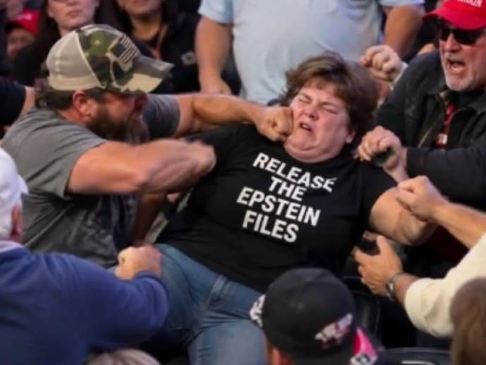 Just when we think there is a bottom, the United States sinks just a bit lower. It’s our brand nowadays.
That’s quite a left cross this thug delivered to this helpless female protestor.
It wasn’t too long ago that beating up women was taboo in America. My 11-year-old, sixth-grade son saw a male classmate of his badly bruise a girl by pushing her hard down to the ground–and proceeded to punch him in the mouth. A fellow father witnessed the scene and told me, “Your son’s fist was in that kid’s teeth within a fraction of a second.”
I had brought him up to avoid violence and achieve peaceful resolutions to conflicts, but I couldn’t fault him here.
What a disgusting bunch of turds we’ve become.
We’re starting to see intimations that stupidity like this is generated and posted by Russian data centers so as to appeal to MAGA idiots and favor the Republicans in the upcoming midterms.

Greenpeace Australia Pacific activists in police custody after two-day protest against Woodside’s Browse gas project at Scott Reef
GREENPEACE GAS PROTEST DAY TWO: Activists spend first night on Woodside’s Scarborough gas platform, “in this for the long haul”


