

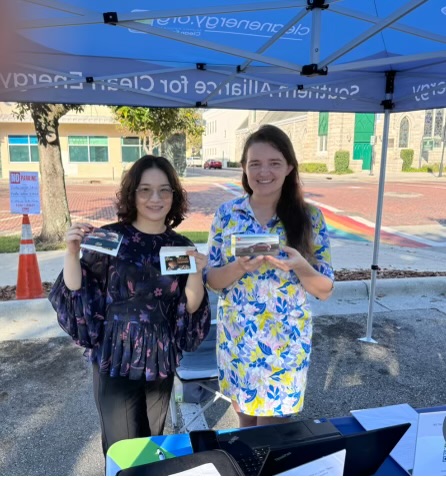
 This guest blog was written by Dr. Dan Zhu, Ph.D., LEED GA, Chief Climate Officer with the City of Gainesville, FL; and Jennie Ford, an Environmental Planner with the City of Gainesville’s Department of Sustainable Development.
On Friday, October 25, Gainesville accelerated its commitment to reaching net zero greenhouse gas emissions by 2045 with an electric vehicle (EV) Ride and Drive event hosted in partnership with the Southern Alliance for Clean Energy. This event provided city leaders, elected officials, and staff the unique opportunity to test drive a Tesla Model 3, immersing them in the benefits of EV technology while highlighting Gainesville’s ongoing efforts in transportation electrification. Transportation electrification is a key priority in Gainesville’s Climate Resilience Plan, with the city’s EV Steering Committee hard at work developing a comprehensive plan for electrifying both city and bus fleets, along with public charging infrastructure across the city.
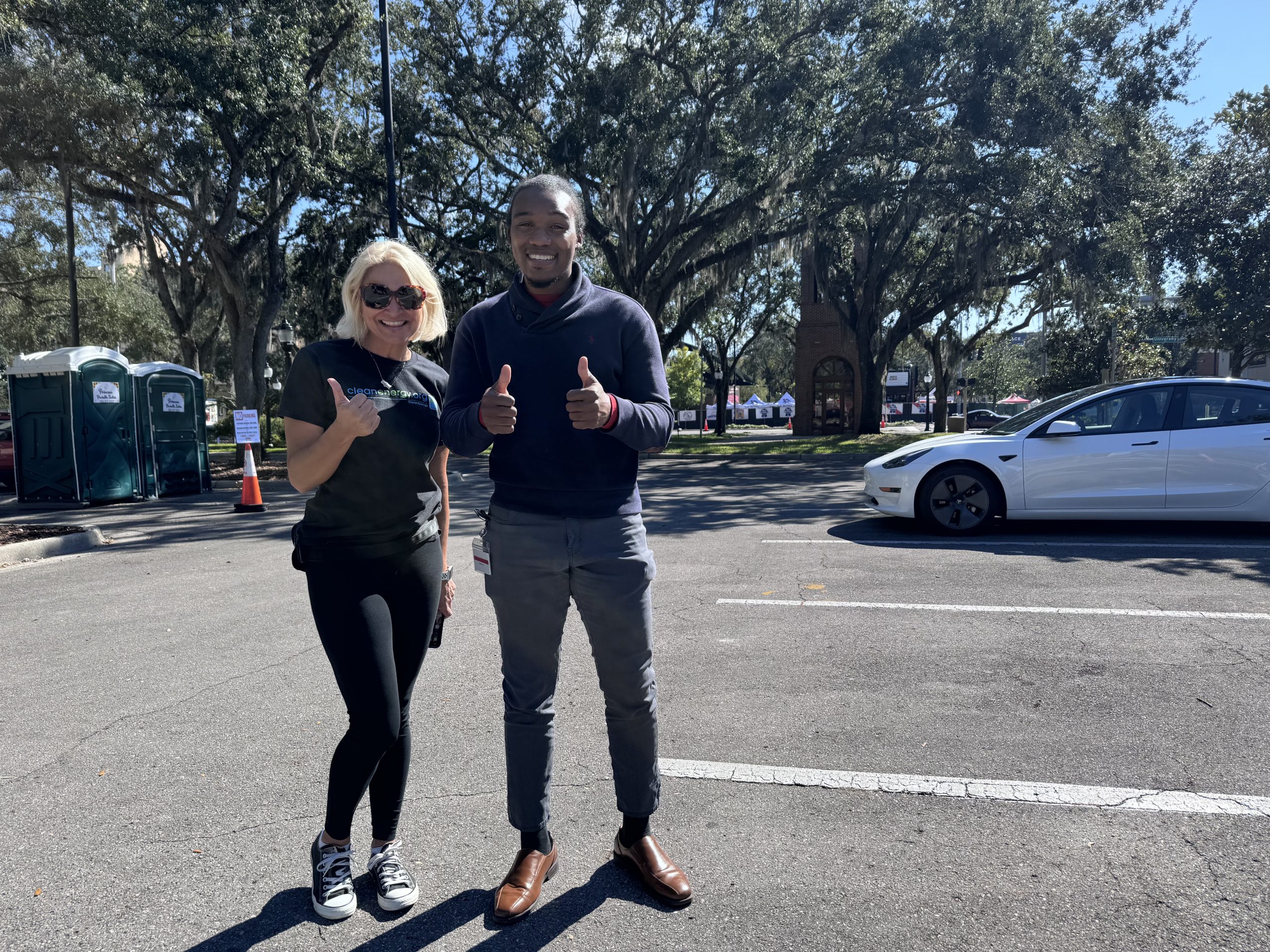 The test drives offered more than just a thrilling ride—they were an opportunity to learn about the technology directly, with a knowledgeable EV driver in the passenger seat. Dory Larsen, Senior ET Program Manager with the Southern Alliance for Clean Energy, brought expertise and patient guidance to the experience, ensuring participants fully understood the benefits and mechanics of EVs, as well as available tax incentives. Alongside her, city staff shared information on Gainesville’s recent initiatives to increase EV adoption, enhancing participant engagement and bolstering support for the city’s electrification goals.
“Driving a Tesla showcases the remarkable range and seamless technology of electric vehicles—it’s a glimpse into a cleaner, smarter future.”
Participants from various city departments—including Human Resources, Fleet, Public Works, Parks, Housing, Communications and Sustainable Development—joined, as did an elected official, including a representative from the Alachua County and City of Gainesville Joint Water and Climate Policy Board. For many, this was their first time behind the wheel of a Tesla, and the experience was met with enthusiasm and appreciation for the support provided by the Southern Alliance for Clean Energy.
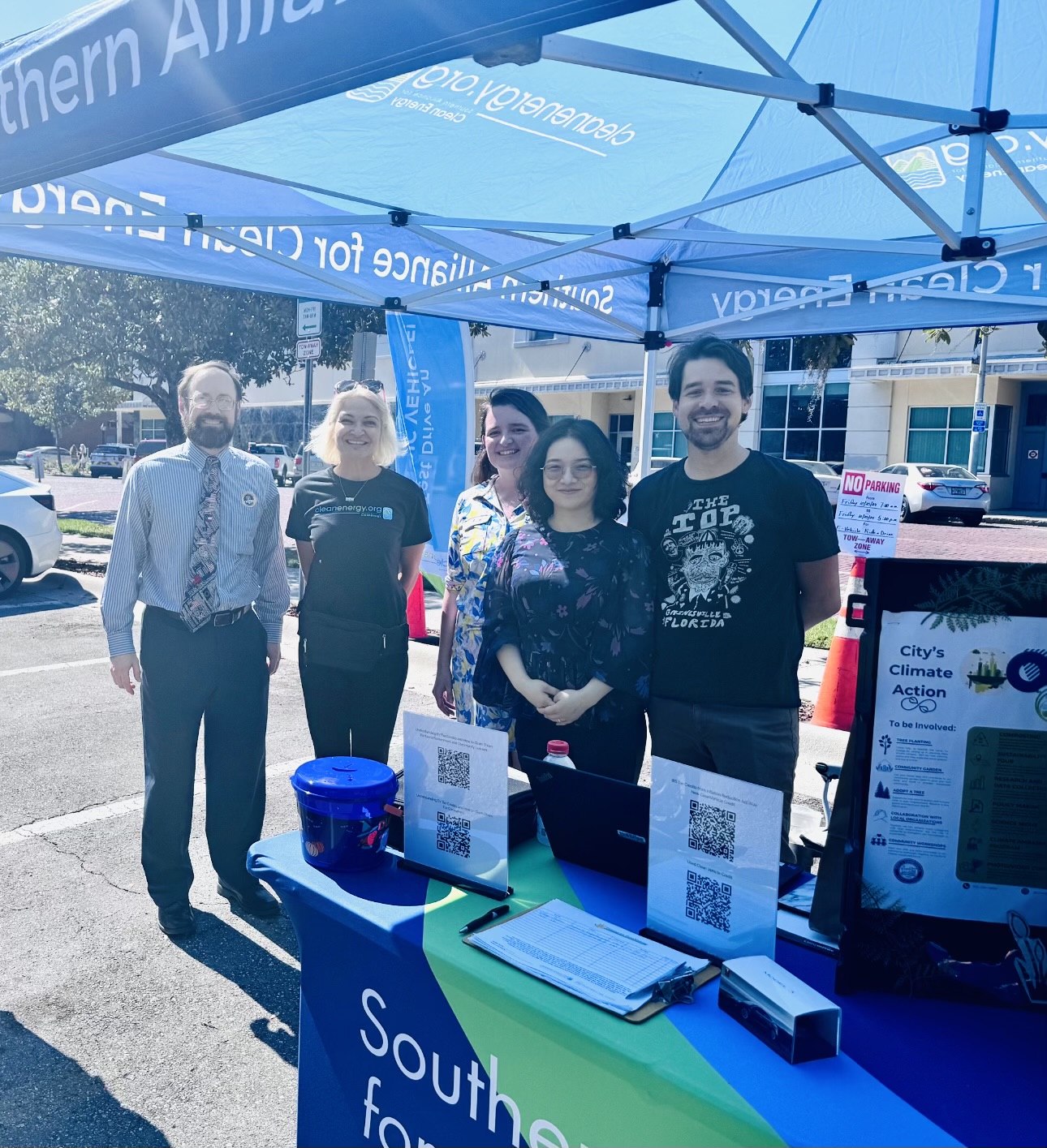 This event not only fueled excitement around EVs but also reinforced Gainesville’s dedication to creating a sustainable, resilient future for all. Together, we’re embracing a cleaner, greener path forward.
“Taking Tesla’s autonomous driving for a spin, we’re showcasing how effortless and impactful the switch to electric vehicles can be for our community and our world.”
The Southern Alliance for Clean Energy’s Electrify the South program leverages research, advocacy, and outreach to accelerate the equitable transition to electric transportation across the Southeast. Visit ElectrifytheSouth.org to learn more and connect with us.
The post Gainesville Embraces Electrification: City Leaders and Staff Test Drive Tesla Model 3 at EV Ride & Drive Event appeared first on SACE | Southern Alliance for Clean Energy.

 Keep in mind that “removing Trump from office” and “stop talking about Trump” are two different events.
It’s quite possible that a Democrat-controlled congress could remove him from power within the coming months. But think about the damage he’s done to our nation and the path to repair it. Think about the war, the trade deals, the economic policies, our relationships with our allies, the racism, our erstwhile position as leader in world democracy, and the degradation in public health, education, and environmental responsibility.
We’ll be talking about Trump as long as an organized human civilization is functioning on this planet.
To the a uthor of the meme here, I would suggest that hate and ignorance are far more aggressive forms of cancer.
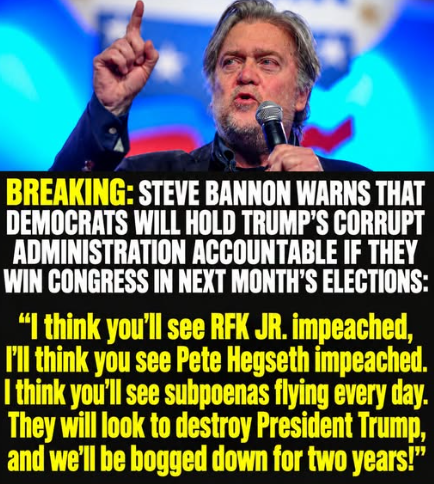 Yes, Hegseth and RFK, Jr. will be gone, but I think what’s going to happen first is the decapitation of the snake itself, i.e., the removal of Trump from the presidency.
Based on the news on social media, this could happen via the 25th Amendment, based on Trump’s mental deterioration. In my view, that’s a shame. If he’s not criminally prosecuted, this nation will be deprived of letting the American people and the rest of the world know that rule of law still matters in the United States.
Steve Bannon on the Consequences of a Blue Tsunami in November



-
Climate Change1 year ago
Guest post: Why China is still building new coal – and when it might stop
-

 Greenhouse Gases2 years ago
嘉宾来稿:满足中国增长的用电需求 光伏加储能“比新建煤电更实惠”
-
Greenhouse Gases1 year ago
Guest post: Why China is still building new coal – and when it might stop
-

 Climate Change2 years ago
嘉宾来稿:满足中国增长的用电需求 光伏加储能“比新建煤电更实惠”
-

 Renewable Energy12 months ago
Sending Progressive Philanthropist George Soros to Prison?
-
Climate Change2 years ago
Bill Discounting Climate Change in Florida’s Energy Policy Awaits DeSantis’ Approval
-
Greenhouse Gases1 year ago
嘉宾来稿:探究火山喷发如何影响气候预测
-

 Climate Change2 years ago
Analysis: China’s CO2 falls 1% in Q2 2024 in first quarterly drop since Covid-19