

english version below
Die physikalische Ozeanographie beschäftigt sich in großen Teilen mit Meeresströmungen: wo sie genau verlaufen, wie stark sie sind und ob sie sich verändern. Im vorherigen Blogeintrag ging es um die Verankerungen, die unter anderem Strömungsgeschwindigkeiten messen können. Diese Methode, also ein Messgerät an einem festen Punkt zu installieren und aufzuzeichnen, was vorbeifließt, nennt man Euler Methode. Der andere Ansatzpunkt – die Lagrange Methode – beruht darauf ein Messgerät ins Wasser auszusetzen, es mit der Strömung treiben zu lassen und seine Bahn zu verfolgen.
Die Idee ein Objekt mit der Strömung driften zu lassen, gibt es schon lange. Georg Neumayer kam auf die Idee Kapitänen auf ihren Reisen eine Flaschenpost mitzugeben, die an bestimmten Orten ins Wasser geworfen werden sollten. In der Flasche befand sich ein Brief, der die Finder bat sich zu melden und Fundort und -zeit zu übermitteln. Die erste dieser Flaschen ging am 14.Juli 1864 vom Schiff „Norfolk“ in der Nähe von Kap Hoorn zu Wasser. Erst drei Jahre später wurde sie an der Südküste Australiens wiedergefunden.
Ein unfreiwilliger Einsatz solcher sogenannten Drifter geschah 1992 bei einem Unfall eines Containerschiffs im Nordpazifik. Das Schiff, das von Hongkong auf dem Weg in die USA war, verlor in einem Sturm mehrere Container. Einer von ihnen hatte Badewannen-Tiere aus Plastik geladen: Quietscheenten, Biber, Schildkröten und Frösche. Geschätzte 29000 dieser Plastiktiere schwammen also plötzlich im Meer und wurden in den kommenden Jahren von Spaziergängen an zahlreichen Stränden gefunden. Zahlreiche Funde konnten auf Hawaii und in Australien vermeldet werden, einige schafften es sogar zur Westküste der USA sowie nach Schottland und England. Wahrscheinlich waren sie durch die Beringstraße nordwärts ins Nordpolarmeer bis nach Grönland in den Nordatlantik gedriftet. So wurde der Containerunfall zu einem Glücksfall für die Wissenschaft.
Die Drifter, die heutzutage eingesetzt werden, können schon ein bisschen mehr als Neumayers Flaschenpost und die verunglückten Plastiktiere. Bei den letzteren beiden, war nicht ersichtlich, welchen Weg sie zwischen Start- und Endpunkt zurückgelegt hatten. Moderne Drifter senden ihre exakten Messdaten automatisch über Satelliten an Datenzentren und machen so die annähernd simultane Beobachtung ihrer Wege möglich.
Auf dieser Fahrt haben wir auch Drifter dabei: gebaut vom Helmholtz Zentrum Hereon in Geestacht. Wissenschaftler*innen vom Hereon haben an einem Prototyp gearbeitet, der weniger Plastik enthalten soll. Jetzt besteht er aus einem Einwegglas, in dem sich Batterien und Software befinden und das erstaunliche Ähnlichkeit zu Neumayers Flaschenpost Idee zeigt. Für zusätzlichen Auftrieb und um das Glas aufrecht in der Wassersäule zu halten, befindet sich ein breiter Holzring am oberen Teil des Glases. Am Ende wird noch ein Aluminiumsegel an die Unterseite des Drifters gehängt, um ihn stabil in der Wassersäule zu halten. Einige der Drifter sammeln zusätzlich zu Positionsinformationen auch Daten über Druck und Temperatur der Luft sowie Wassertemperatur.


Nachdem wir jetzt einige Wochen mit der Vorbereitung der Drifter und dem Zusammenbauen der Einzelteile verbracht haben, sind nun die ersten Drifter zu Wasser gelassen worden. Ob sie zuverlässig funktionieren, wird sich in den nächsten Tagen zeigen. Schon jetzt kann man einige der Drifter online verfolgen. Schaut einfach hier auf der Webseite von Beluga vorbei.

Drifter in a bottle
Physical oceanography is largely concerned with ocean currents: where they go, how strong they are and whether they change. The previous blog post was about the moorings, which can measure, among other things, flow velocities. This method of installing a measuring device at a fixed point and recording what passes by is called the Euler method. The other approach – the Lagrange method – is based on placing a measuring instrument in the water, letting it drift with the current and tracking its trajectory.
The idea of letting an object drift with the current has been around for a long time. Georg Neumayer came up with the idea of giving captains a message in a bottle on their journeys, which should be thrown into the water at certain places. The message was a letter asking the finders to come forward and provide the location and time of the discovery. The first of these bottles was launched on 14 July 1864 from the ship “Norfolk” near Cape Hoorn. It was only three years later that it was found on the south coast of Australia.
An involuntary use of such so-called drifters occurred in 1992 in a container ship accident in the North Pacific. The ship, which was on its way from Hong Kong to the United States, lost several containers in a storm. One of them had loaded bathtub animals made of plastic: squeaky ducks, beavers, turtles and frogs. An estimated 29,000 of these plastic animals suddenly swam in the ocean and were found during walks on numerous beaches in the years to come. Countless finds have been reported in Hawaii and Australia, some even made it to the west coast of the United States, as well as to Scotland and England. They probably drifted north through the Bering Strait into the Arctic Ocean as far as Greenland into the North Atlantic. So the container accident became a stroke of luck for science.
The drifters that are used today can already do a little more than Neumayer’s bottles and the plastic animals. For the latter two, it was not clear which way they had travelled between the starting point and the end point. Modern drifters send their precise measurement data automatically via satellites to data centers, making it possible to observe their paths almost in near real time.
On this trip we also have Drifters with us: built by the Helmholtz Centre Hereon in Geestacht. Scientists from Hereon have been working on a prototype that is supposed to contain less plastic. Now it consists of a big glass containing batteries and software and shows the astonishing resemblance to Neumayer’s bottle post idea. For additional buoyancy and to keep the glass upright in the water column, there is a wide wooden ring at the top of the glass. At the end, an aluminum sail is attached to the bottom of the drifter to keep it stable in the water column. In addition to position information, some of the drifters also collect data on air pressure and temperature as well as water temperature.
After we have spent a few weeks preparing the drifters and assembling the parts, the first drifters have now been launched. Whether they function reliably will be revealed in the coming days. You can already track some of the drifters online. Just check out the website of Beluga here.

After a slight delay of the Maria S. Merian caused by late-arriving containers our research cruise MSM142 finally got underway. By last Tuesday (24.03.2026), the full scientific team had arrived in Nuuk, the capital of Greenland, and the ship reached port on Wednesday (25.03.2026) morning. That same day, scientists and technicians moved on board and immediately began preparations, assembling and testing our instruments. Although the mornings on Wednesday and Thursday were grey and overcast, the afternoons cleared up beautifully. This gave us valuable time to organize equipment on deck and store empty boxes back into the containers before departure.
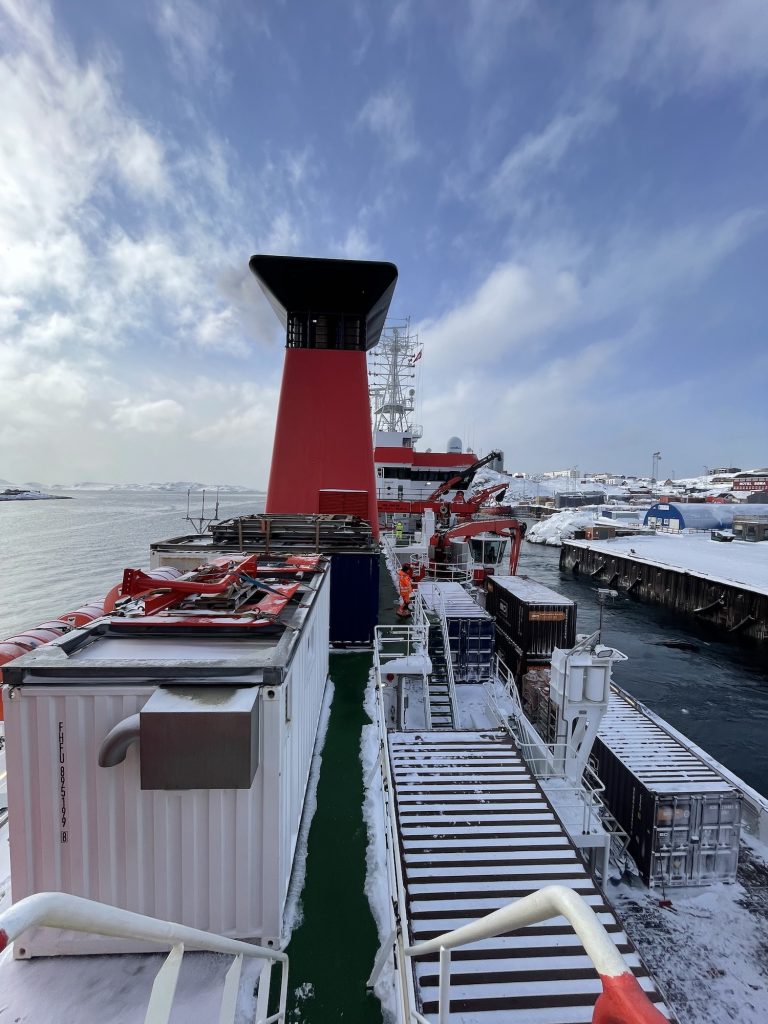
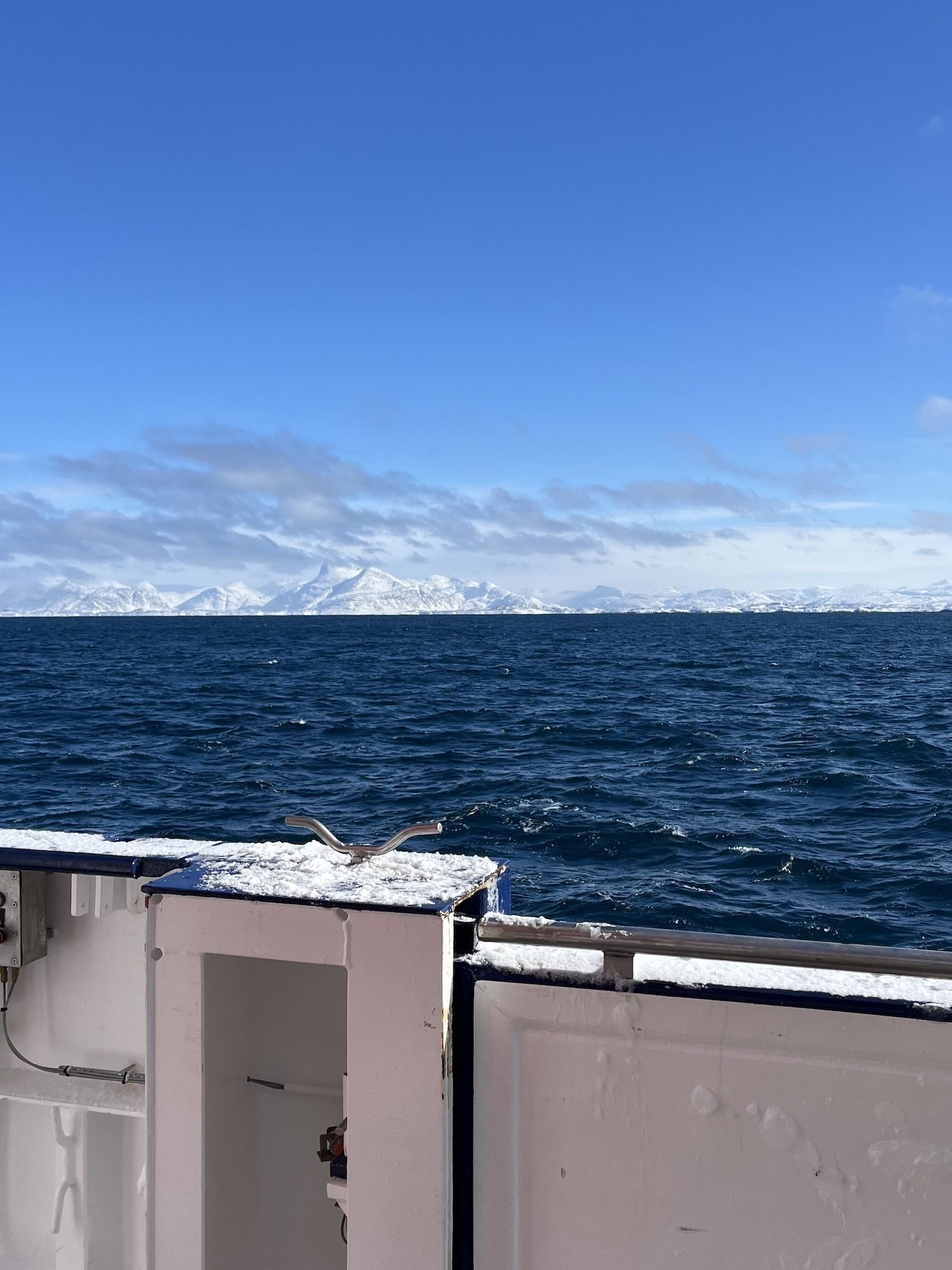
Given the forecast of harsh conditions outside the fjord, we carried out the mandatory safety drill while still in harbour. This included practicing emergency procedures and boarding the lifeboat. After completing border control, we were finally ready to leave Nuuk. We set sail on March 27th, heading into the Labrador Sea to begin our mission. Even before starting scientific operations, we tested the setup for deploying our gliders without releasing them during the transit out of the fjord. Once we reached open waters, we were met by high waves the following morning. For some on board, this was their first experience under such rough sea conditions. Seasickness quickly became a challenge for a few, while scientific work had to be temporarily postponed due to the strong winds and sea conditions. Together with the crew, we discussed how best to adapt our measurement plans to the given weather conditions. On March 29th, we were finally able to begin our scientific program with the first CTD deployment. A CTD is an instrument used to measure conductivity, temperature, and depth, which are key parameters for understanding ocean structure.
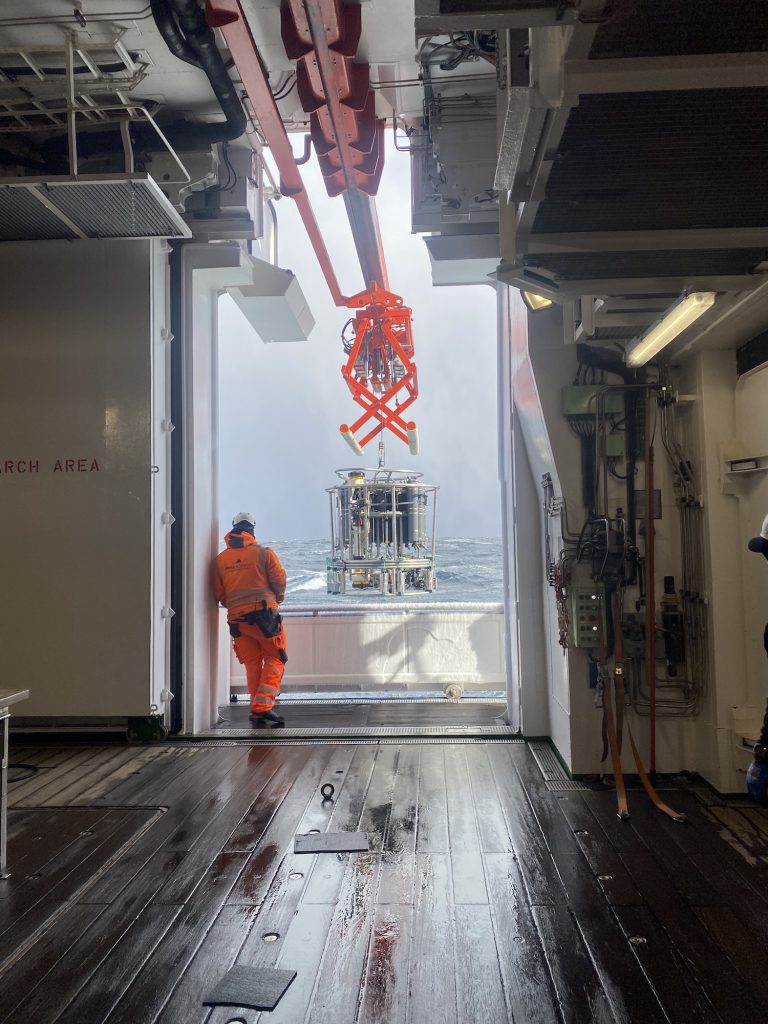
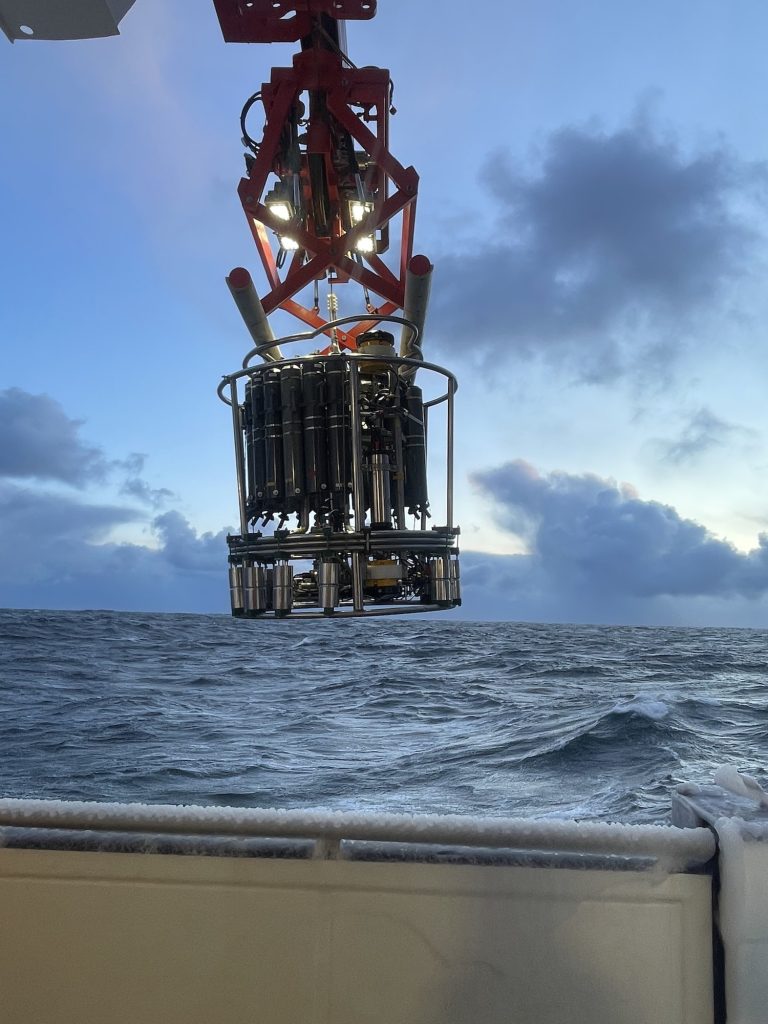
During the following night, we continued with additional CTD stations and successfully recovered two moorings: DSOW 3 and DSOW 4, located south of Greenland. These moorings carry instruments at various depths that measure velocity, temperature, and salinity. DSOW 4 was redeployed on the same day, while DSOW 3 followed the next day. In addition, the bottles attached to the CTD’s rosette can be used to collect water samples from any desired depth. These samples can be used, for example, to determine the oxygen content, nutrient levels, and organic matter.
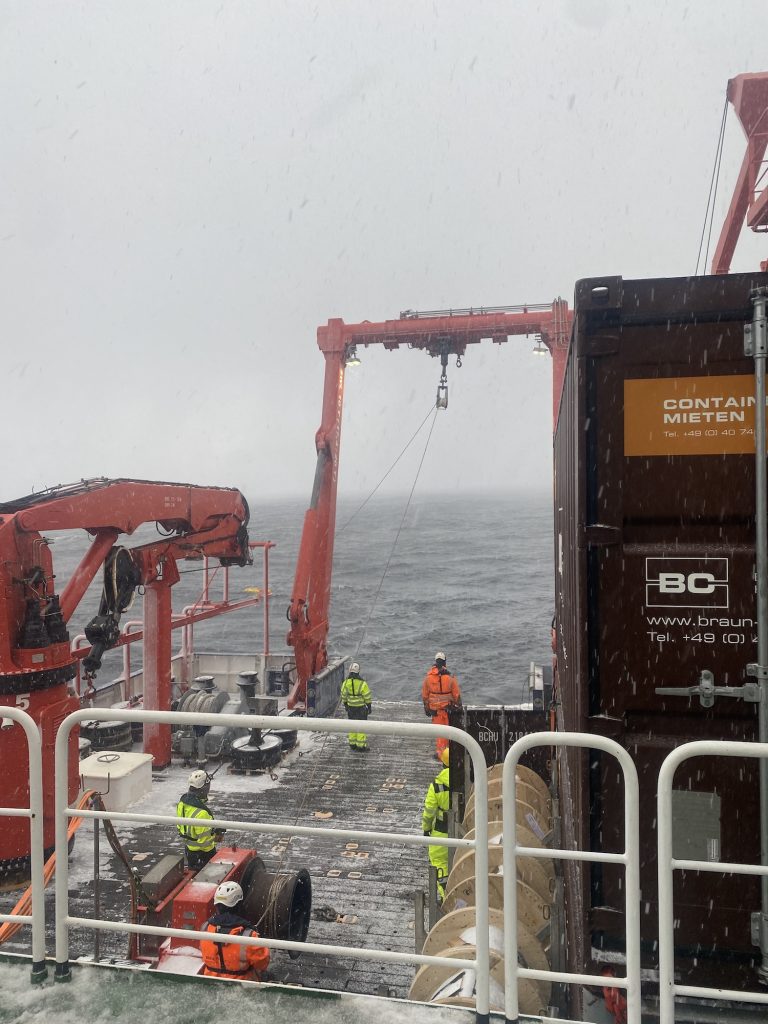
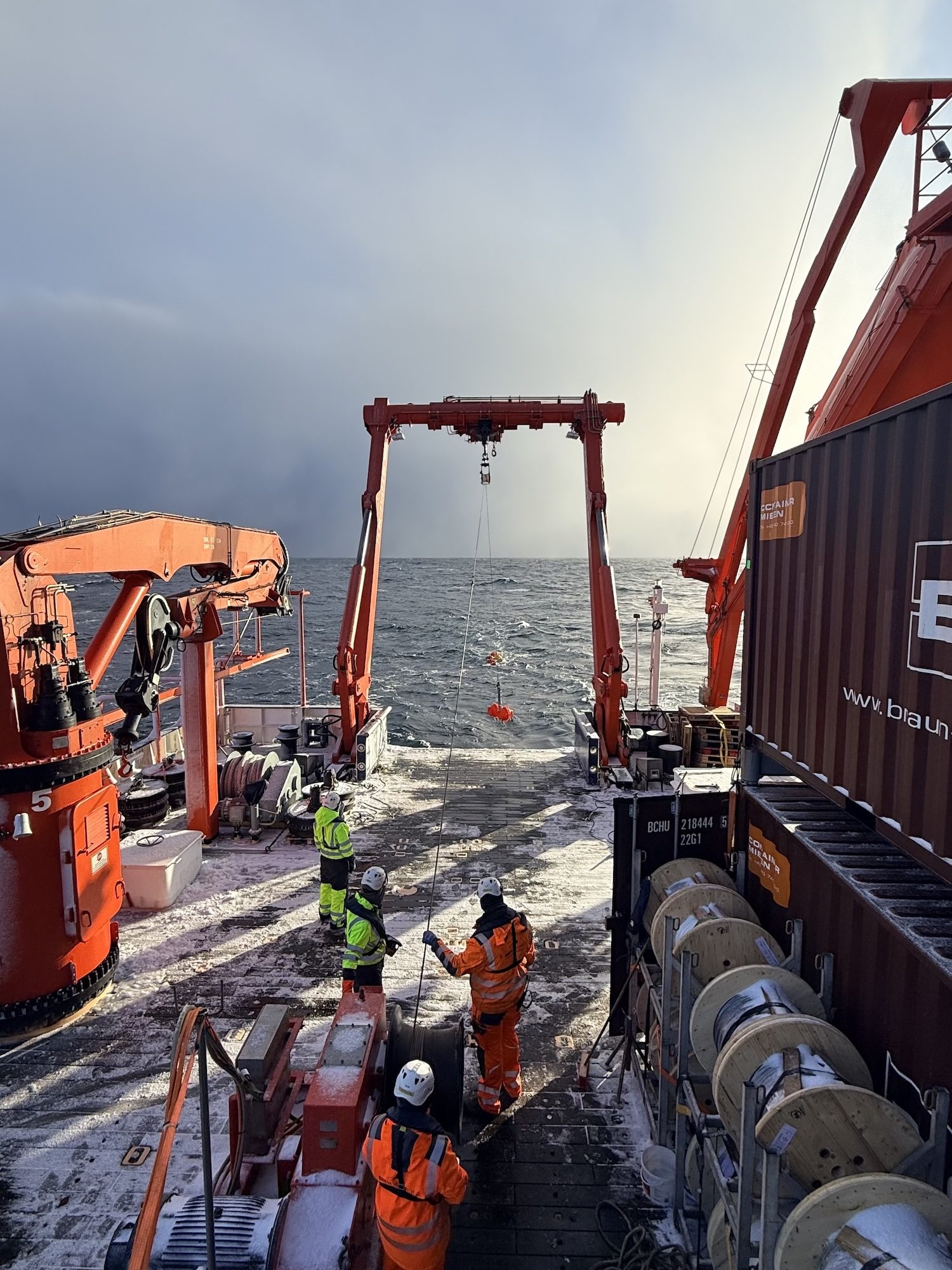
Both are part of the OSNAP array, a network of moorings spanning the subpolar North Atlantic. On these moorings are a few instruments, for example microcats which measure temperature, pressure and salinity.
We then conducted around 25 CTD stations spaced approximately 3 nautical miles apart across an Irminger ring identified from satellite data. This high-resolution sampling was necessary to capture the structure of an Irminger Ring, which had a radius of about 12 km wide.
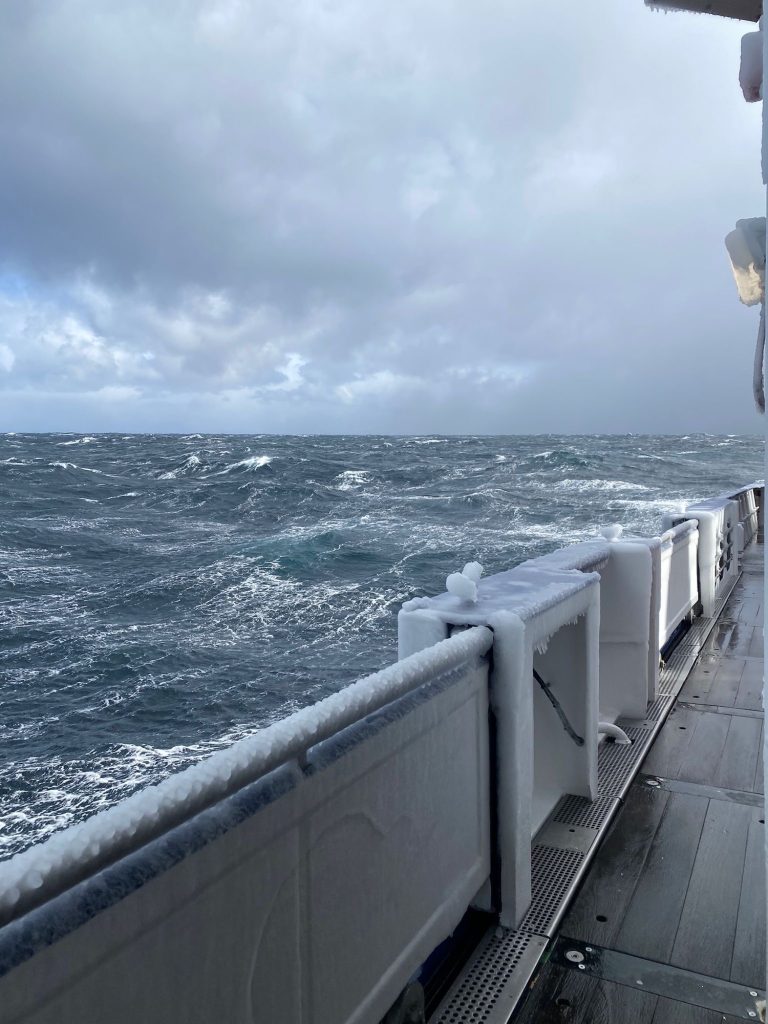
The days leading up to April 2nd were marked by very rough weather conditions. Life on board became both challenging and, at times, unintentionally entertaining sliding chairs were not uncommon. During the night from April 1st to April 2nd, winds reached 11 Beaufort with gusts up to 65 knots, forcing us to pause our measurements. Fortunately, conditions improved by morning, allowing us to resume our work. As well as with the help of the crew we had to adapt to the harsh weather conditions to continue our scientific work. On the 3rd of April, we were able to deploy a few gliders and one float. An ocean glider is an autonomous underwater Vehicle, which you can steer remotely and send to different locations, while it is measuring oceanographic key parameters.
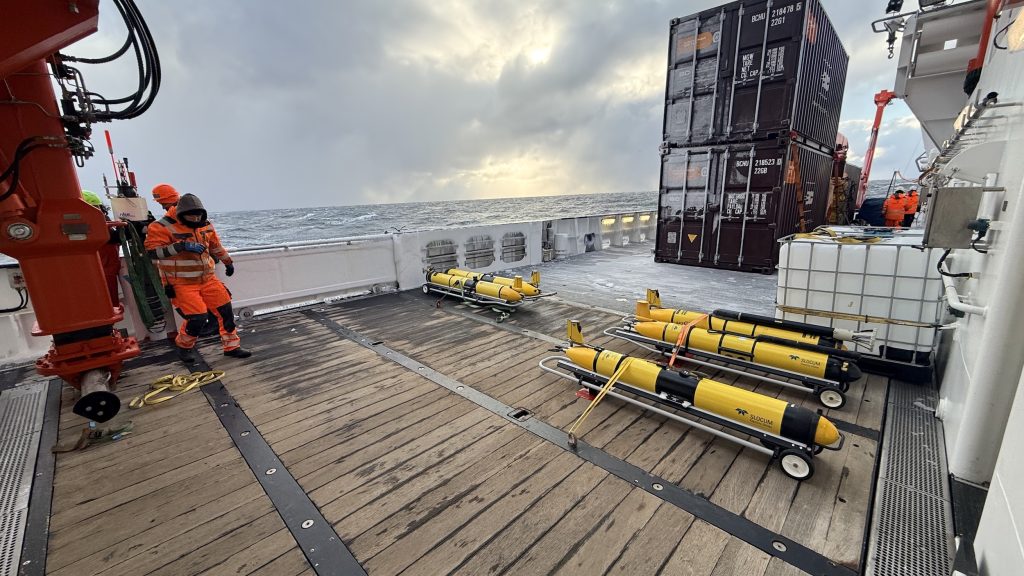
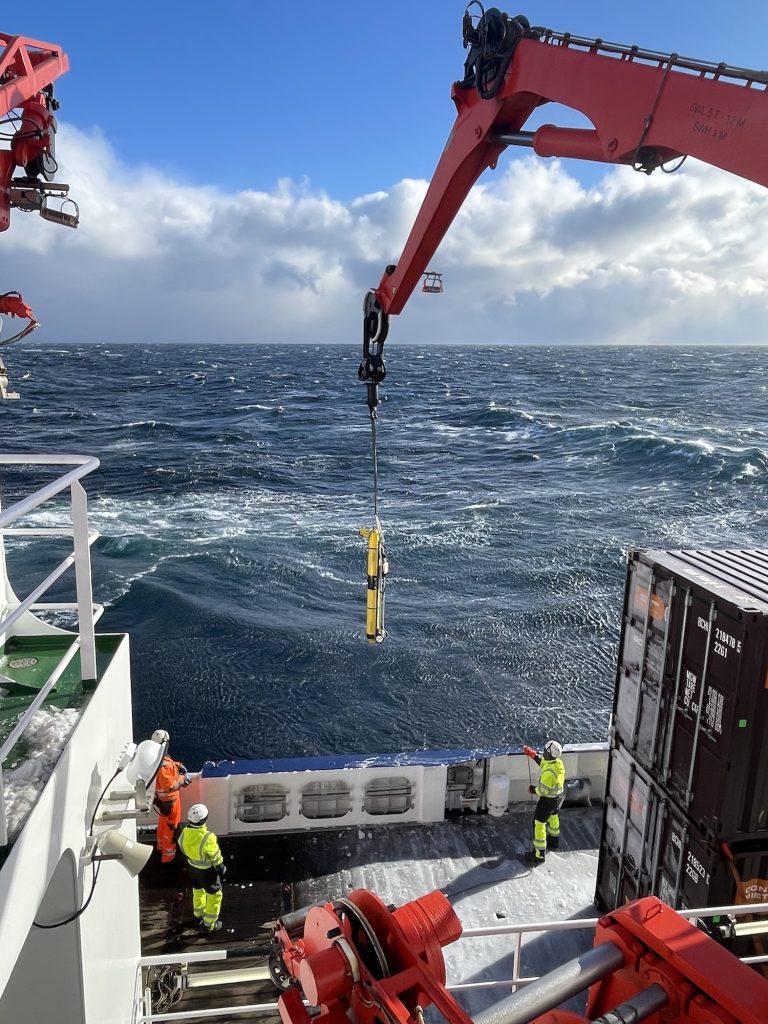
This research cruise focuses on understanding small-scale processes in the ocean and their connection to the spring bloom, an essential phase in marine ecosystem in subpolar regions. Despite the challenging start, we have already gathered valuable data and look forward to the weeks ahead in the Labrador Sea.
Despite their dramatic name, false killer whales aren’t an orca species. These animals are dolphins—members of the same extended family as the iconic “killer whale” (Orcinus orca). Compared to their namesake counterparts, these marine mammals are far less well-known than our ocean’s iconic orcas.
Let’s dive in and take a closer look at false killer whales—one of the ocean’s most social, yet lesser-known dolphin species.
Appearance and anatomy
False killer whales (Pseudorca crassidens) are among the largest members of the dolphin family (Delphinidae). Adults can grow up to 20 feet long and weigh between 1,500 and 3,000 pounds, though some individuals have been recorded weighing even more. For comparison, that’s roughly double the size of a bottlenose dolphin—and slightly larger than a typical sedan.
These animals are incredibly powerful swimmers with long, torpedo-shaped bodies that help them move efficiently through the open ocean in search of prey. Their skull structure is what earned them their name, as their head shape closely resembles that of orcas. With broad, rounded heads, muscular jaws and large cone-shaped teeth, early scientists were fascinated by the similarities between these two marine mammal species.
Although their heads may look somewhat like those of orcas, there are several ways to distinguish false killer whales from their larger namesake counterparts.
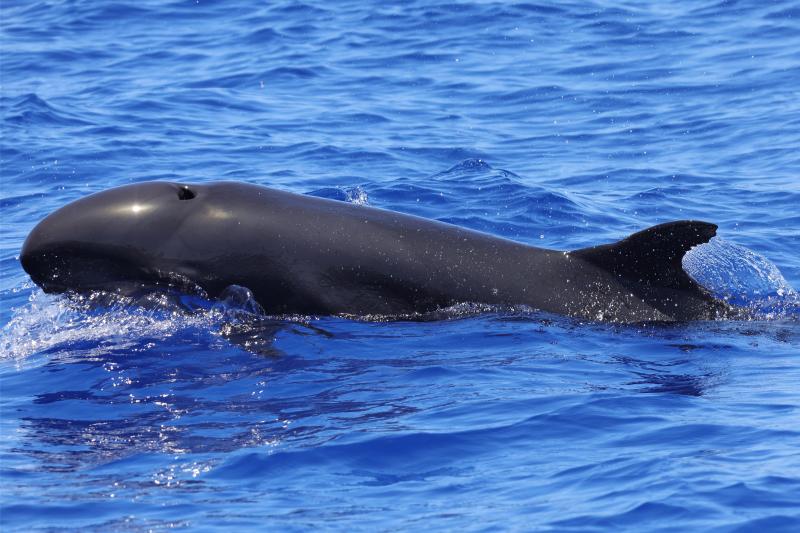
One of the most noticeable differences has to do with their coloration. While orcas are known for their iconic black-and-white pattern with paler underbellies, alternatively, false killer whales are typically a uniform dark gray to black in color—almost as if a small orca decided to roll around in the dirt. If you’ve ever seen the animated Disney classic 101 Dalmatians, the difference is a bit like when the puppies roll in soot to disguise themselves as labradors instead of showing their usual black-and-white spots.
Their teeth also present a differentiator. The scientific name Pseudorca crassidens translates almost literally to “thick-toothed false orca,” a nod to their sturdy, cone-shaped teeth that help these animals capture prey. Orcas tend to have more robust, bulbous heads, while false killer whales appear slightly narrower and more streamlined.
Behavior and diet
False killer whales are both highly efficient hunters and deeply social animals. It’s not unusual to see them hunting together both in small pods and larger groups as they pursue prey like fish and squid.
Scientists have even observed false killer whales sharing food with each other, a behavior that is very unusual for marine mammals. While some dolphin and whale species work together to pursue prey, they rarely actively share food. The sharing of food among false killer whales spotlights the strong social bonds within their pods. Researchers believe these tight-knit social connections help false killer whales thrive in offshore environments where they’re always on the move.
Maintaining these close bonds and coordinating successful hunts requires constant effective communication, and this is where false killer whales excel. Like other dolphins, they produce a variety of sounds like whistles and clicks to stay connected with their pod and locate prey using echolocation. In the deep offshore waters where they live, sound often becomes more important than sight, since sound travels much farther underwater than light.
Where they live
False killer whales are highly migratory and travel long distances throughout tropical and subtropical waters around the world. They prefer deeper waters far offshore, and this pelagic lifestyle can make them more difficult for scientists to study than many coastal dolphin species.
However, there are a few places where researchers have been able to learn more about them—including the waters surrounding the Hawaiian Islands.
Scientists have identified three distinct groups of false killer whales in and around Hawaii, but one well-studied group stays close to the main Hawaiian Islands year-round. Unfortunately, researchers estimate that only about 140 individuals remained in 2022, with populations expected to decline without action to protect them. This is exactly why this group is listed as endangered under the U.S. Endangered Species Act and is considered one of the most vulnerable marine mammal populations in U.S. waters.
Never Miss An Update
Sign up for Ocean Conservancy text messages today.
Current threats to survival
False killer whales are currently listed as Near Threatened on the IUCN Red List. From climate change-induced ocean acidification and harmful algal blooms to marine debris and fishing bycatch, false killer whales face the same mounting pressures that are impacting marine ecosystems around the world. As their prey becomes scarce due to increasing threats, populations of top predators like these decline, serving as a powerful signal that the ocean’s overall health is in critical need of protection.
Here at Ocean Conservancy, we’re working daily to confront these threats head-on and protect the ecosystems and wildlife we all cherish so dearly. But we can’t do it without you. Support from ocean lovers is what powers our work to protect our ocean, and right now, our planet needs all the help it can get. Visit Ocean Conservancy’s Action Center today and join our movement to create a better future for our ocean, forever and for everyone.
The post All About False Killer Whales appeared first on Ocean Conservancy.
https://oceanconservancy.org/blog/2026/03/31/false-killer-whales/
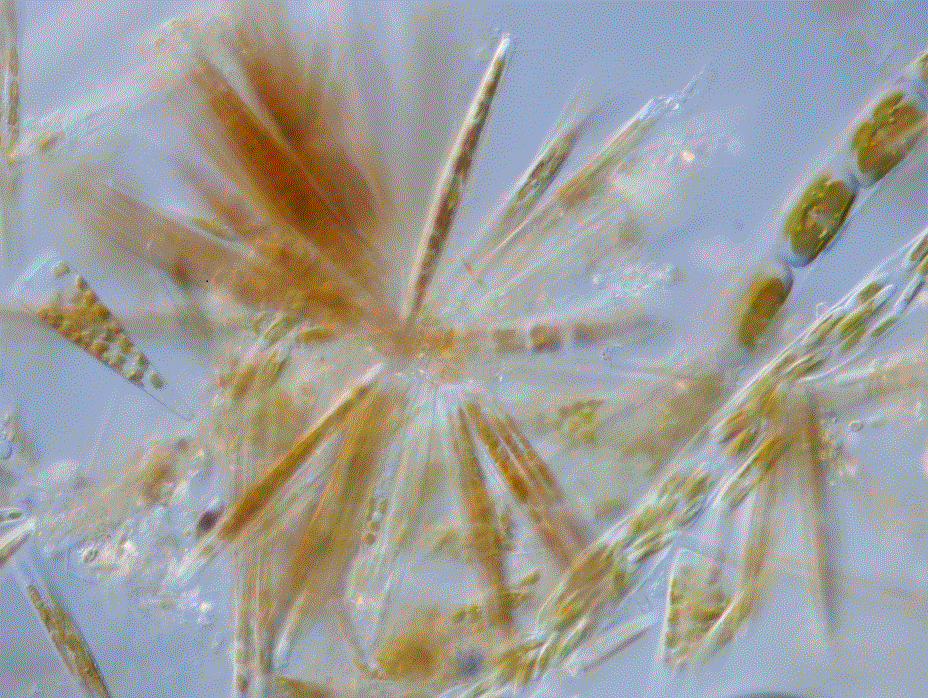
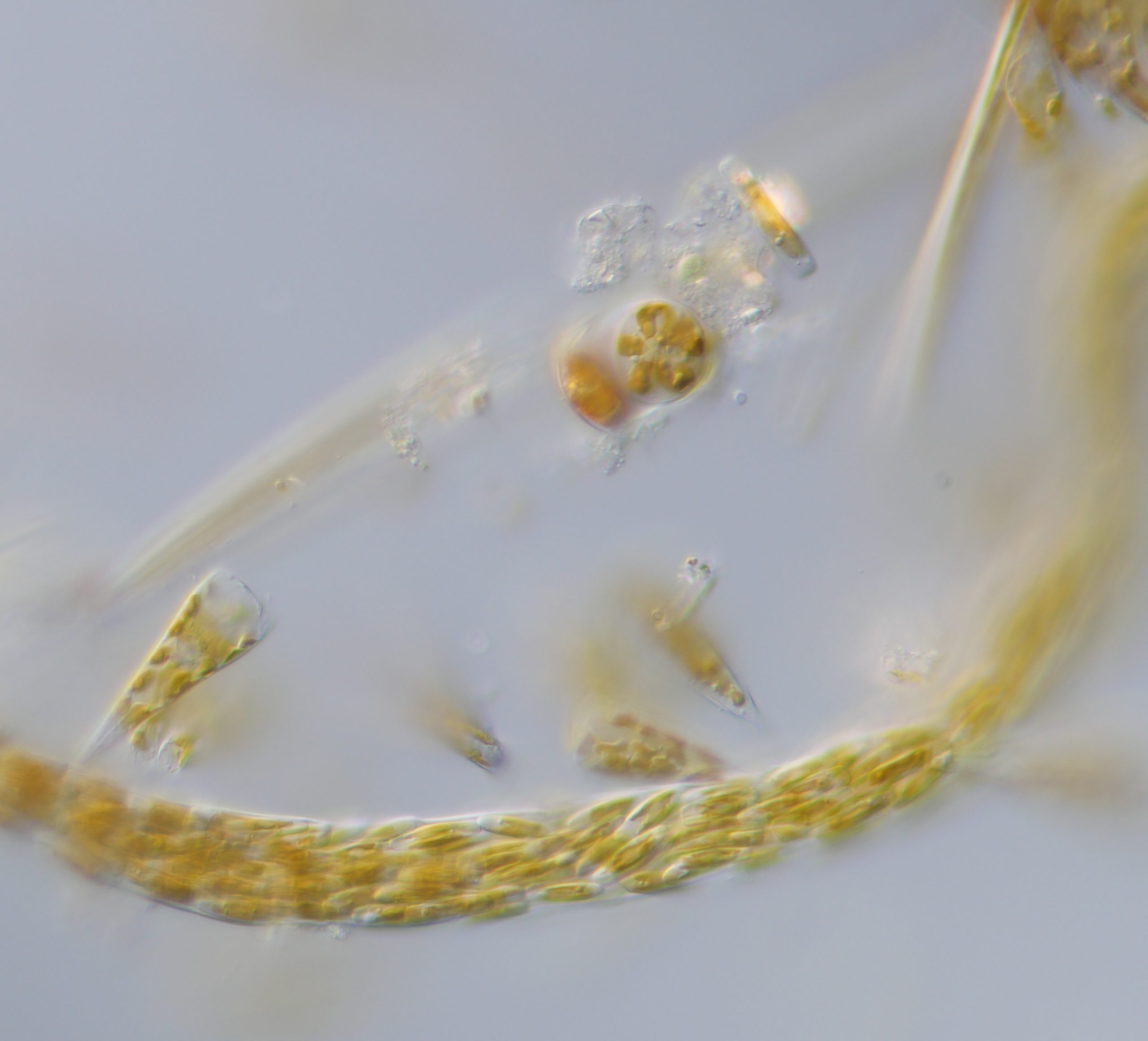
A lot has happened in the meantime: I became an Associate Professor at the University of Southern Denmark, we all lived through the Corona period, then slowly adjusted to the post‑pandemic stability, only to find ourselves again in turbulent political times. I am now affiliated with the Marine Research Center in Kerteminde, a beautiful coastal town on the island of Fyn. My plan is to share small updates on my research and activities every now and then. So let’s start with yesterday’s sampling trip for benthic phytoplankton, carried out by my colleague, Prof. Kazumasa Oguri. The sampling will help prepare for the first‑semester bachelor students who will join his small but fascinating project. This project is all about the benthic diatoms that form dense, photosynthetic communities on tidal‑flat sediments. Their daytime oxygen production enriches the sediment surface and allows oxygen to penetrate deeper, supporting diverse organisms that rely on aerobic respiration. The project will explore how oxygen distribution and oxygen production/consumption in sediments change under different light conditions (day, night, sunrise/sunset). The team will incubate benthic diatom communities in jars and measure oxygen profiles using an oxygen imaging system under controlled light regimes.
Yesterday, we visited several potential sampling sites where students can carry out their fieldwork. I encourage all PIs in our group to define at least one small project related to Kerteminde Fjord, where our laboratories are located. Over time, I hope we can build a more integrated dataset describing the marine and coastal ecosystems of the area.
Another activity currently in preparation is a project on marine invasive species in Kerteminde, which will feed into a course I will run in July and a master’s thesis project. More will come later.
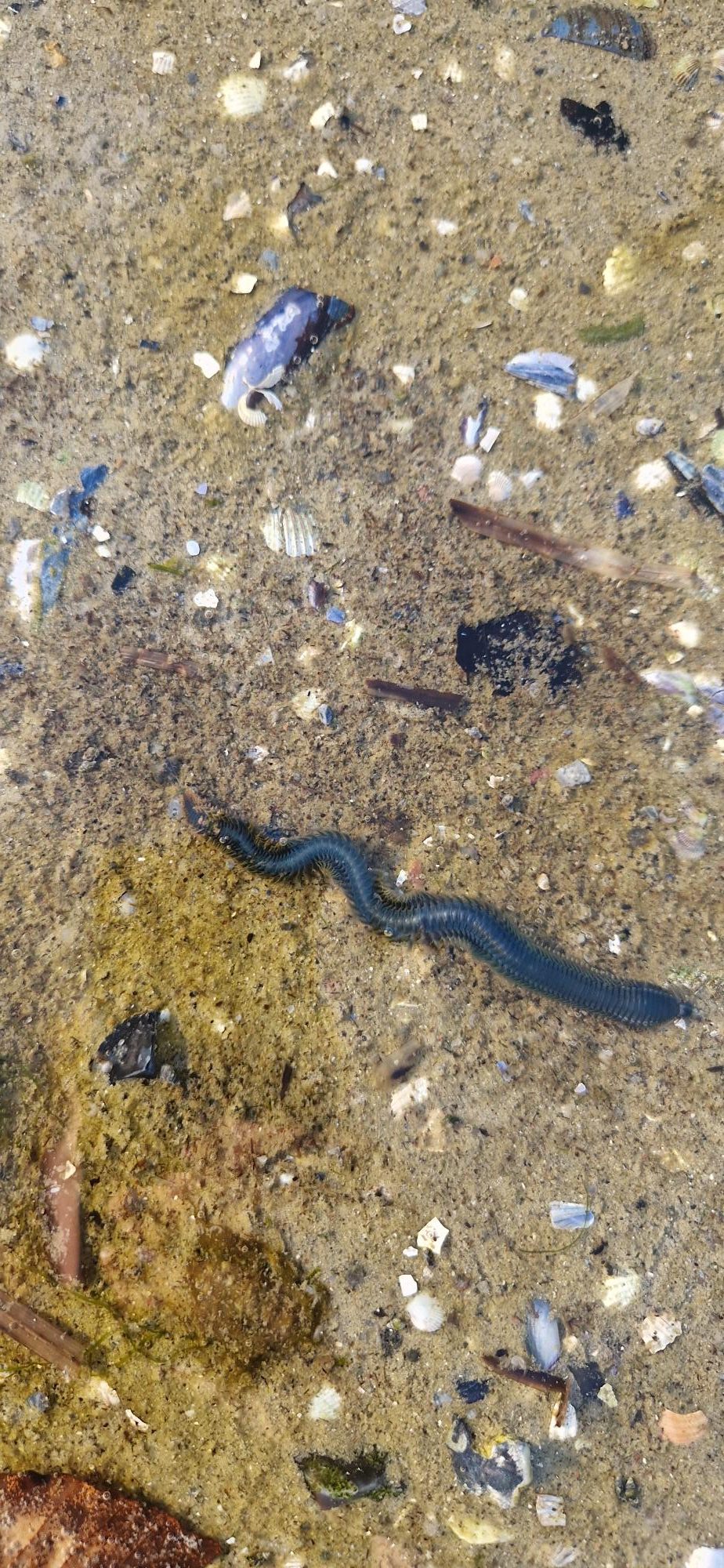
Let’s hope for a more continuous blog from here on, keeping track of our activities, with or without jellyfish!



-
Climate Change8 months ago
Guest post: Why China is still building new coal – and when it might stop
-
Greenhouse Gases8 months ago
Guest post: Why China is still building new coal – and when it might stop
-

 Greenhouse Gases2 years ago
嘉宾来稿:满足中国增长的用电需求 光伏加储能“比新建煤电更实惠”
-
Climate Change2 years ago
Bill Discounting Climate Change in Florida’s Energy Policy Awaits DeSantis’ Approval
-

 Climate Change2 years ago
嘉宾来稿:满足中国增长的用电需求 光伏加储能“比新建煤电更实惠”
-
Climate Change Videos2 years ago
The toxic gas flares fuelling Nigeria’s climate change – BBC News
-

 Renewable Energy6 months ago
Sending Progressive Philanthropist George Soros to Prison?
-

 Carbon Footprint2 years ago
US SEC’s Climate Disclosure Rules Spur Renewed Interest in Carbon Credits