

Welcome to Carbon Brief’s DeBriefed.
An essential guide to the week’s key developments relating to climate change.
This week
Global extremes
RECORD HEAT: Multiple countries experienced record heat this week. Nordic countries were hit by a “truly unprecedented” heatwave, where temperatures reached above 30C in the Arctic Circle and Finland endured three straight weeks with 30C heat, its longest heat streak in records going back to 1961, said the Guardian. Reuters reported that the United Arab Emirates (UAE) is facing “surging temperatures this summer”, following its hottest spring ever.
FIRE WEATHER: Some 81 million Americans were under air quality alerts as hundreds of wildfires burned across Canada and parts of the US, reported the Guardian. Meanwhile, a “massive” wildfire in California has “become the biggest blaze in the state so far this year” amid an intensifying heatwave, reported the Associated Press.
TORRENTIAL RAIN: A “torrent of mud” has killed at least four people in the northern Himalayan state of Uttarakhand, Reuters reported. According to the Times of India, “more than one cloudburst” hit the high-altitude district of Uttarkashi on Tuesday, triggering flash floods. It added that cloudburst risks in the Himalayan region are “projected to increase with climate change”. Meanwhile, Taiwan News said that “torrential rain in central and southern Taiwan over several days has left three dead, four missing, 49 injured and prompted 85 rescues”. Flash floods in a Myanmar-China “border town” have killed six people, according to the Straits Times.
Around the world
- COP30 CHAOS: After significant delays and pressure from a UN committee, Brazil has finally launched the official accommodation platform for COP30, Climate Home News reported. It added that “significant markups and sky-high prices remained”.
- MORE TARIFFS: Donald Trump has increased tariffs on imports from India to 50% as “punishment” for the country buying Russian oil, the New York Times reported.
- CORAL BLEACHING: The Guardian said that the Great Barrier Reef suffered its biggest annual drop in live coral since 1986 in two out of the three areas that are monitored by scientists..
- ENDANGERED: Top scientific advisers in the US have announced that they will “conduct an independent, fast-track review of the latest climate science” following the Trump administration’s move to repeal the “endangerment finding”, the scientific basis for federal climate regulations, Inside Climate News reported.
10,000
The number of glaciers in the Indian Himalayas that are “receding due to a warming climate”, according to Reuters.
Latest climate research
- Ecosystem restoration should be “pursued primarily” for biodiversity, supporting livelihoods and resilience of ecosystem services, as “climate mitigation potential will vary” | Nature Geoscience
- Attendees at the 2024 UN Environment Assembly “underestimate global public willingness to contribute 1% of their personal income to climate action” | Communications Earth & Environment
- Urban green spaces can lower temperatures by 1-7C and play a “crucial role in cooling urban environments” | Climate Risk Management
(For more, see Carbon Brief’s in-depth daily summaries of the top climate news stories on Monday, Tuesday, Wednesday, Thursday and Friday.)
Captured
Carbon Brief’s in-depth explainer unpacked the findings of a recent analysis on climate anxiety in more detail. The analysis explored 94 studies, involving more than 170,000 participants across 27 countries, to find out who is more likely to be affected by climate anxiety and what its consequences could be. The analysis suggests that women, young adults and people with “left-wing” political views are more likely to feel climate anxiety.
Spotlight
Heat and fire in France
This week, Carbon Brief explores how France’s media has covered the impacts of recent heatwaves and wildfires.
“We’re used to high temperatures, but we’ve never experienced heat like this [so] early in the year before,” a family member who lives in the Dordogne area of southwest France explained during a recent visit to the country.
Over recent weeks, there have been extreme heatwaves and fires across Europe, which has set new records across the continent, including in France.
France is now gripped once again by extremes. The country is currently experiencing yet another heatwave and this week faced its “largest wildfire in decades”, according to France24.
French climate scientist Dr Olivier Boucher, who is also the CEO of Klima consulting, told Carbon Brief:
“Climate change is already having visible and significant impacts in France. Heatwaves are becoming more frequent, more intense, and are occurring earlier in the season.
“This trend is accompanied by an increased risk of wildfires, particularly in southern regions, though other areas are also increasingly affected, putting the built environment at risk.”
Red alerts
In July, nearly 200 schools closed or partially closed as a result of high temperatures across the country.
Since the start of the summer, water reserves have been under close surveillance and multiple areas are facing water restrictions as a result of drought.
These water restrictions can include the use of tap water and violations can incur fines of €1,500 (£1,300). According to Le Monde, more than a third of the country is under drought alerts.
France has also experienced a “devastating summer” for fire outbreaks, according to FranceInfo. Traditional firework displays celebrating France’s Bastille day on 14 July were cancelled across the country due to forest fire risks, said Le Monde.

On 4 August, the local area of Aude, situated in the south-east, was placed under a red alert for forest fire risks.
Since then, there have been record-breaking fires in the region. BBC News reported that fires have “scorched an area larger than Paris”. The broadcaster added that the country’s prime minister, François Bayrou, linked the fires to global warming and drought, describing them as a “catastrophe on an unprecedented scale”.
Needing to adapt
Le Point explained how heatwaves impact grape vines and how winemakers have adapted their growing techniques by leaving more leaves on vines to protect the grapes from getting burned by the sun. However, it added that, “in the long run, it is necessary to think about more long-term modifications of viticulture”.
FranceInfo told the story of winegrowers losing their crops, worth millions of euros, in the recent fires in southern France, adding that it is “a real economic disaster for farmers affected by the flames”.
Le Monde interviewed French geographer Dr Magali Reghezza-Zitt, who described the nation’s preparations for dealing with climate change as inadequate. She told the newspaper:
“The gap between what needs to be done and the pace at which climate change is accelerating grows wider each year.”
Boucher added to Carbon Brief:
“All economic sectors are impacted by climate change, with agriculture among the most vulnerable. As the warming trend is projected to continue over the coming decades, adaptation will be essential – both through the climate-proofing of infrastructure and through changes in practices across sectors.”
Watch, read, listen
‘GRASSROOTS ALLIANCE’: A Deutsche Welle documentary explained how unions, activists and the India Meteorological Department have joined forces to protect Delhi’s informal workers from extreme heat.
NEW RULES: A Bloomberg article said that South Africa “will seek jail time, fines and higher taxes for breaches of proposed rules to govern carbon emissions” as part of new efforts to reduce the country’s dependency on coal.
SUSTAINABLE AI?: As the AI race intensifies, the Financial Times investigated if data centers can “ever truly be green”.
Coming up
- 5-14 August: Resumed talks on a global plastics treaty, Geneva, Switzerland
- 10-15 August: Ecological Society of America annual meeting | Baltimore, US
- 13-15 August: African Union-AIP water investment summit 2025 | Cape Town, South Africa
- 15 August: China Environmental Science Youth Academic Conference | Changsha, China
Pick of the jobs
- Save the Children, senior climate advisor | Salary: £61,500-£69,200. Location: London
- Irish Independent, environmental correspondent | Salary: Unknown. Location: Dublin
- Ember, interim managing director | Salary: £89,000-£100,000. Location: Remote
- British Antarctic Survey, seabird remote sensing data analyst | Salary: £41,344-£45,479. Location: Cambridge, UK
DeBriefed is edited by Daisy Dunne. Please send any tips or feedback to debriefed@carbonbrief.org.
This is an online version of Carbon Brief’s weekly DeBriefed email newsletter. Subscribe for free here.

The post DeBriefed 8 August 2025: Arctic heatwave; Climate anxiety deep-dive; France’s wildfire crisis appeared first on Carbon Brief.
DeBriefed 8 August 2025: Arctic heatwave; Climate anxiety deep-dive; France’s wildfire crisis

Saturday, 17 October 2026
7.18 AM AWST
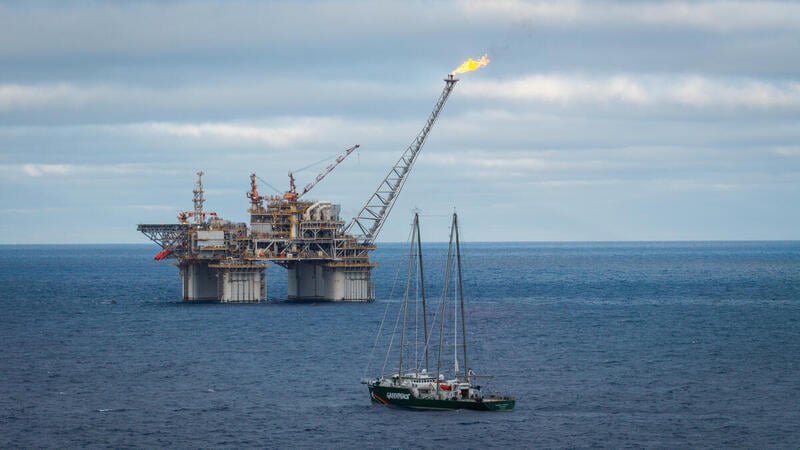
Hi folks! We’re joining you live from the Rainbow Warrior where we will be providing you with updates as our four activists continue scaling and occupying Woodside’s gas platform. The activists are peacefully protesting against Woodside’s latest gas expansion plans, the Browse project, which would see up to 57 toxic wells drilled at Scott Reef.
“Right now our activists are scaling Woodside’s massive Floating Production Unit. They are scaling the South-East pillar and the underside of the Helideck. They’ll be setting up camp soon and have plenty of provisions with them – so stick around!”
5:45 AM AWST
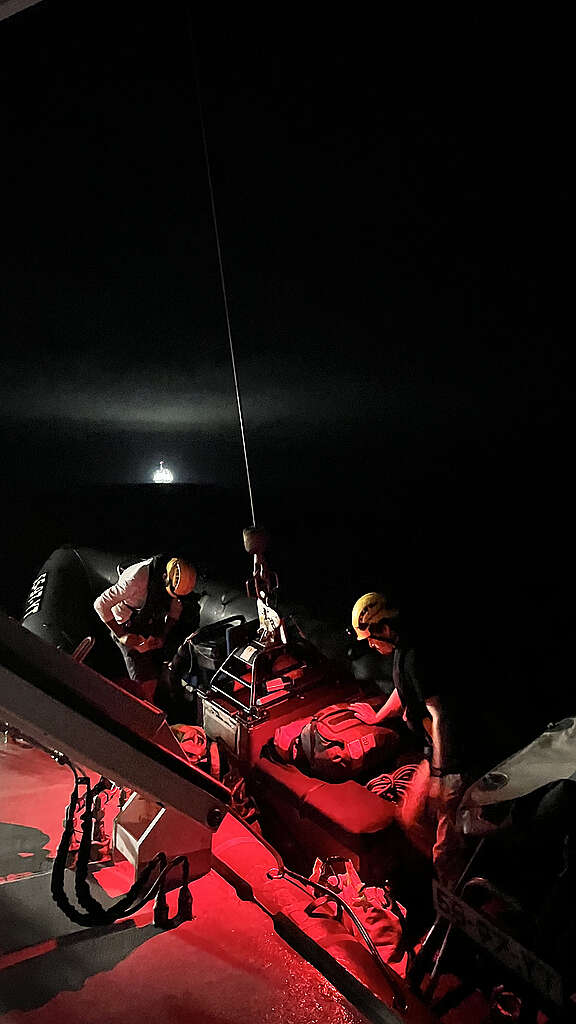
Our RHIBS are in the water! We’ve deployed our four activists and our ship crew on our small fast boats, headed to the gas platform. We’re carrying crew and equipment, plenty of food, all of our safety climbing gear, some big banners, cameras and a whole lot of heart… someone even has something to read after they get settled in.
5:26 AM AWST
Before sunrise activists prepared to launch RHIBS from the Rainbow Warrior.
Looking for a front seat view?
You can follow along with the Live Rainbow Warrior bow cam here!
Looking for more?
Follow us on Instagram for a peek behind the scenes and hear from our Rainbow Warrior crew.
Live blog: Greenpeace activists occupy Woodside gas project to save Scott Reef
Climate Change
Greenpeace activists climb and occupy Woodside’s Scarborough gas project calling on the Australian government to “Stop Woodside’s Dirty Gas” and “Save Scott Reef”
PERTH, Saturday 17 October 2026 — Four Greenpeace Australia Pacific activists are scaling and occupying a Floating Production Unit at Woodside’s Scarborough gas project off the coast of Western Australia, displaying banners reading: “Stop Woodside’s Dirty Gas. Save Scott Reef.”
- Photos and video available here and here. More will be uploaded throughout the day.
- Content and live updates will be uploaded to a live blog and to Instagram
Early this morning at 05:45 AWST, Greenpeace Australia Pacific activists launched from the Rainbow Warrior, Greenpeace’s flagship vessel, scaling and attaching themselves to a Floating Production Unit (FPU), a key piece of gas processing infrastructure at the Scarborough gas field over 200km off the coast of Exmouth.
Woodside has since confirmed it has initiated a temporary shut down of the FPU.
Greenpeace Australia Pacific is occupying the gas platform in peaceful protest of Woodside’s plans to drill for oil and gas at Scott Reef as part of its Browse proposal.
David Ritter, CEO at Greenpeace Australia Pacific, said: “Greenpeace Australia Pacific is taking action today to expose the unacceptable risk to Scott Reef posed by Woodside’s plans.
“Australians love our oceans. Woodside’s reckless Browse gas proposal would turn the magnificent Scott Reef into an industrial gas zone. Woodside wants to drill up to 57 toxic wells around Scott Reef, Australia’s largest oceanic reef, home to nesting green sea turtles, and endangered species like pygmy blue whales and the dusky sea snake; it is a place like nowhere else on Earth.
“Woodside has an alarming track record of oil spills, incidents and environmental neglect, and can’t be trusted with our oceans. From whaling in Albany in the seventies, to Woodside’s threat to Scott Reef today, there’s more than fifty years of history, of Greenpeace taking action off WA’s coasts to protect our oceans.
“There’s no future in new gas projects. Our future is in secure homegrown renewable energy, green industry and exports, where communities and places like Scott Reef are protected — there’s no future in dirty gas shipped offshore.
“The prospect of drilling for oil or gas on the Great Barrier Reef would be considered absolute madness today, but that is exactly the decision before the government: save Scott Reef or risk its destruction at the hands of a gas corporation.”
From aboard the Floating Production Unit, Dr Chris Holden, Greenpeace Australia Pacific activist said: “As a doctor, when I see new fossil fuel projects like Woodside’s Browse project being put forward, I can’t help but think about the impact this is going to have on the health of our communities and planet, and feel a sense of duty to act.
“Not only will this project do irrevocable harm to nature at Scott Reef, it will have a terrible impact on our climate, putting all of our lives at risk.
“On the Rainbow Warrior I’m carrying a copy of the 2025 Lancet countdown report, which warns that health impacts of climate change are worsening, with millions dying needlessly each year due to fossil fuel dependence, growing emissions, and failure to adequately adapt.
“With warnings like this from the leading global health professionals, our government simply can’t allow fossil fuel projects like Woodside’s Browse project to go ahead. It is their duty to do what is in the best interest of our communities.”
Almost half a million people have signed a petition calling on the government to Save Scott Reef and Woodside’s Browse gas project.
-ENDS-
Notes:
- Dial-in, SimSat and Zoom interviews with Geoff Bice, WA Campaign Lead at Greenpeace Australia Pacific, currently aboard the Rainbow Warrior, can be organised separately
Media contact:
Greenpeace Australia Pacific media team on +61 406 231 892 or +61 407 581 404
The board of the Fund for Responding to Loss and Damage (FRLD) will decide on Thursday on whether to “provisionally set aside” $20 million for Nepal to deal with some of the effects of the climate-driven flood it suffered in August.
The motion, seen by Climate Home News, has been drafted by a group of board members from both developed and developing countries and so is likely to pass easily at the fund’s first-ever extraordinary board meeting on October 22.
It invites the government of Nepal to submit a proposal for how to use the money, with the board then deciding at one of its regular board meetings whether to approve the proposal or not.
While Nepali officials have described $20 million as merely “symbolic” in the face of the $4.8 billion estimated costs of recovery and reconstruction, it would be the first time the new FRLD – agreed in 2022 months after devastating floods in Pakistan – has set aside money for a specific disaster.
Until now the fund has only taken requests through a single call for proposals, launched at COP30 in Belém last November, that gave countries six months to submit requests.
Most of the 180 projects the FRLD is currently considering are designed to help countries avoid damage from future climate disasters, for example by strengthening responses to floods in Bangladesh and Lagos.
The draft decision says Nepal’s proposal will serve as a pilot for how funding requests can be submitted outside of the fund’s current timetable. That could let governments seek funds quickly after a climate disaster strikes, rather than waiting for the next call.
This arrangement would set the fund apart from other United Nations funds designed for climate adaptation or cutting emissions like the Green Climate Fund.
Climate campaigners from Fill the Fund said the draft decision is “a real step forward” as it is “the first time this Fund has moved to respond to a specific disaster”.
Too little, too late
The FRLD was agreed by governments at COP27, set up and operationalised at COP28 in 2023 but has yet to award any money. The 180 funding requests it is currently considering would cost around $2.8 billion, but it only has $350 million to allocate.
The United Nations Secretary-General António Guterres has described the amount of money available in the fund as “ridiculously small” and Fill the Fund said $20 million “is a meaningful signal but it is a drop against an ocean of need”.
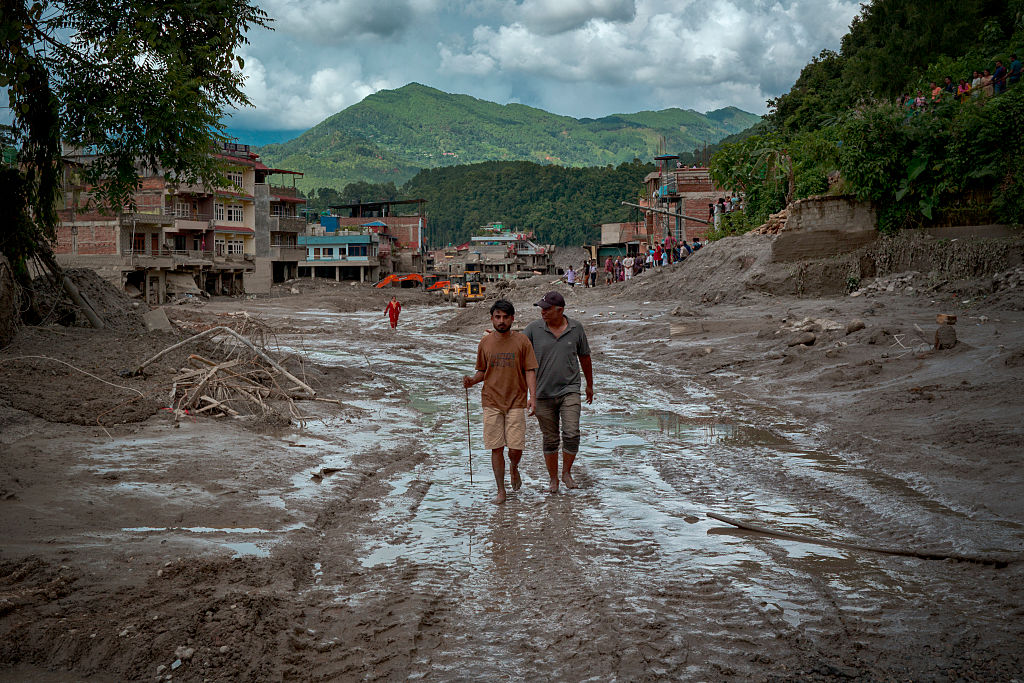
A glacial rock and ice collapse sent a torrent of water and debris through Nepal and the Chinese-administered region of Tibet on August 26. It killed more than 1,400 people, left thousands more missing and destroyed homes, bridges, roads and hydropower plants. Nepal’s finance and environment ministers quickly appealed to the FRLD board for funds, saying that “time is of the essence”.
Their call was followed swiftly by a letter from developing country FRLD board members urging the board’s co-chairs to organise an extraordinary meeting to allocate funds to Nepal.
But developed countries initially called for an informal consultation rather than a full board meeting. It took a further 45 days for the board’s co-chairs to organise an extraordinary board meeting for October 22 and to draft a motion for adoption.
Fill the Fund called for a permanent way of the fund rapid responding to disasters as “Nepal should not have required historic letters, an informal drafting group and the Fund’s first-ever extraordinary meeting simply to unlock an emergency response. The next country cannot wait two months and a bureaucratic marathon. Speed must be built in, not improvised.”
The post UN’s loss and damage fund set to give Nepal $20m for flood recovery appeared first on Climate Home News.
UN’s loss and damage fund set to give Nepal $20m for flood recovery
