

Welcome to Carbon Brief’s DeBriefed.
An essential guide to the week’s key developments relating to climate change.
This week
Deadly flooding
VALENCIA FLOODS: Spain is facing its worst flooding “in generations”, with more than 158 people killed in its third-largest city, Valencia, BBC News reported. On Thursday, more than 1,200 emergency staff worked to rescue people “as rains continued to threaten parts of the country”, the broadcaster said. An editorial in Spanish newspaper El País described the event as “a painful reminder that Spain is on one of the front lines of the climate crisis”.
CLIMATE ATTRIBUTION: The Associated Press reported that, according to a “rapid but partial” attribution study by World Weather Attribution, climate change “made Spain’s rainfall about 12% heavier and doubled the likelihood of a storm as intense as this week’s deluge of Valencia”. The Financial Times reported that sea surface temperatures “far above normal levels” in the Mediterranean helped to fuel the storm.
NEW DANGER: Meanwhile, Tropical Storm Trami has triggered devastating floods and landslides in the Philippines, CNN reported. The outlet quoted president Ferdinand Marcos, who said: “This is climate change. This is all new, so we have to come up with new solutions.” Authorities have reported at least 150 deaths due to the storm and a subsequent typhoon that has struck the region, according to the Philippine Star. Meanwhile, Taiwan also faced its largest typhoon in decades, the Guardian reported.
UK climate plans
CLEAN ENERGY BOOST: The first budget of the new UK Labour government contained plans to “beef up” investment in its “clean energy mission”, BusinessGreen reported. The website pointed to new fiscal rules to boost public spending on “green infrastructure”, plus investment in carbon capture and storage (CCS), green hydrogen and electric car supply chains.
GREEN BUDGET?: The Guardian said “reactions were mixed” on how “green” the budget was. The newspaper noted that, despite higher taxes on air passengers, the government was criticised for maintaining a “freeze” on fuel duty for petrol and diesel and loosening a cap on the price of bus tickets. Carbon Brief has published a rundown of the budget’s key climate and energy announcements.
NEW GOAL: Meanwhile, the UK government’s climate adviser the Climate Change Committee (CCC) has recommended that the nation should make an international pledge to cut its emissions to 81% below 1990 levels by 2035, according to the Press Association. The advice aligns with the UK’s existing domestic target, the Financial Times added. Carbon Brief covered the CCC’s advice, which will influence the target the UK is expected to present at the upcoming COP29 climate summit.
Around the world
- BAD RECORD: Greenhouse gases in the atmosphere reached “record” levels in 2023, with carbon dioxide (CO2) at a concentration last seen a few million years ago, according to new World Meteorological Organization figures covered by BBC News.
- NO DEAL: The EU has imposed tariffs on Chinese-made electric vehicles after China failed to secure a deal to halt their passage, according to the South China Morning Post. In response, Reuters reported that China has told carmakers to halt big investments in European countries that support the tariffs, including France and Italy.
- RISING SEAS: At a meeting in Samoa, Commonwealth nations agreed on an “ocean declaration”, which recognised existing maritime boundaries in nations that lose land to sea-level rise, according to the Associated Press.
- FAKE COP: “Apparently fake” social media accounts are being used to boost Azerbaijan’s hosting of COP29, according to a Global Witness investigation reported by the Guardian. The accounts have been drowning out online criticism of the nation’s poor record on human rights, it added.
8.3%
The proportion by which EU greenhouse gas emissions fell in the past year – the sharpest drop since the pandemic, but “still not on track” for its climate targets, reported EuroNews.
Latest climate research
- A new study in the journal npj Climate and Atmospheric Science suggested that more than half of the 60,000 deaths caused by Europe’s summer heatwave of 2022 can be attributed to global warming.
- A global area of forest bigger than Mexico has the potential for natural forest restoration, which could store more than 23bn tonnes of carbon over the course of three decades, according to new research published in Nature.
- Only one in seven news articles published in the English-language press in India about a 2022 heatwave mentioned the links to climate change, new research in Environmental Communication found. The figure was even lower for articles written in Hindi, Telugu and Marathi, it added.
(For more, see Carbon Brief’s in-depth daily summaries of the top climate news stories on Monday, Tuesday, Wednesday, Thursday and Friday.)
Captured

Additions of new solar and wind generating capacity in China continue to break last year’s records, according to new analysis for Carbon Brief by Lauri Myllyvirta, lead analyst at the Centre for Research on Energy and Clean Air. The growth in China’s solar-power output this year alone is on track to equal the total power generation of Australia or Vietnam in 2023, based on growth rates during the first nine months of the year. The wider analysis by Myllyvirta found that China’s emissions remained flat in the third quarter of the year, leaving open the possibility that its emissions could drop in 2024.
Spotlight
Coming to consensus in Cali?
This week, Carbon Brief reports on the ground in Cali, Colombia, as the COP16 biodiversity talks inch towards their finale.
Tensions are running high and energy is running low as COP16 nears its end, with plenary sessions dragging on long into the nights.
Connectivity issues have plagued the two weeks of the summit, with WiFi signals shaky at best. Translation services have also proven cumbersome in both negotiating rooms and the press centre. Countries with small delegations have complained of being forced to prioritise certain negotiation tracks, while being shut out of others due to a lack of capacity.
Rather than coming towards consensus in the summit’s final days, observers tell Carbon Brief, countries are seemingly entrenching their positions even further.
In a statement shared with Carbon Brief, Oscar Soria, an activist with the Common Initiative and a veteran COP-goer, said:
“What we are seeing at this COP is an unprecedented high level of distrust between developing and developed countries.”
With the talks scheduled to end on Friday, Carbon Brief analysis shows that there are still nearly 700 brackets denoting areas of disagreement remaining in the decision texts. (Biodiversity COPs tend to run over their scheduled finish time.)
Below are four of the key issues negotiators are tasked with addressing – and how progress has been made on each.
Finance
Negotiations around finance at COP16 fall under two tracks: mobilising funds; and the financial mechanism for disbursing them.
Developing countries are unsatisfied with a decision at COP15 to create a Global Biodiversity Framework Fund – hosted at the Global Environment Facility in the US – and would rather see a fund that is governed by the COP itself, while developed countries want to maintain the status quo.
On resource mobilisation, money has been slow to trickle in, with additional pledges made at the summit towards the new fund totalling just $163m.
Carbon Brief understands that it is looking increasingly likely that parties will agree to revisit the issue during intersessional meetings next year.
Digital sequence information
The use of genetic resources, known as digital sequence information (DSI), is one of the key issues at COP16 – and is tied in closely to the fights around finance.
Biodiverse countries, many of whom are in the global south, want mandatory payments from companies that profit from genetic code sourced within their borders (for example, genes that are used in drug development).
Countries with strong pharmaceutical and other industries are pushing for voluntary payments only. As of Thursday evening, both options remained on the table.
Indigenous rights
Another key topic at COP16 is how to recognise the contributions of Indigenous people, who play an outsized role in protecting biodiversity globally.
In Cali, countries have agreed to adopt a programme of work to implement Article 8(j) of the Convention on Biological Diversity (CBD), which deals with respecting and preserving Indigenous knowledge.
However, Indigenous representatives are also calling for negotiators to agree to a new subsidiary body on Article 8(j), with “a mandate to provide advice” to the CBD.
Monitoring framework
In 2022, countries agreed to the Kunming-Montreal Global Biodiversity Framework, a landmark deal often described as the “Paris Agreement for nature”.
In Cali, negotiators have been tasked with coming up with a set of metrics that can be used to monitor countries’ implementation of the framework.
Discussions so far have been slow, but productive, observers told Carbon Brief.
The framework consists of sets of both mandatory and optional indicators, along with an annex containing technical details.
The general sense is that the monitoring framework that is being negotiated is not perfect, but the need to come to a decision – so countries can monitor their progress ahead of a “stocktake” at the next COP – means parties should agree to the framework here, with a promise to revisit and revise it going forward.
(Carbon Brief will publish a full summary of the COP16 talks after countries reach a deal.)
Watch, read, listen
‘DISTURBING’ PROGRESS: In Cali, the Guardian’s Patrick Greenfield reported on “alarm” raised by experts at a “disturbing” lack of progress at COP16.
AFRICAN ADAPTATION: For African Arguments, two policy experts called for the COP29 climate summit to adopt a clear adaptation goal amid growing climate impacts in Africa.
STOCKTAKE: For BBC Radio 4, environmental journalist Roger Harrabin examined whether the US election of 2000 was “the year we lost climate”.
Coming up
- 4-8 November: 12th session of the World Urban Forum, Cairo, Egypt
- 5 November: US presidential election
- 5 November: UN Environment Programme event on national adaptation plans, online
- 7 November: UN Environment Programme Adaptation Gap Report 2024 launch
Pick of the jobs
- New York Times, climate writer and climate multimedia editor | Salary: $111,050-$125,000 and $111,712-$140,000. Location: New York
- Nature Reviews Earth and Environment, locum associate or senior editor | Salary: $74,000-$91,000. Location: London or New York
- Mayor of London, senior policy and programme officer – climate change mitigation | Salary: £51,029. Location: London
- Norwegian Church Aid and DanChurchAid Joint Country Programme Zambia, senior programme officer, climate and environment stewardship | Salary: Unknown. Location: Lusaka, Zambia
DeBriefed is edited by Daisy Dunne. Please send any tips or feedback to debriefed@carbonbrief.org.
This is an online version of Carbon Brief’s weekly DeBriefed email newsletter. Subscribe for free here.


The post DeBriefed 1 November 2024: Spain’s deadly floods; UK budget ‘mixed’ on climate; Countries inch towards a deal at COP16 appeared first on Carbon Brief.

Jacynta Fa’amau is a Pacific campaigner at global grassroots climate movement 350.org and a secretariat member of Pacific Climate Warriors.
The first thing that struck me was the sheer size of Queensland’s Saraji coal mine. Standing at the edge of the enormous pit, my brain scrambled for words as I scanned the earth’s open wound – a whole island could probably fit inside it.
Looking down, I noticed footprints of an emu and a koala, pressed and dried in what was once a puddle – signs of how drought had driven animals in desperate search of water, so dangerously close to the coal trucks and heavy machinery ahead.
Earlier this year, I joined a small group of Pacific Islanders on a journey through the Bowen Basin to learn from First Nations communities battling Australia’s mammoth coal industry. Of the more than 40 coal mines operating in the area, BHP & Mitsubishi Alliance’s Saraji mine is one of the largest. So it came as a painful shock to us when in August, the Australian government approved the mine’s extension just months after our visit.
-
As COP31 co-host, Australia should make its polluters pay for climate damage
With UN climate funds running short on cash, now is the time to start taxing the companies whose emissions are driving harm in the Pacific and other vulnerable parts of the world -
At pre-COP, UN climate chief warns of heat threat to mothers and babies
The spotlight on maternal health came on the first day of the pre-COP31 meeting in Fiji, where Pacific concerns are set to top the agenda as ministers gather for talks

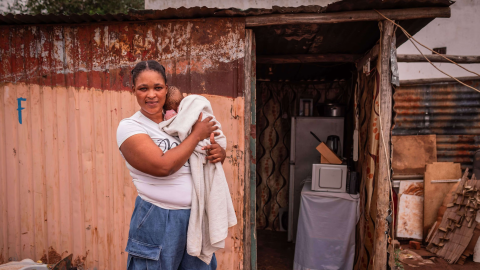
Witnessing coal extraction is devastating. It is bad enough to see what pillaging tonnes of coal can do to a mine’s immediate surroundings: dry creek beds, dwindling wildlife, denuded land. But to know that this coal will be shipped across the ocean, bring air pollution, and eventually lead to the destruction of Pacific islands thousands of miles away is another kind of heartbreak.
Rising ocean waters
I’m an Australian-born Samoan. In 2002, I visited my family home for the first time. My father took me to the rural community where generations of my family were raised. He did not have the words to describe how much has changed since rising ocean waters had taken away almost a third of the beach.
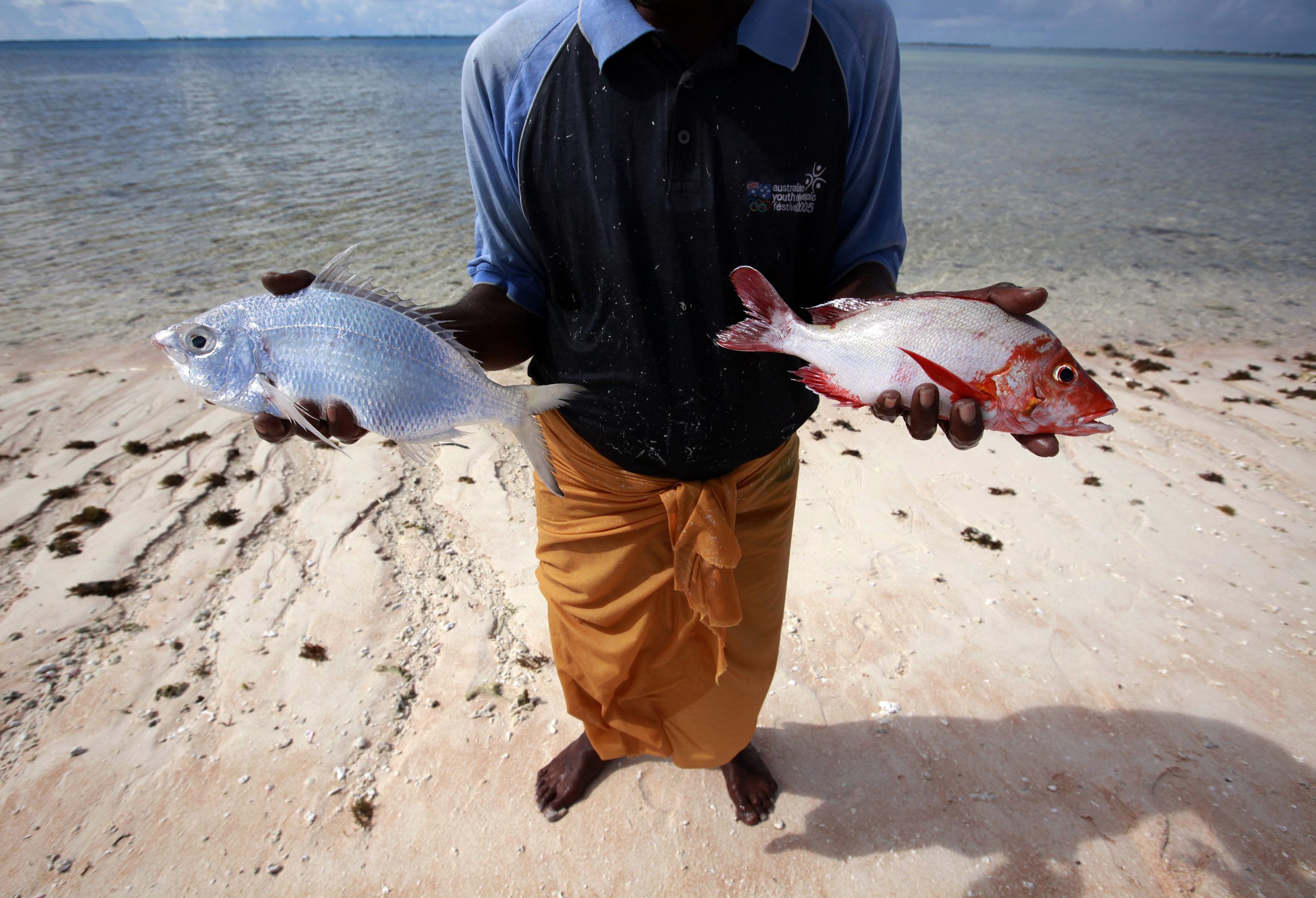
I learned of how we had to relocate my great‑great‑grandparents’ grave to higher ground twice in the last 15 years. Of how my cousins have to paddle out further to sea to catch fish, since warmer waters have destroyed much of the reef. Of how the ocean crashes so close to my uncle’s home that he had to build a new house further away.
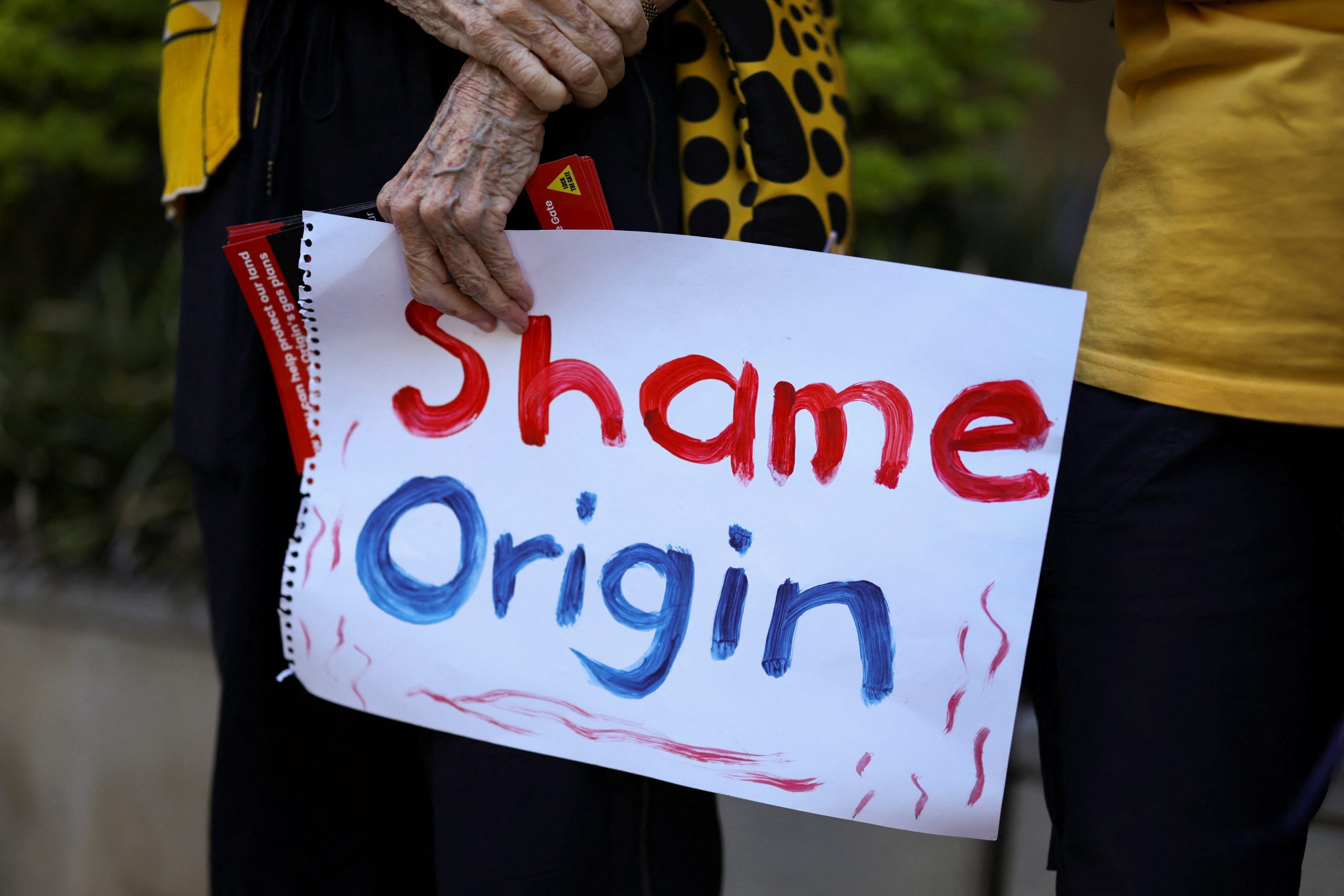
We saw reflections of our own climate destruction in the Pacific when we shared these stories with our First Nations relatives at the edge of the Saraji mine. Murrawah Johnson and Teila Watson, both Birri Gubba and Gangulu women, made clear connections between their struggles and ours. “We don’t get to inherit our land and we don’t get to inherit our traditional roles. We are fighting a war on extinction,” Murrawah said.
Coal extraction devastated their lands and cultures – totems have disappeared, fresh water has become scarce – while the effects of using it have devastated ours. “King tide, cyclones, all the violence that has been enacted on your country and people is because of the violence that has been allowed here, to us and our country,” Teila said.
Wearing the mantle of climate leadership
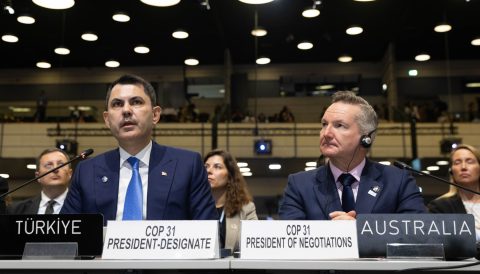
This week, Australia is assuming the mantle of climate leadership as co-president and head of negotiations of this year’s UN Climate Change Conference, COP31. It will lead on deliberating the summit’s priorities as world leaders and climate negotiators descend on Fiji and Tuvalu for the pre-COP meetings.
Ironically, just days before the pre-COP began, the New South Wales Independent Planning Commission approved the largest-ever coal project the state has seen, set to emit an extra 800 million tonnes of carbon emissions. I joined the Pacific Climate Warriors and other communities in submitting about 4,000 appeals to oppose the project – yet these all fell on deaf ears.
-
Fossil fuel expansion threatens COP31 hosts’ credibility, experts warn
Türkiye and Australia are pushing coal, oil and gas at home with no national timeline for their own fossil fuel phase-out -
This Australian coal community is co-designing its own green future
The mining town of Collie offers a promising example of how to survive – and even thrive – amid the global transition to net-zero emissions

But the fight is not yet over. The project still requires federal approval to proceed, so every promise that Australia makes while at the helm of the climate talks counts. These promises will be measured against actual decisions it makes at home: to either lock us into more decades of climate pollution, or begin shutting down coal and gas once and for all.
Pacific leaders have made it clear that countries must align their policies with the 1.5-degree warming goal, a limit that we already know will be breached within the decade. Any chance of keeping this still within reach requires an immediate end to fossil fuel expansion and concrete plans to phase out existing projects. But success will be an uphill battle if COP31’s own head of negotiations refuses to lead by example.
Australia remains the second-largest coal exporter in the world. It is one of the very few industrialised countries under the Paris Agreement’s Annex I that still has no coal phase-out plan. Since 2022, the Albanese government has approved 37 new, expanded or extended coal, oil and gas projects. It is thus unsurprising that its own mitigation policies have been rated by Climate Action Tracker as “insufficient”, even without factoring in fossil fuel exports and related expansion.
Keeping 1.5C alive
Australia must course-correct to earn the mantle it has been given, especially by Pacific nations that backed the country’s bid for the COP31 co-presidency. As a first step, the government must end all coal expansion and explicitly declare a coal phase-out date. It’s the only way to show that it’s capable of leadership that moves beyond endlessly deliberating the “if”, and starts implementing the “how” of keeping the 1.5C target alive.
The dread I felt staring down at the abyss on the edge of that coal mine months ago still exists. I carry it with me as I show up at the pre-COP to demand that leaders heed the calls of Pacific people. But it is tempered with resolve to keep our lands and communities alive. We remain steadfast in our efforts to secure an outcome that protects people everywhere and bring