

As world leaders and policymakers, including the Australian government, converge at the International Seabed Authority this month to deliberate on the future of our oceans, a ground breaking discovery has emerged from the depths of the Pacific.
A recent study published in one of the most prestigious scientific journal, Nature Geoscience has unveiled a remarkable phenomenon: charged metallic lumps producing oxygen four kilometers below the ocean’s surface, in an environment completely devoid of sunlight. These “dark oxygen” sources are not the product of photosynthesis, as was once thought, but rather a result of the unique properties of potato-shaped metallic nodules. These nodules are key players in oxygen production and with further investigation, the discovery team were amazed to find they carried an electric charge, much like a tiny AA battery.
This finding, which was uncovered by chance when lead researcher Professor Andrew Sweetman and his colleagues were investigating a wide area between Mexico and Hawaii, casts doubt on our knowledge of how oxygen is produced. It was once thought that only living things, like plants and algae, could make oxygen through a process called photosynthesis, which requires sunshine. Through the fascinating process of seawater electrolysis, it was discovered that this charge can split seawater into hydrogen and oxygen.
What does this mean for the future of deep-sea mining in the Pacific?
The implications are significant. The potential impact of mining operations on these enigmatic metallic lumps and their surrounding ecosystems must be carefully considered. The International Seabed Authority’s decisions will play a crucial role in determining whether these deep-sea habitats will be preserved or exploited. It will determine the future of the Pacific communities relying on the ocean for our very survival.
Additionally, with The Metals Company partially funding the study, there are pressing questions about their stance on mining activities in light of this new information. Will they reconsider their plans to mine in these regions?
This discovery not only challenges existing scientific patterns but also raises urgent environmental concerns. The potential ramifications of disrupting these oxygen-producing nodules could have far-reaching effects on the delicate balance of deep-sea ecosystems. It’s imperative that everyone, including governments, corporations, and conservationists, tread carefully to ensure the protection of these crucial habitats.
As we move forward, we will continue to fight for the preservation of our oceans and their incredible, yet fragile, ecosystems. The time to act is now—let’s ensure that our future decisions honour and protect the mysteries of the deep.
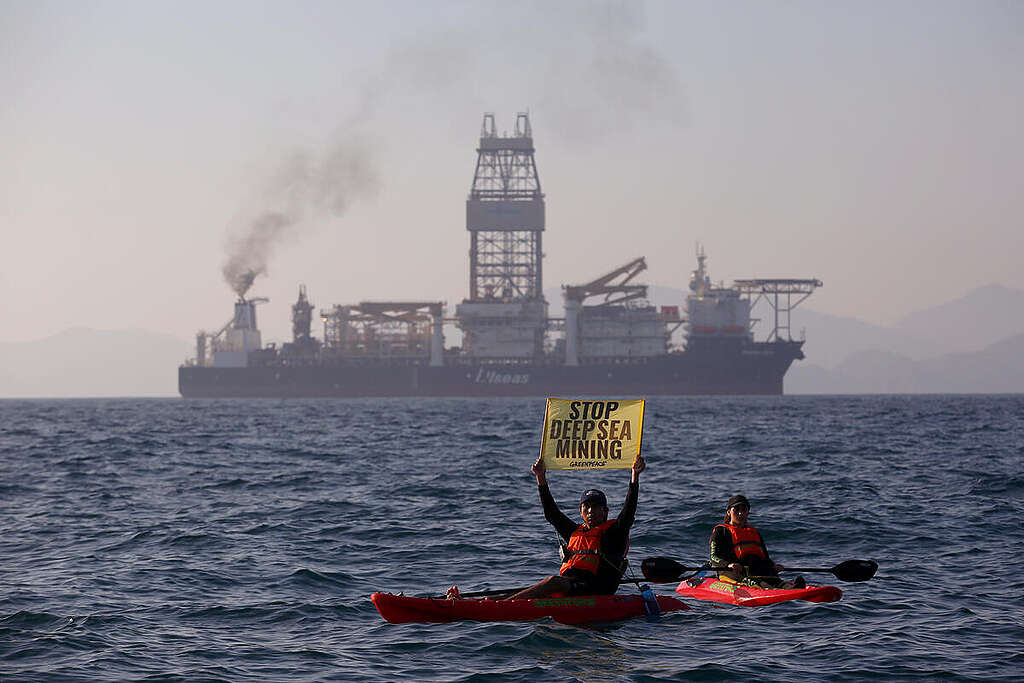
Stop Deep Sea Mining before it starts
Greedy companies want to mine the seafloor for profit. 2 million people worldwide say no to deep sea mining – will you join them?
Dark Oxygen Discovery in the Pacific Ocean: What Lies Beneath?




Climate Change
Summit Sold Its Midwest Pipeline as a Carbon Solution. Now, It’ll Be Used for Fossil Fuels.
The pivot reveals a company adapting to Trump’s “drill, baby, drill” agenda and looking to cash in on recently boosted tax incentives for enhanced oil recovery.
For four years, battles over private property rights have gridlocked state legislatures across the Midwest and stalled plans for a pipeline to transport liquified carbon dioxide from ethanol plants in the region.
Summit Sold Its Midwest Pipeline as a Carbon Solution. Now, It’ll Be Used for Fossil Fuels.
“Today, as in the beginning, life is still made out of carbon dioxide, and the world’s problems are made out of carbon dioxide as well.”
From our collaborating partner Living on Earth, public radio’s environmental news magazine, an interview by Jenni Doering with Peter Brannen, the author of “The Story of CO2 Is the Story of Everything.”
The 4-Billion-Year Perspective to Understanding Earth’s Current Climate Crisis
Climate Change
Trump’s ‘God Squad’ Will Weigh Gulf Oil Drilling Against the Survival of Endangered Whales and Turtles
Citing national security, the Trump administration wants to exempt all federally regulated offshore oil from protections for endangered animals—even if it could cause their extinction.
The Trump administration is turning to the nuclear option on endangered-species protections in the name of national security.



-
Greenhouse Gases8 months ago
Guest post: Why China is still building new coal – and when it might stop
-
Climate Change8 months ago
Guest post: Why China is still building new coal – and when it might stop
-

 Greenhouse Gases2 years ago
嘉宾来稿:满足中国增长的用电需求 光伏加储能“比新建煤电更实惠”
-
Climate Change2 years ago
Bill Discounting Climate Change in Florida’s Energy Policy Awaits DeSantis’ Approval
-

 Climate Change2 years ago
嘉宾来稿:满足中国增长的用电需求 光伏加储能“比新建煤电更实惠”
-
Climate Change Videos2 years ago
The toxic gas flares fuelling Nigeria’s climate change – BBC News
-

 Carbon Footprint2 years ago
US SEC’s Climate Disclosure Rules Spur Renewed Interest in Carbon Credits
-

 Renewable Energy5 months ago
Sending Progressive Philanthropist George Soros to Prison?