Connect with us

Published

on

calpine

Constellation, the biggest clean energy provider in America announced to acquisition of Calpine Corp. The deal, worth $16.4 billion, involves cash and stock. This strategic merger will combine Constellation’s leadership in emissions-free electricity with Calpine’s extensive portfolio of low-emission natural gas, renewable energy, and its massive geothermal operations.

This is how they plan to create America’s largest clean energy provider in the U.S., serving 2.5 million customers nationwide. Furthermore, Constellation will offer innovative energy solutions to reduce costs and support America’s sustainability goals.

Constellation’s Big Bet on Calpine: Earnings Boost and Expansion

The press release revealed that Constellation will buy Calpine with 50 million shares, $4.5 billion in cash, and by taking on $12.7 billion of its debt. The total cost, after considering Calpine’s cash flow and tax benefits, is $26.6 billion. This makes the deal worth 7.9 times its 2026 earnings.

Additionally, Constellation’s shareholders will benefit significantly. They expect earnings per share to rise over 20% in 2026, adding at least $2 in future years. The acquisition will also bring in over $2 billion in cash each year, allowing strong reinvestment. Constellation aims for double-digit growth for the rest of the decade.

The deal should be finalized within a year, pending certain conditions and approvals. This includes the Hart-Scott-Rodino Act waiting period and clearance from various regulatory bodies. Major Calpine shareholders, like ECP, CPP Investments, and Access Industries, back the deal. They’ve agreed to hold their shares for 18 months.

After the deal, Constellation will stay in Baltimore and keep a strong presence in Houston, where Calpine is based.

Joe Dominguez, president and CEO of Constellation remarked,

“This acquisition will help us better serve our customers across America, from families to businesses and utilities. By combining Constellation’s unmatched expertise in zero-emission nuclear energy with Calpine’s industry-leading, best-in-class, low-carbon natural gas and geothermal generation fleets, we will be able to offer the broadest array of energy products and services available in the industry. Both companies have been at the forefront of America’s transition to cleaner, more reliable and secure energy, and those shared values will guide us as we pursue investments in new and existing clean technologies to meet rising demand. What makes this combination even more special is it brings together two world-class teams, with the most talented women and men in the industry, who share a noble passion for safety, sustainability, operational excellence and helping America’s families, businesses and communities thrive and grow. We look forward to welcoming the Calpine team upon closing of this transaction.”

Constellation’s Role in U.S. Carbon-Free Energy

Constellation is a key partner in the U.S. Department of Energy (DOE) and New York State Energy Research and Development Authority (NYSERDA) grants. Under this, the company focuses on clean energy technologies like direct air capture of CO2, long-duration energy storage, and clean hydrogen production.

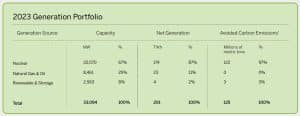
Its diverse portfolio includes America’s largest nuclear fleet and other renewable resources like hydroelectric, wind, solar, natural gas, and oil. Some promising services include:

  • Supplies 10% of America’s clean and carbon-free energy and nearly 90% of its annual output is carbon-free.
  • Offers sustainable gas and carbon offset solutions, such as renewable natural gas (RNG) and carbon credits, to help retail gas customers meet their decarbonization goals.

Notably, Constellation Energy Solutions (CES) designs energy-efficient and renewable projects for commercial clients, including government and healthcare sectors. As per its sustainability report, in 2023, CES helped avoid more than 227,000 metric tons of CO2.
Constellation Source: Constellation

Calpine’s Decarbonization Strategy

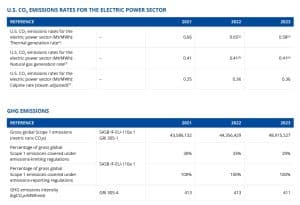
Calpine plays a crucial role in providing clean, affordable, and reliable energy, generating 27,000 megawatts of electricity—enough to power 27 million homes. It also helps customers responsibly manage their energy use and guides them toward a low-carbon future.

Additionally, the company advocates a broad approach to tackling climate change, integrating renewable sources like solar and wind while ensuring reliable backup power to prevent blackouts and rising energy costs. Most crucial is its massive geothermal plant that ensures grid stability during peak usage

Calpine’s decarbonization strategy also focuses on:

  • Expanding operations at The Geysers- the largest geothermal complex in the world
  • Advancing battery storage and natural gas fleet
  • Exploring more prospects for carbon capture technologies
CALPINESource: Calpine

Building the Cleanest and Most Reliable Energy Portfolio in the U.S.

The combined energy portfolio will have nearly 60 gigawatts of zero- and low-emission power capacity. Jointly they plan to expand into Texas and other key states like California, New York, and Pennsylvania.

Constellation will further solidify its position by expanding its renewable energy portfolio. This includes acquiring Calpine’s Geysers facility in Northern California. Additionally, it will also advance its nuclear projects, invest in renewables, and increase nuclear output. One significant milestone is to restart the Crane Clean Energy Center in Pennsylvania.

All these prospects would subsequently increase cash flow and drive innovation and growth in clean energy across the U.S.

Combining Energy Excellence with Community Care

The merger brings together teams with a strong culture of safety, operational excellence, and customer service. Both companies are recognized for delivering reliable, cost-effective energy solutions.

Calpine’s natural gas plants will ensure grid reliability as customers shift to cleaner energy. Both companies have invested in carbon sequestration technology to support this purpose.

Apart from clean energy goals, both companies have plans to boost community development by creating jobs, paying taxes, and fostering growth. It will donate over $21.1 million each year and run volunteer programs in underserved areas.

Andrew Novotny, president and CEO of Calpine said,

“This is an incredible opportunity to bring together top tier generation fleets, leading retail customer businesses and the best people in our industry to help drive a stronger American economy for a cleaner, healthier and more sustainable future. Together, we will be better positioned to bring accelerated investment in everything from zero-emission nuclear to battery storage that will power our economy in a way that puts people and our environment first. It’s a win for every American family and business in our newly combined footprint that wants clean and reliable energy. ECP’s commitment to these goals over the last seven years was critical to the progress we have made as a company and to laying a foundation for future growth.” 

Post-merger, Novotny will join Constellation, ensuring continuity and leadership for the combined business.

In conclusion, the partnership between Constellation and Calpine is set to strengthen the U.S.’s climate goals and support the objectives of the Paris Agreement. By combining resources and expertise, the two companies will create a powerful force in clean energy for a decarbonized future.

The post Constellation and Calpine’s $16.4B Deal Boosts U.S. Clean Energy Transition appeared first on Carbon Credits.

Continue Reading

Carbon Footprint

Why a forest with more species stores more carbon

Published

on

A forest is not just trees. The number of species it holds, from canopy giants to understorey shrubs to soil fungi, directly determines how much carbon it can absorb, and, more importantly, how much it can keep over time. Buyers of carbon credits increasingly ask a reasonable question: Is the carbon in this project long-lasting? The science of biodiversity has a clear answer.

Continue Reading

Carbon Footprint

OpenAI Hits Pause on $40B UK AI Project: Energy Costs Shake Data Center Economics

Published

on

OpenAI Hits Pause on $40B UK AI Project: Energy Costs Shake Data Center Economics

ChatGPT developer OpenAI has paused its flagship UK data center project, known as “Stargate UK,” citing high energy costs and regulatory uncertainty. The project was part of a broader £31 billion ($40+ billion) investment plan aimed at expanding artificial intelligence (AI) infrastructure in the country.

The initiative was designed to deploy up to 8,000 GPUs initially, with plans to scale to 31,000 GPUs over time. It was aimed to boost the UK’s “sovereign compute” capacity. This means building local infrastructure to support AI development and reduce reliance on foreign systems.

However, the company has now paused development. An OpenAI spokesperson stated that they:

“…support the government’s ambition to be an AI leader. AI compute is foundational to that goal – we continue to explore Stargate UK and will move forward when the right conditions such as regulation and the cost of energy enable long-term infrastructure investment.”

Energy Costs Are Now a Core Constraint

The main issue is energy. AI data centers require large amounts of electricity to run GPUs and cooling systems.

In the UK, industrial electricity prices are among the highest in developed markets. Recent estimates show costs at around £168 per megawatt-hour, compared to £69 in France and £38 in Texas. This gap creates a major disadvantage for large-scale data center investments.

AI workloads are especially power-intensive. A single large data center can consume as much electricity as tens of thousands of homes. As AI adoption grows, this demand is rising quickly.

Globally, the International Energy Agency estimates that data centers could consume over 1,000 terawatt-hours (TWh) of electricity by 2030, up sharply from about 415 TWh in 2024. This growth is largely driven by AI. 

data center electricity use 2035
Source: IEA

The result is clear. Energy is no longer just a cost. It is a key factor in where AI infrastructure gets built.

Regulation Adds Another Layer of Risk

Energy is only part of the challenge. Regulation is also slowing investment. In the UK, uncertainty around AI rules, especially copyright laws for training data, has created hesitation among companies.

Earlier proposals to allow AI firms to use copyrighted content were withdrawn after backlash. This left companies without clear guidance on compliance.

For large infrastructure projects, this uncertainty increases risk. Data centers require billions in upfront investment. Companies need stable rules before committing capital.

Planning delays and grid connection timelines also add friction. These factors increase both cost and project timelines.

Together, energy costs and regulatory uncertainty create a difficult environment for hyperscale AI infrastructure.

OpenAI’s Global Infrastructure Expands, But More Selectively

Despite the pause, ChatGPT-maker is still expanding globally. The company is investing heavily in AI infrastructure through partnerships with Microsoft, NVIDIA, and Oracle. It is also linked to a much larger $500 billion “Stargate” initiative in the United States, focused on building next-generation AI data centers.

At the same time, the company faces rising costs. Reports suggest OpenAI could lose billions of dollars annually as it scales infrastructure to meet demand.

This reflects a broader industry shift. AI is becoming more like energy or telecom infrastructure. It requires large capital investment, long timelines, and stable operating conditions.

The pause also highlights a deeper issue. AI growth is increasing pressure on energy systems and the environment.

The Hidden Carbon Cost Behind Every AI Query

ChatGPT and similar tools rely on large data centers. These facilities already account for about 1% to 1.5% of global electricity use. Projections for their energy use vary widely due to various factors. 

Each individual query may seem small. A typical ChatGPT request can use about 0.3 watt-hours of electricity, which is relatively low. However, usage at scale changes the picture.

ChatGPT now serves hundreds of millions of users. Even small energy use per query adds up quickly. Training models is even more energy-intensive. For example, training GPT-3 required about 1,287 megawatt-hours of electricity and produced roughly 550 metric tons of CO₂.

chatgpt environmental footprint

Newer models are even larger. Some estimates suggest training advanced models like GPT-4 could emit up to 15,000 metric tons of CO₂, depending on the energy source.

At the system level, the impact is growing fast. AI systems could generate between 32.6 and 79.7 million tons of CO₂ emissions in 2025 alone. By 2030, AI-driven data centers could add 24 to 44 million tons of CO₂ annually.

AI servers annual carbon emissions
Note: carbon emissions (g) of AI servers from 2024 to 2030 under different scenarios. The red dashed lines in e–g denote the forecast footprint of the US data centres, based on previous literature. Source: https://doi.org/10.1038/s41893-025-01681-y

Looking further ahead, global generative AI emissions could reach up to 245 million tons per year by 2035 if growth continues. These numbers show a clear pattern. Efficiency is improving, but total demand is rising faster.

Big Tech Scrambles to Balance AI Growth and Emissions

OpenAI has not published a detailed standalone net-zero target. However, its operations rely heavily on partners such as Microsoft, which has committed to becoming carbon negative by 2030.

The company has acknowledged that energy use is a real concern. Leadership has pointed to the need for more renewable energy, including nuclear and clean power, to support AI growth.

Across the industry, companies are responding in several ways:

  • Improving model efficiency to reduce energy per query
  • Investing in renewable energy and long-term power contracts
  • Exploring new cooling systems to reduce water and energy use

Efficiency gains are already visible. Some AI systems have reduced energy per query by more than 30 times within a year, showing how quickly technology can improve. Still, total emissions continue to rise because demand is scaling faster than efficiency gains.

The Global AI Infrastructure Race

The pause in the UK highlights a larger trend. AI infrastructure is becoming a global competition shaped by energy, policy, and cost.

Regions with lower energy prices and faster permitting processes have an advantage. The United States and parts of the Middle East are attracting large-scale AI investments due to cheaper power and supportive policies.

At the same time, governments are trying to attract these projects. The UK has pledged billions to support AI growth and improve compute capacity. But this case shows that policy ambition alone is not enough. Companies need reliable energy, clear rules, and predictable costs.

AI’s Next Phase Will Be Decided by Energy, Not Code

The decision by OpenAI does not signal a retreat from AI investment. Instead, it reflects a shift in priorities.

Companies are becoming more selective about where they build infrastructure. They are focusing on locations that offer the right mix of energy access, cost stability, and regulatory clarity.

The UK project may still move forward, but only if conditions improve. For now, the message is clear. The future of AI will not be shaped by technology alone. It will also depend on energy systems, policy frameworks, and long-term investment conditions.

The post OpenAI Hits Pause on $40B UK AI Project: Energy Costs Shake Data Center Economics appeared first on Carbon Credits.

Continue Reading

Carbon Footprint

U.S. Uranium Mining Returns: UEC Launches First New Mine in a Decade

Published

on

U.S. Uranium Mining Returns: UEC Launches First New Mine in a Decade

Uranium Energy Corporation (NYSE: UEC) has started production at its Burke Hollow project in South Texas. This is the first new uranium mine to open in the U.S. in over ten years.

The project started production in April 2026 after getting final regulatory approval. This marks a big step for domestic uranium supply. It’s also the world’s newest in-situ recovery (ISR) uranium mine, which shows a move toward less harmful extraction methods.

Burke Hollow was originally discovered in 2012 and spans roughly 20,000 acres, with only about half of the site explored so far. This suggests significant long-term expansion potential as additional wellfields are developed.

The mine’s output will go to UEC’s Hobson Central Processing Plant in Texas. This plant can produce up to 4 million pounds of uranium each year.

A Scalable ISR Platform Expands U.S. Uranium Capacity

The Burke Hollow launch transforms UEC into a multi-site uranium producer in the United States. The company runs two active ISR production platforms. The second one is at its Christensen Ranch facility in Wyoming; both are shown in the table from UEC.

UEC burke hollow resources

UEC Christensen Ranch resources

This “hub-and-spoke” model allows uranium from multiple wellfields to be processed through centralized facilities, improving efficiency and scalability. UEC’s operations in Texas and Wyoming are now active. This gives them a licensed production capacity of about 12 million pounds per year across the U.S.

ISR mining plays a key role in this strategy. Unlike conventional mining, ISR involves circulating solutions underground to dissolve uranium and pump it to the surface. This reduces surface disturbance and can lower environmental impact compared to open-pit or underground mining.

Burke Hollow is the largest ISR uranium discovery in the U.S. in the last ten years. This boosts its long-term value as a domestic resource.

Unhedged Strategy Pays Off as Uranium Prices Rise

UEC’s production launch comes at a time of strong uranium market conditions. The company uses a fully unhedged strategy. This means it sells uranium at current market prices instead of securing long-term contracts.

This approach has recently delivered strong financial results. In early 2026, UEC sold 200,000 pounds of uranium for $101 each. This price was about 25% higher than average market rates. The sale brought in over $20 million in revenue and around $10 million in gross profit.

The strategy allows the company to benefit directly from rising uranium prices, which have been supported by:

  • Growing global nuclear energy demand
  • Supply constraints in key producing regions
  • Increased long-term contracting by utilities

Unhedged exposure raises risk in downturns, but offers more upside in strong markets. UEC is currently taking advantage of this.

Nuclear Energy Growth Is Driving Demand for Uranium

The timing of Burke Hollow’s launch aligns with a broader global shift back toward nuclear energy. Governments are increasingly turning to nuclear power as a reliable, low-carbon energy source.

nuclear power capacity additions IAEA projection 2024 to 2050
Source: IAEA

The International Atomic Energy Agency projects that global nuclear capacity could double by 2050, depending on policy and investment trends. This would require a significant increase in uranium supply.

In the United States, nuclear energy accounts for around 20% of electricity generation. It also produces zero carbon emissions during operations. This makes it a key component of many net-zero strategies.

There are several factors supporting renewed nuclear demand, including:

  • Development of small modular reactors (SMRs)
  • Extension of existing nuclear plant lifetimes
  • Government funding to maintain nuclear capacity
  • Rising electricity demand from data centers and electrification

As demand grows, securing a reliable uranium supply becomes increasingly important.

uranium demand and supply UEC

Reducing Import Risk: A Strategic Domestic Supply Push

The Burke Hollow project also addresses a major vulnerability in U.S. energy policy. The country currently imports about 95% of its uranium needs, leaving it exposed to global supply risks.

A large share of uranium production and enrichment capacity is concentrated in a few countries, including Russia and Kazakhstan. This concentration has raised concerns about supply disruptions and geopolitical risk.

uranium production US 2025 EIA

By expanding domestic production, UEC is helping to reduce reliance on imports and strengthen the U.S. nuclear fuel supply chain.

The company’s broader strategy includes building a vertically integrated platform covering mining, processing, and, eventually, uranium conversion. This approach aligns with U.S. government efforts to rebuild domestic nuclear fuel capabilities.

Federal programs have allocated billions to boost uranium production and enrichment. This shows how important the sector is.

Two Hubs, One Strategy: Wyoming Supports the Texas Breakthrough

While Burke Hollow is the main focus, UEC’s Christensen Ranch operation in Wyoming remains an important part of its production base.

The Wyoming site has recently received approvals for expanded wellfield development, allowing it to increase output alongside the Texas operation.

Together, the two sites form the foundation of UEC’s dual-hub production model. However, it is the Texas project that marks the first new U.S. uranium mine in over a decade, making it the central milestone in the company’s growth strategy.

Investor Momentum Builds Around Uranium Revival

The restart of U.S. uranium production is drawing strong attention from investors and industry players. Uranium markets have tightened in recent years, driven by rising demand and limited new supply.

UEC’s production launch has already had a positive market impact. The company’s share price rose following the announcement, reflecting investor confidence in its growth strategy.

UEC stock price

At the same time, utilities are increasing long-term contracting activity to secure fuel supply. This trend is expected to continue as new nuclear capacity comes online and existing plants extend operations.

Industry forecasts suggest that uranium demand will remain strong through the 2030s, supporting higher prices and increased investment in new production.

Lower Impact Mining, Higher ESG Expectations

The use of ISR mining at Burke Hollow reflects a broader shift toward more sustainable extraction methods. ISR typically reduces land disturbance and avoids large-scale excavation.

However, environmental management remains critical. Key issues include groundwater protection, chemical use, and long-term site restoration.

UEC has emphasized environmental controls and regulatory compliance in its operations. These efforts are important for maintaining social license and meeting ESG expectations.

From a climate perspective, uranium production plays an indirect but important role. Supporting nuclear energy, it helps enable low-carbon electricity generation and reduces reliance on fossil fuels.

The Bottom Line: A Defining Moment for U.S. Uranium Production

The launch of the Burke Hollow mine marks a major milestone for the U.S. uranium sector. It ends a decade-long gap in new mine development and signals renewed momentum in domestic production.

In the short term, it strengthens supply and supports rising uranium markets. In the long term, it highlights the growing role of nuclear energy in global decarbonization strategies.

UEC’s Burke Hollow shows that new uranium projects can advance in today’s market. There are still challenges, like scaling production and handling environmental risks, but progress is possible.

As demand for nuclear energy continues to grow, domestic projects like Burke Hollow will play a key role in shaping the future of energy security and low-carbon power.

The post U.S. Uranium Mining Returns: UEC Launches First New Mine in a Decade appeared first on Carbon Credits.

Continue Reading

Trending

Copyright © 2022 BreakingClimateChange.com

