

The world’s poorest countries are reeling from debt made worse by exchange rate fluctuations and worsening climate shocks, a new study has found, as officials considered ways to ease the burden at the Spring Meetings of the International Monetary Fund (IMF) and the World Bank this week.
On Friday, the International Institute for Environment and Development (IIED) issued new research showing that Least Developed Countries (LDCs) and Small Island Developing States (SIDS) have been required to take out loans for their growth and development in foreign currencies – usually US dollars – forcing them to spend billions of dollars every year repaying sovereign debt.
These poorer countries become vulnerable to currency volatility – and when extreme weather like powerful storms batters their fragile economies, their debt burden grows even bigger.
“With every climate-driven disaster, their requirement to borrow more money increases while their currency simultaneously devalues,” said Ritu Bharadwaj, IIED principal researcher and the paper’s lead author. Moreover, because the global economy is largely structured around the US dollar, “these countries are taking on all the risk associated with currency fluctuations,” she added.
Loss and damage fund to hand out $250 million in initial phase
IIED researchers examined how debt repayments and currency volatility affected 13 representative countries, and cross-referenced that data with climate modelling, showing a clear link between climate disasters and currency depreciation – which in turn leads to spiralling debt.
To solve the problem, they proposed that international financial institutions offer new loans in local currencies, while debtor nations should be allowed to swap existing debt for investments in climate, nature or social protection.
“What we’re suggesting is that creditors should take on some of that risk as part of reforms to make the global financial system fairer,” said IIED’s Bharadwaj.
At energy security talks, US pushes gas and derides renewables
The research – which focused on 13 countries across Africa, Asia and the Americas, using data from 1991 to 2022 – showed that over that 31-year period, the average value of SIDS currencies fell against the US dollar by around 265% and that of LDCs by 366%. As a result, the local currency cost of repaying their debt jumped.
Using the 2022 value of the US dollar as a baseline, the cumulative extra cost for SIDS over those three decades was $10.25 billion, the equivalent of 3% of their GDP per year. For LDCs, the cumulative value of extra repayments was $9.98 billion, equal to 6.6% of GDP.
These huge sums vastly outweigh the amounts SIDS and LDCs can spend on curbing their planet-heating emissions and adapting to climate change, and paying back debt diverts scarce resources from other day-to-day spending on healthcare and education, the study found.
Gaston Browne, prime minister of Antigua and Barbuda, said the analysis provides an “urgent and credible foundation for action”, adding that “the paper makes clear that the hidden cost of repaying debt in foreign currencies, especially during times of crisis, is a silent drain on our economies”.
“For every dollar lost to currency depreciation, there is a clinic not built, a road not repaired, a social protection programme left underfunded,” he said.
Xi commits China to full climate plan but emissions-cutting ambition still unclear
Ghana’s fossil fuel trap
Separately, another report from the Centre for Research on Multinational Corporations (SOMO) and ActionAid Ghana argued that fossil fuel companies have profited from World Bank support for multi-billion-dollar oil and gas projects in Ghana, while its people continue to suffer from power outages, unaffordable electricity and rising public debt.
In the report published on Thursday, the researchers said $2 billion in World Bank funding for oil and gas projects had led to surplus supplies and mainly benefited the private companies running the projects.
Oil and gas projects backed by big multinationals – including the Sankofa gas deal, Jubilee oil and gas project and the West African Gas Pipeline – have over-promised but under-performed, the report said. As a result, they have failed to solve Ghana’s energy and power crisis, causing the country to spend more on fuel imports or buying up costly unused gas.
Joseph Wilde-Ramsing, acting executive director of SOMO, said: “Ghanaians are paying high prices for electricity they can’t afford, while foreign oil and gas companies reap guaranteed profits.” He described the situation as one of “utter negligence, exploitation and a climate disaster rolled into one”.
“Ghana has been compelled to enter into energy agreements that are unaffordable and unsustainable,” said John Nkaw, country director of ActionAid Ghana. “These contracts seem to guarantee profits for oil giants while our government struggles to pay off debts.”
According to the World Bank, which provides guarantees for such projects in the host country to leverage capital investment, the Sankofa Gas Project – approved by the bank in 2015 – had the objective of increasing the availability of natural gas for “clean power generation”.
Multinational energy firms Eni and Vitol served as private sponsors alongside the Ghana National Petroleum Corporation, while the World Bank provided $700 million in guarantees to reduce financial and political risks.
Makhtar Diop, then World Bank Vice President for Africa, said at the time that the guarantee was the largest provided by the bank, and would allow the country to leverage up to $8 billion in foreign direct investment, thereby transforming electricity, enabling lower-carbon power generation, increasing electricity access and reducing oil imports.
The World Bank also provided guarantees to cover any risk eventualities for the West African Gas Pipeline, including $50 million from its International Development Association, $75 million from its Multilateral Investment Guarantee Agency, and $125 million from the Steadfast Insurance Company. Those political risk guarantees helped the project get to financial closure, with the bank saying the project would not have gone forward without them.
The World Bank was contacted for comment but had not responded by the time of publication.
Global finance system reform
Speaking to journalists this week at the IMF/World Bank Spring Meetings in Washington DC, Ceyla Pazarbasioglu, the IMF’s strategy chief, agreed there is an urgent need to address the high debt service burden facing many countries, adding that the situation is becoming more acute in the current global economic environment, Reuters reported.
Noting the growing challenges facing vulnerable low- and middle-income countries, Kristalina Georgieva, the IMF’s managing director, said the global lender must be more active in debt restructuring processes.
Commenting on the IIED’s research, Prime Minister Browne of Antigua and Barbuda said that, as SIDS face worsening climate shocks, deepening debt burdens, and volatile currency markets, the findings provide evidence to advance reforms that are “fair, feasible, and necessary”.
Browne called for change to the current global financial architecture, which he said places an unfair burden on the most vulnerable and creates structural barriers to investment in climate resilience, adaptation and long-term development. “As Co-Chair of the Debt Sustainability Support Service (DSSS), I am committed to taking this issue to the highest levels of international decision-making,” he added.
Under Ghana’s ongoing debt restructuring, SOMO and ActionAid are advocating for an independent process that assesses the historical and current levels of fossil fuel-related debt affecting Ghana’s finances, followed by the cancellation of that debt.
They called for greater transparency and fairness in global energy investments, adding that all energy contracts that shift financial risk onto countries should be reassessed.
“As the US calls for the World Bank to continue investing in fossil fuels, our latest report is a stark warning on what the World Bank’s fossil fuel investment can do to a country’s economy and energy sector,” SOMO’s Wilde-Ramsing said.
The post Climate shocks and volatile currencies hike debt burden for poor countries appeared first on Climate Home News.
Climate shocks and volatile currencies hike debt burden for poor countries

Next week, diplomats from around the world will descend on Yerevan, Armenia, to negotiate a series of decisions under the UN Convention on Biological Diversity (CBD).
Between 19 and 30 October, 196 parties will gather to hammer out the precise wording of the dozens of legal texts that make up the decisions under the Conference of the Parties (COP) to the CBD.
This year’s summit is particularly significant, as it marks the halfway point between the agreement of the Kunming-Montreal Global Biodiversity Framework and the deadline for achieving its targets.
The CBD has found that countries are currently not on track to meet 22 out of the framework’s 23 targets.
During the fortnight, delegates will also be negotiating decisions relating to the two supplemental protocols to the CBD: the Cartagena Protocol, which covers biosafety; and the Nagoya Protocol, which covers access and benefit-sharing for the use of genetic resources.
(The Cartagena and Nagoya Protocols, which are each governed by a “meeting of the parties”, or “MOP”, have fewer parties than the CBD as a whole, with 173 and 141, respectively.)
Carbon Brief is tracking the progress of countries towards consensus on dozens of negotiating texts using the interactive table below.
The tracker includes texts from the COP, as well as the MOPs for the Cartagena and Nagoya protocols. It also includes draft decisions from the most recent subsidiary body meetings, as these form the starting point for the negotiations in Yerevan.
The CBD has three subsidiary bodies: the subsidiary body on scientific, technical and technological advice (SBSTTA), the subsidiary body on implementation (SBI) and the subsidiary body on article 8(j) and other provisions (SB8J).
SB8J focuses on issues related to the Indigenous peoples and local communities. It was established at COP16 in Cali, Colombia, in 2024.
The first two columns of the interactive tracker list the topic of each agenda item and the relevant body, with subsequent columns including dates, page counts and links to the original documents.
The table is searchable and can be sorted using the arrows in the header.
Areas of disagreement in UN draft texts are denoted by square brackets. Counting the brackets in a particular iteration of a text therefore gives a sense of how far parties are from reaching consensus.
The bracket column is colour-coded, with dark green indicating a low number of brackets and red indicating a high number of brackets remaining.
Texts can also present parties with choices using “options” or alternatives (“alt”), which are counted together in the sixth column of the table.
The key discussions in Yerevan will centre around two agenda items in particular. The first is the global review, which will assess progress towards the GBF and make recommendations for accelerating action.
The second is finance, which can be separated into two parts: resource mobilisation and the financial mechanism. On resource mobilisation, biodiverse global south countries are likely to push for an increased amount of international finance for conservation.
Disagreement over the creation of the financial mechanism led to the suspension of COP16 in Cali in October 2024, as parties failed to find agreement on the mobilisation of finance before the end of the summit.
Global south countries want the establishment of a separate financial mechanism under the control of the CBD; global north countries largely prefer to maintain the existing mechanism, which sits under the Global Environment Facility.
At the resumed session of COP16 in Rome in early 2025, countries agreed on a roadmap that would lead to the establishment of a permanent mechanism.
related
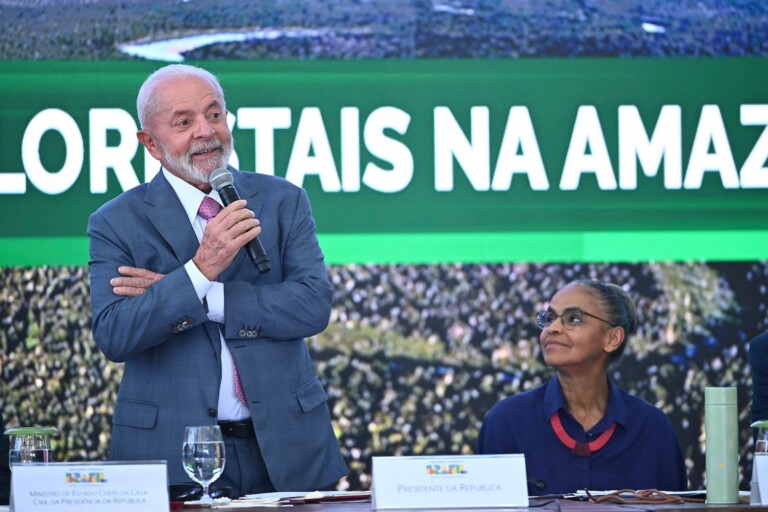
Analysis: Lula presidency saved at least 20,000km2 of Brazilian Amazon since 2022
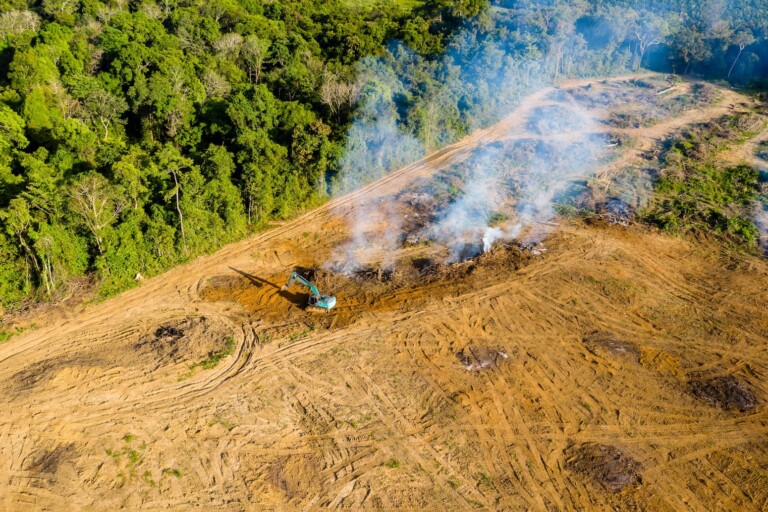
Why land-use emissions have fallen by a third this century – in six charts

Analysis: 84% of nations miss deadline to identify ‘nature-harming’ subsidies by 2025
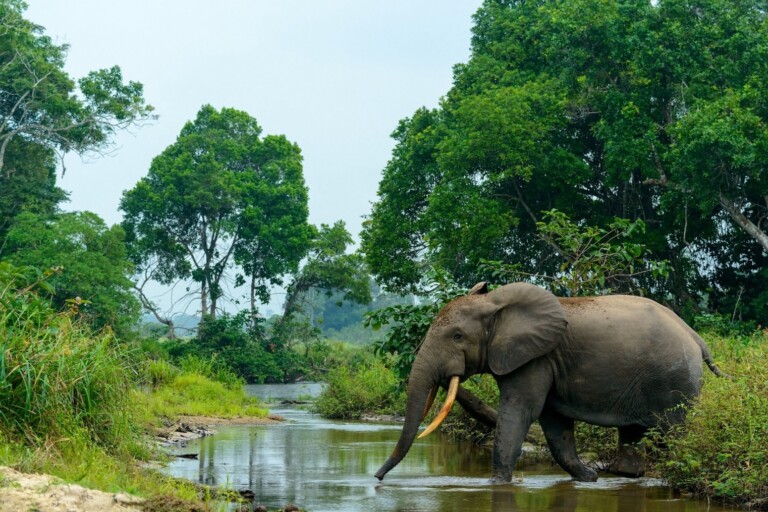
UK withdraws millions in funding from world’s second-largest rainforest in Congo
The post Interactive: Tracking negotiating texts at the COP17 biodiversity summit appeared first on Carbon Brief.
Interactive: Tracking negotiating texts at the COP17 biodiversity summit
A beacon of love
On an outer island of Fiji, two thousand nautical miles from Sydney, is a shining light of hope and resilience for our troubled world.
The island of Kioa is home to a Tuvaluan community who migrated from their atoll of Vaitupu in the late 1940s. It is a land of warm hearts, big smiles, and deep cultural roots; a place where the sound of a conch still summons the island together, where islanders paddle out to fish in carved outrigger canoes, and healthy happy children walk barefoot to school.
Here, culture is life. Kioans live sustainably through their traditional knowledge and practices. The island is alive with song, dance and the rhythms of a life tied to the tides, the winds, and the seasons.
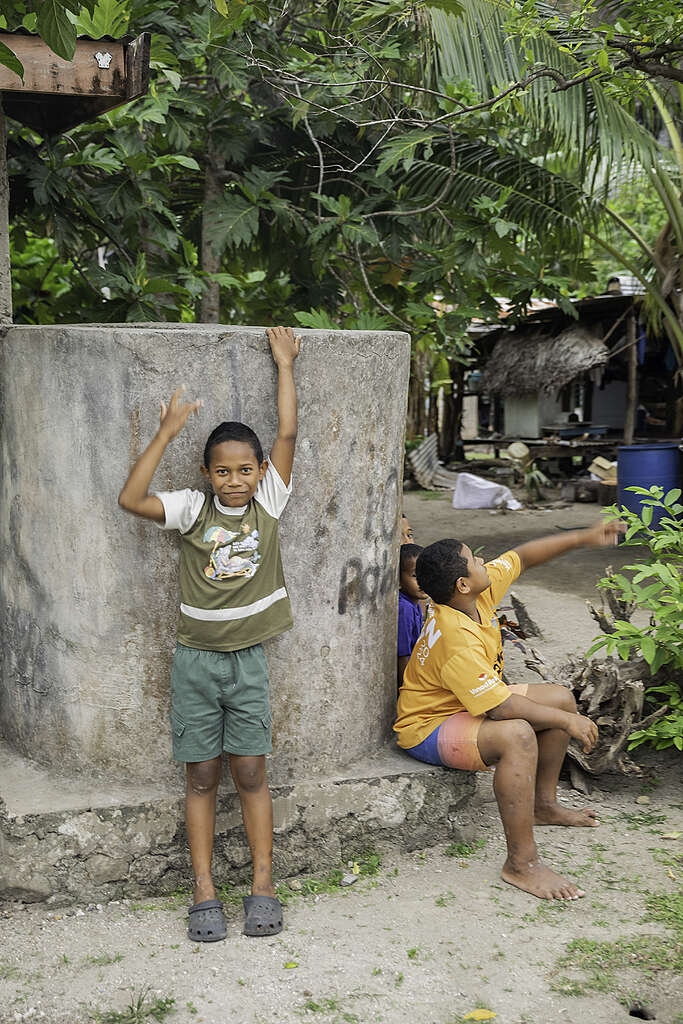
Facing the future
Greenpeace has been lucky to have a relationship with Kioa for a number of years now, and we are continually learning from this remarkable community.
Last week, as part of our Voyaging Oceania project, we returned to the island. Our purpose was twofold —- to carry messages from the island to leaders gathering in Nadi this week for the Pacific Pre-COP, and to support the Kioa community in their efforts to improve water security for the island.
Unlike Tuvalu itself, with its eight atolls, Kioa is a mountainous, forested and richly fertile island. It will remain habitable far into the future. Kioans did not initially migrate from Vaitupu due to climate change, but the move was prophetic. They now have a lifeboat.
However, even Kioa faces challenges on our rapidly warming planet, in particular when it comes to water. Climate change is shifting once reliable rainfall patterns. On top of this, the island is already feeling the effect of this year’s intensifying El Niño event, which for Fiji means reduced rainfall and prolonged dry spells.
Right now, fresh water has to be carefully rationed, and is only available for a few hours a day. During last week’s visit aboard our campaigning ship Oceania, Greenpeace was privileged to work with the Kioa community on a new solar-powered water distribution project for the island.
Designed and led by the island, the project involves using a solar pump to move water from a reliable source to a storage tank and then using gravity to distribute the water around the village.
It was a lesson in how local knowledge and ingenuity can be the backbone of today’s climate solutions. To build a dam around the source, the local community knew the exact spot where they could gather gravel at low tide to mix with the cement. They took only what was needed, knowing that all resources must be carefully conserved. Kioa has no roads and no machinery, and it was an all-of-island effort to carry the materials up to the project site, including many heavy bags of sand and rock.
Such projects truly bring to life the vision of a resilient, locally-led, fossil fuel free Pacific.