

Welcome to Cited, your essential guide to new climate research.
In the news
SPRING HEATWAVE: Temperature records for May fell across western Europe as the region baked in an “exceptionally early” heatwave, reported the Associated Press. The outlet noted that temperatures reached 35.1C in the UK and 36C in France at the end of last month, with the latter’s national weather service stating that a “heat dome” had produced temperatures more than 10C higher than “usual”. BBC News said temperatures reached 40.3C in Portugal. Carbon Brief explored how the media covered the extreme weather and the role of climate change.
CLIMATE RESEARCH ‘STYMIED’: The White House released draft regulations that would “give political appointees the final word” on federal research grants and other funding across government agencies, reported Scientific American. According to Bloomberg, climate experts said the “sweeping” changes would “stymie research in the field”. At the same time, the Guardian reported the National Science Federation – a US government agency – announced it would be dismantling a $368m deep-sea observation system that provides “crucial” data on ocean systems and climate change. [For more, see ‘Spotlight’ below].
WMO WARNING: A report from the World Meteorological Organization (WMO) and UK Met Office, covered by Reuters, found that average global temperatures are forecast to reach “near-record levels” in the next five years. The newswire said the report projected that average temperatures each year over 2026-30 will range between 1.3-1.9C above pre-industrial levels, with one year where temperatures will top the warmest year on record, set in 2024.
Research picks
Impacts
- Climate change and population growth have led to a 51% increase in global exposure to extreme daytime heat in cities over the past two decades | Communications Earth & Environment
- Global warming interacts with poverty to “magnify educational disruption” and “deepen existing inequities” among children and young people | The Lancet
- Human-caused greenhouse gas emissions has increased the likelihood of “landfalling” oceanic heatwaves by a factor of nine | One Earth
Nature
- Wildfire “disturbances” have been shifting Canada’s forests from a carbon sink to a carbon source since the 2000s | Global Change Biology
- Following decades of rapid decline, mangrove forests around the world have been recovering since 2010, with both forest loss and degradation rates slowing | Science
- Large-scale cultivation of macroalgae has “low potential” for carbon dioxide removal and unintended consequences that “can be substantial” | Biogeosciences
Projections
- Global hailstorm-induced damage potential could increase by 37-42% by the late 21st century, depending on the emission scenario | Nature
- Even under a low-emissions scenario, 45% and 35% of mountain bird and mammal species, respectively, are at risk of seeing losses in habitat range by 2050 that outweigh any gains by at least 20% | Conservation Biology
- Future warming will likely boost natural methane emissions from freshwater, as methane-oxidising bacteria fail to keep pace | Nature Climate Change
Captured
China accounts for more “conventional” carbon dioxide removal (CDR), such as afforestation and reforestation, than any other country in the world. That is according to the third edition of the annual state of carbon dioxide removal report, published last week and covered in detail by Carbon Brief. China’s average conventional CDR of 539m tonnes of CO2 over 2014-23 is more than double that of the US, the next-highest country.
625
How many times greater cities in the global south experienced “compound” exposure to extreme heat and air pollution than global-north cities over 2003-20, according to an npj urban sustainability study.
Spotlight
AMOC observations at risk
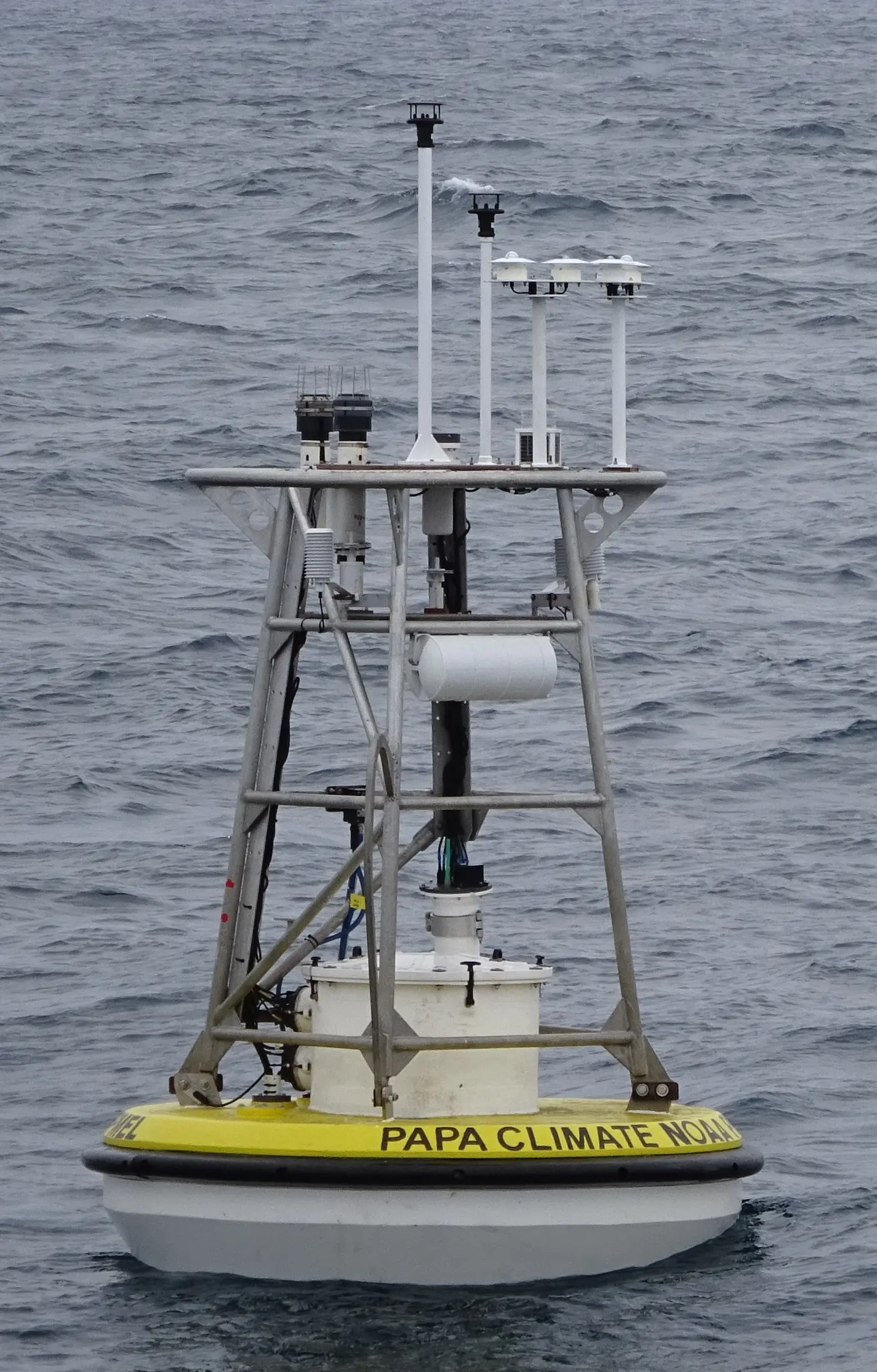
The Irminger Sea, a patch of frigid ocean east of Greenland, plays an outsized role in the Earth’s climate.
Here, surface water that has travelled thousands of kilometres from the tropics grows cold and dense enough to sink to the ocean’s depths – a transformation that must occur for the water to begin a long journey back to the southern hemisphere.
This makes the Irminger Sea an “action centre” for the mighty Atlantic Meridional Overturning Circulation (AMOC), the vast system of ocean currents that keeps temperatures in Europe mild.
Last week, the US government announced plans to dismantle ocean moorings installed in the Irminger Sea which, among other things, collect data on the health of the AMOC.
This came as part of a programme to “descope” the Ocean Observatories Initiative, a $368m network of ocean sensors installed in the Pacific and Atlantic oceans.
Two of the moorings earmarked for removal in the Irminger Sea form part of an internationally funded, trans-Atlantic AMOC monitoring array, known as OSNAP, that stretches from Canada to Scotland.
Experts told Carbon Brief the move by the Trump administration highlights the vulnerability of AMOC observation systems around the world. These deep-sea moorings – scattered across the Atlantic – collect real-time data on, among other things, ocean current, temperature, pressure and biochemistry.
Prof Penny Holliday, chief scientific officer of the UK National Oceanography Centre, told Carbon Brief that the OSNAP array, as well as the RAPID array at 26N, are “entirely dependent” on research grants that have to be “continually reapplied for”.
“Funding is perilous all the time,” she said.
A report prepared last month by scientists for Nordic ministers exploring the security of funding for AMOC observing systems warned that RAPID and OSNAP were in “critical condition” and faced “material exposure over an 18-month horizon”. Meanwhile, other key basin-wide and global components of the global AMOC observing system were rated as “at risk”.
It is not just US funding that is uncertain. The report notes, for example, that the five-yearly funding the UK provides to RAPID and OSNAP is “at risk from 2027 due to year-on-year budget reductions” at the Natural Environmental Research Council.
(RAPID is funded by the US and UK, whereas OSNAP is backed by five different countries, with the US contributing half of the total financial support.)
Report co-author Dr Femke de Jong from the Royal Netherlands Institute for Sea Research told Carbon Brief that “continued AMOC observations” are under pressure in “multiple countries”. She said:
“While the risk of a declining AMOC to society is starting to be recognised, there is not yet a system or institution in place to guarantee a way to monitor it.”
AMOC monitoring arrays are still in their infancy – RAPID, the oldest, was launched in 2004. Two decades of data captured so far shows that the AMOC is slowing down. However, scientists will need many more years of data to be able to confidently link the decline to climate change, rather than natural variability in the ocean.
NOC’s Holliday points to the disconnect between scientific and funder timelines:
“The timescale of observations needed in order to be able to detect a climate change signal from the very naturally variable ocean is around 40-60 years…. [And yet], in the Netherlands, they have to apply for a new grant for their ocean moorings every two years. They are going to have to do that for 40 years.
“This is a very inefficient way of getting funding for what should be critical infrastructure.”
Preprints to watch
Carbon Brief’s pick of new papers still going through peer review
- Urban areas were responsible for two-thirds of CO2 emissions from burning fossil fuels in 2022 | Nature portfolio
- Climate adaptation measures are responsible for one-quarter of greenhouse gas emissions and three-quarters of human freshwater withdrawals | Earth System Dynamics
- Global food miles – the emissions generated from transporting food – could be “lower than previously estimated”, at around 0.82bn tonnes per year | Nature portfolio
Noticeboard
- 10 June: AMS Washington Forum early registration deadline
- 10-12 June: Fourth international conference on carbon dioxide removal, Milan
- 11 June: Application deadline for postdoctoral research position in the political economy of net-zero at the University of Oxford; Salary: £39,424-47,779
- Mid-June: AGU annual meeting abstract submissions open
- 17 June: World Weaving climate research programme funding application deadline
- 17 June: CCMC lecture (online): “Temperature, health and adaptation: What actually protects people?”
- 21 June: Application deadline for postdoctoral research position in extreme event health impacts at Vrije Universiteit Amsterdam; Salary: £42,552-66,456
Cited is researched and written by Cecilia Keating, Robert McSweeney, Ayesha Tandon, Daisy Dunne and Dr Giuliana Viglione.
Please send tips, feedback and upcoming climate research to cited@carbonbrief.org
This is an online version of Carbon Brief’s fortnightly Cited email newsletter. Subscribe for free here.
The post Cited 9 June 2026: Europe’s ‘exceptional’ heatwave | Warming forecast | AMOC observations ‘at risk’ appeared first on Carbon Brief.
Cited 9 June 2026: Europe’s ‘exceptional’ heatwave | Warming forecast | AMOC observations ‘at risk’

Next week, diplomats from around the world will descend on Yerevan, Armenia, to negotiate a series of decisions under the UN Convention on Biological Diversity (CBD).
Between 19 and 30 October, 196 parties will gather to hammer out the precise wording of the dozens of legal texts that make up the decisions under the Conference of the Parties (COP) to the CBD.
This year’s summit is particularly significant, as it marks the halfway point between the agreement of the Kunming-Montreal Global Biodiversity Framework and the deadline for achieving its targets.
The CBD has found that countries are currently not on track to meet 22 out of the framework’s 23 targets.
During the fortnight, delegates will also be negotiating decisions relating to the two supplemental protocols to the CBD: the Cartagena Protocol, which covers biosafety; and the Nagoya Protocol, which covers access and benefit-sharing for the use of genetic resources.
(The Cartagena and Nagoya Protocols, which are each governed by a “meeting of the parties”, or “MOP”, have fewer parties than the CBD as a whole, with 173 and 141, respectively.)
Carbon Brief is tracking the progress of countries towards consensus on dozens of negotiating texts using the interactive table below.
The tracker includes texts from the COP, as well as the MOPs for the Cartagena and Nagoya protocols. It also includes draft decisions from the most recent subsidiary body meetings, as these form the starting point for the negotiations in Yerevan.
The CBD has three subsidiary bodies: the subsidiary body on scientific, technical and technological advice (SBSTTA), the subsidiary body on implementation (SBI) and the subsidiary body on article 8(j) and other provisions (SB8J).
SB8J focuses on issues related to the Indigenous peoples and local communities. It was established at COP16 in Cali, Colombia, in 2024.
The first two columns of the interactive tracker list the topic of each agenda item and the relevant body, with subsequent columns including dates, page counts and links to the original documents.
The table is searchable and can be sorted using the arrows in the header.
Areas of disagreement in UN draft texts are denoted by square brackets. Counting the brackets in a particular iteration of a text therefore gives a sense of how far parties are from reaching consensus.
The bracket column is colour-coded, with dark green indicating a low number of brackets and red indicating a high number of brackets remaining.
Texts can also present parties with choices using “options” or alternatives (“alt”), which are counted together in the sixth column of the table.
The key discussions in Yerevan will centre around two agenda items in particular. The first is the global review, which will assess progress towards the GBF and make recommendations for accelerating action.
The second is finance, which can be separated into two parts: resource mobilisation and the financial mechanism. On resource mobilisation, biodiverse global south countries are likely to push for an increased amount of international finance for conservation.
Disagreement over the creation of the financial mechanism led to the suspension of COP16 in Cali in October 2024, as parties failed to find agreement on the mobilisation of finance before the end of the summit.
Global south countries want the establishment of a separate financial mechanism under the control of the CBD; global north countries largely prefer to maintain the existing mechanism, which sits under the Global Environment Facility.
At the resumed session of COP16 in Rome in early 2025, countries agreed on a roadmap that would lead to the establishment of a permanent mechanism.
related
Analysis: Lula presidency saved at least 20,000km2 of Brazilian Amazon since 2022
Why land-use emissions have fallen by a third this century – in six charts
Analysis: 84% of nations miss deadline to identify ‘nature-harming’ subsidies by 2025
UK withdraws millions in funding from world’s second-largest rainforest in Congo
The post Interactive: Tracking negotiating texts at the COP17 biodiversity summit appeared first on Carbon Brief.
Interactive: Tracking negotiating texts at the COP17 biodiversity summit
A beacon of love
On an outer island of Fiji, two thousand nautical miles from Sydney, is a shining light of hope and resilience for our troubled world.
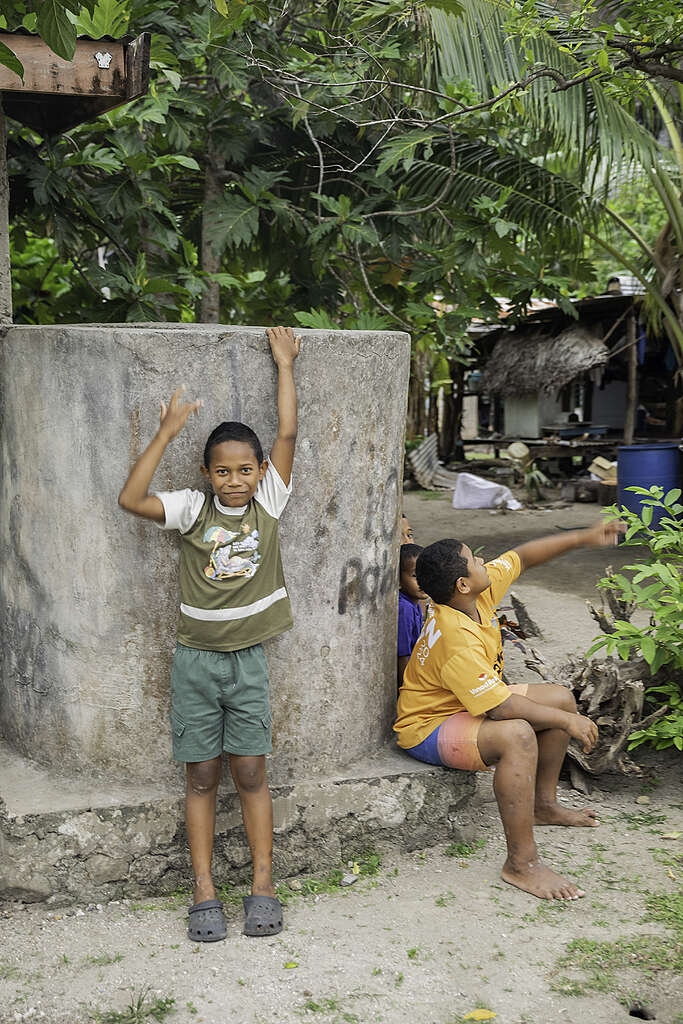
The island of Kioa is home to a Tuvaluan community who migrated from their atoll of Vaitupu in the late 1940s. It is a land of warm hearts, big smiles, and deep cultural roots; a place where the sound of a conch still summons the island together, where islanders paddle out to fish in carved outrigger canoes, and healthy happy children walk barefoot to school.
Here, culture is life. Kioans live sustainably through their traditional knowledge and practices. The island is alive with song, dance and the rhythms of a life tied to the tides, the winds, and the seasons.
Facing the future
Greenpeace has been lucky to have a relationship with Kioa for a number of years now, and we are continually learning from this remarkable community.
Last week, as part of our Voyaging Oceania project, we returned to the island. Our purpose was twofold —- to carry messages from the island to leaders gathering in Nadi this week for the Pacific Pre-COP, and to support the Kioa community in their efforts to improve water security for the island.
Unlike Tuvalu itself, with its eight atolls, Kioa is a mountainous, forested and richly fertile island. It will remain habitable far into the future. Kioans did not initially migrate from Vaitupu due to climate change, but the move was prophetic. They now have a lifeboat.
However, even Kioa faces challenges on our rapidly warming planet, in particular when it comes to water. Climate change is shifting once reliable rainfall patterns. On top of this, the island is already feeling the effect of this year’s intensifying El Niño event, which for Fiji means reduced rainfall and prolonged dry spells.
Right now, fresh water has to be carefully rationed, and is only available for a few hours a day. During last week’s visit aboard our campaigning ship Oceania, Greenpeace was privileged to work with the Kioa community on a new solar-powered water distribution project for the island.
Designed and led by the island, the project involves using a solar pump to move water from a reliable source to a storage tank and then using gravity to distribute the water around the village.
It was a lesson in how local knowledge and ingenuity can be the backbone of today’s climate solutions. To build a dam around the source, the local community knew the exact spot where they could gather gravel at low tide to mix with the cement. They took only what was needed, knowing that all resources must be carefully conserved. Kioa has no roads and no machinery, and it was an all-of-island effort to carry the materials up to the project site, including many heavy bags of sand and rock.
Such projects truly bring to life the vision of a resilient, locally-led, fossil fuel free Pacific.