

Welcome to Carbon Brief’s China Briefing.
China Briefing handpicks and explains the most important climate and energy stories from China over the past fortnight. Subscribe for free here.
Key developments
First ministerial China-UK ‘climate dialogue’
UK-CHINA CATCH UP: On 16 June, Huang Runqiu, head of China’s Ministry of Economy and Environment (MEE), met Ed Miliband, the UK’s secretary of state for energy and climate change, as well as Rachel Kyte, UK’s special representative for climate, in London, reported Chinese media outlet Jiemian News. The meeting was the first of a “new annual UK-China climate dialogue” announced during Miliband’s trip to China in March. The meeting has not been widely reported by major Chinese state media or English-language outlets. A short report from the MEE said the ministers discussed multilateral climate governance and “next steps” for climate cooperation. The MEE also said they had agreed to cooperate in areas such as adaptation, carbon markets, climate “investment and [private] financing” (气候投融资) and methane emissions controls.

‘NEW CLIMATE AGREEMENT’: While there was no public announcement on the event from the UK side, a government spokesperson told Carbon Brief via email: “There is no route to energy security for today’s generation without our clean energy mission, and there is no climate security and no route to keeping future generations safe without engaging global climate action. It is negligent not to engage with China on their important role in reducing global emissions.” The government email said that at the meeting, the UK had “secured a new climate agreement with China”, explaining that the two ministers “signed a new climate memorandum of understanding [MoU], setting out where both countries can work together to reduce global emissions, such as climate change mitigation and emissions reduction targets”.
‘FRANK CONVERSATIONS’: According to the UK government email, Miliband had “frank conversations” with his counterpart. It added that the new MoU offered a “forum to encourage greater action from China”, including “more ambitious targets”. It also “allows the UK and China to collaborate on…measuring and controlling methane emissions…[and] climate finance”. The inclusion of methane in the MoU “suggests the UK is looking to work with China in areas that the US previously did”, according to an individual who participated in the talks.
CHINA-EU: A few days earlier on 13 June, Huang had attended the 10th China-EU ministerial dialogue in Belgium, meeting Jessika Roswall, EU commissioner for environment, water resilience and a competitive circular economy, reported China Environment News. Huang said facing “multiple challenges in environmental and climate governance”, there is a “greater need” to strengthen cooperation between EU and China, added the outlet. The Chinese state news agency Xinhua published two articles praising the EU and China’s “green-energy” partnership as well as “green cooperation”. Meanwhile, European Commission president Ursula von der Leyen “accused Beijing of deliberately creating a near-monopoly” in the global rare-earth supply at the G7 summit in Canada on 16 June, adding that “no single country” should control 80-90% of the “raw materials and downstream products like magnets”, reported the Hong Kong-based South China Morning Post.
China’s oil demand to ‘peak in 2027’
PEAK IN 2027: Following the ongoing debate on whether China’s oil demand has already peaked, the International Energy Agency (IEA) said that it would “top out in 2027” – two years earlier than previously forecasted – “reinforcing the outlook for a global peak and prolonged supply surplus this decade”, reported Bloomberg. Japanese media outlet Nikkei Asia said “slowing demand” in China, which had accounted for 60% of oil demand growth in the world in the past decade, marked what the IEA called a “fundamental transformation” of the global energy market. However, according to Reuters, the IEA “stuck to its prediction that global [oil] demand will peak by 2029”, despite China’s more rapid transition. The news agency added that the IEA’s view “sharply contrasts with that of producer group OPEC, which says [global oil] consumption will keep growing for much longer”. In its coverage of the IEA report, the Times said China’s early peak was due to the “unexpectedly ‘breakneck’ switch to electric vehicle[s] (EVs)”. The sale of EVs surpassed more than one million in May, up 24% from a year ago, reported Reuters. China’s “trade-in” subsidies that boosted sales of EVs, however, were suspended in some cities as “funds run short and officials scrutinise the prevalence of zero-mileage used cars”, according to Bloomberg.
-
Sign up to Carbon Brief’s free “China Briefing” email newsletter. All you need to know about the latest developments relating to China and climate change. Sent to your inbox every Thursday.
ENERGY TRENDS: China’s demand for imported liquified natural gas (LNG) is expected to fall by 6-11% this year, said Reuters. This “unusual downturn” would be the first fall in three years due to “weak industrial demand and strong domestic and piped gas supply”, added the newswire. Separately, China’s thermal power output – mostly coal – grew 1.2% from a year earlier in May – the first rise since November – reported Bloomberg, attributing the rise to heatwave-induced demand and weak hydro output. Covering heavy rain that also caused floods (see below), Bloomberg reported that the “filling up” of rivers and reservoirs in central and southern China that “feed the country’s mighty dams” posed a “threat to the coal market that competes with hydropower in electricity generation”. Meanwhile, the Chinese government said that China’s overall energy intensity decreased by a cumulative 11.6% over 2021-24, reported state broadcaster CCTV. The outlet added: “This is equivalent to saving 1.4bn tonnes of standard coal and reducing carbon dioxide emissions by about 3bn tonnes.”
‘Worst flood’ and record-breaking rain
FLOODS AND HEATWAVES: The government issued its most severe “red” flood alerts for the first time this year after heavy rains in central and southern China, reported Reuters. State broadcaster CCTV said that floods “exceeding the warning level” occurred in 27 rivers across the country. Huaiji, a county in southern Guangdong province, was “hit with [the] worst flood in a century”, said state broadcaster China Global Television Network (CGTN). Record-breaking rain also fell in Hunan province in central China, affecting more than 400,000 people, reported Xinhua. About 400 ninth-grade students and 30 teachers were evacuated in Guangxi, in the south, the day before the senior high school entrance examination, said Xinhua. Meanwhile, ahead of the arrival of the first typhoon of the year, named Wutip, more than 16,000 people were transferred to safer places from “construction sites, low-lying flood-prone areas and regions at risk of flash floods” in Hainan province in south China, said Xinhua. At the same time, parts of China were hit by a “brutal heatwave”, with Xinjiang province in the northwest experiencing temperatures of up to 46.8C, according to the Guardian.
FLOOD RELIEF: About 60m yuan ($8m) were issued “to bolster flood relief efforts in Guangdong Province”, said Xinhua. In addition, the National Development and Reform Commission (NDRC), “urgently” allocated 100m yuan ($14m) to support “disaster relief work” in Guizhou, with an additional 100m yuan to Guangdong and Hunan, according to China News.
China ‘will cap’ carbon market emissions by 2030
WIDER COVERAGE: China is planning to expand the coverage of its national emissions trading scheme (ETS) to “ALL industry sectors and aviation by 2027”, according to a LinkedIn post by Yan Qin, principal analyst at consultancy firm Clearblue Markets, citing a new “high-level policy (Opinions)” document dated 24 May. The document – not seen by Carbon Brief – has been named publicly and, while its contents have not been put into the public domain, they have been “confirmed…by analysts with access to the draft”, reported Table.Briefings. In his own LinkedIn post, Lauri Myllyvirta, co-founder of the Centre for Research on Energy and Clean Air (CREA) said it was not yet clear if the expansion would only cover “main emitting sectors” – likely including the chemicals industry at a minimum, said Myllyvirta – or all industry and aviation, as Qin suggested.
CARBON CAP: According to Qin’s post, the plan would also “introduce absolute [emissions] allowance caps for sectors with stabilised emissions, starting in 2027, and [an] absolute cap for the ETS by 2030”. To date, the ETS has only covered the power sector and has lacked an absolute cap on emissions. New sectoral caps would be conditional, according to Table.Briefings, which described this flexibility as an “escape hatch”. In his post, Myllyvirta said: “The introduction of a national [ETS] cap by 2030 is in line with expectations – that’s when China’s emissions are supposed to have peaked, at the latest, and when the focus shifts from reducing carbon intensity to absolute emission cuts, in the current policy roadmap.” He added that while past slippage on ETS implementation gave “reason to be skeptical about any new timelines”, the document did “imply to me that there is a push from the top to make the ETS…relevant in China’s decarbonisation effort”.
1,084,450,000
The capacity of China’s solar-power installations – some 1.08 terawatts (TW), up 57% year-on-year – as of May 2025, according to China’s National Energy Administration (NEA) and reported by PV magazine. China added 198 gigawatts (GW) of new solar capacity in the first five months of the year, reported the Guardian, including 93GW in May alone.
Spotlight
China and the world’s climate cooperation in dilemma
A group of prominent experts of climate policy from academia, thinktanks and civil society shared their thoughts about China and climate change at the 2025 Bath Conference on China & Global Sustainability Transition earlier this week, organised by the SGAIN project at the University of Bath.
A wide range of topics – including the potential for China to show climate leadership – were discussed under the Chatham House rule. Carbon Brief outlines some of the key messages from the conference.
In an on-the-record opening keynote, Erik Solheim, former minister of climate and the environment of Norway and former executive director of the UN environment programme, said that, while European leaders currently appear to have “no time for long-term environmental problems”, China’s president Xi Jinping has been speaking a “lot more about the environment”.
Xi’s attitude was illustrated by his “two mountains” theory, said Solheim. He added that this theory – showing that “going green is not just for the environment, going green is also good for the economy” – was the “primary driver” of China’s “green transition”.
In a second on-the-record keynote, Kate Logan, director of the China climate hub and climate diplomacy at the Asia Society, said that other than the “new three” – solar panels, EVs and batteries – being a new engine of China’s economic growth, its exports of clean-energy technology have also surpassed that of “traditional energy”.
China has made major overseas climate-related investments, said Max Schmidt, a researcher from the Perspectives Climate Group, who agreed to be named despite the Chatham House rule.
Other speakers said that China’s overseas investments – both from the state and private capital – have largely shifted from infrastructure to renewable energy projects, while largely phasing out money going towards foreign coal plants.
Asked by Carbon Brief about ongoing Chinese investments in overseas coal-fired power, despite its pledge to end such activity, another speaker said that this commitment had been “by [and] large…diplomatic”. They added: “As we understood, it does not apply to what has already been in the pipeline.”
China’s role in the new international climate-finance goal agreed at COP29 in Baku, Azerbaijan last year. One speaker said:
“Strategically, we promote cooperation…[and] multilateralism…[But] if [the developed countries] say China needs to provide public [climate] funds, fill[ing] the gap left by the US, these prominent [Chinese climate] negotiators will definitely say no.”
Another speaker said that talks on climate finance between the UK and China have not been “very productive”.
The person said China urged developed countries, including the UK, to increase their climate finance, while the UK urged China to “count their south-south climate support towards the [international] climate finance goal”.
“Neither side wants to budge, so there has been little progress and it is unclear how the gap left by the US will be filled,” added the person.
In answering Carbon Brief’s question on how to move things forward, one speaker said:
“Stop trying to set any formal obligations for China…Instead, set an open-ended opportunity…Keep China happy and you will see…a lot of donations…That’s my understanding of dealing with the government for so many years.”
Addressing recent security concerns over China’s clean-energy exports, a speaker suggested that in an ideal world, the UK would have a “list” of products that it “welcomes” from China.
However, complex clean-energy products containing many components, such as EVs, present “huge grey areas”, which are “in the middle” and are likely to have to be decided on a “case-by-case basis” due to the uncertainty involved, added the speaker.
In the US, meanwhile, “climate conversations” were being “disrupted” by another factor – the supply of critical minerals amid geopolitical concerns – according to a different speaker, who said this was intensified by China “leapfrogg[ing]” in the EV industry.
Another speaker said that critical minerals were being “politicalised”, in part because of the different ways they are used in each country.
The speaker said that critical minerals had a wide range of uses. For the US they were mainly used in semiconductors, petrochemicals and defence, whereas China also used them in EVs and wind turbines, they explained.
Speaking to Carbon Brief on the sidelines of the event, Dr Yixian Sun, who leads the SGAIN project, said that the rest of the world could take “useful lessons” from China’s efforts towards sustainable development. He added:
“To keep the 1.5C goal alive, stronger international cooperation is urgently needed – to help China deepen its own transition and [to] develop inclusive partnerships with the rest of the world.”
Watch, read, listen
EMISSIONS PEAKED?: Bloomberg’s “Zero” podcast interviewed CREA’s Myllyvirta, about whether China’s emissions have “finally peaked”, citing his analysis for Carbon Brief.
‘GREEN DEVELOPMENT’: Prof Bai Quan, from the Academy of Macroeconomic Research (AMR) under China’s National Development and Reform Commission (NDRC), who Carbon Brief interviewed last year, published an article about “green development” at state-run media outlet Economic Daily.
INDUSTRY MITIGATION: Prof He Kebin, dean of the Institute for Carbon Neutrality at Tsinghua University, gave a talk about “industrial decarbonisation”, reported China Energy Net.
‘NATIONAL LOW-CARBON DAY’: A short video promoting combating climate change for China’s “national low-carbon day” (25 June) was produced and published by the MEE.
New science
Persistent emissions of ozone-depleting carbon tetrachloride from China during 2011–2021
Nature Geoscience
China was responsible for half of the world’s emissions of the ozone-depleting greenhouse gas carbon tetrachloride over 2011-20, according to new research. The paper used both long-term atmospheric observations from a network of sites from across China and a “top-down approach” to estimate the country’s carbon tetrachloride emissions. The authors noted that “substantial” carbon tetrachloride emissions are permitted for feedstock use in China, but still found thousands of tonnes of “unexplained” carbon tetrachloride emissions from the country per year.
Agricultural and Forest Meteorology
The extreme heatwave and drought in North China in 2022-23 caused more than 80,000 hectares of forest canopy dieback, a new study found. The researchers used remote sensing forest monitoring algorithms and drone-captured images to identify forest canopy dieback during this period. The most severe dieback occurred in May 2023, they found. Areas with high forest cover were hardest hit in the early stages of the extreme weather, which suggests that “afforestation efforts may have inadvertently increased forest vulnerability”, the study authors wrote. They added that this extreme weather event was “highly severe, widespread, and prolonged, causing historically low anomalies in regional greenness and productivity”.
China Briefing is compiled by Wanyuan Song and Anika Patel. It is edited by Wanyuan Song and Dr Simon Evans. Please send tips and feedback to china@carbonbrief.org
The post China Briefing 26 June 2025: First UK-China climate dialogue; China-climate conference summary; Oil peak ‘in 2027’ appeared first on Carbon Brief.

When oil and gas shipments stopped flowing through the Strait of Hormuz at the start of the Iran war, Southeast Asian nations were left reeling as the supply crunch laid bare their acute reliance on fossil fuel imports.
As prices soared, governments in the region scrambled to introduce emergency energy-saving measures – from a four-day working week to curbs on air conditioning. Thailand revived decommissioned coal plants while the Philippines, which imports nearly all of its oil, declared a “national energy emergency”.
But the crisis has also prompted renewed resolve to find a long-term solution to their vulnerability at a time when electricity demand is booming to power the region’s growing industry, cooling needs and the mushrooming of energy-hungry data centres.
At the heart of Southeast Asian nations’ response is a longstanding infrastructure project to connect the region’s power grids by 2045 and enable cross-border trading of clean electricity through a network of underground and subsea interconnectors.
-
Southeast Asia’s fragile grids threaten billions in clean energy investment
Renewables developers need reliable electricity infrastructure and stable policies to help the region meet climate goals and surging demand for power -
UN backs push to upgrade grids slowing clean power uptake in Africa and SE Asia
The Global Grids Accelerator will help turn national and regional plans to expand electricity infrastructure into viable projects on the ground -
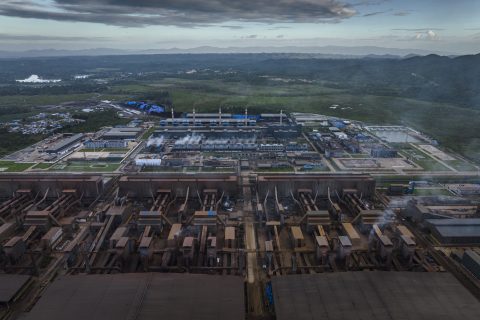
China keeps Indonesia’s battery dream afloat but future less certain
Chinese capital and technology turned Indonesia into the world’s top nickel supplier, but its dependence on China and the rise of nickel-free batteries could upset its battery ecosystem plans
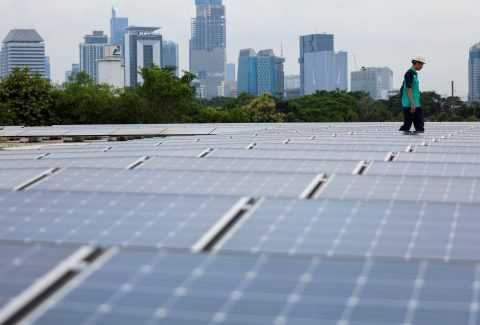
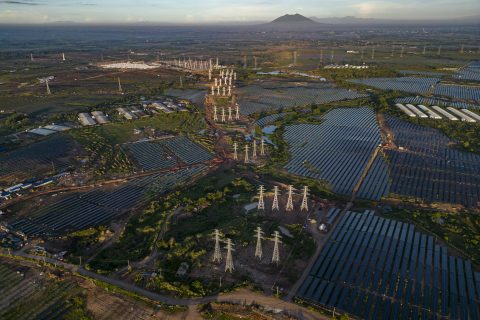
The plans will allow nations with high renewable energy generation potential to trade surplus power to their neighbours and major demand centres like Singapore, helping to integrate more renewables into the power mix and reduce reliance on fossil fuel imports.
“[It] will give us more energy security,” the Philippines’ energy secretary, Sharon Garin, told a press conference after a meeting of the Association of Southeast Asian Nations’ (ASEAN) energy ministers last week, when they discussed accelerating the delivery of the regional grid as part of measures to respond to the energy crisis.
“The Philippines is rich in solar power, Malaysia is rich in hydropower and Indonesia has geothermal: different countries have different resources. [The ASEAN Power Grid] will optimise the utilisation of renewables to the benefits of each member state,” said Garin.
But turning this decade-old political vision into a reality has been slow, held up by painstaking work to harmonise a patchwork of regulatory and legal frameworks and mobilise the private capital needed to build cross-border infrastructure.
More than $300 billion is needed to expand and modernise the region’s fragile grids to support the projected energy demand increase by 2050. This includes $27 billion required to deliver the cross-border interconnections by 2040, according to the International Energy Agency (IEA).
Every year of delay could cost the region billions of dollars in additional fuel costs and lock in new gas infrastructure for decades to come, according to analysis by global energy think-tank Ember.
The building block for energy security
With electrification high on the agenda of the COP31 climate talks in Türkiye next month, there is growing attention on the need to modernise and expand grid infrastructure to cope with growing electricity use and more renewables in the power mix.
Clean electrification and energy efficiency could deliver about a third of cumulative carbon emission reductions between 2026 and 2050, according to the International Renewable Energy Agency’s World Energy Outlook. But delivering that would require doubling annual global grid investment to $1 trillion between now and 2035.
Last month, the UN launched an initiative to accelerate investment into expanding and modernising grids in Southeast Asia and Africa.
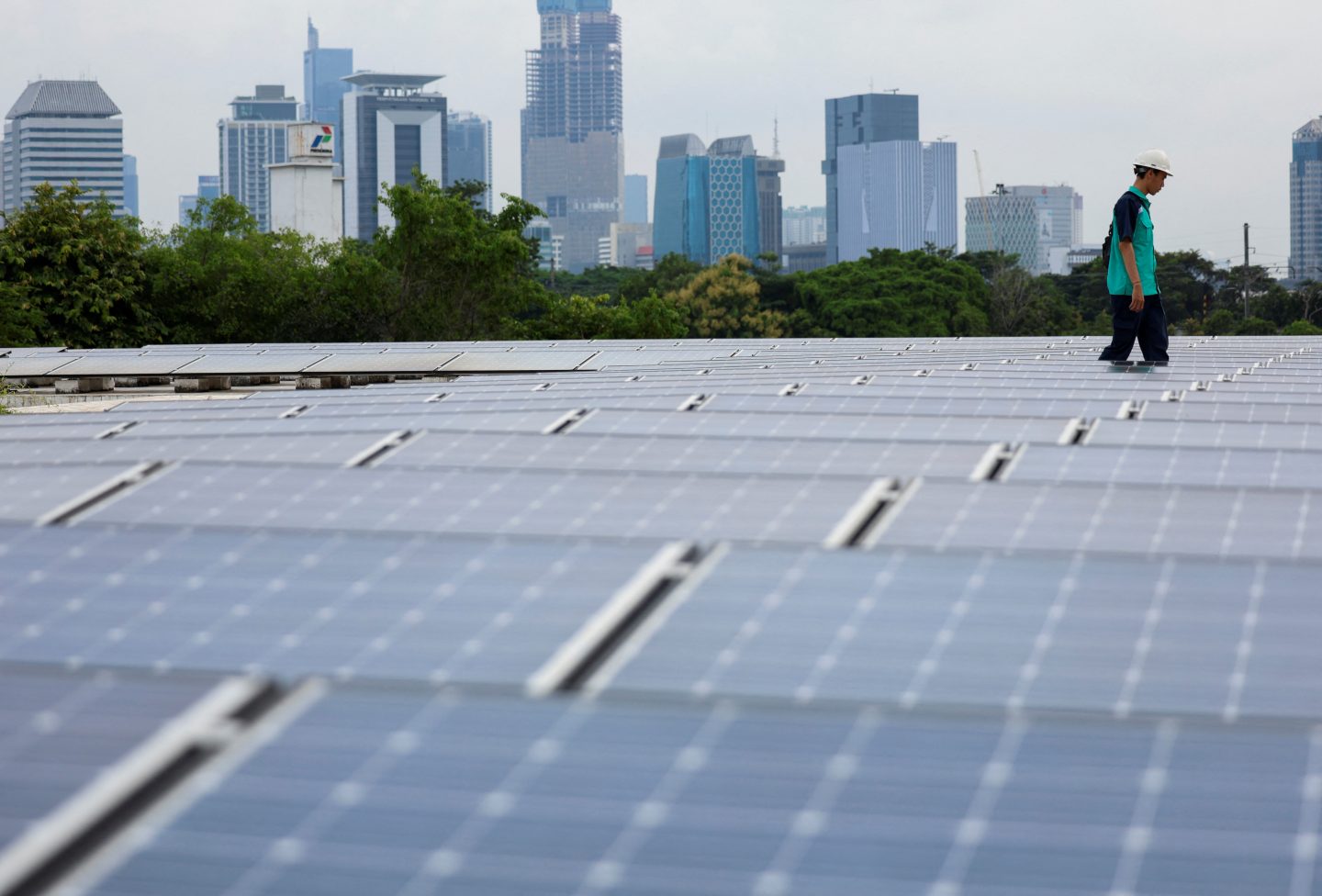
First conceptualised in 1997, the ASEAN Power Grid has gained fresh impetus in recent years as countries turn to renewables to cut their emissions and move away from volatile fossil fuel markets.
Energy supply disruption caused by wars in Ukraine and the Middle East has strengthened the case for regional grid connections. Before this year’s conflict began, the Middle East accounted for 60% of Southeast Asia’s crude oil imports. Competition for fewer, more expensive oil and gas shipments has left Southeast Asia facing a $160 billion energy import bill this year. Based on current policies, this could rise to $400 billion by mid-century.
In the