

Welcome to Carbon Brief’s China Briefing.
China Briefing handpicks and explains the most important climate and energy stories from China over the past fortnight. Subscribe for free here.
Key developments
Carbon emissions on the decline
‘FLAT OR FALLING’: China’s carbon dioxide (CO2) emissions have been either “flat or falling” for almost two years, reported Agence France-Presse in coverage of new analysis for Carbon Brief by the Centre for Research on Energy and Clean Air (CREA). This marks the “first time” annual emissions may have fallen at a “time when energy demand was rising”, it added. Emissions fell 0.3% during the year, driven by a fall in emissions “across nearly all major sectors”, said Bloomberg – including the power sector. It said the chemicals sector was an exception, where emissions saw a “large jump from a surge of new plants using coal and oil” as feedstocks. The analysis has been covered around the world by outlets ranging from the New York Times, Bloomberg and BBC News through to Der Spiegel, CGTN and the Guardian.
TOP TASKS: President Xi Jinping listed “persisting in following the ‘dual-carbon’ goals” as one of eight “key” elements of economic work in 2026, according to a December speech just published in Qiushi, the Chinese Communist party’s leading journal for political theory. This included “deeply advancing” carbon reduction in key industries and “steadily promoting a peak in consumption of coal and oil”, according to the transcript. The National Energy Administration (NEA) also outlined a number of priority tasks for the department, including resolving “grid integration challenges” to encourage greater use of renewable energy and “boosting investment” in energy resources, said energy news outlet International Energy Net.

ETS EXPANSION: Meanwhile, the government has asked “heavy polluters” in several sectors not yet covered in China’s emissions trading scheme (ETS) to report their emissions for 2025, reported Bloomberg, in a “key step” for the further expansion of the carbon market. The affected industries are the “petrochemical, chemical, building materials (flat glass), nonferrous metals (copper smelting), paper and civil aviation industries”, according to the original notice posted by the Ministry of Ecology and Environment (MEE), as well as steel and cement companies not yet covered by the ETS.
State Council issued ‘unified’ power market guidance
POWER TRADE: China will aim for “market-based transactions” to account for 70% of total electricity consumption by 2030, according to new policy guidance released by China’s State Council and published by International Energy Net. The policy also called for greater “integration” of cross-regional trading and “fundamentally sound” market-based pricing mechanisms. On renewable power, the guidance urged officials to “expand the scale of green power consumption” and establish a “green certificate consumption system that combines mandatory and voluntary consumption”, as well as encourage “implementation of inter-provincial renewable energy priority dispatch plans”. It also calls for “roll[ing] out spot trade nationwide by 2027, up from just 4% of the total transactions today”, reported Bloomberg.
CLEAN-POWER PUSH: An official at China’s National Development and Reform Commission said in a Q&A published by BJX News that establishing a “unified” national power market is “crucial for constructing a new power system”. A separate analysis by Beijing-based power services firm Lambda reposted on BJX News argues that China’s unified power-market reforms – which have been “more than two decades” in the making – will allow for “widespread integration” of renewable energy, resolving the challenge of wind and solar “generating but being unable to transmit and integrate”. Business news outlet Jiemian quoted Xiamen University professor Lin Boqiang saying that, while power-market reform may present clean-energy companies with “growing pains” in the short term, it will “force the industry to develop healthily” in the long term.
EU tariffs lifted on first firm’s China-built EV imports
‘SOFTENED’ STANCE: The Chinese government has “softened its stance” on electric vehicle (EV) manufacturers who seek to independently negotiate with the EU on prices for their exports to the bloc, said Reuters, after it previously “urged the bloc not to engage in separate talks with Chinese manufacturers”. The move came as Volkswagen received an exemption from tariffs for one of its EVs that is made in China and imported to the EU, which it committed to sell above a specific price threshold, reported Bloomberg. It added that the company also pledged to follow an import quota and “invest in significant battery EV-related projects” in the EU.
-
Sign up to Carbon Brief’s free “China Briefing” email newsletter. All you need to know about the latest developments relating to China and climate change. Sent to your inbox every Thursday.
‘MADE IN EU’ MELTDOWN: Meanwhile, EU policymakers attempted to agree legislation that may force EV manufacturers to ensure “70% of the components in their cars are made in the EU” if they wish to receive subsidies, reported the Financial Times. A draft of the plan was ultimately rejected by nine European Commission leaders and commission president Ursula von der Leyen, Borderlex managing editor Rob Francis wrote on Bluesky.
BRAZIL BACKTRACKS: Brazil has “scrapped” a tariff exemption for Chinese EV manufacturers that allowed cars assembled in Brazil with parts imported from China to be sold at much lower prices than similar vehicles made from parts imported from other countries, reported the Hong Kong-based South China Morning Post. Separately, Bloomberg reported on the surge of tariff-free Chinese EVs that has enabled Ethiopia to ban the import of combustion-engine cars.
PRICE-WAR BAN: The Chinese government has “banned carmakers from pricing vehicles below cost”, reported Bloomberg, in an effort to clamp down on a “persistent price war” affecting the industry. China’s car industry, “particularly in the EV segment”, has seen “aggressive discounting, subsidies and bundled promotions” pushing down profitability for companies across the supply chain, said the state-run newspaper China Daily.
More China news
- POWERFUL WIND: China has connected a 20-megawatt offshore wind turbine – the “world’s most powerful” and “equivalent to a 58-story building” – to the grid, reported state news agency Xinhua.
- PROVINCIAL MOVES: Anhui has become the first Chinese province to release data on how much carbon different forms of power in the province emits per kilowatt-hour of power, according to power news outlet BJX News.
- RARE-EARTH RUNES: China may hold a “policy briefing” on export restrictions for rare earths and other critical minerals in March, according to Reuters.
- NO CHINA CREDITS: The US confirmed that clean-energy tax credits will not be available for companies that are “overly reliant on Chinese-made equipment”, said Reuters.
Spotlight
Ma Jun: ‘No business interest’ in Chinese coal power due to cheaper renewables
Carbon Brief spoke with Ma Jun, one of China’s most well-known environmentalists, about how open data can keep pressure on industry to decarbonise and boost interest in climate change.
Ma is director of the Beijing-based Institute of Public and Environmental Affairs (IPE), an organisation most well known for developing the Blue Map, China’s first public database for environment data.
Speaking to Carbon Brief during the first week of COP30 in Brazil last November, the discussion covered the importance of open data, key challenges for decarbonising industry, China’s climate commitments for 2035, cooperation with the EU and more.
Below are highlights from the conversation. The full interview can be found on the Carbon Brief website.
Open data is helping strengthen climate policy
- On how data transparency prevents environmental pollution in China: “From that moment [when the general public began flagging environmental violations on social media in 2014], it was no longer easy for mayors or [party] secretaries to try to interfere with the enforcement, because it’s being made so transparent, so public.”
- On encouraging the Chinese government to publish data: “The ministry felt that they had the backing from the people, basically, which helped them to gain confidence that data can be helpful and can be used in a responsible way.”
- On China’s new corporate disclosure rules: “We’re talking about what’s probably the largest scale of corporate measuring and disclosure now happening [anywhere in the world].”
- On the need for better emissions data: “It will be impossible to get started without proper, more comprehensive measuring and disclosure, and without having more credible data available.”
‘Green premium’ still challenging despite falling prices
- On the economics of coal: “There’s no business interest for the coal sector to carry on, because increasingly the market will trend towards using renewables, because it’s getting cheaper and cheaper”.
- On paying for low-carbon products: “When we engage with them and ask why they didn’t expand production, they say that producing these items will have a ‘green premium’, but no one wants to pay for that. Their users only want to buy tiny volumes for their sustainability reports.”
- On public perceptions in China of climate change: “It’s more abstract – [we’re talking about] the end of the century or the polar bears. People don’t feel that it’s linked with their own individual behaviour or consumption choices.”
Climate cooperation in a new era
- On criticism of China’s climate pledge: “In the west, the cultural tendency is that if you want to show that you’re serious, you need to set an ambitious target. Even if, at the end of the day, you fail, it doesn’t mean that you’re bad…But in China, the culture is that it is embarrassing if you set a target and you fail to fully honour that commitment.”
- On global climate cooperation: “The starting point could be transparency – that could be one of the ways to help bridge the gap.”
The role of civil society in China’s climate efforts
- On working in China as a climate NGO: “What we’re doing is based on these principles of transparency, the right to know. It’s based on the participation of the public. It’s based on the rule of law. We cherish that and we still have the space to work [on these issues].”
- On the climate consensus in China: “The environment – including climate – is the area with the biggest consensus view in [China]. It could be a test run for having more multi-stakeholder governance in our country.”
This interview was conducted by Anika Patel at COP30 in Belém on 13 November 2025.
Watch, read, listen
GREEN ALUMINIUM: Lantau Group principal David Fishman wrote on LinkedIn about why China’s aluminium smelters are seeking greater access to low-carbon power, following heated debate over a Financial Times article.
STRONGER THAN EVER: Isabel Hilton, chair of the Great Britain-China Centre, spoke on the Living on Earth podcast about China’s renewables push and exports of clean-energy technologies.
CUTTING CORNERS?: Business news outlet Caixin examined how a surge in turbine defects at one wind farm could be due to “aggressive cost-cutting and rapid installation waves”.
POLES APART: BBC News’ Global News Podcast examined the drivers behind China’s flatlining emissions, as revealed by Carbon Brief.
600
In gigawatts, China’s total capacity of coal plants that are “flexible” and – in theory – better able to balance the variability of renewables, according to a new report by the thinktank Ember.
New science
- China will see a 41% decline in in coal-mining jobs over the next decade under current climate policies | Environmental Research Letters
- During 2000-20, China’s per-person emissions of CO2 increased from 106kg to 539kg in urban households and from 35kg to 202kg in rural households, indicating that the inequality between urban and rural households is shrinking | Scientific Reports
Recently published on WeChat
China Briefing is written by Anika Patel and edited by Simon Evans. Please send tips and feedback to china@carbonbrief.org

The post China Briefing 19 February 2026: CO2 emissions ‘flat or falling’ | First tariff lifted | Ma Jun on carbon data appeared first on Carbon Brief.

June Rubis is a steering group committee member for the Cali Fund, from Sarawak in Malaysian Borneo.
At COP16 in Cali, governments made a significant commitment: at least half of the funding from the new Cali Fund should support the self-identified needs of Indigenous Peoples and local communities, including women and youth. It was a watershed moment for multilateral benefit-sharing.
The challenge now is to translate that commitment into access arrangements that recognise the different institutions, priorities and decision-making processes of Indigenous Peoples and local communities.
For generations, biodiversity and traditional Indigenous knowledge have provided significant value to companies who depend on nature’s genetic diversity to discover new drugs that fight diseases, create products that improve health, and grow crops resilient to extreme heat and flooding events. While some compounds are sampled directly from the source country, increasingly the digital blueprints are held in online public databases which are freely accessible to use for innovation and research.
Countries urged to ramp up “insufficient” nature policies at COP17
The Cali Fund was established at COP16 to encourage commercial users of Digital Sequence Information, or DSI, to share benefits arising from its use. Estimates suggest it could generate over $3.5 billion a year – a stark contrast to the modest $10,656 currently committed to the fund from just five SMEs, underlining how much progress must be made at COP17 over the next two weeks.
The COP16 decision that set up the fund offers two routes for money to reach Indigenous Peoples and local communities: through government authorities, and through direct payments to institutions identified by Indigenous Peoples and local communities themselves.
Varied ways of organising
Indigenous Peoples and local communities organise through a wide range of institutions. Some have national or regional organisations experienced in managing international grants. Others work through territorial organisations, customary institutions, community associations, cooperatives or networks. Some have professional finance teams and audited accounts; others have extensive experience governing territories, collective resources or conservation work without having been organised around international funding requirements.
For direct access, some questions are already apparent. Which institutions should be able to receive funds? How should they be identified? What fiduciary standards should apply? How should safeguards and accountability work where institutional capacities differ? What support may be needed where institutions have strong community mandates but less experience with international finance?
Comment: Protecting nature is a public duty, not a Wall Street profit opportunity
If access is designed mainly around institutions that already meet the expectations of large international finance mechanisms, early funding will tend to favour those already familiar to funders. They will gain further experience and become better positioned for future funding, while institutions with less administrative capacity may remain outside the system despite strong community mandates and long histories of stewardship.
These first decisions matter most, because they set the terms for everyone who follows.
The role of intermediaries requires care. Some Indigenous organisations may want a fiscal host to hold and manage funds on their behalf. Communities may choose to work through an NGO they trust. Government-facilitated arrangements may work well in particular national contexts.
What matters is the function an intermediary performs and the authority that comes with it. Providing administrative support is different from deciding which Indigenous organisations qualify, which priorities can receive support, or how success will be assessed. Direct access means communities keep that decision-making authority.
Decision-making power
The COP16 decision refers to institutions that Indigenous Peoples and local communities identify. But authority among Indigenous Peoples does not sit in one kind of body. It may sit with territorial organisations, customary institutions, community associations or combinations of these. Legal recognition and customary authority do not always align neatly.
Global deforestation slowed in 2025 but Brazil’s election could undo “fragile” gains
An important feature of the Cali Fund’s governance is that Indigenous Peoples and local communities participate as full members of the Steering Committee, rather than as observers. Seven Indigenous Peoples and local community representatives, one from each of the seven socio-cultural regions, participate in consensus-based decision-making alongside representatives of governments and UN entities. Six additional representatives from civil society, scientific institutions and the private sector participate as observers.
That representation carries responsibility. Institutional legitimacy, access and representation take different forms across the seven socio-cultural regions. Indigenous Peoples and local communities members therefore have an important role in bringing those differences into the Fund’s governance and in ensuring that arrangements developed for one context do not become the assumed model for everyone else.
Safeguards and clear responsibilities
COP17 can establish the core principles and direction, while allowing operational pathways to develop in ways that respond to different regional contexts. The decisions countries take in Yerevan will shape how that flexibility is realised in practice.
The choices made around access will influence which institutions are able to participate, which routes become established and which forms of authority are recognised within the funding architecture. The aim should be an architecture with enough structure to maintain confidence while allowing for different forms of Indigenous and community governance.
A credible direct-access pathway will need safeguards, financial oversight and clear responsibilities. This would give the 50% commitment a stronger institutional foundation.
The Cali Fund’s importance will ultimately depend not only on how much funding reaches Indigenous Peoples and local communities, but on whether they are able to determine how the money is accessed, governed and used. This requires access pathways that recognise their institutions, priorities and decision-making processes, rather than requiring them to conform to a single predetermined model.
The post COP17 must settle who decides how Cali Fund money is disbursed appeared first on Climate Home News.
COP17 must settle who decides how Cali Fund money is disbursed
The UK government has approved extraction at the Jackdaw gas field in the North Sea, despite acknowledging that this decision could make it harder for Britain to convince other countries to move away from fossil fuel production.
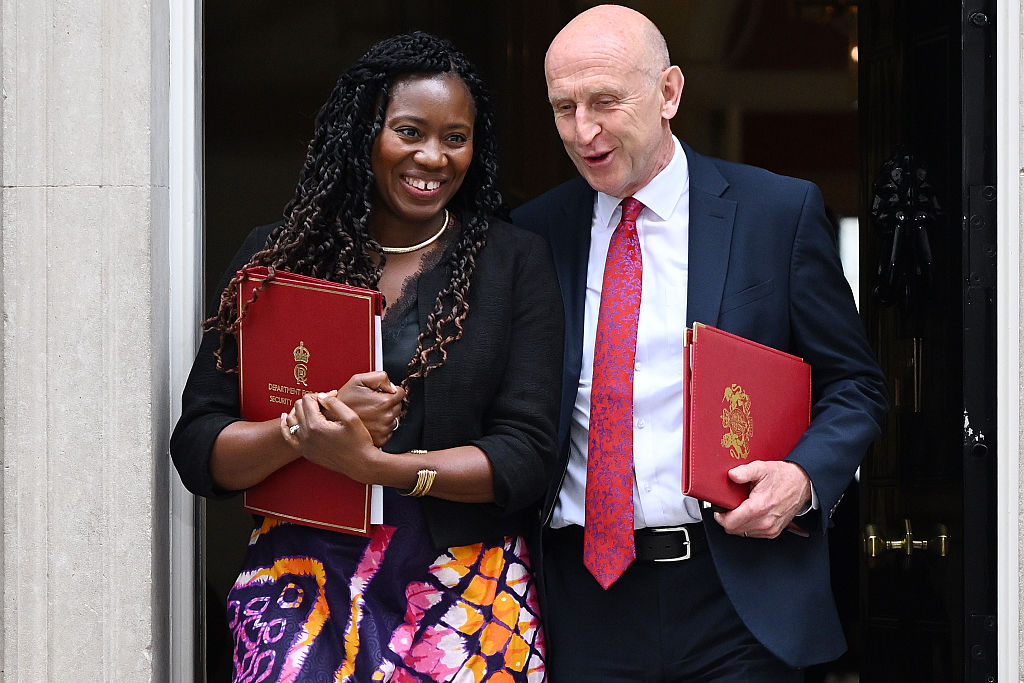
UK energy secretary Miatta Fahnbulleh approved the drilling on Wednesday after months of high-profile debate, fuelled in part by interventions from US President Donald Trump. She argued that the project would boost energy security in the wake of the Middle East fossil fuel crisis, protect hundreds of jobs and add £2.9 billion ($3.88bn) to the UK economy.
She said Jackdaw’s gas would be cleaner than imported gas and would not prevent the UK from meeting its legally-binding carbon targets and its goal of net zero by 2050. As the field is already licensed, she said extraction was consistent with the Labour Party’s 2024 manifesto promise not to issue any new oil and gas licenses.
The same morning, the government announced a new Energy Wealth Fund to reinvest oil and gas revenues in the climate transition. It will start with £2 billion ($2.67bn) from the government and be topped up over time with tax revenues from offshore oil and gas production.
Climate campaigners in the UK and abroad were quick to condemn the decision, while a leading legal expert told Climate Home News it goes against the advice of the International Court of Justice. Meanwhile, the government’s own documents reveal that it recognises the drilling could damage the UK’s reputation and its ability to push forward the global transition away from fossil fuels.
“Climate leadership” blow
The 92-page decision document says Fahnbulleh “acknowledges that international standing on climate is important and accepts that a decision to grant consent may not further the UK’s international climate leadership.”
It adds: “She acknowledges concerns about the potential implications for the UK’s credibility and influence – including the difficulty inherent in encouraging other states to move away from fossil fuel production while the UK continues, in a limited and transitional way, to draw on its own domestic resources.”
While noting that Jackdaw has not been issued with a new license – just permission to extract gas – the document says Fahnbulleh “accepts this does not fully resolve the underlying tension in the UK’s position” but “considers this alongside the substance of the UK’s wider record [on emissions reduction], which remains significant”.
It continues that she accepts these concerns are “legitimate” and weigh against approving gas extraction, but only gives this argument a “moderate negative weight” set against the benefits of gas production.
“Huge” wrong signal
In international climate talks, the UK has long supported the transition away from fossil fuels and is one of very few major oil and gas producers to ban new licenses. Across the North Sea, the Norwegian government continues to make offshore areas available for oil and gas exploration through annual licensing rounds.
Climate experts and campaigners shared the concern, acknowledged in the decision document, that approving Jackdaw could set a precedent for fossil fuel production elsewhere. Sam Fankhauser, professor of climate change economics at Oxford University, said the direct climate impact of Jackdaw is “much smaller than the debate around it would suggest” but the “wrong signal it sends, however, is huge”.
-
Carbon capture industry faces tough future, as UK raids green spending
Despite a spate of projects getting underway, the mood at an industry conference in London this week was low with government subsidies set to shrink -

