

Welcome to Carbon Brief’s China Briefing.
China Briefing handpicks and explains the most important climate and energy stories from China over the past fortnight. Subscribe for free here.
Key developments
China confirms climate commitment
XI’S NOT FOR TURNING: Chinese president Xi Jinping confirmed that the country’s 2035 “nationally determined contribution” (NDC) will cover the “entire scope of the economy, including all greenhouse gases” and be published before COP30, Bloomberg reported. It added that these comments, made at a virtual meeting of global leaders, signaled that “China won’t back off from its ambitions” on climate change, despite economic and geopolitical challenges. Reuters noted that Xi also flagged that “China’s actions to address climate change will not slow down”. As “Xi’s first international appearance on climate change since 2021”, the speech “sends a clear signal of China’s support for multilateralism”, Li Shuo, director of the China Climate Hub at the Asia Society Policy Institute, told Bloomberg. Nevertheless, campaign group Greenpeace East Asia global policy advisor Yao Zhe “cautioned against” interpreting it as meaning that an ambitious climate pledge is “guaranteed”, Climate Home News said, adding that it “remains an open question, especially given the ongoing tariff war with the US”.
BRAZIL’S INFLUENCE: The meeting was part of a broader campaign by COP30 host Brazil to persuade China, the EU and other powers “to commit to cutting greenhouse gas emissions enough to keep global warming well below 2C”, Reuters reported. Shortly before the meeting, Huang Runqiu, head of China’s Ministry of Ecology and Environment, reaffirmed China’s commitment to tackle climate change at a meeting with COP30 president André Corrêa do Lago in Beijing, according to China Environment News. Corrêa do Lago later told journalists he believes China is developing a “very ambitious” climate pledge, Bloomberg said.
GREEN BRICS: At a meeting in Rio de Janeiro, the foreign ministers of BRICS member states “reinforce[d the] group’s commitment to climate action”, according to a press statement published on the bloc’s website. Meanwhile, Xi visited the headquarters of the New Development Bank, a multilateral development bank established by BRICS, where he called on the bank to “implement more…green finance projects, so as to help developing countries…accelerate their green and low-carbon transformation”, the state-run newspaper China Daily reported. A China Daily editorial noted: “The BRICS countries are working together to help…developing countries finance the fight against climate change”. However, Reuters covered new research finding that Chinese companies are still building 7.7GW of new coal capacity overseas, mostly in BRICS member Indonesia, counter to China’s 2021 pledge to “stop financing coal projects overseas”.
Solar and wind outweigh fossil fuels

RENEWABLES REIGN: China’s combined wind and solar capacity has exceeded that of thermal sources (火电, which mainly refers to coal and gas) for the first time in history, industry news outlet BJX News reported, with 74 gigawatts (GW) of wind and solar installations in the first quarter of 2025 bringing total capacity up to 1,482GW. This compares to 1,451GW of thermal power, the outlet added. Finance outlet Caixin noted that wind and solar capacity had already topped coal power (煤电) capacity in July last year. In a press conference, a National Energy Administration (NEA) official indicated that solar and wind capacity additions will continue to surpass thermal additions in the long-term, according to BJX News. Writing on Bluesky, Lauri Myllyvirta, lead analyst at the Centre for Research on Energy and Clean Air (CREA), wrote that the high number of new solar and wind additions showed a “huge rush to install capacity” before subsidies are cut off in July under the forthcoming market-based renewables pricing policy.
NEW NUCLEAR: Meanwhile, China has approved the construction of 10 new nuclear reactors, Shanghai-based news outlet Jiemian said. The units will have a combined capacity of at least 12GW, according to Carbon Brief calculations, bringing China’s total nuclear capacity to 113GW once built, according to state broadcaster CCTV. The country has also formalised a ban on new “captive” coal-fired power plants in an updated list of business areas in which companies in China are not allowed to operate for 2025, BJX News reported.
MARKET REFORM: A new notice on regional spot markets for electricity was issued, BJX News said, mandating several provinces to begin either “official operations” or trial operations, with the goal of spot markets covering the whole nation by the end of 2025. China enacted “basic rules” for ancillary services markets for the power grid, finance news outlet East Money said, which includes defining the scope for grid-regulating services, operating practices and cost mechanisms for the sector. An analysis in China Electric Power News noted that the issuance of these rules marks the establishment of trading rules for the “three major trading types” – medium- and long-term markets, spot markets and ancillary services – in an “important step” for power market reform.
INDUSTRY AND TRANSPORT: China has called for electrification to account for 10% of the transport sector’s total “end-use energy consumption” by 2027 and for battery electric vehicles (EVs) to make up the majority of new car sales by 2035, East Money reported. Separately, China has issued its first “green hydrogen certificate”, which was awarded to a “solar + grid power” hydrogen project, the Substack China Hydrogen Bulletin reported.
Tariffs, export controls and executive orders
THOUSAND-PERCENT TARIFFS: The US has “announced plans to impose tariffs” ranging from 41-3,521% on solar panels imported from south-east Asian countries, many of which are manufactured by Chinese companies in the region, BBC News reported. Chinese companies are likely to embrace relocating to countries other than the US, the New York Times said, as the “profit margins on solar exports to the US are high enough that relocation will be worth it, even with continuing tariff uncertainty”.
-
Sign up to Carbon Brief’s free “China Briefing” email newsletter. All you need to know about the latest developments relating to China and climate change. Sent to your inbox every Thursday.
MINERAL FLOWS: China’s exports of critical metals to the US have “plung[ed]” in recent weeks, with “shipments of several critical items halting entirely in March”, the Hong Kong-based South China Morning Post reported. The shortage of minerals, which are “vital for EVs, wind turbines” and other clean-energy technologies, the Financial Times reported, could “cause shutdowns in automotive production…if Beijing fully chokes off exports”. Meanwhile, China has criticised a new US executive order “aimed at stepping up deep-sea mining” to increase access to key minerals, saying the move “violates international law”, according to BBC News.
Spotlight
China issues new ‘action plan’ to control HFC emissions
China issued a new “action plan” in April to control hydrofluorocarbons (HFCs), potent greenhouse gases (GHGs) that could significantly increase short-term climate warming.
In this issue, Carbon Brief assesses its potential impact on China’s GHG emissions.
Short-term pollutant
HFCs are man-made GHGs that can be several thousand times stronger at absorbing heat than carbon dioxide (CO2). One type, HFC-23, is 10,000 times more powerful than CO2.
They are used in a number of appliances, particularly as coolants for fridges and air conditioning.
Efforts to phase them out are governed by the 2016 Kigali Amendment to the Montreal Protocol on ozone-depleting substances, which China ratified in 2021.
China is the world’s largest producer and consumer of HFCs, accounting for more than 70% of global production and 50% of consumption. It also produces and consumes the majority of the appliances that use them.
Its HFC emissions stood at 273m tonnes of CO2 equivalent (MtCO2e) in 2020, according to the government’s recently-submitted GHG inventory. This is equivalent to more than 2% of China’s CO2 emissions that year, which totalled 11bn tonnes.
Despite HFCs’ relatively low share in overall GHG emissions, their absorption strength necessitates their inclusion in climate strategies, says Sun Xiaopu, senior China counsel at the thinktank Institute For Governance and Sustainable Development (IGSD).
She told Carbon Brief that mitigating HFCs will help avoid “short-term global warming” and climate tipping points.
Action plan for 2030
The government’s plan sets targets and timelines for “gradually reducing” production and consumption of appliances using HFCs by 2030, as well as reducing or banning consumption of ozone-depleting substances (ODSs).
These include lowering HFC production by 2029 by 10% from a 2024 baseline of 2bn tonnes of CO2 equivalent (GtCO2e). Consumption would also be reduced 10% from a baseline of 900MtCO2e in this timeframe. This aligns with China’s obligations under the Kigali Amendment.
From 2026, China will “prohibit” the production of fridges and freezers using HFC refrigerants.
From 2029, it will ban the use of HFCs in most cooling systems, including air conditioners and other refrigeration equipment – prioritising the automotive, home appliance and industrial cooling sectors.
To enforce this, China will take measures such as requiring licences for manufacturing and consumption of controlled HFCs, improving monitoring of the production of HFC-23, as well as encouraging recycling of HFC refrigerants, and imposing import and export quotas for HFC refrigerants (although not the appliances that use them).
The plan will also introduce “stricter legal liabilities and higher financial penalties” to deter non-compliance, said Zheng Tan, programme officer of the industry programme at the climate nonprofit Energy Foundation.
He told Carbon Brief this is a “crucial step” in strengthening China’s existing HFC policy framework.
Tightening controls
Although China has controlled HFCs for some time, efforts accelerated after 2021, Hu Jianxin, a professor at Peking University’s College of Environmental Science and Engineering and Kigali Amendment negotiator, told Environment China.
China has shown willingness to act ambitiously on HFCs before. It issued a notice to freeze domestic production capacity for five widely-used HFCs in 2021, two years earlier than its international obligations required.
The government reported, prior to the action plan, that its HFC controls saw production quotas in 2024 fall by 404MtCO2e and consumption quotas fall by 262MtCO2e year-on-year.
There is scope for ambitious HFC action to continue, Sun told Carbon Brief.
Non-government bodies could use “vertical” communication channels, such as panels of technological, economic and scientific experts, to feed governments information, she added, helping them understand the feasibility of higher targets, “leapfrog obsolete technologies” or address roadblocks to adopting alternative solutions.
Hu noted that industry representatives have been consulted on HFC controls, which could encourage greater compliance – in contrast to reports of companies previously flouting ODS production controls.
Nevertheless, he told Environment China industry could “always do more”, adding that, while some sectors could stop using HFCs immediately, others may need decades – although he did not clarify which sectors, or why.
Sun speculates that this may be because the patents for these alternatives are held by non-Chinese companies, creating barriers for Chinese companies to discover new solutions.
The climate thinktank Institute for Global Decarbonisation Progress found that Chinese companies hold only 14% of patents for one such group of compounds, hydrofluoroolefins.
Beyond patents, it added, alternatives “often encounter challenges related to safety, cost or energy efficiency”.
According to Zheng, developing “effective monitoring, reporting and verification tools and capacity-building measures”, policy support to increase demand for less damaging alternatives and developing science-based standards will be important for enhancing compliance.
Furthermore, China’s action plan only applies to appliances using HFC refrigerants within China, Sun said. Companies making such appliances for export are not subject to its controls.
A report co-authored by IGSD and the appliance-focused nonprofit Collaborative Labeling and Appliance Standards Program found that Chinese companies, among others, are “dumping” inefficient air-conditioning units that use HFC refrigerants in south-east Asia.
Halting this trade, the report said, could “result in a reduction of over 1GtCO2e over 25 years”.
Watch, read, listen
CHINA 101: The US-China Economic and Security Review Commission held a congressional hearing on China’s energy landscape and its geopolitical implications, featuring a number of experts on China’s energy and climate developments.
GREEN FINANCE: The East Asia Forum published an article by Christoph Nedopil Wang, director of the Griffith Asia Institute, on how China can cooperate with other Asian countries to “set a global example for green economic growth”.
COOPERATION AND COMPETITION: The European Guanxi podcast explored how EU-China climate cooperation could navigate tensions around carbon taxes and EV pricing.
EMPTY BARRELS: A new report by the Oxford Institute for Energy Studies outlined three potential scenarios for how China’s rising EV adoption will affect oil demand, finding it could fall by 600,000 barrels per day by 2030.
70%
The reduction in rainfall in the southern province of Guizhou since November last year, compared to average levels in previous years, as it battles a “lingering drought that has severely affected rural communities”, the state-run newspaper China Daily reported. Temperatures in April averaged 12.7C, marking the “second-highest national average temperature recorded” for the month since 1961, according to the state-supporting news outlet Global Times.
New science
Construction and analysis of China’s carbon emission model based on machine learning
Scientific Reports
A new study used machine learning to calculate a possible carbon emissions trajectory for China through to 2030. It mapped China’s carbon emissions to nine explanatory variables, including the “proportion of coal in total energy consumption and urbanisation rate”. As a result, the model estimates that China’s carbon emissions will “level off from 2022 to 2028 and peak in 2028”, with annual emissions in 2030 “expected to be about 9.72bn tonnes”.
Scientific Reports
New research examined the predictions of CMIP6 models for annual cycles of surface air temperature over China, “one of the most profound manifestations of global warming”. The study examined historical and future monthly temperatures under three different shared socioeconomic pathways. The study found that, under the model, the “amplitude” – or spread between the highest and lowest temperatures in a given year – would be narrower in future, although it noted that the patterns of likely temperature changes differ regionally, and particularly between northern and southern China.
China Briefing is compiled by Wanyuan Song and Anika Patel. It is edited by Wanyuan Song and Dr Simon Evans. Please send tips and feedback to china@carbonbrief.org
The post China Briefing 1 May 2025: Xi steadfast on climate; Solar and wind surpassed thermal power; Controlling short-term GHGs appeared first on Carbon Brief.

Climate Change
After a week of plenty of activity and drama for Greenpeace at sea, I felt like writing to you on a much quieter theme…
Do you have a favourite book, poem or story about the ocean?
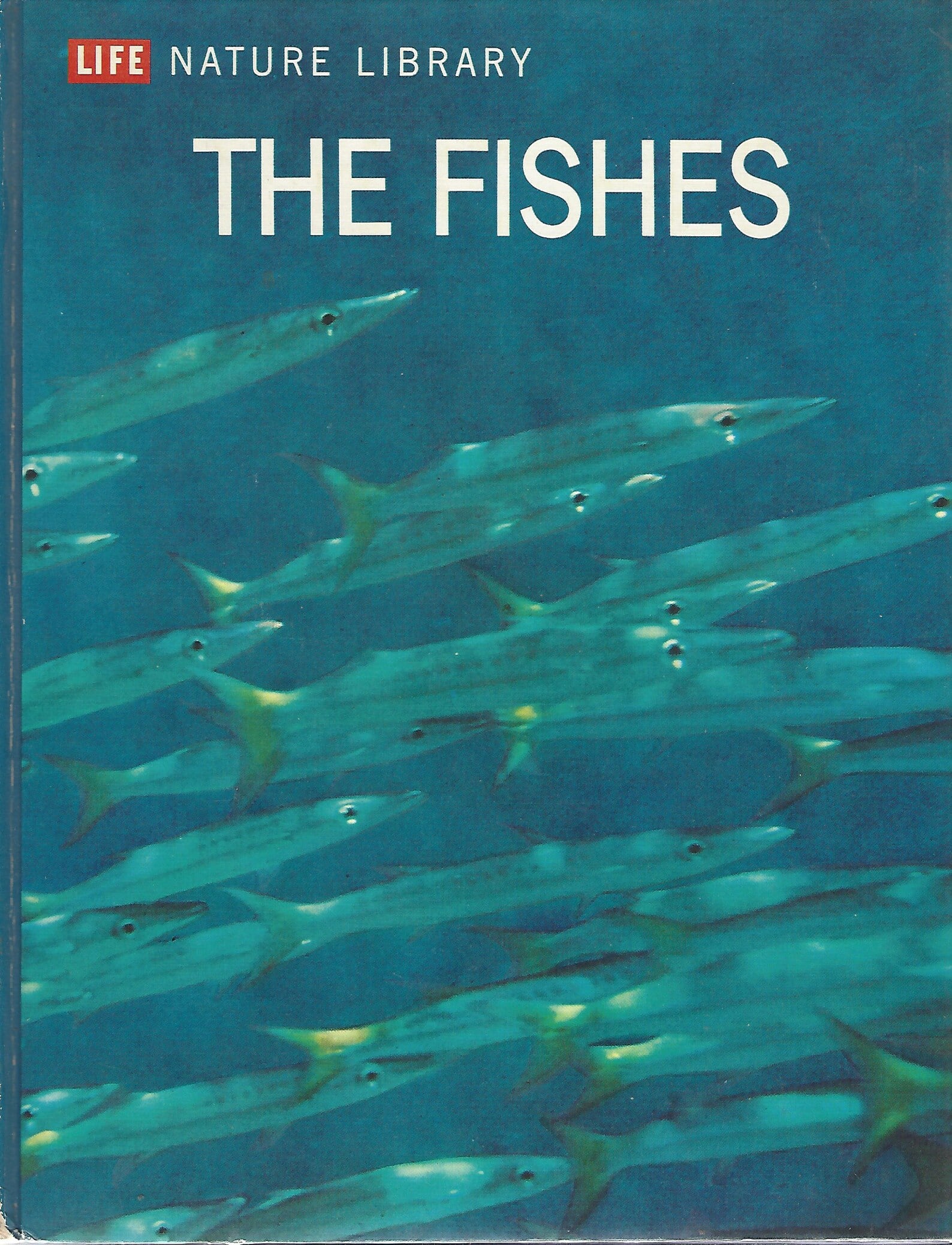
When I was very small, it was the TimeLife book of The Fishes, by F. D. Ommanney, which I remember endlessly poring over, my child’s mind gripped, in total fascination. The cover illustration showed a shoal of barracuda, mid-water and heading upwards, lit up as an iridescent blue by a column of sunlight. Oddly, it is only the cover and the illustrations of the deep sea creatures which I now remember—but I loved that book, as the weakened spine, blunted pages and dog-eared corners attested.
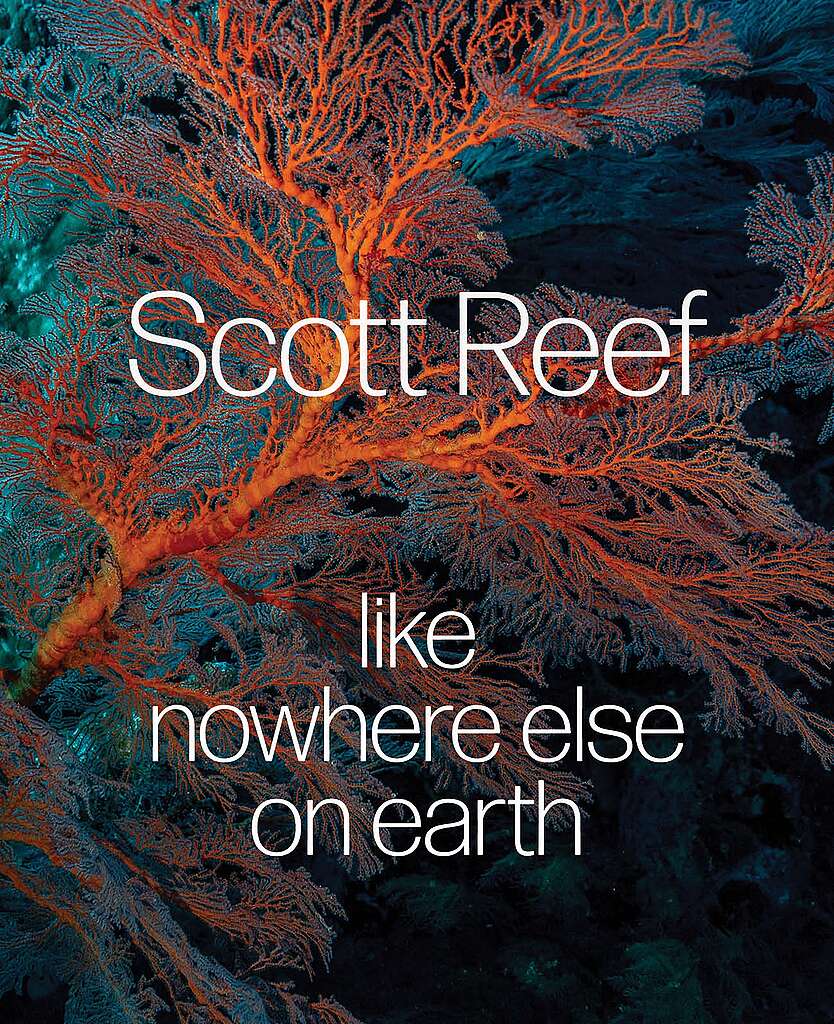
The Fishes has been on my mind recently, because I’ve been working with some dear friends on our own illustrated oceans book, to be published by Upswell Publishing. The book is called Scott Reef: Like Nowhere Else on Earth, and I want to share with you a bit of the story behind its creation.
Scott Reef is absolutely magnificent: Australia’s largest freestanding oceanic reef, brimming with life, including rare and threatened species such as a genetically distinct population of green sea turtles, pygmy blue whales and the wonderfully elegant dusky sea snake. But Scott Reef isn’t near our capital cities; it is way off the north-west coast of WA. And it is threatened with devastation by Woodside, which wants to drill up to 57 toxic wells at the Reef for its vast, dirty Browse gas project.
One of the main challenges in the fight to save Scott Reef from being turned into an industrialised gas zone by Woodside is bringing this incredible location to life for people who haven’t actually experienced it first hand. Because despite its ecological significance and dazzling beauty, ‘Scott Reef’ is also—at least not yet—exactly a household name.
To help get over this barrier, Greenpeace has enabled a number of photographers to travel to Scott Reef by boat (including the Rainbow Warrior) to document its astonishing diversity of colour and life. We then brought these images together in a remarkable photobook, produced by our talented in-house team, which we’ve been putting into the hands of as many leaders as possible—including the MPs whose decisions can determine the Reef’s future.
Back in June this year, I was sharing a copy of our in-house book at a business gathering in Perth when someone pulled me aside. Had we thought about publishing the book commercially? Apart from anything else, he wanted to buy a copy himself! He had a point. We were proud of what we’d created, but a commercially published version could reach a much wider audience and have even greater campaign impact. I immediately turned to my dear friend, Terri-ann White, who runs Upswell Publishing in WA, for advice.
Terri-ann has a huge heart and terrific vision. So many wonderful things in WA owe their existence to her doings, and, true to form, she was immediately encouraging and enthusiastic. “But,” she said, “it would add a whole new dimension if we had some words to accompany the incredible pictures.”
Fair enough, I thought. I could ask a few authors.
“And when would you like it published?” she asked.
“Ideally November,” I answered sheepishly.
Now, in publishing terms, nobody goes from idea to finished work, beautifully produced by a commercial publisher, in just four months. It. Just. Doesn’t. Happen. A book of this scale would ordinarily take nine months, I was told. But Terri-ann was undeterred. “If you can get a rapid turnaround on the writing, I will give it a shot.”
Over the following few days, I sent out 24 emails to prospective writers. To my joy and surprise 23 of them responded almost immediately with an enthusiastic yes!
Terri-ann was somewhat alarmed and perplexed when I told her the good news… we’d discussed a few authors, not more than twenty! “Impossible,” she texted. “Editing is important and you are talking about thousands of words!” But I also know Terri-ann. She does the impossible. And so, here we are… Terri-ann is going to hit that improbable deadline. Scott Reef: Like Nowhere Else on Earth will be on shelves in November.
The contributors are a wonderfully diverse bunch, united by their enthusiasm for Scott Reef — and their extraordinary speed!
It’s a brilliant mix. The book brings together national icons like Peter Garrett, Tim Winton, Mick Dodson, Janet Holmes à Court and Fiona Stanley; the intellectual heft of professors Frank Bongiorno, Jessica Meeuwig, Rick Steiner and Samantha Hepburn; the poetic vision of Prema Arasu, Berndt Sellheim and Saadiah Freeman; the field expertise and passionate first hand witnessing of Imogen Zethoven, Tooni Mahto, Ben Fitzpatrick, Geoff Bice, Olaf Meynecke, Paul Gamblin, Sarah Gittoes and Hayley Baillie; and the determination of emerging activist voices Jackson Reid and Emma Sangalli.
Their elegant words wrap themselves around the sheer wonder of the underwater world, brought to life by the work of the photographers — of whom one, Wendy Mitchell, has also contributed a wonderful essay.
Terri-ann showed me the full physical proofs this week and they are breathtaking. This book contains some of my absolute favourite images of wildlife beneath the waves -– and believe me, after almost 20 years at Greenpeace, I’ve been privileged enough to see some remarkable shots! The essays bring a whole new depth and richness to the story of Scott Reef.
If I am being honest, and maybe a bit sentimental, I hope that a four or five-year-old child somewhere in Australia will spend part of their summer holidays turning the pages of this book, wide-eyed with curiosity and awe at the beauty and strangeness of the creatures that call our oceans home.
Our shared commitment is to make sure that, as those children grow up, the wonders of Scott Reef will exist not just in the pages of the book, but out there in the wild waters off north-western Australia—alive, thriving, and every bit as extraordinary as they are today; a living wonder beneath the waves.
Pre-orders of Scott Reef: Like Nowhere Else on Earth are available here.


Q & A
Sometimes you get asked a question so often that you decide to produce a report to answer it!
We know there is strong public opposition to voter opposition to gas drilling at Scott Reef and fracking in the Kimberley in Western Australia. But I am frequently asked whether, even if people don’t want it, more gas drilling is a necessary evil to sustain WA’s prosperity?
The short answer is an unequivocal ‘No’. The longer answer is our new report, From Gas to Green: Building Western Australia’s Future State, which makes the comprehensive case that Asia’s gas market is declining — while WA has an enormous untapped opportunity to become a global leader in green industries and exports, helping drive the region’s shift away from fossil fuels. The faster that WA embarks on a decisive shift away from gas—and that includes no fracking in the Kimberley, or drilling at Scott Reef — so much the better for the state’s people, ecology and economy.