

Canada’s federal government has announced C$97.3 million (almost US$72 million) in new funding for clean transportation projects across the country. It was announced by Natural Resources Canada and other federal departments. The money will support 155 projects in provinces and territories nationwide.
The investment aims to expand electric vehicle (EV) charging, help freight fleets reduce emissions, and increase public awareness of clean transportation.
The Honourable Julie Dabrusin, Minister of Environment and Climate Change and Nature, stated,
“We are making it easier, cleaner, and more affordable for Canadians to get where they need to go by investing in new EV charging infrastructure… Making the switch to an electric vehicle reduces greenhouse gas emissions, and with the EV Affordability Program, drivers can save up to $5000, making EVs more accessible for Canadians to go electric.”
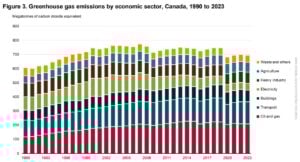
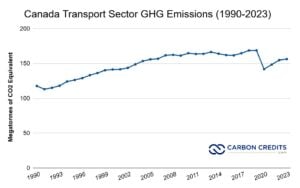
Transportation is Canada’s largest source of greenhouse gas emissions. According to Environment and Climate Change Canada, transport accounted for about 22–25% of national emissions in 2023, totaling almost 157 million tonnes of CO₂ equivalent. Passenger vehicles and freight trucks make up most of these emissions.
Reducing transport emissions is key to Canada’s goal of reaching net-zero emissions by 2050.
Charging Ahead: Billions Flow Into EV Infrastructure
The biggest part of the C$97.3 million package, C$84.4 million, will support EV charging infrastructure. This funding comes from Canada’s Zero Emission Vehicle Infrastructure Program (ZEVIP). It will support 122 projects that will install more than 8,000 new EV chargers across the country.
Canada already has more than 30,000 public charging ports installed, according to Natural Resources Canada. The new chargers will expand coverage in cities, rural areas, highways, workplaces, and multi-unit residential buildings.
Some major recipients include:
- Pollution Probe Foundation: C$7.3 million for 495 chargers.
- Manitoba Motor Dealers Association: C$6.5 million for up to 520 chargers.
- DP World Canada: C$4.375 million for 111 chargers.
- Purolator Inc.: C$2.575 million for 393 chargers.
Municipalities such as Calgary, Vancouver, Regina, Kelowna, Mississauga, and St. John’s are also receiving funding.
The federal government has set a target for 100% of new light-duty vehicle sales to be zero-emission by 2035. Expanding charging infrastructure supports this goal and helps reduce range concerns for drivers.
Greening the Freight Network
The announcement also includes C$5.7 million for three projects under the Green Freight Program. Medium- and heavy-duty trucks play a major role in freight transport. These vehicles consume large amounts of diesel fuel and produce significant emissions.
The Green Freight funding will help fleets with the following:
- Upgrade engines and vehicles,
- Improve fuel efficiency,
- Adopt low-carbon technologies, and
- Improve logistics planning.
Freight trucks represent about 37% of Canada’s transportation emissions, according to federal data. Cutting fuel use in this segment can reduce both operating costs and carbon output.
These projects aim to improve fleet performance while supporting Canada’s broader climate targets.
Education and Indigenous-led Initiatives in the EV Shift
The remaining C$7.2 million will support 30 education and awareness projects across Canada. These initiatives will provide information about EV adoption, charging technology, and clean fuels. They will also help train workers in EV infrastructure installation and maintenance.
Of the 30 projects, 11 are Indigenous-led. These projects focus on increasing awareness and access to clean transportation in Indigenous communities and northern regions.
Activities in this program include:
- Community test-drive events
- Skills training workshops
- Public outreach on clean fuel options
The advocates believe that education helps build confidence in electric mobility and supports long-term adoption.
Part of a Bigger National Electrification Push
The C$97.3 million funding is part of Canada’s broader Automotive Strategy and National Charging Infrastructure Strategy, announced in early 2026.
In addition to this funding, the Canada Infrastructure Bank (CIB) increased its charging and hydrogen refueling program by C$1 billion. This brings the total funding in that initiative to C$1.5 billion. The CIB program aims to support up to 5,400 new public fast-charging stations across the country.
The government also continues to provide purchase incentives for zero-emission vehicles. Federal rebates of up to C$5,000 are available for eligible EV buyers under existing programs.
Together, these measures aim to reduce emissions while strengthening Canada’s auto sector and supply chains. More so, the sector’s GHG emissions keep rising again post-COVID 19 pandemic.
Supporting Canada’s Net-Zero and 2035 ZEV Targets
This funding supports Canada’s national climate targets. The federal government plans to cut emissions by 40–45% from 2005 levels by 2030. It also aims for net-zero emissions by 2050.

This commitment is part of the Canadian Net-Zero Emissions Accountability Act. Transportation is the biggest source of emissions in the country, and so cutting vehicle emissions is key to reaching these goals.
Canada has set rules for new light-duty vehicles. By 2035, all sales must be zero-emission. There are interim goals of 20% by 2026 and 60% by 2030. Expanding EV charging helps meet those sales targets by making electric vehicles more practical for drivers across urban and rural areas.
Cleaner freight projects also support Canada’s broader plan to cut emissions from medium- and heavy-duty vehicles. The C$97.3 million funding supports Canada’s long-term move to a lower-carbon transportation system. It combines infrastructure investment, fleet upgrades, and education programs.
Closing the Emissions Gap in Transport
Transportation emissions remain high in Canada. Power plant emissions have fallen in recent years, but transport emissions have been slower to drop.
Electric vehicles produce zero tailpipe emissions. Canada’s electricity grid is about 83% non-emitting. So, when powered by it, EVs can greatly reduce carbon output. Heavy-duty vehicle upgrades and freight efficiency improvements also provide measurable reductions.
The new C$97.3 million funding helps close infrastructure gaps and prepares communities for increased EV adoption. It also sends a signal to private investors. Public funding often helps unlock additional private capital in clean energy and infrastructure projects.
Moreover, the installation of 8,000 new chargers will increase national charging coverage. Freight modernization projects will reduce diesel use, while education programs will improve awareness and workforce skills.
These steps support Canada’s commitment to reducing emissions by 40–45% below 2005 levels by 2030, while moving toward net-zero by 2050.
The C$97.3 million investment is one part of a broader national effort. As charging networks grow and fleets modernize, Canada’s transportation sector may gradually lower its carbon footprint. Further policy support, infrastructure development, and private investment will determine the pace of that transition.
- READ MORE: From Now to 2060: How Canada’s SMRs and Maritime Nuclear Power Will Drive a Net-Zero Future
The post Canada Invests C$97M to Supercharge EV Charging and Cut Transport Emissions appeared first on Carbon Credits.

Carbon Footprint
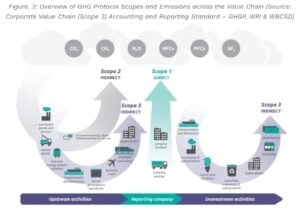
Verra to Launch Scope 3 Standard in 2026: A New Era for Value Chain Carbon Tracking

The post Verra to Launch Scope 3 Standard in 2026: A New Era for Value Chain Carbon Tracking appeared first on Carbon Credits.

Rising global oil prices are driving up demand for electric vehicles (EVs), with Chinese brands emerging as key beneficiaries. Recent spikes in crude prices are driven by heightened tensions in the Middle East and disruptions in the Strait of Hormuz, a critical oil shipping route.
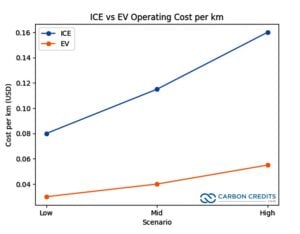
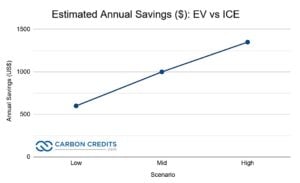
These factors have pushed Brent crude above $100 per barrel and created instability in fuel markets. This has pushed many consumers to rethink fuel costs and consider EV alternatives. Higher fuel prices increase running costs for gasoline and diesel cars, making EV ownership more economical in many markets.
Chinese EVs Gain Speed Abroad
Dealers in countries like Australia and parts of Southeast Asia see growing interest in Chinese EVs. This rise comes as fuel prices increase.
Showrooms selling Chinese new energy vehicles (NEVs) are seeing more test drives, customer inquiries, and rising order volumes. In Australia, the EV market share hit a record high of 11.8% for vehicle sales. Analysts say this jump is partly due to rising petrol prices.
Chinese manufacturers like BYD, GWM, and Chery are rapidly growing abroad. Some dealers see more walk-ins and more customers buying EVs.
China’s EV industry is now the largest in the world. In 2024, Chinese automakers produced over 12.87 million plug‑in electric vehicles (PEVs), including battery electric (BEV) and plug‑in hybrid models, accounting for nearly 47.5% of total automobile production. That figure marked a strong year‑on‑year rise and underscored China’s industrial scale and export readiness.
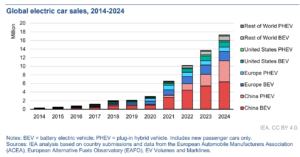
By late 2025, more than 51% of all new vehicles sold in China were electric — a major shift from just a few years earlier.
This domestic scale provides an export advantage. Chinese EVs often cost less than similar European and North American models. This helps them succeed in markets where fuel costs hit household budgets hard.
Fuel Costs Drive Behavior Shift
Rising oil prices are a major driver of these sales trends. Global crude prices have fluctuated due to geopolitical tensions. The Strait of Hormuz route carries around 20% of the world’s oil trade. These disruptions pushed crude prices sharply higher in early 2026.
In many countries, higher retail fuel prices translate into more immediate cost pressures for consumers. Reports from countries like Australia show petrol prices over $2.50 per litre. This rise is making consumers think about EVs to lower long-term costs.
Global EV Market Trends and Forecasts
The surge in Chinese EV exports aligns with broader global trends. Major industry forecasts suggest that global sales of battery electric and plug-in hybrid vehicles may top 22 million units by 2025. This could represent about 25% of all new car sales worldwide.
Global electric vehicle sales in 2025 reached nearly 21 million units, including both battery electric vehicles and plug‑in hybrid electric vehicles. This total represents a significant increase, roughly 20 % more than in 2024.
China’s share in this global growth is large. In 2024, Chinese manufacturers made up around 70% of all EV exports. This shows China’s key role in supply chains and manufacturing.
As oil demand growth slows due to EV uptake, some forecasts suggest that EVs could displace millions of barrels of global oil demand each day in the coming decade. By 2030, EV adoption could cut about 5 million barrels per day of oil use, according to major energy outlooks.
Trade Barriers vs Expansion
Despite strong export gains, barriers remain. Some regions have imposed tariffs and trade restrictions on Chinese EVs, and infrastructure gaps in charging networks can slow adoption. For example, tariffs exceeding 100% on certain Chinese EV imports in the U.S. have limited market share there.
However, Chinese OEMs are developing supplier and shipping capacity to support overseas demand. In 2025, China’s electric car makers expanded shipping through roll‑on/roll‑off carriers capable of transporting more than 30,000 vehicles, improving export logistics.
Emerging markets in Southeast Asia, Latin America, and Oceania are also showing rising EV interest. In the Philippines and Vietnam, dealerships see EV orders growing quickly. Some are even doubling their weekly sales, thanks to high fuel costs.
In India, where oil imports make up a big part of the economy, rising petrol costs make running traditional fuel vehicles more expensive. This has helped boost interest in electric vehicles, which are cheaper to operate when fuel is costly. Notably, the share of ICE retailers fell by over 25% in March.
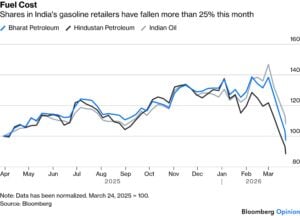
Indian consumers and businesses view EVs as a way to shield against unstable oil prices. This also helps lower fuel costs, supporting the country’s move to electric transport.
What This Means for Energy and Transport Futures
The convergence of high oil prices and strong EV supply from China is creating a feedback loop. Higher fuel costs push consumers to consider EVs more seriously. Chinese manufacturers are well positioned to fill that demand with competitive pricing and large production scale.
The shift could speed up the move from fossil fuel cars to electric vehicles worldwide. This is especially true in price-sensitive and emerging markets. EV adoption also has implications for oil demand trends.
- As battery and charging tech get better and EV markets grow, oil use — especially in transport — might slow down or peak sooner than we thought.
At the same time, governments and industry groups are tracking these shifts closely. Policies that support charging infrastructure, EV incentives, and emissions standards will influence how quickly the global fleet electrifies.
Ultimately, the current oil price shock may have sparked a shift in global automotive markets — one where Chinese EVs take an increasingly central role in transport electrification worldwide.
The post Oil Shock Ignites Chinese EV Export Surge Around the World appeared first on Carbon Credits.
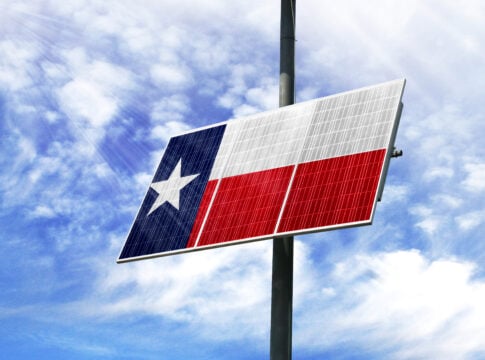
The U.S. is witnessing a surge in utility-scale solar development, driven by growing corporate demand for clean energy. Major tech companies like Meta and Google are securing long-term deals in Texas, combining renewable energy growth with economic and grid benefits.
This trend highlights how corporate commitments are shaping the future of the clean energy transition. Let’s find out.
Zelestra and Meta’s $600 Million Solar Deal
Madrid-based renewable energy firm Zelestra secured a massive $600 million green financing facility, signaling strong investor confidence in utility-scale solar. The funding, backed by Société Générale and HSBC, will support two large solar projects in Texas—Echols Grove (252 MW) and Cedar Range (187 MW).
These projects are not standalone efforts. Instead, they are part of a broader clean energy partnership with Meta, one of the world’s largest corporate renewable energy buyers. Together, they form a portion of a seven-project portfolio totaling 1.2 GW under long-term power purchase agreements (PPAs).
Sybil Milo Cioffi, Zelestra’s U.S. CFO, said:
“This financing marks a significant milestone in the delivery of our largest U.S. solar projects to date. It reflects strong confidence from Societe Generale and HSBC in our strategy and execution capabilities and reinforces our ability to attract first-class capital to support our growth platform in the U.S. market.”
Zelestra is strengthening its presence in the U.S. energy market with innovative solutions for hyperscalers and corporate clients. It is developing around 15 GW of renewable projects across key markets. In February 2026, BloombergNEF ranked Zelestra among the top 10 PPA sellers to U.S. corporations.
Solar Powering Meta’s Climate Strategy
Meta continues to aggressively expand its clean energy footprint. The company has made renewable energy procurement a core part of its climate roadmap—and the numbers clearly reflect that shift.
In 2024, Meta reported emissions of 8.2 million metric tonnes of CO₂e after accounting for clean energy contracts. In comparison, its location-based emissions stood at 15.6 million tonnes. This marked a sharp 48% reduction, largely driven by renewable energy purchases.
Moreover, the company has consistently maintained momentum:
- Since 2020, it has matched 100% of its electricity consumption with renewable energy.
- Over the past decade, it has secured more than 15 GW of clean energy globally.
- Overall, renewable energy procurement has helped cut 23.8 million MT CO₂e emissions since 2021.
As a result, Meta cut operational emissions by around 6 million tonnes in 2024 alone. At the same time, it tackled value chain emissions using Energy Attribute Certificates (EACs), reducing Scope 3 emissions by another 1.4 million tonnes.
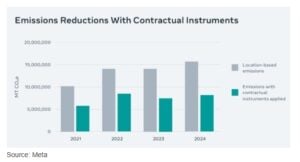
Most of these deals were concentrated in the U.S., highlighting the country’s growing importance in corporate decarbonization strategies.
Importantly, this collaboration goes beyond just energy supply. It also aims to deliver broader economic benefits, including:
- Local job creation during construction
- Long-term tax revenue for the region
- Continued investment in local infrastructure
David Lillefloren, CEO at Sunraycer, said:
“These agreements with Google represent a significant milestone for Sunraycer and underscore the strength of our development platform. We are proud to support Google’s clean energy objectives while delivering high-quality renewable infrastructure in Texas.”
Additionally, the deal was facilitated through LevelTen Energy’s LEAP process, which simplifies and speeds up PPA execution. This highlights how innovative platforms are now playing a key role in scaling renewable deployment.
“Google’s data centers are long-term investments in the communities we call home,” said Will Conkling, Director of Energy and Power, Google. “This collaboration with Sunraycer will fuel local economic growth while helping to build a more robust and affordable energy future for Texas.”
Google, like Meta, has built a strong clean energy portfolio over time. Since 2010, it has signed over 170 agreements totaling more than 22 GW of capacity worldwide. Its long-term ambition is even more ambitious—achieving 100% carbon-free energy, every hour of every day, by 2030.
Why Texas Is Becoming the Center of Energy Transformation
All these developments point to one clear trend—Texas is rapidly becoming a global hub for clean energy and data center growth.
On one hand, the state offers strong solar resources, vast land availability, and a deregulated power market. On the other hand, it is witnessing a surge in electricity demand, especially from data centers and AI-driven workloads.
According to projections from the EIA, U.S. electricity demand could rise by 20% or more by 2030. Data centers are expected to play a major role in this growth. In fact, energy consumption from data centers increased by over 20% between 2020 and 2025.
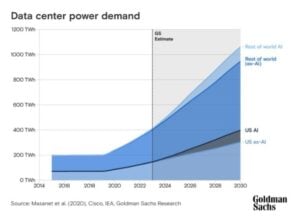
As a result, energy infrastructure in Texas is facing growing pressure. Rising industrial activity, extreme weather events, and rapid digital expansion are all contributing to grid stress. Yet, at the same time, this demand is driving unprecedented investment in renewable energy.
The EIA expects Texas to lead solar expansion in the coming years, accounting for nearly 40% of new solar capacity in the U.S. California will follow closely, and together, the two states will drive almost half of total additions.
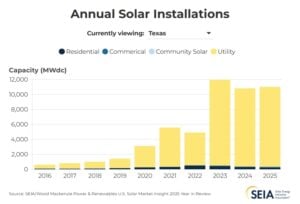
Even though the sector has faced temporary slowdowns, the long-term outlook for U.S. solar remains highly positive.
In 2025, the U.S. added 53 GW of new electricity capacity—the highest annual addition since 2002. Notably, wind and utility-scale solar together generated 17% of the country’s electricity, a massive jump from less than 1% two decades ago.
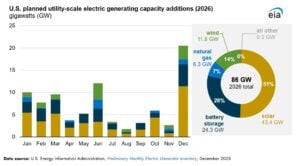
Looking ahead, growth is expected to accelerate again. Developers are planning to add around 86 GW of new capacity in 2026, which could set a new record. Solar alone is projected to account for more than half of this expansion.
Breaking it down further:
- Solar is expected to contribute 51% of new capacity
- Battery storage will make up 28%
- Wind will account for 14%
Utility-scale solar capacity additions could reach 43.4 GW in 2026, marking a 60% increase compared to 2025 levels.
Analysis: Corporate Demand Is Reshaping Energy Markets
Overall, the developments from Zelestra, Meta, Google, and Sunraycer highlight a broader transformation underway in global energy markets.
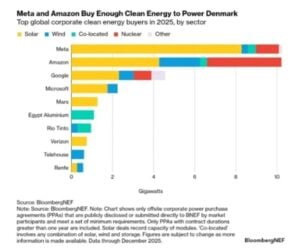
First, corporate buyers are no longer passive participants. Instead, they are actively shaping energy infrastructure through long-term PPAs. These agreements provide stable revenue for developers while ensuring a clean power supply for companies.
Second, financing is becoming more accessible. Large-scale funding deals, like Zelestra’s $600 million facility, show that banks are increasingly willing to back renewable projects with strong contractual support.
Third, regions like Texas are emerging as strategic energy hubs. The combination of rising electricity demand and favorable renewable conditions is attracting both developers and corporate buyers.
However, challenges remain. Grid reliability, permitting delays, and policy uncertainty could still impact the pace of deployment. Even so, the overall trajectory remains clear.
Clean energy demand is rising fast. Big Tech is leading the charge. And solar power is set to play a central role in meeting future electricity needs.
- READ MORE: Meta, Amazon, Google, and Microsoft Dominate Clean Energy Deals as Global Buying Slips in 2025
The post Texas Solar Market Heats Up with Meta and Google Investments appeared first on Carbon Credits.


-
Climate Change8 months ago
Guest post: Why China is still building new coal – and when it might stop
-
Greenhouse Gases8 months ago
Guest post: Why China is still building new coal – and when it might stop
-

 Greenhouse Gases2 years ago
嘉宾来稿:满足中国增长的用电需求 光伏加储能“比新建煤电更实惠”
-
Climate Change2 years ago
Bill Discounting Climate Change in Florida’s Energy Policy Awaits DeSantis’ Approval
-

 Climate Change2 years ago
嘉宾来稿:满足中国增长的用电需求 光伏加储能“比新建煤电更实惠”
-
Climate Change Videos2 years ago
The toxic gas flares fuelling Nigeria’s climate change – BBC News
-

 Carbon Footprint2 years ago
US SEC’s Climate Disclosure Rules Spur Renewed Interest in Carbon Credits
-

 Renewable Energy5 months ago
Sending Progressive Philanthropist George Soros to Prison?