Carbon Footprint
Canada Invests C$97M to Supercharge EV Charging and Cut Transport Emissions

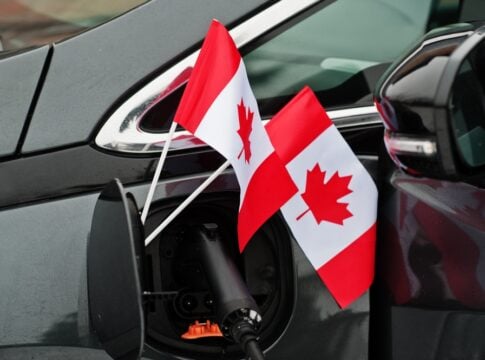

Canada’s federal government has announced C$97.3 million (almost US$72 million) in new funding for clean transportation projects across the country. It was announced by Natural Resources Canada and other federal departments. The money will support 155 projects in provinces and territories nationwide.
The investment aims to expand electric vehicle (EV) charging, help freight fleets reduce emissions, and increase public awareness of clean transportation.
The Honourable Julie Dabrusin, Minister of Environment and Climate Change and Nature, stated,
“We are making it easier, cleaner, and more affordable for Canadians to get where they need to go by investing in new EV charging infrastructure… Making the switch to an electric vehicle reduces greenhouse gas emissions, and with the EV Affordability Program, drivers can save up to $5000, making EVs more accessible for Canadians to go electric.”
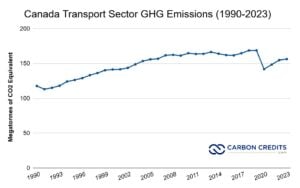
Transportation is Canada’s largest source of greenhouse gas emissions. According to Environment and Climate Change Canada, transport accounted for about 22–25% of national emissions in 2023, totaling almost 157 million tonnes of CO₂ equivalent. Passenger vehicles and freight trucks make up most of these emissions.

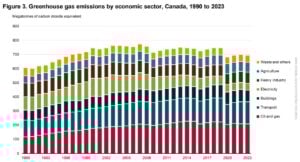
Reducing transport emissions is key to Canada’s goal of reaching net-zero emissions by 2050.
Charging Ahead: Billions Flow Into EV Infrastructure
The biggest part of the C$97.3 million package, C$84.4 million, will support EV charging infrastructure. This funding comes from Canada’s Zero Emission Vehicle Infrastructure Program (ZEVIP). It will support 122 projects that will install more than 8,000 new EV chargers across the country.
Canada already has more than 30,000 public charging ports installed, according to Natural Resources Canada. The new chargers will expand coverage in cities, rural areas, highways, workplaces, and multi-unit residential buildings.
Some major recipients include:
- Pollution Probe Foundation: C$7.3 million for 495 chargers.
- Manitoba Motor Dealers Association: C$6.5 million for up to 520 chargers.
- DP World Canada: C$4.375 million for 111 chargers.
- Purolator Inc.: C$2.575 million for 393 chargers.
Municipalities such as Calgary, Vancouver, Regina, Kelowna, Mississauga, and St. John’s are also receiving funding.
The federal government has set a target for 100% of new light-duty vehicle sales to be zero-emission by 2035. Expanding charging infrastructure supports this goal and helps reduce range concerns for drivers.
Greening the Freight Network
The announcement also includes C$5.7 million for three projects under the Green Freight Program. Medium- and heavy-duty trucks play a major role in freight transport. These vehicles consume large amounts of diesel fuel and produce significant emissions.
The Green Freight funding will help fleets with the following:
- Upgrade engines and vehicles,
- Improve fuel efficiency,
- Adopt low-carbon technologies, and
- Improve logistics planning.
Freight trucks represent about 37% of Canada’s transportation emissions, according to federal data. Cutting fuel use in this segment can reduce both operating costs and carbon output.
These projects aim to improve fleet performance while supporting Canada’s broader climate targets.
Education and Indigenous-led Initiatives in the EV Shift
The remaining C$7.2 million will support 30 education and awareness projects across Canada. These initiatives will provide information about EV adoption, charging technology, and clean fuels. They will also help train workers in EV infrastructure installation and maintenance.
Of the 30 projects, 11 are Indigenous-led. These projects focus on increasing awareness and access to clean transportation in Indigenous communities and northern regions.
Activities in this program include:
- Community test-drive events
- Skills training workshops
- Public outreach on clean fuel options
The advocates believe that education helps build confidence in electric mobility and supports long-term adoption.
Part of a Bigger National Electrification Push
The C$97.3 million funding is part of Canada’s broader Automotive Strategy and National Charging Infrastructure Strategy, announced in early 2026.
In addition to this funding, the Canada Infrastructure Bank (CIB) increased its charging and hydrogen refueling program by C$1 billion. This brings the total funding in that initiative to C$1.5 billion. The CIB program aims to support up to 5,400 new public fast-charging stations across the country.
The government also continues to provide purchase incentives for zero-emission vehicles. Federal rebates of up to C$5,000 are available for eligible EV buyers under existing programs.
Together, these measures aim to reduce emissions while strengthening Canada’s auto sector and supply chains. More so, the sector’s GHG emissions keep rising again post-COVID 19 pandemic.
Supporting Canada’s Net-Zero and 2035 ZEV Targets
This funding supports Canada’s national climate targets. The federal government plans to cut emissions by 40–45% from 2005 levels by 2030. It also aims for net-zero emissions by 2050.


This commitment is part of the Canadian Net-Zero Emissions Accountability Act. Transportation is the biggest source of emissions in the country, and so cutting vehicle emissions is key to reaching these goals.
Canada has set rules for new light-duty vehicles. By 2035, all sales must be zero-emission. There are interim goals of 20% by 2026 and 60% by 2030. Expanding EV charging helps meet those sales targets by making electric vehicles more practical for drivers across urban and rural areas.
Cleaner freight projects also support Canada’s broader plan to cut emissions from medium- and heavy-duty vehicles. The C$97.3 million funding supports Canada’s long-term move to a lower-carbon transportation system. It combines infrastructure investment, fleet upgrades, and education programs.
Closing the Emissions Gap in Transport
Transportation emissions remain high in Canada. Power plant emissions have fallen in recent years, but transport emissions have been slower to drop.

Electric vehicles produce zero tailpipe emissions. Canada’s electricity grid is about 83% non-emitting. So, when powered by it, EVs can greatly reduce carbon output. Heavy-duty vehicle upgrades and freight efficiency improvements also provide measurable reductions.
The new C$97.3 million funding helps close infrastructure gaps and prepares communities for increased EV adoption. It also sends a signal to private investors. Public funding often helps unlock additional private capital in clean energy and infrastructure projects.
Moreover, the installation of 8,000 new chargers will increase national charging coverage. Freight modernization projects will reduce diesel use, while education programs will improve awareness and workforce skills.
These steps support Canada’s commitment to reducing emissions by 40–45% below 2005 levels by 2030, while moving toward net-zero by 2050.
The C$97.3 million investment is one part of a broader national effort. As charging networks grow and fleets modernize, Canada’s transportation sector may gradually lower its carbon footprint. Further policy support, infrastructure development, and private investment will determine the pace of that transition.
- READ MORE: From Now to 2060: How Canada’s SMRs and Maritime Nuclear Power Will Drive a Net-Zero Future
The post Canada Invests C$97M to Supercharge EV Charging and Cut Transport Emissions appeared first on Carbon Credits.