


Canada has pledged nearly C$29 million ($21.6 million) to support carbon capture, utilization, and storage (CCUS) and renewable energy projects. The funding aims to back new technologies that reduce greenhouse gas emissions and make clean energy more competitive. This commitment was announced by the Canadian government in late March 2026 as part of ongoing efforts to meet climate goals.
The investment is small compared with Canada’s larger climate budget. But it signals continued federal support for emerging technologies and deployment of clean energy solutions. CCUS is one of several tools that nations are using to curb emissions while keeping energy supplies stable.
What Canada Is Funding? Inside the C$29M Clean Tech Bet
The C$29 million pledge covers a mix of CCUS and renewable energy efforts. It is intended for 12 projects that capture carbon dioxide (CO₂) from industrial emissions. It also supports systems that convert captured CO₂ into usable products or store it underground so it cannot enter the atmosphere.
The Honourable Tim Hodgson, Minister of Energy and Natural Resources, said:
“Canada is scaling up clean energy while strengthening our electricity grid and responsibly growing our conventional energy industry — because competitiveness means doing more than one thing at the same time. We are investing to provide reliable, affordable and clean power across the country that will propel our economic growth, protect affordability for Canadian families and make Canada a low-risk, low-cost, low-carbon energy superpower.”
Carbon capture refers to systems that trap CO₂ from power plants and factories before it is released. The captured gas can be stored deep underground or used in industrial processes, such as making building materials or fuels. Utilization means finding commercial uses for captured CO₂ so that it has economic as well as environmental value.
Renewable energy projects in Canada focus on expanding wind, solar, hydro, and other low‑carbon power sources. As of 2024, about 79 % of Canada’s electricity generation came from low‑carbon sources, with hydropower alone accounting for roughly 55 %. The rest comes from wind, solar, and nuclear energy.
Carbon Capture’s Strategic Role in Net Zero
Canada has a strong track record in CCUS deployment. Several large‑scale facilities already operate in the country, especially in Alberta and Saskatchewan.
For example, the Quest Carbon Capture and Storage Project in Alberta captures about one million tonnes of CO₂ per year and stores it deep underground.
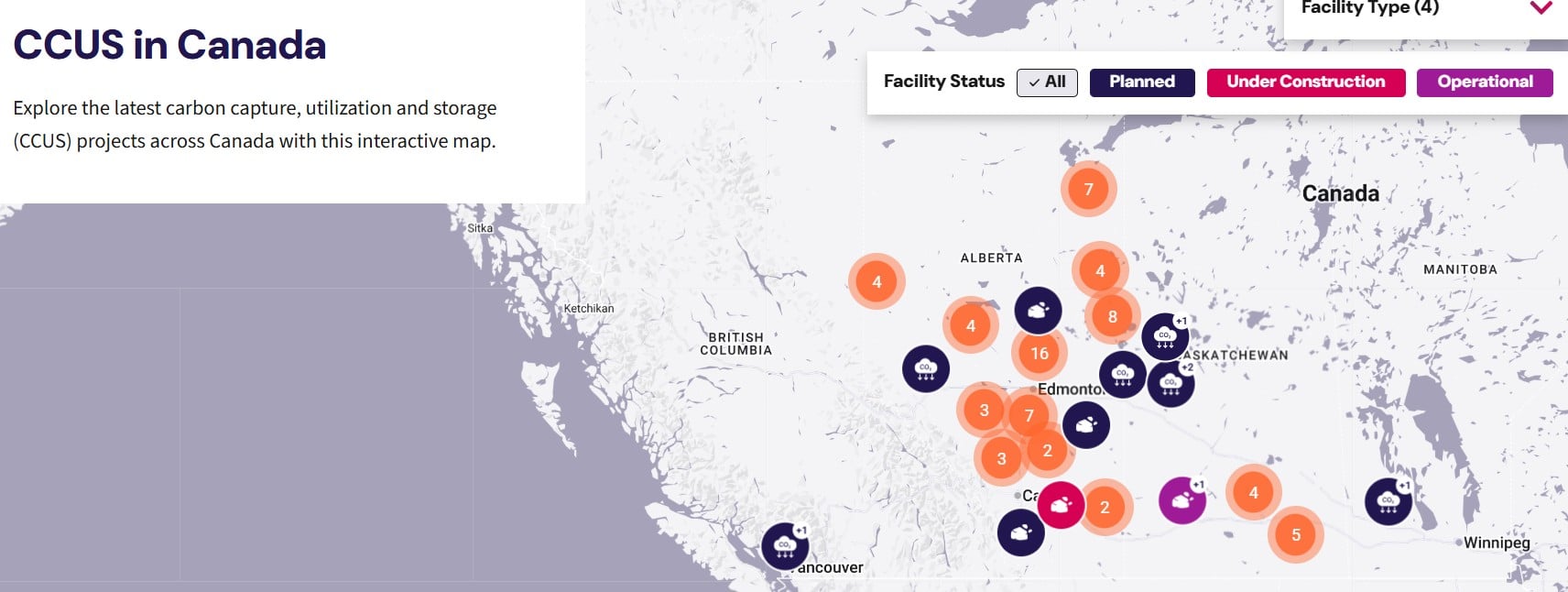
Canadian CCUS technology accounts for a notable share of planned global capacity. Canadian projects represent about 11.5 % of planned CCUS storage capacity worldwide.
Notably, Canada’s carbon capture capacity could increase from about 4.4 million tonnes of CO₂ per year to 16.3 million tonnes annually by 2030. However, much larger growth is still necessary to meet net-zero targets by 2050.
CCUS is considered critical for reducing emissions from hard‑to‑decarbonize sectors like heavy industry and oil and gas. It also plays an important role in achieving Canada’s long‑term climate targets, including net-zero emissions by 2050. In these scenarios, CCUS helps bridge gaps that electrification and renewables alone cannot fill.
Canada’s Energy Innovation Program (EIP) is designed to speed up the development of clean energy technologies while keeping the energy system reliable and affordable. It supports early-stage research and development in CCUS.
The program also funds renewable energy demonstration projects that test new ways to generate and integrate clean power, especially those with local benefits. In addition, EIP promotes innovation in electricity systems by supporting new approaches to smart grid regulation and capacity building.
A Power Mix Already Going Green
Renewable energy is another core part of Canada’s climate strategy. Over the last decade, installed renewable capacity has grown steadily. Between 2014 and 2024, Canada’s total renewable energy capacity increased from about 89,773 MW to 110,470 MW.
The federal government has supported renewable projects through multiple funding programs. Earlier initiatives included a $964‑million investment targeting wind, solar, storage, hydro, and other renewable technologies.
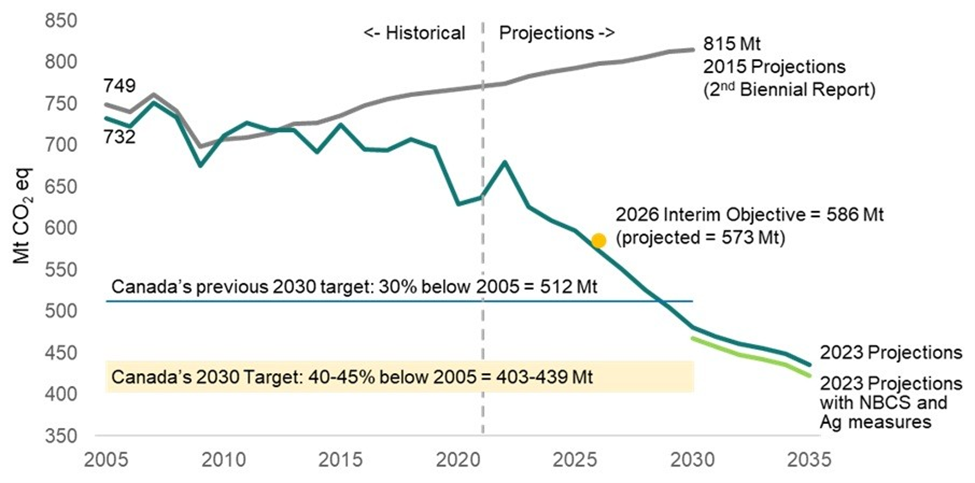
Canada has also set decarbonization targets tied to renewables. The country aims for net‑zero electricity by 2035, which supports a broader economy‑wide goal of net‑zero greenhouse gas emissions by 2050.
CCUS and Renewables on a Global Rise
Investment in CCUS and renewable energy is rising globally. According to industry forecasts, the global clean energy market — including wind, solar, energy storage, and CCUS — is expected to continue strong growth through 2030 as countries push toward climate targets.
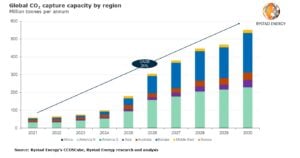
For CCUS specifically, analysts project that global installed capacity could grow fivefold by 2030 as more projects move from demonstration to full deployment. Canada is among several countries with mature CCUS infrastructure and planned expansions.
Renewables continue to be the fastest‑growing energy source globally. International agencies like the International Renewable Energy Agency (IRENA) project that renewable capacity will keep expanding rapidly through the end of the decade, driven by falling technology costs and climate commitments.
The Roadblocks to Scaling Clean Tech
While CCUS has potential, it also faces hurdles. Costs are high, and the technologies are still emerging at scale. Critics argue that CCUS has historically underperformed in some early projects, and that a significant amount of captured CO₂ is used in enhanced oil recovery rather than stored permanently.
Some stakeholders also warn that public funds for CCUS must be carefully targeted to avoid subsidizing continued fossil fuel use rather than meaningful emission cuts. Despite these concerns, many policymakers see CCUS as an essential component of climate strategy if Canada is to meet its 2030 and 2050 goals.
Renewable energy projects also face challenges, including grid integration, siting barriers, and supply chain constraints for equipment like turbines and solar panels. However, continued funding and clear policy signals tend to reduce these barriers over time as markets mature.
Cutting Emissions While Keeping Energy Stable
Canada’s C$29 million commitment fits into a broader pattern of public funding aimed at accelerating clean energy and decarbonization technologies. Larger federal efforts, such as the Net Zero Accelerator Initiative, provide billions of dollars over multiple years for clean tech, including CCUS deployment and industrial decarbonization.
The CCUS market is evolving from pilot projects to commercial opportunities. Meanwhile, renewable energy continues its growth as a mainstream power source. Together, these developments support Canada’s long‑term climate and economic goals.
As the global energy landscape changes, investments in both CCUS and renewables help reduce emissions, create jobs, and build resilience in a low‑carbon economy. Canada’s latest funding pledge reinforces its ongoing role in these key markets.
- READ MORE: Canada Approves First Uranium Mine in 20 Years as Tech Giants Eye Nuclear Fuel for AI Power
The post Canada Doles Out Almost C$29M for CCUS and Renewables as Clean Energy Market Surges appeared first on Carbon Credits.

The post Promoting Improved Cooking Practices in Nigeria appeared first on Terrapass.
For most companies, the largest figure in the carbon inventory is not the office, the vehicle fleet, or the electricity bill. It sits upstream, in the goods and materials a business buys to make and sell its products. These purchased inputs form the bulk of a company’s Scope 3 emissions, which routinely exceeds everything the business controls directly, and can add up to 90% of their global footprint.




-
Climate Change1 year ago
Guest post: Why China is still building new coal – and when it might stop
-

 Greenhouse Gases2 years ago
嘉宾来稿:满足中国增长的用电需求 光伏加储能“比新建煤电更实惠”
-
Greenhouse Gases1 year ago
Guest post: Why China is still building new coal – and when it might stop
-

 Climate Change2 years ago
嘉宾来稿:满足中国增长的用电需求 光伏加储能“比新建煤电更实惠”
-

 Renewable Energy12 months ago
Sending Progressive Philanthropist George Soros to Prison?
-
Climate Change2 years ago
Bill Discounting Climate Change in Florida’s Energy Policy Awaits DeSantis’ Approval
-
Greenhouse Gases1 year ago
嘉宾来稿:探究火山喷发如何影响气候预测
-

 Climate Change2 years ago
Analysis: China’s CO2 falls 1% in Q2 2024 in first quarterly drop since Covid-19