Connect with us

Published

on

From The Other 98%:
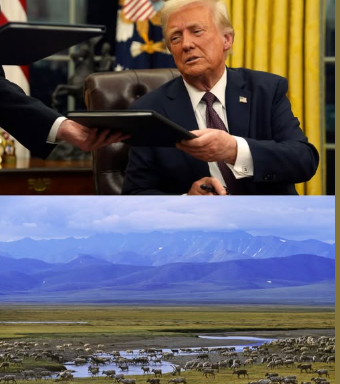
Trump just gave away America’s last wild frontier — to Big Oil. It’s the largest giveaway of public land to fossil fuel companies in modern history. The announcement, made Thursday by Trump’s Interior Secretary Doug Burgum, opens 1.56 million acres of the Arctic National Wildlife Refuge wilderness to oil and gas drilling.
Burgum bragged that “Alaska is open for business,” calling it a win for “energy independence.” Translation: the Arctic is open for destruction.

Big Oil Donors Will Sure Like This One

Continue Reading

Renewable Energy

Everpoint’s BladeBlok Recycles Blades for Drilling

Published

on

Weather Guard Lightning Tech

Everpoint’s BladeBlok Recycles Blades for Drilling

James Timmins, VP of Engineering at Everpoint Services, joins to discuss how recycled wind turbine blades become BladeBlok, a drilling fluid additive for oil, gas, and geothermal wells.

Sign up now for Uptime Tech News, our weekly newsletter on all things wind technology. This episode is sponsored by Weather Guard Lightning Tech. Learn more about Weather Guard’s StrikeTape Wind Turbine LPS retrofit. Follow the show on YouTubeLinkedin and visit Weather Guard on the web. And subscribe to Rosemary’s “Engineering with Rosie” YouTube channel here. Have a question we can answer on the show? Email us!

Welcome to Uptime Spotlight, shining light on wind energy’s brightest innovators. This is the progress powering tomorrow

Allen Hall: James, welcome to the podcast. Thank you. There has been a lot of activity at EverPoint Services. So I wanna back up first because if you’re not familiar with EverPoint Services, they are a recycler f- for renewable projects.

James Timmins: So we’re a, a renewable energy service company that specializes in, um, decommissioning and remediation services for, uh, wind and solar assets.

Allen Hall: So when a solar farm gets hit by hail and the panels are broken, EverPoint comes up and cleans up that mess to, to allow the repair to happen.

James Timmins: Correct, yes.

Allen Hall: And on the wind turbine side, you’re t- decommissioning wind turbines, but you’re also taking the [00:01:00] blades.

James Timmins: Yes. So it’s our responsibility to haul off the damaged, I guess, the scrap.

And, um, obviously there’s a very healthy market for scrap steel that you find in the tower base- Yes … but the fiberglass is a little less straightforward when it comes to disposal and/or recycling.

Allen Hall: So typically with the fiberglass blades or any composite that’s, that’s being recycled, th- there’s really two techniques that are being implemented right now.

Uh, well, really three. Let’s go over three of ’em. One of ’em is you can just bury them. They’re c- essentially construction materials, so you can bury them. Not ideal, but it has happened in the past. The second is they grind up the, the blades and use ’em in, uh, c- the cement-making process, where they’re burning some of the things that are combustible there and using it for fuel, but also the fiber can help with the cement.

Does, does that sound right? Correct. And, and then the third one I’ve seen is just as a reinforcement product. [00:02:00] So it’s, uh, they chop up the fiber in different lengths, they clean it up, and you can u- use it as an additive to different products. Yes. And, and that generally has been the marketplace in the blade recycling area for- Going on 20 years now probably Yes Until now.

And that’s where Everpoint has really changed the game because you’re thinking about blade recycling a completely different way.

James Timmins: Correct. So my background is oil and gas. I was a drilling engineer, uh, for major oil companies, so it was my job to plan, execute, and oversee drilling operations. So I worked kind of all over the world, and this project started as an icebreaker at a friend’s birthday.

I had never met Tyler Goodell before. I- Wait,

Allen Hall: wait, wait. So you’re at a birthday party-

James Timmins: Yes …

Allen Hall: and your kids are having fun. They’re eating cake. Oh,

James Timmins: we were at a dive bar, so we- Oh, okay … yeah, watching a band, uh- … sitting over a bucket of Lone Stars and yeah.

Allen Hall: Okay. That’s the [00:03:00] best place for new ideas to occur clearly.

So you’re, you’re, you’re at a birthday event, you’re hanging out, and what happens?

James Timmins: He asked me what, what I would do with tens of thousands of tons of scrap fiberglass.

Allen Hall: And you get asked that every day, or is it- No. Okay.

James Timmins: And I thought it was a weird question, and I kinda put it in the back of my mind. And about 15 minutes later I was like, “Well, I have an idea that we could, uh- Put at least some of that to work.

Allen Hall: And what was that idea?

James Timmins: The idea was that we could grind it to a specific particle size distribution and use it as a fluid loss additive in oil, gas, and geothermal drilling operations.

Allen Hall: Okay. That’s a unique application.

James Timmins: Yes.

Allen Hall: So I think we need to walk into what happens when we’re drilling an oil well or any sort of well, I suppose.

Uh, there’s unique things that happen that require specialty fluids or specially …

James Timmins: Uh, specialty additives you could say. Additives.

Allen Hall: Yes. [00:04:00] So- Okay. That’s a, that’s a good way to describe it. All right. So, uh, I’m drilling a well. I’m in Texas. I’m an oil tycoon. I wanna drill this well. What am I doing?

James Timmins: So you have what’s called drilling mud, which is pumped down the drill string through the bit.

Um, helps cool the bit, um, power down hole tools, and sweep the cuttings out, which is the- Okay … drilled up rock.

Allen Hall: Yep.

James Timmins: So there’s a, a hydrostatic pressure that the fluid column exerts on the formation. And if that fluid column exerts more pressure than the formation can stand, it splits open like a fracture.

Allen Hall: Okay.

James Timmins: In this case, an accidental fracture. Or you could have just a porous formation of, uh, low pressure. And so you have this pressure imbalance from the wellbore where the fluid wants to flow to the area of low pressure. And, uh, this mud is $300 or $400 a barrel. And if you’re- Whoa … losing 100 barrels an hour, the costs add up really quick.

Can’t drill ahead. Um, it’s what’s called non-productive time. [00:05:00] So you’re spending 80 or $100,000 a day for all this equipment to be out there, and you’re not drilling ahead, so.

Allen Hall: Okay. So as the, the drill bit goes down into the formation, you’re hitting rock. You hit a crack in a rock, or you create a crack in a rock.

All your drilling mud, and it’s not really mud, right? No, it’s- It’s, it’s a special compound-

James Timmins: Yes … that we call mud. Very,

Allen Hall: uh,

James Timmins: yeah, it’s drilling fluid, I guess, is the technical term. Okay . But, um- I’ve

Allen Hall: heard mud used universally.

James Timmins: It kinda looks like chocolate milk most of the time.

Allen Hall: There you go. Yeah. Okay. So it’s an expensive fluid.

You’re pushing it down in, but then you get a, a crack or a formation that you run into, and all that precious fluid goes running off somewhere else. Yep. So which it doesn’t allow you to cool the bit, which basically stops all drilling.

James Timmins: Correct.

Allen Hall: Okay, that’s a big problem.

James Timmins: And in worst case scenario, the fluid column falls and the pressure on the formation falls, and then the well starts flowing and you have a well control problem, so.

Allen Hall: So now you got a big problem.

James Timmins: Yep. [00:06:00]

Allen Hall: All right. So now you have fluid coming back at you that you’re not ready for.

James Timmins: Correct, yeah.

Allen Hall: Okay, that seems like quite the mess.

James Timmins: Yeah, so it’s actually one of the… You know, in some parts of the world, one of the top drivers of non-productive time and cost. So it’s a, kind of a problem as old as the oil field itself, but…

Allen Hall: Okay, c- ’cause at the end of the day, you would like to have a specific hole tapped at a specific location pulling-

James Timmins: Yes …

Allen Hall: hopefully petroleum products from that area or whatever you’re going for. It’s could, could be gas- Yeah … uh, off of that site, but you have to have some constraints about it, right? Right.

You d- d- to control everything. Okay. So n- that sets the problem. All right. We’re gonna run to this, uh, area where we’ve, we’ve cracked the found- the, the rock or there’s porous rock and we’re pumping this, a really expensive fluid down it and we would like to stop that from happening. How does that end up involving wind turbine blade recycling?

James Timmins: So we grind this material to a specific size and you mix it at a certain [00:07:00] concentration. Could be two pounds per barrel of mud or 80, uh, depending on the severity of the losses. But, um, this mixture is pumped down into the formation and this, um, kind of acts like a… Technical term is bridging. So this, these fibers from the recycled turbine blades cannot fit through all of the pore spaces.

Sure. And gradually they be- begin to accumulate on the wall of the, the wellbore. So they- Okay … uh, eventually it’s kinda like a clogged sink with… You know, you get enough- So you get enough hair in the sink … chopped vegetables. Yeah. Yeah. It, it eventually will stop flowing.

Allen Hall: Oh, well, who hasn’t experienced that?

So it’s, it’s… So you, you wanna put things down into this hole that prevent the fluid from running off. Recycled blades seems like a very viable option just because it’s in an inert substance, it’s pretty durable.

James Timmins: It is.

Allen Hall: It’s tough. It can handle high temperatures [00:08:00] and it now can be pumped.

James Timmins: Yes.

Allen Hall: Wow. All right.

So that’s a, that’s a remarkable idea. But ideas and products, there’s usually a long distance between those two.

James Timmins: Correct, yes.

Allen Hall: So from initial concept to where you are today, walk through what you had to go do to make this into a real product.

James Timmins: Uh, so we… I basically have- was familiar with these types of products in the past, but at the level I was at, I was not getting into the granular detail-

Allen Hall: Sure

James Timmins: of the qualification of the product, of the spec of the product. So, um, I kind of had to do a lot of research reading technical papers online about product development for this particular type of product. So, um, I started with a, basically in my garage, um, a geologist sieve. Okay. I got a sample of shredded fiberglass, which I think was, was like five-inch shred.

So I [00:09:00] bought a blender from Target, not knowing what else to use, and I stuffed it down in, with a crescent wrench and blended it up and broke the blender and eventually got enough usable material to, uh, start testing it in a lab. And so-

Allen Hall: Oh …

James Timmins: there are third-party labs that do these kind of tests, and they’re all industry standard, um, prescribed methods, so they’re called mud checks and, uh, what’s called a pore plugging apparatus, which is like a, either a ceramic disc that’s simulates a formation and it’s porous, it’s got a certain permeability, or you have what’s called a slotted liner, which is a stainless steel plate with two-millimeter slots on it.

And you put the mixture in, and you pressurize it, and if it stops it, then you know it works. So- So

Allen Hall: you’re plugging a hole- Yeah … in a laboratory,

James Timmins: basically. Exactly, and it’s under high temperature and pressure, so it’s designed to simulate kinda downhole conditions. But-

Allen Hall: [00:10:00] Wow. Yeah Okay, so- Got a

James Timmins: little into the weeds,

Allen Hall: but So you’re, no, you’re in your garage, you chop up some material, you go, “All right, let’s go check this out.”

You, you get a, a- an independent laboratory to try it, and they say it works.

James Timmins: Yes.

Allen Hall: And then it’s, then you’re off to the races now because- Well, that’s what I thought … you opened Pandora’s box

James Timmins: Yeah … a

Allen Hall: little

James Timmins: bit. So I was not expecting how much, how rigorous the t- the qualification would be on the industry side as well.

Right. Sure. Yeah So, um, that was kind of the starting line for, uh, product qualification, but, um, I had a very coarse particle size, thinking that would be adequate because I was not familiar with what’s actually used.

Allen Hall: What the ingredients are, yeah.

James Timmins: Right. So, um, I was kinda shopping it around to friends, and they’re like, “It’s a niche product where it is right now.

It needs to be finer.” So that’s kind of been the process is, okay, it needs to be [00:11:00] this particle size D50, which is 50th percentile mean particle size, basically. And so then the question is how do we get there? And- Right … so- Grinding composites

Allen Hall: can be difficult because- It is … they’re tough, and they’re, as you have learned with the, the- The-

blender experiment

James Timmins: Right … chopping them is not easy. Right. Very abrasive, uh, very high tensile strength. It’s basically designed not to be cut or not to be torn. Um-

Allen Hall: Right. That’s why we love it …

James Timmins: not to be, not to ever degrade in weather. So it has been an ongoing Kind of research project to find out what’s the best equipment for this, uh, can we do this at, you know, a reasonable cost?

‘Cause it’s not gonna be as cheap as grinding up or, you know, picking up sawdust from a sawmill or- Right … or chopping up cedar trees or whatever. So- Which

Allen Hall: are generally soft and easy to, to chop and-

James Timmins: Right. And not nearly as abrasive and so- Right … we [00:12:00] have identified, um, a process that we think is economical, and we’ve demonstrated it in, you know, kind of a small commercial run.

But, uh, you know, it’s kind of going back and forth to consumers and them saying, “We want this product size,” and then me going back and forth to our partners saying, “Can we do this? Can we do a lot of it? Can we do it-”

Allen Hall: Right. The quantity’s gonna

James Timmins: be big. Right. Exactly. So, you know, talking to equipment manufacturers, they’ll all tell you that their product, their, their machine can handle this material.

And they’re usually all right, but, you know- Can they

Allen Hall: handle the quantity?

James Timmins: Exactly. Without- They can do it for a month, or, you know, six months, and then it’s, well, do we have to overhaul the whole machine now ’cause this- That’s it … yeah.

Allen Hall: It’s, those composites are rough on blades.

James Timmins: Yep.

Allen Hall: So you’ve, you’ve broken through that barrier.

You obviously have figured out a way to, to chop the material down or grind the material down into the right particle size. So [00:13:00] now you have a material that is, one, clean, is using existing blades right off the turbines, being ground down, and is a, a product that will be consumed by industry in large quantities.

James Timmins: Yes.

Allen Hall: So all these blades that have, that were gonna be recycled anyway because of the age of the turbine now have a home-

James Timmins: Yes …

Allen Hall: in the oil and gas industry, which is sort of ironic, right? Right. The renewable industry is taking over oil and gas. At the same time, we’re supporting it in a way, but, uh, the product is called what?

James Timmins: BladeBlock.

Allen Hall: BladeBlock. Okay. Great name. So BladeBlock is then, is a product that’s, it comes in a, in a bag, or is it a cylinder? Is it a truckload?

James Timmins: Comes in whatever the customer wants it to come in.

Allen Hall: Okay.

James Timmins: So 50-pound sacks, uh, super sacks, or bulk trucks.

Allen Hall: So it must have a really unique, uh, application i- in terms of, I have a big problem where I can’t use off-the-shelf expensive mud.

I need to f- fill this hole relatively quickly. [00:14:00] I’m just gonna go grab some BladeBlock and solve this problem right now.

James Timmins: Yes.

Allen Hall: And, and it… So that changes the industry quite a bit. So places that you may have had trouble drilling wells in, you can now drill wells.

James Timmins: Yes.

Allen Hall: That’s remarkable. So what has been the response from the industry?

James Timmins: Uh, they love it. Um- I bet … they love the idea. They, they kind of giggle at the irony of- … you know, oil and gas solving a renewable problem. Um, and-

Allen Hall: And a renewable problem solving an oil and gas problem.

James Timmins: Right. We are selling on the performance and the cost of the product, but there is also a sustainability and circular economy, you know, aspect as well that is marketable, and there’s still an appetite on both the operator side and the oil field service side for that.

Allen Hall: This is not a… We’re in Texas at the moment, but this is not a Texas, Oklahoma, N- uh, New Mexico kind of problem. You’re actually fixing problems globally with BladeBlock.

James Timmins: Yes.

Allen Hall: So the product is, [00:15:00] although made in the United States, can be shipped anywhere I would assume. Yep. So, uh, y- are you getting any requests outside of the United States for it?

James Timmins: We have talked to overseas partners, I guess, kind of industry leaders overseas, and there is definitely some interest. Um, we are also talking to, uh, service companies domestically headquartered who have operations internationally who have expressed interest in, uh, using it overseas. But, I mean, right now, you know, we’re close enough to the ship channel that we can ship it wherever they want it.

That’s amazing.

Allen Hall: And it’s a patented product also,

James Timmins: right? Yes. So- We are in the… I guess, we’ve received our notice of allowance, and we’re in the final stages of issuance, so.

Allen Hall: So you have a, a patented, US patented, or is it, is it a world patent? Are you, you going outside the United States- Uh, we will … on patent?

James Timmins: Yes.

Allen Hall: Wow. All right. So you have eventually a somewhat global patent, so to speak. That’s not how it works, but it… that’s essentially [00:16:00] what you’ll have, uh, for BladeBlock to solve problems globally. Would, would that also involve, like, offshore wells too? Yes. Do they have the same problem? So I’m thinking of Texas ’cause we’re here, but offshore of the coast of Norway where they’re drilling wells, or in the North Sea or-

James Timmins: Persian Gulf.

Yeah …

Allen Hall: Persian Gulf, sure, that they can use BladeBlock to solve some of their problems- Yes … which they couldn’t have solved today.

James Timmins: Yeah.

Allen Hall: So d- have they abandoned wells because of this problem?

James Timmins: Yes. Um, especially in certain formations you have what are called vugs, which are basically just large limestone caves that have been-

Allen Hall: Limestone

James Timmins: is tough.

Yeah … so you can put a whole car down there if you want- … and, uh, still not fill it in. So, um, you know, this product, it basically is practically inexhaustible from you know, it’s… We’re kind of only limited by how much we can manufacture on- How much you can

Allen Hall: process …

James Timmins: right. So, um- It’s kind of a good problem to have for us, but

Allen Hall: [00:17:00] Yes.

It changes the whole dynamic of blade recycling, because the blade recycling effort up to this point has been the operator or the OEM pays the recycler to grind the blades, and then they have to find a way to source out that material. But the, basically everybody’s trying to reuse the material because it, it does have value.

How do we best reuse this, right? This is what the recycling efforts are on the recyclable blade, uh, resin systems that are happening. But you’re just taking the existing blades that weren’t meant to be recycled and recycling now in a product that has a lot of value.

James Timmins: Correct, yes. So obviously the biggest challenge everyone faces is the economics of it.

And you-

Allen Hall: You know how many people have been working on that problem? Literally thousands of people have been working that problem, and you guys figured it out at a birthday event.

James Timmins: Yeah, uh- … totally out of left field. Um, it, it just, it’s one of those things that sticks in the back of your head, and you think about it for 10 minutes, and you’re like, “Oh, uh, why-” But

Allen Hall: I have [00:18:00] a, I have a solution.

Like, we can use it here. Yeah, which, you know, most people, that would never have occurred to.

James Timmins: Right. And it’s kind of a technical rabbit hole, like the drilling fluid is- It is … it’s, it’s, so it’s not a whole lot of people out there thinking about lost circulation material- … uh, on a daily basis. Um, but that was, you know…

The problem with so many of these applications is you’re competing with, in some cases, literal dirt and sand. We pay f- five cents a pound for sand or concrete filler, fly ash, whatever, and it’s like, well, you’re never gonna process it that cheap, or you’re never gonna way to, to be able to economically process it that cheaply, so.

Allen Hall: Sure, but there’s unique applications where those things don’t work.

James Timmins: Right.

Allen Hall: And you can now make an unprofitable drill hole profitable.

James Timmins: Yes.

Allen Hall: That’s a game changer. So this is remarkable, and I, I know you guys have been working on this for a couple of years, and it’s, EverPoint has always been, [00:19:00] and we’ve talked to EverPoint for a couple of years now on the podcast of, when we talk to recyclers, we don’t act- we actually have talked to a number of recyclers, but we don’t have them on the podcast because it’s, seems like the amount of material coming into their facility and the amount of material going out are not the same.

Correct. They’re landfilling them or whatever’s going on, which is, it, it to me is trouble, right?

James Timmins: Right.

Allen Hall: You, your, EverPoint has always been, “We are actually gonna do what we say we’re gonna do. We’re gonna take the solar panels, we’re gonna recycle, we’re gonna…” You’ll be able to follow it. Correct, yeah. Which is one of the technologies that EverPoint brought, is you could follow your recycling product all the way from the site to where it finally ended up at.

That was remarkable. That was an industry-changing, uh, idea, and I appreciate that EverPoint was doing that. Now, you’re actually turning it into a viable product called Blade Block. Game changer. Now, our podcast is probably not heard by a lot of oil and gas folk, but the, you know, the word does spread and we [00:20:00] have almost two million YouTube subscribers at this point.

How do people get ahold of you to purchase BladeBlock? Do they go onto your website? Are they-

James Timmins: Yeah. I mean, LinkedIn, website.

Allen Hall: Okay. However.

James Timmins: Yeah.

Allen Hall: So- And, and what’s your website address?

James Timmins: It’s everpointservices.com.

Allen Hall: Okay. And you’re based in Texas?

James Timmins: We are. Houston.

Allen Hall: In Houston, right. So the, everybody that is interested in having improved oil and gas drilling mud, uh, can use BladeBlock now, and it’s a viable product that’s being offered, it’s patented, it’s gonna ship globally.

It’s the right time and it’s the right way to recycle your blades. So if you have a, a wind turbine farm that’s being decommissioned, there’s a lot of repowering happening right now, uh, there should be a lot of, of blade material available to make BladeBlock with. So congratulations. That’s remarkable.

James Timmins: Thank you so much.

Allen Hall: James, so thank you so much for being on the podcast. Of course. It was great to meet you.

James Timmins: Nice to meet you as

[00:21:00] well.

Everpoint’s BladeBlok Recycles Blades for Drilling

Continue Reading

Renewable Energy

Democracy v. Constitutional Republic

Published

on

I wish I had $100 for every time I heard some uneducated Trump supporter tell me this.

A democracy is a system where governmental power is derived directly from the will of the majority. A constitutional republic is a specific type of representative democracy where the people elect officials to govern, but those officials are strictly limited by a supreme, written constitution designed to protect minority rights from majority rule.

I remember a conservative friend who lived in Hawaii who complained that the native people objected to a project directed from Washington to build something at the top of one of their volcanoes, on the basis that this was their holy land.  My friend asked, “Doesn’t the majority rule?”

“Not necessarily.” Trying to make my point in the simplest way possible, I explained, “People have rights. My neighbors like me, but imagine that they didn’t, and 20 of them, a 20:1 majority, wanted to come in here and beat me to death. I have a right not to murdered. When you think about it, we’re lucky not to live in a country where ‘the majority rules.’”

“Oh. I guess you’re right,” my friend said.

Democracy v. Constitutional Republic

Continue Reading

Renewable Energy

Why Trump Is So Repugnant

Published

on

My biggest beef with Trump isn’t the many individual points of failure, but the fact that they are all the product of the mind of a criminal sociopath whose only way of thinking is self-enrichment, normally at the expense of anyone who cannot serve to make him richer and more powerful.

Why Trump Is So Repugnant

Continue Reading

Trending

Copyright © 2022 BreakingClimateChange.com