

Weather Guard Lightning Tech

ArcVera CEO Discusses Optimizing Wind Farm Performance and Viability
This episode of the Uptime Wind Energy Podcast features an interview with Gregory Poulos, CEO of ArcVera Renewables, to discuss how the company’s work is helping operators improve wind farm performance. We discuss wind resource assessments, wake modeling, repowering with new turbine technology, evaluating offshore wind resources, and accounting for risks like future nearby wind farm development. ArcVera helps make wind power more viable and cost-effective through services spanning a project’s full lifetime, from initial prospecting to operations to eventual repowering decades later.
Reach out to ArcVera and get your wind farm performing better! https://arcvera.com/contact/
Sign up now for Uptime Tech News, our weekly email update on all things wind technology. This episode is sponsored by Weather Guard Lightning Tech. Learn more about Weather Guard’s StrikeTape Wind Turbine LPS retrofit. Follow the show on Facebook, YouTube, Twitter, LinkedIn and visit Weather Guard on the web. And subscribe to Rosemary Barnes’ YouTube channel here. Have a question we can answer on the show? Email us!
Pardalote Consulting – https://www.pardaloteconsulting.com
Weather Guard Lightning Tech – www.weatherguardwind.com
Intelstor – https://www.intelstor.com
Allen Hall: Welcome back to this special edition of the Uptime Wind Energy Podcast. I’m Allen Hall, along with my co host, Joel Saxum. ArcVera Renewables is the leading provider of renewable energy technology services, including wind resource assessments, technical due diligence, project engineering, and O& M support.
ArcVera’s work in the wind industry is helping to make. Wind energy more affordable and reliable. The company’s services are helping developers to build new wind farms and improve the performance of existing wind farms. As a result, wind energy is playing an increasingly important role in the global energy mix.
In this podcast, we’ll explore ArcVera’s work with ArcVera’s CEO, Greg Poulos. Welcome to the program.
Gregory Poulos: Thanks for having me on, guys. It’s great to be here. Hi, Allen. Hi, Joel. Good to see you again.
Allen Hall: Yeah, so the last time we got together was in New Orleans at ACP, and that was a good time. That was a really crazy convention.
I know since we have left there Joel and I work in the lightning space and you’re in the wind in the wind space, actual wind, the productive part of the wind industry business. It’s been a busy summer. I assume you guys have been busy with all the projects and all the IRA things have been happening, trying to evaluate performance of farms and what, where to put new farms and what’s going on offshore.
I’m really interested to pick your brain here.
Gregory Poulos: Yeah all of those things globally. Absolutely.
Allen Hall: ArcVera’s been around for about 40 years at this point. Can you just give our listeners a brief introduction as to all the things you do around the wind industry?
Gregory Poulos: Absolutely. So we work on on the wind side.
We also work in solar and battery storage. But on the wind side, we work just as in solar and storage through the full project lifetime. So in wind there’s a prospecting phase where A developer or somebody trying to create a wind farm is looking for a spot or they have a spot in mind and they need to know if it’s going to be economic.
It should they invest more in there in the development. So we help folks understand how windy a certain site may be using our vast experience and also advanced modeling tools. Some which we discussed at ACP um, a variety of other things, including our meteorological expertise about flow over complex terrain. There’s a lot of free material out there that is inaccurate, and so we help narrow the band of to what the real answer is.
Ultimately you have to measure on site and so you have to use lidar, sodar or meteorological towers most commonly offshore, they call them floating lidar or flidar but so we’ll recommend the configuration design and where to place those systems. Monitor all those systems after their installed, inspect them all with an eye toward eventual financing.
You need to have a nice tied up story around your energy production, and it all starts with getting excellent data measured. So we work with them through the entire development process, analyzing data, creating reports related to energy, evaluating the different turbine technologies that are available in the correct hub height to place those at for a given meteorological regime and wind speed based on IEC Standards. Design the turbine arrays, do the energy work, and then ultimately, after a long process that is too long to describe in my brief introduction to what we do a turbine is purchased and an offtaker is found ultimately who will buy the power or you take merchant risk and you go to the bank, get your money.
And we work with the clients through that with technical reports in support of financing wind farms. And, uh, during construction, we do some work on the construction site. Depending on how things are going, we’ll review the contracts for operations and maintenance, review the turbine supply agreement.
And then after construction, there’s all sorts of operational side work we can do. Including forensic analysis of performance power performance testing with the I. C. R. E. Standard certification that we have and all the way through. And then 30 years later, you might repower depending on the situation.
We’ll come back and do it all again. With repowering it.
Joel Saxum: Something to focus on here is what Allen and I, because, with Weather Guard, we’re always talking lightning with people. They call, hey, I have lightning issues, I have lightning issues. And one of the things that we focus on with everybody who calls is the simple fact that there is not a blanket you can throw over and say, This is how lightning works.
It does, in a certain sense, but every site is different depending on the technology installed, depending on the topography, the local geography, the local weather patterns, all of these things go into fact when you’re making decisions on what to do, whether it’s O& M decisions, why, for us, of course, why is lightning striking me this way, what can I expect in the future, I have damage here, why is this happening, what’s going on here. What you guys are focusing on as well, Greg, is, yeah, there may be an idea of, Hey, wind blows here in this county, and we think we have this for a wind resource.
However, when you really want to nail it down and get into the nitty gritty and get some bankable insights, you need to talk to the experts and have them do a per site actual investigation and give you some real insights.
Gregory Poulos: Yeah, that’s correct. There’s a whole process to this that, being around for 40 plus years, at least the original founders, not me, I was 12 when the original founders started.
A set of gurus that existed in those early days, basically over time, came up with more and more rigorous methods to study wind farms and get the answer right. You make mistakes, you make corrections so all the methods of energy assessment have steadily improved over time, and they’re constantly changing as we discover new things, such as the long range wakes topic we discussed last time. So there are new things emerging as the industry changes, but yeah you absolutely have to follow a protocol. And we serve on the standards committee for the international electrical technical commission, the IEC. And there’s a new standard that’s actually going to be coming out I’m not sure the exact timing, a year or two after all the processes are done or new called IEC 15 61400 15 2.
Anyway, that’s underway with a bunch of industry, current industry experts that are all working together to formulate a standard for that process. But there are very well established practices already. Very well known practices that are used to create bankable wind assessments.
Allen Hall: There’s a big repowering effort in the United States and I want to touch on that point for a minute.
When I talk to existing wind farms that have been around 10, 20 years and they’re getting to that repower stage, when you ask them what the expected power production was from that site, Uh, when they started to build it and what the actual is, there’s a big discrepancy between those two typically. So the data they had went, I think a lot of times it didn’t use an ArcVera-type service when they put these farms out there, they just put some met towers up, got some general numbers and starts putting farms up.
That’s really not the way to do it. So when they come to a repowering situation. What’s the right approach there to actually get some hard numbers because they’re going to put different technology and typically on these new sites and they need to know, do I need to put low wind speed turbines up here?
Do I need to raise the tower hub height a little bit? What’s that process look like?
Gregory Poulos: That process is, is pretty straightforward once you have the right information. In some cases we have the old data from the original wind farm in our database. Because we did work on it before. Maybe they didn’t do a bankable assessment, but we might have been, had the data, happened to have the data in house.
That’s happened several times. But except for that we also advise them to put up new meteorological measurements around the site for a year prior to doing the repowering assessment. Sometimes there isn’t time for that. And you, there’s a a second method to evaluate the energy production on a site, which involves using the actual SCADA data, the power production data from those farms that have been the, from the farm that’s been operating all that time.
You can use that information and Reverse engineer how the wind blows and then re engineer that to create an operational repowering forecast using modern turbine technology, which is usually much taller. And so you need some knowledge of what the shear is at a site like that. In other words the change in the wind speed with height, you have to understand that if you’re going to go higher.
It’s going to be windier generally at a particular location. That’s not always true in topography. Sometimes it’s windier downhill anyway. I didn’t want to get that, sneak that in real quick. But but for the most part, except in certain places like complex California valleys where the wind speed actually decreases with height.
You need to understand how the new, how energy from new modern turbines with bigger rotors, taller hub heights will work. And you have to reverse engineer the data because you don’t have any meteorological information to go on. Let’s say the original net towers were very short anyway, very old technology, very low quality, not much to work with even with the old data for modern techniques, consistent with modern techniques. So you have to reverse engineer the power production at that farm, try to understand how the wind blows there, and then reconstruct what a new turbine at a taller hub height might produce. It’s very uncertain and compared to a full measurement campaign, but it can be done.
Allen Hall: How does LiDAR play into those measurements? Do you need to put LiDAR up at some of these sites to really understand how the wind is moving versus altitude or some of the perturbations you’re getting from the landscape.
Gregory Poulos: You can certainly use LIDAR. You can use meteorological towers or SODAR.
LIDAR is handy certainly. It generally observes the wind speeds to uh, 120 to 200 meters above ground, depending on the settings and characteristics of the site. Lasers that come out of LIDARs bounce off particulates in the atmosphere. So if the atmosphere is very clean, sometimes they don’t return a signal.
Sodars can be used as well and they have different characteristics and meteorological towers are the long standard that’s existed in the industry. A lot of the standards are actually based on anemometers, um, in the wind turbine design. So using LiDAR and sodar creates a little uncertainty in the turbulence measurements.
In any case. They’re very helpful. Absolutely. And many of our clients are using LIDAR and SODAR all around the world to supplement meteorological measure, meteorological tower based measurements and to go higher, above. It’s very expensive to build a very tall net tower. In many parts of the world, so you put up a shorter one and supplement it with information from a lidar or a stodar that looks above the net tower height.
Joel Saxum: Digging back into the repower issue, and this is one of the reasons why I think someone going to do a repower should contact ArcVera, simply because you guys are also doing this long distance wake research, right? So you’re understanding what’s happening down wind and whatnot. So as again, as say XYZ wind farm was installed in 2010 and there are what’s 2023 now about 2013 because someone’s taking perfect advantage of PTCs.
So in that 10 years in that area. There more than likely has been some neighboring wind farms installed, either downstream, upstream, next to it. While you guys are, yes, you have some constraints of this is where the existing towers are, we’re going to assimilate new, possibly new technology onto these existing towers.
However, around this area, there has also been local changes in the wind resource because of these additions. Now, ArcVera has a bunch of specialized knowledge that others may not have around this long distance wake changes that may affect the production. So it, this, in this case right now is my thought.
If I’m doing a repower, I’m calling ArcVera because they’ve got not only the knowledge, the existing knowledge of the wind resource within that wind farm, but they have a specialized batch of knowledge. You guys have a specialized batch of knowledge of what could be going on around, and the long-term wakes affecting it.
Gregory Poulos: That’s right. With the modeling technique that we described in the last podcast we have the ability to recreate the impact of new wind farms being built. Over time so you can do a simulation with and without those wind farms in place and get a more accurate estimate of how that affects ongoing energy production.
The other you can use that method, but you have to have knowledge of when wind farms went in the types of turbines that are there. You have to have all the power curves and all the specs of those wind farms as well as the wind farm you’re trying to build to really understand how that is going to affect things.
Yeah, we can do that, and it’s certainly something we do every day. It’s complicating. Those same issues are complicating day to day wind energy resource assessment for new wind farm builds as well as repowers.
Allen Hall: Computational power it takes to do that, it’s got to be tremendous, right? That’s a really difficult model.
Gregory Poulos: It is. It’s definitely a specialized activity. The we run on supercomputers in the cloud. For generally thousands of processors operating simultaneously for a day or five days or, whatever it happens to take for the particular instance. And then you get terabytes of data and you have processing methods to take that down to just the answer you need.
There’s a lot more information there you throw away because it’s a commercial application. You could probably do a master’s degree or PhD with most of that every run every day. But it’s very sophisticated stuff. Involves a lot of automation to get down to a commercially viable pricing.
You’re taking something that 10 years ago would cost a million dollars probably, and you’re doing it for 25, 000 or 50, 000 or maybe less.
Allen Hall: So let’s jump offshore. And I know, ArcVera, you have a presence worldwide. Let’s just start there. Where are all your offices at?
Gregory Poulos: We have subsidiary offices operating in Brazil since 2011, I believe was the first major inroads there.
And then South Africa since 2015. And in Bangalore, India, since 2020, during the pandemic, we opened that one.
Allen Hall: I want to touch on the offshore piece because I know India is planning on a lot of offshore and that looks like it’s on the, it’s like the East coast of the United States. Everything’s on the Eastern side of India is where they’re planning all that.
So all the wind’s going to come off land onto the turbines and then on the, in, in the New York bight area, same thing. With all the changes that are happening in the who’s going to put wind turbines where situation in the New York Bight? How do you know what that resource is going to look like when you finally someday put in turbines or putting turbines in the water?
Gregory Poulos: You don’t know what’s coming. That’s the hardest part of the build out risk calculation. So you have to do scenarios. Ocean wind being temporarily canceled, it may come back, right? So you can say, okay we have a reprieve for a little while, but eventually the wind is going to flow through some new wind farms where ocean wind was originally planned and take some of the power out of the wind before it reaches our wind farm.
So we can operate Scott free for a little while, but then they’re going to come later. So you have to assess that. And just so you understand the risk, there’s not too much you can do about it, other than just take a haircut or not build your wind farm. But it’s good to understand the magnitude. If it’s a small magnitude, you could say, okay that’s going to be acceptable even long term, or it may be, okay, for 10 years, we’ll make X.
And then after 10 years, we’re going to assume those are going to be built. And can we handle that financially and, or how would, what would we do in that instance? Because there’s no current laws for reimbursement for future wind farms to existing wind farms. That’s what you have to do, is just evaluate the various scenarios.
Allen Hall: And do you, would you need to know the kind of turbines that would be installed in front of you?
Does that matter all that much? I guess maybe the hub height would matter.
Gregory Poulos: You can make very good assumptions even if it’s not built about what it, what the likely effects are going to be. But depending on how long it is, it could be quite a bit different, right? This could be a really different technology.
We don’t know what’s coming, but Using the three bladed upwind machine assumption, there are certainly standards for expected thrust and power production. That you can apply and make assumptions about the type of turbine just based on experience that very realistic at least it no more uncertain than the rest of the process.
Allen Hall: Yeah, So what happens when we’re talking about wind off the coast of New Jersey places like Atlantic City, right? They built big casinos and there’s big buildings and the build out will continue along the coastline in New Jersey, I assume for a while and even New York for that matter.
When they start building structures right on the edge of shorelines, I assume that affects the wind offshore, right? That’s part of these wakes that are created that seem to go for 50, 100 kilometers?
Gregory Poulos: Sure, yeah. If you were to build wind farms onshore and the wind were from onshore to offshore, they would deplete the wind resource to some degree.
And that effect would be felt in the offshore wind farms. And the reverse is true if the wind blows the other direction. The when the wind blows from onshore to offshore, it also blows the temperature structure over the land, over the ocean. And so it’s suddenly, it’s over warm, let’s say in the summertime, you have very warm air over land, the sun’s up, it’s hazy, hot, and humid.
In New Jersey, New York, and the wind is from the southwest that gets blown over the relatively cold ocean that creates a stable atmosphere, which lengthens the wake effect and makes it worse. There are effects of just the weather that’s occurring onshore if it’s being advected in the terminology of atmospheric science, it’s being moved offshore only.
Joel Saxum: You’re on the big word of the day, wind right now, Greg. Evected.
Gregory Poulos: Evection, there you go.
Joel Saxum: So I’m going to, I’m going to throw an odd one at you and Allen this isn’t in our questions that we threw, but I was just thinking about it as we’re talking offshore. So on the podcast, we have talked about some new technologies and we’ve had some on.
So some of these new technologies, of course, floating offshore wind is going to be new. And I believe that, and I don’t, this is me armchair engineer, right? I believe that those platforms could cause the wake changes as well, because there’s actually a different angles of incidents as they move offshore.
But the other things I’m wondering is, has ArcVera investigated, that they can talk, that you can talk about? Or maybe even just on the side or on the water cooler, the ideas of say, the sea twirl or the wind wall and those kind of technologies that are On the horizon, maybe that are startups that might become commercialized at some point.
Have you investigate investigated any of those?
Gregory Poulos: We haven’t investigated them officially under contract, that kind of thing. But certainly we’ve seen the announcements. There’s a long history of turbine technologies that have been tried of different types. Nothing to date has yet beat the economics of three bladed upwind, upwind turbine. That, that’s not to say there aren’t some strong advocates for other technologies and that others may in fact come out. We do have the experience in house to evaluate them, but we haven’t looked at those specifically. What you off, what you get when it’s early stage is extremely expensive because it’s one off type stuff.
So until it’s commercially viable, you really have to invest a lot of money to get it off the ground, even if it’s more efficient. It might not make it.
Joel Saxum: Yeah, there’s a lot of hurdles there, right? To new technology. And then, not only is the technology development hurdles, but then you have to get past the commercial and political hurdles in front of it as well.
I think some of those technologies may be, they’re very interesting to watch and to look at. But they’re getting them to a commercial status, as Phil Totaro will tell you from IntelStor getting them commercialized is a lot different than being technologically feasible.
Gregory Poulos: Yeah, are they being used for small wind, say house, household style, or farms, farm scale, or are they being utility scale?
It, for the three bladed upwind turbine, utility scale seems to be prime.
Joel Saxum: Yeah, I think that one of the, one of the big problems here is that what people maybe don’t understand that haven’t seen the whole picture of wind is that yes, like it might be technologically feasible, but then you also have to get the insurance companies to agree that they’ll take this risk on and put it out at a large scale.
And that’s a difficult thing to do when they’re already taking the losses that they do take with the offshore wind that we’re working with today.
Gregory Poulos: Yeah, that’s a standard practice part of due diligence. As you go into financing, or insurance can also get these same reports, you do a turbine technology review.
The less risk is associated, the least risk is associated with small changes from an existing proven technology. If you’re doing something brand new. There’s going to be a risk premium associated with that applied. Basically, you’re going to have to pay more for the money, the loan that you’re going to get because of the risk.
And there’ll be other conditions applied which makes it just a more expensive project in the end, the rates of return drop.
Allen Hall: There’s a lot of interesting areas in wind and to just. knowing what’s happening in the wind energy business. And it all starts with you, Greg, honestly, right? So if you don’t know what the wind is, you do not know what your energy production is going to be.
And that’s why people consistently call ArcVera for knowledge and advice on, on, what those projects will look like, Greg, how do people get ahold of ArcVera? How do they contact you? How do they connect up?
Gregory Poulos: They can certainly contact me. I’m just greg.poulos@arcvera.com. And through our website naturally, right?
So there’s an info button there and you can contact us easily through that arrangement. And there’s also direct contact information for various people on our website anytime. Yeah, please, send a note along, I’ll get you, I’ll get people in touch with the right individuals, technology, technical experts at our company to handle their particular problem, wind, solar, or battery storage.
Allen Hall: It’s a great discussion every time you’re on the podcast. We got to touch base in another couple of months. I know there’s a lot happening in wind at the moment, particularly offshore. And as things develop, I want to touch base. And thanks for being on the program. Love to have you back.
Gregory Poulos: My pleasure.
ArcVera CEO Discusses Optimizing Wind Farm Performance and Viability

Weather Guard Lightning Tech
India Locks Down Turbine Data, Danish Wind Jobs Dip
India now requires turbine data, control centers, and R&D to sit inside its borders. Plus a study on reverse flow loads in parked blades, Envision’s spare parts push across Southeast Asia, and Danish wind employment falling to 32,700.
The Uptime Wind Energy Podcast is brought to you by Weather Guard Lightning Tech, creators of the StrikeTape Ultra LPS retrofit. Subscribe to Uptime’s Substack newsletter. And check out Rosemary’s “Engineering with Rosie” Youtube channel. Have a question we can answer on the show? Email us!
The Uptime Wind Energy podcast, brought to you by StrikeTape. Protecting thousands of wind turbines from lightning damage worldwide. Visit striketape.com. And now, your hosts
Rosemary Barnes: Welcome to the Uptime Wind Energy podcast. I’m your host, Rosemary Barnes, and I’m filling in for Allen today here with Jolanda Pedron. All right, onto our first story. India is drawing a line around its wind data. The Ministry of New and Renewable Energy has ordered every turbine maker on the approved list of models and manufacturers to report where its data actually lives.
Data centers inside India, servers inside India, research centers inside India, and no real-time data leaving the country. The order went out last week with status reports due by month-end. And while the government tightens the rules on data, the hardware keeps moving in. Flender has just opened another generator plant in Chennai [00:01:00] Yolanda, I think this is gonna have a large impact on the number of companies who are, you know, there’s a lot of companies around today developing, like, smarts for wind turbines.
There’s a lot of scope to operate turbines better, to improve power output, reduce maintenance costs, et cetera, and y- a lot of companies are taking advantage of that. Even Patlow has some projects going on in that sort of area. What do you think about the impact this will be? Is India planning to develop their entire own ecosystem for that aspect of the industry?
I
Yolanda Padron: mean, it looks like it, right? Which is really, I mean, kind of groundbreaking. I know that we talked a couple weeks ago about Europe sort of being a little bit scared of bringing in, um, different manufacturers from Asia, um, and just the, the idea of cybersecurity being something really prevalent and really important to all of these people.
So just if India starts siloing everything and that works, maybe that’ll translate to Europe.
Rosemary Barnes: Do you think that it, it can work? Has India [00:02:00] got the expertise in place already to, to make this work, or is this gonna be a real, like, handbrake on their, their wind industry continuing to develop as fast as it has been?
Yolanda Padron: I mean, I’m really curious to see it because I don’t know if they’ll bring in a lot more experts to be able to, to do that.
Rosemary Barnes: I know the Indian, um, operating environment is quite different to other locations. I mean, it’s, it’s similar in a way to Australia in its dissimilarity, if that makes sense. I, I think there’s a lot of really India-specific problems, so of course Indian companies are gonna be best placed to take advantage of that.
But what we’ve seen so far is a lot of, uh, companies from Europe or America coming in to y- you know, like tweak the way that they attack similar problems in other markets. They’re, you know, moving in to understand India better and take advantage of that. Now, of course, like not every smart operating method or aerodynamic improvement, they don’t all need [00:03:00] real-time data, and probably most of them don’t actually.
So I think it’s not gonna like s- snip off this entire kind of improvement. But it is really interesting. It’s quite, like it is quite severe, the restrictions, and I haven’t heard of any other market, um, that is doing that. I, I don’t know, do you think it’s warranted or is it maybe like overly paranoid? I know when I heard that in, um, in Europe they’re not allowing Chinese manufacturers of inverters, for example, and I just felt like, “Ugh, is that a bit over the top?”
I’m not sure. Um, yeah, what’s your opinion, Yolanda?
Yolanda Padron: I think it, it might be a little bit over the top. We live in such a globalized world that the idea of one country just siloing completely is, is a little bit strange to me. But- I guess if, if that’s, they have a, a reason for concern, then I guess it might make sense.
But to your earlier point, like, I don’t know if the cost of doing this [00:04:00]would also come into play
Rosemary Barnes: Yeah, I think that there’s always a, a, a trade-off. It’s like when you have any kind of l- local content rule, which is similar in a way because it forces, um, yeah, it, it forces your own ecosystem to develop, and that’s, that’s great.
Like, it is a missed opportunity if you just have, you know, like a huge new industry and you just import it all, then that i- is a lost opportunity for your own economy. But I mean, in the past, India has had pretty strong local content rules, and they do have a bunch of wind energy manufacturing, um, within the country.
They are a country known for really great engineering, so it’s for sure not beyond them to, you know, step up. So yeah, I guess time will tell if this is a smart move from that point of view. I don’t think it’s actually the motivation behind this rule. I think it’s more of a, like, a cybersecurity, um, kind of perspective where you don’t want, you know, overseas companies having the ability to shut down your energy system, for example.
Um, [00:05:00] so yeah, but it, it has the potential to have that other effect of, you know, like boosting the local industry or alternatively just slowing down the whole industry because they can’t get anything done. I guess that’s always that balance that you need to, need to look at when you’re looking at local content.
So India is deciding who gets to control the data inside a turbine. Our next story is about something inside that same turbine nobody controls yet, the air moving across a blade that isn’t turning. A parked turbine might look like the safest thing on the site. Blades are locked, the rotor’s still, nothing turning, nothing generating.
But a new study says that stillness is not safety. When the rotor is locked and the wind shifts, air can strike the trailing edge first and travel backwards across the blade. That is reverse flow, and in reverse flow, the models this industry uses to predict blade loads start to fall apart. Field data cited in the study suggests blades on turbines above 15 megawatts can go aerodynamically [00:06:00]unstable at winds as low as eight meters per second.
That is nowhere near a storm. So this is actually already definitely a known issue, and I know that modern wind turbines don’t usually park with locked rotors, right, Yolanda?
Yolanda Padron: Yeah.
Rosemary Barnes: We, we saw that a locked rotor during installation was one of the causes of the Vineyard Wind fiasco, right? Where broken blade pieces washed up on the beach.
So definitely something that’s known about.
Yolanda Padron: And it’s something that even onshore you have a, you have your system so that it tracks sort of where the wind is coming from. So even if it’s stopped, it won’t just be stopped at a specific angle, particularly in case the, the winds shift.
Rosemary Barnes: Yeah, and I’ve seen examples of blades failing when, um, there was a storm and there was power lost, so they weren’t able to yaw or pitch a turbine, and that also can cause…
Like, any time that- Wind is going in a different direction than what the turbine desi- was designed for, you’ll get unpredictable stuff happening and often, [00:07:00] like, really bad loads. Like the harshest, um, conditions, loading conditions that a wind turbine blade has to withstand is not in operation. It’s if you’ve got just wind hitting like a bluff body, they call it, where a gust of wind just hits flat on the blade and tries to bend it.
Like that is way, way stronger loading than, um, than anything it would see operationally. If you’re looking at, you know, like a really severe storm, like a one in 50 year kind of, um, wind speeds, and then if you have flow going on weird angles where it’s creating lift, then you can ratchet up those loads even more.
So for sure a known issue. This study, it, it singled out turbines above 15 megawatts, which are huge. That’s a, you know, like a big offshore wind turbine. But I don’t think it’s limited to that. Like what would you think, Yolanda? Is this, is this like purely a big blades thing, or is this something that actually all wind turbines need to take into account?
Yolanda Padron: Oh, this is definitely something that all wind turbines need to take into account. It’s something that we’ve seen a lot in the [00:08:00] US as well, um, onshore and s- wind f- uh, smaller wind farms and wind farms that have, you know, 200 plus, um, wind turbines on them, uh, the, the 1X or 2X turbines. Uh, this is also ver- a, a reason that it’s really important, right, to check your systems constantly, and I know that a lot of the, the owner/operators do that, um, in their regular maintenance checks.
Um, but it’s, it’s, it’s an issue that, uh, if you don’t have the correct systems in place or if you just remotely reset things, uh, because you see an error that maybe you thought, “Oh, that, that must be just a glitch,” uh, then you start having issues like this that can cause catastrophic failures, not just on the blade but on the turbine itself if, if the blade ends up hitting the turbine, um, it, it ends up hitting the, the tower itself.
Uh, and then [00:09:00] a similar issue, um, that can happen too is when you don’t have the correct systems in place for, for an emergency, and so the turbine can just overspin, and that also causes a lot of blade failures, uh, both onshore and, and offshore as well. But I think onshore it’s, it’s just the, the wind farms are so big that it’s It’s easy or, or easier to miss, like, one or two turbines, um, when you’re doing those checks.
Rosemary Barnes: Yeah. And I think another issue with keeping the rotors locked out, and one of the big reasons why they moved to pinwheeling as the, you know, um, turbine off kind of configuration, was with the, the bearings, right? Like, it’s not good for the bearings to be totally stationary. Um, so I think that it’s better to, yeah, pinwheel.
It’s lower loads on the bearings.
Yolanda Padron: Something, um, similar to this as well, right, and, and I think Wind Power posted about it the [00:10:00] other day, um, about just, oh, it’s really common for, for sites to, to think of, of a financial solution to, to negative pricing being just fully stopping turbines that might not be producing at positive pricing.
Um, and then, uh, that can also cause a lot of loading issues because you’re, you’re having a, a turbine at, at full capacity, and then it just stops.
Rosemary Barnes: Yeah, that’s true. The braking loads are, are one of the more extreme loads that turbines have to withstand also. I mean, hopefully if they’re curtailing, um, voluntarily, uh, they’re not doing an emergency brake kind of level.
I hope that they’re being a bit more gentle on their turbines, but yeah, for sure, like, the easiest thing for a turbine to do is just operate normally its whole lifetime. That’s exactly what it was designed to do, and anything that deviates from that can reduce the t- life of the turbine, complicate things.
So machines keep getting bigger, and the physics keep [00:11:00] getting harder. Meanwhile, the map keeps getting wider. Next, a Chinese manufacturer planting both turbines and spare parts across Southeast Asia. Stay with us
Speaker: Are you overspending on lightning repairs? Most operators are because solving lightning damage is complicated. Weather Guard Lightning Tech helps operators reduce lightning damage. Our innovative StrikeTape lightning diverter protects over twenty thousand blades worldwide. Now, StrikeTape Ultra installs faster than ever.
StrikeTape Ultra cures uptower in just fifteen minutes, even in cold weather. Visit weatherguardwind.com to schedule a call.
Rosemary Barnes: China’s turbine makers are no longer just shipping machines. They are building the network that keeps those machines running. Envision Energy has secured its largest wind project in Vietnam, 200 megawatts with REE Energy, 25 [00:12:00] turbines, grid connection targeted for October 2027. It is also the company’s largest overseas nearshore project to date.
And Batangas, Philippines, Envision has opened a distribution center holding major components and spare parts close to the projects that need them. Turbines first, then the parts network. Yelena, I’m just wondering if spare parts was a big headache for you when you worked in asset management, and do you think that this plan of, that Envision has is gonna be a successful one for Vietnam?
Yolanda Padron: I think spare parts, having spare parts on site or near a site is always a good strategy. I know that sometimes it can get the, the accounting itself can get a little bit difficult because for at least, you know, in the US for tax purposes, you can’t really sell something from one project to another, so you, you have to be a little bit careful, um, as far as when you hold a part or you’re sending one part that might fit in multiple sites and where you’re technically buying that [00:13:00] from.
Uh, but I think the spare parts that they’re having here I, I think it’s a, it’s a really good idea, right? Because oftentimes you might have a, a big, um, there might be a big queue for a particular component that fails years after, uh, it was produced, and then you– I mean, if you need it now and there’s a big queue now, then you need to wait until it can get to site, until it can be produced, until it’s your turn in line.
Uh, and so just having those components on site or really close to the site I think is a really good idea.
Rosemary Barnes: Yeah, it’s really challenging. Like it’s, it, it’s easy to imagine how you could organize a spare parts network or, you know, just l- literally a bunch of warehouses holding spare parts for the kind of, you know, like one-off failures that happen routinely throughout a wind turbine’s life.
But when you start to see a serial issue or if there’s just, you know, like statistically every now and then [00:14:00] you’ll get clusters of failures even if it’s not a serial issue, that’s when it starts to get really hard. So I know in Australia, and I’m sure it’s the case elsewhere, you kind of got to pair your spare parts inventory with the capability to repair and refurbish as well.
Because sometimes it’s like, you know, you might do, like speaking of blades, which is my specialty, you might have a bill of, you know, maybe even a million dollars to do a really big repair on a blade, but that’s better than spending probably, honestly, the similar amount of money on a brand-new blade, but then that comes with a six-month or a 12-month, um, wait time.
You know, like obviously you’re gonna save overall if you can get that turbine up faster. And we also see a lot of, um, in-country capabilities to refurbish, you know, all of the drivetrain components and, and everything like that, and I think that that is such an important complement. Like your spare parts strategy should never just be about having them physically sitting there, ’cause if you were [00:15:00] to have enough to cover any situation, then, you know, most of your components would go unused over the, the lifetime of the wind farm.
And it’s not like they’re just swap in, swap out for any different wind turbine, right? Like they are usually quite turbine specific.
Yolanda Padron: I completely agree with the idea, especially with blades and how trif- tricky some of the new blades and their, their repair processes can be. It’s really important to have a plan and not necessarily just, “Okay, now I’m gonna throw this one out and bring in a new one, and always hold a new one,” because that’s really expensive.
Um, and it’s also really, really important to, uh, that doesn’t matter what particular part it is, that whatever storage facility you’re using, that you’re, you make sure that the environmental factors impacting the spare parts are taken care of, right? So, um, I know I’ve seen spare parts for a battery site or spare parts for a solar site, uh, that just kind of end up degrading even more than the parts that were in [00:16:00] operations because no one was really looking at them.
They were just outside in the elements, and then you just wasted millions and millions of dollars for really nothing. Um, something that you need to take to the landfill eventually or report.
Rosemary Barnes: Hopefully recycle it if it’s electronic waste.
Yolanda Padron: I completely agree that to, to be able to, to have any sort of replacement strategy, you, or any sort of spare parts strategy, you need to make sure that, that the replacement strategy is there and that the refurbishment strategy is there.
If there’s anything that you can recycle in-house and use in-house, that’s a lot better than just landfilling anything or sending anything to be recycled elsewhere where it just piles and piles and piles up.
Rosemary Barnes: Yeah. I think also it’s reassuring if you’re buying wind turbines from maybe a, a less well-known manufacturer or less well-known in your country, I think it is reassuring to have a, like just a stack of spare parts on site, because that will give you the confidence that if [00:17:00] and when things start to go wrong, you know, a few years into the wind farm’s operation, you are gonna have that capability.
‘Cause I think it is, like it’s a big leap to move away from the really, really well-known, uh, manufacturers into some of the less well-known ones and have the confidence that y- you know, you wouldn’t have any- anyone to ask what they’re like for service, uh, for example, and you might also not have confidence that they’re even gonna exist in, you know, 10 years, 20 years, 30 years’ time.
So having the parts on site can give you that confidence. Although, as you say, if those parts aren’t actually functional when you go to use them, that can be worse than not having them in the first place because you thought that you were okay and then you find yourself scrambling. That’s not ideal at all.
Yolanda Padron: Yeah, I completely agree. I did hear about someone who, um, had a, a blade that they They thought they, they didn’t really have the capabilities in-house to, to restore it, and so they sent it to be recycled, [00:18:00] and then later it was sold to them by their OEM, um, on site. And so I think that also speaks to the…
And, and it was just because someone noticed the serial number was exactly the same and kind of noticed. It was, it was really honestly kind of a funny, funny thing in retrospect. But, uh, and it, it just speaks to the idea of you really need to understand if you’re holding spare parts and, and just in general, even if you don’t wanna hold spare parts.
Um, the idea of being able to refurbish or have a plan to be able to refurbish the, the materials that you have on site is really, really, really important because it can save you so much money. I mean, the, I mean, the, for that case, just the, the transportation costs of hauling the blade off, of paying someone to recycle it, of paying for a new blade, um, and everything just to kind of be bamboozled in that way where you could’ve just repaired it on site is, is It’s almost a no-brainer, yeah.
Rosemary Barnes: I gotta say, that’s like a real recycling win, right? Like, you can’t get [00:19:00] better than, than that. Uh, you know, you had a blade, you recycle it into a blade. It’s, you know, performing exactly the same function, better than shredding it and hiding it in a, you know, a footpath, a sidewalk, or something like that.
Stay with China a moment longer, because the product strategy tells you as much as the project map. Mingyang Smart Energy has unveiled the Tianchi MCD 5 MW turbine at its factory in Guizhou. It’s the first machine in the company’s new medium-speed compact drive platform, a semi-direct drive that Mingyang says cuts component count by 60%.
And it is built for sites nobody used to bother with: mountains, plateaus, places where the wind averages four and a half meters per second. Now, Yolanda, 5 MW is pretty big for an onshore turbine in locations. It sounds like, you know, these locations, aside from the, like, less than ideal wind resource, also sounds like places where it’s actually, you know, transport might be a bit of a constraint.
I wonder what their strategy [00:20:00] is gonna be to get those large components and installation equipment in.
Yolanda Padron: Yeah, I mean, it’s, it’s not gonna be the first site, I think, that we’ve seen that where they have to develop some sort of game-changing vessel or crane or something to be able to, to get things, uh, to the site.
Uh, my, my first thought honestly was just kind of like, “Oh goodness, that might be a lightning nightmare depending on, on where they’re located.”
Rosemary Barnes: Yeah, that’s true. Like we’ve seen in Japan, they have all their turbines on the ridges where the wind speeds are great, at least. Um, but they have been just absolutely destroyed by lightning, like really, really dealing with extreme situations.
I think also, like these are low wind speed sites. Like what, what did they say? Four and a half meters per second average wind speeds? I mean, that’s like half what you would consider a good, a good site, right? And we know that the power in wind, it goes, like it increases with the cube of wind [00:21:00] speed. So, um, you know, like if you double the wind speed, you get eight times as much power.
So it’s like all of the challenges associated with a high wind speed site in the mountains or, you know, somewhere tricky to get to you know, at least you’ve got eight times the power to make up for the effort of maintaining it. Uh, just it seems like, like a lot of effort to get to a low wind speed site, right?
I think these turbines, the cut-in wind speed is gonna be two and a half meters per second, so you know, again, like you can reduce your, yeah, like the, the wind speed a- again by another factor of eight. It’s almost nothing at that wind speed. It really, yeah, I don’t know that you can make up for a low wind speed site by having a really low cut-in wind speed, right?
Like, you’re still gonna end up with low power across the board.
Yolanda Padron: Yeah, and it’s, it’s strange too, I mean, we said it’s, it’s a mountainous region, right? And so, and the transportation [00:22:00] in itself, I mean, we talked about the idea of bringing them in is gonna be difficult. But I know that a lot of times we see a lot of blades that have issues down the line because of the transportation issues and because of the way that maybe they, they didn’t use the lifting points right, and there might be a lot more transportation issues or damages from transportation on the site if they come in and it’s a completely different terrain that they’re used to.
Uh, and teams have to build in a completely different terrain to- that- than they’re used to, then that might also cause problems down the line. Not to mention the idea that I know sometimes in sites where there’s already roads, uh, it, it, because of the position of the turbines, because of the, the way that things are, are mapped out in development and construction, sometimes it’s a, a hassle for operations to, to get the correct cranes or trucks or everything in there to do any sort of maintenance.
Uh, so [00:23:00] I can’t imagine in a place where it’s just really, really difficult to get to in general.
Rosemary Barnes: Yeah, and especially over the lifetime, you know, maintenance i- is gonna be such a challenge. So I think that it sounds like they’re aware of that because their emphasis with this new platform, dropping the component count by 60%, that’s a claim from Ming Yang that I haven’t seen the details of.
It seems highly implausible but, um, yeah, I would wanna look into that a bit more to believe it. But they also say that their new bearings and gearbox features lift reliability by 10%, so yeah, I think that that is going to make their job a little bit easier, but yeah, I don’t know if it’s enough that would make me wanna invest in a wind farm with a, what was the number?
Four and a half meters per second average wind speed. Seems marginal at best. So new machines for marginal sites built in China and priced to compete. Now let’s move [00:24:00] to Denmark, where the employment numbers show what that competition feels like from the other side. Back in a moment.
Speaker 4: Delamination and bondline failures in blades are difficult problems to detect early. These hidden issues can cost you millions in repairs and lost energy production. CIC NDT are specialists to detect these critical flaws before they become expensive burdens. Their nondestructive test technology penetrates deep into blade materials to find voids and cracks traditional inspections completely miss.
CIC NDT maps every critical defect, delivers actionable reports, and provides support to get your blades back in service. So visit cicndt.com because catching blade problems early will save you millions
Rosemary Barnes: Numbers out of Denmark tell two stories at once. Green Power Denmark counted [00:25:00] just under 110,000 full-time jobs across the Danish energy sector in 2025. That is up 1,526 positions or 1.4%, slightly ahead of Danish employment overall. That is the good news. Inside the wind sector, employment fell to 32,700, a drop of roughly 500.
Green Power Denmark blames international competition and unfavorable market conditions. Its chief economist calls the dip normal You know what, Yolanda? I think that if Denmark’s labor market is weak in the wind industry, there are many countries outside of Denmark that would wanna snap up that talent.
I know that my own company, Pardalote, is included in those numbers of people that would really like to have Danish talent. I’m trying to s- hire someone currently that’s got wind turbine blade expertise, and I tell you what, that is not easy to do in Australia. So I would say if there are any Danes listening or watching who fancy a move to Australia, then please do get in touch [00:26:00]if you have some excellent wind turbine blade experience.
Yolanda Padron: You guys would have a lovely, lovely boss. I’ve- I just gotta say that. The learnings that you have in Denmark and just the, the, the school- not just from the schooling, the, the onsite, I mean, it- it’s just historically Denmark’s been really, really great in, in wind. And there’s just so many bright minds, um, that d- I mean, if, if they can’t find a j- a job in Denmark, then I, I agree that there’s a lot of places in wind that if they’re, they’re okay with moving, they’ll, they’ll find a, a good spot that’ll receive them really happily.
Rosemary Barnes: I know it is a bit of a, like, a cultural blocker. Danes more than other nationalities that I know are, are really, um, I don’t wanna say attached, it makes it sound like not quite the word I’m looking for, but they, they do really appreciate the region that they’re from and, you know, family is so important to Danes, so not the easiest thing [00:27:00] to just say, “Just move to the other side of the world.”
But you know, I did it. It, it can be done and, uh, yeah, Australia is, has got very nice weather, especially at the moment. It’s, um, it’s gonna be… It’s been, like, in the high teens Celsius all this week, and this is, I’m in Canberra in still winter and, uh, yeah, like, on the weekend it’s gonna be 20 degrees. It’s, you know, normally 15 degrees is a really great one-off day in winter.
It was my birthday this week and in Denmark there is a, a saying or a, you know, a belief that if you have good weather on your birthday, then that means that you must have been really good all year. And the weather was just, like, unprecedentedly good for my birthday, um, yeah, for a winter day. So obviously I was very, very good this year.
Yolanda Padron: You’re a great person, and happy belated birthday.
Rosemary Barnes: Thank you. But it is something that I say every time we get another story about another Danish wind energy company that’s, you know, doing layoffs and, you know, I’m honestly surprised that it’s [00:28:00] only 500 fallen in wind energy. If you look at, like, even just the job losses at LM Wind Power alone, um, I think that it would be about that many, right?
And so there are obviously some other companies um, growing to absorb some of the job losses, ’cause for sure we’ve covered more than 500 job losses just on the show. But I know I always feel really sad, um, not just for the people involved who y- you know, probably love wind energy and wanted to work in that field, but I feel sad that, you know, this was such a strength for Denmark, their, their wind industry, that they had been, you know, developing this expertise since the ’70s, honestly.
Uh, really, really world leading and, uh, of course, like, globalization means that you can’t, like, stay siloed forever, and Denmark obviously also took advantage of that globalization to, you know, export. Wind industry was a huge export market for Denmark, and still is. Um, but I do, I, I just feel really bad at the companies that are losing, um, all of that, you know, institutional [00:29:00]knowledge and the really, really deep specialist knowledge.
It’s, um, yeah. Uh, and they’ll go on to, you know, bring new skills to other industries, but it just makes me sad. As a wind energy lover and, um, you know, somebody who has a lot of friends that work in wind industry in Denmark, I do feel, feel sad. And there are some of my old colleagues who are amazing, like, literally the best engineer that I ever worked with, an electrical engineer, it, it was not easy for him to find a new job in wind.
I’m actually not sure if he’s working in that industry now. And plenty of other, like, really, really talented engineers that have gone on to other, um, yeah, other different kinds of industries, and it just makes me a little bit sad.
Yolanda Padron: Yeah. I mean, there are a lot of people too that are com- And I agree, it’s sad.
It’s really sad. But I, there are a lot of people too, some friends that, uh, just, you know, started doing consulting on their own, and it’s, it’s good to see that they’re still in wind, you know? Because they’re, they, they’re so smart and they have so much knowledge of so many years in the industry that they bring to the table, um, [00:30:00] that, I mean, it, it might even work out better for them, right?
Because maybe now they’re not just wor- focusing on Denmark itself, and now they get to, to expand and do what they evidently love to do, uh, the, for clients around the world, which is really exciting.
Rosemary Barnes: Well, that wraps up another episode of the Uptime Wind Energy podcast, and my first as the primary host of the show, so let me know if you think I did a terrible job in the comments.
Comments boost engagement, make me look better. So if today’s discussion sparked any questions or ideas, we’d love to hear from you. Reach out to us on LinkedIn, and if you found value in today’s conversation, please leave us a review. It really helps other wind energy professionals discover the show. And don’t forget to subscribe so you never miss an episode.
For Yolanda, and Matthew and Allen Hall in their absence, I’m Rosemary Barnes, and we’ll see you here next week on the Uptime Wind Energy [00:31:00] podcast.
Renewable Energy
About Two-Thirds of Americans Will Never Call the Lake North of New York “Lake America”
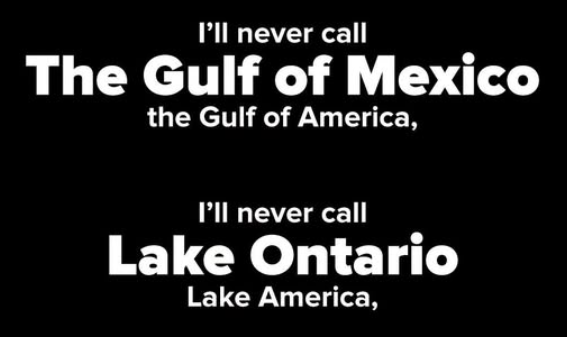 At what point did 30% of the U.S. electorate become so tuned into a criminal sociopath’s wanting to rename places in the Western Hemisphere in an effort towards his own self-aggrandizement?
The only interesting question that remains is what if any trajectory does this nation have to recover some level of dignity once Trump is removed from the presidency.
Some say it will take generations. No one knows for certain.
About Two-Thirds of Americans Will Never Call the Lake North of New York “Lake America”
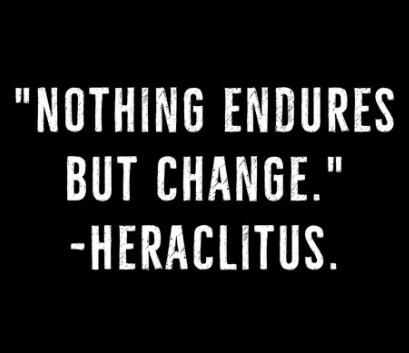 “No man ever steps in the same river twice, for it’s not the same river and he’s not the same man.” — Heraclitus
One of humankind’s greatest thoughts is tied up in this quote from the ancient Greek philosopher Heraclitus. It’s right up there with “I think therefore I am,” and “The unexamined life is not worth living.”
But where the last of the three are indisputable, what up with this “persistence of change” stuff?
It’s true that the aspects of people and things change. The walls of the Grand Canyon are constantly shifting, but no sensible person thinks it’s a different place than it was millions of years ago.
Most of the cells in my body die and are replaced in a matter of a few months, and my attitudes and beliefs change day by day. But my beloved kindergarten teacher, Alice Adams, will exist in my memories until the day I die.
What Heraclitus left of us is intellectually stimulating, but it doesn’t affect how we function as human beings.


India Locks Down Turbine Data, Danish Wind Jobs Dip

Guest post: Why tough methane cuts are crucial for keeping warming ‘well-below’ 2C

About Two-Thirds of Americans Will Never Call the Lake North of New York “Lake America”
-
Climate Change1 year ago
Guest post: Why China is still building new coal – and when it might stop
-
Greenhouse Gases1 year ago
Guest post: Why China is still building new coal – and when it might stop
-

 Greenhouse Gases2 years ago
嘉宾来稿:满足中国增长的用电需求 光伏加储能“比新建煤电更实惠”
-

 Climate Change2 years ago
嘉宾来稿:满足中国增长的用电需求 光伏加储能“比新建煤电更实惠”
-
Climate Change2 years ago
Bill Discounting Climate Change in Florida’s Energy Policy Awaits DeSantis’ Approval
-

 Renewable Energy10 months ago
Sending Progressive Philanthropist George Soros to Prison?
-
Greenhouse Gases1 year ago
嘉宾来稿:探究火山喷发如何影响气候预测
-

 Carbon Footprint2 years ago
US SEC’s Climate Disclosure Rules Spur Renewed Interest in Carbon Credits