



- Formal negotiations
- Finance
- Global review
- Global report
- Digital sequence information
- Harmful subsidies
- Marine biodiversity
- Planning, monitoring, reporting and review
- Article 8(j) implementation
- Biodiversity and climate change
- Links with other bodies
- Around the COP
- Armenian presidency
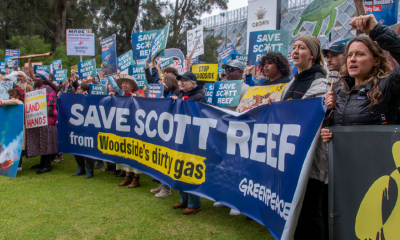
- Protests
- Lobbying and influence
- Carbon and biodiversity markets

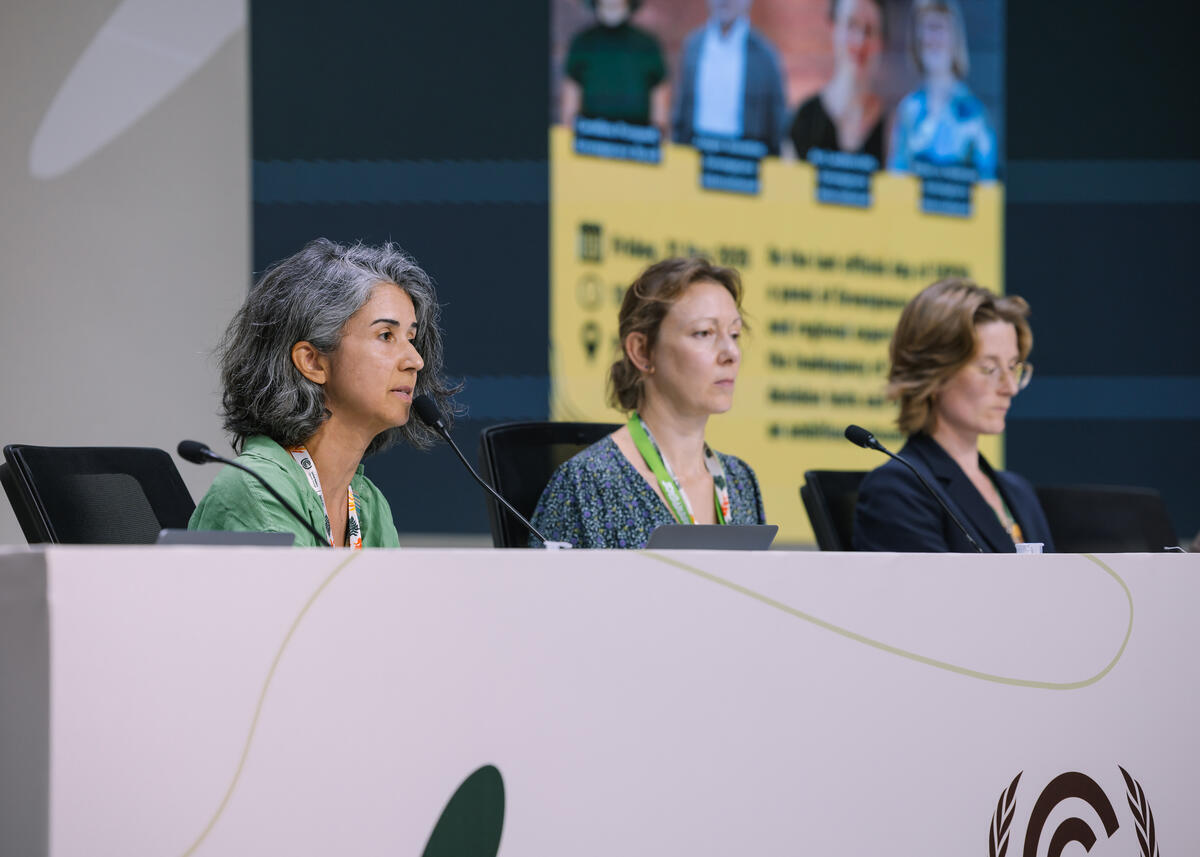
About halfway through the most recent United Nations’ annual climate change conference, COP30 in Belém, Carolina Pasquali, my counterpart at Greenpeace Brazil, started to lose her voice. She was suffering from the kind of hoarseness that kicks in when you have been speaking so much that your vocal cords become inflamed.
Carolina’s voice may have become tired during COP30, but she never fell silent. On the last morning of COP30, at Greenpeace’s final press briefing, I found myself standing behind Carolina as a press pack swarmed her, seeking answers to what was happening.
‘Who is that woman?’ I overheard one of the 56,118 registered delegates ask another.
‘With a crowd like that, she must be the Brazilian environment minister’, was the reasoned but inaccurate answer.
With Brazil hosting COP30, and particularly given the storied history of Greenpeace Brazil as a defender of the Amazon rainforest, Carolina carried an enormous load of leadership and advocacy in the lead-up and during the event. It is no wonder her voice was feeling the strain.
I’ve had the privilege of working with Carolina as part of the Greenpeace global leadership community for a few years now, and she’s an excellent colleague—thoughtful, principled, strategic, a brilliant public speaker, and in possession of a wonderful, wry sense of humour. She’s a friend and a terrific leader whom I admire deeply.
It had been Greenpeace Brazil’s vision that emergency action to halt deforestation was core to the demands that civil society brought to the COP. Given the event’s location in the Amazon, it seemed axiomatic that the goal of phasing out fossil fuels must be accompanied by the other critical half of the climate challenge: addressing deforestation, the second-largest driver of climate change.
Late in the afternoon on the second-last day of the COP, a fire broke out in the middle of the venue, sending a huge fork of flame towards the sky. It was a terrifying moment for those present in the venue. Thankfully, due to good design, the wise use of non-flammable materials, and the rapid response of first responders, there were no fatalities or serious injuries.
In her next speech, Carolina thanked those who had fought the blaze and overseen the evacuation, for their speed and bravery. And she reflected with due gravitas, this is what humanity can do: act together in the face of an emergency—whether that be a fire in a building or our whole planet facing global heating.

As it happened, COP30 got within striking distance of delivering a response that was fit for purpose in our times of planetary emergency, with support from a critical mass of countries for formal roadmaps to end deforestation as well as transition away from fossil fuels. But the official text ultimately fell short in the final hours of negotiations. As Carolina said: ‘while many governments are willing to act, a powerful minority is not.’
In these moments of failure by politicians and negotiators, it would be easy to give in to legitimate feelings of anger and frustration; but the task before us is to appraise every moment for opportunities for momentum. And the critical mass of nations that are committed to roadmaps for ending deforestation and phasing out fossil fuels offered light amidst the gloom.
And so we follow the path. We take the chances. We think through the next phase of strategy. And onwards. As Carolina said simply, ‘the work now continues.’
I’m not only grateful for Carolina’s friendship and for Greenpeace Brazil’s steadfast dedication to tackling deforestation in the Amazon, but for the entire Greenpeace network’s shared commitment.
Greenpeace is relied on for some heavy lifting at climate COPs, and our team consisted of policy experts, campaigners and other specialists from various geographies who brought their deep policy, communications, and campaigning expertise from around the world to the event,. Our morning briefings, sharing analysis, agreeing on focus and assigning tasks for the day, were possessed of that special energy that comes from a group of many backgrounds working very long hours together in common cause.
I’ve reflected over my time with Greenpeace, that when I visit any of our offices, bases or vessels, anywhere in the world, I feel at home. I am confident that you would have the same sensation of coming home too, because if you are reading this, then you are part of Greenpeace too–you, and me, Carolina, and the tens of millions of people all over the world that share our common vision of an earth restored to flourishing.
So on we go. The work continues, in love and hope, together.

Q & A
In the aftermath of the collapse of Australia’s COP31 bid, many people have reached out to ask: What happened? Why didn’t Australia get COP31? And what now?
In the lead-up to November’s COP, nobody in Australia would have anticipated that we would not be welcoming the global climate community to Adelaide next summer. Up until the very final moment when Climate and Energy Minister Chris Bowen told reporters that Türkiye would host COP31 with Australia assuming the role of president of negotiations, hope was alive that we would clinch the deal.
I suspect that the full picture of why the COP31 bid slipped through our hands is a complex mix of factors, some of which may never come to light in the public domain. What we do know is that in the UNFCCC system, decisions on COP hosts are made by full consensus rather than voting. So, for as long as Turkiye declined to withdraw its bid, it was never a done deal.
Much will no doubt be said about whether Australia could have done more to boost our chances of securing the bid. But as I said in the immediate aftermath of the announcement, whatever the forum, whoever the President, the urgency and focus of our actions cannot change. Phasing out fossil fuels and ending deforestation must be at the core of the COP31 agenda.
The task for Chris Bowen will now be to use his role as president of negotiations to drive global emissions reductions at speed and scale consistent with the Paris Agreement.
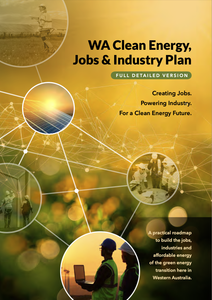
Prepared by a coalition of nine Western Australian union, industry, conservation, and community organisations—including UnionsWA, the Conservation Council WA, and the Smart Energy Council—the WA Clean Energy, Jobs & Industry Plan provides a practical roadmap to transform Western Australia into a clean energy powerhouse while creating thousands of secure local jobs.
Western Australia stands at a pivotal crossroads: lead the global clean energy economy or watch investment, future industries, and secure jobs go elsewhere. The WA Clean Energy, Jobs & Industry Plan outlines a transformative blueprint to harness the state’s world-class solar and wind resources. Discover how legislated renewable targets, green iron manufacturing, and a dedicated regional training strategy can generate tens of thousands of local jobs, lower household bills, and build a resilient, net-zero future for all Western Australians.

WA needs a clear and forward-thinking plan if it is going to become a competitive renewable energy powerhouse and maintain its economic strength through the energy transition.
“Western Australians know a faster renewable energy transition will lower their household expenses and prevent harmful climate pollution. But the community also needs clear direction to ensure this transition will create jobs, lower costs and not cause undue environmental harm.
“Here, sectors representing a broad range of interests have laid the groundwork for those outcomes, clearly outlining what is needed to create a future for WA that is good for the environment, for the climate, for workers and for the economy.
Summary
The WA Clean Energy, Jobs & Industry Plan sets out a strategic roadmap to position Western Australia as a global clean energy superpower while creating thousands of secure local jobs.
The report establishes three overarching goals:
- Creating local employment.
- Maintaining industrial competitiveness.
- Lowering household energy costs
To realize this vision, the framework details actionable measures to follow on from the recent WA Government announcement of a 75% Renewable Energy Target by 2031 for the South West Interconnected System. This includes developing a statewide Renewable Energy Target, coordinating statewide workforce and training pipelines, strategically planning regional infrastructure to safeguard high-value biodiversity and cultural heritage, and ensuring equitable benefit-sharing through household electrification incentives and First Nations equity partnerships. Ultimately, the plan highlights that establishing clear policy and regulatory certainty will unlock lower energy bills, boost power reliability, and secure the state’s global competitiveness in emerging green commodity export markets.

Key Findings
- Statewide Renewable Energy Target and Emissions Reduction Targets: The report calls for a statewide RET and 1.5°C aligned emission reduction targets to remove policy risk, lower capital costs, and attract clean energy investment.
- Transformative Job Creation: Accelerating the transition offers massive employment prospects, including up to 8,800 solar and battery jobs by 2050, as well as 24,000 ongoing and 11,000 construction jobs in a commercial green iron industry.
- Industrial Electrification & Competitiveness: Requiring large gas users to adopt binding electrification timetables and providing concessional financing will protect existing energy-intensive manufacturers from rising energy costs and impending domestic gas shortfalls.
- Green Commodity Export Leadership: Western Australia can build new export markets in green iron, green ammonia, and offshore oil/gas decommissioning by constructing shared common-user infrastructure and setting dedicated Green Commodity Export Targets.
- Coordinated Workforce & Training Pipeline: To address critical skill shortages the plan recommends establishing a WA Clean Energy Jobs Plan 2050, three regional training hubs, and dedicated pathways for female and under-represented apprentices.
- Environmental Safeguards & Community Benefits: Fast-tracked development must be paired with State Planning Policies that avoid high-biodiversity and cultural heritage lands, mandate new data centres to run on additional renewable power, and deliver household electrification rebates and First Nations equity partnerships.
What you can do
WA has an opportunity to lead on sustainable, clean energy and associated industries. You can help by:
- Sending an email to Environment Minister Murray Watt and Prime Minister Anthony Albanese, calling on them to reject Browse.
- Sharing this story to help more Australians understand what’s at stake.
- Encouraging your friends and family to take action.
Countries have completed the first “global review” of their progress towards reversing nature loss by 2030 at the COP17 biodiversity talks in Yerevan, Armenia.
The review “notes with deep concern” that, unless action is “rapidly accelerated”, the goal to reverse nature loss and meet a set of 23 targets by 2030 “will not be achieved”.
It “urges” countries to accelerate action, including by “increased ambition in addressing the gaps”.
Much of the discussions in Yerevan focused on how to raise the necessary funds to help developing countries protect nature.
Some major economies pushed to expand the range of nations that are expected to provide finance, with countries agreeing at the end of the two weeks of talks that non-donors that want to contribute can “signal interest” before COP18.
This came after developed countries failed to meet a target to significantly ramp up nature finance over the last few years.
It also came as a landmark fund agreed at COP16 in Colombia to pay communities for the genetic resources derived from nature stands nearly empty two years on.
The Yerevan talks marked the halfway point of the “Kunming-Montreal Global Biodiversity Framework” (GBF), the “Paris Agreement for nature” first made in 2022 and due to be achieved by 2030.
During the nearly 12-hour-long final plenary, countries voted for Quito, Ecuador, to host the COP18 nature talks, which will be held in 2028.
Countries managed to sign off on all the major negotiation texts, marking a stark contrast to COP16, which ran so far over time that the Colombian presidency lost “quorum”, forcing talks to resume in Rome months later.
Below, Carbon Brief has detailed analysis of all of the key outcomes from COP17.
Formal negotiations
Finance
Finance, predictably, was at the heart of the discord and deadlock at the Yerevan talks.
At COP17, discussions on finance had to achieve several outcomes.
The first part – to take stock of biodiversity finance mobilised so far to meet the nature deal’s goals – fell under the global review.
As the global report noted, developed countries failed to meet their commitments to raise “at least $20bn a year by 2025” for nature. Delegates pointed to falling aid levels and a sharp 27% decline in environmental funding for the 2026-30 period.
The second part was to agree on how to mobilise resources for the next four years, to meet the GBF’s