

Wind Operations is Changing Across the US
Allen and Yolanda discuss operational shifts driven by the IRA bill, focusing on the importance of long-term operational strategies, collaboration, and advanced monitoring solutions.
Sign up now for Uptime Tech News, our weekly email update on all things wind technology. This episode is sponsored by Weather Guard Lightning Tech. Learn more about Weather Guard’s StrikeTape Wind Turbine LPS retrofit. Follow the show on Facebook, YouTube, Twitter, Linkedin and visit Weather Guard on the web. And subscribe to Rosemary Barnes’ YouTube channel here. Have a question we can answer on the show? Email us!
Intro: [00:00:00] You are listening to the Uptime Wind Energy Podcast brought to you by build turbines.com. Learn, train, and be a part of the Clean Energy Revolution. Visit build turbines.com today. Now here’s your hosts, Allen Hall, Joel Saxon, Phil Totaro, and Rosemary Barnes.
Allen Hall: Welcome to the Uptime Wind Energy Podcast. I’m your host, Allen Hall in the Queen city of Charlotte, North Carolina, and I have.
Yolanda Padron in Austin, Texas, and Yolanda has been out at a site in West Texas last several days working out some strike tape installations because the, the blade season of Texas is so long and the repair season is so long. Everybody’s really making work and, and maybe even spending a little more money than they thought they were gonna spend this year.
Just to get their turbines righted because it is for us at Weather Guard, it’s still lightning season. There are a lot of storms and the amount [00:01:00] of rain in West Texas is crazy. Flooded roads, uh, on highways still days after rainstorms. That tells you that the amount of rain. It has been a little bit of an unusual year on the, on the wind production side because of the weather.
Right?
Yolanda Padron: Yeah. It’s, it’s been high production for, for a lot of the, that area. It’s definitely, it’s, you start getting all of those drone inspections in and everything. Sometimes I think it’s, it’s worked out pretty great for some of the operators that maybe didn’t have a lot of, uh, planning capabilities in the past.
So then they’re able to come in and actually. Books, some teams to do work even, even though the traditional blade season has passed.
Allen Hall: Oh yeah. Is there gonna be a traditional blade season from here on out? And I think this is where a lot of operators are rethinking, uh, the changes to the IRA bill and the one big beautiful bill aspects is, you know, with the, with the production tax credits sort of waning and, and [00:02:00] wrapping up.
They are going to be putting more emphasis on o and m. And in fact, when we were at Skys specs forums, and I keep bringing this up ’cause it’s such a monumental thing that we were at in Ann Arbor a couple weeks ago. The emphasis has moved from definitely from development to more of operations. But the, the level of complexity there has changed.
Even talking to operators today, and you and I talked to what, 3, 4, 5 different operators in one day. CMS is huge. You, you’re seeing a, just a complete flip on CMS. Everybody’s willing to try something, which is unique, right?
Yolanda Padron: Yeah. I think nobody loves being a Guinea pig, right? Nobody likes staying behind either.
And especially now that you really do need to make sure these blades don’t just last you 10 years before you can repower. They, the team seem to really be focusing a lot more on long-term solutions rather than short term solutions. So it be that, you know, installing Light Lightning diverters be [00:03:00] that installing even just a, a long-term leading edge protection solution instead of a short-term one teams, she seemed to be really looking into.
What the overall opex impact is going to be in the very long term for as long as they can keep the site on, as long as they can keep the permits in, instead of having it be something where you can keep the cost low, low, low, low, low, and then you get another investment and you can repower, and then just keep the cost low, low, low, low, and barely keep the site running.
Allen Hall: We were one of the sites that had probably one of the highest production in, in terms of this particular operator’s fleet, and, and you could actually see that when you were there. But it does come with a consequence, right? Is that when you run turbines as much as you can possibly maintain them, there is some wear and tear that will happen because of the rougher environments that they’re in.
So in order to get that increased capacity factor. You’re gonna have some issues you need to be thinking a little bit broader on. And right now, just because we’ve talked to so many [00:04:00] operators recently, I, I, what are you hearing for like the top three? What are, what are the top three things that operators are doing right now or going after and what should they be doing?
Yolanda Padron: I think something that the operator operators seem to be looking into right now. Mainly what are the main issues that’s going on at my site, you know, and how can I quantify them? How can I make sure that whatever impact they have, I can get rid of it now or as soon as possible. Um, they’re really looking into like what the ROI of a specific solution is.
Um, it like the short-term ROI of a specific solution and the long-term ROI, I think. We were talking about this the other day, right? And having how sometimes you, the pendulum swings a little more towards the financial right. And sometimes the pendulum swings a little bit more towards the engineering.
And I think right now we’re, it seems like we’re being caught in a, in a very strange place where [00:05:00] a lot of the, the engineering emphasis that maybe wasn’t there as much in the past is starting to, to ramp up a little, because you, you need to have that. Information to be able to back up your, your financial, uh, decisions.
Allen Hall: Yeah. The, the business case is being made more and more by engineering and maybe engineering, just getting smarter about it for the longest time. Engineers in wind, in my opinion. Just watch it get from the outside. Would say, technically we need to fix these blades, or technically we need to go after these gear boxes.
Or technically we need to look at these aspects of the generators or inverters, whatever the, whatever the case may be for a particular site. Transformers, yeah, it’s another one. But all of them were more of a technical thing like, yeah, we’re not really getting our maximum out of this piece of equipment and here’s how we make it better.
And the asset managers would really look at that a little. Sideways and say, well, okay, all that’s great technically, but what does it mean to me dollar wise? Now, it seems [00:06:00] like there’s a a lot more asset managers listening to engineering and engineering, translating technical speak into dollars. And I see the pendulum really swinging it back where the asset manager, which do still control the purse strings and rightly so, ’cause engineers are not the best place for that.
However, do, do you, don’t you see that kind of shift to engineering having to look at the numbers and are starting to get the numbers from a variety of sources because they have more data to put together a business case and say, yes, if I spend a hundred thousand here, I’m gonna keep a million later.
That’s a pretty good business case.
Yolanda Padron: Yeah, absolutely. And I think, you know, we mentioned that there’s been a lot of layoffs everywhere. We’ve had a lot of cutting of engineering teams, so you have these people. Who have to really maximize the resources that they have and the time that they invest in specific issues.
Right? So if I have a hundred million dollars issue here and a [00:07:00] $5 million solution here, and then I have a. $1 million issue here with a $1 million solution over here, I’m going to start focusing on that $5 million solution.
Allen Hall: Yeah. Because it really comes down to production at the end of the day. Uh, I know we don’t like to think of it that way, but tournaments need to run.
They need to run as long as they can and be as efficient as they can. So you’re right. I think you think we’re seeing a huge shift in, in that aspect. Here’s, here’s what I see in terms of. Where everybody is putting emphasis and we could tell, ’cause we do talk to the people who sell products in these areas.
Leading edge erosion, a lot of leading edge erosion salespeople going around the United States at the minute, I assume worldwide and offering their solutions and, and right now, Yolanda, I mean you see all this, what are your top two or three leading edge solutions that you’re hearing about?
Yolanda Padron: I think the top solutions I’m hearing of onshore are the L Polytech [00:08:00] tape or role, uh, the Armor Edge, uh, and Han Tech Technos, the Pan on Solutions.
Allen Hall: Yeah, the Pan on Solutions seems to be the incumbent in, in ec uh, having more distribution this year through soccer More. Making great strides there. Uh, the, the shells, uh, are always, especially offshore, but onshore, they’re, they’re tending to get a little more traction than they have. And then the LI, I’ve run into a number of operators this year that were putting on the L from Polytech Tape, which is sort of a.
Onshore solution, uh, to erosion A lot of times in the states where there’s dirt and debris around farms where it can be a little bit rough. Those three, all of those, so far I’ve heard, I’ve heard really good things from
Yolanda Padron: no, I’ve, I’ve heard things as, I’ve heard great things as well about those. I’ve seen great things in the field.
It, I’ve [00:09:00] seen, uh. People within the field really leaning towards one or the other depending on what exactly is in their farm. So a lot of these wind farms have have crop dusting right around there because. Of where it’s built, right? So you have very strong, toxic, toxic chemicals like going into your blades and hitting them at very high wind speeds, or very high tip speeds, right?
And so you have to really take into consideration a more robust solution like the Armour Edge or some sort of shell going into that. In other places, you have a, a pretty good gel coat. You have. Really anything you, you really need and maybe a pain on every once in a while just to make sure you get protected is the only solution you, you’ll really need.
So I think it’s not just a, a site by site, but it’s, you know, you really have to map these out and make sure you get the correct solutions for. [00:10:00] For that specific turbine, depending on where it is in the site.
Allen Hall: Yeah. And the engineers on staff and a lot of these operators have a pretty good sense of what’s causing the erosion.
They’ve had enough sky specs inspections to, to go back and go, uh, that looks like some sort of contamination. Or, yes, we’re next to a farm field and they’re plowing every three or four months. And yeah, it, it, it shows up there and the solutions do vary. Right. And I, I think that’s one of the, there’s not one universal solution.
That’s what operators are telling me. They’re saying. There are some solutions that are great for dirt. There’s some solutions that are great for rain. There’s some solutions that are great for a semens turbine but may not so great for a GE turbine. It does seem to be very specific to turbine model and location,
Yolanda Padron: turbine model, location, what site team you have, and whether that team is.
Worked with your turbine model before, I think are really important things to take into consideration when you’re planning your next campaign.
Allen Hall: And we just talked to some operators going back on the repair scenarios and what you’re gonna be focused on that are looking at root bushings [00:11:00] and the inserts, uh, that are tending to slide around.
And, and obviously we’ve, we’ve talked to Onyx about their solution, which is really good and, and golf. When technology is done in Louisiana, has a solution, and CNC onsite has a solution and we foresee a, a solution. So there’s a couple of good solutions out in the field and I, it looks like operators are, are taking advantage of the technology that’s been developed over the last six months to two years that they’re trialing it or maybe just not even trialing it.
In some cases, they’re making sort of a larger deployment to see. If those technologies can help them save blades, because buying a new blade set is crazy expensive right now.
Yolanda Padron: Yeah, crazy expensive. And the downtime that you get from buying a new blade is also insane. A lot of these OEMs really don’t make turbine blades to keep in storage until somebody needs them.
Right. And so you really, you’re faced with a, a very large [00:12:00] downtime end. Pretty much, I mean, not anything, but a lot of things are a lot cheaper than having to sink in millions of dollars to replace a blade that you could have caught the issue from. From a simple sensor installation.
Allen Hall: Yeah. And then that rolls into general CMSI think, uh, obviously there’s been a lot of CMS solutions.
GE has one out of the factory. Siemens, it sounds like they’re gonna be headed towards one vest just has different things that they do. But the, the amount of CMS going in from the gearbox and drivetrain. That’s becoming almost universally accepted. The question right now I think is with a lot of operators, it leads to a lot of data.
There’s just a flood of data. A lot of that’s going into like a horizon where they can manage that data, but it still, there’s still a lot of data and with the reduction in engineering staff, you have to have some way to go look and address it because a lot of times, at least listening to [00:13:00] engineers complain and if, if you spend a long enough time.
Talking to engineers, they’ll always find a pain point. Like the, the, the question about CMS is, is it telling me the truth all the time? If it sets off an alarm, do I believe it or do I just reset it and keep moving? Are you seeing the same thing from your experience on the operations side? Like there’s just a lot of CMS and it’s great, but with reduced engineering staff, we’re not sure how we’re gonna manage it.
Yolanda Padron: Yeah, definitely. I think it’s a, it’s, it’s a sad issue that’s, that’s facing a lot of the teams. Um. But it is something, you know, you get innovation from struggling, right? So I’m sure a lot of these teams who are running really thin right now, they have so many things that they have to accomplish. They’re going to have to find a way to, to be able to, to actually read all of this data and see what it means and see what it translates to.
In the field and see what if there’s a specific alarm, like what’s the [00:14:00]probability of that alarm actually meaning something important. And I think something that all we’ve talked about a lot is having, it’s going to have to be some sort of collaboration between all these operators, between these OEMs.
Something where everyone just does it for the benefit of the industry. And just kind of put the, the commercial side a little bit. The commercial aspect a little bit to the side and just collaborate with each other, uh, to make sure that, that these things can really be done
Allen Hall: well. I, I want to break right here ’cause I wanna talk about that after we come back.
There does seem to be a shift from OEM technology leading the industry to. Operations operators and owners leading the industry and going after solutions and then telling the OEMs what they want to go do. So after the break, let’s discuss that. Are you worried about unexpected blade root failures and the high cost of repairs?[00:15:00]
Meet eco Pitch by Onyx Insight. The standard in blade root monitoring. Onyx state-of-the-art sensor tracks blade root movement in real time, delivering continuous data to keep your wind farm running smoothly and efficiently. With Eco Pitch, you can catch problems early, saving hundreds of thousands of dollars.
Field tested on over 3000 blades. It’s proven reliability at your fingertips. Choose eco Pitch for peace of mind. Contact Onyx Insight today. To schedule your demo of Eco Pitch and experience the future of blade monitoring. So, Yolanda, we’ve had so many discussions with operators and I, I would say over the last month we’ve talked to more operators than we have in the last year, and I think just because of the IRA bill change, all the operators are looking for an advantage and trying to learn from the industry.
The problem though, I think, is that. There are organizations in the United States and, and broader [00:16:00] world that are focused on operations, but they don’t necessarily bring in outside help. And I’ll, I don’t wanna name them because I don’t want to call ’em out, but there are some that, uh, are very internally focused.
So you as Yolanda, as an operator, and say, I’m an operator. We can go to a conference, we can talk about, we have these problems, but we may not have a solution. Now it does seem like the barriers that were between operators are starting to break down and they’re starting to call one another and find out how operator A fixed this problem so that me operator B can implement it.
Are you seeing more of that now that maybe you saw a year or two ago? Yeah,
Yolanda Padron: definitely. I think, I mean as as small of an industry as this can feel, sometimes there’s always. An opportunity to interact with a lot of the same people. Right. And you, I think there, there was a a point in time where maybe you, you [00:17:00] saw everybody else as, as a competition or everybody in another company as sort of your competition to your company.
But with all of these teams, again running a little bit more lean, you really have no other way out of your problem sometimes than to just. Talking to each other and collaborating and making sure you, you together, you can find a solution to get you to the end of the line instead of just solving everything in a vacuum in the way you can.
You just don’t have any time to do that anymore.
Allen Hall: I think it’s one of the things about the podcast, we always find out when we’re talking to operators and they’ll, they’ll mention a problem they’re having and we’ll say, Hey, go back in the archives. We’ve talked to somebody who has a solution for that.
Like, oh, really? That’s interesting. And then they, you know, they can make the connection and, and start to help out their fleet. But now I think that would happen less in terms of, unless Joel and I were actually initiating that conversation, [00:18:00] uh, but now it seems a little more proactive, right. That, uh. If there is money to spend, it does seem like the, the purse strings have loosened a little bit in terms of getting the fleet up and, and that, and that’s sort of twofold.
One is that you hear a lot of operators selling assets to investment groups. That that seems to be a really smart move at this point to try to get a little cash in the bank, uh, uh, if you want, develop more. And, and two, like, well, if I’m gonna keep this asset. I wanted to run as efficiently I can and, and maybe some day somebody will throw me an offer.
You know, mark Zuckerberg will show up and wanna build a data center at my site. So I, I ought to be able to get as, maximize my value out of this thing. That’s really changing the dynamic in, in terms of whether an operator reaches out to somebody. Right. And I, and I wanna hear your thoughts of like how in internally, ’cause you’ve been on the other side of the wall, you, you’ve seen the, the good side, not the, not the supply side.
Uh. Is there restrictions within an, an organization where you couldn’t call [00:19:00] your quote unquote developer competitor? Or is it like, Hey, if I see my competitor at a conference, we can, uh, have a donut together, a coffee together? It’s not a big deal. Where, where were we six months ago, a year ago, and where do you think we are now?
Yolanda Padron: A year ago or so? There was a lot of emphasis on, you know, give people the information they need to know both internally. Externally. Right. And so everyone is a little bit siloed. It was great for some reasons, it wasn’t great for some other reasons, right? But it really didn’t foster the innovation that we’re seeing now, and I, it really didn’t give you the opportunity to go out or even.
Think about going out and talking to your next door neighbor to, to see if, if that was an issue, at least not on, like, outside of the site level. Now, I think there, there were a few months, at least in the States, [00:20:00] right, where we just didn’t know what was going to happen. And everybody was a little bit stalled because you didn’t know what direction to run to.
And I think now, like you said, a lot of people living towards the data centers, the investor groups and everything, you’re able to see that first off, teams are getting a little bit, a lot smarter, right? Like the investor groups are getting a lot smarter and asking the right questions. Now that maybe they wouldn’t be asking three years ago.
And second of all, you’re, you’re starting to see just, just the idea that we all want this industry to survive and we we’re all here, we all believe in it. So getting us all to, to just talk about the very common issues that we’re seeing because there’s, as with everything, right, there’s always going to be something and.
Even if you, if you have a large fleet, if you have a small fleet, there’s a lot of issues that are common [00:21:00] within the same operators, within the same blade type. And so you, you’re able to just by talking to the guy next door, you’re able to see. What a, a solution actually looks like. So what’s been tried before, what hasn’t been tried before, you can really brainstorm ideas with each other and it’s, it’s honestly really exciting as an engineer to see that just come to fruition in the, these past few months.
Allen Hall: So in light of that, and as we get to conference mode and so. November, December, kinda get into December, then went into, uh, the winter time, whether in February, March tend to be big conference times. I, I, 1:00 AM questioning whether a lot of engineers and operators are gonna show up to these things in force and that like they just don’t have the money to do it.
And they’re gonna put travel [00:22:00] restrictions on. The mother thought is that, well, they need to go find solutions. Where are they gonna find solutions at? I mean, obviously you can use AI and go through the uptime database on YouTube. You can pretty much find any solution. But if you wanna show up at a conference and talk to somebody in person, you’re going to have to travel.
So I’m really curious what you think the the, the, the late winter early spring conferences are gonna be filled with. Is it gonna be operators or is it gonna be just suppliers looking at one another?
Yolanda Padron: I think it’ll be a little bit of a, of a mix of both. Right. You know, you’re trying to save money as an operator, right?
And sometimes you might not get the approval to go and spend money and travel to a conference, but you also have a host of issues that sometimes that’s the only way, that’s the only way that you’re going to be able to find someone who can solve them, right? There’s great groups online like e-cig where operators can talk to each [00:23:00] other and it’s, it’s great.
But it’s, it’s also great to actually be able to, to talk to some of the experts that may, sure, they may be trying to sell you a solution, but they can also be really great consultants for the problem that you are having, regardless of whether your solution fits in with them or not.
Allen Hall: Yeah. And I, I’ve noticed, uh, a little bit of a shift here, uh, maybe just because we’re in that supplier business to wind and aerospace, is that.
The unique vendor items that would help wind operators operate more efficiently, that have been around a couple years, have been vetted and, but there’s still a lot of newcomers to the marketplace. And I could name five of them off the top of my head. Uh, but at this point it’s kind of a little bit too late, right?
And so if, if you don’t have case studies, if you don’t have, uh, operators that would swear by your system, whatever that is. It’s gonna be really hard to [00:24:00] penetrate that market. And in some ways I think that’s good because now when an operator talks to somebody, they should go, do you have a case study? Do have you, what’s the business case for this?
Who’s, who else has done it? And if the, that this lowers the threshold in which you can act, particularly with asset managers. The asset managers first gonna ask you is. Well, who else has done it? We don’t wanna be the Guinea pig. The Guinea pig days are over. I, I think. And, but at the same token, there’s still a lot of big players that are trying to push into certain marketplaces, sensing that there’s, uh, maybe a little bit of blood in the water, uh, that they could gain market share.
Where do you think that sits right now and having a lot of vendors come to your door and try to sell you things over the last couple of years? If
Yolanda Padron: your face is solving a whole host of issues, you don’t have enough money to solve most of them. And so the last thing I wanna do as an operator is give somebody the opportunity to mess up on my watch.
[00:25:00] Right? And so by having those case studies, by having somebody else already be the Guinea pig, by being, by being able to show me that you’ve solved this, you’ve. Gotten a solution for the problem I have in the environment that I have. It is key for me to say, okay, perfect. You’ve got this. I can work on something else.
Allen Hall: That’s, that’s interesting. So are you looking more, if obviously you work for a large operator, are you looking for someone to sort of project manage, uh, and upgrade to your project? So let, let me, lemme just give you the example. So if I have a CMS system and I, uh. Proven operators who love my thing, but I I’m gonna go sell it to another operator to de-risk it.
Is it now, unlike in the past, in the past, you give it to an operator, and operator to project manage it, and they would oversee it. Do you think that we’ve transitioned away from that now because the operators have less [00:26:00]engineering staff, they have less capability to do it, that now they’re asking the, the supplier, the vendor.
To not only provide the technology, but to project manage it and to show that it actually works and maybe have to eat some of the cost to install it and to do that oversight that they wouldn’t have done a year ago.
Yolanda Padron: Yeah, definitely. Especially for something as on a trial basis. I think you, you don’t, I mentioned whole host of issues, not a lot of money, not a lot of time, right.
Not a lot of staff. If I am. Sitting at an office in Austin and I know I have an issue and I can hire somebody to, to do a trial and solve that issue. I really don’t want to also have to go and project, manage the, the trial and sit at the site and try to get signal while I’m, I’m doing something else and just multitasking and not really doing anything perfectly, you know?
And so. [00:27:00] As an an aftermarket product provider, I think it’s really important to also be able to project manage your solution or the installation of your solution in the time that it’s being trialed to. Of course, it’s really important to give the operator much visibility as they want to see, uh, because you, you don’t wanna be left in the dark either.
You’re not going to just. Hand the keys to the kingdom of, to whoever knocks on your door. Right? But it’s, it’s really important to be able to, to, to be someone that the operator can trust.
Allen Hall: And I wanna take this to another segment, uh, after the break because I think that same approach is happening with full service agreements.
Said, operators are now getting more project management oversight of what actually is happening in the full surface agreement, so let’s talk about that when we get back. Don’t let blade damage catch you off guard OGs. Ping sensors [00:28:00] detect issues before they become expensive, time consuming problems. From ice buildup and lightning strikes to pitch misalignment in internal blade cracks.
eLog Ping has you covered The cutting edge sensors are easy to install, giving you the power to stop damage before it’s too late. Visit eLog ping.com and take control of your turbine’s health today. Okay, Yoland. Full service agreements. And we have talked to countless numbers of operators more recently that have full service agreements.
And maybe that was the preference over the last couple of years. ’cause the farms seem to be obviously less than five years old. And, and they’re also at the moment talking about extending those full service agreements, so maybe going another five years. But the, the hands-off approach to the FSA is changing.
I, I, we had talked to. Just today, at least two operators that are saying we need to have shadow monitoring, or [00:29:00] we need to be looking into RCAs that have been published, or we need to go dig into the manuals for the wind turbine. It’s not it, it’s not just a trust but verify anymore. It’s like verify, verify, verify.
Maybe a little bit of trust if it works. Uh, are you sensing the same thing and, and what’s really driving that?
Yolanda Padron: I think. Initially when a lot of these full service agreements, long-term service agreements were signed on, it was with the idea that we have this site, we’ll keep it on for 10 years, we’ll repower it, everything will be perfect.
It doesn’t matter what they do because we have these contractual limits to how much money they go over. They go under production will be protected. The business case is there. It’s great. At the end of the full service agreement, we’ll repower, we’ll just sign another one on and it’ll be fine. Hands off.
The OEM knows what they’re doing. I think [00:30:00] now that we’re reaching a lot of the end of these full service agreements and we’re reaching the end of the PTCs, and we know that we’re going to have to keep these projects on for longer. And have them be in a good enough shape to still generate money and not just lose money to everybody in the short and long term.
It’s you. You really have to start picking out the different contractual obligations to be able to see, okay, well do I actually as. An operator know what this means, and if I do, are they complying contractually with what they’re supposed to be complying with? Right. And then taking it a step further now that we talked about how everybody’s entering a little bit into a more collaborative state, you’re noticing a lot of the problems that people are having and you’re able to see that it’s okay, so here’s all of the contractual obligations, but here are all of the [00:31:00] other things that we need to make sure.
Our turbines are taken care of to be able to get through that threshold and to be able to make these projects last and generate money or generate energy as long as, as long as possible.
Allen Hall: Well, and this came up when a Slack discussion between Rosemary and I the other day, which is kind of an odd thing because we caught on a little bit of a Slack rant, but it had to do with resistance checks of the LPS, and you think, well, that’s.
You know, that’s really the basic thing, right? How hard is that? You just, it’s an ome or check. Uh, but rosemary is pointing out like the, the, the manuals for the turbine say in some turbines, this is a specific turbine, so you need to measure the resistance of the LPS every two years and under a full service agreement.
The OEM wasn’t doing. Yet when they had problems, it was on the operator to go fix it. So it, it turned into this really odd [00:32:00] discussion of, well, wait a minute, if the full service agreement means that the operator is taking control of it and they’re not even following their own instructions, how is the operator responsible for that?
That doesn’t, that doesn’t make a lot of sense to me. But I, I think that has been the case for a number of years. And today we were talking to another operator in a sort of a similar field saying. We’re gonna hit maximum payout for, from the O eem on on the full service agreement. So we’re gonna keep capping that every year, and the OEM is fine with it.
So we, we always hit those max limits, you know, what do you do after that?
Yolanda Padron: And it’s tricky from a site level, right? Because you have these full service agreements, you don’t necessarily have the staff to actually be able to. Climb the tower with these OEMs and make sure that they do everything they’re supposed to be doing.
And in some of these contracts, you won’t even have a stipulation that says, give me the reports to, in that case, the, the LPS testing. [00:33:00] Right. And so it, it becomes a, a tricky, a tricky environment. ’cause you, you have these. You have this relationship within OEM, right? And you have to, to, you have to keep that relationship going, especially for the sake of your projects.
But it’s also a bit of a, of a strange point to find yourself where it’s like, I don’t distrust you, but please give me a reason to trust you. You know? Um, and so it does become really tricky when it’s something that’s. Both when it’s something that’s stated in the contract explicitly and they don’t have any documentation for, so it gives you a bit of a reason to, to distrust them, but also when it’s an a very known issue that they either didn’t flag or they flagged and while burying it into something else, and so you don’t [00:34:00] necessarily.
Have a, a good understanding of, okay, well if we’re managing this together, you know, if we’re in this together, why wouldn’t I want to know about this potential issue that’s going on in my turbine?
Allen Hall: Is this going to change turbine supply agreements and FSA contracts? Because the more I talk to Yolanda’s of the world.
The more I realize they become contract lawyers and less engineers that they’re searching through. And maybe that’s the, the advantage of AI is they can kind of be a contract lawyer with some help from ai, but to, to help understand what their, um, the operator has to do or what they’re obligated to go look for, to check the boxes so they could get a payout from the OEM.
In relationship to, uh, you know, just maximizing profits. And, and on some level, some of that’s gonna come from the OEM. Are we turning engineers into contract lawyers?
Yolanda Padron: [00:35:00] We’re definitely upholding a, a, a stronger relationship between the engineers and the legal teams within the operators, right? And so I think I’ve, I definitely noticed a lot more questions coming over from the legal teams.
While, while I was on that side, right? And so it was a lot of, okay, what can we do in the long term for new contracts? And what can we do to make sure that this is explicitly stated or what can we negotiate? But I am also noticing a lot of pushback from the OEMs. And it doesn’t just happen in when, um, but a lot of pushback from the OEMs and maybe shortening that period from which they’re, they’re liable.
And so instead of having it be a 20 year, 15 year full service agreement, maybe shortening it to, to 10 years, to five years, doing it little by little, which is also another, another point of [00:36:00] distrust, right. Unfortunately,
Allen Hall: it, it is become a little more combative, I think, and the contracts are gonna get thicker over the next six.
Months to a year, uh, because the engineers are getting smarter and they know what to ask. And because development and operation and maintenance are getting closer and closer together, they’re probably sharing an office right now where they weren’t even in the same building. And consolidation forces, uh, new neighbors to occur.
But I, I, I don’t see the industry necessarily, uh, being tanked. Right? So I think this all gets back to where is the industry growing right now? Since you’ve been out on site and much closer to it than I have. Uh, my feeling, my feeling is, is like, yeah, we’re going this through this little rough patch and everybody is, there’s a lot of good engineers here.
Be careful because you put good engineers, you put ’em under stress, things happen and all of a sudden wind energy gets even better. Are you seen as sort of the same thing or you, or you is just like all, all hands on deck? [00:37:00]We’re in crisis mode.
Yolanda Padron: I think we were definitely in crisis mode earlier this year.
Uh, you know, but now I think a lot of, a lot of teams, and I’m seeing it, we’re seeing it through different operators, large and small. It’s a lot more, it’s just a lot more collaborative. If, if you’re looking at the repair teams coming in, you’re looking at the owners, the operators, you’re looking at the asset managers, the engineers.
Everyone just really wants to make it work and find a solution and, you know. Just work on everything together. I think there’s definitely been a lot more open discussions than I saw in the past and a lot more availability of teams to talk and, and, and teams really wanting to find solutions to a lot of these issues.
Like you said, a group of engineers sometimes can be a little bit dangerous in the sense that. [00:38:00] They’re, they’re going to find a, a very creative solution to an issue. Um, but that’s, I don’t know. It’s a, it’s an exciting time, I think, to, to be in this industry and, and just to, to see how we can all work together.
Allen Hall: Yeah. If you can survive the adversity, you get honed, having been through a number of aerospace ups and downs over the years, one thing that we’ve learned is that. Um, the reliability of airplanes. I know people will disagree with me with this, but the reliability of airplanes have gone up quite a bit, and the reliability of turbines is about to do the same thing.
You’re gonna see fewer models being built. You’re gonna see a lot more focus on the design and the certification and validation phase of turbines along with operators checking. Uh, and, and one of those happened today where an operator said We’re, we’re checking blades as they show up on site. Yeah, two years ago that was unheard of.
You couldn’t convince [00:39:00] anybody to do that. And it was a, the unique operator, typically European that would do that, and Americans didn’t wanna do that at all. But we’re, we’re seeing this really dynamic shift. So, although I am panicked and truly I am, because I think the industry. Is going to be, uh, you know, it’s gonna make or break right?
It’s renewables. Solar and wind plus battery are gonna be the future. Already are the future in sort of a sense. Once you get over this little bit of rough patch and get organized, look out, I, I think wind and solar and battery are going to be going gangbusters. The economy’s got a, in interest, rates have to come down a little bit to make it a little more profitable.
But man, I think the future looks great.
Yolanda Padron: Yeah, I agree. It’s a really exciting time to be here.
Allen Hall: That wraps up another episode of the Uptime Wind Energy Podcast. If today’s discussion sparked any questions or ideas. We’d love to hear from you. Reach out to us on LinkedIn and don’t forget to subscribe. So if you never miss an episode, [00:40:00] and if you found value in today’s conversation, please leave us a review.
It helps other wind energy professionals discover the show and we will see you here. Next week on the Uptime Wind Energy Podcast.
https://weatherguardwind.com/wind-operations/

 What kind of people are the celebrities in music and digital media as a whole? Not an easy question to answer.
Obviously, they’re talented. Most are well educated and many have the good looks that come from good genetics.
And yes, most of these people have the intelligence to see that Donald Trump is a criminal sociopath on target to destroy the U.S. while enriching himself beyond measure.
For every Jon Voight (see left) that are perhaps 1000 Robert Deniros, Bruce Springteens, and Leonardo Dicaprios.
But why are there any Jon Voights at all? The answer is unclear.
I once met a Princeton grad to whom I explained that a guy from my prep school in Philadelphia went to Princeton, and now is all over social media shouting, “Close the Borders!” and “English Only!”
My new acquaintance laughed hysterically, and said with a smile, “Yes, we have grads like this, perhaps one in a few thousand. What a waste of hundreds of thousands of dollars. You can get that level of education by dropping out of high school and driving a truck.”
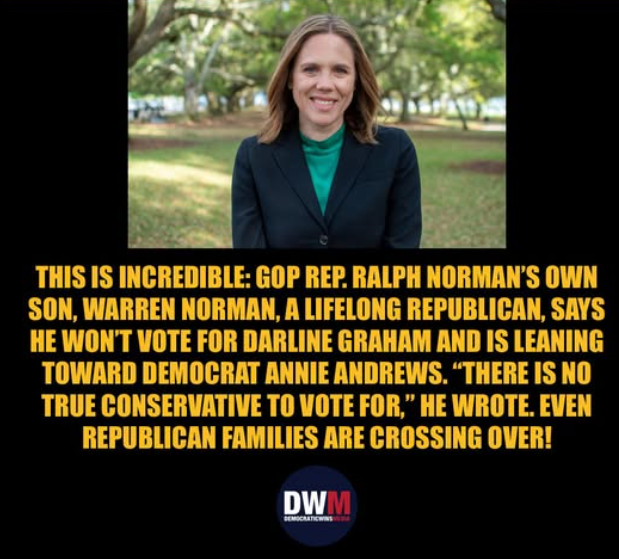 At left we see an example of a phenomenon that seems to be happening with increasing frequency: a life-long Republican saying “enough” and refusing vote for the current version of the GOP.
I applaud people who have both:
a) the intelligence to see where a party has crossed a moral line, and is now operating as a criminal enterprise.
b) the inner courage to do this, as it is hard for most people to admit they were wrong after a lifetime of kneejerk reactions, especially on a topic of such importance.