

Lenovo launched its TruScale Device-as-a-Service (DaaS) for Sustainability. This subscription service helps businesses cut their IT carbon footprint by up to 35%. It also lowers device costs.
This all-in-one service manages the entire lifecycle of devices, incorporates carbon tracking tools, and offers flexible subscriptions. In doing so, it supports sustainability goals while improving budget efficiency.
The launch shows a bigger change in how companies view technology. It’s not just about tools for getting things done; it is also about helping with corporate climate action.
IT now plays a key role in helping organizations meet their net-zero and ESG (Environmental, Social, and Governance) commitments.
John Stamer, Lenovo’s Vice President and General Manager for Global Product Services, stated:
“Enterprises are rethinking how they manage IT – not just for performance, but for purpose. TruScale DaaS for Sustainability reflects our vision for the future of IT: circular by default, intelligent by design, and accountable by outcome.”
What Is TruScale DaaS and How Does It Work?
TruScale DaaS lets companies subscribe to laptops, desktops, servers, and other IT devices. This way, they can use the equipment without owning it.
Lenovo takes charge of device deployment, maintenance, refurbishment, and safe disposal. This setup cuts e‑waste, reduces the need for new device production, and lowers emissions tied to supply chains.
Key features include:
-
Lifecycle Management:
Devices are refurbished and redeployed, extending their usable life and conserving resources. Lenovo reports that more than 1 million devices have already been recovered and reconditioned under its asset recovery services.
-
Carbon Impact Portal:
Businesses can monitor emissions at each stage—manufacture, use, and disposal—helping them understand where to target reductions. It supports detailed Scope 1, 2, and some Scope 3 tracking for IT equipment.
-
CO₂ Offset Services:
Organizations can offset emissions they cannot avoid, aligning with their science-based targets or internal climate pledges. Lenovo partners with verified third-party carbon offset providers to ensure quality and transparency.
This model supports both ecological stewardship and operational efficiency. By outsourcing the management of IT assets, companies can also free up internal resources to focus on core priorities.
How TruScale Slashes Costs
Traditional IT spending often locks companies into fixed costs for hardware they may underuse. TruScale reduces waste by allowing businesses to adjust subscriptions to meet actual demand. This means no more overspending on unused or old devices.
According to Lenovo, businesses using TruScale can reduce IT maintenance costs by up to 40%. They also benefit from lower downtime due to AI-assisted diagnostics, proactive repairs, and optimized logistics. This boosts workforce productivity while extending the useful life of every device.
The subscription model takes away capital expenses (CapEx). It turns IT spending into operational expenses (OpEx). This flexibility is especially valuable during uncertain economic conditions or rapid business changes.
Environmental Impact: From E‑Waste to Carbon Savings
The core strength of TruScale lies in its environmental benefits, which include:
E‑Waste Reduction
Refurbishing used devices helps the environment. It keeps electronics out of landfills and reduces the need to mine raw materials. This includes lithium, cobalt, and rare earth metals. Mining these materials may harm the environment and raise human rights issues.
Carbon Footprint Reduction
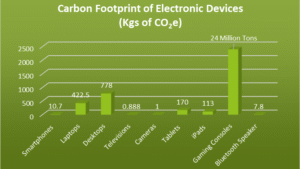
Manufacturing one laptop can produce 200–400 kg of CO₂, depending on the materials and energy mix used. By refurbishing instead of replacing, TruScale avoids these emissions. Lenovo estimates customers can reduce IT-related emissions by up to 35%.
Circular Economy Model
TruScale aligns with global movements to reduce, reuse, and recycle. The circular approach saves energy, cuts pollution, and boosts resource efficiency.
Additionally, Lenovo itself has committed to reducing its own carbon emissions. It also aims for 90% of products to be repairable and recyclable by 2025—further reinforcing the company’s focus on sustainability.
Lenovo’s Journey to Net Zero by 2050
Lenovo is aligning its climate strategy with the Paris Agreement’s 1.5 °C goal. It aims for net-zero greenhouse gas emissions by 2050. The Science Based Targets initiative (SBTi) validated this target in January 2023.
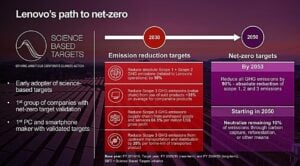
Its near-term goals are to cut Scope 1 and 2 emissions by 50% by 2030. This is based on the 2019 level. They also aim for significant Scope 3 reductions:
- 35% for product use, 66.5% per revenue in purchased goods and services, and 25% per tonne-km in logistics.
Lenovo is boosting its climate efforts with a supplier emissions reduction program. This program affects almost all of its procurement spending. It also features renewable energy pilots. These pilots aim to reduce emissions by about 30,000 metric tons in 2025.
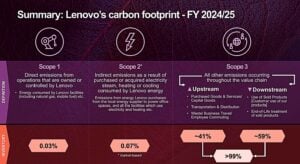
In its 2025 ESG Report, Lenovo highlighted its progress. The company received top honors, including Platinum from EcoVadis and an ‘AAA’ MSCI ESG rating.
Lenovo’s move comes as the carbon credit market gains momentum. By 2024, the voluntary carbon market (VCM) is worth about $2 billion. Analysts believe it could hit $50 billion by 2030. It may go even higher if policy support and corporate demand keep increasing.
TruScale’s carbon offset offerings tap into this trend. Clients can offset emissions from IT hardware. They do this by buying high-quality credits.
Prices for these credits now range between $13 and $15 per metric ton of CO₂, up from $3–5 just a few years ago, as quality and scrutiny have improved.
Lenovo ensures its offset services meet international standards such as Verra’s VCS, Gold Standard, or American Carbon Registry (ACR). This helps companies cut greenwashing risks. It also improves climate disclosures. They follow frameworks like the Task Force on Climate-related Financial Disclosures (TCFD) or CSRD in the EU.
Why Businesses Embrace Sustainable IT Solutions
Across sectors, businesses face rising pressure from investors, regulators, and consumers to clean up their environmental footprint. At the same time, companies need more agile and cost-efficient IT systems to remain competitive in the digital economy.
By offering a bundled solution, TruScale allows firms to hit both targets. Companies can cut emissions and e-waste. They can also follow regulations and report ESG performance. This can all happen while remaining lean and flexible.
According to a recent survey by IDC, over 70% of IT decision-makers say that sustainability will be a key driver of IT purchases within the next five years. Early adopters of sustainable services, like TruScale, can boost their reputation. This is especially true with eco-aware clients and stakeholders.
Why TruScale Is a Climate-Smart Investment
For companies looking to lower costs, meet climate goals, and stay ahead of tech trends, TruScale offers a clear advantage. It does the following:
-
Cuts emissions from IT hardware.
-
Reduces e-waste and material use.
-
Lowers total cost of ownership.
-
Enables better ESG reporting.
-
Increases IT agility and resilience.
In a world where every business is under pressure to prove its climate action, TruScale helps translate sustainability into everyday operations. Lenovo is showing that smart, scalable IT management can also be a powerful tool for environmental leadership.
READ MORE: Schneider Electric Launches AI-Native Initiative for Sustainability and Energy Management
The post Lenovo Launches TruScale DaaS for Sustainability to Cut IT Carbon Emissions by 35% appeared first on Carbon Credits.

EU carbon credit claims changed on 27 September 2026, the day the Directive (EU) 2024/825 began to apply across the European Union. The change is narrow. It changes how a company can talk about the credits it buys. A product can no longer be called neutral on the strength of compensation alone; however, every specific, evidenced statement about what a company measured, reduced, and funded stays fully available.

The post Promoting Improved Cooking Practices in Nigeria appeared first on Terrapass.



-
Climate Change1 year ago
Guest post: Why China is still building new coal – and when it might stop
-

 Greenhouse Gases2 years ago
嘉宾来稿:满足中国增长的用电需求 光伏加储能“比新建煤电更实惠”
-
Greenhouse Gases1 year ago
Guest post: Why China is still building new coal – and when it might stop
-

 Climate Change2 years ago
嘉宾来稿:满足中国增长的用电需求 光伏加储能“比新建煤电更实惠”
-

 Renewable Energy12 months ago
Sending Progressive Philanthropist George Soros to Prison?
-
Climate Change2 years ago
Bill Discounting Climate Change in Florida’s Energy Policy Awaits DeSantis’ Approval
-
Greenhouse Gases1 year ago
嘉宾来稿:探究火山喷发如何影响气候预测
-

 Climate Change2 years ago
Analysis: China’s CO2 falls 1% in Q2 2024 in first quarterly drop since Covid-19