Connect with us

Published

on

Fossil fuels and climate change are increasing electric bills for Georgia Power customers. The Georgia Public Service Commission is currently considering approval of Georgia Power’s plan for the future, called an Integrated Resource Plan or IRP. That plan will not protect customers from further bill increases driven by fossil fuels and climate change; in fact, the Georgia Power plan doubles down on fossil fuels that risk high bills directly and further drive climate change, which drives high bills through extreme weather events and storms.

You may have heard recent announcements from Georgia Power and the Public Service Commission (PSC) that they have negotiated a “base rate freeze” in exchange for not having a rate case “this year.” “This year” happens to be the first time two Georgia PSC commissioners are coming before the voters in five years. Georgia Power and the PSC make this sound like customers should expect their electricity bills to stop increasing. But that’s not the full picture. Georgia Power can increase bills in three ways over the next year:

  1. In a resource procurement docket later this year,
  2. In a docket to cover costs to recover from storms and extreme weather, and
  3. In a docket to recover fuel costs

Fuel Costs Drive Up Bills

Over the past few years, Georgia Power customer bills have increased significantly, with the largest single increase coming when Georgia Power had to adjust bills in reaction to high gas prices. Further increases will happen when Georgia Power adds storm costs and another fuel cost to bills.

Source: Southern Environmental Law Center, January 2025

Electric utilities, including Georgia Power, have passed all fuel costs directly to customers since the oil crisis of the 1970s. That means that if fuel prices go up, those additional costs do not impact the returns that Georgia Power shareholders receive; they only impact Georgia Power’s customer bills. 

Georgia Power requests PSC approval for an update to the fuel cost portion of customer bills about every 3 years. If Georgia Power has under-recovered fuel costs to date, in other words, if Georgia Power paid more for fuel than it expected, it will ask the Commission to increase the fuel cost portion of customer bills. 
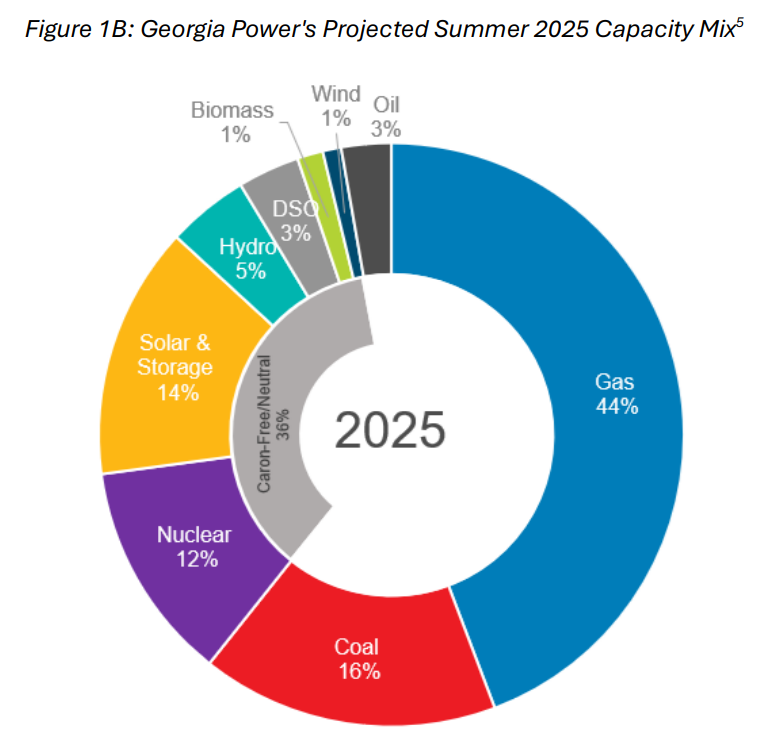
Georgia Power’s 2025 Capacity Mix by Fuel Type, Source: Georgia Power’s 2025 Integrated Resource Plan

Georgia Power has increased the share of its power that is generated by gas, which was its largest source of capacity in 2025. Georgia Power’s IRP proposed further increases in gas capacity, which will increase the risk of higher and higher customer bills as the price of gas fluctuates. “Natural” gas is a global commodity, and volatility in gas prices can be driven by any number of factors, as was seen when prices hit record volatility in the first quarter of 2022 and remained high that entire year in reaction to Russia’s invasion of Ukraine, among other issues.

It is basic common sense that if a system relies more on fuel-based resources, particularly resources with fuels that have volatile prices, the fuel costs that are passed on to customers will be higher and more volatile. Fuel cost is simple multiplication: the MWh generated by a fuel type multiplied by the price of fuel for that generator. Georgia Power can hedge and enter into various contracts for different fuels that can change the overall impact of the fuel cost on the margins, but the only way to reduce exposure to high and volatile bills is to reduce reliance on these fuels to supply electricity. Again, Georgia Power’s IRP proposes to do the opposite. It proposes to add 8,000-9,000 MW of new gas to meet load growth from data centers and manufacturing, while only adding 1,000 MW-4,000 of new renewable resources. This is despite the fact that renewables continue to be the least costly and are faster to deploy than gas.

“Renewable energy sources like wind and solar power are needed to meet rapidly growing energy demand in the United States amid near-term obstacles to increasing natural gas capacity,” NextEra CEO John Ketchum, June 10.

Climate Change Drives Up Bills

The second way that fossil fuels are driving up Georgians’ electricity bills is by further contributing to climate change. 

The links between carbon dioxide emissions and a warming climate have been known for decades; yet, Georgia Power is proposing to continue to operate two large coal plants far into the future despite this knowledge and despite the other known pollution from coal power plants. Communities that live in the shadows of these coal plants deserve clean air and water. 

Just as destructive but perhaps more insidious is electric utilities claiming to reduce emissions while building new methane gas power plants. It is true that the burning of methane, or “natural” gas, produces less carbon dioxide per MWh than coal. But it is also true that methane is leaked directly into the atmosphere throughout the process of drilling for, transporting, storing, and burning methane gas. And methane is a more potent greenhouse gas in the near term. In fact, the replacement of coal with gas to generate electricity is likely a major contributor to the fact that we are seeing worse and worse impacts of climate change every year.

I don’t need to remind anyone in the Southeast of the devastation we saw across the region, including in Georgia, from Hurricane Helene last year. That devastation led Georgia Power and other utilities to fix damage to their infrastructure to get the lights back on for their customers. This is an important role for the utility, but it can be expensive, particularly when storms are so destructive.
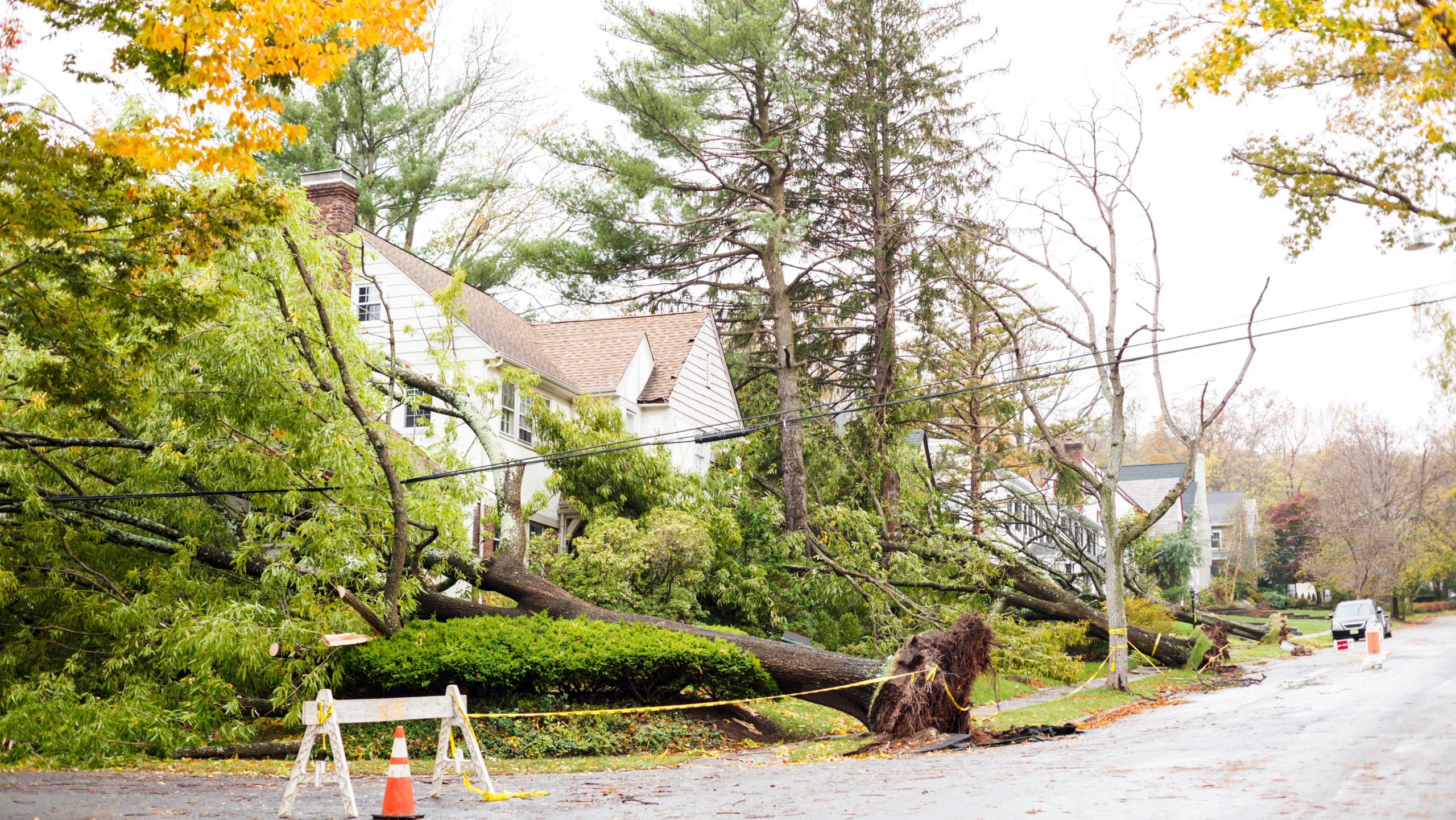
As part of its proposal to skip a rate case until 2028, Georgia Power proposes a separate process in the Spring of 2026 to get approval from the PSC to add a charge on customer bills for the costs associated with storms through the end of 2025. That includes a whopping $862 million as of March 31, 2025.

Going into 2025’s hurricane season with warmer-than-average ocean surface temperatures and cuts to NOAA and the weather service, that figure is expected to go up.

If you’re in a Hole, Stop Digging

If fossil fuels and climate change are already leading to high bills, adding more fossil fuels is not a solution. If you are in a hole and trying to get out, the first step is to stop digging yourself deeper into that hole.

If the Georgia Public Service Commission really wanted to protect customers from high and volatile bills, in the near and long-term future, it would direct Georgia Power to reduce, not increase, its use of fossil fuels.

The post Freezing Out Georgia Customers: Election Year Deal with Georgia Power Won’t Keep Electric Bills from Rising appeared first on SACE | Southern Alliance for Clean Energy.


Freezing Out Georgia Customers: Election Year Deal with Georgia Power Won’t Keep Electric Bills from Rising

Continue Reading

Renewable Energy

And Mexico Will Pay for the Wall

Published

on

One of the most remarkable characteristics of Donald Trump is his shamelessness.  No matter how many lies he gets caught in, he’s always willing to tell one more–one that’s even more outrageous.

One would think that he and his supporters would eventually reach a limit, but the answer is clearly that such a limit does not exist.

And Mexico Will Pay for the Wall

Continue Reading

Renewable Energy

Dogger Bank Wake Lawsuit, EverWind Hydrogen Farm

Published

on

Weather Guard Lightning Tech

Dogger Bank Wake Lawsuit, EverWind Hydrogen Farm

Rosemary previews Pardalote’s new hands-on blade repair course. EverWind’s Ocean Lake, Canada’s largest wind project, will feed a green hydrogen and ammonia plant in Nova Scotia rather than the grid. Plus BP’s exit from an offshore project in Japan, and the wake-effect lawsuit pitting SSE, Equinor, and Vårgrønn against RWE’s Dogger Bank South.

Sign up now for Uptime Tech News, our weekly newsletter on all things wind technology. This episode is sponsored by Weather Guard Lightning Tech. Learn more about Weather Guard’s StrikeTape Wind Turbine LPS retrofit. Follow the show on YouTube, Linkedin and visit Weather Guard on the web. And subscribe to Rosemary’s “Engineering with Rosie” YouTube channel here. Have a question we can answer on the show? Email us!

The Uptime Wind Energy podcast, brought to you by StrikeTape. Protecting thousands of wind turbines from lightning damage worldwide. Visit striketape.com. And now your hosts

Allen Hall 2025: Welcome to the Uptime Wind Energy podcast. I’m your host, Allen Hall. I’m here with Matthew Stead, Yolanda Padron, and Rosemary Barnes is back this week.

Rosemary, you’ve been to a number of training courses over the last couple of weeks. The first off was GWO. What was your experience at GWO training?

Rosemary1: It was the fourth or maybe even fifth time that I’ve done it. Um, I did it a few times in Denmark and then, uh, this is the second time doing it in Australia. also, this was my first time doing first aid in Australia. Last time they did GWO here, but my first aid was still valid from Europe, so I, I didn’t redo it. And it’s like so much about [00:01:00] snakes and spiders and jellyfish But a good, good rule of thumb, not 100% accurate, but good rule of thumb, if it is something from the ocean that stung you, then you put something warm on it, and if it’s something from the land that stung or bit you, then something cold on it,

Allen Hall 2025: well, how often do you usually take GWO training?

Rosemary1: You gotta do it every two years to be valid. I don’t do it every two years because, um, if you do it every two years, like within two years, then you can do the refresher course. So that’s three days instead of four However, um, because I don’t climb constantly, like often it will be six months or more in between climbs, I’ll just do it before I know that I’ve got a climb.

all the other people except for one were technicians who, you know, have been working for a while.

So they’re also doing the full course, not the refresher. So they get a little bit more practice than I do. But, um, it’s just not often enough. Y-you know, like every time I go it’s like I, I really feel the need to have the refresher, um, because I’m just not fully on top of it. ‘Cause it’s [00:02:00] not just that you need to know what to do. You need to be able to… Like if you need to use it, you’re gonna be freaking out, you know?

This is the worst thing that’s probably ever happened in your life, and now you’ve gotta remember all your training. It’s like you want it to be actually second nature to some extent. So yeah, first day is manual handling, which is v- you know, very– That one’s very easy and I would be happy to never do that again.

Like I will always remember that. Um, then you got fire, um, fire safety awareness, and that one’s just fun ’cause you just get to, um, light fires and put stuff out then first aid, which I definitely always want a refresher on.

The CPR dummies at this place, they had lights, um, and it lit up green if you were doing it right, and I haven’t used a dummy that was so advanced before, so that was quite good. I realized I wasn’t pressing hard enough. and then yeah, last two days is working at heights training, which is the most intense ’cause you got your harness on all day and, um, you know, climbing up and down and rescuing people.

this was Rite Training in Goulburn, and, um, the [00:03:00] instructor’s name was Claire. highly recommend doing that one.

Allen Hall 2025: Is that a general requirement in Australia that you have GWO before you can climb?

Rosemary1: Like, yeah, they will sometimes, um, let you climb if you are babysat by people. I would not recommend other engineers, like if you’ve never climbed a wind turbine before, like I would really not recommend that you just go up with a team and haven’t done the training because you do need to be able to use a ladder safely and, um, you can, y- you can easily, like even inside the nacelle, you could easily hurt yourself really badly if you’re used to working in an office, uh, you’re upping your danger level by, you know, like many, many, many times by going up a turbine and it’s just something that you gotta take seriously.

Allen Hall 2025: How busy are the courses in Australia? Are a lot of technicians trying to get in and get trained?

Rosemary1: No, it’s people that have a job that are getting trained. But there were heaps of techs in this course. There were maybe eight or so, which is also part of the reason why it took a really long time.

Allen Hall 2025: So [00:04:00] this week, as we record, y- you’re presenting a blade repair course for engineers and technicians. a completely new area that you’re, uh, going into in terms of offering advice and expertise that it’s really hard to find on the planet. It’s probably a, a, a busy or, or requested course, I would imagine, in Australia, where you just don’t have access to a lot of the manufacturers.

Rosemary2: it’s a, it’s a course for just for engineers or technical type people, um, but including hands-on stuff. So the way that I I forced this to come into being was just the last five years. I, um, you know, I started working a lot on wind turbine blade repairs and, um, people would ask me, you know, “Have these repairs been done right?”

And the thing is that the only repairs that I had anything to do with when I was working at LM were weirdo ones, right? [00:05:00] Where the normal, like a technician couldn’t, couldn’t handle it. It was outside of, um, yeah, their, their standard, uh, kind of repairs that they can do for whatever reason. and now in the work that we do at Part Load, it’s primarily normal repairs, and I just didn’t know exactly what technicians know. You know, how do they, how do they know whether they can repair it or not? What do they know before they go up there?

When are they calling the engineer? Um, all that sort of stuff, like the normal stuff. eventually it became less about me learning, ’cause like I said, I kind of picked up most of it. Um, but now I’ve got staff that I’m training up to be, uh, you know, composites engineers and to work with these kinds of issues. There’s a lot of repetitive tasks involved in what we do when we, like, assess the condition of a wind farm.

A lot of what we do is look main- manually looking through photos and thing- if things are classified right or not. I [00:06:00] Found this guy from Direct Wind Services, Jurij Eska. He’s a blade engineer. He’s worked in Europe and then come back to Australia, so a little bit like me. And, um, I just worked with him on a few projects and I’m like, “Oh, okay. Well, this guy, uh, he really gets it.” And I asked him, “How do you, how do you train your technicians?

What course do they do? Maybe I can do that course.” And he said, “Oh, we train them ourselves.” And so then I asked him to put this course together. So where we started off the course yesterday, that was, um, uh, an indoor session where I was talking through how are blades designed, uh, certified, tested, manufactured, um, what kinds of manufacturing defects can you see and what do they do about them in the factory?

‘Cause you know that they’re doing a lot of repairs in the factory already before you ever see a, a brand new blade. and then the next three days we’re going to be working on, um, yeah, grinding and [00:07:00] infusions and a bit of a, a bit of theory about, um, composite repairs.

Allen Hall 2025: What do you feel like are those key skill sets that engineers should know how to do, maybe not as well as a, a professional technician that does it a lot, but at least at a beginner’s level should be able to complete them before they start repairing blades on their own and giving advice about how to repair blades?

What, what are those key items?

Rosemary2: part of it is that I want them to be able to understand what is a bad damage and what’s not a bad damage cause you look a lot at images from the outside, but it’s really about what’s on the inside and how deep it goes is the real thing.

So, um, it’ll be about learning, you know, developing some judgment about, um, how bad it can be and how bad it can look on the outside. We’re not gonna be looking at so many real damages ’cause like obviously we’re just dealing with pieces that are in the, um, in the, uh, workshop and Yuri has [00:08:00] made some samples for us, um, purposely made them badly so that we’ve got some, you know, damage to find.

Allen Hall 2025: Are you addressing carbon fiber at all?

Rosemary2: Uh, I actually haven’t asked about that. I don’t think so. Carbon fiber is, um, is a real pain to work with because it’s conductive. Like, even grinding it makes a bit of a hazardous work environment. We did talk a little bit about the different materials yesterday and, um, about pultrusions. And actually, it turns out Yuri used to work somewhere where they, uh, manufactured pultrusions, and I had always, I was always under the impression that a pultrusion is, you know, like, perfectly s- perfectly straight.

That’s the point. And he’s like, “No way.” No way. There’s waviness in the pultrusions

Allen Hall 2025: And on March 3rd through 5th at WOMA 2027, Rosie, you’re gonna give part of this course as part of WOMA, right?

Rosemary2: Little, little mini course. We’ll have to decide what, what makes sense to include, ’cause it was… Yeah, I went through really a, a fair [00:09:00]bit about blades yesterday, you know, like why they are shaped the way that they are. So we had to talk about aerodynamics and, um, why they’re made of composite. So we had to talk about, you know, like composite materials, like how, how they, how they work So I don’t know if, uh, people wanna write in comments that m- we should, we should do some sort of, um, poll beforehand to see what are the topics that are most interesting to people, ’cause I think we’ll have a half day, right? So we’ll need to be, we’ll need to be focused.

Allen Hall 2025: the description of repairs and what repairs should look like could be tremendously valuable. Everybody who has seen a repair always wonders, “Was that repair done right?” And s- and if you can have some general tools to know, like, “Uh, maybe there’s something not quite right here,” or, “That looks like a solid repair,” that would be a tremendous help to the industry, p- particularly for asset managers

Rosemary2: Yeah. And you know what I think is even more useful than being able to pick out when it’s wrong is to be able to know when it’s right. You can– Y-you know, like it is so– [00:10:00] It’s such a relief. Like it takes such a mental load off you when you’re just like, “Yeah, that’s all, that’s all good. That’s normal. Okay, I know that that– I knew that that would happen, so this is not a surprise.”

‘ know, once you know you can make that judgment, you can do it very quickly and focus your attention where it should be, so you don’t need to stress for an hour over every repair. You’re just like, “Yeah. Good, good, good, good, good.” And then, “Mm, please explain why you have chosen to not, not repair this, but just put a Band-Aid over it.”

that’s the goal of this training is to get everybody, y-you know, technical people, not people who wanna ever be a blade repair technician. They’ve got their own training that covers what they need to know. But this one is just, yeah, getting people like asset managers or my employees to learn what they need to know about composites, given that they have already got a strong engineering education.

So, um, you know, they know a lot of the stuff, but just need to know the composite-specific stuff and wind turbine blade-specific stuff

I will run this course again, by the [00:11:00] way, ’cause there was a lot of people who wanted to do it I couldn’t fit in. So it’ll happen at least once. I’ll keep on running it until everybody that wants to do it has, has done it. But, um, yeah, feel free

to get in touch

Allen Hall 2025: So if you wanna attend Rosie’s short blade course at WOMA 2027, just visit woma2027.com and register today

Allen Hall 2025: [00:12:00] Well, over in Canada, they just approved a, really a wind farm big enough to power a small city, and almost none of the electricity is going to the grid, which is a very interesting aspect to some of the things that are happening in Canada at the minute.

So up in Nova Scotia, uh, they’ve conditionally approved the Ocean Lake Wind Project. This’d be the largest wind farm in the province’s history. Up to 158 turbines will rise, uh, generating as much as 1.2 gigawatts of power. But this power is not headed to households in Canada. Nearly all of it will be feeding Everwind Fuels’ green hydrogen and ammonia plant at Point Tupper, where clean electrons will become a fuel that can be shipped across the ocean to Europe. And Matthew, there’s been a lot of [00:13:00] projects like this in Europe that have stopped more recently, particularly in northern Europe and up in Scandinavia, uh, on the hydrogen side. Or at least they’ve slowed them down. Canada seems to be going into that breach maybe to fill that void. And is there a marketplace for this to occur up in Canada?

Matthew Stead: Yeah, I think it’s very interesting. Um, you know, like you say, a number of canceled projects, and in Australia there’s been numerous canceled projects. So I like, um, the analogy or use of the term hopium rather than hydrogen, um, where, um, everyone’s hoping hydrogen will be the answer. Um, although, you know, what I, what I’ve read and understood is that, um, you know, the commercials just don’t really stack up and, um, yeah. So in terms of South Australia anyway, um, there was some major, um, hydrogen, uh, development planned with, um, you know, it, it never stacked up. So, you know, it sounds like a great [00:14:00] idea, um, but I’m not sure that the commercials will ever stack up unless you’ve got that guaranteed offtake for the, for the ammonium

Allen Hall 2025: Yolanda, what kind of uphill battle is this to get this wind farm up and running knowing that it’s one customer and that commercial market is a little shaky at the minute?

Yolanda Padron: what we saw, they have a lot of ca- caveats, right? So they’ve, they need to secure the customers before they start building and before they do anything, um, behind the meter. But it’s, I mean, it’s, it’s a pretty big wind farm, and it’s pretty far up north. But I mean, we, we talked to someone in, in northern US today who was having icing issues.

So I mean, of course we know Canada is no, no stranger to that, if they do make it work, I think it’d be really, really exciting to, to have sort of one technology power another, um, instead of just what we’ve been hearing a lot of the potential data centers and, and just wind po- [00:15:00] powering data centers.

Matthew Stead: Why not data centers? You know, seriously, like you said, Yolanda. why not go something that does have commercial demand?

Yolanda Padron: we’ve talked a lot about the potential of da- data centers, right? And we’ve talked a lot about people wanting to do them. Um, but there’s also a lot of talk of potentially doing data centers up in space and a lot of talk of maybe what if we do it offshore or, you know. And so I think there’s a lot of what ifs with data centers.

Of course, there’s a lot of what if with this, but just from a technology standpoint, I think this is really intriguing to have something that’s, that’s a little bit even more out there than what we’ve heard so far

Allen Hall 2025: Is it a build it and they will come type of s- situation here that hydrogen and ammonia may be the, the first offtake, but realistically, if that doesn’t work out, they can still connect to the grid and feed Canada, feed the Northeast of the United States or something else

Matthew Stead: Also, um, like Japan has [00:16:00] also expressed strong demand for, um, ammonia, and so, you know, they- they’re on the East Coast, aren’t they? So, you know, shipping it from East Coast to Japan is not gonna be so, so easy. I stick by what I said before. It’s hopium. it’s not a plan

Allen Hall 2025: I just saw an article today talking about Airbus continuing on with a hydrogen aircraft, and I think they were gonna work with a Japanese firm to work on that together. Six months ago I thought that died, but maybe it’s still in the offering. Maybe there’s an offtake for hydrogen. B- besides the, you know, replacement for some of the, uh, more unpleasant gases that are used in steel production and in some other industry things, maybe part of this is airplane fuel.

Which ammonia is one of those offerings also, right? The, there’s been a number of efforts to turn ammonia fuel into essentially jet fuel. They configure the engines to burn ammonia, which is a possibility. It does seem remote though, [00:17:00] honestly. There doesn’t seem to be a huge pull for hydrogen, and there’s not a, a major market for ammonia at at least at the moment.

So I don’t know. It, it’s… When you’re talking about gigawatts of capacity you’re gonna build, you, you hopefully have an offtake

for it

Yolanda Padron: if they designed it for it being not connected to the grid, right, it just is kind of like a behind the meter thing, and then could they later retrofit it into there? Like, how would all that permitting and everything

Allen Hall 2025: I–

well, that’s a great question. I– There are a number of, uh, connections between the United States and Canada at the moment. guess is that when they place this wind farm, they have that alternate route lined up, just like any wind farm in here in the States, that you’ll find them real close to high-voltage transmission lines.

Generally, those are the easy ones because transmission lines cost money and take time for permitting. I’m not sure Canada has those kind of restrictions, right? But Nova Scotia is not the easiest place in the world to do heavy construction work, just the [00:18:00] nature of Nova Scotia. It will be fascinating to see how they progress with this, but it’s something to keep an eye on because a lot of other projects like this have slowed down

Matthew Stead: Do you remember when some of the OEMs were talking about, um, putting electrolyzers on their offshore wind turbines? So the, the theory, the theory was you’ve got offshore wind turbine, you don’t connect it to the grid standalone, um, and you generate hydrogen or, uh, possibly ammonia on the actual wind turbine.

And then every now and then you just decant it, you know, drive up with a boat, you know, plug in the hose, and then suck out the hydrogen or ammonia. So, um, yeah, once again, all of those have gone quiet, haven’t

they?

Allen Hall 2025: speaking of Japan, a global oil giant is walking away from the Japanese offshore wind project, uh, but the project’s not dying. BP has told its Japanese partners it intends to withdraw from a wind farm planned off Yamagata Prefecture, uh, apparently worried about [00:19:00] profitability. The 450-megawatt project sits, uh, just off the coast, and it is led by trading house Marubeni, which says it will press ahead without BP.

Kansai Electric and Tokyo Gas remain on board also. So BP’s exit follows really a, a brutal year for Japan, where Mitsubishi has, and some others, have pulled out of, uh, at least three projects so far, uh, over rising construction costs, and I think a lot of that’s tied to inflation. Uh, the ambition’s still there for, uh, for a number of companies, but it’s just getting harder and harder to do projects in Japan.

Is this just the nature of the economy in Japan at the moment, or is this more about Japanese policy on the offtake,

Matthew Stead: I, I’m not really deep into the details but, you know, it just appears to me like a blip. I mean, there, I think there’s a lot of commitment in Japan to, you know, carry [00:20:00] out their offshore developments and I, I think this is probably more just a blip, um, and a little, you know, internal corporate, you know, argument rather than a sustained issue on offtake agreements and so forth

Allen Hall 2025: Well, Yolanda, how hard is it to keep partners on a wind development in general? Are there a lot of moving pieces there until the turbines hit the water or hit the

earth?

there’s

Yolanda Padron: I think a lot of moving pieces, but not, uh, I haven’t seen a lot of changes once it’s been publicly announced and everything’s, you know, everything’s been signed and everything. Um, I do think this is really interesting. I know we’ve talked a lot about, about having, about the idea of like sometimes people think wind’s really expensive, and the way that we’re gonna make wind work is just making it cheaper for everybody and just optimizing it as much as possible, um, and, and just being, having the turbines be as resilient as possible, right?

And I think such a strong player just backing out maybe [00:21:00] will incentivize some of the people in Japan to sort of try to see how they can optimize it a little bit more. I’m really excited to see it. I don’t know. It’d be… I think it’d be a nice it

Allen Hall 2025: Isn’t the bonus to offshore wind the price stability? Although the price may be higher today than you may be happy to pay, the stability of that price is a huge leverage point when you compare it to things like oil and gas or natural gas, um, in particular, which are highly volatile, that for electricity, at least you have this fairly steady source at a fixed price that you can plan out 10 years, 20 years, 25 years, maybe even 30 years. And as batteries become more prevalent on the grid, that the math even gets better over the years. Isn’t that the bonus? And, and if [00:22:00] everybody can focus on the long-term effects to the economy is where all the action will be?

Matthew Stead: Yeah, I mean, when I first, um, started looking into wind, you know, 10 plus years ago, I, I won- wondered why. Why would you build offshore with all that expense? And then, you know, it became clear to me just around the, um, you know, the diversity, you know, the, the fact that you might get more wind at times that you don’t get onshore wind, and the fact that it’s more consistent.

Um, yeah, and, you know, so those… I- it’s really a trade-off, isn’t it? Between the capital costs and the, um, more reliable, more consistent, um, offshore wind. So I think, you know, I, I was convinced at the start, I thought it was crazy, but then obviously it’s, it’s a, it’s a… it makes sense

Yolanda Padron: Yeah, I agree. And I think, uh, depending on where you’re having your offshore wind farm, you run into things that you maybe haven’t run into before, right? I know onshore we run into a lot of things in the [00:23:00]US and Australia that we, you know, the, the turbines just maybe weren’t designed for, or there wasn’t a lot of research being done because it was being done in Europe and, and the conditions are really different.

Um, and just the same way, you know, the sea is different in different places. There’s different depths. There are diff- different things that you need to worry about. but yeah, I, I completely agree that there’s a lot more generation, um, offshore. It’s, it’s bigger turbines. Um, there can be bigger, larger costs. You know, if you need to do a blade replacement or something, it, it can get, again, really expensive really quickly. But, but it’s, it’s a trade-off for sure.

Allen Hall 2025: We’re gonna take a quick break, but when we come back, we wanna talk about a place where wind is being fought over versus projects slowing down ​

[00:24:00] over in the UK, there’s a big fight about offshore wind, and not just about where wind turbines will be planted, but more about how they will affect other wind turbines.

So RWE is defending the UK government’s approval of its three-gigawatt Dogger Bank South project, which won its consent order, uh, basically a month and a half ago. Uh, but the developers next door are taking that approval to court. Equinor, SSE, Vårgrön own the neighboring 3.6-gigawatt Dogger Bank wind farm, and they have filed for j-judicial review.

Their argument is technical, but the price tag is not. They say wake effects, where one wind farm steals the wind from another due to turbulence, could cut their output and cost them between €500 million and [00:25:00] €669 million over the life of their project. That’s a lot of money, Matthew. A half a million euros is not something to ignore.

It looks like this is headed to some judicial court or maybe arbitration. Wake effects, which are actually not that well understood from what I can tell at the moment, there’s a lot of discussion and argument about, uh, how real are they or, or what effect they can have on power output. Uh, there’s a lot of money at stake, and the location of some of these wind farms is pretty close to one

another

Matthew Stead: you know, we always, always talk about, you know, AEP loss and, you know, the, the challenge is actually measuring it. And, um, you know, I’ve heard different numbers, but, you know, plus or minus half a percent of AEP loss, um, appears to me from what– in discussions, you know, the, the limit of what you can actually ever measure on a good day.

Um, I just wonder, I mean, while those numbers, you know, €500, um, [00:26:00] million is a, is a big number, um, but what is that as a percentage of the overall output of that, of that facility? Um, I, I don’t know the answer, but, you know, if, if it’s, you know, half a percent, I think you’d be struggling to, um, struggling to justify that, that wake effect loss.

I mean, you know, going back to what you said, Allen, you know, there are wake effects of some sort, but it’s a question of how much. I mean, that-that’s why aircraft don’t take off, um, too closely, isn’t it? Because there’s wake effects. Um, so it’s definitely a given, definitely a given. Um, but, you know, how much of an impact it truly is.

Um, and I mean, there’s always other variables, you know, variables in the weather, you know, wind patterns, da, da, da, da, da, da, da, and how much do this– does this actually compare to those other, other variables?

Allen Hall 2025: Yolanda, how would you even mitigate wake turbulence on an adjacent wind farm? Are there ways to do that today?

Yolanda Padron: I think the, the aerodynamics, Allen, would [00:27:00] be a lot more in your court than, than in mine.

Matthew does have a really good point. I mean, what are we… With the UK wanting to ramp up offshore as much as they want to ramp up, right? They’re not going to just cancel a large project, and they need to… I mean, it’s not, uh, there’s a finite amount of space, right? So what, I mean, what, what are you, what are you gonna do?

It’s like, it’s what, like, what happens in onshore where you, you really hope maybe that you don’t get a wind farm that’s really, really close by. Um, but you might also want to plan for it. I mean, I know of sites that have le- that lease a little bit of extra land so that way no one else can lease it, or that they can, they can use that to, to travel between turbines.

Um, and it’s, I mean, it’s, it’s kind of… Isn’t it kind of just part of it, part of the trade?

Allen Hall 2025: it has to be, right, at some point. [00:28:00] The question in my mind about all this is how much wake is there? Is it directly impacting the adjacent wind farm? Is there– are there things that can be done to minimize that wake turbulence? I think the answer is yes, but as wind turbine blade designers, I haven’t seen the same level of wake reduction that we have seen more recently in aerospace.

It’s complicated to do some of these things on a wind turbine blade. You’re mass-producing. You’re making a blade a day or a blade in a day-and-a-half timeframe. Are you gonna design this really aerodynamic tip to go on to reduce the wake on a particular wind farm? Probably not, right? So it’s, it’s– is it worth doing that versus the, the cost it would be?

So it’s gonna cost 500 million euros in loss to an adjacent wind farm. Do you put that 500 million into the design effort and the molds and [00:29:00]everything else to make these blades different? Uh, it’s a tight trade-off, right? It– from the engineering side. It may be better settled in the courts, honestly. Just it may be cheaper to do it that way.

Matthew Stead: Uh, I, I was gonna go down a different avenue. I mean, obviously there’s always curtailment. There’s always curtailment due to grid congestion, et cetera, et cetera, et cetera, maintenance. I mean, if they, if they just– when wind is coming from a certain direction, they could just de-rate and, uh, just not absorb as much energy, um, out of the wind when the wind is coming from that sector.

And so that would be a way of, um, not modifying the turbine, just de-rating it under a certain wind condition. I mean, the same thing occurs with noise curtailment all the time. Um, so there’s, there’s noise modes. There could be a, a wake loss mode. We should trademark that

Allen Hall 2025: Well, you know who’s gonna make money out of this no matter what? The

lawyers.

Allen Hall 2025: [00:30:00] Well, in this quarter’s PES Wind magazine, there are a number of great articles, and you can download the entire magazine and all those great articles at peswind.com. There’s a nice little article from Enerpac Tool Group, and if you’re not familiar with them, they make a, a number of tools that are handy in the wind industry.

Uh, and, you know, routine torque checks is kind of a pain, right? And the problem with a lot of those checks is that you have to haul around a heavy hydraulic pump to do it. And so if you’ve ever been to a trade show and seen some of these [00:31:00] pumps, it is a pain. And if you h- have to move around, especially on a w- wind site a lot, you really don’t wanna have a heavy pump that maybe is made for something, uh, more robust.

Uh, and you need something that’s portable. That’s what you really need, right? So the Enerpac Tool Group has really created this, uh, LU series they call. Which is a lightweight, portable, hydraulic pump, which is for intermittent work, which is what happens on most wind sites. It’s intermittent. Uh, so the product line director, Angie Wallace, uh, talks about this and says technician feedback has shaped this new tool, uh, from multiple carrying handles and an upward-facing gauge.

And that is a big thumbs up from me. When you put the gauge on the side of the tool where you can’t see it, such a problem. It’s like they’ve never used it. Well, obviously, the Enerpac has been talking to technicians, and they put the gauge where the technician can actually see it. Uh, and it’s designed to go through towers and, and tight [00:32:00] spaces.

Uh, so this is made specifically for offshore conditions. It’s ruggedized, and it’s a great tool. And a lot of times, Matthew, when you s- see the technicians about and some of the tools they carry, you’re like, man, that is not a good tool for this. That is, that is too much to be hauling around, particularly uptower.

It’s nice that we can see some tools that are designed job

Matthew Stead: I, I’m completely convinced. I, I don’t have much to say. Um, I mean, my, my day job is, um, you know, designing products and working out what products we’re going to, to work on, and, you know, the customer is the main voice you should listen to, um, at least in the first step. So always listen to the customer first, and I think from what you’ve described, customer first, and then develop the product to suit the application.

Yeah, so yeah, I’m convinced

Allen Hall 2025: Yolanda, you’ve seen Interpack on sites, haven’t you? It does seem like I run across them once in a while at some of the US

sites

Yolanda Padron: Every once [00:33:00] in a while. I do gotta say I love the idea of when, like, actual, like, boots on the ground people’s feedback is taken into consideration for, for anything really. And so this is, this just makes me really happy because I think a lot of times, like, as engineers, like, we love the idea of just, oh, I’m gonna do this really cool fancy thing, and then it’s just it- no one can use it, or a very specialized person has to be able to use it.

And so actually doing, you know, modifying a product so that it, it makes sense for the people using it, and I know we’ve, we’ve all talked about it a lot internally and, and we continue to work towards making it easier and easier on, on the people actually installing the product. Like, this is, this is really exciting.

Allen Hall 2025: So if you need a lightweight pump for tightening some bolts uptower, particularly if you’re offshore, take a look at this Enerpac line of LU lightweight series tools. It’s well worth it. And at that same time, you should check out PES Wind magazine. Just go to [00:34:00] peswind.com

That wraps up another episode of the Uptime Wind Energy podcast. If today’s discussion sparked any questions or ideas, we’d love to hear from you. Reach out directly to Rosemary, and don’t forget to subscribe so you never miss an episode. for yolonda, Matthew, and Rosemary, I’m Allen Hall, and we’ll see you here next week on the Uptime Wind Energy podcast.

Dogger Bank Wake Lawsuit, EverWind Hydrogen Farm

Continue Reading

Renewable Energy

Ben Carson on NEWSMAX!

Published

on

Looks like communism! is the new mantra of the GOP.  It’s coming from the least intelligent of their leaders to the least intelligent of their followers.

Could work!

Ben Carson on NEWSMAX!

Continue Reading

Trending

Copyright © 2022 BreakingClimateChange.com