

Suresanathan Murugesu is the country director of Action Against Hunger in the Philippines
The Philippines is caught in an extreme weather trap. Here, forecasts for a strong El Niño in the months ahead do not just indicate a period of drought – they also point to torrential rain and flooding.
It could hardly come at a worse time, threatening communities that are still struggling to recover from previous typhoons, such as last year’s Typhoon Tino, as well as two strong earthquakes – in Cebu in September 2025 and last month’s 7.8-magnitude quake in Mindanao.
Forecasts point to the arrival of one of the most intense El Niños in recent history this year and into 2027, with the United Nations warning that it could be the strongest in decades around the world.
The peak of the El Niño is expected towards the end of the year, but the weather phenomenon is already estimated to have caused agricultural losses of nearly €30 million (£25.9 million), potentially affecting the livelihoods of 4 million farmers.
-
Scientists warn El Niño could intensify climate extremes in 2026
Climatologists say a particularly powerful weather pattern could amplify wildfire risk, heatwaves and flooding worldwide as global temperatures continue to rise -
WHO issues new guidance on heat-health action plans, as El Niño sets in
Amid warnings of “unprecedented” weather extremes this year, the World Health Organization urges governments to strengthen protections for vulnerable groups -
Philippines storm victims to seek damages from Shell in “unprecedented” climate claim
The case is the first civil claim to directly link an oil firm’s climate impact to deaths and personal injury in the Global South, its backers say


On the climate frontline
For many, El Niño is a figure in a report or a distant headline, but for those of us who live and work on the ground, it is a reality that is already hitting the most vulnerable families.
When I travel through the communities of the Bangsamoro Autonomous Region – in the south – or speak with families on the island of Siargao or in the Zamboanga region, I do not see data or graphs.
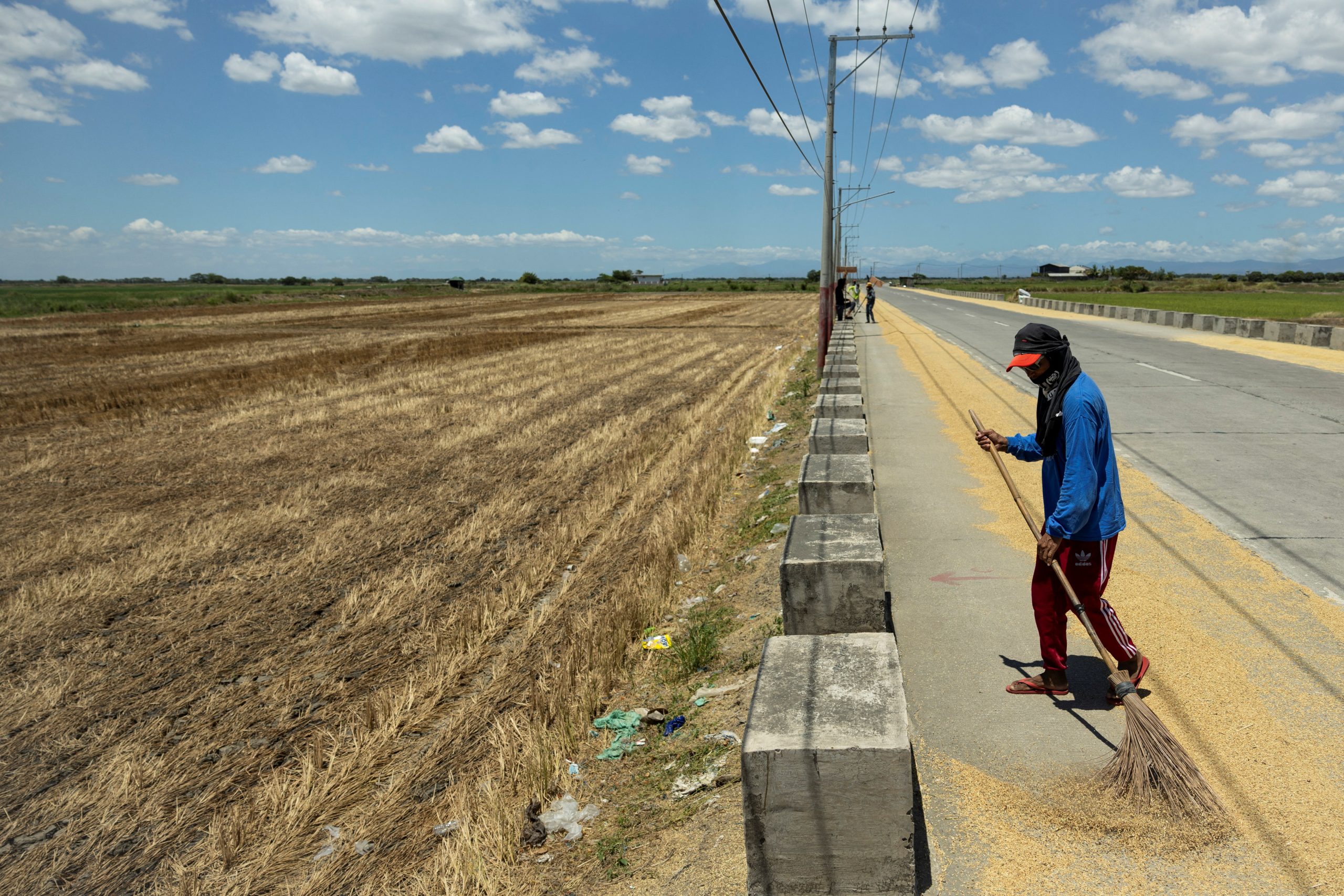
I see a father looking at his cracked rice field, wondering how he will pay off the debts from a harvest that is already lost before it has even begun. I see a mother walking under a relentless sun because her village’s well has dried up, carrying the water that sustains the health of her children and her entire community.
And what we are seeing today – 26 provinces experiencing drought and millions of dollars in agricultural losses – is only the beginning.
Loss and damage fund delays first project approvals as needs dwarf resources
Many Filipino families are still trying to rebuild and recover after last year’s typhoons and the two earthquakes. In Mindanao, where the recent magnitude 7.8 earthquake displaced more than 90,000 people and destroyed over 19,000 houses, uncertainty remains about when the people will be able to fully recover and return home.
Today, they are trying to protect the meagre possessions they have and, if they are lucky enough to have their home unscathed by typhoons and earthquakes, their homes from flooding; tomorrow, they will have to survive the hardship and impact of drought.
The effects of El Niño threaten to exacerbate their troubles.
Struggle for basic needs
Many low-income Filipino families already face significant challenges to meet their basic needs.
In our daily visits, we see how life is becoming increasingly difficult for millions of people. Rising fuel and transport costs are driving up the price of basic foodstuffs, making them unaffordable for many families. At the same time, crop failures and income losses are leaving households without livelihoods, while disasters contribute to further suffering.
But we are not just talking about hunger. We are talking about health, safety and dignity. Water shortages are forcing many people to resort to unsafe sources, increasing the risk of disease. And, as is the case in so many crises, it is the most vulnerable who bear the heaviest burden: walking long distances every day to fetch water or food, enduring enormous physical strain and facing risks of violence and insecurity.
Building resilience
Faced with this reality, our response is based on a simple idea: to be there before the crisis reaches its most critical point. At Action Against Hunger, we work alongside communities to anticipate the situation, assessing the impact of the drought and activating early response mechanisms to protect their livelihoods and access to water.
We translate climate forecasts into concrete action plans: from support for farmers to programmes ensuring safe water. All of this is done in coordination with local authorities and international partners, because we know that what we do today will make the difference tomorrow.
The hardest months are yet to come. But the question is not just what will happen, but what we are doing now to prevent it. How many tables will remain empty and how many children will see their health compromised will depend on our ability to act in time.
We cannot stop El Niño. But we can prevent it from becoming a crisis of human dignity. We cannot afford to look the other way whilst the earth cracks and opportunities disappear. Because behind every statistic, there is a family struggling to get by. And that is a reality we cannot ignore.
The post A strong El Niño spells more climate pain for the Philippines appeared first on Climate Home News.
A strong El Niño spells more climate pain for the Philippines

Continue Reading
Three countries have been named by the Paris Agreement’s compliance committee for failing to submit a nationally determined contribution (NDC) and repeatedly snubbing offers of help with their climate plans.
After months of internal debate over whether to identify serial non-responders, the Paris Agreement’s Implementation and Compliance Committee (PAICC) named the three countries which have failed to engage with it over their NDCs on Friday.
It named Democratic Republic of Congo, Senegal and North Korea in a footnote of its annual report, adding that it decided to name them “with a view to facilitating engagement”, adding that representatives of the three nations had been invited to its meeting in early 2027 “with the purpose of identifying any challenges and constraints”.
“The Committee noted the importance of Parties engaging with the Committee in a timely manner, while noting that some delays may be due to the national capabilities and circumstances of the Parties”, the report said.
-
Under US pressure, World Bank says it will back gas “where appropriate”
The US wants the World Bank to expand its gas support while climate campaigners are pushing for it to end – its head spoke this week of limited backing for the fossil fuel -
IPCC scientists vow to press on with climate reports despite political deadlock
After governments again failed to agree a timeline, nearly 120 IPCC authors pledged to complete their assessment on time and with full scientific rigour -
Paris Agreement committee snubbed over missing NDC climate plans
Many governments have still not submitted a nationally determined contribution to the UN, breaching a key requirement of the Paris Agreement

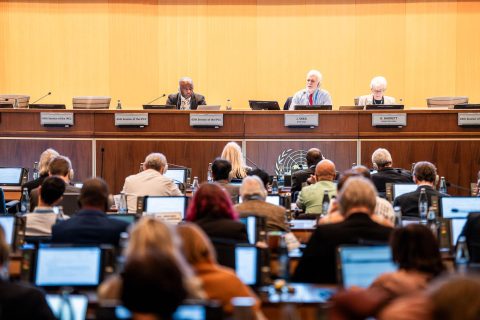

In July, PAICC said 12 countries had ignored its repeated attempts to discuss why they had not published an NDC as required every five years under the 2015 Paris accord.
Members of the committee had been divided over whether to name them, but at a September meeting decided to do so in their annual report to the annual climate COP summit.
By the time the report was published on Friday, only Congo, Senegal and North Korea “had not communicated an NDC or submitted a [Biennial Transparency Report] and had not yet responded to any of the Committee’s notifications, despite several reminders issued by the Committee in this regard”.
Rainforest and renewable energy ambitions
The silence from Congo and Senegal is notable because the former is home to much of the Congo Basin rainforest while the latter has sought billions of dollars in climate finance to support its renewable energy ambitions.
After Brazil, Congo has more rainforest than any country in the world. This forest, and the country’s peatlands, absorb huge amounts of greenhouse gas but are fast being lost to expanding farmland, charcoal production, logging and mining.
Senegal signed a Just Energy Transition Partnership with Canada and wealthy European nations in 2023, to help it meet its renewable energy targets under the-then government of Macky Sall. It was chair of the Least Developed Countries group between January 2022 and December 2023.

Tejas Rao, who is researching the PAICC as part of a doctoral thesis at Cambridge University, said the governments of the three countries should engage with the committee.
“Engagement costs these governments very little and the committee has shown it will listen,” he said.
“Silence leaves the committee with no basis to help, and it leaves the [governments] exposed to the narrative that they are simply disengaged,” he told Climate Home News.
Paris Agreement requirement
The 2015 Paris Agreement requires all parties to publish an NDC every five years outlining their emissions reduction targets, with each plan meant to be more ambitious than the country’s last NDC.
The latest set – the third round of plans, with new targets for 2035 – was due in February 2025. While most countries missed this deadline, all but around 30 – mostly small emitters but including Egypt, Vietnam and Argentina – have now submitted them.
Over the year, the PAICC – which is made up of government climate officials from developed and developing countries – has been communicating with governments that have not submitted NDCs and trying to overcome barriers to them doing so.
Some nations have cited exceptional circumstances as the reason for not submitting an NDC, a process that requires a significant amount of work in tracking emissions and consulting on how to curb them across the economy. For example, a letter from a Sudanese official to the PAICC, seen by Climate Home News, said that the country’s civil war had led to the suspension of its NDC preparation.
-
IPCC scientists vow to press on with climate reports despite political deadlock
After governments again failed to agree a timeline, nearly 120 IPCC authors pledged to complete their assessment on time and with full scientific rigour -
Under US pressure, World Bank says it will back gas “where appropriate”
The US wants the World Bank to expand its gas support while climate campaigners are pushing for it to end – its head spoke this week of limited backing for the fossil fuel -
Who shapes climate science? The equity question facing the IPCC
Early completion of the next global climate science assessment reports risks excluding research from the Global South, which is key to ensuring the findings are fair
The US and Iran are not signed up to the Paris Agreement and so do not have active NDCs, nor does Taiwan, which is not a UN member state.
Rao said that because the PAICC is “facilitative and non-punitive”, naming the countries “is meant to open a door, not close one – the invited consultation is the point”.
“In recent months, governments that explained their constraints, whether capacity, finance or domestic process, have been met with follow-up and support rather than sanction, and the number of silent governments has fallen sharply,” Rao said.
The post Paris Agreement committee names three countries snubbing it over NDCs appeared first on Climate Home News.
Paris Agreement committee names three countries snubbing it over NDCs