

Hosting a COP in the Amazon, the world’s largest tropical rainforest, has raised hopes that this year’s UN climate summit in Brazil will be free from the shadow of fossil fuels, after the last two were held in major oil-producing countries. But even as Brazil faces extreme heat and flooding, its government has signalled it wants to extract more climate-warming oil.
“I dream of a day when we no longer need fossil fuels, but that day is still far away. Humanity will depend on them for a long time,” Brazilian President Luiz Inácio Lula da Silva said last week during a speech in Belém, the capital of Pará and the host city for November’s COP30.
This Tuesday, Brazil’s National Energy Policy Council, which brings together federal ministers, approved the Latin American nation’s entry into the Charter of Cooperation (CoC) between oil-producing countries, a discussion forum linked to the Organization of the Petroleum Exporting Countries (OPEC+).
It provides a platform to “facilitate dialogue and exchange views regarding conditions and developments in the global oil and energy markets”, according to OPEC. Despite lacking binding obligations, Brazil’s entry into the CoC has brought backlash from climate groups.
“This is a disappointing setback for everyone who relies on the Brazilian government to lead a just transition away from fossil fuel exploration—an essential step if we are to survive on this planet,” said André Guimarães, director of the Amazon Environmental Research Institute (IPAM).
According to a report by the climate campaign group 350.org, Brazil became the third-largest country in terms of investment in expanding its oil and gas sector last year, shortly after countries agreed at the COP28 in Dubai to “transition away from fossil fuels”.
Japan disregarded widespread calls to raise its 2035 emissions goal
Fossil fuel growth
If Brazil were to maintain only the oil wells it currently has in operation, the country’s production would decline by 64% by 2035. However, with new exploration projects set to be licensed, Brazil’s oil production is expected to increase by 36% in the next decade, according to analysis by 350.org based on International Energy Agency (IEA) data.
President Lula responded to criticism that his support for oil would tarnish Brazil’s leadership at COP30. “Look at the United States; see if France is worried. No, they are exploiting as much as they can. It’s England exploiting [oil] in Guyana and France in Suriname,” he said, pointing out that neighbouring countries are already profiting from oil in the Amazon region, working with Europe-based multinationals.
In his speeches, Lula has argued that the profits from new oil explorations will be used to finance the energy transition. However, this claim has been met with skepticism and sarcasm from environmentalists.
“It’s like recommending smoking twice as much to raise more money for lung cancer treatment,” mocks Caetano Scannavino, from the Amazonian NGO Saúde e Alegria.
In 2010, the Lula government passed a law stipulating that revenues from oil exploration in the pre-salt fields—a new source of wealth for Brazil at the time—would be invested in health and education. However, amid an economic crisis in the following years, the government redirected those funds to cover other expenses such as public debt.
Amazon oil
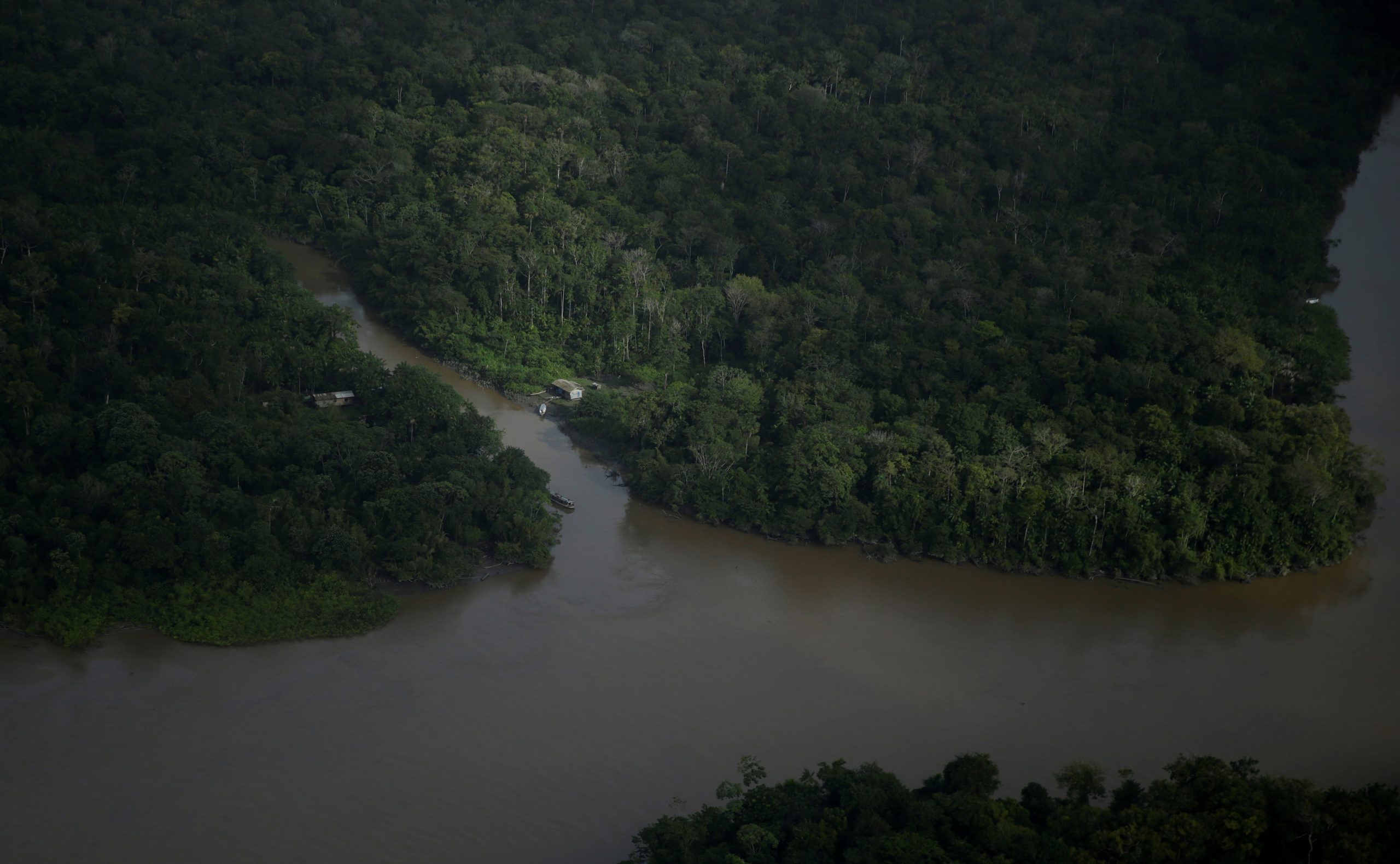
Since taking office for his third non-consecutive term, Lula’s government has been seeking an environmental license to drill an exploratory oil well in the Foz do Amazonas Basin, located along the coast of Amapá state, in an area of extreme environmental sensitivity.
The license was denied early in his administration, in May 2023. Experts at IBAMA (the Brazilian Institute of Environment and Renewable Natural Resources, the federal government’s environmental agency) concluded that Petrobras, the state-owned oil company, had failed to present a solid impact mitigation and emergency response plan.
Additionally, IBAMA’s President Rodrigo Agostinho noted the risks of exploring the area without first conducting a Sedimentary Area Environmental Assessment (AAAS). This includes an assessment of sensitive ecosystems, biodiversity hotspots and affected communities to determine potential environmental and social impacts.
Since then, three ministers – Alexandre Padilha for Institutional Relations, Rui Costa who is Chief of Staff, and Alexandre Silveira for Mines and Energy – have been negotiating a political agreement with the Ministry of the Environment, led by Marina Silva.
Seen as a roadblock by other ministries, Silva has repeatedly stated that IBAMA’s decision will be purely technical. However, sources within the government told Climate Home that the license is expected to be granted by the end of March.
Big polluters funnel 75% of profits to shareholders, not clean energy
Pressure from above
Even if IBAMA’s technical staff reject Petrobras’ revised plans, the agency’s leadership could still approve the drilling under political pressure from the president himself. Lula has been considering replacing IBAMA’s current president and has reportedly been eyeing Márcio Macêdo, a close ally who currently heads the General Secretariat of the Presidency.
“We can’t keep up this back-and-forth with IBAMA, which is a government agency but seems to act against the government,” Lula said last week during an interview to Diário FM, a local radio in Amapá state.
The environmental public servants’ association, Ascema, responded to that declaration with a letter stating that political pressure is unacceptable and that evaluations take the time needed to assess potential environmental and social impacts, as well as mitigation or compensation measures.
“The attempt to fast-track the approval of high-impact projects without due adherence to technical and scientific procedures threatens not only the integrity of Brazil’s ecosystems but also the rights of traditional populations and local communities directly affected by these decisions,” stated the Brazilian Forum of NGOs for the Environment.
Pressure to fast-track environmental licensing for large infrastructure projects, such as hydroelectric dams and highways, has already left a stain on the left-wing administrations of Lula and his successor, Dilma Rousseff. The most emblematic case was the construction of the Belo Monte hydroelectric dam in Pará state in the Amazon.
In 2011, the approval of its environmental license led to the dismissal of IBAMA’s president. The project significantly impacted the Xingu River, a large tributary of the Amazon River, and Indigenous communities who depended on the river were not consulted. The violation of their rights was later recognised by Brazil’s Supreme Court.
Recently, due to the variability of the region’s hydrological regime combined with an undersized reservoir infrastructure, the dam has been operating at less than half of its projected power generation capacity, calling into question the economic rationale of the project.
Weakening studies
Now, the government aims to speed up environmental approval for drilling in the Foz do Amazonas basin by weakening IBAMA’s evaluation process. Through legal opinions issued by the Attorney General’s Office, the Ministry of Mines and Energy (MME) has successfully narrowed the scope of the environmental assessment.
One of its main arguments was that IBAMA cannot require mitigation measures for noise pollution caused by aircraft in the region, despite complaints from Indigenous communities that disturbances have scared away game animals essential to their way of life.
Another requirement that was legally overturned was the demand for a Sedimentary Area Environmental Assessment, a tool the MME has resisted implementing, since it could identify areas where oil exploration should be restricted.
With much of the licensing process stripped down, IBAMA’s final decision now hinges on the company’s emergency response plan. The initial denial of Petrobras’ request was based, among other criteria, on the absence of a plan to rescue wildlife in the event of an oil spill.
In response, the company built a wildlife rescue centre on the coast of Amapá state. This plan remains the last pending issue, and its approval will determine whether the license is granted.
Government officials at the Ministry of Environment told Climate Home they fear that the issuance of the license could send a crucial signal to potential fossil fuel investors in the region, as the National Petroleum Agency has already announced it will auction another 47 oil blocks in the same area of the Foz do Amazonas basin in June.
The post Lula’s government pushes for new oil drilling in the Amazon – where it plans to host COP30 appeared first on Climate Home News.
Lula’s government pushes for new oil drilling in the Amazon – where it will host COP30

The head of the United Nations has called on all countries to deliver plans for phasing out their production and consumption of fossil fuels, as rising oil prices and climate shocks threaten energy and human security.
In his farewell speech to the UN General Assembly (UNGA) in New York on Tuesday, outgoing UN Secretary-General António Guterres for the first time urged “every government to adopt a national plan to transition away from fossil fuels” aligned with limiting warming to 1.5C. The plans, he said, should include “clear timelines and protection for affected workers and communities”.
“We know fossil fuel interests won’t step aside on their own. For decades, Big Oil has treated the atmosphere as an open sewer – and cashed in on the consequences,” Guterres told diplomats in his speech opening the leaders’ segment of the assembly, also calling out the industry’s windfall profits after Russia’s invasion of Ukraine.
-
COP31 electrification pledge leaves out clean power commitment
Campaigners and experts say the goal’s effectiveness in reducing emissions may be limited unless countries agree to meet it using only clean energy -
Climate change and energy transition rise up national security agenda
Leaders highlighted the national security risks posed by global warming and fossil fuel dependency at New York Climate Week
At last year’s COP30 climate summit in Belém, a group of about 80 governments led a failed push to develop a global roadmap to transition away from fossil fuels. Brazil instead proposed to draft a voluntary report that will be presented this year ahead of COP31 after countries and organisations submitted their views to the process.
Governments first agreed to transition away from fossil fuels in energy systems at COP28 in Dubai in 2023, but have since failed to agree at UN climate talks on how to move forward with that commitment, as efforts to do so have been effectively blocked by large fossil fuel-producing countries.
France, Netherlands issue plans
A few countries have moved forward with their own transition plans. France launched the first one at an international conference on the issue in April and the Netherlands followed suit this month. Not being major fossil fuel producers, both European nations aim to end their coal, oil and gas consumption by 2050, although the Dutch plan was criticised for not setting specific phase-out dates for the dirty fuels.
Adão Soares Barbosa, climate ambassador from Timor-Leste and chair of the Least Developed Countries (LDC) group in the UN climate negotiations, told a press briefing on Tuesday that last year’s discussions on shifting away from fossil fuels need to continue at COP31, adding that developed countries should lead the way with transition plans and curb their use of fossil fuels.
“We are expecting that we can make a request to major-emitting countries to limit emissions from this sector,” he said. “For LDCs, we’ll also try to reduce fossil fuel use, but it will depend on national circumstances.”
Samoa’s lead negotiator Anna Rasmussen said small island states have outlined their energy transition plans in their nationally determined contributions (NDCs) – countries’ plans for meeting the Paris Agreement goals – but added “we’re still waiting” for climate finance to help implement those plans.
Despite the global push to clean up the energy mix, countries leading climate talks are themselves also expanding fossil fuel production. COP31 co-presidents Australia and Türkiye have both recently given the green light to mine and drill more coal, oil and gas, and still depend on fossil fuels for 60% and 56% of their electricity production respectively.
Fossil fuel expansion threatens COP31 hosts’ credibility, experts warn
COP30 host nation Brazil has also persisted with its plans to explore potential new oil reserves near the mouth of the Amazon River – a region known as the Equatorial Margin.
These are moving ahead despite President Luiz Inácio Lula da Silva announcing last year at the Belém climate summit that the country would develop its own fossil fuel phase-out plan. This is still under development with little information about its progress and may be hampered by elections next month.
“We have achieved our self sufficiency in oil and will continue to explore the potential of new reserves, such as those in the Equatorial Margin,” Lula said in his speech to the UNGA on Tuesday. “But we will not abandon the environmental agenda,” he insisted. “We will move forward with the roadmap for the decarbonisation of the Brazilian economy.”
Transition far cheaper than status quo
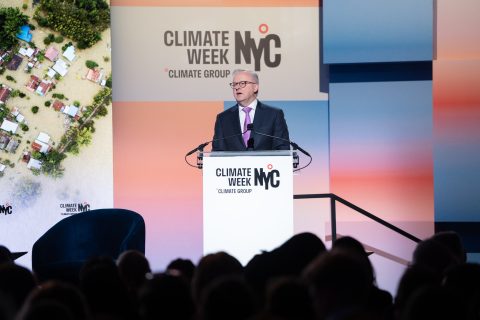
Speaking at the main Climate Week NYC venue, Mads Christensen, executive director of Greenpeace International, said given the fast-shifting cost dynamics for both fossil fuels and renewables, countries should revise their existing energy plans because they are now out of date.
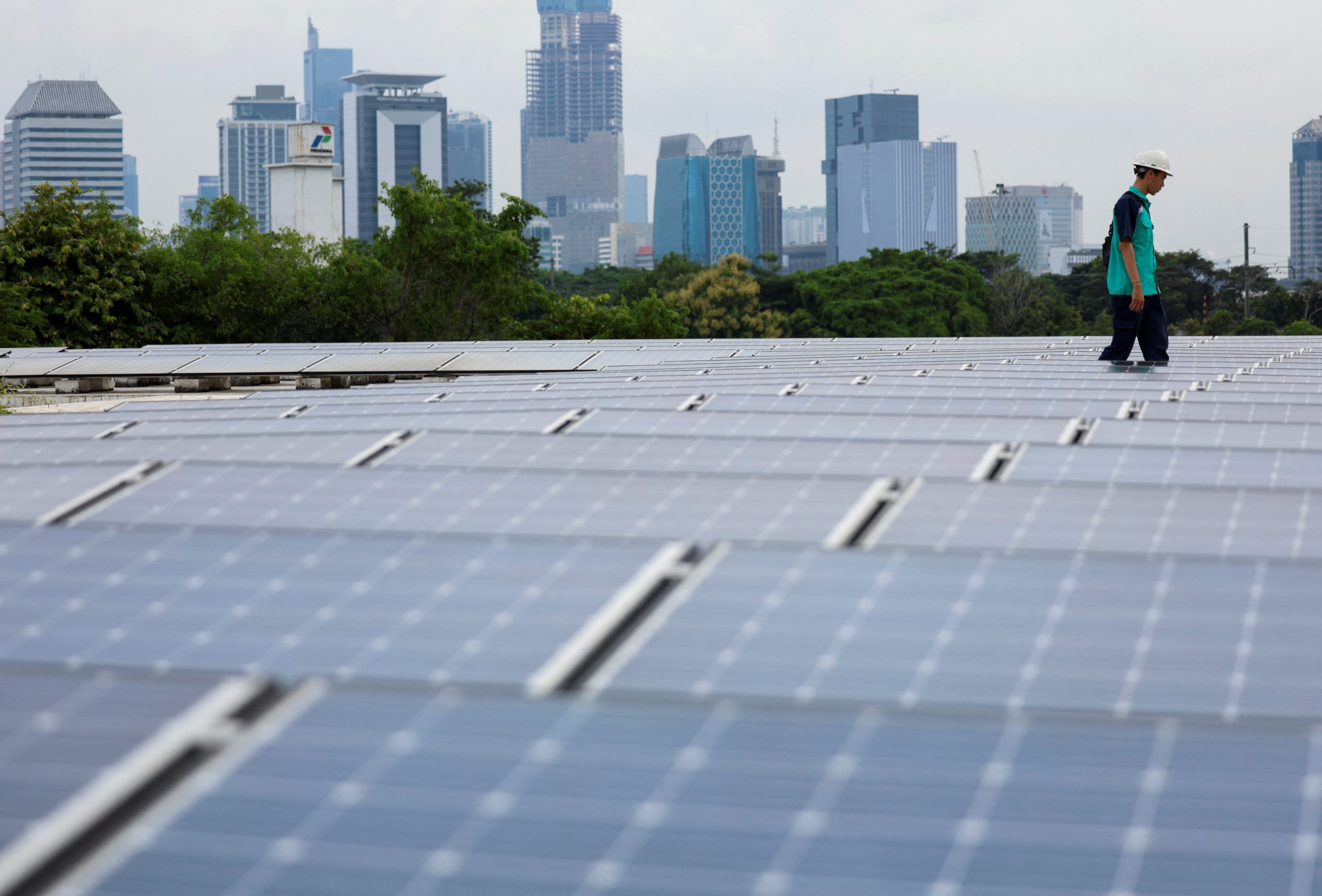
Gas power generation now costs around 150 euros per megawatt compared with around 50 euros for solar with battery storage – making the latter two-thirds cheaper.
“If these plans were updated, I think we would have a much faster transition because it simply makes good financial sense,” he said.
Tzeporah Berman, founder and chair of the Fossil Fuel Treaty Initiative, told Climate Home News that the Santa Marta process for transitioning away from fossil fuels (TAFF), launched at April’s conference, could help countries discuss, design and develop their national roadmaps, as well as mobilise the international cooperation required to actually deliver them.
“Many countries want not only national roadmaps but a global roadmap off the highway to hell,” she added. “A global plan is necessary to ensure the rules aren’t rigged against those who want to do the right thing and so all countries can make credible commitments.”
The second TAFF conference will be held in the Pacific island nation of Tuvalu next spring, co-chaired by Ireland. In New York, Tuvalu’s climate minister Maina Vakafua Talia called for stepped-up efforts to tackle the fossil fuel use that is threatening his country’s “demise” by driving global warming.
“The world is running out of time, and so I ask every government to come to… Tuvalu with solutions – real solutions, not false solutions – for us to ensure that we have a pathway and a way forward,” he urged.
The post UN chief urges countries to adopt fossil fuel transition plans with timelines appeared first on Climate Home News.
UN chief urges countries to adopt fossil fuel transition plans with timelines
COP31’s flagship initiative to accelerate the electrification of the world’s economy has been criticised for failing to include a commitment to produce the power from clean energy.
Governments that sign the voluntary pledge at this year’s UN climate summit will commit to increasing electricity’s share of total energy consumption to 35% globally by 2035 in line “with pathways consistent with keeping 1.5C alive”, the text unveiled by the Turkish presidency on Tuesday says.
While the document says that the electrification goal is “complementary to efforts to expand renewable energy and improve energy efficiency”, governments are not explicitly asked to commit to producing the extra power with clean sources and driving down greenhouse gas emissions.
The text instead says the “use of clean electricity” will vary according to national circumstances. Fossil fuels are not mentioned by name, although the pledge cites the COP28 Global Stocktake decision, which called for “transitioning away from fossil fuels” in energy systems.
-
Climate change and energy transition rise up national security agenda
Leaders highlighted the national security risks posed by global warming and fossil fuel dependency at New York Climate Week -
Fossil fuel expansion threatens COP31 hosts’ credibility, experts warn
Türkiye and Australia are pushing coal, oil and gas at home with no national timeline for their own fossil fuel phase-out
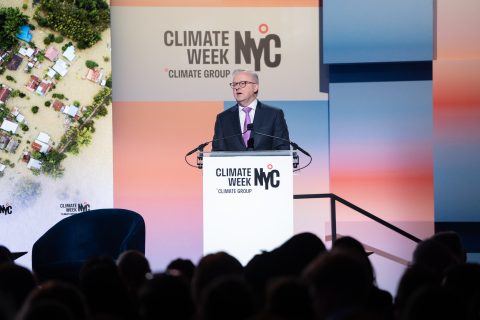
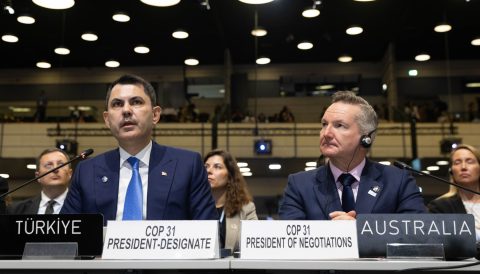
COP31 president Murat Kurum said earlier this month that the push to make electrification more “widespread” – through measures like the rollout of electric vehicles and heat pumps – will “automatically” lead to a reduction in the use of fossil fuels.
But many campaigners disagree, criticising the proposed pledge for failing to give an explicit signal on the fossil fuel transition.
Lack of clarity on energy sources
“Let’s not let electrification become the Trojan horse of our times, used to hide new fossil fuel consumption rather than promote renewable energy,” Claire Smith from civil society umbrella group Beyond Fossil Fuels said in reaction to the pledge’s publication.
She added that the commitment will only help address the climate crisis if electrification is powered by a flexible energy system where solar and wind are complemented by enhanced grids and storage.
The pledge’s text says that the electricity goal should be supported by “diverse and sustainable energy sources”, but it stops short of explaining what these sources are.
Alden Meyer, an international climate policy expert and senior associate at think-tank E3G, said the details of the pledge matter to how effective it will be in helping bring planet-heating emissions down.
“It has to be clean, and we haven’t got enough clarity on a guarantee that it will be a decarbonisation move,” he told Climate Home News.
China’s industrial engine starts to break its fossil fuel habit
According to an annual electricity review from energy think-tank Ember, in 2025 renewables edged ahead of coal power for the first time in 100 years. Continued growth in solar and wind pushed the share of renewables above a third of global electricity generation to just under 34%, compared with coal at 33%, it said.
Janet Milongo, energy Transition lead at CAN International, said success cannot be measured simply by how much of the world’s final energy consumption becomes electric.
“We must ask what generates that electricity, who has access to it, who owns the infrastructure, and whether it is helping communities transition away from fossil fuels,” she added.
Electrification alone can’t meet climate goals
Analysis published by the IEA on Tuesday, alongside the pledge, found that it would already be cost-effective to raise electricity’s share of global energy use from 23% today to around 33% with existing technologies, putting the COP31 goal “within striking distance”. Based on current policies, however, the share reaches only about 30% by 2035.
Hitting the 35% target would cut fossil fuel importers’ import bills by around $400 billion a year by 2035, the IEA said. At the higher prices caused by the conflict in the Middle East, that saving rises to more than $500 billion.
Speaking at New York Climate Week on Tuesday, IEA executive director Fatih Birol said the agency’s figures show that in 2026, about 80% of all new power plants built will run on renewables, with a few percentage points coming from nuclear power and the rest from fossils fuels. “So therefore, electrification itself will lead reduction of the [greenhouse gas] emissions,” he added.
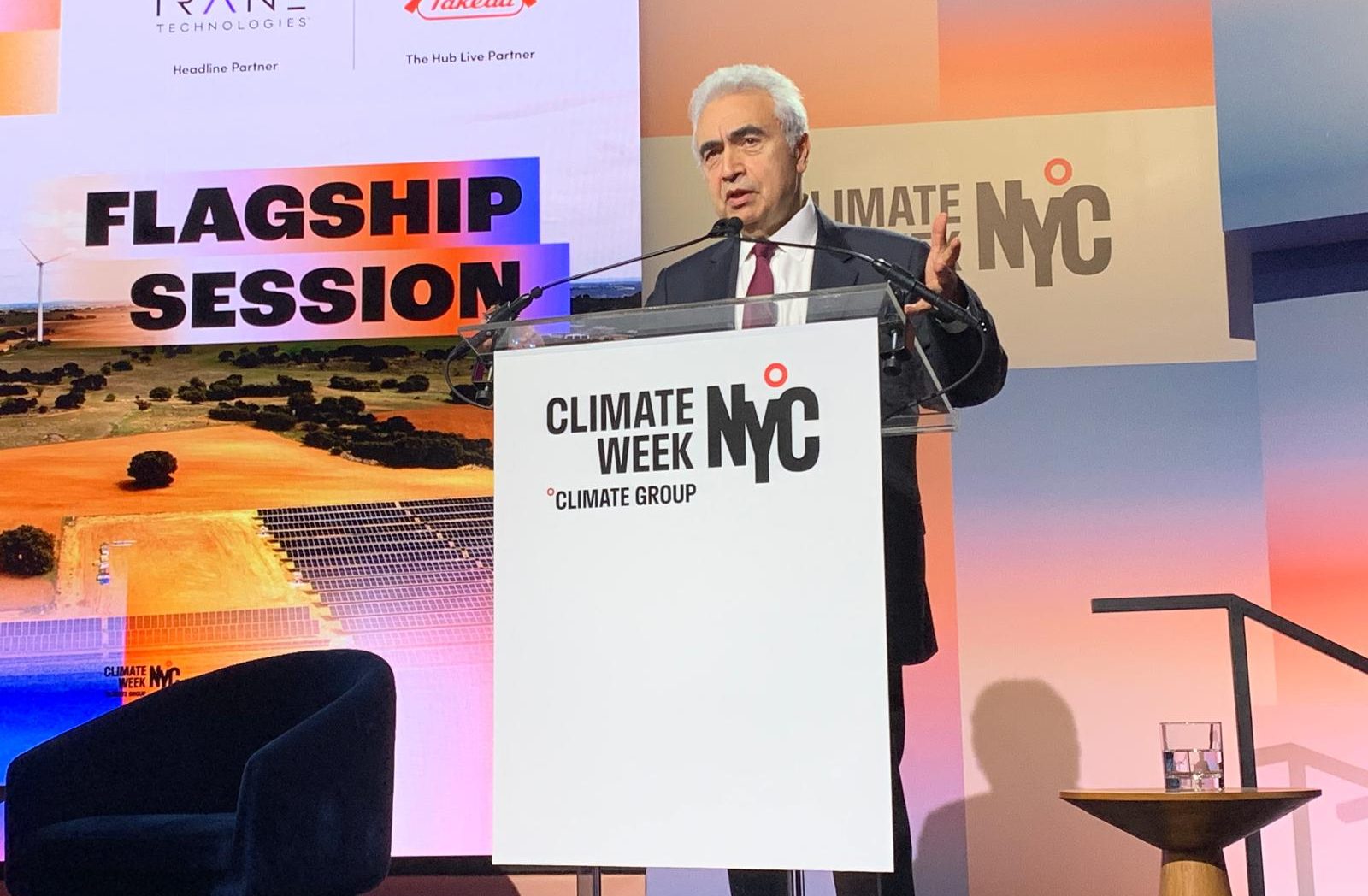
However, the IEA warned in its new report that electrification “by itself is not enough” to meet the world’s climate targets. It noted that, if “low-emission” sources of power continue to simply grow in line with current policy scenarios, that would be only just enough to cover the extra demand from electrification, driving a modest decline in emissions.
Matt Webb, associate director of global clean power diplomacy at E3G, said the pledge is a “welcome signal of leadership” and can help COP31 be a “critical moment” for countries to double down on the energy commitments made at COP28.
But to secure the full benefits of electrification, he added, it is essential that we “urgently clean up” by speeding up the rollout of renewables and developing credible national plans to transition away from fossil fuels.
The post COP31 electrification pledge leaves out clean power commitment appeared first on Climate Home News.
COP31 electrification pledge leaves out clean power commitment
People around the world have donated almost $90 million to a government-led campaign to help Nepal recover from its recent devastating Himalayan flood, according to a Nepali climate negotiator, even as the UN chief slammed the tiny amount of money in a new fund to deal with such disasters.
Individuals and companies from Nepal and abroad have chipped in from $5 to “many millions” of dollars to the Prime Minister’s Disaster Relief Fund, Manjeet Dhakal, an advisor to the poorest countries at UN climate talks, told an event on Monday focused on early warning systems.
The prompt and substantial response from the public contrasts with the slower, more limited support that is potentially on offer from the UN’s new Fund for Responding to Loss and Damage (FRLD), set up by governments to compensate developing countries for climate disasters.
Comment: Human security relies on adapting to the world’s new climate reality
Over three weeks have passed since Nepal’s finance and environment ministers asked the FRLD board to take an urgent decision to allocate funding to help Nepal protect people and restore essential services in the wake of the disaster, which caused around 1,450 deaths and left more than 5,000 people missing.
“Time is of the essence,” the ministers wrote in an appeal to the FRLD on August 31, which was swiftly followed by a letter from a group of developing-country board members urging the FRLD board’s co-chairs to organise an extraordinary meeting to come up with a response.
Loss and damage fund hesitates
Yet, despite informal online meetings, the co-chairs have yet to convene a meeting with the power to allocate funds. The board’s next scheduled meeting begins on December 15.
Dhakal said on Monday that the request has “received some positive response, but still there is some discussion ongoing about how to respond to that”.
“If they can’t respond in a timely manner, then is [the fund] fit for purpose in terms of disasters that the world would be facing in the coming years? The scale and intensity of these disasters is increasing,” he said.
With just $820 million pledged to it by rich countries and not all of that yet delivered, the FRLD has earmarked just $350 million to spend in its initial phase and without further contributions could run out of money next year.
Because of these limited funds, and a huge number of requests for funding totalling nearly $3 billion, the FRLD has said it will only give out a maximum of $20 million to each project for now. It has yet to approve funding for any projects.
Dhakal recently told The Nation magazine that this amount was just a “symbolic gesture”. Nepal’s government has estimated the costs of recovery and reconstruction at $4.8 billion, with homes, roads, bridges, hospitals and hydropower stations in the affected area needing to be repaired and rebuilt.
“Ridiculously small” funding
In a speech to the UN General Assembly on Tuesday, the body’s outgoing Secretary-General António Guterres criticised the “ridiculously small” level of funds made available by wealthy governments to the FRLD. Developed countries should “make the loss and damage fund work at scale”, he said.

The Portuguese diplomat told world leaders that when he travelled to Nepal three years ago, he had “sounded the alarm on accelerating glacier melt, warning that the rooftops of the world are caving in”.
“Some dismissed it all as overstating dangers, but as tragic events have shown, impacts are arriving sooner, hitting harder, and spreading further than many anticipated,” he said.
A recent study by scientists with the World Weather Attribution group found that climate change contributed to the rock-ice avalanche which sparked a huge flash flood along a river valley on the Nepal-Tibet border.
Speaking at a separate event in New York on Monday, leading climate scientist Johan Rockström highlighted those findings on the role of global warming in the Himalayan disaster.
“This will be potentially the first poster-child case of a loss and damage invoice, because here we have a proven case of a catastrophe which would not have occurred if it hadn’t been for human-caused climate change,” he said.
The post As loss and damage fund stalls, Nepal crowdfunds flood relief appeared first on Climate Home News.
As loss and damage fund stalls, Nepal crowdfunds flood relief



-

 Greenhouse Gases2 years ago
嘉宾来稿:满足中国增长的用电需求 光伏加储能“比新建煤电更实惠”
-
Climate Change1 year ago
Guest post: Why China is still building new coal – and when it might stop
-
Greenhouse Gases1 year ago
Guest post: Why China is still building new coal – and when it might stop
-

 Climate Change2 years ago
嘉宾来稿:满足中国增长的用电需求 光伏加储能“比新建煤电更实惠”
-

 Renewable Energy11 months ago
Sending Progressive Philanthropist George Soros to Prison?
-
Climate Change2 years ago
Bill Discounting Climate Change in Florida’s Energy Policy Awaits DeSantis’ Approval
-
Greenhouse Gases1 year ago
嘉宾来稿:探究火山喷发如何影响气候预测
-

 Carbon Footprint2 years ago
US SEC’s Climate Disclosure Rules Spur Renewed Interest in Carbon Credits