

Integrated Resource Planning (IRP) is the process that most utilities use to make important decisions about the future of our electricity system. Public hearings for expert testimony and public input in front of independent regulators are key components in IRP processes at utilities across the country and are the norm.
But at TVA, Things Look a Little Different
TVA is structured differently than other utilities: originally “built for and owned by the people,” TVA is the nation’s only federally-owned utility. Yet TVA has one of the least-public IRPs in the nation. TVA is a self-regulated federal monopoly — the TVA Board of Directors is supposed to serve as the utility’s regulatory body — but all information the Board receives comes through TVA staff. The TVA Board has no independent staff like other regulators. Utilities across the region would surely like the option to filter the information their regulators hear, but that is not the way state utility regulation is designed. Except at TVA.
On January 25, in Nashville, Tennessee, four experts provided testimony on TVA’s IRP process and contents, and members of the public crafted recommendations for TVA through breakout groups. Click here to watch a recording of the entire Hearing. The recommendations from experts and the public will be packaged and delivered to the TVA Board.
The hearing was kicked off with a video statement from Congressman Steve Cohen (who represents a district of Memphis) in which he announced a bill he’s preparing that will require TVA to be more transparent and inclusive in its resource planning efforts — precisely what we’ve been advocating for.

The first session of the hearing mimicked the style of a public hearing a regulatory commission would ‘typically’ hold when reviewing a utility’s IRP. Four experts in energy modeling and policy provided analysis and findings on TVA’s energy planning. Below are some highlights from each presenter.
TVA’s Planning Process is “Merely a Thought Exercise” – Liz Stanton
Dr. Liz Stanton of Applied Economics Clinic is an expert with an extensive track record of testimony on energy plans. In her presentation, Liz explained how the TVA planning process differs from that done in other jurisdictions: since TVA is a self-regulated monopoly (unlike other utilities that are regulated by a Public Utility Commission/Public Service Commission), the TVA Board is supposed to regulate TVA.

Image credit: SACE
Stanton also explained in her testimony that the TVA’s planning process doesn’t even result in a concrete ‘plan.’ It is “merely a thought exercise,” according to Stanton, which results in ranges of energy resources that are essentially meaningless.

Dr. Liz Stanton testifying at the hearing on TVA’s 2024 IRP.
“The lack of a preferred plan eliminates accountability from utility planning.” – Liz Stanton
Over-Reliance on Gas Leads to Skyrocketing Bills – Peter Hubbard
The second expert, Peter Hubbard, of Georgia Clean Energy Solutions, exposed how TVA’s over-reliance on fossil gas resources will result in increased cost and decreased reliability. As discussed in Hubbard’s testimony, customer bills skyrocketed in 2022 when gas prices spiked, as TVA passes 100% of fuel costs through to its customers. TVA had to cut off people’s power all across the Valley during Winter Storm Elliott in December of 2022 because gas power plants failed and gas fuel was unavailable. Hubbard also outlines how TVA’s planned gas plants could become stranded assets: plants that customers are on the hook to pay for without getting any benefits (i.e. power) from those plants. Planned gas plants across the country are being cancelled, and the EPA is expected to release a regulation on greenhouse gas emissions from gas plants this year. TVA’s planned gas buildout is not immune to these headwinds.
In the intervening years since the 2019 IRP, an increasing number of signposts are pointing away from new gas-fired generation and toward renewables and storage. – Peter Hubbard, Georgia Clean Energy Solutions
Peter also observed that TVA is taking a lot of liberties from their 2019 IRP, which called for building 2 GW of new gas-fired combined cycle capacity and 1.5 GW of new combustion turbine capacity. That’s 3.5 GW total. But even before they started this current 2024 IRP process, TVA had already reached a “final” decision to build 3.5 GW of gas-fired units at Johnsonville, Paradise, Colbert, and Cumberland AND proposed a 1.5 GW gas combined cycle at Kingston, 0.5 GW gas combustion turbine at the New Caledonia site as well as 0.9 GW in Cheatham County. That means TVA was already pursuing a total of 6.3 total proposed GW, theoretically while still under the guidance of the 2019 plan.

Slide from Hubbard presentation during the hearing that shows TVA’s planned gas build.
It’s Also About Health – Taylor Allred
Next up, Taylor Allred from Greenlink Analytics provided testimony on environmental justice and energy burdens. Energy burden is the portion of a household’s income that goes toward energy costs. Tennesseans face high levels of energy burden across the board; Memphis, in particular, has among the highest energy burdens in the country.
Taylor presented findings from Greenlink’s mapping tools, which showed a correlation between energy burdens and race, with higher energy burdens more likely in neighborhoods with predominantly Black or Latinx residents. He also found a strong correlation between energy burden and asthma rates.
In other words, this is not just about affordability, it’s about health.
Taylor acknowledged that TVA’s recently announced $1.5 billion investment in energy-efficiency investment through 2028 could make a big difference for public health and energy burden, and also create jobs and economic development. Using Greenlink’s Clean Energy Jobs Calculator, Taylor was able to estimate that the $1.5 billion investment in energy efficiency could create 10,000 additional local jobs and a net increase in job-based income of $660 million. (SACE has previously called on TVA to expand energy efficiency programs as a part of its economic development work.) But he also pointed out that Greenlink’s prior analysis showed that $1-1.5 billion would be necessary to get energy burdens below 6% in Memphis alone.
Clean Energy will Bring Economic Benefits for the Tennessee Valley – Taylor McNair
Our final expert, Taylor McNair from GridLab shared a report and policy brief released in 2023 by GridLab and Synapse Energy Economics that presents a path for TVA to achieve 100% clean electricity by 2035. GridLab and Synapse used the same modeling tool as TVA, EnCompass, to develop this pathway. Taylor McNair presented the results of that study in his testimony.
Based on that analysis, the 100% Clean Energy transition for TVA would deliver over $255 Billion in economy-wide net savings for Valley customers and support over 15,000 jobs each year.
A pathway to 100% clean electricity by 2035 with a focus on distributed energy resources like energy efficiency and rooftop solar would also reduce energy burdens and improve health across the Valley.
What’s Next
You can watch a recording of the hearing and review the testimony and documents developed by expert witnesses. With this information, send a comment to the TVA Board of Directors before its next meeting on February 14 in Johnson City, Tennessee to tell the Board what you want to see from TVA on its IRP process and IRP itself. We expect TVA to release its draft IRP in March. Given the flawed procedure for engaging informed comments and lack of independent review, we are highly skeptical that the TVA draft IRP will serve our region well. As the process unfolds, SACE will continue to help the public understand what is in the draft and what it means for our rates, our climate, our air and water, and our communities.
The People’s Hearing was organized by: Appalachian Voices, Energy Alabama, Southern Alliance for Clean Energy, Sunrise Nashville, Center for Biological Diversity, Climate Reality Project: Memphis and Nashville chapters, and Vote Solar.
The post TVA, Our Nation’s Largest “Public” Utility Has The Least Public Planning Process appeared first on SACE | Southern Alliance for Clean Energy.
TVA, Our Nation’s Largest “Public” Utility Has The Least Public Planning Process

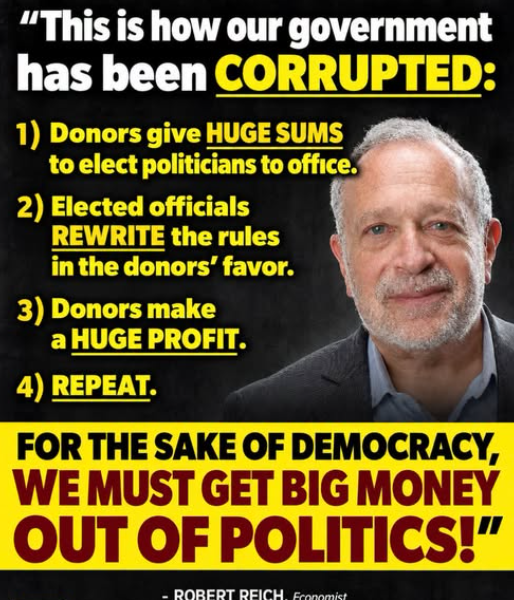 Have we hit the tipping point on climate change? For example, has the melting permafrost in the Arctic released so much methane that a runaway feedback loop has been established?
As suggested at left, an analogous question could be asked about the level corruption in the U.S. government.
Weather Guard Lightning Tech

Nordex Outsells Vestas, GE Vernova Rebuilds Wind Team
Nordex closes in on Vestas in onshore orders, GE Vernova rebuilds its wind team, Nexxis buys BladeBug, and wooden blades draw doubts.
The Uptime Wind Energy Podcast is brought to you by Weather Guard Lightning Tech, creators of the StrikeTape Ultra LPS retrofit. Subscribe to Uptime’s Substack newsletter. And check out Rosemary’s “Engineering with Rosie” Youtube channel. Have a question we can answer on the show? Email us!
Weather Guard Lightning Tech
Siemens Gamesa Builds Hornsea Blades, NEMS Invests in Perth
Siemens Gamesa starts Hornsea 3 blade production in Hull, Germany approves an Offshore Wind Act amendment, and Nexxis buys BladeBUG.
The Uptime Wind Energy Podcast is brought to you by Weather Guard Lightning Tech, creators of the StrikeTape Ultra LPS retrofit. Subscribe to Uptime’s Substack newsletter. And check out Rosemary’s “Engineering with Rosie” Youtube channel. Have a question we can answer on the show? Email us!
Episode Transcript
Uptime News Flash
September 7, 2026
Happy Monday, everyone. Well, let’s talk about the biggest wind farm on earth. It doesn’t exist yet, but its blades are being built right now. Over in Hull, England, Siemens Gamesa just started making blades for Ørsted’s Hornsea 3 offshore wind farm. That’s two point nine gigawatts, one hundred and ninety-seven turbines. Each blade is longer than a football pitch. Fourteen hundred workers build blades in that factory, turning raw materials into finished product. When complete, Hornsea 3 will power more than three million British homes. It’s the single largest offshore wind farm in the world.
And if we slide over to Germany for a moment, the German cabinet just approved an amendment to the Offshore Wind Act, the WindSeeG. It’s headed to the Bundestag next. The goal? New rules by January first, twenty twenty-seven. But the Offshore Wind Energy Foundation says the draft does not go far enough. Sixteen gigawatts of awarded projects are still waiting on final investment decisions. Sixteen — that’s quite a few. The foundation wants a new way for developers to hand back sites they can’t build, so those sites can be re-tendered quickly under conditions that actually work. Sort of a use-it-or-lose-it approach. That’s the idea.
We’ll head a little further east to India. India ranks fourth in the world for installed wind power, but probably not for long. A government official said this week that India will overtake Germany and become the world’s third-largest wind energy nation by twenty thirty — one hundred seven gigawatts of installed capacity. India added a record six gigawatts last year alone, shattering their previous record of a little over four gigawatts. And twenty-eight more gigawatts are under construction right now. Impressive.
Let’s head down to Western Australia, because a company called National Electric Motor Services, NEMS for short, is building a one million dollar facility in Perth to test and repair wind turbine generators. Right now, Australian wind farm operators ship their broken generators overseas for repairs, and that takes months. NEMS is the only authorized service center for ELIN Motoren in all of Western Australia. This is the fifth project funded through Australia’s Wind Energy Manufacturing Co-investment program. Local repair, faster turnaround, and homegrown capability — that’s all good.
And staying in Australia, Perth-based Nexxis Technology just bought a British robotics company, BladeBUG. BladeBUG is a robot that uses suction cups to crawl across wind turbine blades. Nexxis already has a robot called Magneto that uses electromagnetic adhesion to climb steel structures. If you put the two together, you can inspect almost any surface on a turbine, or about anything else. Add AI and machine vision, and you have robots that can see what human eyes might miss, from places human hands shouldn’t have to reach. It’s safer, faster, and it’s going to be a lot smarter.
One more story before we finish today. Siemens Gamesa has now installed more than 300 recyclable blades in six countries. The secret is a new resin. Unlike conventional resins, this one lets you separate the blade components at end of life, so you can separate the fabric from the resin. Cool stuff. Jonas Pagh Jensen, head of sustainability at Siemens Gamesa, says the technology is ready for full-scale use. And Siemens Gamesa has already installed 36 GreenerTower units — steel towers with 63% lower carbon emissions. So although sustainability may have faded from the headlines, it’s still in tender documents, and it’s showing up more than ever. In Denmark, the Netherlands, and France, buyers are all asking about recyclability and decarbonization before they award contracts.
So what should you be watching this week? Recyclability is no longer a nice-to-have — it’s a must-have, and it’s showing up in tender scoring. If your blades can’t be recycled at end of life, you may not win the contract to begin with. And a lot of supply chains are going local. Australia doesn’t want to ship generators overseas anymore. India is building its own turbine factories. The countries buying wind power want it built at home. For professionals in the wind industry, the competitive edge is shifting — it’s not just who can build the best turbine, it’s who can build it locally, recycle it fully, and inspect it without putting a person in a harness.



-
Climate Change1 year ago
Guest post: Why China is still building new coal – and when it might stop
-

 Greenhouse Gases2 years ago
嘉宾来稿:满足中国增长的用电需求 光伏加储能“比新建煤电更实惠”
-
Greenhouse Gases1 year ago
Guest post: Why China is still building new coal – and when it might stop
-

 Climate Change2 years ago
嘉宾来稿:满足中国增长的用电需求 光伏加储能“比新建煤电更实惠”
-

 Renewable Energy11 months ago
Sending Progressive Philanthropist George Soros to Prison?
-
Climate Change2 years ago
Bill Discounting Climate Change in Florida’s Energy Policy Awaits DeSantis’ Approval
-
Greenhouse Gases1 year ago
嘉宾来稿:探究火山喷发如何影响气候预测
-

 Carbon Footprint2 years ago
US SEC’s Climate Disclosure Rules Spur Renewed Interest in Carbon Credits