

Welcome to Carbon Brief’s DeBriefed.
An essential guide to the week’s key developments relating to climate change.
This week
Record heat in 2024
DEADLY DECADE: UN secretary general António Guterres used his new year’s message to declare that “we have just endured a decade of deadly heat”, the Press Association reported. The news outlet said that all of the top 10 hottest years on record took place in this period, with 2024 emerging as the hottest. Meanwhile, China Daily reported that China reached its hottest annual temperature since records began, while ABC News said Australia saw its second-warmest year.
DANGEROUS HEAT: The Associated Press covered research from World Weather Attribution and Climate Central that found people globally experienced “an average of 41 extra days of dangerous heat” last year due to climate change. The analysis also found that climate change intensified 26 of the 29 extreme weather events from last year that the groups studied, according to Euronews.
Turning off Russian gas
GAS BLOCK: Russian gas flowing into several European countries was stopped on New Year’s Day, after Ukraine refused to renegotiate a transit deal “in the hopes of hurting its invader financially”, NBC News reported. Ending the flow of gas via Ukrainian pipelines will cost the Russian state-backed Gazprom around $5bn a year in gas sales, but will also cost Ukraine around $800n a year in transit fees, according to CNN.
EUROPE’S RESPONSE: EU member states prepared for this event by increasing capacity for liquified natural gas (LNG) imports and renewables, according to the Kyiv Independent. LNG from the US and Qatar has also helped the EU move away from Russian gas, Reuters said. However, Euractiv reported on “unease” from negatively affected eastern European countries, with Slovakia “threatening” retaliation against Ukraine, and Moldova – which is not an EU member state – “declaring a state of emergency” amid gas shortages.
Around the world
- FIRE WEATHER: “Out of control” bushfires are blazing in Australia, with elevated fire danger warnings issued for many states amid high temperatures, according to the Guardian.
- FLOOD DAMAGE: Hundreds of people have been evacuated in north-west England due to flooding, BBC News reported. Meanwhile, the Bank of England warned that climate change-driven floods could “devastate the value” of hundreds of thousands of UK homes, according to the Daily Telegraph.
- BANK WITHDRAWAL: Morgan Stanley, Bank of America and Citigroup announced that they were quitting the UN-backed net-zero banking alliance, Bloomberg reported. Financial Times described the departures as “the latest sign corporate America may retreat from climate goals” under incoming president Donald Trump.
- ALL ELECTRIC: Norway is “on the brink” of achieving its target for 100% of new car sales to be electric by 2025, with zero-emission cars making up 88% of new sales last year, the National reported. Meanwhile, the Daily Telegraph said Tesla saw its “first ever drop” in annual electric-vehicle sales, amid pressure from Chinese rivals.
$75 billion
The amount that fossil-fuel companies will be fined over the next 25 years, under a recent New York state law, according to Reuters.
Latest climate research
- The record-long Canadian wildfire season in 2023 was more than five times as likely due to human-caused climate change, according to a new study published in npj Climate and Atmospheric Science.
- New research in Proceedings of the National Academy of Sciences concluded that the rate at which carbon dioxide (CO2) emissions increase could affect the pace at which the Atlantic Meridional Overturning Circulation (AMOC), a current moving water, heat and nutrients around the world, slows down.
- A nationally representative survey of more than 1,000 US adults, published in Environmental Science and Policy, found that only around one-third were aware of the term “climate justice”, but half supported its goals after reading a short description.
(For more, see Carbon Brief’s in-depth daily summaries of the top climate news stories on Thursday and Friday.)
Captured
The UK’s electricity was the cleanest it has ever been in 2024, according to new Carbon Brief analysis that was covered by the Times, the Guardian and other news outlets. CO2 emissions per unit have fallen by 70% over the past decade, as the chart above shows. This trend can be attributed to the UK phasing out coal while expanding its use of renewables, which reached a record 45% of electricity generation last year.
Spotlight
Europe’s forgotten overseas territories and climate change
In the wake of Cyclone Chido, Carbon Brief considers the climate threat facing Europe’s overseas territories.
Cyclone Chido tore through the French island of Mayotte in mid-December, killing at least 39 people and leaving thousands injured or homeless.
The storm, which was made more intense by climate change, was the strongest to hit the tiny Indian Ocean territory in close to a century. Much of the devastation was linked to the lack of sufficient shelter and resources in what has long been France’s poorest region.
Chido marks the latest extreme weather event to hit one of Europe’s “overseas territories” – colonial remnants that are largely dotted around the tropics, from the Caribbean to the Pacific.
‘Urgent action’ required
Most of the 34 European overseas territories are part of France, the UK and the Netherlands, due to their histories operating slave plantations on tropical islands.
These territories vary significantly in governance, wealth and independence. However, they have a shared vulnerability to climate-related threats, such as cyclones and sea level rise.
The EU’s first climate risk assessment report, published last year, called for “urgent action” to protect member states’ overseas territories from climate change, highlighting their “remote locations, weaker infrastructure and economic vulnerability”. UK territories, particularly those in the Caribbean, face similar challenges.
“Technically, politically, institutionally, they’re in the global north, but their realities are akin to any other country in the global south,” Dr Vanessa Deane, an urban planning researcher at New York University, told Carbon Brief.
Carbon Brief analysis of the Emergency Events Database (EM-DAT), run by the Centre for Research on the Epidemiology of Disasters (CRED) in Belgium, shows that at least 197 people in European overseas territories were killed by extreme weather events over 1990-2024. (EM-DAT is the most comprehensive disaster database, but lacks complete data for poorer countries, meaning this figure is likely to be an underestimate.)
At least another 39 have been killed by Chido in Mayotte, making it the deadliest single event over this period in an overseas territory, according to EM-DAT data. The final death toll may be far higher.
Another quarter of a million people in these territories have lost their homes, been injured or otherwise affected over this period, mainly due to cyclones, according to EM-DAT.

‘Lagging behind’
Dr Virginie Duvat, a small islands researcher at the University of La Rochelle in France, said territories such as Mayotte are simply not treated the same as their mainland counterparts by French policymakers:
“Climate adaptation policies are lagging behind. This is paradoxical because these territories are more exposed and more vulnerable to climate change.”
Elise Naccarato, a climate justice advocate at Oxfam France, pointed to the “almost total absence of the overseas territories” in France’s upcoming climate adaptation plan.
Overseas territories generally lack the financial and technical capacity to implement climate adaptation programmes, or recover from climate-related disasters. Yet they also often cannot access climate-related aid.
Instead, the territories tend to rely on specialised funds set up by the EU and central governments to support climate-related activities, but these have been described as “insufficient” and “uncertain”.
As an example, Dr Daphina Misiedjan, a legal researcher at Erasmus University in the Netherlands, pointed to the “roundabout way” that the Dutch government provided relief to the territory of Sint Maarten, in the wake of Hurricane Irma. Rather than providing money directly, the government handed control to the World Bank, and funds took years to reach people.
Last year, residents of the Dutch Caribbean island of Bonaire, alongside Greenpeace Netherlands, launched a lawsuit against the Netherlands, claiming the state had not protected them sufficiently from climate change.
“[European countries] really profited from the colonial times, but now they have extra responsibility to make sure these islands are safe during the climate crisis,” Greenpeace climate campaigner Maarten de Zeeuw told Carbon Brief.
Watch, read, listen
THE YEAR IN CLIMATE: After a year of key elections and many extreme weather events, BBC podcast the Climate Question presented a review of the top climate stories from 2024, hosted by an expert panel.
WINE LIST: A “big read” article in the Financial Times, which includes interactive graphics, looked at how the changing climate is pushing wine making into northern regions and “redrawing of Europe’s wine map”.
BEST BOOKS: Mongabay has published a list of 10 “notable” environment-themed books published in 2024. Topics covered range from Indigenous land rights to coral bleaching.
Coming up
- 6-11 January: First Global Heat Health Information Network Southeast Asia Heat Health Forum, Singapore
- 9-10 January: Attribution Science and Climate Law Conference, New York City
- 9-11 January: Extraordinary Summit on the Post Malabo Comprehensive Africa Agriculture Development Programme, Kampala, Uganda
Pick of the jobs
- UK Climate Change Committee, chair | Salary: £1,000 per day. Location: London
- Wiley, deputy editor – environment | Salary: $59,900-$87,767. Location: Remote or hybrid, US, UK or Brazil
- Smith School, University of Oxford, data lead – state of carbon dioxide removal | Salary: £48,235-£57,255. Location: Oxford, UK
DeBriefed is edited by Daisy Dunne. Please send any tips or feedback to debriefed@carbonbrief.org.
This is an online version of Carbon Brief’s weekly DeBriefed email newsletter. Subscribe for free here.


The post DeBriefed 3 January 2025: ‘Decade of deadly heat’; Russian gas cut off; Europe’s forgotten overseas territories and climate change appeared first on Carbon Brief.

June Rubis is a steering group committee member for the Cali Fund, from Sarawak in Malaysian Borneo.
At COP16 in Cali, governments made a significant commitment: at least half of the funding from the new Cali Fund should support the self-identified needs of Indigenous Peoples and local communities, including women and youth. It was a watershed moment for multilateral benefit-sharing.
The challenge now is to translate that commitment into access arrangements that recognise the different institutions, priorities and decision-making processes of Indigenous Peoples and local communities.
For generations, biodiversity and traditional Indigenous knowledge have provided significant value to companies who depend on nature’s genetic diversity to discover new drugs that fight diseases, create products that improve health, and grow crops resilient to extreme heat and flooding events. While some compounds are sampled directly from the source country, increasingly the digital blueprints are held in online public databases which are freely accessible to use for innovation and research.
Countries urged to ramp up “insufficient” nature policies at COP17
The Cali Fund was established at COP16 to encourage commercial users of Digital Sequence Information, or DSI, to share benefits arising from its use. Estimates suggest it could generate over $3.5 billion a year – a stark contrast to the modest $10,656 currently committed to the fund from just five SMEs, underlining how much progress must be made at COP17 over the next two weeks.
The COP16 decision that set up the fund offers two routes for money to reach Indigenous Peoples and local communities: through government authorities, and through direct payments to institutions identified by Indigenous Peoples and local communities themselves.
Varied ways of organising
Indigenous Peoples and local communities organise through a wide range of institutions. Some have national or regional organisations experienced in managing international grants. Others work through territorial organisations, customary institutions, community associations, cooperatives or networks. Some have professional finance teams and audited accounts; others have extensive experience governing territories, collective resources or conservation work without having been organised around international funding requirements.
For direct access, some questions are already apparent. Which institutions should be able to receive funds? How should they be identified? What fiduciary standards should apply? How should safeguards and accountability work where institutional capacities differ? What support may be needed where institutions have strong community mandates but less experience with international finance?
Comment: Protecting nature is a public duty, not a Wall Street profit opportunity
If access is designed mainly around institutions that already meet the expectations of large international finance mechanisms, early funding will tend to favour those already familiar to funders. They will gain further experience and become better positioned for future funding, while institutions with less administrative capacity may remain outside the system despite strong community mandates and long histories of stewardship.
These first decisions matter most, because they set the terms for everyone who follows.
The role of intermediaries requires care. Some Indigenous organisations may want a fiscal host to hold and manage funds on their behalf. Communities may choose to work through an NGO they trust. Government-facilitated arrangements may work well in particular national contexts.
What matters is the function an intermediary performs and the authority that comes with it. Providing administrative support is different from deciding which Indigenous organisations qualify, which priorities can receive support, or how success will be assessed. Direct access means communities keep that decision-making authority.
Decision-making power
The COP16 decision refers to institutions that Indigenous Peoples and local communities identify. But authority among Indigenous Peoples does not sit in one kind of body. It may sit with territorial organisations, customary institutions, community associations or combinations of these. Legal recognition and customary authority do not always align neatly.
Global deforestation slowed in 2025 but Brazil’s election could undo “fragile” gains
An important feature of the Cali Fund’s governance is that Indigenous Peoples and local communities participate as full members of the Steering Committee, rather than as observers. Seven Indigenous Peoples and local community representatives, one from each of the seven socio-cultural regions, participate in consensus-based decision-making alongside representatives of governments and UN entities. Six additional representatives from civil society, scientific institutions and the private sector participate as observers.
That representation carries responsibility. Institutional legitimacy, access and representation take different forms across the seven socio-cultural regions. Indigenous Peoples and local communities members therefore have an important role in bringing those differences into the Fund’s governance and in ensuring that arrangements developed for one context do not become the assumed model for everyone else.
Safeguards and clear responsibilities
COP17 can establish the core principles and direction, while allowing operational pathways to develop in ways that respond to different regional contexts. The decisions countries take in Yerevan will shape how that flexibility is realised in practice.
The choices made around access will influence which institutions are able to participate, which routes become established and which forms of authority are recognised within the funding architecture. The aim should be an architecture with enough structure to maintain confidence while allowing for different forms of Indigenous and community governance.
A credible direct-access pathway will need safeguards, financial oversight and clear responsibilities. This would give the 50% commitment a stronger institutional foundation.
The Cali Fund’s importance will ultimately depend not only on how much funding reaches Indigenous Peoples and local communities, but on whether they are able to determine how the money is accessed, governed and used. This requires access pathways that recognise their institutions, priorities and decision-making processes, rather than requiring them to conform to a single predetermined model.
The post COP17 must settle who decides how Cali Fund money is disbursed appeared first on Climate Home News.
COP17 must settle who decides how Cali Fund money is disbursed
The UK government has approved extraction at the Jackdaw gas field in the North Sea, despite acknowledging that this decision could make it harder for Britain to convince other countries to move away from fossil fuel production.
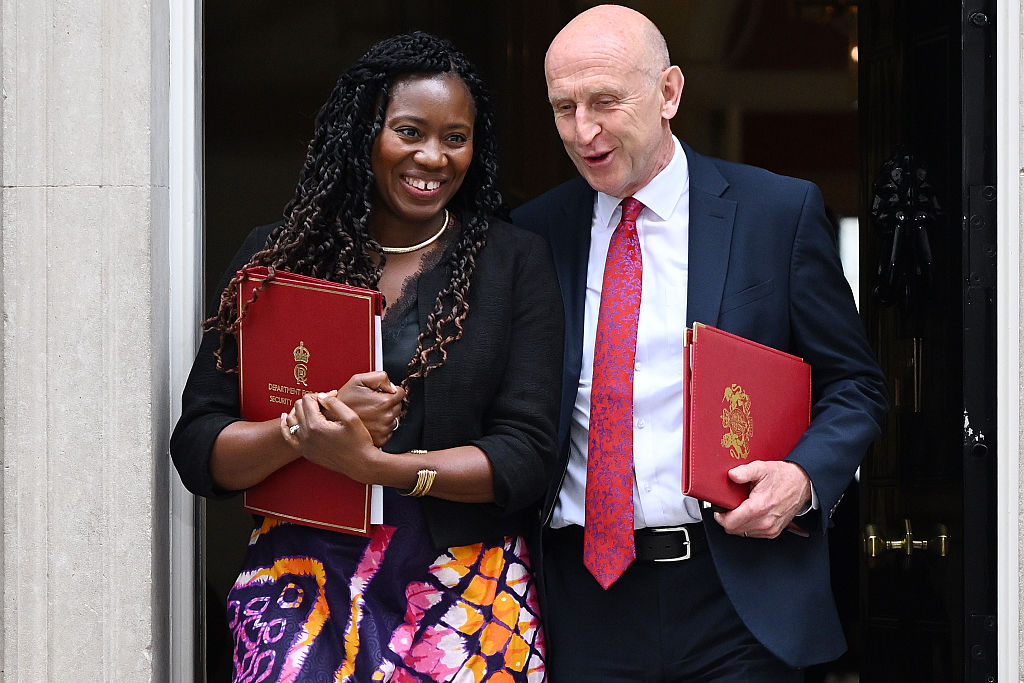
UK energy secretary Miatta Fahnbulleh approved the drilling on Wednesday after months of high-profile debate, fuelled in part by interventions from US President Donald Trump. She argued that the project would boost energy security in the wake of the Middle East fossil fuel crisis, protect hundreds of jobs and add £2.9 billion ($3.88bn) to the UK economy.
She said Jackdaw’s gas would be cleaner than imported gas and would not prevent the UK from meeting its legally-binding carbon targets and its goal of net zero by 2050. As the field is already licensed, she said extraction was consistent with the Labour Party’s 2024 manifesto promise not to issue any new oil and gas licenses.
The same morning, the government announced a new Energy Wealth Fund to reinvest oil and gas revenues in the climate transition. It will start with £2 billion ($2.67bn) from the government and be topped up over time with tax revenues from offshore oil and gas production.
Climate campaigners in the UK and abroad were quick to condemn the decision, while a leading legal expert told Climate Home News it goes against the advice of the International Court of Justice. Meanwhile, the government’s own documents reveal that it recognises the drilling could damage the UK’s reputation and its ability to push forward the global transition away from fossil fuels.
“Climate leadership” blow
The 92-page decision document says Fahnbulleh “acknowledges that international standing on climate is important and accepts that a decision to grant consent may not further the UK’s international climate leadership.”
It adds: “She acknowledges concerns about the potential implications for the UK’s credibility and influence – including the difficulty inherent in encouraging other states to move away from fossil fuel production while the UK continues, in a limited and transitional way, to draw on its own domestic resources.”
While noting that Jackdaw has not been issued with a new license – just permission to extract gas – the document says Fahnbulleh “accepts this does not fully resolve the underlying tension in the UK’s position” but “considers this alongside the substance of the UK’s wider record [on emissions reduction], which remains significant”.
It continues that she accepts these concerns are “legitimate” and weigh against approving gas extraction, but only gives this argument a “moderate negative weight” set against the benefits of gas production.
“Huge” wrong signal
In international climate talks, the UK has long supported the transition away from fossil fuels and is one of very few major oil and gas producers to ban new licenses. Across the North Sea, the Norwegian government continues to make offshore areas available for oil and gas exploration through annual licensing rounds.
Climate experts and campaigners shared the concern, acknowledged in the decision document, that approving Jackdaw could set a precedent for fossil fuel production elsewhere. Sam Fankhauser, professor of climate change economics at Oxford University, said the direct climate impact of Jackdaw is “much smaller than the debate around it would suggest” but the “wrong signal it sends, however, is huge”.
-
Carbon capture industry faces tough future, as UK raids green spending
Despite a spate of projects getting underway, the mood at an industry conference in London this week was low with government subsidies set to shrin
